Thank You, Aaron.

This poem gave me strength today.

—–

—–

—–

Ame ni mo Makezu

by Kenji Miyazawa

Japanese

—–

雨ニモマケズ
風ニモマケズ
雪ニモ夏ノ暑サニモマケヌ
丈夫ナカラダヲモチ
慾ハナク
決シテ瞋ラズ
イツモシヅカニワラッテイル
一日ニ玄米四合ト
味噌ト少シノ野菜ヲタベ
アラユルコトヲ
ジブンヲカンジョウニ入レズニ
ヨクミキキシワカリ
ソシテワスレズ
野原ノ松ノ林ノ蔭ノ
小サナ萱ブキノ小屋ニイテ
東ニ病気ノ子供アレバ
行ツテ看病シテヤリ
西ニツカレタ母アレバ
行ツテソノ稲ノ束ヲ負ヒ
南ニ死ニソウナ人アレバ
行ツテコワガラナクテモイイトイイ
北ニケンカヤソショウガアレバ
ツマラナイカラヤメロトイイ
ヒデリノトキハナミダヲナガシ
サムサノナツハオロオロアルキ
ミンナニデクノボウトヨバレ
ホメラレモセズ
クニモサレズ
ソウイウモノニ
ワタシハナリタイ

——-

——-

Transliteration

——-

ame ni mo makezu
kaze ni mo makezu
yuki ni mo natsu no atsusa ni mo makenu
jōbu na karada wo mochi
yoku wa naku
kesshite ikarazu
itsu mo shizuka ni waratte iru
ichi nichi ni genmai yon gō to
miso to sukoshi no yasai wo tabe
arayuru koto wo
jibun wo kanjō ni irezu ni
yoku mikiki shi wakari
soshite wasurezu
nohara no matsu no hayashi no kage no
chiisa na kayabuki no koya ni ite
higashi ni byōki no kodomo areba
itte kanbyō shite yari
nishi ni tsukareta haha areba
itte sono ine no taba wo oi
minami ni shinisō na hito areba
itte kowagaranakute mo ii to ii
kita ni kenka ya soshō ga areba
tsumaranai kara yamero to ii
hideri no toki wa namida wo nagashi
samusa no natsu wa oro-oro aruki
minna ni deku-no-bō to yobare
homerare mo sezu
ku ni mo sarezu
sō iu mono ni
watashi wa naritai

—–

—–

Translation

—–

not losing to the rain
not losing to the wind
not losing to the snow or to the heat of the summer
with a strong body
unfettered by desire
never losing temper
cultivating a quiet joy
every day four bowls of brown rice
miso and some vegetables to eat
in everything
count yourself last and put others before you
watching and listening, and understanding
and never forgetting
in the shade of the woods of the pines of the fields
being in a little thatched hut
if there is a sick child to the east
going and nursing over them
if there is a tired mother to the west
going and shouldering her sheaf of rice
if there is someone near death to the south
going and saying there’s no need to be afraid
if there is a quarrel or a suit to the north
telling them to leave off with such waste
when there’s drought, shedding tears of sympathy
when the summer’s cold, walk in concern and empathy
called a blockhead by everyone
without being praised
without being blamed
such a person
I want to become

—–

—–

—–

(ps: I’m not tryin to front — I can’t read Japanese characters or transliterations.  Just including them for those of you who can. :) )

Don’t Resist: Resist!

I’ll be the first to admit it, folks: non-resistance, one of the core elements of Buddhist or dhammic praxis, seems like a sham. On its face, non-resistance sounds like one or a combination of (a) weakness: a sort of rationalized fear of fighting back; (b) delusion: playing Mary Sunshine and pretending that there’s nothing to resist; or (c) apathy: leaving it to fate or karma or whatever to sort everything out.

With a slightly more nuanced view of non-resistance, we realize that it doesn’t so much refer to external conflict or confrontation, but has more to do with our internal states, as a tool for reducing suffering.  A British professor, a guest speaker I heard at the Cambridge Insight Meditation Center back in September, cited as an example the moment you open a delicious-looking box of chocolates, only to find that they’ve all been eaten up — except the coconut ones, which you hate.  The more we resist reality (by fantasizing about the missing chocolates; resenting the scoundrels who devoured them), the greater our suffering will become.

Ok, understandable, but something still feels off.  It was at that moment, when he pulled out the bonbon anecdote, that the thought occurred to me: This white guy has no idea of the weight of the words he’s using.

Resistance.  Struggle.

These words carry a lot of meaning for a lot of people.  How could he use them so blithely, so unawares?

Now, it wasn’t just a matter of the professor: his explanation, language and vocabulary were also tied to the audience he was addressing: largely wealthy, white, overeducated, and middle-aged. But there was also a larger context: the neighborhood in which this dharma talk was taking place.  Area 4, poor and gentrifying, a long under-resourced and heavily policed area, with lots of homeless and near-homeless people of color.

When talking about non-resistance, how often do we hear examples of irritation like sitting in traffic?  Not getting a bonus or promotion at your firm?  Undergoing chemotherapy?

In my experience, A Lot.

And how often do we hear examples of police profiling and brutality?  Eviction?  Domestic abuse?  Racist education?  Colonization?  War?

It’s a shame that so many dharma talks by convert Americans in the U.S., from what I’ve seen and read, are couched in terms of a white ruling-class (and often straight, male, cisgendered, non-disabled) experience.  Some may include the “social justice question” as an afterthought, or as a response in a Q & A, but rarely do dharmic explanations center around the people who must resist routinized oppression in order to survive.  Talks ignore these realities.  And that ignorance, willful or not, can raise a lot of skepticism about the dharma. Earlier in 2009, brownfemipower approached this same question from a different angle: the notion of submission, and whether it can ever be relevant to people who don’t really have a choice.

Fortunately, though, the way I see it, when we get to the deep meaning of non-resistance, we understand that it is totally compatible with political and social struggle.  Lately I’ve run across a few explications that speak to confronting violence or abuse.

Some psychologists, among them Tara Brach and Marsha Linehan, talk about radical acceptance—radical meaning “root”—to emphasize our deep, innate capacity to embrace both negative and positive emotions. Acceptance in this context does not mean tolerating or condoning abusive behavior. Rather, acceptance often means fully acknowledging just how much pain we may be feeling at a given moment, which inevitably leads to greater empowerment and creative change.

– Christopher K. Germer from “Getting Along” (Tricycle, Spring 2006)

Non-resistance means looking at the totality of a given situation: not denying any aspect or focusing too narrowly on one area.  And not getting lost in our own imagination, our own reactions, or our own desires to appear strong, calm, courageous, or unperturbed.  In a conversation with Pema Chödrön, Alice Walker makes a similar point about the importance of acknowledging and accepting pain when somebody tells us to “go to the back of the bus”:

The cause of someone’s aggression is their own suffering.  So we can connect with our own aggression and provocation, feel that, and exude good wishes for ourselves and others.

Let’s be clear: exuding good wishes for ourselves and others doesn’t rule out strong action.  Even physical, militant action.  In his essay “Loving the Enemy” (2002), Jeffrey Hopkins writes,

If your own best friend [suddenly, without warning],* came at you with a knife to kill you, what would you do? You would seek to disarm your friend, but then you would not proceed to beat the person, would you? You would disarm the attacker in whatever way you could—you might even have to hit the person in order to disarm him, but once you have managed to disarm him, you would not go on to hurt him. Why? Because he is close to you.

If you felt that everyone in the whole universe was in the same relationship to you as your very best friend, and if you saw anyone who attacked you as your best friend [acting harmfully],* you would not respond with hatred. You would respond with behavior that was appropriate, but you would not be seeking to retaliate and harm the person out of hatred. He would be too dear to you.

We’re not talking docility here.  What makes non-resistance so great and useful is that it’s not a prescription for action or non-action, but rather an aid to clear-sightedness that we can apply to any given situation.  It says: look at the reality in front of you.  Much as we might want to deny that our friend is brandishing a knife, he is, and that needs addressing.  Much as we might want to concoct some story of betrayal — that our friend has now become our enemy — in truth he’s only our enemy if we make him so.  Otherwise, he’s only changed from what he was before.

As my teacher Goenkaji says, Accept each moment as it is — not as you would like it to be, but as it is.

And when the moment comes to resist, you’ll resist.

——–

Have a good weekend, friends.  I know I will.  :)  More on that next week.

——–
*The original language in this piece talks about the best friend “going mad” as the explanation for the harmful behavior. As folks at Feministe pointed out while I was guest-blogging there, casually linking violence and mental illness presents a lot of problems, including exacerbating stigmas against people living with mental illness. I think Hopkins’ story is still helpful in the sense that it points to the power of a pre-existing, positive, loving relationship that allows us to choose mercy over revenge, refusing to totalize a person even based on their violent actions. At the same time, it’s also a very simplified example, evading the possibility of calculated betrayal, or an inherently predatory “best-friend” relationship. If you have time, I really recommend checking out the Feministe thread, and probing the example a bit further.

For Baybes Who Resolve To Learn Meditation

Hey friends! For any of you folks in the Bay Area, I just wanted to pass along this announcement for a *free* (donation-based, give-as-you-can) introductory course to Vipassana (or “insight”) meditation, at my local sangha, the East Bay Meditation Center. EBMC is largely run by and for queer folks and people of color (with one weekly sitting day reserved for LGBTQQI & SGL folks, and one for POC), though this workshop is open to straight white people, too.  Should be rad.

I’ll be ringing in the new decade at the Center tonight, sitting together up until midnight. Truly, there’s nowhere else I’d rather be on New Year’s. It’s an amazingly warm and wonderful space, and one of my main anchors in the Bay.

Have a safe and happy night, y’all, and thank you for reading, shaping, and encouraging the Kloncke chronicles of 2009.  Wishing you all the best things for 2010.

Into the Heart of the Moment:
Meditation for Beginners
Buddha Statue Head

with Mushim Ikeda-Nash and Kitsy Schoen

Open to all

Five Monday evenings:
Jan. 25 – Feb. 22, 2010
7:00 -9:00 pm

East Bay Meditation Center
2147 Broadway Street, Oakland, CA 94612
(near the 19th Street BART)
www.eastbaymeditation.org

About this Class Series

Are you stressed or overwhelmed, seeking ways to be more compassionate to yourself and others? How do you get your brain to work for you instead of replaying old tapes and unhelpful messages?  We don’t have to keep doing things the same way – we have choices! Based in Buddhist teachings and supported by modern science, mindfulness meditation has clear and proven benefits for health and well-being. We’ll offer basic instruction in sitting and movement meditation, interactive exercises, and support for establishing a home meditation practice.

Registration is Required and Space is Limited!
Please plan to attend all five classes in the series.  This is NOT a drop-in class.

To register, please click here, or copy and paste the following link into your web browser:

https://www.surveymonkey.com/s/7SYNGZ7

If the link does not work, reply to this email, admin@eastbaymeditation.org with your full name, requesting a registration form for the “Into the Heart of the Moment” series.


Dana, or Generous Giving

There is no registration fee for attending this event, nor most EBMC events.

However, EBMC is not independently funded.

The center and the teachers will be sustained only by your voluntary donations (the practice of generous giving, or “dana”).  Please donate generously, in proportion to your ability:

  • Either online (you will be offered an opportunity at the end of the online registration process)
  • Or at the event, in the two baskets at EBMC, one for the center, the second for the teachers.


Thank you for your generosity.  Giving together, our unique, diverse center will continue to grow and thrive!

About the teachers

Mushim Ikeda-NashMushim Ikeda-Nash teaches meditation retreats for people of color and social justice activists nationally, and she is a core teacher at East Bay Meditation Center. Known for her warm and down-to-earth approach to mindfulness practice, she brings 28 years of monastic and lay experience to her teaching, with an emphasis on integrating meditation and everyday life.   http://mushim.wordpress.com/

Kitsy Schoen

Kitsy Schoen has been practicing Vipassana meditation for 30 years. She is a graduate of the Community Dharma Leader program of Spirit Rock Meditation Center and is on the Leadership Sangha of the EBMC.  Kitsy is passionate about the integration of mindfulness and multicultural awareness.

In order to protect the health of community members with environmental illness, please do not wear fragranced products (including”natural” fragrances) or clothes laundered in fragranced products to EBMC. A list of fragrance free products is posted on the EBMC website, at
http://eastbaymeditation.org/accessibility/scentfree.html

wheelchair - lively
The East Bay Meditation Center is wheelchair accessible.

Monday Music

Well, it was gonna be a Monday Musiq Video, but my favorite version of “Just Friends (Sunny)” (to which Ryan recently reintroduced me) got nixed from YouTube.  What can you do.

So here, instead, something that’s been in heavy rotation on my laptop lately.  I wish I could upload the version from my own library (slightly gentler, more a cappella, with only the lightest touch of instrumentals — just breathtaking), but it’s “protected” and alla’ dat nonsense.  Anyway, this one’s gorgeous, too.

Here’s wishing you some of that slow Sunday luminosity.

Bonus Track: Ill Doctrine Holiday

Jay Smooth gets it right on.  Now this is real metta (lovingkindness).  As Sharon Salzberg says,

The practice of lovingkindness is, at a certain level, the fruition of all we work toward in our meditation. It relies on our ability to open continuously to the truth of our actual experience, not cutting off the painful parts, and not trying to pretend things are other than they are.

Unrelenting pressure to be positive is not real love or kindness, even if it’s coming from good intentions.  It’s only when we let go of expectations for joy or peace that real, honest listening and caring can occur.

Take care, y’all, and I’ll see you Monday.

– – –

love,

katie

SF Annual Homeless Dead Memorial

Reverend Hope at the Memorial Service For All Our Homeless Dead.

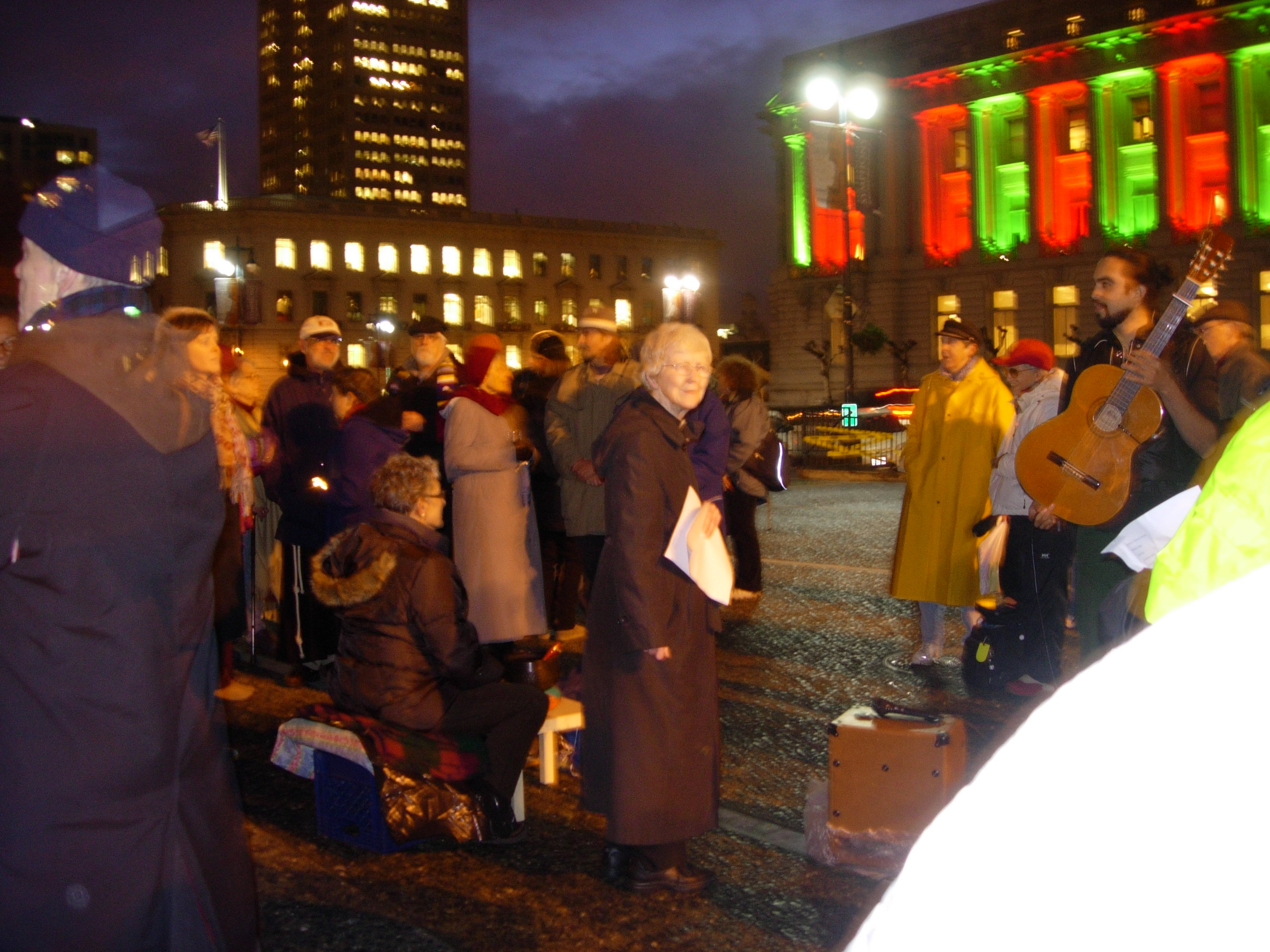
Last night, for the nineteenth time in as many years, San Franciscans assembled in front of City Hall for the Interfaith Memorial Service For All Our Homeless Dead, organized by Reverend Glenda Hope with SF Network Ministries, along with the Coalition On Homelessness.  Half a dozen laypeople and religious leaders — a rabbi; a Zen Buddhist nun; a housing activist; a Franciscan sister (my boss and roommate, Carmen); and more — presented poems and eulogies, mourning the dead and calling for justice for the living.  Alternating with the speeches, one person from a given neighborhood would read aloud a list of names: the recorded deaths of homeless people in that area, in 2009.  I think there were between 50 and 60, maybe more.  A singing bowl rang after each name spoken, including, hauntingly, a few nameless: John Doe Number 64 (ding), John Doe Number 67 (ding), John Doe Number 95 (ding) . . .

Evidently, over the years it’s become increasingly difficult or complicated to access information on homeless mortality.  In addition, the deaths of people living in single-resident occupancy housing (or SRO’s — basically hotel rooms) are not recorded.  So the actual death toll among the very poor or destitute is far greater than our reading reflected.

A man sang in a beautiful soprano; the lists of names were ceremonially burned.  All told, about 80 people gathered in the cold near-rain.  And though the memorial itself was lovely, the most moving part for me was knowing that this frail reverend, emceeing in a barely audible voice, has faithfully assembled people here on every winter solstice since 1980.  Almost twenty years of bearing witness this way, in this same place.

Mandiram Yoga, Barcelona

These days I’m back into yoga, 3 to 5 times a week. I found the studio, or it found me, quite by accident. Vipassana students are encouraged to organize weekly group sittings in their communities, just silently sitting together for one hour to support one another in the practice. So when I was kickin’ it in BCN for a couple of weeks back in June, I went with a friend to check out the Sunday evening gatherings, held in an unassuming apartment building right off of Plaza Catalunya.

Have you ever entered a space and just felt it was something special?

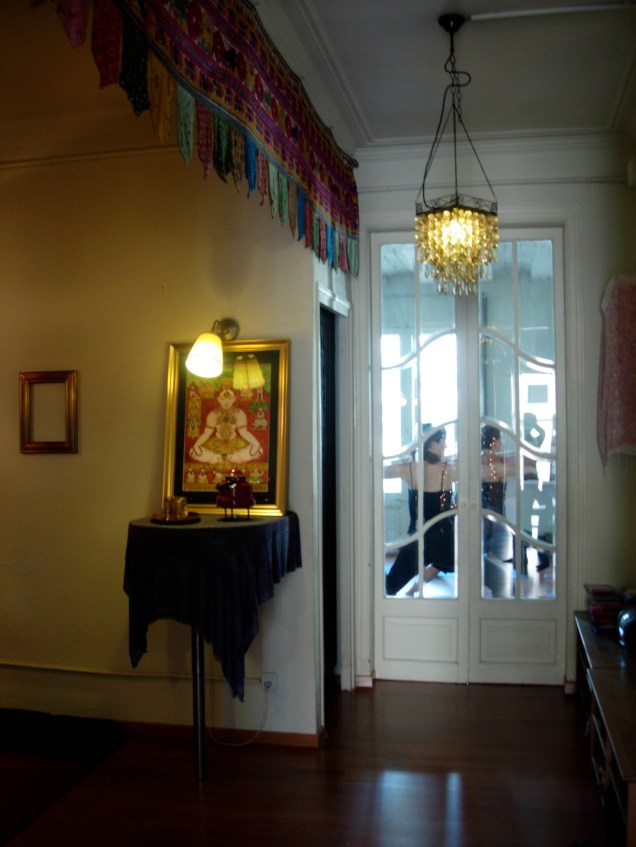
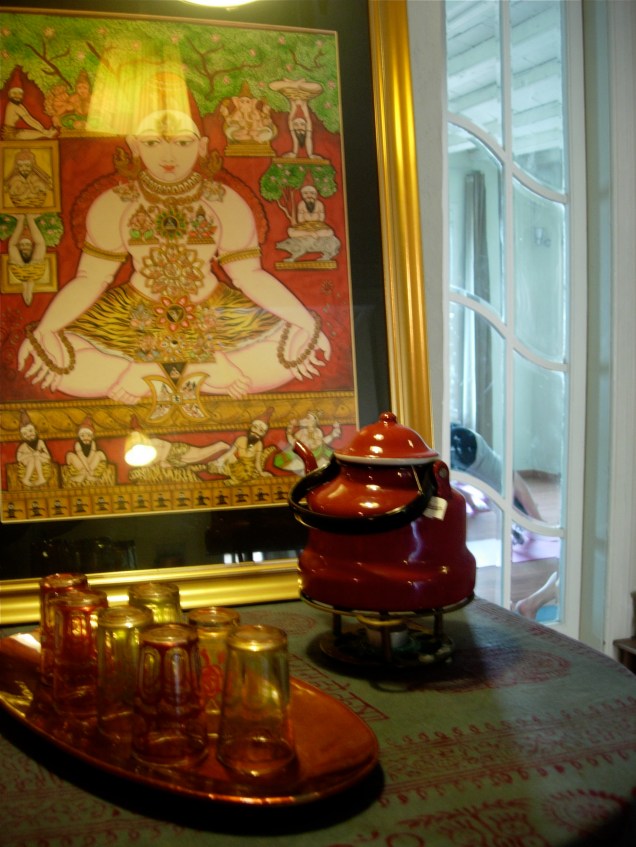
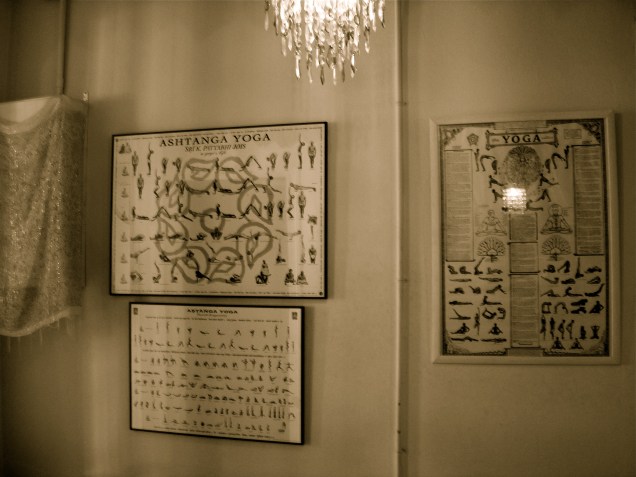
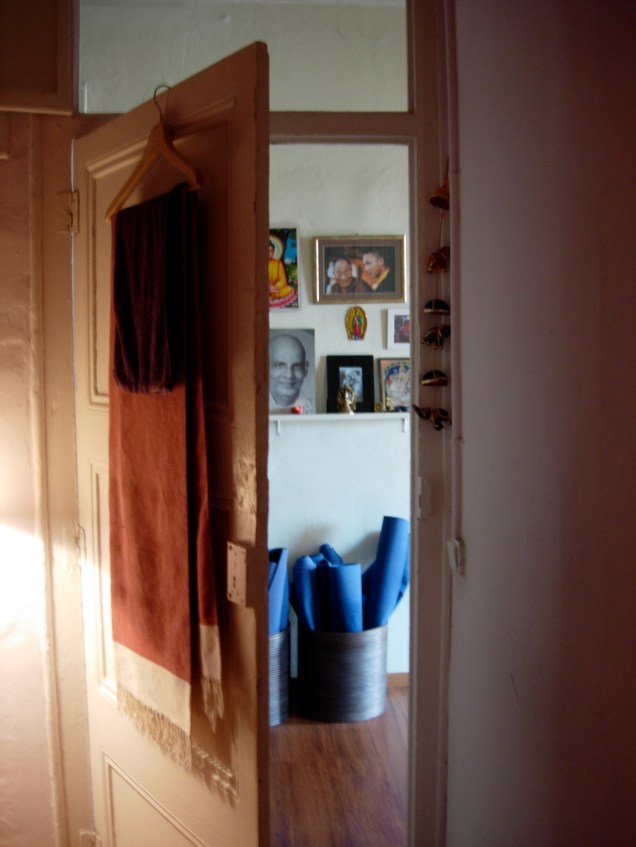
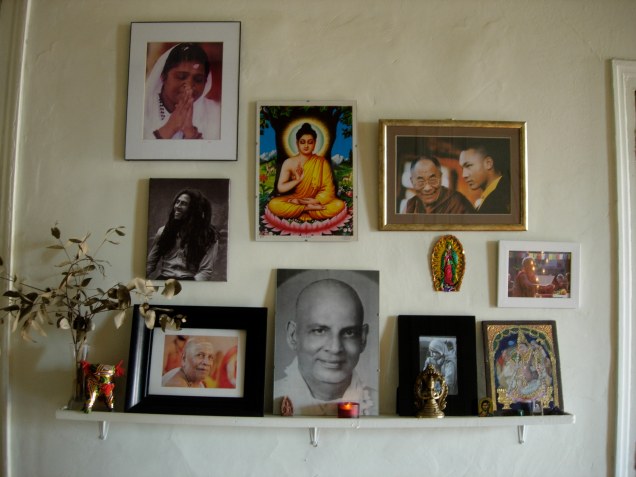
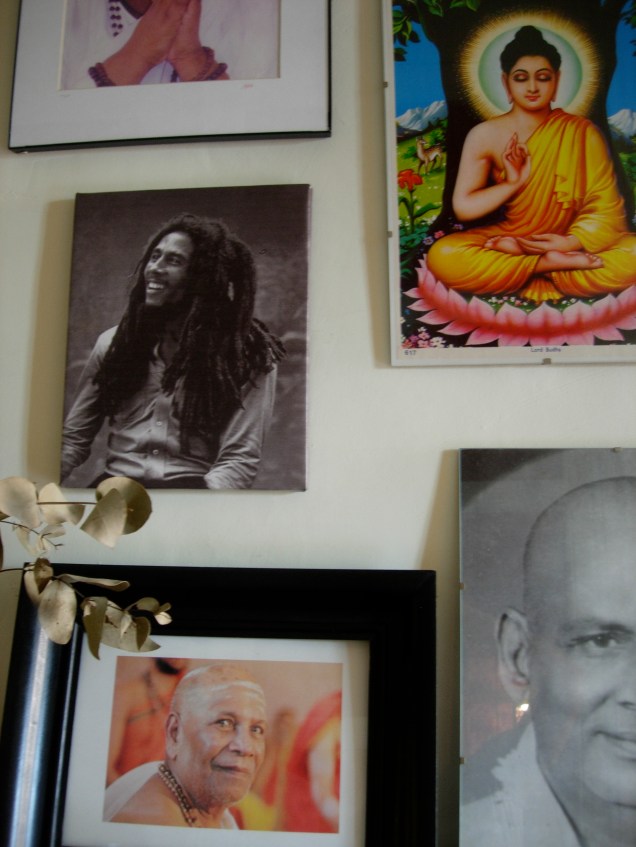
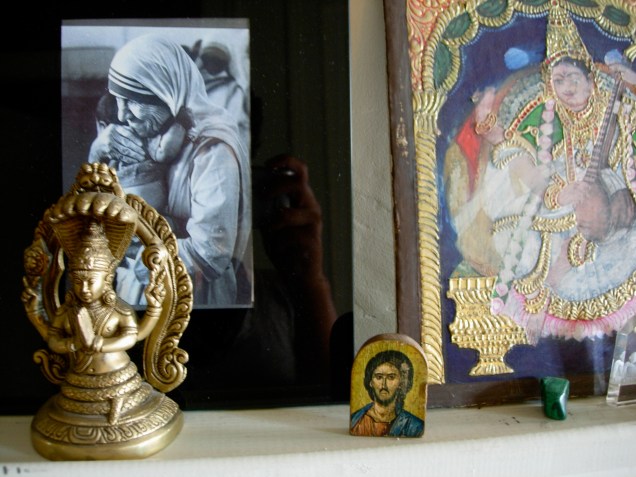
I couldn’t stop wandering around, looking in wonder at every little thing: the fabric mats; the incense; the photo of Bob Marley alongside the Dalai Lama, Mother Theresa, Jesus, Buddha, and other spiritual inspirations.

Smitten doesn’t begin to describe it.

So when I decided to settle in Barcelona for a month, and wanted to sign up for a yoga class instead of a gym membership, I happened to know just the right place.

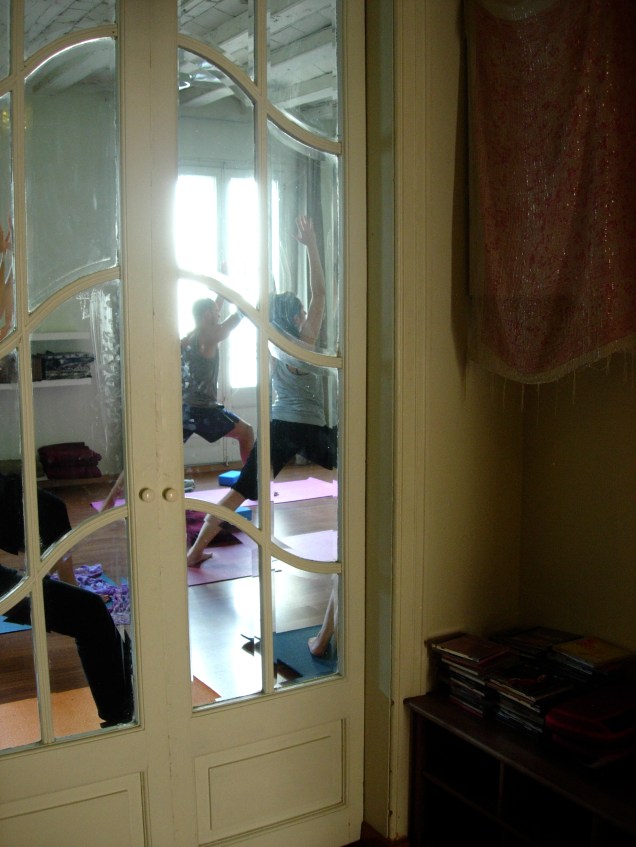
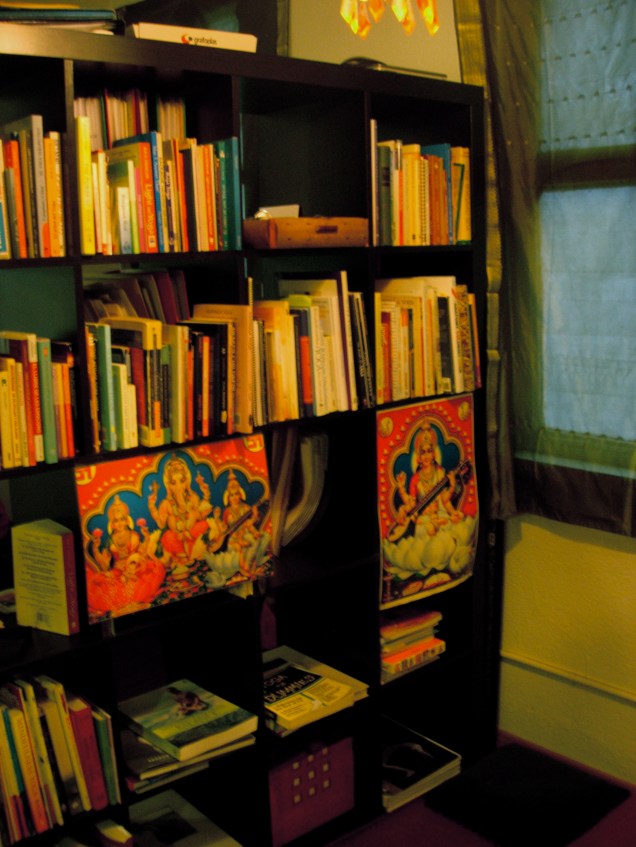
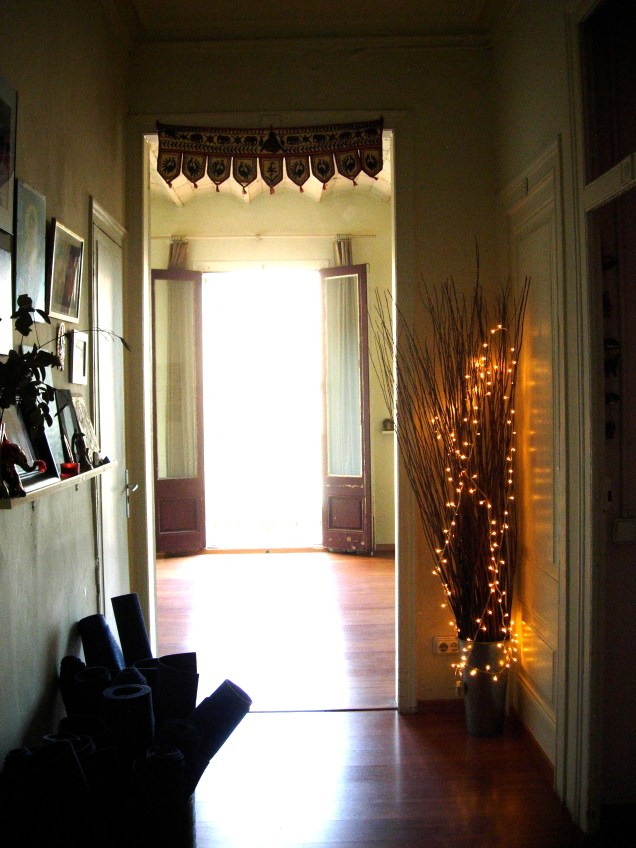
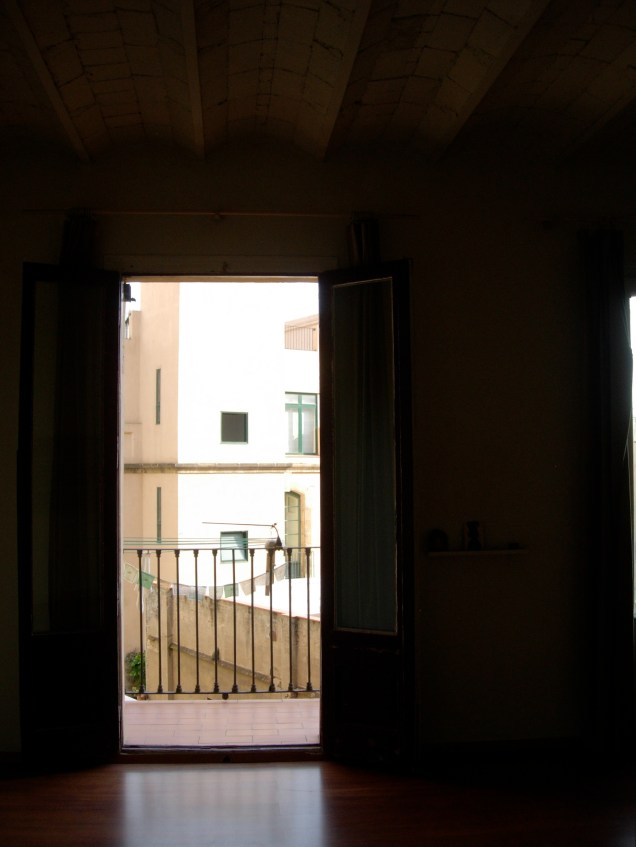
Owned and operated entirely by women teachers (though students of all genders attend), the studio has clean, airy rooms; fresh lilies every week; chandeliers; rooibos tea; a small library of works on yoga, India, and Buddhist philosophy; and extremely hardcore asanas.

Every time I go, I arrive an hour early to read, and leave drenched in sweat, floating down the street. The two-and-a-half hours in between are filled with an almost palpable sense of caring — a bright, loving, permeating awakeness. And each time, thanks to the book or the practice or both, I come away having learned something valuable about how to live. Really.

Not all yoga joints are like this, believe you me.

I hope you’ve found your own places like Mandiram. Sanctuaries. Places where the most mundane objects, gestures, and even open spaces seem luminous. Leave you feeling spacious, yourself, even (especially) when you return home and – bam! – your roommate convenes a Dirty Dishes Conversation.

Deep thanks to Gloria, Alex, and all the people who have given me, and others, this haven and springboard.

Further Death Of The Cool

This makes me laugh.

An American study shows that “optimistic women” have better heart health and greater longevity than “cynical women who harboured hostile thoughts about others or were generally mistrusting of others.”

The findings echo results of Dutch research indicating similar correlations between attitude and health among men.

Lead researcher Dr Hilary Tindle, assistant professor of medicine at the University of Pittsburgh, said: “The majority of evidence suggests that sustained, high degrees of negativity are hazardous to health.”

But, I mean, what if they had found the opposite?  Should we then try to be as cynical and pessimistic as possible, so that we’d have more years to fill up with misery?

Folks, I’m getting a familiar whiff of The Cool, here.  According to The Cool’s logic, being negative is worthwhile because you gain things by it: things like protection (via mistrust); righteousness (from hostility, making someone else the ‘enemy’); or realism (you’re the anti-Pollyanna/up on the news/nobody’s fool).

If we accept this logic, then we might ask whether positivity has its own compensatory benefits.

And wouldn’t you know: it does!  So science adds another tally to the “pro” side of happiness: “Being positive helps you live longer.”

But…do you see where I’m going with this?  Can you smell what I’m cookin’?

Being positive helps you live better, for however long.

Ultimately, none of the supposed ‘benefits’ of negativity that The Cool promises us are true benefits at all.  They’re simply variations on what The Cool loves best: more coolness.  Even longer lifespans can be a form of Cool.

Now, of course, blind optimism never helped anyone, either.  Nobody needs to live in denial.  Optimism and realism can, and should, go together.  All I’m saying is…when it comes to positivity versus negativity, there’s really no contest.  Chuck the pro/con list and take a page from the book of these beautiful abuelas.

Or, if you prefer, heed the wise words of De La Soul:

And stop frownin like you hostile
You know that it’s a booger rubbin up against your nostril

Heh. Can you get much realer than that?

Hat tip to Junot for the article.

Thank Heaven For Disasters

NeEddra James’ blog, PARAMECultureWorks, entered my life at a great moment.  She’s a sharp writer and an incredibly insightful soul — and the email conversation we recently struck up reminds me why Internet ‘connections’ can be worthwhile.  You should check out her blog in its entirety, but here I wanted to crosspost a piece that’s been particularly helpful to me over the last few days.

NeEddra’s illustration of the value of wake-up calls gets at the heart of the Buddhist teaching that ultimately there is no good or bad, merit or demerit.  Because every uncomfortable, unpleasant, or downright excruciating event has something to teach us.  It’s a doorway leading to the higher dimension of consciousness attained through nonjudgmental acceptance of what is.  Total awareness and presence of mind. So with the valuable teachings that moments like these can offer, how can we really label them “bad?”

Putting this understanding into practice is no easy feat, obviously.  But little by little, moment to moment, and with the help of reminders like NeEddra’s parking ticket saga, we get there.

Hope you’re having a peaceful day, folks.  Whatever catastrophes (a.k.a. opportunities) come your way.

Offering To The Döns

“Practice offering to the döns* by welcoming mishaps because they wake you up.”

I always read my monthly horoscope on the first day of the month. On Dec. 1 Susan Miller told me the full moon, which reaches its apex today on the 12th, would occur in my third house: the house of other people’s money. She went on to say that I’d be writing a big, non-negotiable check, and with “Saturn in hard angle to the moon…there will be no way to avoid acknowledging one’s responsibility or alternatively, accepting a loss and moving on.”

And so it is.

Continue reading