Pillow Talk, Pillow Action

Goodness gracious, people. A lot has happened for me since September. In college towns, big cities, and on tropical islands. With old friends, new friends, mentors, lovers, family, and the lifelong “domestic partner.” Painting bedrooms, taking walks, cooking soup, learning stick-shift, finding a twin spirit in my high school crush, getting (a) into art school and (b) certified in scuba diving. Another 10-day Vipassana course (this one in North Fork, California). Sleeping on the streets of San Francisco. Living and working in a street ministry. And all the while, continuing to open, open, open up.

Part of me feels like apologizing, and trying to atone for the extended absence by crafting some sort of meaningful, powerful narrative about the last three or four months. (Autumn. Wow. All of autumn.) The most insightful insights, the most surprising surprises, the most splendid splendors. But instead, in classic Kloncking fashion, I think it’s best to begin with the tangible. And colorful. And close to home. Less talk, more action.

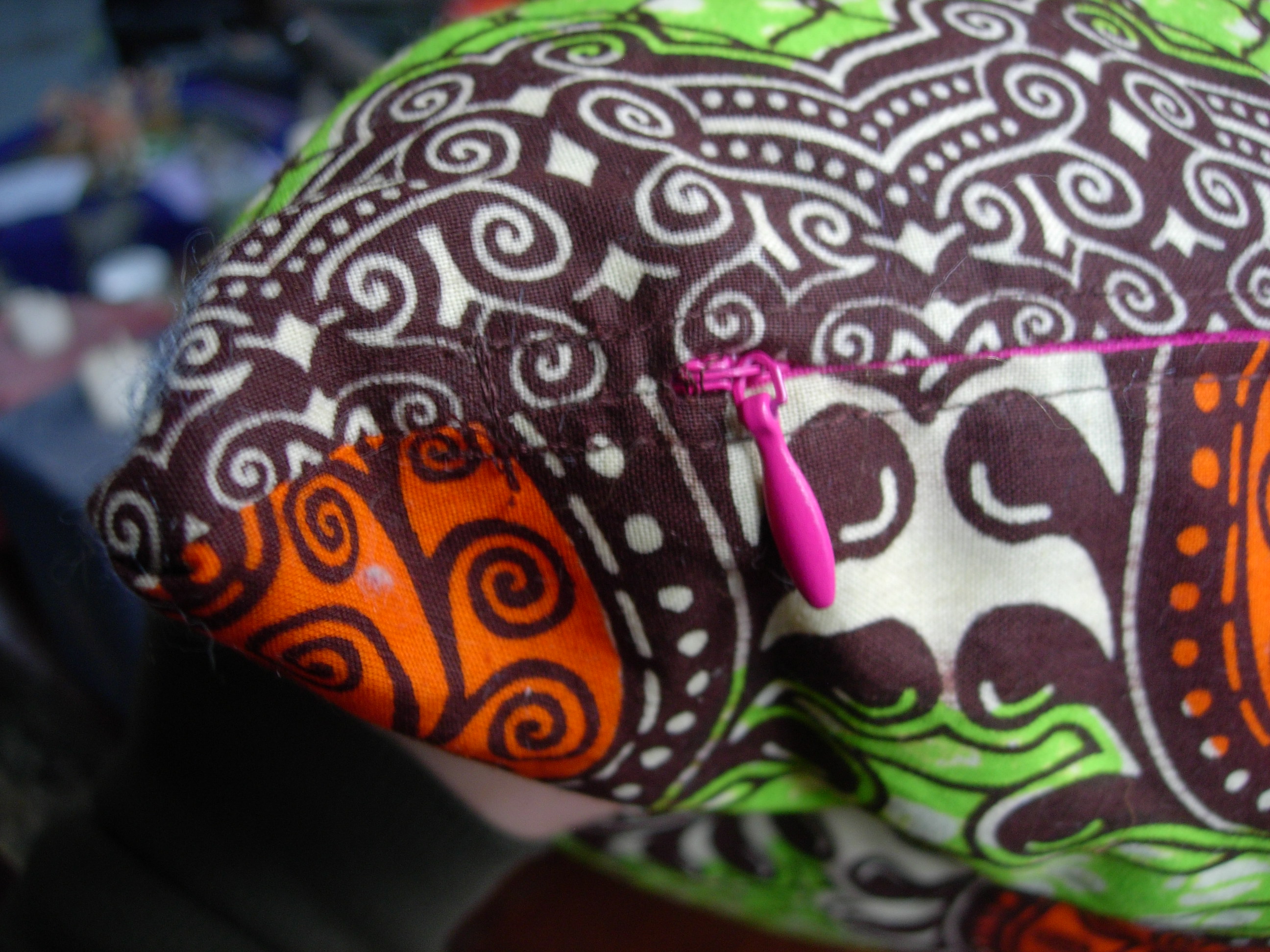
I bought these gorgeous fabrics this summer, from a very kind, friendly shopkeeper near my flat in Barcelona. When my folks came out to visit me, my mom and I decided we’d use them for a pillowcase project. She taught me how to do it while I was home for Thanksgiving. Specifically, how to add on the invisible zippers. (Invisible yet pink! Ha!)

I wish I had thought to take some pictures during the sewing process because the best part of all was watching my mother as she modeled the stitching for me, guiding the fabric through the electric machine with such rhythm and confidence and obvious pleasure. Sewing was one of her main hobbies for most of her life — she made, mended and/or altered much of her own clothing. Her mother (my Oma) was a factory seamstress, too. So mama certainly knows her way around a Singer, even though hers mostly lies dormant these days.

It was beautiful to witness her work — like watching a cheery old former minor-league shortstop play catch with his grandkids. Graceful muscle memory. Alacrity. Plus, she’s an excellent teacher for a novice like me. I’m quite proud of our results.
It’s good to be back, friends!  Hope you’re well.  More to come.  Ps: many thanks to Kyle, who unknowingly gave me the push I needed to get this thing going again.  De-lurking in person is even more fabulous.

Friends, Meet “Advance The Struggle”

Advance The Struggle: Bay Area Radical Perspectives

Last night was a night of dealing with domestic abuse.  (A friend of a friend.)  So today I’m tired and needing some solitude, reading, and yoga.  But I wanted to share real quick this inspiring website, Advance The Struggle, which my friend Ryan, from San Francisco, was kind enough to introduce to me here.

Click here for pamphlet

The blog focuses on marxist politics — analysis and praxis — in a thoughtful, energetic, well-balanced way.  And this pamphlet they produced (worth viewing as a PDF, if you can, for all the stunning artwork), is a great place to start: an insightful commentary on the radical organizing vacuum following the police murder of Oscar Grant back in January.  Follow it up with the response article by Bring The Ruckus, super useful, in my opinion, for adding the concept of “strategic and lasting” institutions, or “dual power.”  Selma James’ 1975 essay, “Sex, Race and Class,” reprinted in full, is another good read.  And of course, don’t forget to check out the comments on the posts — there’s fruitful discussion in there, too.

I’ll share my own thoughts and responses tomorrow, or when I’m feeling up to it.  Maybe link it to Glenn Greenwald’s must-read rundown of the CIA’s 2004 Inspector General Report, recently released, on the U.S. torture of suspected terrorists. Meantime, if you’re feeling what they’re saying on A/S, click and comment allá!

Take care, y’all.

love,

katie

Gettin’ Her Due

From NY Daily News
From NY Daily News

Love this story. Hip-hop pioneer Roxanne Shante, the breakthrough female artist behind the hit song “Roxanne’s Revenge,” has succeeded in forcing an unwilling Warner Brothers Music company to honor its contractual agreement to fund her continuing education. Having earned a PhD in psychology from Cornell, Dr. Shante now practices therapy in urban Black communities.

From NY Daily News:

[Warner Brothers] finally agreed to honor the contract when Shante threatened to go public with the story.

Shante earned her doctorate in 2001, and launched an unconventional therapy practice focusing on urban African-Americans – a group traditionally reluctant to seek mental health help.

“People put such a taboo on therapy, they feel it means they’re going crazy,” she explained. “No, it doesn’t. It just means you need someone else to talk to.”

Shante often incorporates hip-hop music into her sessions, encouraging her clients to unleash their inner MC and shout out exactly what’s on their mind.

“They can’t really let loose and enjoy life,” she said. “So I just let them unlock those doors.”

Shante, 38, is also active in the community. She offers $5,000 college scholarships each semester to female rappers through the nonprofit Hip Hop Association.

She also dispenses advice to young women in the music business via a MySpace page.

“I call it a warning service, so their dreams don’t turn into nightmares,” she said.

Fabulous.  Now if we can just secure access to higher ed for folks without Warner Bros. contracts…

And here’s the 1984 single — a response to UTFO’s “Roxanne Roxanne” — that changed the game.

Malalai Joya and a Gandhian Paradox

My dear friend Adaner posted this article on Facebook: an interview with Afghan women’s rights activist Malalai Joya.  Barely out of her twenties, Joya continues to courageously oppose Taliban and warlord oppression, expose U.S. propaganda, and inspire thousands of people  — at the cost of her own personal safety.  Though her efforts have been completely non-violent (illegally educating girls and speaking her mind as an elected representative) the resulting death threats have forced her to live under constant armed guard, sleeping in a different house every night and adopting a pseudonym to protect the identity of her family.

It’s a powerful interview.  One point in particular stuck with me, in conversation with my recent reading on the life of Gandhi, to whom these words are attributed:

“Whatever you do will be insignificant, but it is very important that you do it.”

Joya is expressing the same idea, I think, when she says,

“I am young and I want to live. But I say to those who would eliminate my voice: ‘I am ready, wherever and whenever you might strike. You can cut down the flower, but nothing can stop the coming of the spring.'”

Just as a flower is not a season, but an expression of it, a good activist is not a hero, but an expression of a greater heroic impulse.  At some point or another, almost everyone I know who has worked for social justice in some way has confronted this paradox.  We want to contribute; we want to do our duty; we want to give.  But how do we do this, knowing that though we may work ourselves literally to death, ultimately our contribution will be insignificant?

What we give may be minuscule, but that we give, and give purely, is what matters.  To give purely means to be guided by something greater than ourselves, our clever ideas, our generosity, our solidarity, our unflagging commitment.  To give purely means simply surrendering ourselves to the heroic impulse.  After that, the gift will express itself in whatever form it wants to.

But of course, self-surrender is one of life’s most difficult goals.  Requires an enormous amount of faith.

In Joya’s case, much of her faith seems to rest in other people.  She trusts them to continue, even if she cannot.

“If I should die, and you should choose to carry on my work, you are welcome to visit my grave. Pour some water on it and shout three times. I want to hear your voice.”

Love And Happiness

Today’s 5th-most-emailed NYT article (copied in full below the fold) is a truly profound “Modern Love” column by Laura Munson: a woman who saved her own marriage using insight into happiness.  Her summary: “I don’t love you anymore,” my husband said, but I survived the sucker punch.

It’s a perfect illustration of the ideas I used recently, during my own troubles with love.  (Thanks again, by the way, to everyone who wrote with well-wishes and comfort after my weepy post from Paris.)

When Munson’s husband, demoralized by a mid-life crisis and a tanking job, came to her talkin’ bout rescinding his affections and wanting out of the deal, her response was, “I don’t buy it.”  Which basically means, she recognized that this was his issue, not hers.  So she didn’t take it personally.  Instead, she tried to think of structures and solutions to help give him what he needed.  (Space.)  And she waited until the crisis passed.  She refused to make herself responsible for his happiness, and at the same time took responsibility for maintaining her own — not blaming or resenting him for threatening to destroy their family.

Despite what most of the R&B songs tell us, love isn’t about being somebody’s “rock” and assuming the weight of their burdens.  Ultimately, love is about giving them the space, time, and tools to stand on their own.

So when my friend in China confessed that he’d been concealing a new relationship from me, even though it stung, I was also able to recognize that it was not my problem to solve.  It really had nothing to do with me.  He was the one who felt confused and scared enough to hide the truth about something so natural and innocent: loving more than one person at once.  Given the cultural shame around this kind of situation, keeping quiet about it for so long may have been ignoble or short-sighted on his part, but it’s also very understandable — not to mention totally commonplace.

And you know, it’s funny.  Once we let go of our blaming and victimhood, a situation like mine or Munson’s can reveal itself as an extraordinary opportunity to learn.  We can learn how to rebuild something broken, and even do it in a gentle, playful way.  Her: planning middle-class summer vacations with the kids; me: proposing long-distance trust-rebuilding games.

And even more importantly, we can learn how to give love without expecting anything in return.  Which is really the true nature of love, when you get down to it.

Munson’s ability to keep a level head and compassionate heart in the face of dysfunction in a marriage, of all systems, makes her story tremendously inspiring.  And we can apply the same lessons to all sorts of loving relationships — whether with friends, lovers, spouses, or blood kin.  Giving people space to be as they are is nothing less than a radical act of humanity.  It doesn’t mean being a pushover.  I don’t accept dishonesty, and Munson didn’t accept recklessness.  But neither do we fight.  No blaming, no struggle.  Just seeing the situation for what it is, and finding ways to live it as lovingly as possible.

This is what the Buddha means in one of his notoriously challenging suttas about blame.  From the Dhammapada:

“He abused me, he beat me, he defeated me, he robbed me,”
in those who harbor such thoughts hatred is not appeased.

“He abused me, he beat me, he defeated me, he robbed me,”
in those who do not harbor such thoughts hatred is appeased.

Hate is not overcome by hate; by Love alone is hate appeased.
This is an eternal law.

Wishing you luck in giving and receiving space to be,

katie

Continue reading

Letter To Shem Walker, Deceased

Dear Mr. Walker,

I know we never knew each other while you were living, but you’ve been on my mind a lot this week.  Your death at the hands of a trigger-ready undercover cop — who stayed put on your front porch even when you asked him to move — is tragic.  And it is an extreme example of the same overreach of the law that put Professor Gates in handcuffs and mugshots.  And Sean Bell, like you, in a coffin.  No one can prove beyond a doubt that Blackness had anything to do with it.  And yet we all know…

These prejudices, now measurable through tools like Implicit Association Tests, don’t start out explosive and deadly.  They germinate and spread silently, almost unnoticed.  Until another patch of poisonous weeds forces its way through the topsoil and bares itself in daylight.

I remember a germ of this idea.  One instance.  It was in college, and a friend of mine — white, Jewish — sat on the edge of the bed, trembling, her hands poised for storytelling.  A male student had approached her while she was studying, she said, and despite her efforts to resume her work, and then get up and walk away from him, he wouldn’t leave her alone.  Wouldn’t accept her lack of interest.  Kept flirting aggressively.  And she started to feel uneasy, then trapped, then terrified.

I’ve been there.  Many women have.  And I wanted to comfort my friend, to tell her I sympathized.  The problem, though, was that in recounting the events, she kept referring to the man as “this big Black guy.” As in, “I had this big Black guy towering over me…”

My friend wasn’t being intentionally malicious, but the implications of her words are clear.  She feared this man more because he was Black.  She automatically, and I might say unconsciously, interpreted Black maleness as a particularly dangerous threat to her safety.

Perhaps some of the same unconsciousness overcame the policeman who killed you.

Or maybe, like the infamous “Floyd” in The Fugees’s The Score, he “gets a hard-on from just shootin’ n***as.”

I didn’t object or question my friend about what she said — that day, or ever.  If the same situation arises again, though, I’ll say something.  Your life and needless death reminds me how this unconsciousness, left unchecked, spreads so quickly.  Not only costing lives, but corroding the hearts and minds of millions.  I don’t want people like my friend to remain unconscious in this way.  I love her.  And I know she can be better, more open, less afraid.  Just like Officer Crowley can be better.

Despite the circumstances and against the odds, I hope you passed peacefully, Mr. Walker.  I hope that when you saw that death’s arrival was inevitable, you accepted it, and allowed it to fill you with love and light, not anger or animosity.  As another victim of a brutal murder once said, full of compassion even throughout his killing, “They know not what they do.”

Thank you for spreading love and light to me.  You will be missed, certainly, and also, you will matter.

Sincerely,

Katie Loncke

Manifestación for Iran

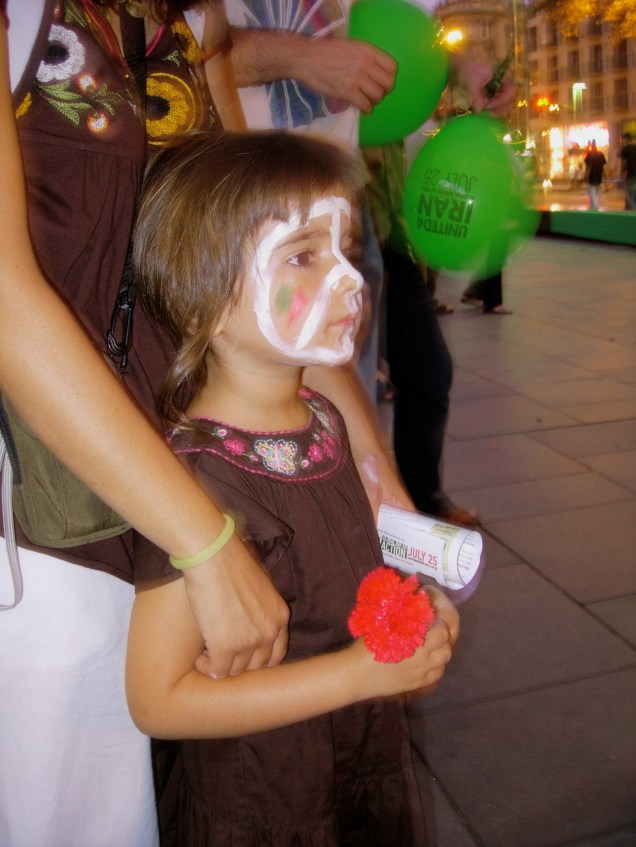
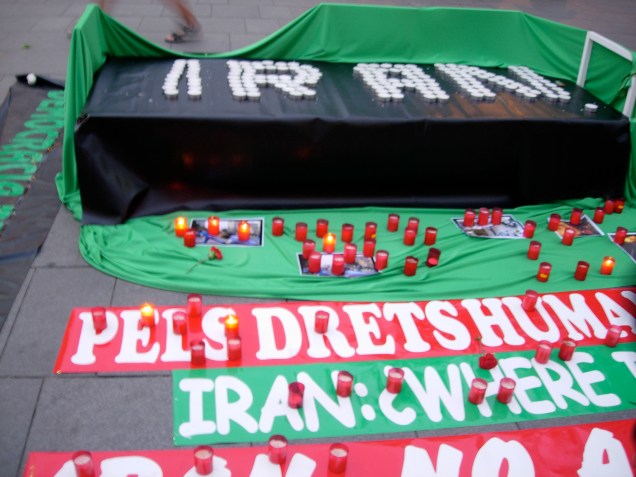
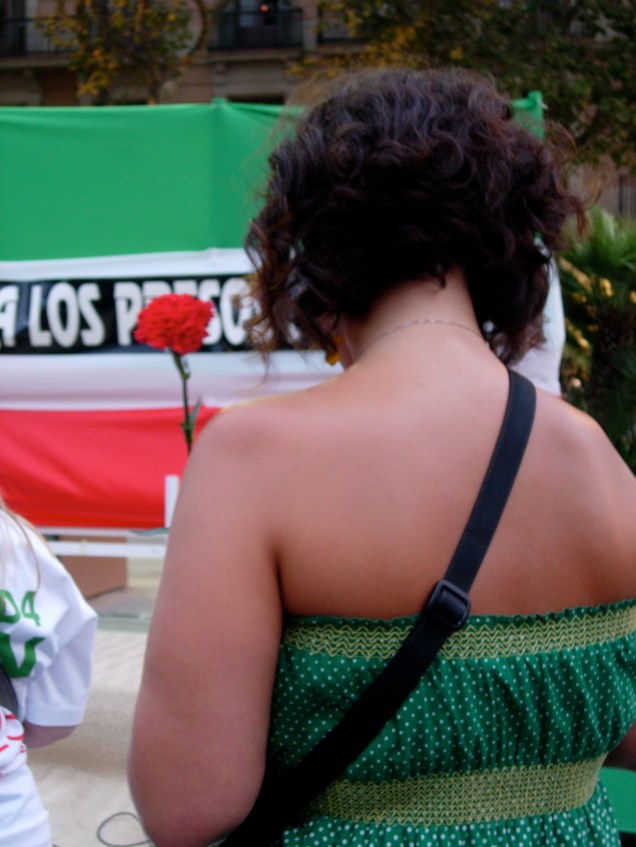
Saturday evening at Plaça de la Universitat.  Sometime I’ll learn how to take better photos at night…but in a fitting way, the fuzziness implies an aspect of the experience: vision blurred with tears.

Seeing all these people here in Catalunya, families and strangers and activists and musicians, I was amazed at the sheer strength of everyone. And struck at the thought that the pain and anguish among those resisting is reflected in equal measure among the men with machine guns carrying out the repression.  Their lives, too, are hellish.

Overwhelmed by my own emotion, I kept lifting up my camera halfheartedly, and then putting it down again.  It’s like Jay Smooth says: sometimes we have to live our grief directly, without making media out of it.  Sorry I couldn’t translate the moment into better photos to share with you.

DIY “Acceptance Speech”

The tradition of the acceptance speech appeals to me for a few reasons.  It happens in the context of community — a community honoring the achievements of its members.  Often it inspires others to persevere through their own challenges, knowing that someone else managed to overcome great obstacles or do something extraordinary.  And most of all, acceptance speeches are about gratitude.  Expressing gratitude to everyone who contributed to what, superficially, might seem like an individual feat, but is actually the culmination of much effort by many people. (And by greater powers, if that’s how you feel about it.)

Given the loveliness of this tradition, I don’t see why it should be limited to celebrities.  Or, even, like, “winners” in the traditional sense.  Don’t need to tally votes to know that every day, ordinary people like you and me do good things with the help of others.  So why not give ourselves, and them, a little recognition?  Why not deliver our own mundane acceptance speeches?

I thought about this a lot back in the spring, when I was feeling particularly grateful for a phenomenon that honorees often mention in this oratory ritual: “being where I am today.”  I started thinking of all the people without whose help I could never have reached Spain, and the meditation center that radically transformed the quality of my life.

I thought of these people, and then I started writing to them.

Here, transcribed from my notebook, is one of the first letters in my multi-phase acceptance speech.  To Canadian author Alice Munro, whose short stories quite literally changed my life.  Obviously, it doesn’t matter whether or not the letter actually reaches the intended recipient — I had a hell of a time trying to dig up a mailing address for this notoriously reclusive writer, and six months later my lovingly hand-stamped envelope is probably still floating around in the UK postal system.  But the main point of the practice is the intention.

So, friends, do me this favor: take the concept and run with it.  Reach out to somebody who’s helped you achieve something wonderful.  (And yes, I guarantee that you have achieved something wonderful in the last year. ;) )  In a letter, in a Facebook post, in a phone call, over coffee.  Just try it.  You might like it.  Good luck, and let me know how it goes!

* * * * * * * * * * *

15 March, 2009

Dear Ms. Munro,

Continue reading