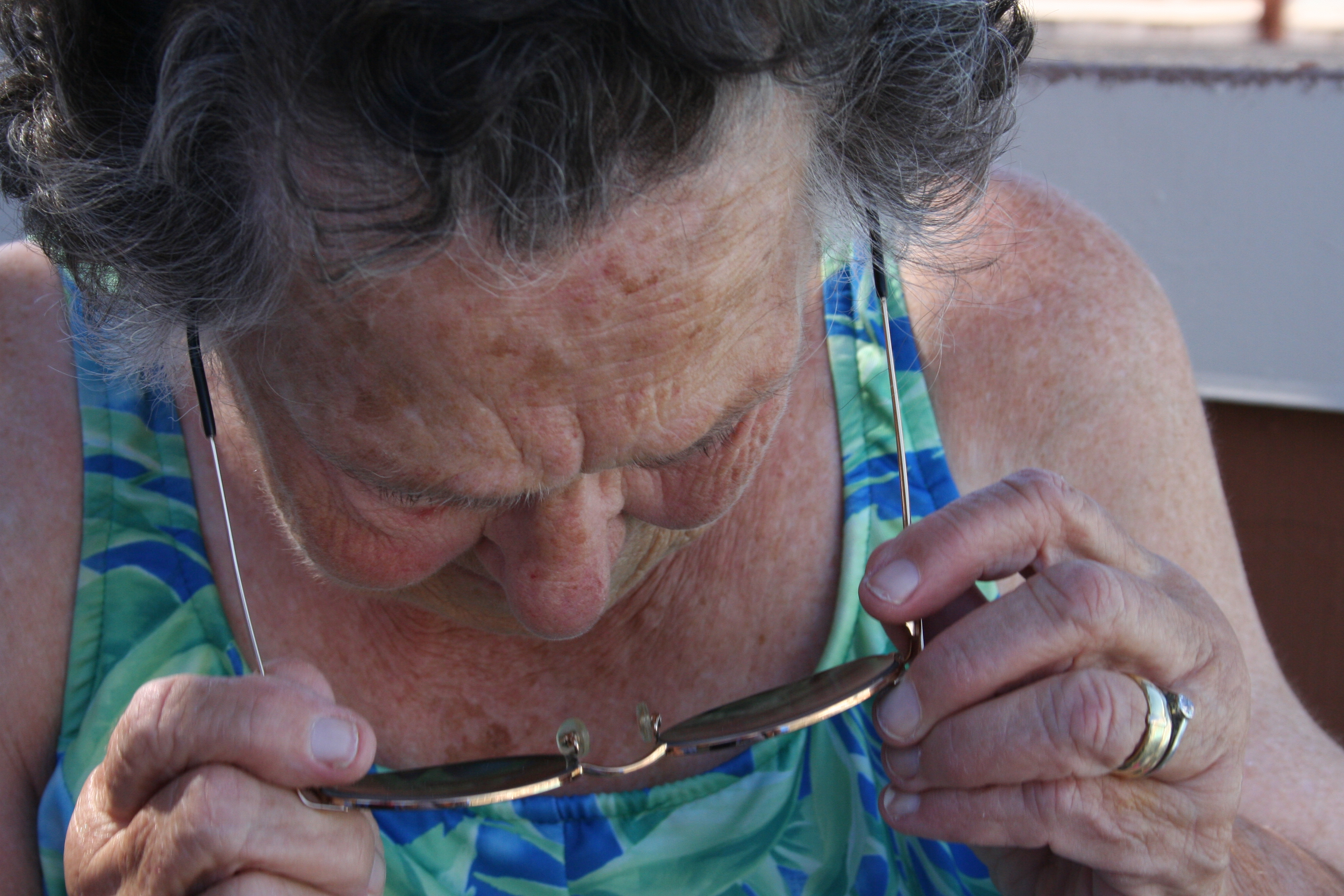
Oma, my maternal grandmother, during our weeklong visit this month. She is a goofball.
I thought I knew Oma’s stories. Back in middle and high school, when we were tasked with writing oral histories or interviewing elders, Oma was my go-to source. Growing up poor in Vienna. Marrying a camp-surviving Jewish man 20 years her senior, after the war. Emigrating in 1949 on a refugee boat and landing in New Orleans on Labor Day, only to wait another day on the ship because all the dock workers were on holiday. Being overawed at the opulence of Safeway on her first US grocery shopping trip. Discovering with horror that the racism she thought she had escaped was still being visited here on Blacks and “foreigners.” Even in America.
This story never made it into my school reports, though. I don’t remember when she started telling it (meaning, most likely, at what age she felt I was old enough to hear it). But now she repeats it on every visit. (What a perfect jigsaw-fit for aging: losing her short-term memory while vividly recalling her childhood. The ‘intelligent design’ of transmitting elder wisdom, huh?)
It goes like this.
*Trigger warning: rape, war, threatening with weapons, and vicarious trauma.*
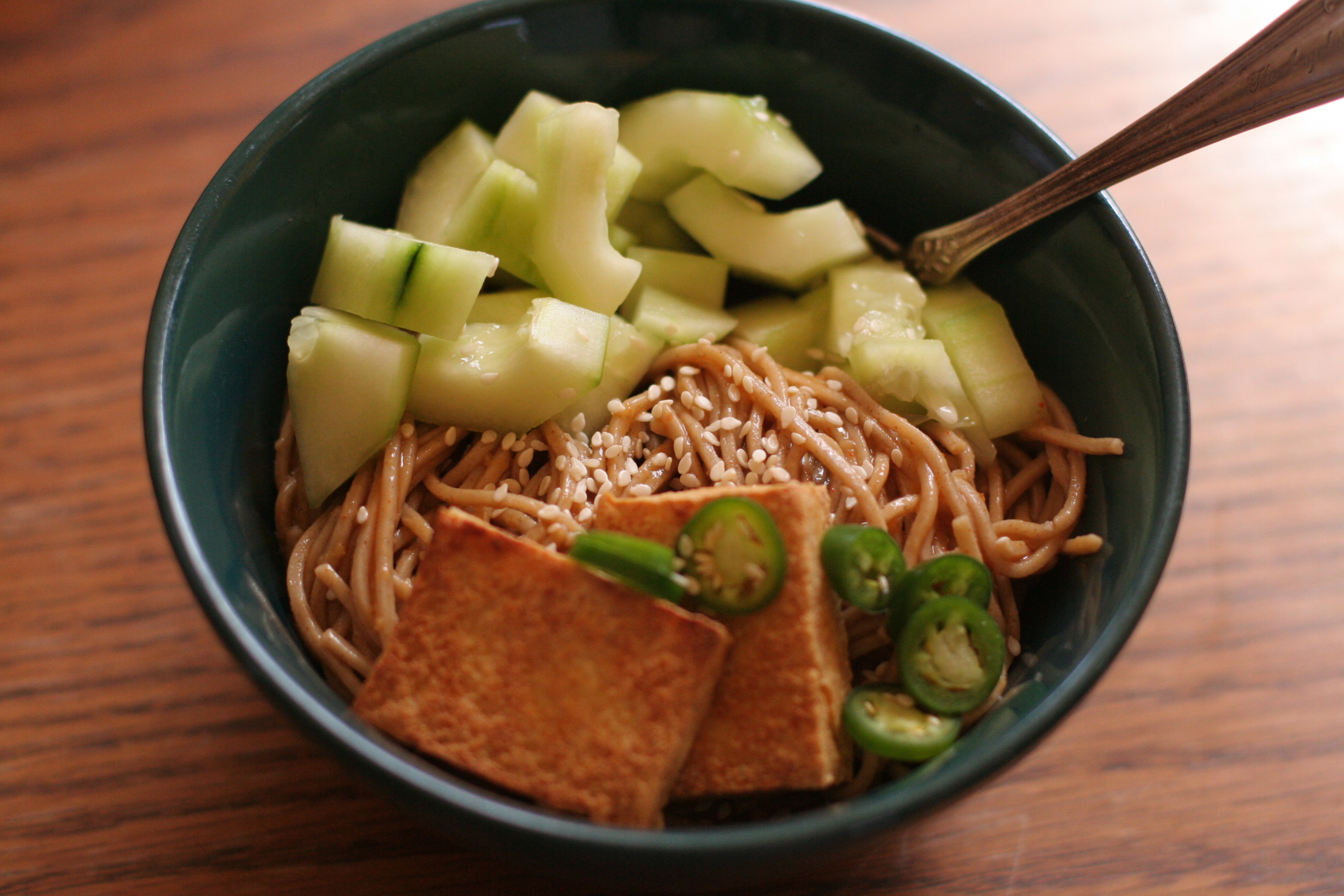
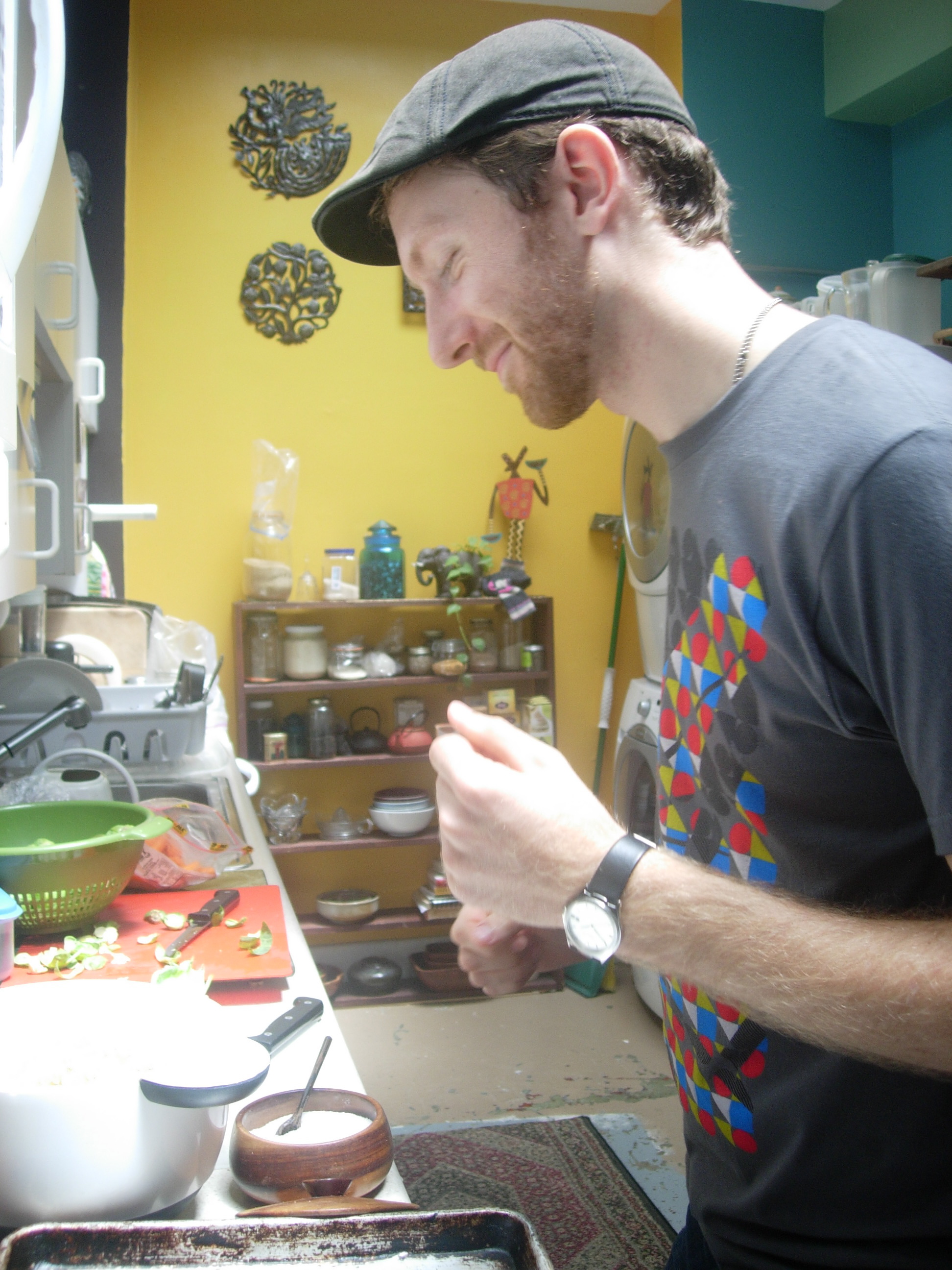
I made this the other night for a semi-potluck, and as usual,* it was a hit. Sesame-ginger-honey-lemon-cayenne dressing over buckwheat soba noodles, diced cucumbers, and pan-fried tofu, finished with sesame seeds and with green onions and cilantro, if I’ve got ’em on hand.
Swanson actually got this recipe from a restaurant here in San Francisco called pomelo. The in-store version is mighty tasty (their tofu is especially nice), but it’s simple enough to make at home — no outlandish ingredients or particularly finicky prep. (A food processor does come in handy, though.)
My minor tweaks: more cayenne, more cucumber. (I’ll use 1.5 or 2 cucumbers instead of one-half.)
I could eat this every day for a week, people.
Well, that’s true about a lot of foods. But this one especially.
Enjoy!
————————————————————
*One fairly disastrous exception was the time I tried to make it for my wonderful CouchSurfing hosts in Barcelona. The effort was doomed by my inability to find Japanese ingredients in Catalunyan grocery stores. The result was a brownish, ginger-less spaghetti slop with rock-hard tofu nuggets. Pretty humiliating. But they were totally sweet about it, bless their hearts. Maybe someday they’ll visit me in San Francisco and I can redeem myself with a proper version.
One weekend highlight: Saturday night, when clubbing plans fell through, Ryan and I did a little online digging and came up with a one-hour, five-dollar, group bachata lesson near Lake Merritt. In a senior activity center, as we discovered on arrival. Talk about a score.
Let me just say: a lot of these elders can dance. I find it so inspiring. And many of the most optimistic, vivacious old folks I know are deeply musical people who actively dance, sing, or play instruments. So when Ryan and I learn bachata, I really feel like we’re investing in a long and happy life.
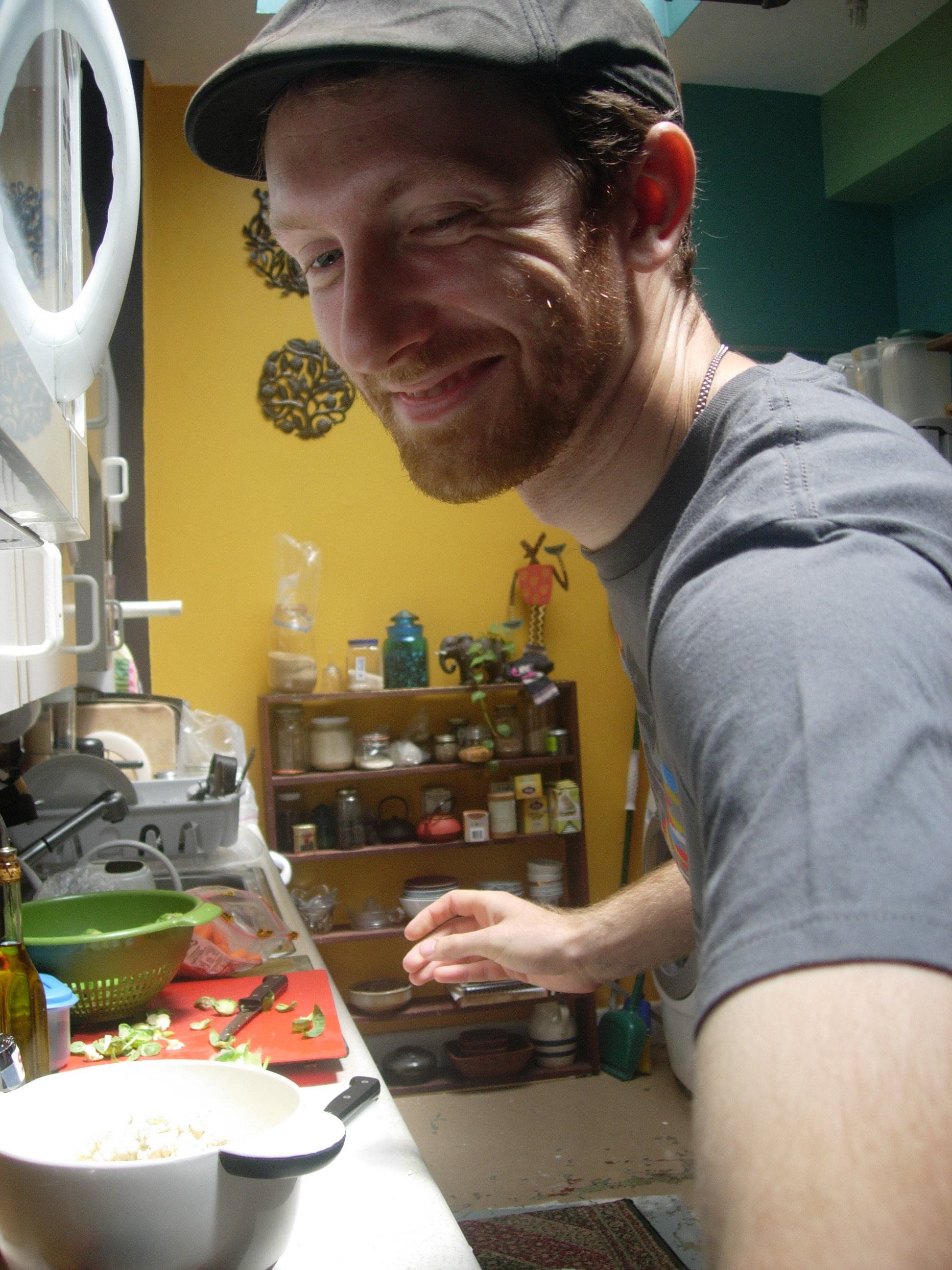
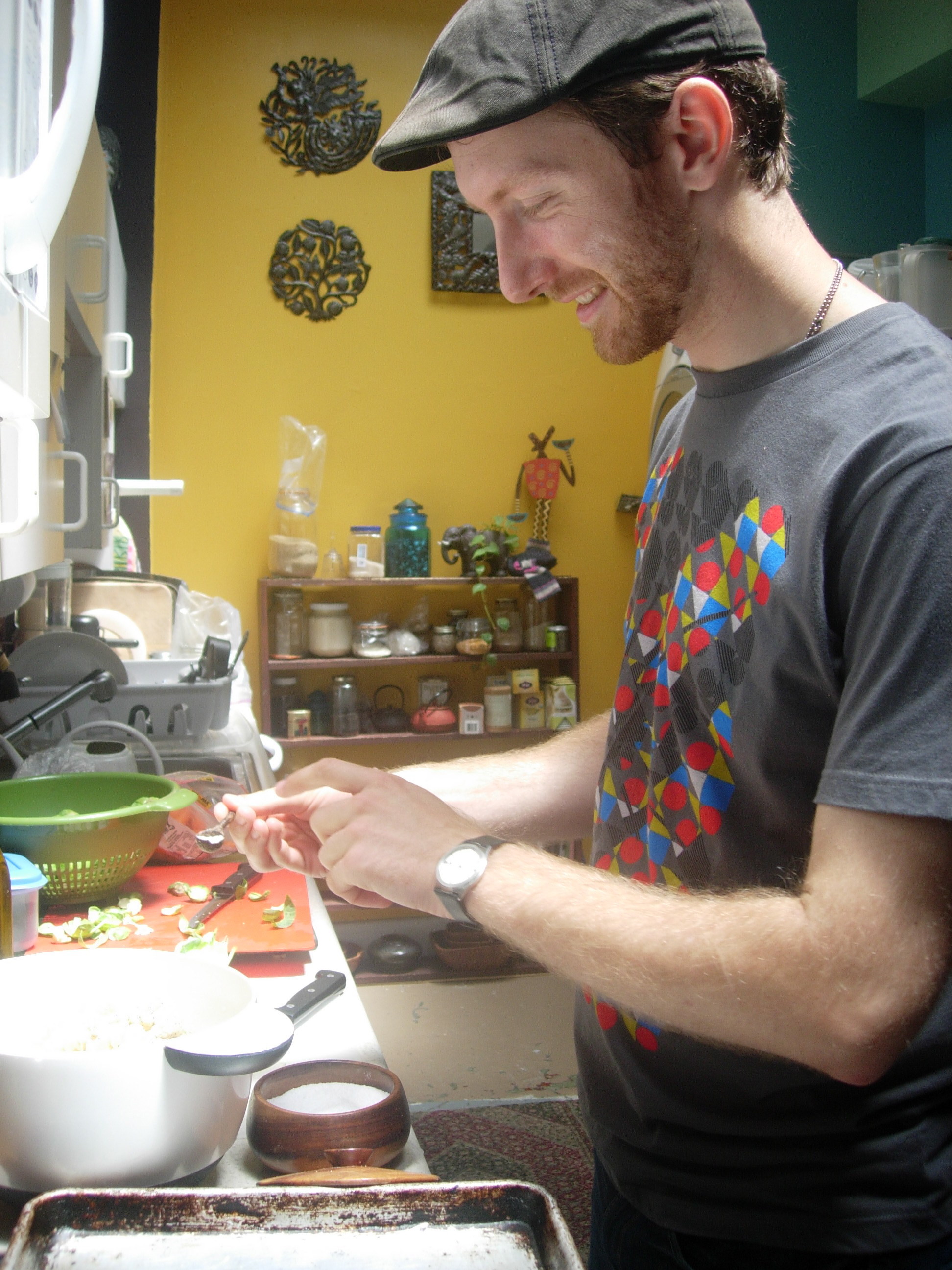
Bonus: practicing our moves while we roast a big pan of carrots, cauliflower, and b-sprouts.
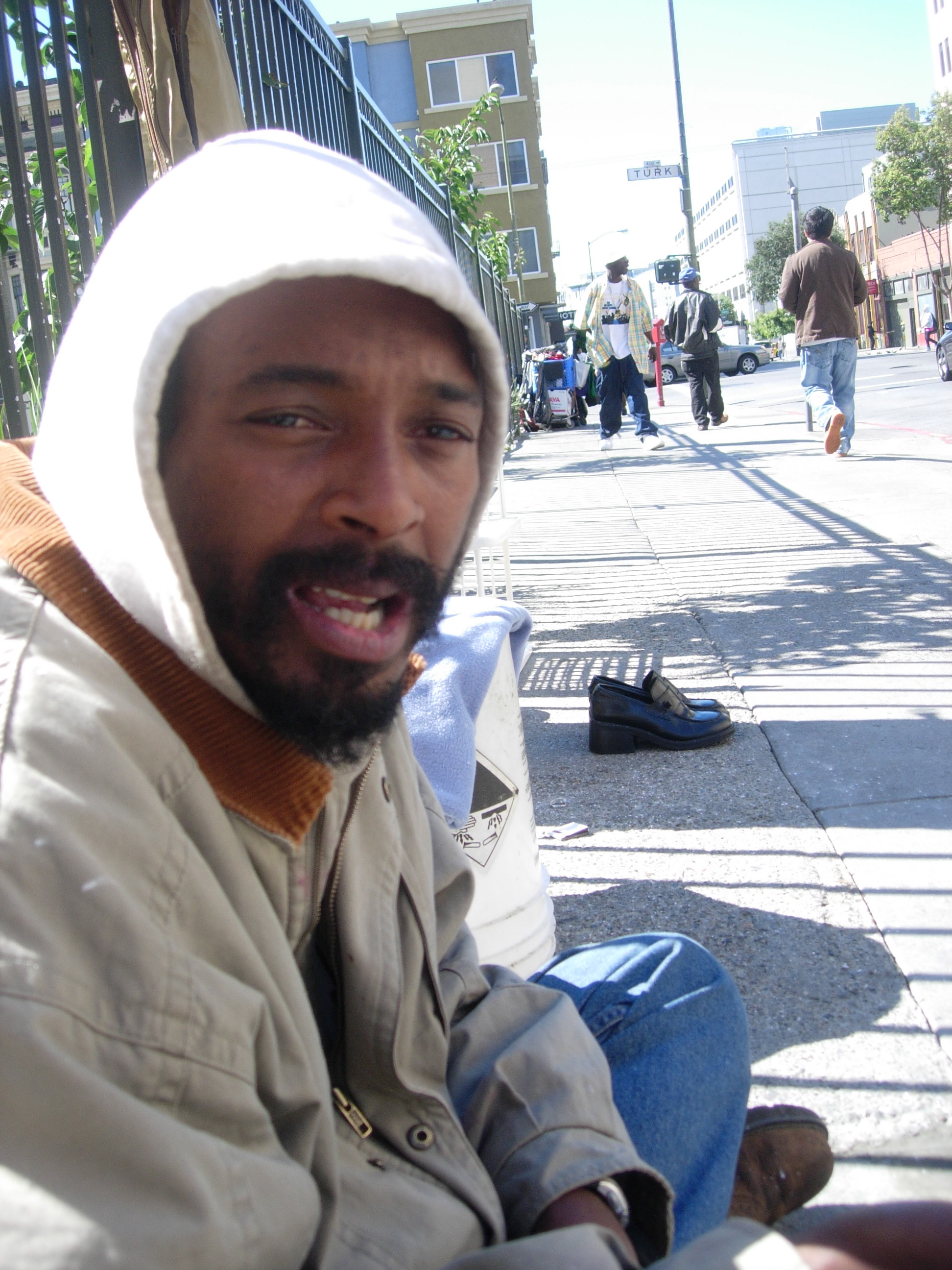
A little before 10 this morning I’m headed down the block to the donut shop to pick up our weekly Thursday dozen-and-a-half for interfaith Bible Study. And on my way back, just a few doors down from home, I see a man sitting on the sidewalk, spreading pennies on the ground and dusting them with baby powder.
“Fresh, clean pennies! One for a nickel!”
I couldn’t help but laugh. Now who could pass up a deal like that? So I ran inside, grabbed a nickel and my camera, and was treated to a long conversation with the salesman, a sweet guy and born storyteller who calls himself Hobo Joe.
Turns out we'd met on the block before and warmly recognized each other. Love when that happens.
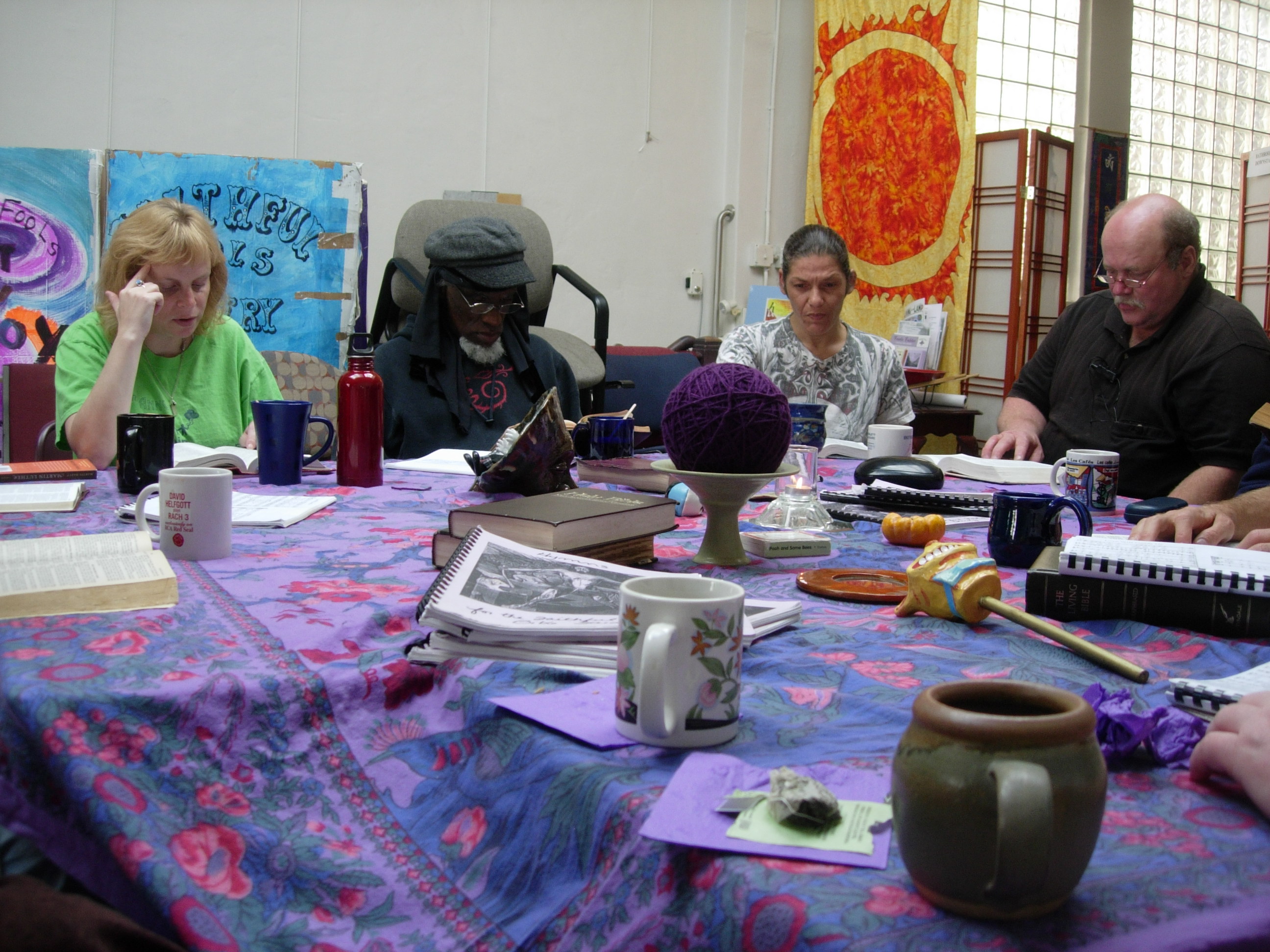
And Bible Study was beautiful, too: all the familiar faces, laughing and singing and sharing from our various Christian, Jewish, Buddhist, pagan, and Unitarian Universalist perspectives.
For those who’ve recently tuned into Kloncke, I should explain that I both live and work at this community center/homeless outreach nonprofit/street ministry called Faithful Fools. So Thursday morning Interfaith Bible Study (which follows the morning meditation in our downstairs Street Zendo) is both work and home for me.
From left: Abby, Ra Mu, Gina, and Bobby
Don’t know what brought it on, but I felt especially lucky and honored to be here this morning.
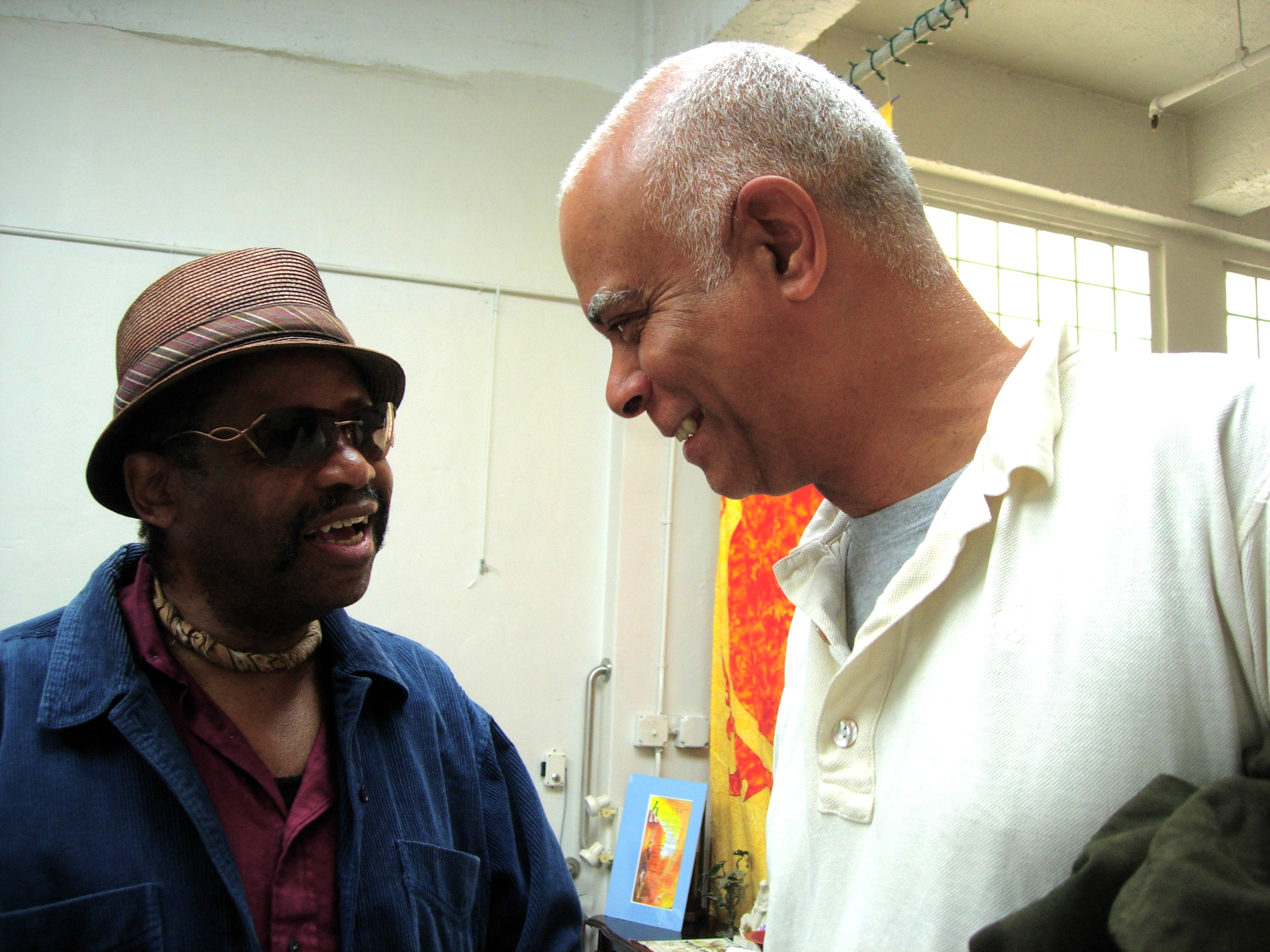
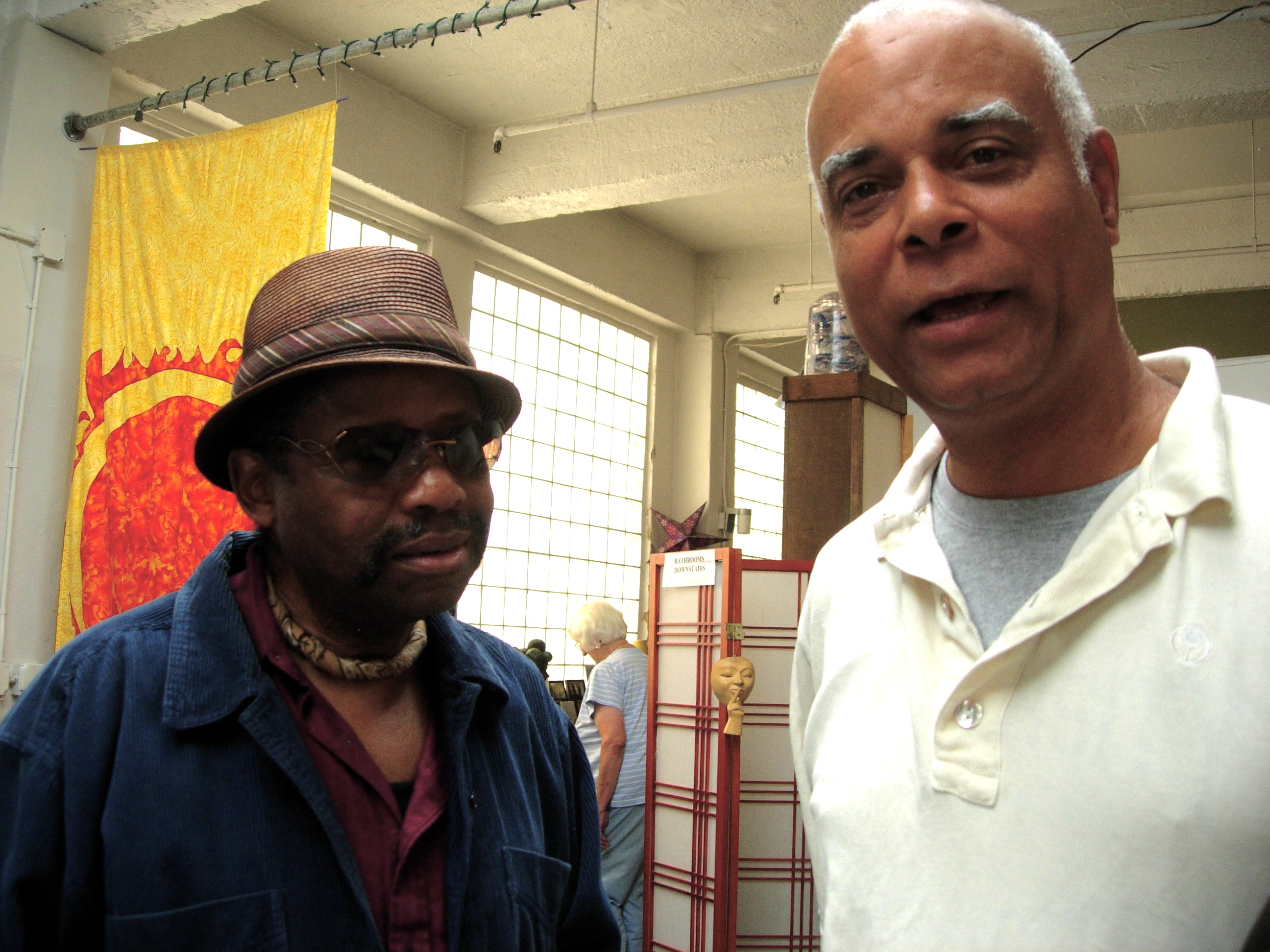
JR and Charles causin trouble as usualTwo great artists, philosophers, theologians, and very cool cats.
Honestly, I’m not sure I’d ever even tried carrot soup before Ryan cooked up this batch on Saturday. If I have, its memory was totally and completely overshadowed by his gingery, sweet, spicy phenomenon-in-a-bowl.
How can a simple mixture of onions, olive oil, broth, carrots, ginger, cayenne, and cilantro wind up tasting like all the good things of the world combined? (Then again, that might just be an effect that all super-delicious foods have on me. I said the same thing about my friend Cat’s organic honey one time — that it tasted like chocolate and the sea and all earthly deliciousness.)
When I was about ten, my very favorite outdoor colorscape was a kind of calm, rich, horizontal trio of soft gray, dark brown, and brilliant green. You know how we associate scent with memories? Color works the same way for me (and probably for many of you, too). One or two shades can evoke a whole time and place and mode of being. Clay red and robin’s-egg blue bring me back to a wet walk through a southern Indian suburb. Rusty orange is the color of Barcelona. And yellow is the color of my bedroom: for nearly a decade, whenever and wherever I’ve been able to paint my walls, they’ve always turned out some kind of buttercup or saffron.
Yesterday I reconnected with color thanks to some more helpful tips from Soren Gordhamer’s book Wisdom 2.0. He says that in order to take a real break from computer work, we should try to (a) reduce information intake, (b) breathe deeply, (c) go outside (important one for me to remember!), (d) move around, and (e) keep communication to a minimum (147-148). So we should not, for example, read an article or catch up on a webcomic or play a computer game or text a lover or watch a TV show, even for fun. The most effective resting happens when we relax our discursive mind altogether, and anchor ourselves in experiences beyond screens and words.
With that in mind, I decided that instead of rushing to take the bus home and return to my reading, I would take my camera and meander around the Western Addition on my way back to the Tenderloin.
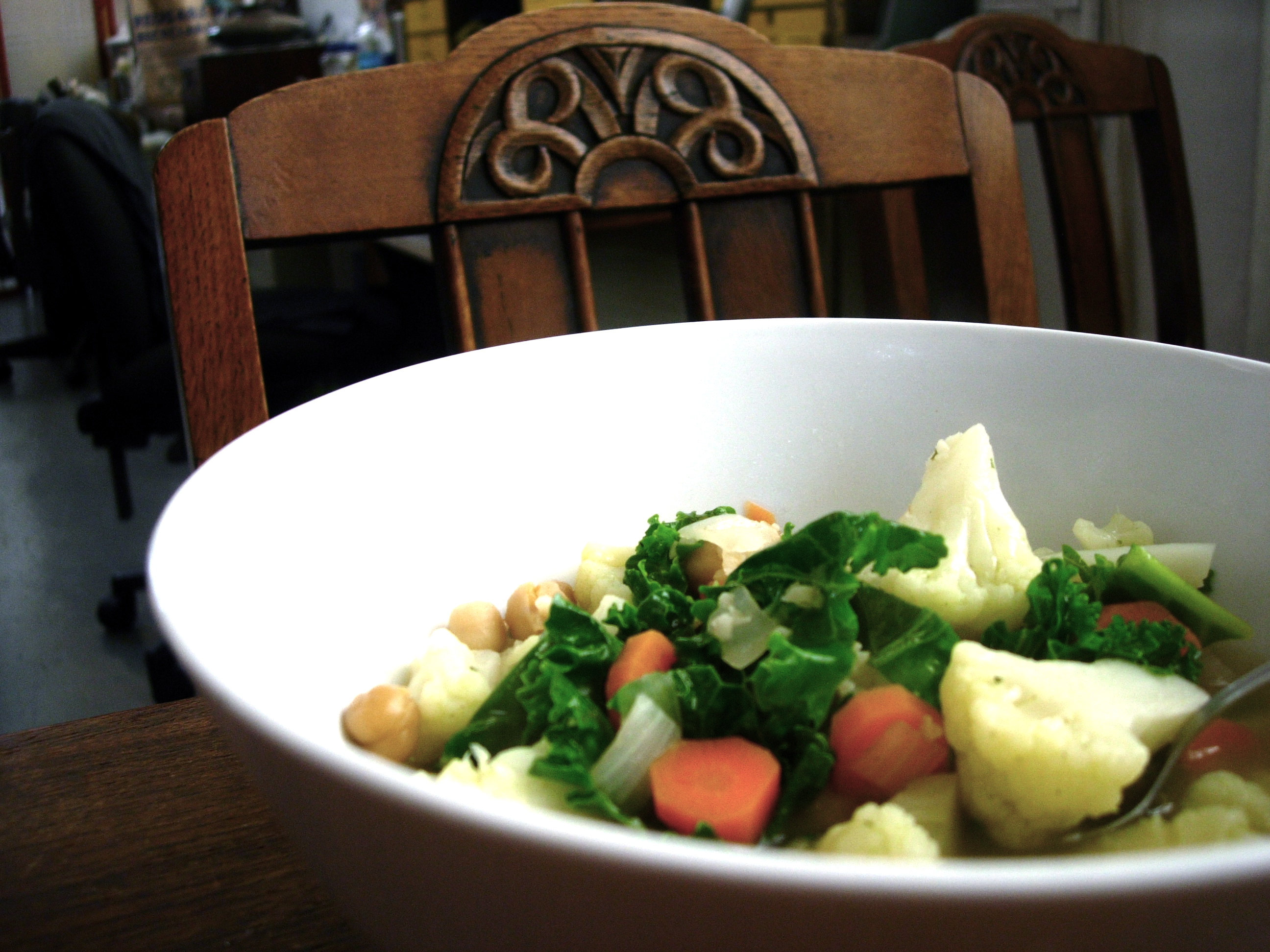
I’ve made this soup, oh, a kazillion times or so. And yesterday I made it again. Will never get sick of it. Kale and cauliflower (two all-time favorite foods) plus carrots, chickpeas, sautéed onions, and a little bulgur for texture and bulk — all swimming in a full-bodied broth deepened with olive oil, spiked with habanero peppers, and brightened with a surprising secret ingredient: orange juice.
My “recipe” (more like “ritual” at this point) riffs off of Heidi Swanson’s lovely Chickpea Hotpot. I’ve adapted it to my tastes and lifestyle, which means the following.
Lifestyle: I like spicy things. A lot. One time I said as much in a food writing workshop, and the professor asked me ‘What I think that’s about.’ I don’t really have an answer. In go the habaneros.
Tastes: I prefer to use produce by the bunch or half-bunch, rather than by the cup or whatever. It’s not some sort of naturalist statement (refusing to divide a God-given head of cauliflower into civilized units), but pretty much a matter of convenience. So in the end, my soup winds up chock-full of imprecisely quantified produce, good to get me through half a week at least.
One key aspect of this soup is the broth. If the broth you use doesn’t taste good, the soup won’t taste good — so find one you fancy. Personally, I’m a die-hard fan of Rapunzel vegan bouillon cubes with herbs and salt. The only way to top it, in my mind, would be to call in my Oma to cook up her matzoball soup: simmered the old-fashioned way with a chicken in the pot, parsnip, celery, onions, carrots, all kinds of who-knows-what magic, plus…a package of Lipton’s soup mix, her tried-and-true American twist. Don’t know how it works, but it does. Now that I abstain from chicken, this comforting cauliflower-kale number is the closest I’ve come to recreating those childhood days at Oma’s house, nursing a steaming, white-and-blue, old-Jewish-lady-type bowl of pillowy matzoballs and delicious liquid gold.
Enjoy, friends! See y’all next week.
Katie’s Kale and Cauliflower Soup, a.k.a. What Oma Would Cook If She Were Vegetarian
1 yellow onion
1, 2, or 3 habanero peppers, halved (careful not to touch your eyes after you touch the seeds!)
2/3 cup uncooked bulgur
3 cubes Rapunzel bouillon + 5 cups water, OR 5 cups veggie broth
a few glugs of olive oil
1 small head cauliflower, cut into trees
1 small bunch kale (depending how big the bunch is — prob’ly half of 1 supermarket unit)
3 carrots, peeled and cut into discs
1 can or so cooked chickpeas
(or you can cook them yourself beforehand — like a coffee-mug’s-worth of dried beans)
a couple pinches of salt
1/2 cup OJ
cilantro if you’ve got some handy
———————–
———————–
Dice the onion and throw it into a big soup pot, bottom coated with olive oil, over medium-high heat. (That’s 4 or 5 out of 7 on my dial.) Halve the habaneros and toss them in, too. Sautée until the onions are translucent and yummy-smelling.
Meanwhile, measure out your water and bouillon cubes (or broth, if that’s what you’re going with), and start chopping your produce. When the onions are translucent (about 5-10 minutes), add the bulgur to the pot, stir, and add broth/bouillon + water. Leave it alone for a while and finish chopping your cauliflower, carrots, and kale.
After 15 minutes or so, add the cauliflower; a couple minutes later, throw in the carrots. Save the kale for last so it stays nice and green. Remove the hot peppers before the pot gets so crowded you can’t find them anymore.
When the cauliflower is just about tender, toss in the chickpeas (already cooked, so they just need to get nice and warmed through) and add orange juice. Taste the broth and adjust as necessary: more salt, olive oil, and/or orange juice. Turn off the burner and then add the chopped kale, stirring it in so that the heat just barely cooks it through and you still get that nice crunch and structure.
Ladle into bowls and sprinkle with chopped cilantro, if you’re into that.
It’s amazing to think back six months to when I first arrived in the Bay Area, with nothing to do but look for work. No major activities, no responsibilities to anyone. How can things change so much in six short months?
Faithful Fools: apprenticing with Tenderloin spiritual-realist matriarchs
Art school: blogging and theorizing; submitting monthly assignments
Political education: post- organizing for March 4th, now regrounding myself through study groups
Dharma: deepening my daily meditation, seeking out communities of advanced practitioners
Relationships: a partner, a posse, friends, family, and a few animals
Yeah, it’s feelin’ like a lot.
And I’ve been hanging on to the blogging for dear life, trying like heck to publish every weekday. But the truth is, that kind of frequency costs me the time to consider the meta-questions, to develop my nascent theories of mindful blogging. And that’s what I’m in grad school for, after all!
So for the next little while, I’ll be backing off on the daily posting, probably limiting it to three days a week. I’m genuinely surprised at how difficult this feels for me — how much of a sacrifice or failure it seems — given that, on multiple occasions, I’ve cheerfully abandoned the blog for months at a time. So, as Shaila Catherine might observe, this becomes my work for the moment: developing equanimity in letting go and switching up the schedule.
Spiritual practitioners thrive in unpredictable conditions, testing and refining the inner qualities of heart and mind. Every situation becomes an opportunity to abandon judgment and opinions and to simply give complete attention to what is. Situations of inconvenience are terrific areas to discover, test, or develop your equanimity. How gracefully can you compromise in a negotiation? Does your mind remain balanced when you have to drive around the block three times to find a parking space? Are you at ease waiting for a flight that is six hours delayed? These inconveniences are opportunities to develop equanimity. Rather than shift the blame onto an institution, system, or person, one can develop the capacity to opt to rest within the experience of inconvenience.
A welcome reminder. And a very helpful practice for those of us with wee control issues. Just yesterday, when I found myself spiraling downward into disappointment and resentment at canceled plans, I remembered equanimity. And my disappeared dinner date transformed into a chance to walk, for the very first time, around Oakland’s lovely Lake Merritt.
Gorgeous late afternoon and evening, complete with a sweet springtime surprise.
So who knows — maybe this downsizing of the blog will open up some other opportunities. Regardless, I’m happy for the chance to practice letting go.
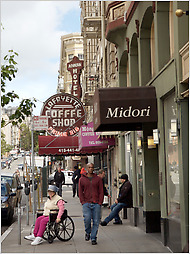
I honestly don’t have much to say about this article from the NYT (lead photo taken directly in front of our home at Fools’ Court) on a potential new tourism trade in San Francisco’s Tenderloin (TL) district. The backward priorities, exploitation, and opportunism seem pretty obvious to me.
Encouraging adventure-seeking San Franciscans to visit may be easier than selling the Tenderloin to tourists, city tourism officials say. Laurie Armstrong, a spokeswoman for the San Francisco Convention and Visitors Bureau, called the recent efforts “a step in the right direction,” but added that it was a “very, very long road” to make the neighborhood appealing.
Appealing to whom? Not the people who live here, but outsiders — with money to spend. The bright side here, I suppose, is exposing the persistence of the trickle-down mentality that drives city planning. Promoting tourism will supposedly help businesses, which will supposedly help…homeless folks? Not likely. Most stores around here won’t even let you in to use the bathroom if you look like you’ve spent the night on the streets. Which might appear to be the case even if you do sleep inside, in a shelter or SRO: single-resident occupancy.
Just a couple days ago, at the feminist Marxist study group at the Faithful Fools, we talked with Diane, a longtime visitor to the Fools, about her experiences living in an SRO. It’s sort of like a jail, she said with a chuckle. You’re permitted a limited number of visits every month. (8 per month is the max at her place, she thinks.) Since you can’t have more than 3 people per room, a single mother with three children is out of luck. There are no kitchen facilities, turn-of-the-century wiring (making personal cooking devices surefire circuit overloaders), and one communal microwave for all 150 tenants. You’re supposed to get 24 hour’s notice before anyone comes to inspect your room, but managers rarely honor rules like that.
Diane teaching Ryan some dance moves.
Not to say that SROs are no better than sleeping in doorways. But investing in them as tourist attractions? How exactly is this helping to create, as Gavin Newsom claims, “a positive identity for the Tenderloin”? Why not tax rich people (a.k.a. wealthy tourists and corporations) and put funding directly into improving and expanding housing? Making it a human right in practice, not just in theory? Of course, the city instead assists landlords who evict low-income tenants in order to turn rental units into condominiums (through legislation like the Ellis Act, which Diane was explaining to us). Meanwhile, the thousands of housing units currently vacant could easily eliminate homelessness altogether.
Forget appealing to tourists. Personally, I’d rather the folks of the TL follow the lead of Homes Not Jails, who just a week ago occupied a vacant building, resisting eviction and declaring the duplex public property. Organizing in opposition to state-supported capitalist institutional violence would give the Tenderloin a much more “positive identity,” in my mind, than million-dollar slum museums and “hundreds of [fucking] plaques on buildings throughout the neighborhood.”












 Kloncke