Via cnekez, keeper of the beautiful blogspace to live (def):.
Interviewer: Isn’t love a union between two people? Or does Eartha fall in love with herself?
Eartha Kitt: [Smiles] I think, if you want to think about it in terms of analyzing … Yes. I fall in love with myself … and I want someone to share it with me. I want someone to share me with me.
Seems to me that Eartha Kitt (a singer, dancer, and actress) is talking about falling in love with the whole world. Even with the interviewer — asking those leading, loaded questions.
She cuts right through his seeming innocence (or cluelessness?), mocking the true misogynistic subtext: that a woman is incomplete without a man (hello, heterosexism), and that in order to make love ‘work’, women have to ‘compromise.’ (And in this sexist, racist society, we know what that means, y’all.)
To me, this scene is a profound display of pitch-perfect compassion. As Khandro Rinpoche says, “Compassion is not about kindness. Compassion is about awareness.” She is on some next-level shit here. And she is sharing it.
What does it mean to fall in love with oneself (“for the right reason; for the right purpose”)?
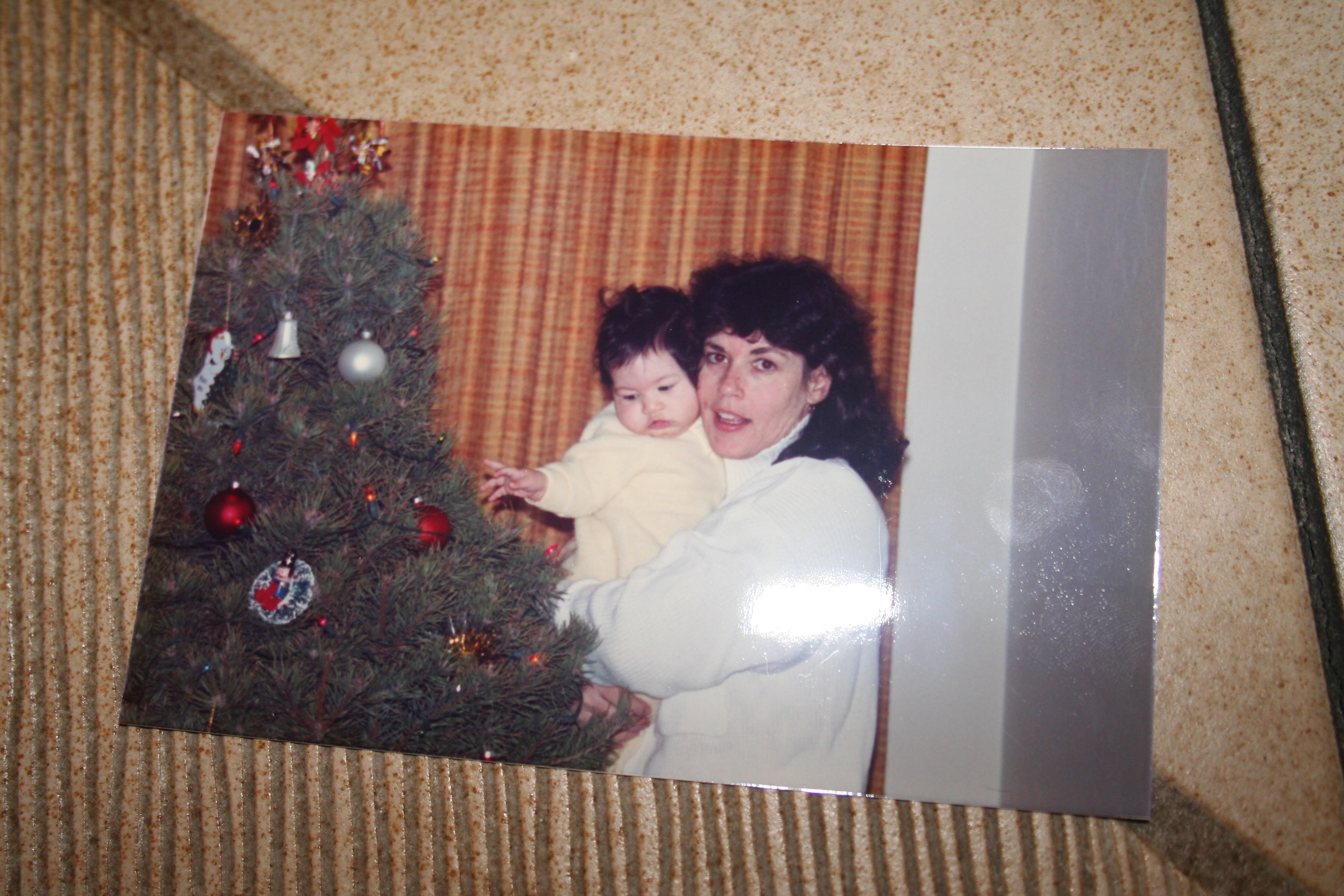
My mama and me, sometime around a December 24th, judging by the object of my interest
No, I’m not referring to Baby Jesus. It’s my mama’s birthday today! All the holiday furor tends to obscure it, of course — horrifically, I’ve even forgotten about it myself, a year or two. And whether it’s because her birthday has always been overshadowed, or she simply doesn’t put too much stock in it (chicken or egg?), December 24th tends to be a low-key affair for her.
Today, we spent a long, sweet afternoon painting pottery with Ryan at one of those places where you…paint pottery. Can’t wait to show you those photos. Ryan’s mug depicts a maritime scene with sea creatures conspiring against a battleship.
For now, here are a few assorted of my time in Sacramento: the birthday present I made my mom (a real old-fashioned analog photo album of my time in college. Super cheesy, but she loves that stuff); a dinner party with high school friends (starting with Richard’s gorgeous fried chicken, from a recipe in ad hoc at home); etc.
However you interact with it, I hope this weekend finds you well, healthy, safe, and happy.
Hey friends! Thank you for the rich discussion in the last post, on communicating with our elders. I’m always so humbled and grateful for the open, honest reflections that people share in this space. And that’s part of why this weekly practice of blogging continues.
Speaking of practices, I’m on a mission to cultivate more traditions and rituals in my life. Little anchors and measuring sticks for relating to change, and the passage of time, in a slightly different way. (Note: I love the weekly butcher-shop ritual described in this gorgeous essay by a dynamic/post-/questioning vegan; link via Napaquetzalli and Ernesto.)
One ritual that I’ve been recalling lately dates back to 2008/early 2009, when I lived in Central Square, back in Cambridge. My friend Jen turned me on to this weekly program on an independent radio station. “The Secret Spot.” Old-school and R&B jams: from Erykah Badu to Teddy Pendergrass, D’Angelo, Aretha Franklin, Chaka Khan, Lauryn Hill, Al Green. I LOVED The Secret Spot. And on Saturday nights, I would light some candles in the living room, turn down the lights, cozy up with a blanket in my favorite armchair, and listen. Sing along, too, if the apartment was empty (which it often was — this being Saturday night, when my fellow twentysomething housemates were typically engaged in more age-appropriate activities).
Of the four commonly-cited inescapable sufferings (birth, old age, sickness, and death — sidenote: why puberty-slash-adolescence didn’t make the list, I don’t know), lately I’ve been getting acquainted with the latter three. Dad has veered sharply and suddenly toward death in the past four months. (Thankfully, after this most recent spinal surgery a week ago, he’s recovering well.) And during our time in Nicaragua, I saw more closely than ever the way that my boss, teacher, friend, and a co-founder of the Faithful Fools, Kay Jorgenson, is living with her advanced and intensifying Parkinson’s.
It’s common knowledge that us kids these days in the States are generally lousy at caring for, and living with, those who are aging, whose faculties are deteriorating, and who are nearing their death. As products of a youth-worshiping and death-denying environment, we perpetuate and acquiesce to behavioral and institutional forms of elder isolation, shaming, and neglect — from expressing disgust toward the sexuality of the old (particularly women), to casually off-loading Grandma into the iconic nursing home, eager to get on with business.
So how can we, as young feminists and/or students of dhamma, create and reclaim healthier practices for relating to elders? It’s too big a question to cover right here, but I wanted to approach one small slice of the issue: communication around diminishing abilities, and growing needs for assistance.
A common example is driving. We think Opa shouldn’t be getting behind the wheel anymore. He feels otherwise. How do we navigate this?
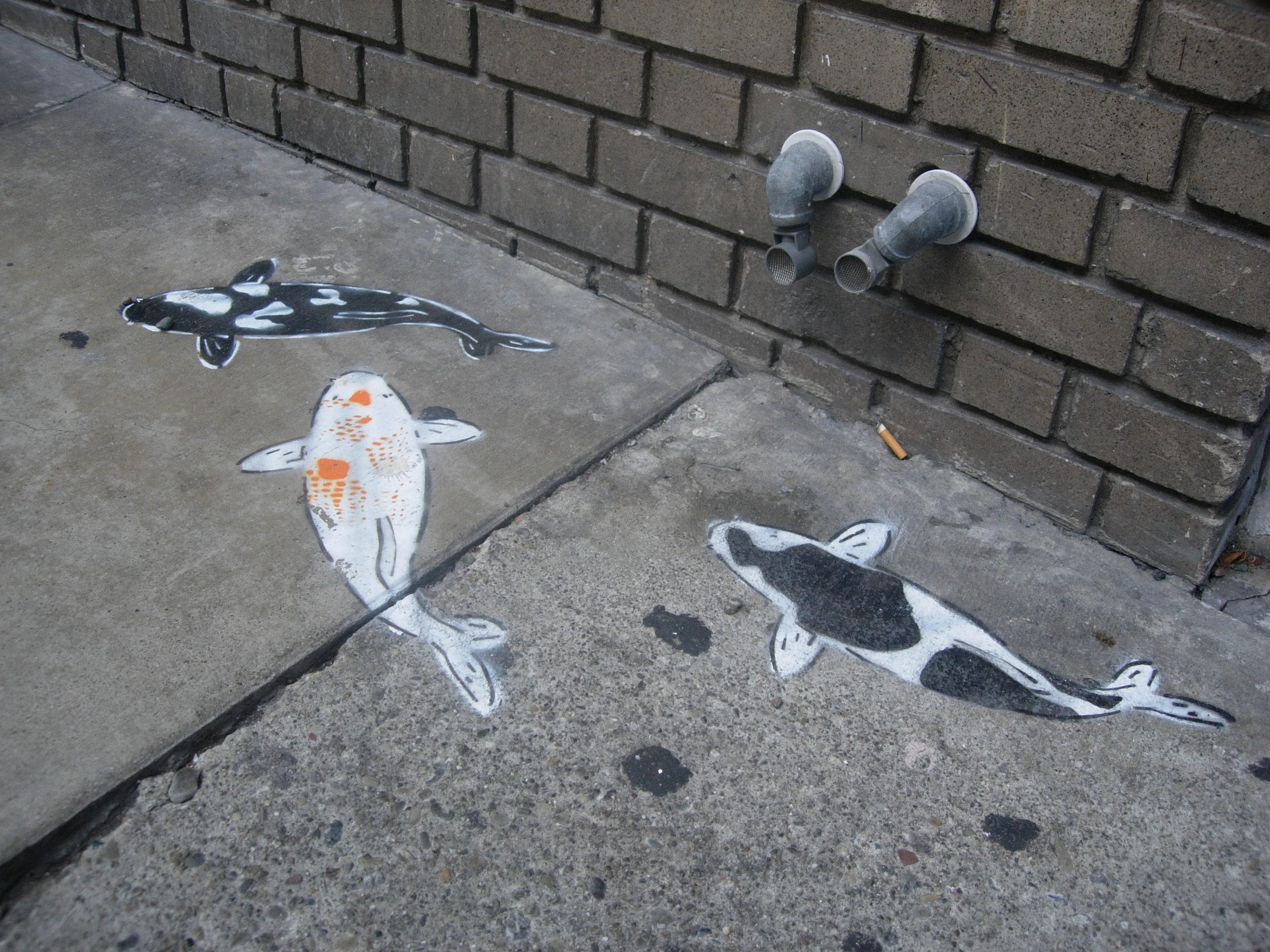
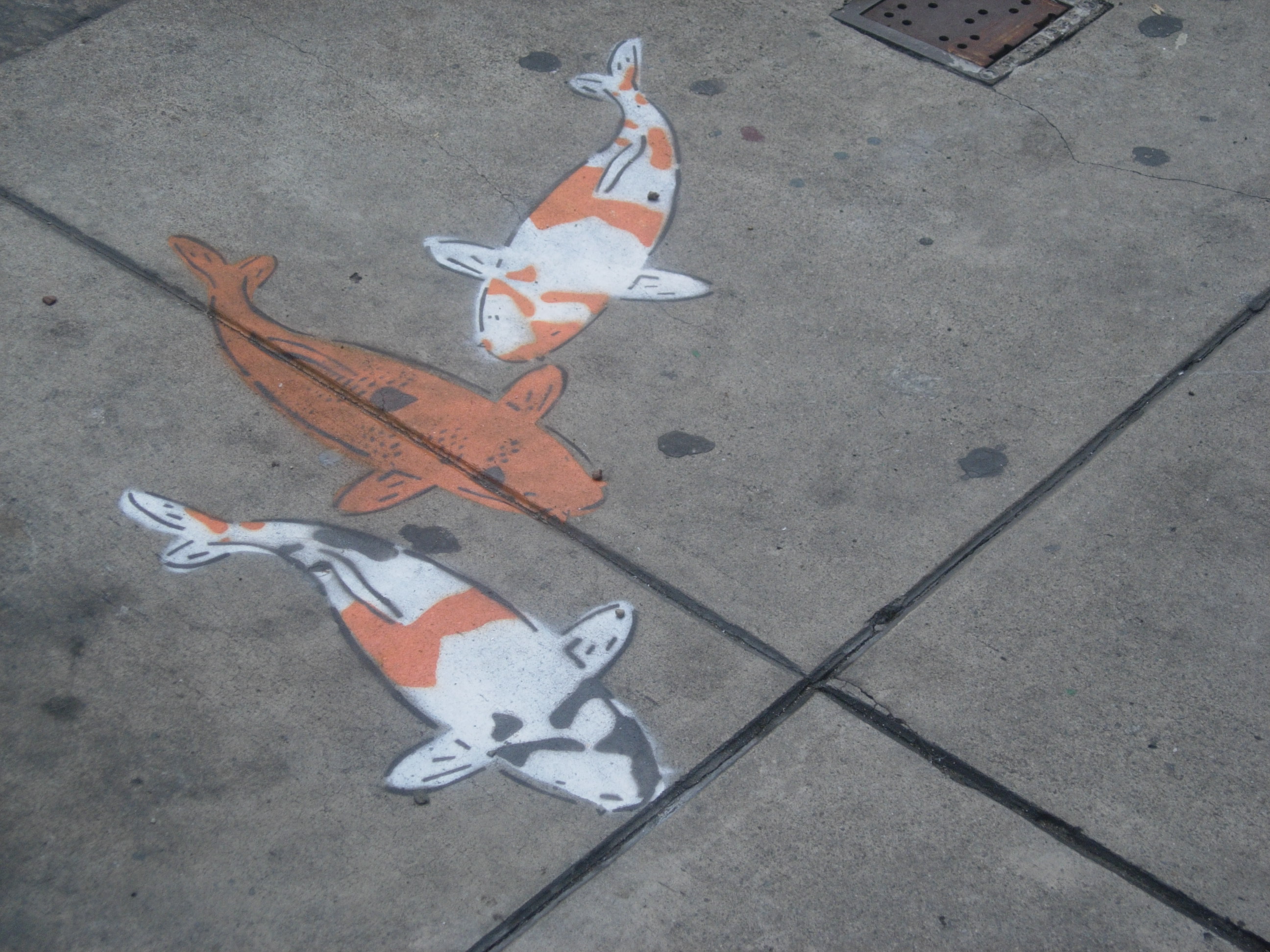
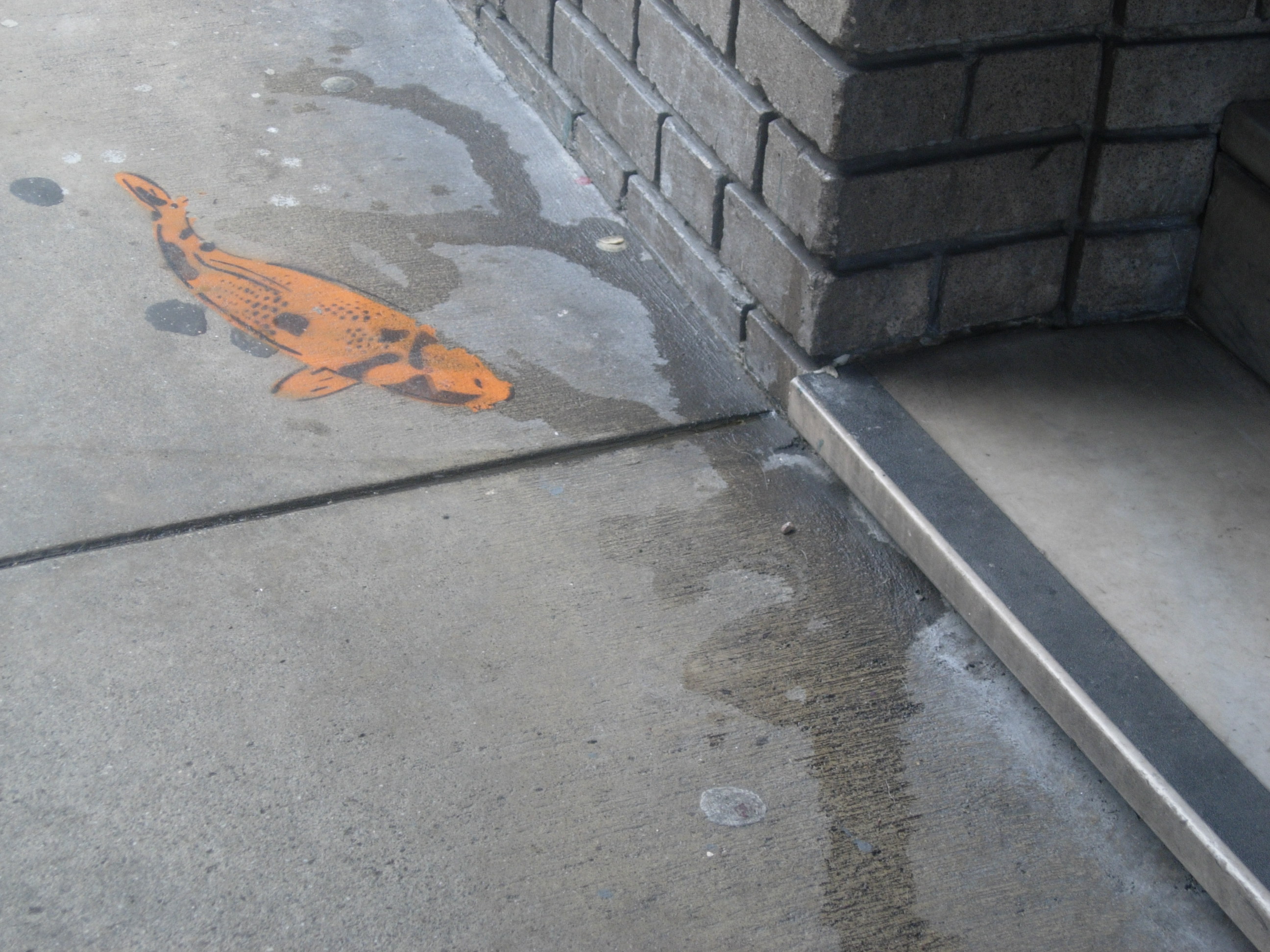
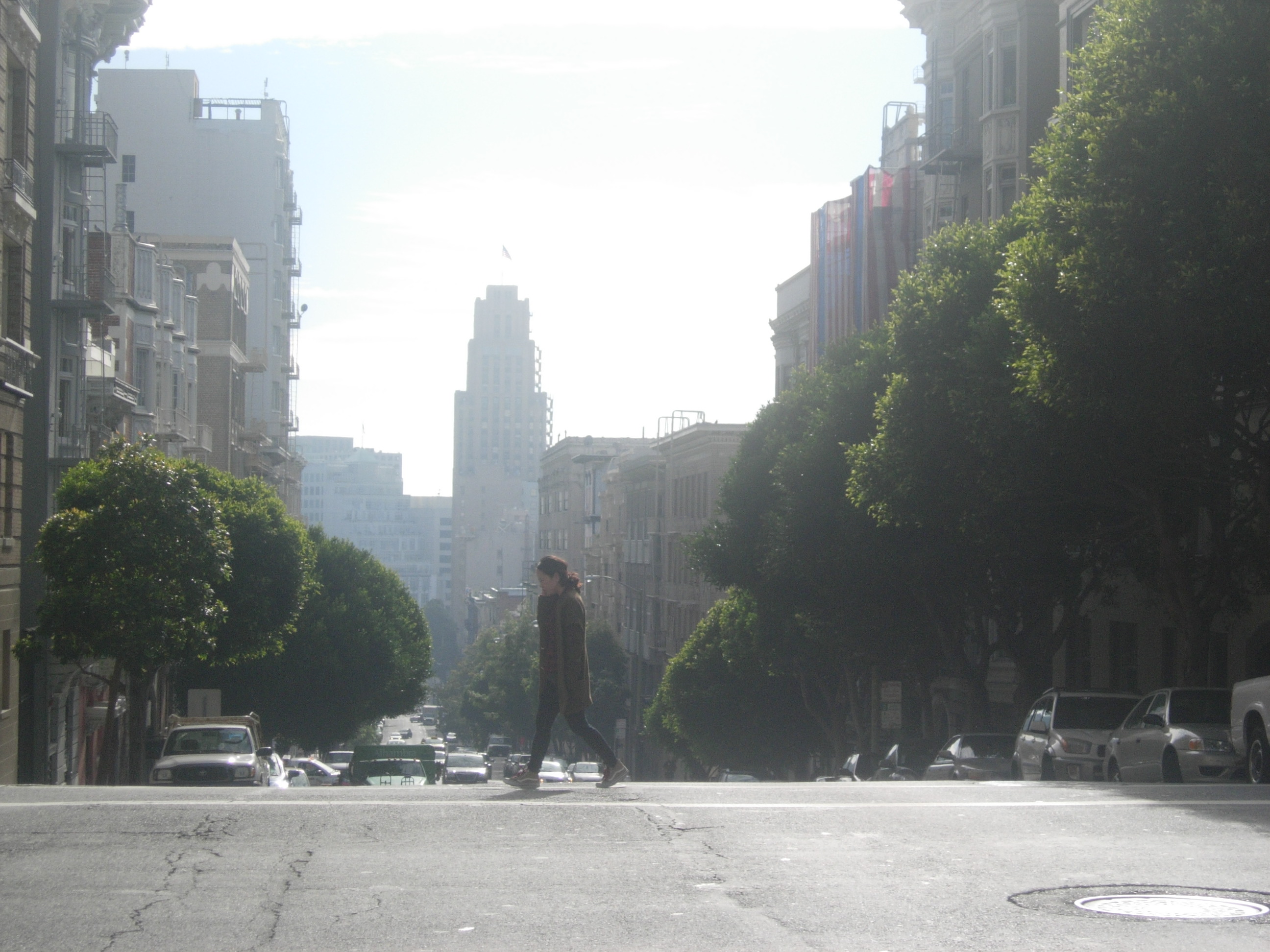
Photos from this morning's walk. In the last month or so, these koi have appeared on sidewalks all around my neighborhood. Thank you, whoever is responsible!
The official anniversary isn’t until the 9th, but tomorrow I’m leaving for 2 weeks in Nicaragua with the Faithful Fools (an annual trip they make to maintain relationship and community ties). Won’t be blogging from there, but thanks to the magic of technology, I’ll be able to ghost-post!
And what to publish?
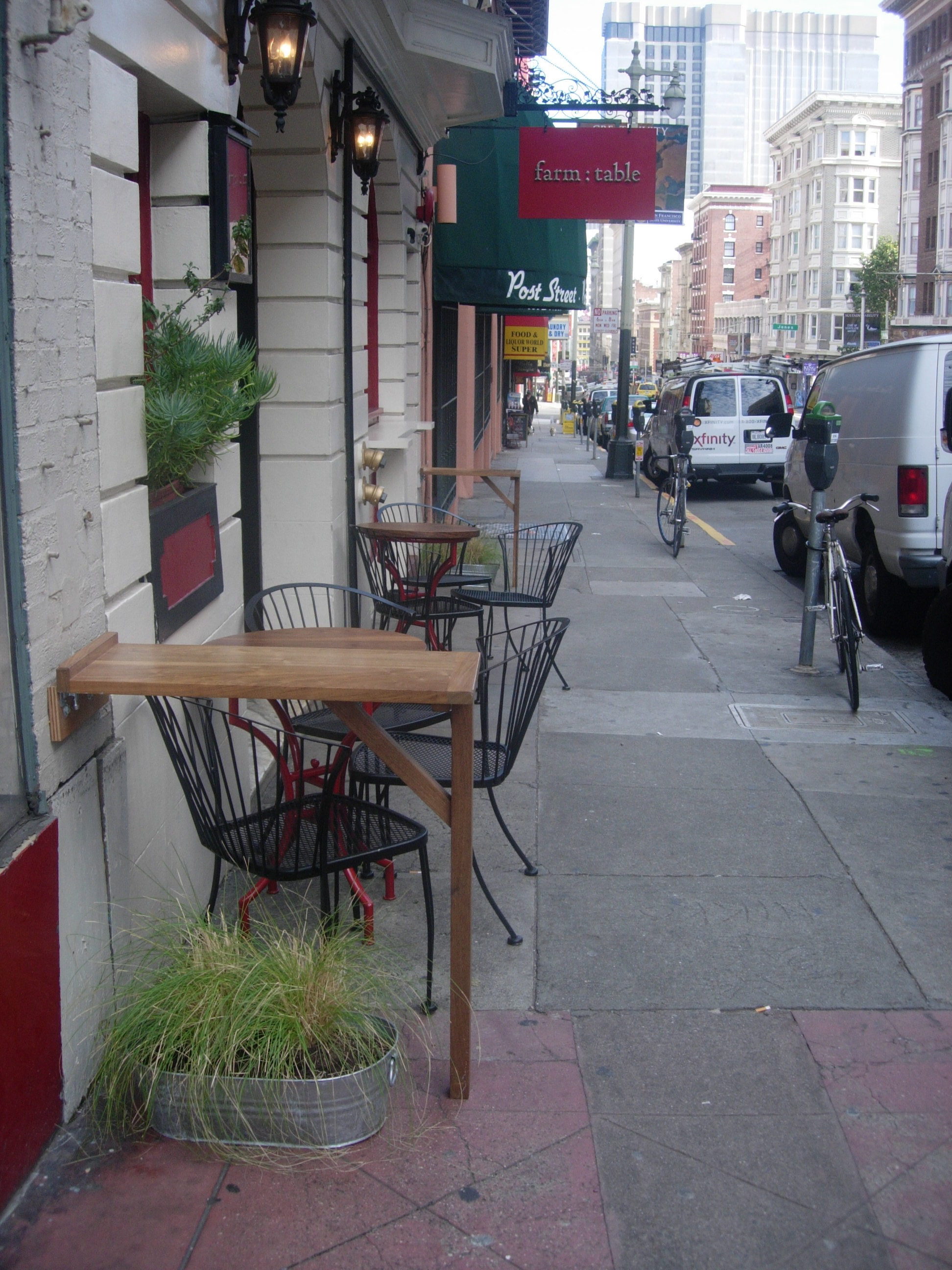
What I had for breakfast: farm:table daily toast. Brandied cranberry compote with apples and a drizzle of condensed milk, on German rye.
Well, for a long time I’ve been wanting to add a “Best Of” section, so that folks visiting for the first time will have a sense of what this place is all about. Kloncke presents a very eclectic mix (much like the mind, heart, and life of a human), and someone accustomed to niche writing might feel overwhelmed or turned off at first, especially if they don’t know me personally and don’t give a hoot about what I ate for breakfast. (See right.) So an entry point might be helpful. Hence, a retrospective: beginning today, ending on the 16th, each post a candidate for inclusion in the new feature.
farm:table
Looking back over the last two years offers some refreshing perspective for me, a reminder of the origins and evolution of this project. For instance: my photos at the beginning were blurry as hell! Hehe.
Seriously, though, in spite of the fact that it’s the traditional, political essays and longer pieces that have driven most of the traffic here, the foundations of the blog were explicitly a step away from my overly narrow fixation on politics as The Only Important Thing.
Honestly, the most gratifying, uplifting feedback I’ve received hasn’t been about solid analysis (although that’s lovely and appreciated, too). It’s been the friends who’ve told me that a video I made inspired them to call their grandparents.
Or that some photos I took changed the way they appreciated farmers’ markets, and the small picture-worthy subjects.
Or that a story I told, or an essay I quoted, helped them to reflect on their anger or approach unemployment with a “beginner’s mind.”
Political writings (inflected with dhamma) might be the biggest draw here, but the true basis of the project is much broader, less serious, and more honest.
A gown made out of condom wrappers, for a health benefit party
Even more important, I love thumbing through old posts to read the comment threads. Readers and commenters are what makes blogging so special to me as a form of writing. Less speech, more conversation. And given how terribly seldom I participate in comments on other folks’ blogs (a practice I hope to improve in the coming year! For an insightful essay on this lopsidedness phenomenon, check this post), I truly, truly appreciate every single comment that comes through Kloncke. Hearing from all of you is an unbelievable pleasure. So thanks!
Happy reading, friends. To kick us off, here’s the very first post, from 09 December 2008. What I find most interesting about it is my focus on embodiment. I was seriously psyched to be out of my headspace, and into my hands, hips, and feet! Thanks, old me. Excellent idea.
Friends, I’m sorry for the extended blog silence! I’ve been in a bit of a weird place lately. Evident in the state of my bedroom (look like a hurricane blew through), my online habits (browsing Texts From Last Night), and chronic mental tangents that destroy my book-reading abilities (more on that later).
Also, awareness is heightening around the matters that cannot be shared or discussed on this blog. Including: much of my work (for confidentiality reasons); specifics of my love life (for family diplomacy reasons); and my dad’s recent bouts with illness (for his-privacy reasons). As you well know by now, there’s not much about my day-to-day existence that I feel is too “private” or “sacred” or even mundane to share. It’s all life. But not all of life belongs in this blogspace. Gotta dance around some of it. These days, my figurative thighs are getting a workout.
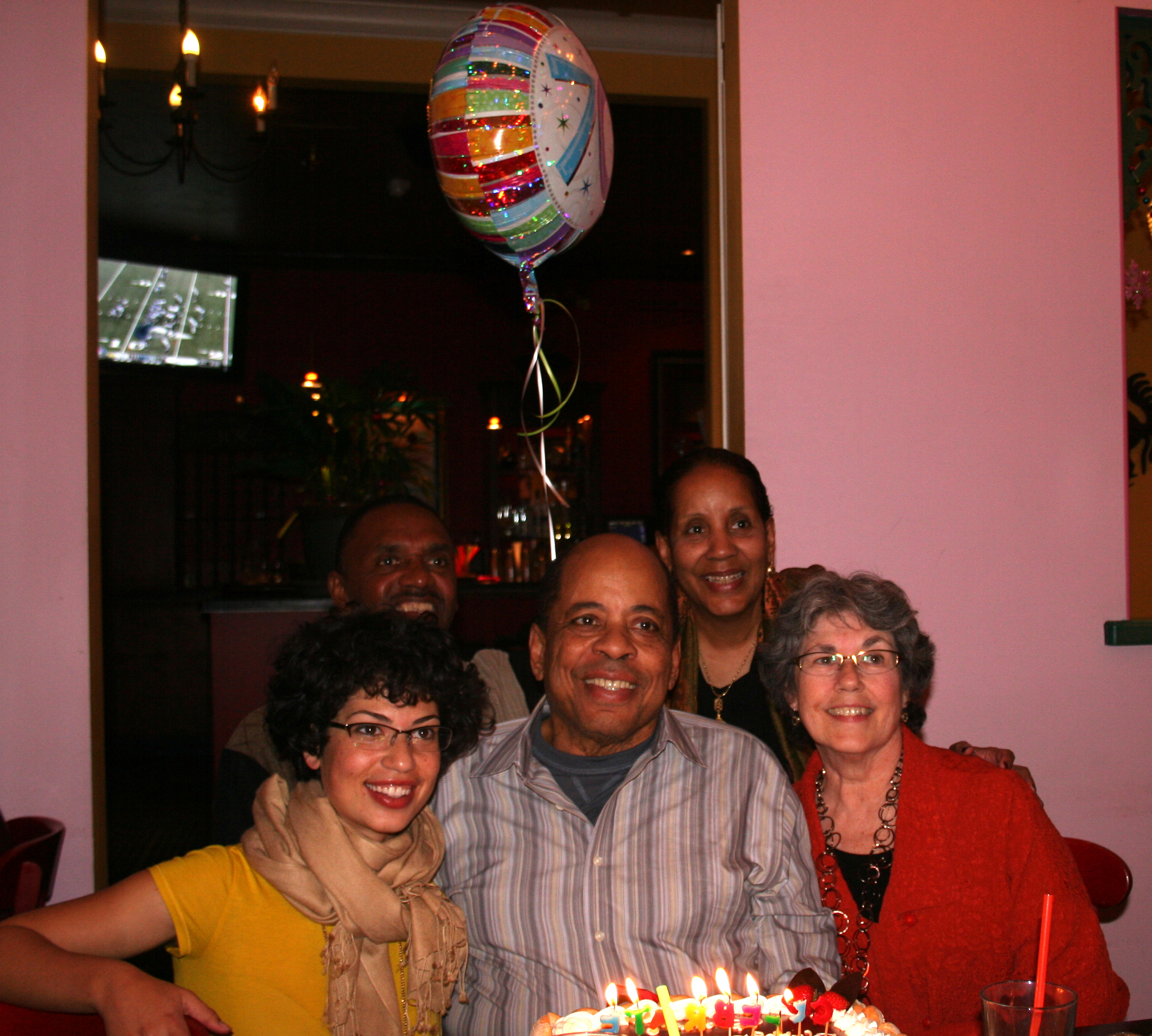
In any case, here are a couple family photos from yesterday, at my pop’s 70th birthday party — actually more of a celebration of life, resilience, recovery, and the amazing network of friends, kin, and pets who have all contributed to his recovery from a near-fatal health crisis. They say a lot, and very little.
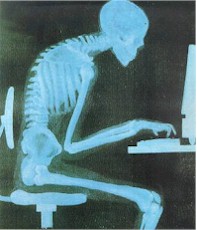
At different times in my life, I’ve been inclined to sit up straight, and I’ve been inclined to slouch. Maybe the same is true for you.
Unsurprisingly, at the times when my default is to sit up straight, I’m usually active in dance, yoga, or some sort of regular exercise that both strengthens my back and brings awareness to my bodily experience. This is kind of the mechanical explanation for posture: practice makes perfect. Just do it.
But recently a book helped me to re-member another, subtler aspect of sitting up.
It takes some courage.
Really. When I’m sitting erect and alert, I feel more permeable. I am not hiding. My body feels sturdy, in a way, but also fragile and exposed.
I think it’s possible to experience this fragility, openness, and permeable vulnerability even with a crooked spine. But for me, the straight spine is quite an effective jump-starter. It’s something I can control* that has a noticeable, positive (though sometimes challenging) effect on my mental state.
The act of sitting up automatically invites non-cognizing awareness. I’m not thinking, Okay, now shift the right hip 3 centimeters forward, raise the upper back 30 degrees… The awareness encourages the movement, and the movement encourages awareness.
This kind of awareness, or mindfulness, can feel pleasant, but it also contains a dark undertone. It is frightening to open awareness to painful sensations. Painful realities. Especially when I can’t control them with my thinking. I can’t think my way out of a sensory experience: an unpleasant smell, a twinge, a wave of nausea. And at the same time, burying them under mental chatter, while it may provide some temporary respite, does not make the unpleasantness disappear.
Why does this matter?
Maybe it doesn’t. But for me, returning to a straight back is like a small homecoming. In fact, regardless of whether I’m sitting straight or not, simply noticing where I’m at with my posture brings a different, brighter quality to my experience.
This is all dhamma stuff, in a way, and at the same time it’s non-sectarian, and not self-improvement. Straighten up, or don’t.
Here’s part of the chapter on Sitting from the abovementioned book, Sensory Awareness: The Rediscovery of Experiencing, which I checked out of the library on the urging of my friend David, a regular at Interfaith Bible Study at the Faithful Fools.
Now let us try coming to actual sitting. We leave the back of the chair for good, sensing the readjustments throughout our structure as the support is given up, feeling how we come more and more into the vertical, simultaneously reaching down to the seat of the chair and rising up from it.
If we are now really to relate to what we sit on, we must become much more awake than usual in the region of us directly in contact. Let us rise a little from the seat, pause, and gently find our way back without using hands or eyes. Can we find it? Ah! There is a definite meeting. Our nerves are as good down there as anywhere.
The question comes up: are we just padding down there where our sitting originates, as we may have always imagined? By no means! We begin to feel a definite structure, possibly as firm as the chair itself. To explore it let us raise one buttock and slip a hand underneath. Somewhat gingerly, we sit now on our own hand. Something in our bottom is not just firm but hard. Can we raise the other buttock, to sit on both hands at once? Ouch! We had not dreamed there would be such hardness. With relief, we divide our weight between our two hands, so as not to crush either. What is so hard in there? Even our heels do not seem so hard.
Cautiously, buttock by buttock, we leave our hands and return to the unprotesting seat. It becomes clear that, whatever the singular nomenclature for our bottom, sitting is actually divided between two sitting-bones. We can allow an equal or unequal distribution of weight, for more or less pressure on the seat, and of course on our own tissues. We can also “walk” with these sitting-bones. With a little experimentation, we find we can walk here and there on the seat until we are quite familiar with it, perhaps discovering a very agreeable perceptiveness in our own pelvis. Finally we may perch ourselves on the very edge of the chair, where our thighs no longer rest on anything, but bridge out into space. By this time our whole pelvis may be wide awake. [83-84]
—————————————————
*Even as I typed that sentence, my back slowly unfurled and straightened up in front of the computer! Ha! Now, we can’t always control our posture, or make our spine erect. I’ve been reminded of this over the last couple of months, watching my dad recover from a terrible spinal infection that initially made sitting up on his own impossible. Slowly, with agonizing pain, tremendous patience, and a lot of assistance, he regained the ability to sit up, to hermit-crab around the rehab center in a wheelchair, to stand, and now to walk, with a walker. What a gift, to be able to sit up straighter and straighter with less and less pain.
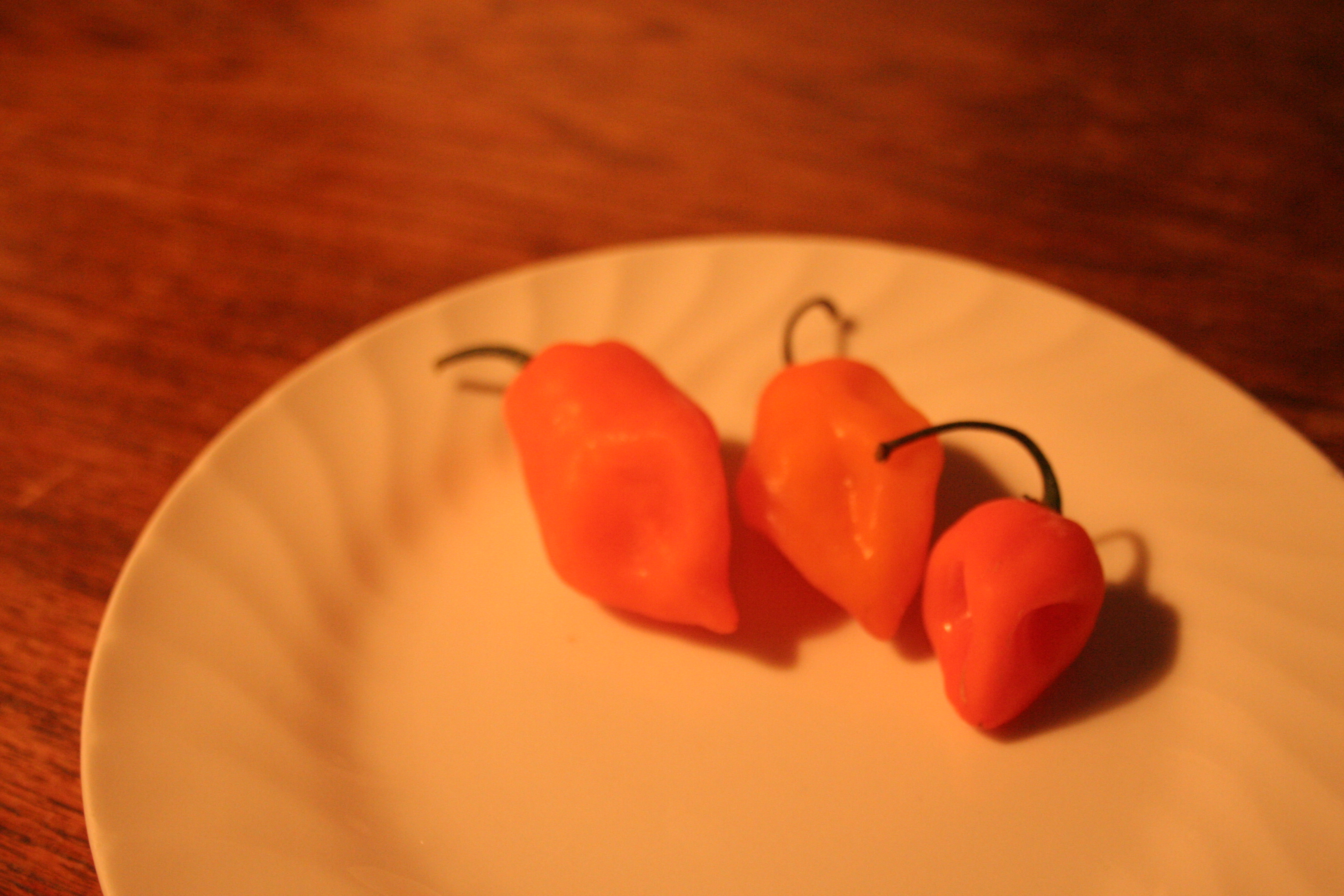
As per our plan, for our one-year dating anniversary, Ryan and I made our own hot sauce. It took 20 roasted habañeros (a.k.a. Scotch Bonnet peppers), four cloves of roasted garlic, and some elusive smoked paprika to blend up this incredibly delicious condiment. (Full recipe below, slightly tweaked from one we found online.) Some of the habs came straight from Ryan’s dad’s backyard garden — part of how we cooked up this idea in the first place.
And after it was finished, we took one of the two bottles on a journey down to the Mission for some pupusas.
This slideshow requires JavaScript.
Celebrating an extraordinary year with this wonderful person, near the annual TransgenderDay Of Remembrance, I was especially aware of the privileges and basic safety that we enjoy in our loving partnership. We are a legibly cisgender, hetero, same-age couple, both U.S. citizens, living in a time of war but unaffected by it directly. We live in a time and place where interracial relationships are largely accepted and even commonplace; where open relationships are at least acknowledged, if frequently maligned or misunderstood; and where I am not likely, as a woman, to be openly attacked for asserting my own sexuality, and seeking control over my own reproductivity.
I truly wish that loving — and simply living with integrity, with basic safety — did not require so much courage from so many people.
May my life’s work, and Ryan’s, contribute to bringing about conditions that encourage everyone to love in the best ways we know how.
———————————————————
Habañero Hot Sauce Recipe

20 habañero peppers
3-5 cloves of garlic
1/2 cup distilled white vinegar
2-3 Tbsp lemon juice
1 tsp smoked paprika
1 tsp brown sugar (we used light brown)
1 tsp salt
1/2 tsp chili powder

Equipment: Oven, baking sheet, food processor.

Set oven to 350º.
Peel and halve garlic.
Cut off stem tops and halve peppers (keeping the seeds).
Roast together on an oiled baking sheet until golden brown
and smelling amazing (about 20 minutes).

Add peppers and garlic to the food processor with dry ingredients.
Pulse to combine.
Slowly pour in wet ingredients while blending.*
When you've got a smooth, uniform consistency, adjust to taste.**

Bottle (we used a couple old hot sauce bottles) and refrigerate.

*Adding liquid too soon may result in splashing, necessitating turkey-baster triage.
**Ignore any eggings-on, and taste only a tiny bit at a time.  Think twice before,
for instance, dipping a hunk of bread in the hot sauce as though it were hummus.
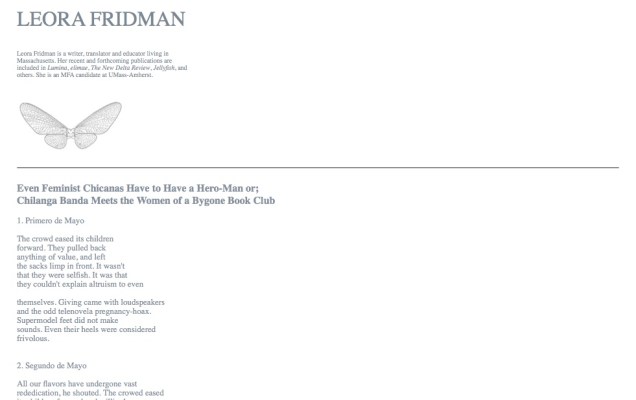
My dear friend Leora Fridman in published online form. So much lovely. Miss you, sistercat.
Not much more from yours truly today. Just thinkin’, readin’, cookin’, meditatin’, and trying not to catch pneumonia. (Slowly, slowly, my Cambridgewear is trickling into my Tenderloin closet. Yesterday, an enormous white scarf.)
Have a wonderful weekend, friends! See you next week!
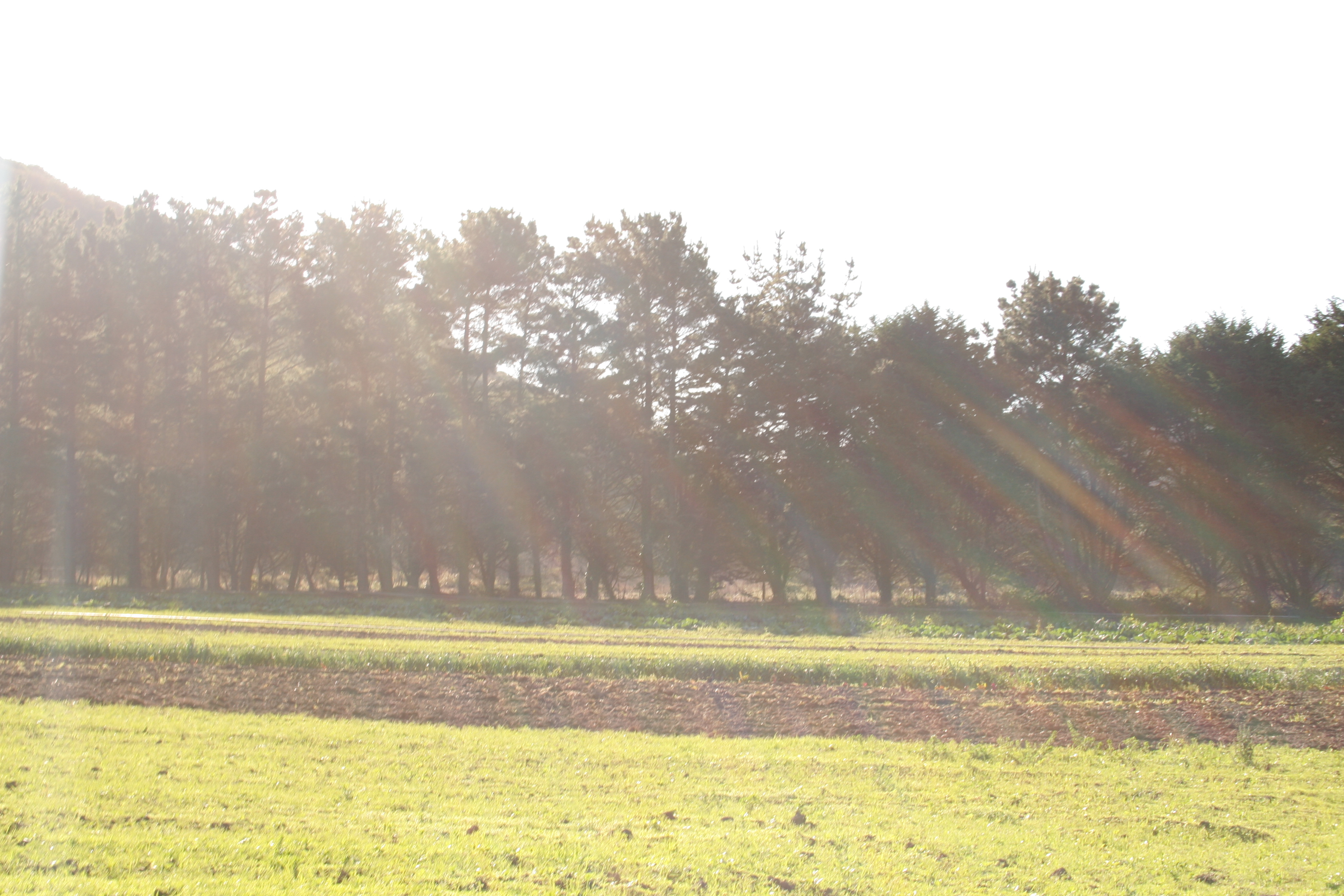
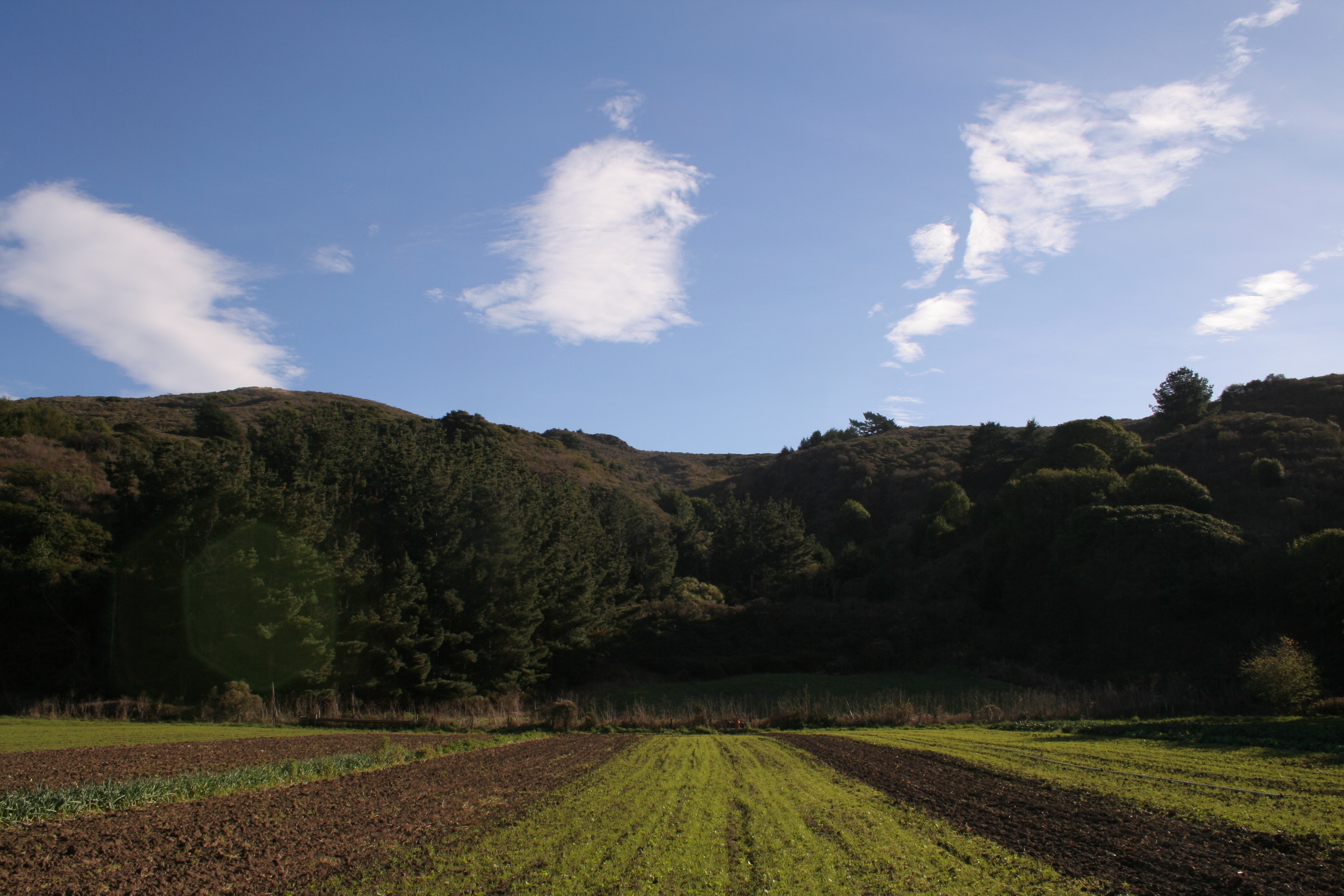
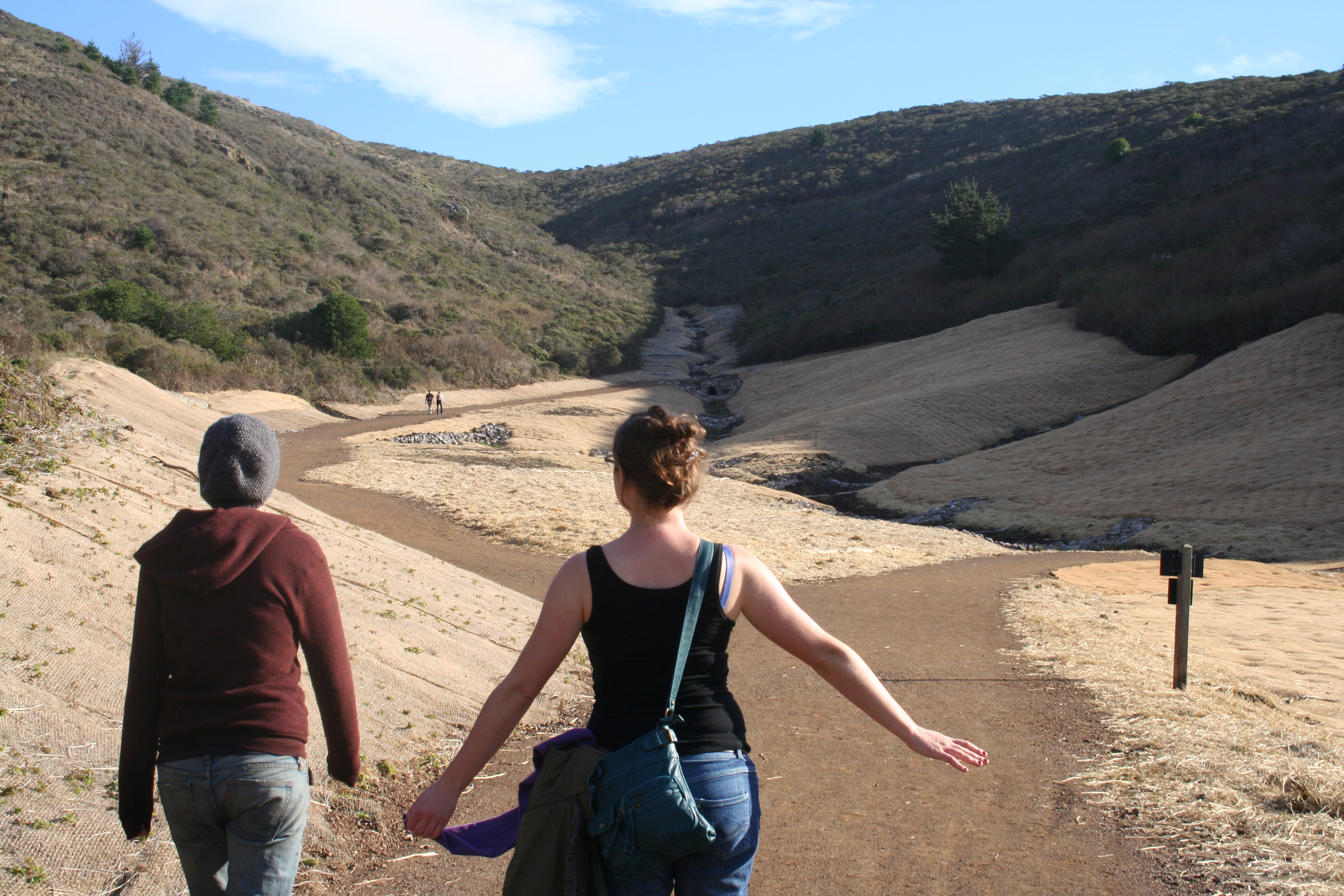
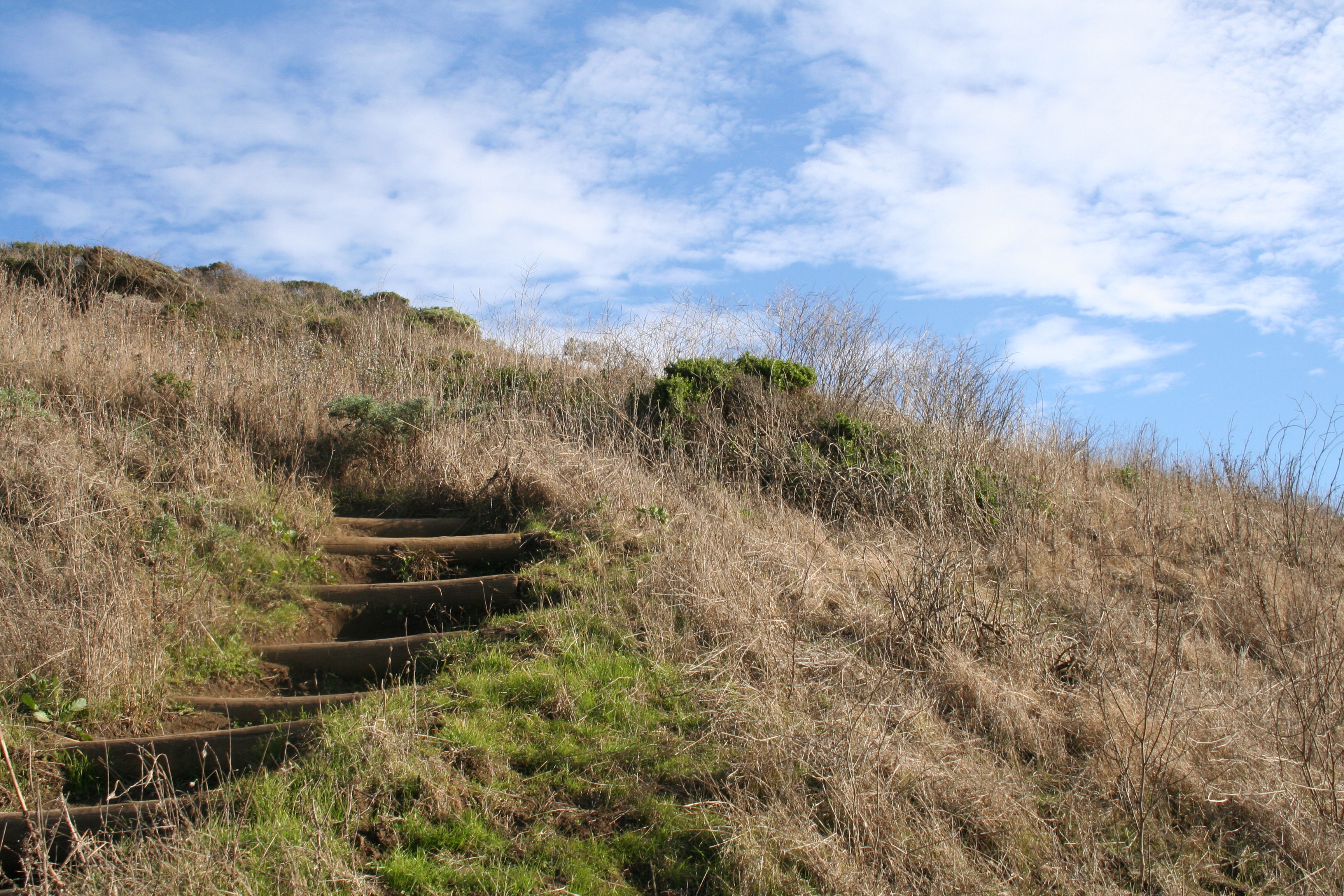
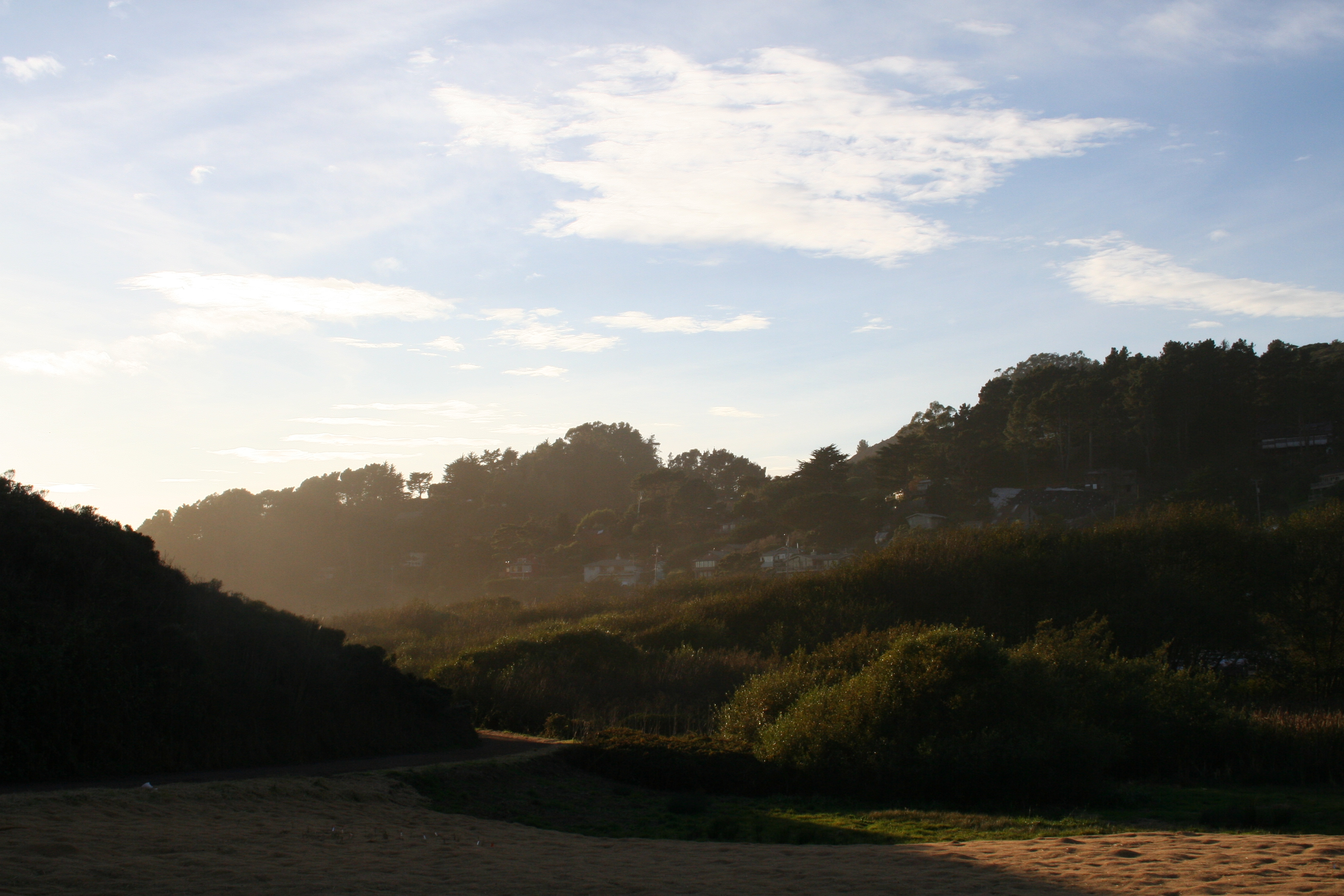
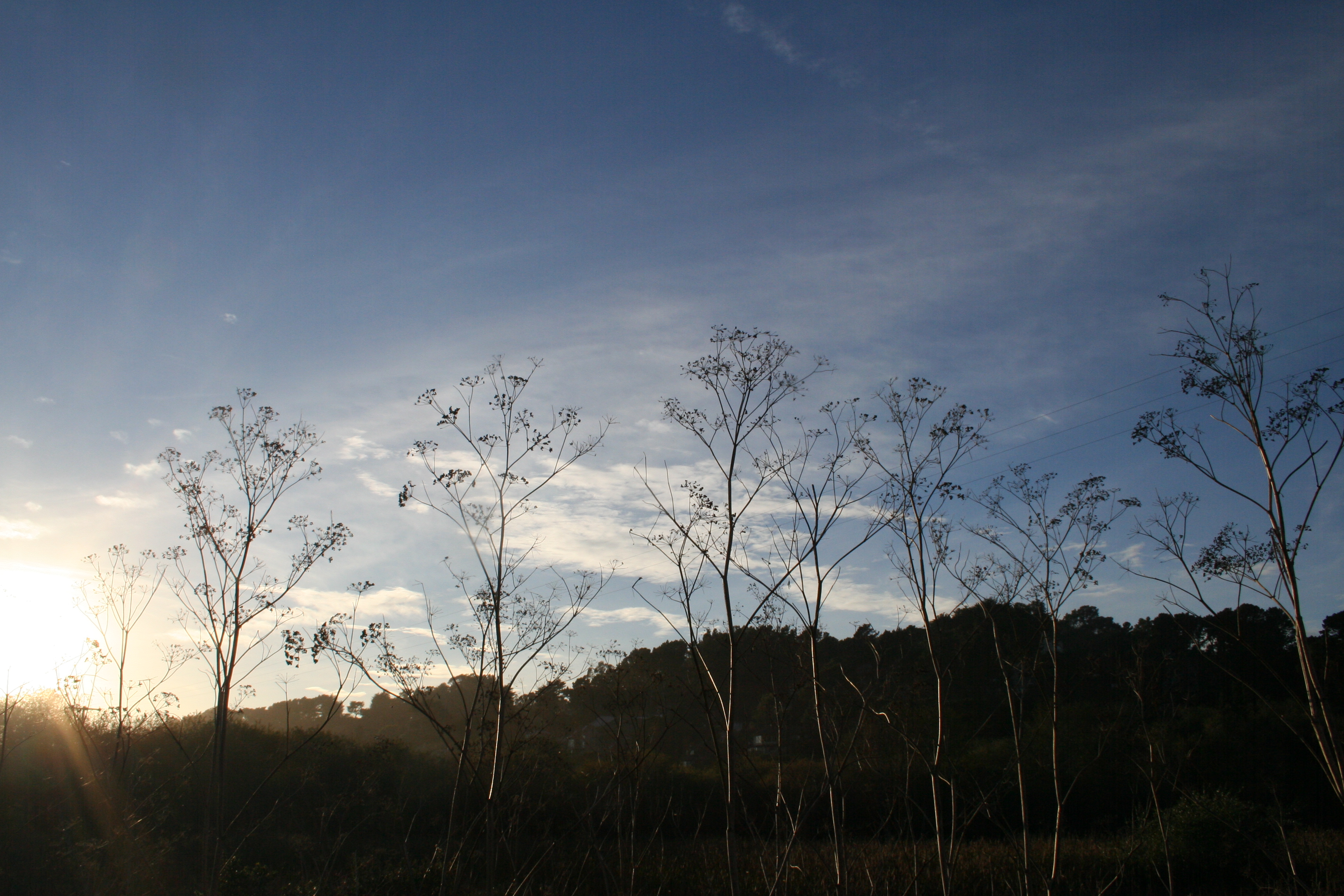
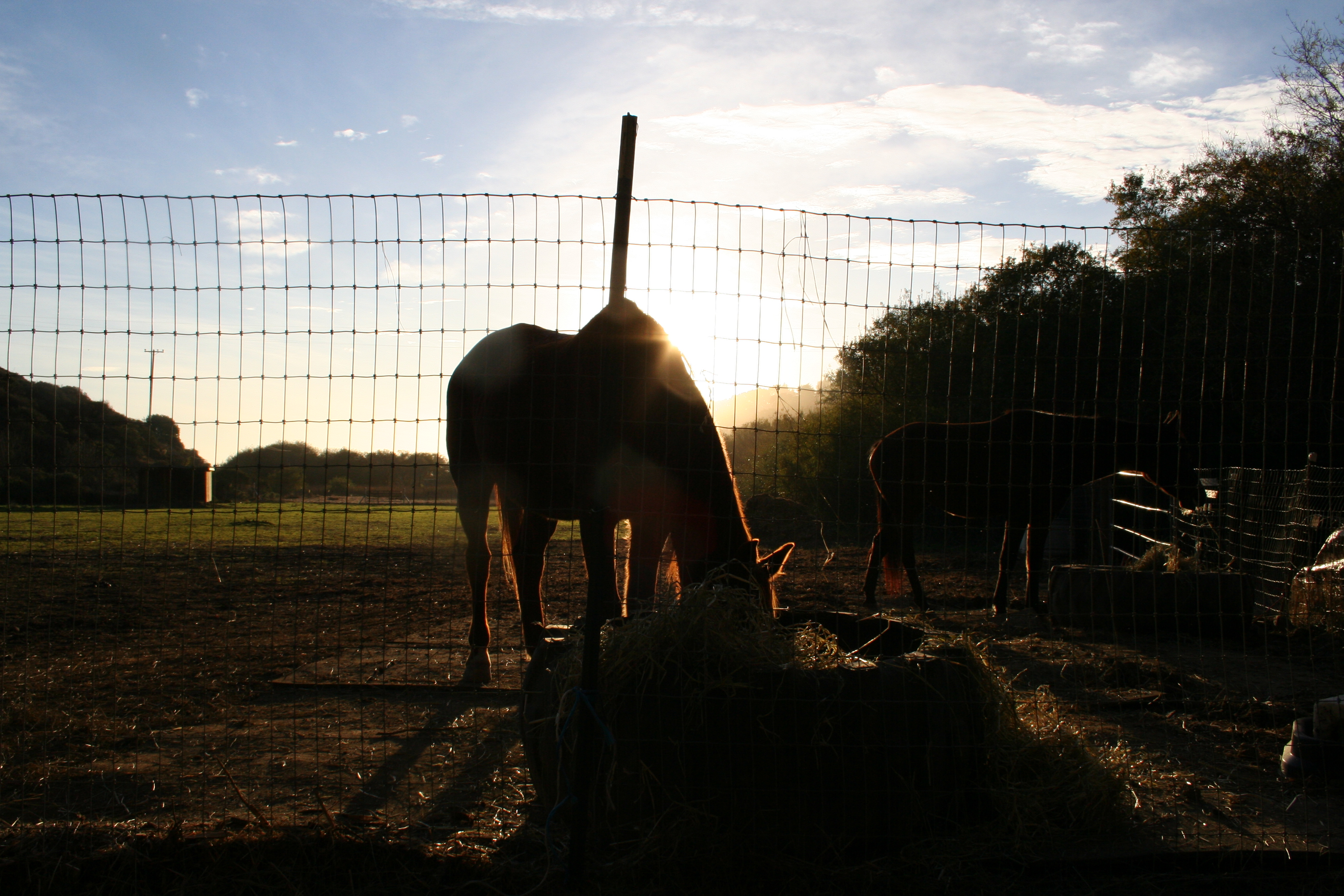
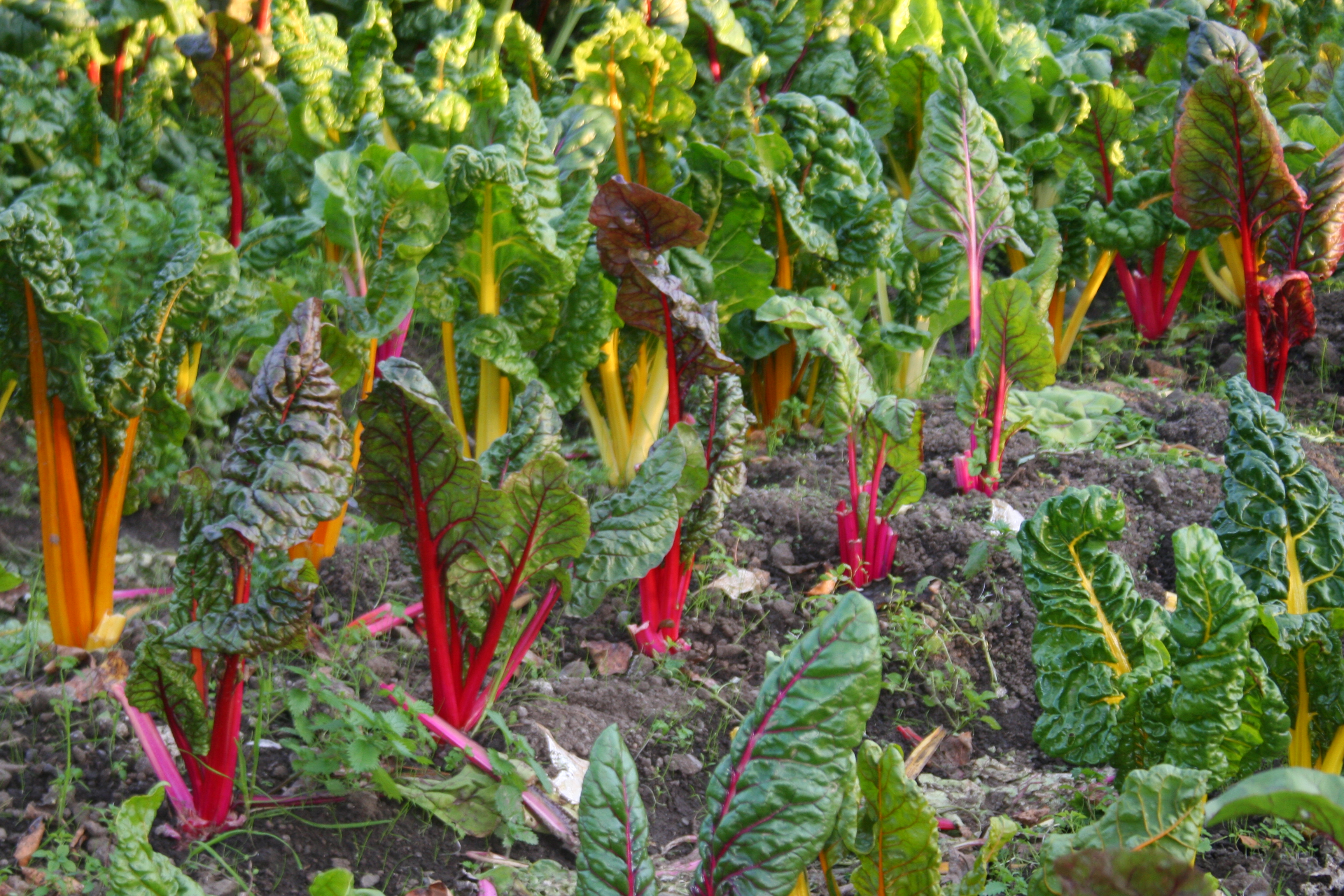
Saturday I crossed the Golden Gate Bridge to spend the day (and overnight) at San Francisco Zen Center’s Green Gulch Farm with my friends Michaela and Sarah. Michaela, a newly ordained priest, has lived on the farm for the last 5 years, and since ordination in September, will undergo 4 more years of training before becoming … a more official priest! Or something. I’m not quite sure how the Zen works. And Sarah, who has taken her lay vows, is not only the executive director of Buddhist Peace Fellowship, but also a true SFZC baby, raised by Zen teacher parents among its three campuses: Green Gulch, Tassajara, and City Center.
Anyhow, the two of them go way back, and it was a delight to spend a while walking, joking, thinking out loud, and generally hangin out with these amazing, brilliant, passionate dharma sisters. And the setting, while old-hat to them in some ways, for me was … well. Green Gulch — a functioning subsistence-plus-sales farm, as well as a practice center, located in one of the wealthiest counties in the US — has its issues, is evolving, is imperfect. And has its gorgeousness, my, my.




 I think it’s possible to experience this fragility, openness, and permeable vulnerability even with a crooked spine. But for me, the straight spine is quite an effective jump-starter. It’s something I can control* that has a noticeable, positive (though sometimes challenging) effect on my mental state.

 Kloncke