K-Lo Retro Part VIII: Dangers Of Compassion

[From 04 August 2010]

You keep using that word. I do not think it means what you think it means.

Last night, at a Berkeley fundraiser for the East Bay Meditation Center, prominent Insight meditation teacher Joseph Goldstein gave a general talk on Buddhism, and as he spoke in his gentle, warm, candid, funny, luminously clever way, I felt a familiar tightening in my stomach.

The talk started out like this. There is tremendous suffering in the world. It’s not hard to see. War, oppression and destruction. But if we look closely, we find that the root of that suffering is in the mind. Greed, fear, and hatred. And it’s not just “other people” who have this greed, fear, and hatred; it’s us, too. Therefore, using Buddhist teachings, we turn our attention inward toward the mind/heart, healing suffering from the inside out.

Later, when asked whether his Buddhist practice could be formulated into a plan for social change, Goldstein said Yes: through compassion. Not a simplistic type of compassion, but a compassion that is born out of nearness to suffering. This is more difficult than it sounds, he noted, because our deeply ingrained habit pattern is to try to push suffering away from ourselves. Get rid of it. But in order to have strong, profound compassion, we need to go toward suffering. Without romanticizing it, but seeing it for what it is.

Now, I like Joseph Goldstein. I saw him speak once before at the Cambridge Insight Meditation Center, and he’s hilarious and wise and a gifted storyteller. And on one level, I agree with what he said last night.

The problem, for me, was what went unsaid.

Continue reading

K-Lo Retro Part VII: Introducing the Stat Dragon

[From 14 April 2010]

by Jeffrey Donato

A stat counter is a common tool that lets bloggers see the number of people who visit their site. I learned about it back in 2005, when I first became acquainted with blogs, and have interacted with stat counters and traffic graphs in my bloggerly life ever since. Every day (ok let’s be real: practically every five minutes), I check my traffic chart on Kloncke to see how many people are reading. I glance at the line graph and its 15-day history, with the current day’s data point climbing ever upward until the stroke of midnight, when its ascending carriage takes a pumpkin-like tumble back down to zero. New day, new stats.

Within the past few months, I noticed myself monitoring my stat charts with increasing closeness and intensity. It became sort of embarrassingly compulsive. I checked my traffic at Gmail-like intervals (read: Too Frequently). And of course, my heart would soar and sink according to the graph’s altitude.

High: high.

Low: low.

Many page views: “My writing is helping people.”

Few views: “This blogging thing is just a narcissistic waste of time.”

Et cetera.

And then, the real kicker: auto-adjusting scale.

Let’s say I’ve been plugging along on my little blog for a month, and one day I get 25 views, the next day 30, the next day 7, and so on. The top of the y-axis represents the largest number of views in a single day: 150. The smallest, one notch above zero, is 3. Then, one day, the blog is viewed 170 times. What happens to the chart?

Continue reading

K-Lo Retro Part VI: Oscar Grant, Audre Lorde, Chögyam Trungpa Rinpoche and the question of loving our enemies.

[From 06 July 2010]

Cross-posted at Feministe. As the verdict approaches, I find myself thinking more and more about the relationships between state violence and intimate violence. In what ways our focus on state violence, and mechanisms for resisting it, jive and don’t jive with methods for dealing with intimate violence. Aaron Tanaka made a wonderful comment on the original post — as always, Aaron, I’m truly grateful for your insights and questions, and their organic connection to the great work you do.

Just yesterday, only 20 minutes after a conversation about police alternatives, as my friend Noa was dropping me off at home, we found ourselves in an impromptu cop watch. Four officers were arresting three men on my block — two of whom I recognized as regulars on the corner, and one with whom I’ve tossed a football across Hyde Street traffic. When I saw the cops lining the men up against the fence, I just stepped out of Noa’s car onto the sidewalk and inserted myself. After one of the officers attempted to intimidate Noa by calling in her plate number (we’d been stopped and talking in the car inside a red parking zone), she drove around the block, parked, came back and joined me for the next half hour as we watched these three men get yelled at, cuffed, and loaded into a police van.

I’ll maybe write up a full summary tomorrow, because the effect of our intervention on the cops’ behavior was pretty interesting, as well as the conversation we struck up with two male officers. For now, here’s my Feministe piece from Sunday.

————————–
————————–

Continue reading

K-Lo Retro Part V: Bad Good Romance

[From 23 July 2010]

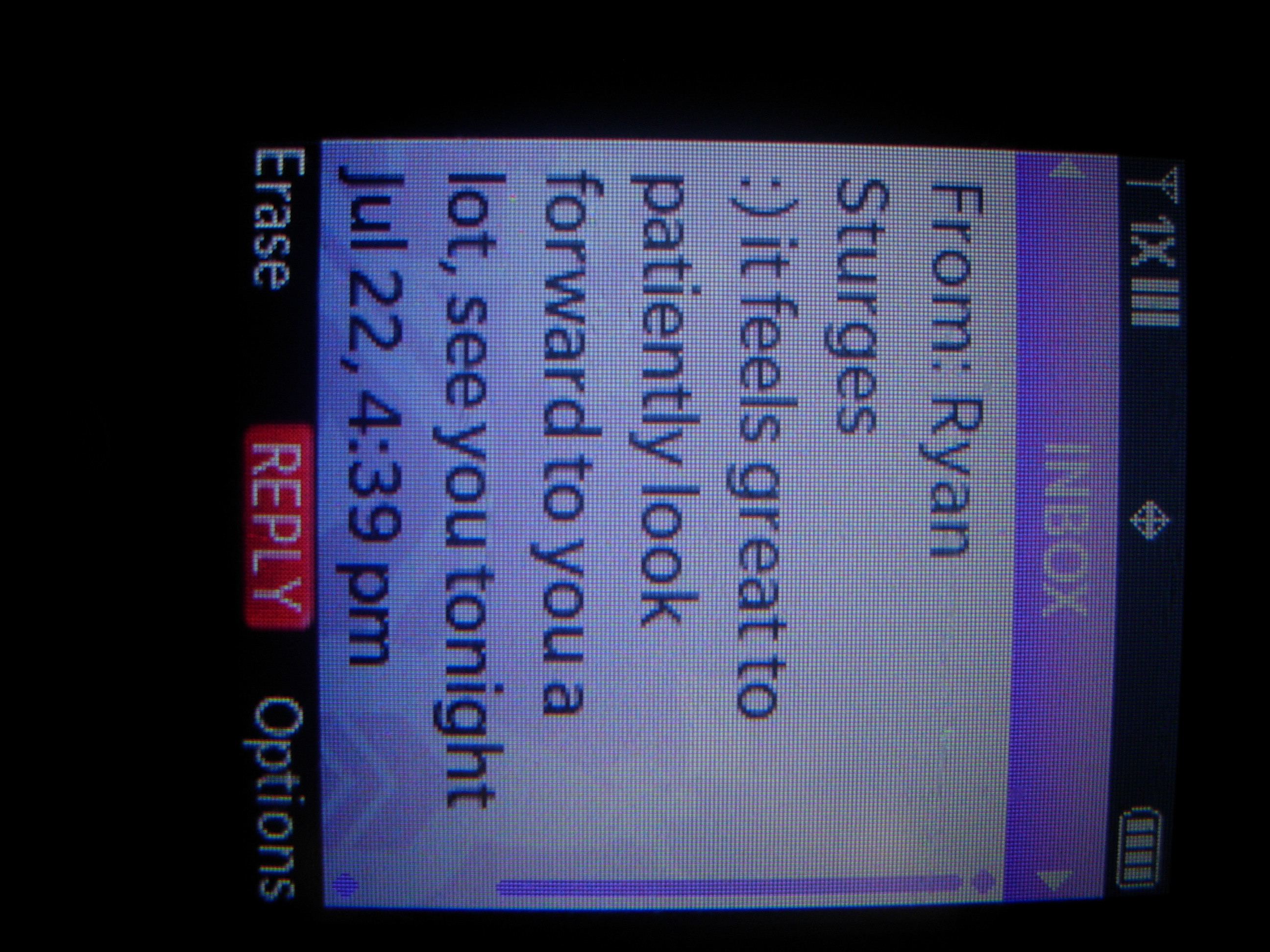
text from Ryan
From my partner, after a week-and-a-half without seeing each other

For a variety of reasons, I often feel shy about celebrating this relationship. Given all the bullshit, grief, and even trauma that most of us young people endure in our love lives (and I’ve had my share, with more to come in the future, no doubt), it feels weirdly rude or dissonant when somebody speaks in detail about a marvelous partnership. Cute couple-y photos, fine; wedding or baby announcements, ok. But in general, no news is good news. Conversations are for commiserating over heartache, analyzing a transgression, or dishing about a new lover.

Besides, it’s a little difficult to even define what I mean by a “marvelous partnership.” I don’t mean pleasurable, necessarily, though it certainly is that. But for me, the relationship’s best attributes aren’t your typical high highs — the dizzy, heady, mind-blowing, earth-shaking, dare I say passionate feelings.

Instead, there’s deep comfort. Profound mutual respect and care. Trust. Confidence. Generosity. Wonder. Humor. Steadiness. Openness — which means both closeness and spaciousness. And the kind of love that radiates outward, illuminating not only the partnership itself but our engagement with others, too.

Continue reading

K-Lo Retro Part IV: “We Are Real”: Violence, Colonialism, Human Suffering, and Reflections of Palestine and Israel in The Last King Of Scotland

[From 14 June 2010]

As you may have noticed if you’ve been hanging around here for any amount of time, I don’t talk much about current events.

Partly because this blog is mainly autobiographical — about my own lived experience — and I haven’t been involved in many “current events” lately. Also, news consumption has been extremely low for me in the past year — on purpose.

Despite my personal media fast, some major happenings (mostly US-centric) inevitably come to my attention. Oscar Grant’s murder. The bp oil spill. Arizona’s racist immigration law. The Gaza aid flotilla killings.

Still, when I am trying to talk about these issues, I don’t try to thoroughly research and analyze them the way I might have two or three years ago. Not that there’s anything wrong with research and analysis: both good and important. But here, for now, I’m focusing on deepening my understanding not of politics, per se, but of suffering. In order to understand suffering, it’s important to be aware of what’s happening around us — including politics and all the harm that’s constantly happening. But there’s more to it than that, I think.

Continue reading

K-Lo Retro Part III: Día En La Playa

[From 16 June 2009]

My friend Nuria grew up in Catalunya, so she knows where to find the quiet beaches here. No screaming babies, squawking vendors, or complaining tourists. (Though those scenes have their own charm, too).

This Sunday she took me to a tiny one, 45 minutes by train outside of Barcelona. Maybe two dozen people in the little nook we picked.

We had a simple day, enjoying the sun and sand and water on our skin. (Bathing suits: unnecessary. Ya feel me?)

But even the simple days are also, inevitably, complex. When you escape the crowds, sometimes you find the loners.

First there was the white guy crouching in the rocks above the beach. Nuria’s eyes narrowed. “Qué hace?” she hissed, hackles visibly raised. She stood up to get a better look. When she was reassured that he had left, we talked about the violence of voyeurs. Men who spy on naturist beaches to ogle and masturbate. A couple of shady characters I encountered on The Camino. Nuria is one of the most loving people I know, toward everyone she meets, but she also has a temper, and this behavior is a big trigger. She has been known to throw stones.

So we talked about the ways in which these men are suffering from addiction, lost deep in their own pain and ignorance, and doing such harm to others because of it. How almost everyone on Earth, including ourselves, at times, is addicted to pleasure in some form or another.

And how, fortunately, most of the time, the collective, family vibe among nude beachgoers (who tend to have a higher level of comfort with their own bodies, and less sexual neurosis about nudity) overwhelms the negativity of predatory intruders. As we talked, Nuria opened up about her past, her own painful histories. Even on the simple days, these things tend to resurface.

Then there was the long-haired argentino dude who sat down next to us, asking for rolling papers and tobacco. His speech was so rapid and his accent so heavily Italian that I gave up trying to follow. One thing I did catch: “. . .parejas?” “Partners?” Pointing to both of us. Well, we are in Spain, a country that recognizes same-sex marriages. Maybe assumptions here are different. Maybe this was a heartwarming break from heteronormativity. Except that…it clearly wasn’t. I didn’t have to understand this guy’s words in order to see his intentions. Just the same old sexist fantasy: girl-on-girl action. And even better — a white girl with a brown girl.

Oh, dear.

Why does a day at the beach have to be so complicated?

Except that…it doesn’t.

There’s a lovely saying I’ve heard a couple of times recently, in different contexts. Just as darkness cannot survive the arrival of light, suffering cannot survive the arrival of equanimity. When you become equanimous — that is, fully present and accepting — toward something that is bothering you, it stops bothering you. You just see it for what it is. Someone is acting out their insecurity. Someone is doing harm. If the harm occurring is severe, requiring action to stop it, take action. If not, let it be. Let it pass. Either way, the first step is to observe, without a knee-jerk reaction.

Eventually, not finding the response he wanted from us, the long-haired dude left.

Did racist patriarchy spoil our day at the beach?

Well, we took some photos. You tell me.

———
[Heads-up: nothing explicit, but maybe not the safest for work]

Continue reading

Kloncke Retrospective Part II: Don’t Resist: Resist!

[From 01 January 2010]

I’ll be the first to admit it, folks: non-resistance, one of the core elements of Buddhist or dhammic praxis, seems like a sham. On its face, non-resistance sounds like one or a combination of (a) weakness: a sort of rationalized fear of fighting back; (b) delusion: playing Mary Sunshine and pretending that there’s nothing to resist; or (c) apathy: leaving it to fate or karma or whatever to sort everything out.

With a slightly more nuanced view of non-resistance, we realize that it doesn’t so much refer to external conflict or confrontation, but has more to do with our internal states, as a tool for reducing suffering. A British professor, a guest speaker I heard at the Cambridge Insight Meditation Center back in September, cited as an example the moment you open a delicious-looking box of chocolates, only to find that they’ve all been eaten up — except the coconut ones, which you hate. The more we resist reality (by fantasizing about the missing chocolates; resenting the scoundrels who devoured them), the greater our suffering will become.

Ok, understandable, but something still feels off. It was at that moment, when he pulled out the bonbon anecdote, that the thought occurred to me: This white guy has no idea of the weight of the words he’s using.

Resistance. Struggle.

These words carry a lot of meaning for a lot of people. How could he use them so blithely, so unawares?

Now, it wasn’t just a matter of the professor: his explanation, language and vocabulary were also tied to the audience he was addressing: largely wealthy, white, overeducated, and middle-aged. But there was also a larger context: the neighborhood in which this dharma talk was taking place. Area 4, poor and gentrifying, a long under-resourced and heavily policed area, with lots of homeless and near-homeless people of color.

When talking about non-resistance, how often do we hear examples of irritation like sitting in traffic? Not getting a bonus or promotion at your firm? Undergoing chemotherapy?

In my experience, A Lot.

And how often do we hear examples of police profiling and brutality? Eviction? Domestic abuse? Racist education? Colonization? War?

It’s a shame that so many dharma talks by convert Americans in the U.S., from what I’ve seen and read, are couched in terms of a white ruling-class (and often straight, male, cisgendered, non-disabled) experience. Some may include the “social justice question” as an afterthought, or as a response in a Q & A, but rarely do dharmic explanations center around the people who must resist routinized oppression in order to survive. Talks ignore these realities. And that ignorance, willful or not, can raise a lot of skepticism about the dharma. Earlier in 2009, brownfemipower approached this same question from a different angle: the notion of submission, and whether it can ever be relevant to people who don’t really have a choice.

Fortunately, though, the way I see it, when we get to the deep meaning of non-resistance, we understand that it is totally compatible with political and social struggle. Lately I’ve run across a few explications that speak to confronting violence or abuse.

Some psychologists, among them Tara Brach and Marsha Linehan, talk about radical acceptance—radical meaning “root”—to emphasize our deep, innate capacity to embrace both negative and positive emotions. Acceptance in this context does not mean tolerating or condoning abusive behavior. Rather, acceptance often means fully acknowledging just how much pain we may be feeling at a given moment, which inevitably leads to greater empowerment and creative change.

– Christopher K. Germer from “Getting Along” (Tricycle, Spring 2006)

Non-resistance means looking at the totality of a given situation: not denying any aspect or focusing too narrowly on one area. And not getting lost in our own imagination, our own reactions, or our own desires to appear strong, calm, courageous, or unperturbed. In a conversation with Pema Chödrön, Alice Walker makes a similar point about the importance of acknowledging and accepting pain when somebody tells us to “go to the back of the bus”:

The cause of someone’s aggression is their own suffering. So we can connect with our own aggression and provocation, feel that, and exude good wishes for ourselves and others.

Let’s be clear: exuding good wishes for ourselves and others doesn’t rule out strong action. Even physical, militant action. In his essay “Loving the Enemy” (2002), Jeffrey Hopkins writes,

If your own best friend [suddenly, without warning],* came at you with a knife to kill you, what would you do? You would seek to disarm your friend, but then you would not proceed to beat the person, would you? You would disarm the attacker in whatever way you could—you might even have to hit the person in order to disarm him, but once you have managed to disarm him, you would not go on to hurt him. Why? Because he is close to you.

If you felt that everyone in the whole universe was in the same relationship to you as your very best friend, and if you saw anyone who attacked you as your best friend [acting harmfully],* you would not respond with hatred. You would respond with behavior that was appropriate, but you would not be seeking to retaliate and harm the person out of hatred. He would be too dear to you.

We’re not talking docility here. What makes non-resistance so great and useful is that it’s not a prescription for action or non-action, but rather an aid to clear-sightedness that we can apply to any given situation. It says: look at the reality in front of you. Much as we might want to deny that our friend is brandishing a knife, he is, and that needs addressing. Much as we might want to concoct some story of betrayal — that our friend has now become our enemy — in truth he’s only our enemy if we make him so. Otherwise, he’s only changed from what he was before.

As my teacher Goenkaji says, Accept each moment as it is — not as you would like it to be, but as it is.

And when the moment comes to resist, you’ll resist.

——–

Have a good weekend, friends. I know I will. :) More on that next week.

——–
*The original language in this piece talks about the best friend “going mad” as the explanation for the harmful behavior. As folks at Feministe pointed out while I was guest-blogging there, casually linking violence and mental illness presents a lot of problems, including exacerbating stigmas against people living with mental illness. I think Hopkins’ story is still helpful in the sense that it points to the power of a pre-existing, positive, loving relationship that allows us to choose mercy over revenge, refusing to totalize a person even based on their violent actions. At the same time, it’s also a very simplified example, evading the possibility of calculated betrayal, or an inherently predatory “best-friend” relationship. If you have time, I really recommend checking out the Feministe thread, and probing the example a bit further.


Kloncke Turns Two! A Retrospective

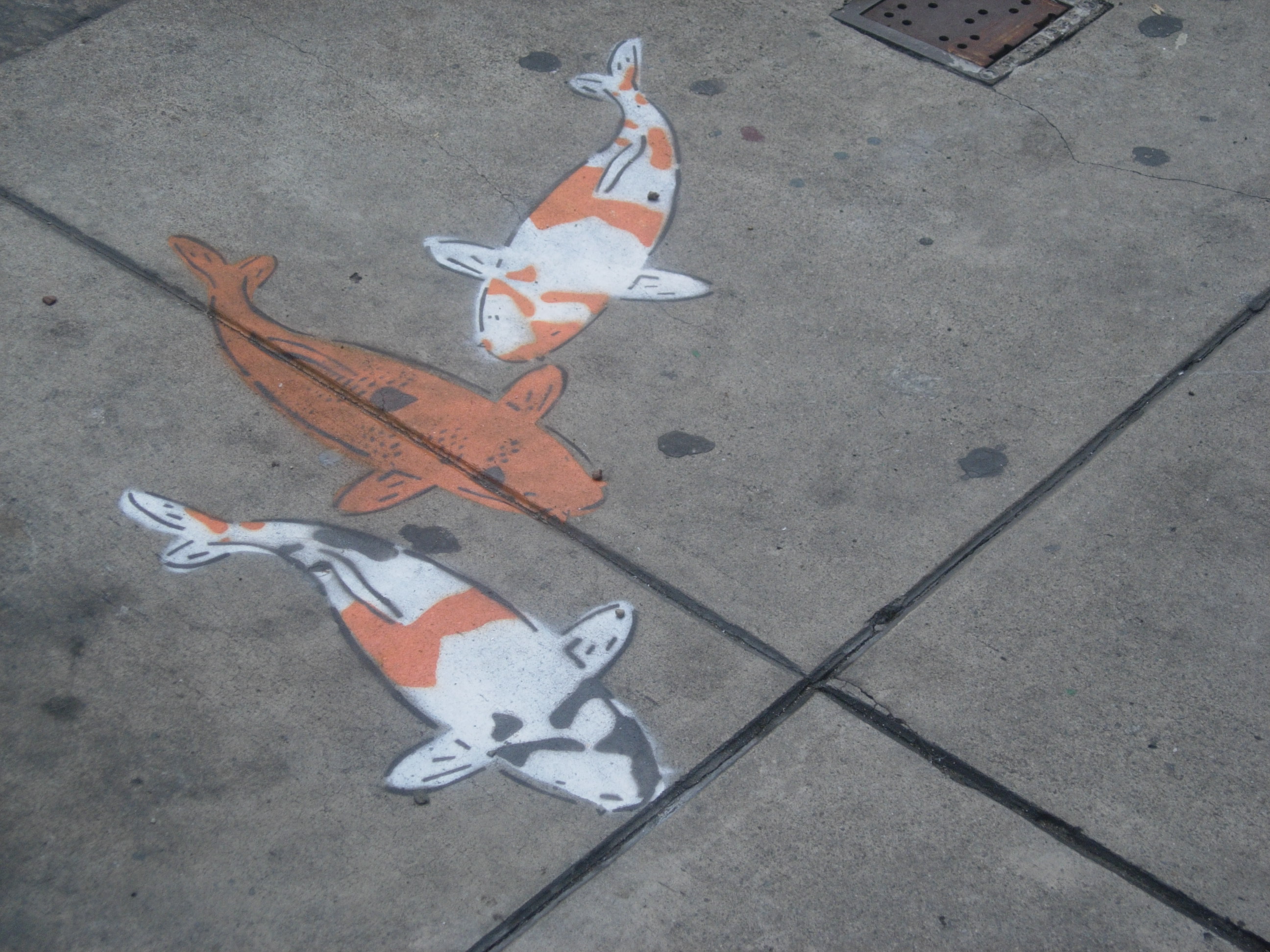
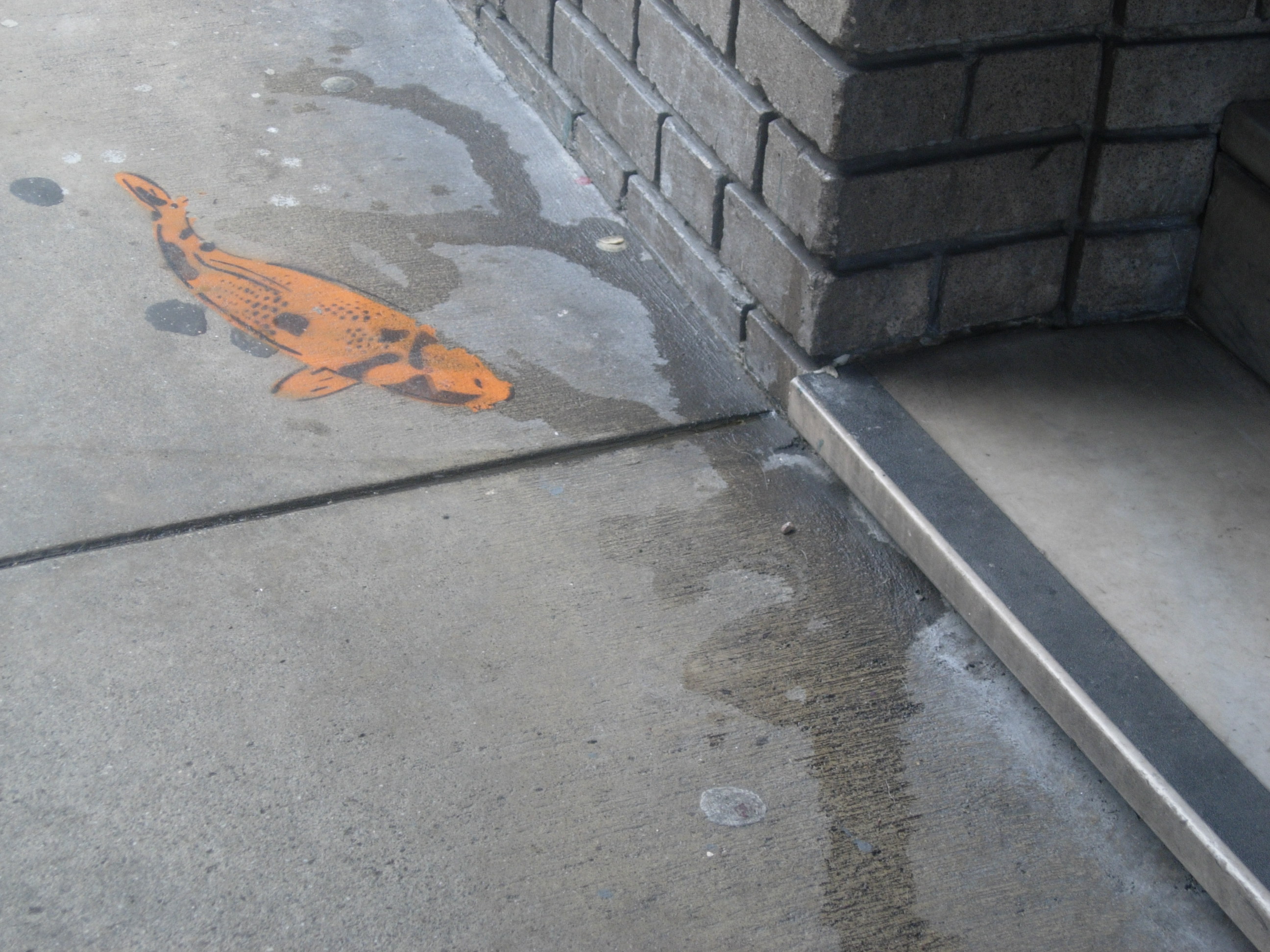
Photos from this morning's walk. In the last month or so, these koi have appeared on sidewalks all around my neighborhood. Thank you, whoever is responsible!

The official anniversary isn’t until the 9th, but tomorrow I’m leaving for 2 weeks in Nicaragua with the Faithful Fools (an annual trip they make to maintain relationship and community ties). Won’t be blogging from there, but thanks to the magic of technology, I’ll be able to ghost-post!

And what to publish?

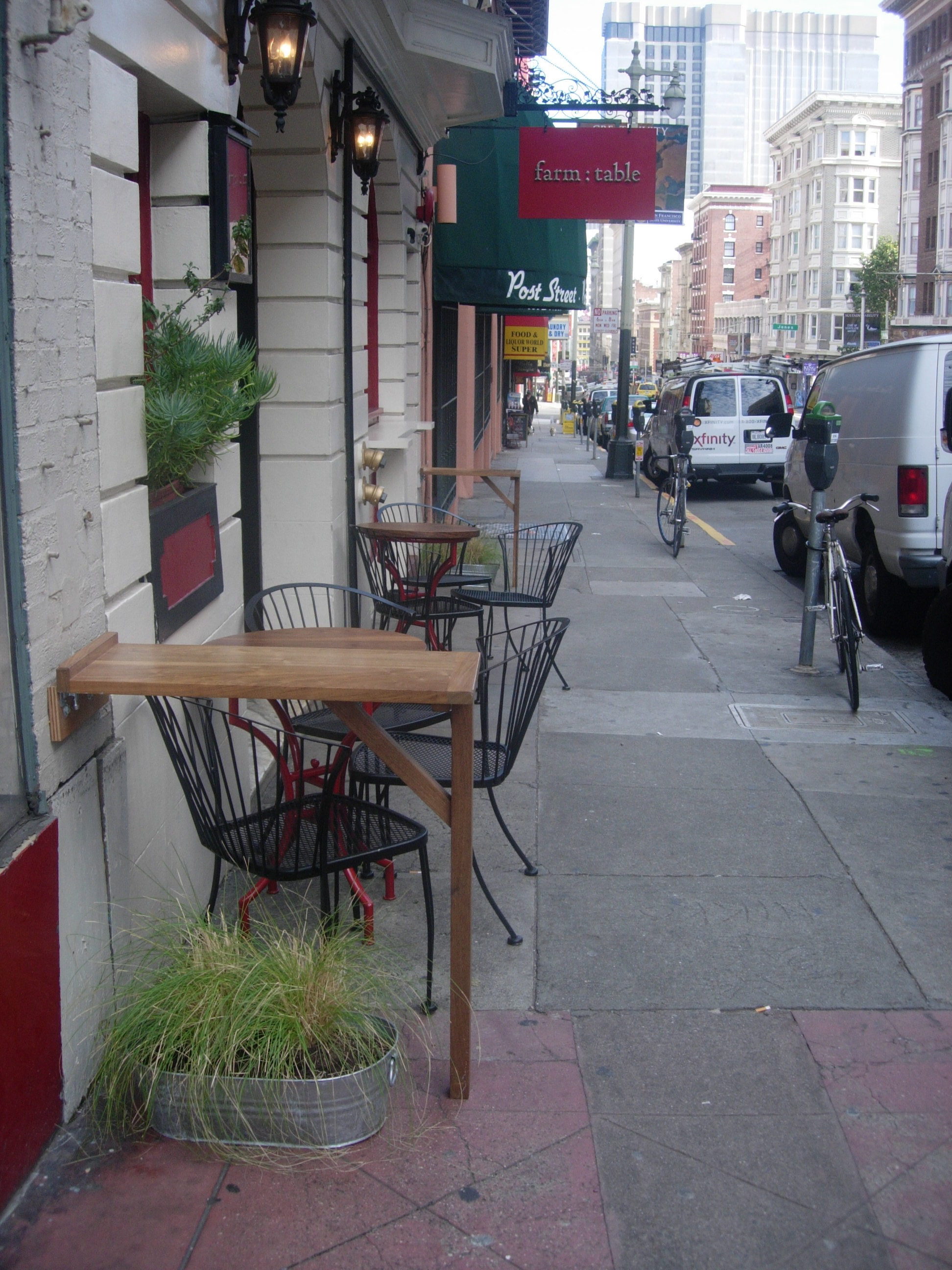
What I had for breakfast: farm:table daily toast. Brandied cranberry compote with apples and a drizzle of condensed milk, on German rye.

Well, for a long time I’ve been wanting to add a “Best Of” section, so that folks visiting for the first time will have a sense of what this place is all about. Kloncke presents a very eclectic mix (much like the mind, heart, and life of a human), and someone accustomed to niche writing might feel overwhelmed or turned off at first, especially if they don’t know me personally and don’t give a hoot about what I ate for breakfast. (See right.) So an entry point might be helpful. Hence, a retrospective: beginning today, ending on the 16th, each post a candidate for inclusion in the new feature.

farm:table

Looking back over the last two years offers some refreshing perspective for me, a reminder of the origins and evolution of this project. For instance: my photos at the beginning were blurry as hell! Hehe.

Seriously, though, in spite of the fact that it’s the traditional, political essays and longer pieces that have driven most of the traffic here, the foundations of the blog were explicitly a step away from my overly narrow fixation on politics as The Only Important Thing.

Honestly, the most gratifying, uplifting feedback I’ve received hasn’t been about solid analysis (although that’s lovely and appreciated, too). It’s been the friends who’ve told me that a video I made inspired them to call their grandparents.

Or that some photos I took changed the way they appreciated farmers’ markets, and the small picture-worthy subjects.

Or that a story I told, or an essay I quoted, helped them to reflect on their anger or approach unemployment with a “beginner’s mind.”

Political writings (inflected with dhamma) might be the biggest draw here, but the true basis of the project is much broader, less serious, and more honest.

A gown made out of condom wrappers, for a health benefit party

Even more important, I love thumbing through old posts to read the comment threads. Readers and commenters are what makes blogging so special to me as a form of writing. Less speech, more conversation. And given how terribly seldom I participate in comments on other folks’ blogs (a practice I hope to improve in the coming year! For an insightful essay on this lopsidedness phenomenon, check this post), I truly, truly appreciate every single comment that comes through Kloncke. Hearing from all of you is an unbelievable pleasure. So thanks!

Happy reading, friends. To kick us off, here’s the very first post, from 09 December 2008. What I find most interesting about it is my focus on embodiment. I was seriously psyched to be out of my headspace, and into my hands, hips, and feet! Thanks, old me. Excellent idea.

Continue reading

Unmentionables

Friends, I’m sorry for the extended blog silence! I’ve been in a bit of a weird place lately. Evident in the state of my bedroom (look like a hurricane blew through), my online habits (browsing Texts From Last Night), and chronic mental tangents that destroy my book-reading abilities (more on that later).

Also, awareness is heightening around the matters that cannot be shared or discussed on this blog. Including: much of my work (for confidentiality reasons); specifics of my love life (for family diplomacy reasons); and my dad’s recent bouts with illness (for his-privacy reasons). As you well know by now, there’s not much about my day-to-day existence that I feel is too “private” or “sacred” or even mundane to share. It’s all life. But not all of life belongs in this blogspace. Gotta dance around some of it. These days, my figurative thighs are getting a workout.

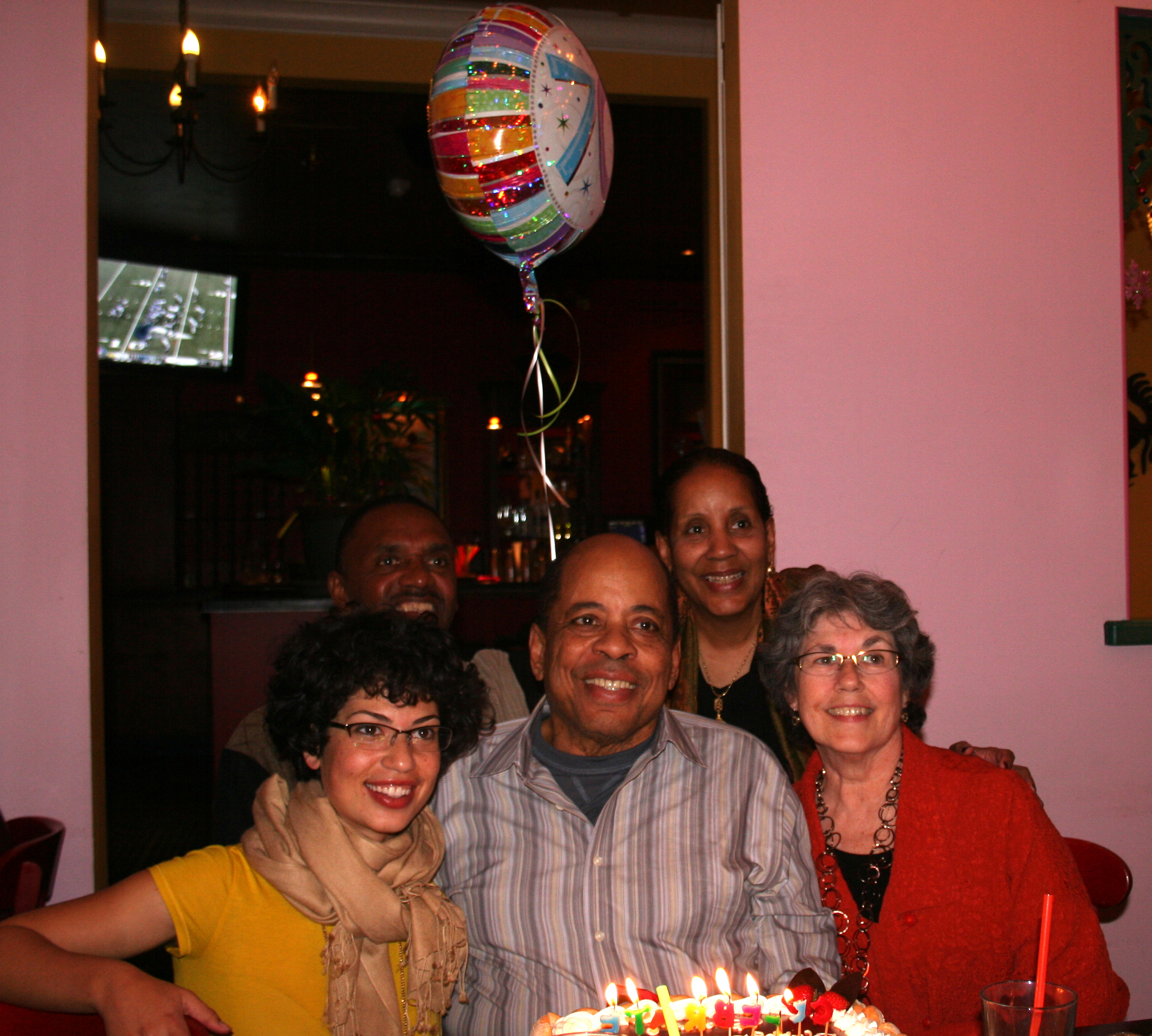
In any case, here are a couple family photos from yesterday, at my pop’s 70th birthday party — actually more of a celebration of life, resilience, recovery, and the amazing network of friends, kin, and pets who have all contributed to his recovery from a near-fatal health crisis. They say a lot, and very little.

Death To Tyranny (A Poem)

I hate tyranny.
Believe me, I do.
Each day I resolve anew to smash tyrannical impulses wherever they may lurk,
and destroy tyrannical structures wherever they may lord.

Like the sea star, my many arms stretch in many directions,
each fending off an enemy,
and like the sea star my guts burst forth out of my mouth,
and from my belly I bellow:
“Death to tyranny!  Fuck you, tyranny!  Fuck you!”

But countering my thrusts are a thousand treasons,
and even more traitors.
Every hour, it seems, an ugly surprise.  A slap in the kisser.
I gamely push back.  No pigeon shall shit on my head!  It is declared.

No splinter shall burrow into my pinky,
No roommate shall pile up dirty dishes,
or sprinkle pubic hair on the toilet seat like an amateur parsley garnish.
No clock shall molasses its way through a boring psychology lecture
Or a morning at the DMV,
No mail delivery person shall give me the side-eye,
No ex-lover shall guilt-trip me with two tickets to Anthony Hamilton.

I fight every fight I can.
But these are just the preliminaries.
These are merely the foundational bricks of my anti-tyrannical fortress.
If I let these petty traitors get to me, I will lack the power necessary to defeat tyranny where it matters most.
So I grit my teeth and deplete my resources
(Each daily assault costs so many resources; it is truly exhausting.)

Let me tell you something.

One time, someone threw a glass of water in my face.
A fucking glass of water in my fucking face.
Can you imagine?
Who could do that to a person?
Not that it’s the worst thing been done to me, but still.
Who could ever justify throwing a glass of fucking water
In somebody’s fucking face?

At the time, what came to mind was a wind-battered cypress
reeling back from the treacherous coast, preparing
to strike the inevitable blow.