india.arie --- I See God In You
Month: August 2009
Mandiram Yoga, Barcelona
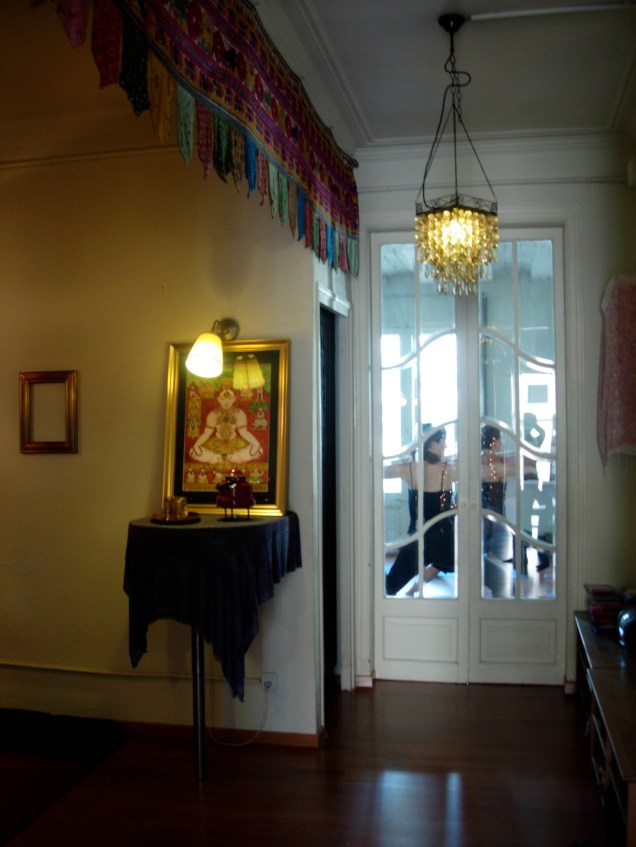
These days I’m back into yoga, 3 to 5 times a week. I found the studio, or it found me, quite by accident. Vipassana students are encouraged to organize weekly group sittings in their communities, just silently sitting together for one hour to support one another in the practice. So when I was kickin’ it in BCN for a couple of weeks back in June, I went with a friend to check out the Sunday evening gatherings, held in an unassuming apartment building right off of Plaza Catalunya.
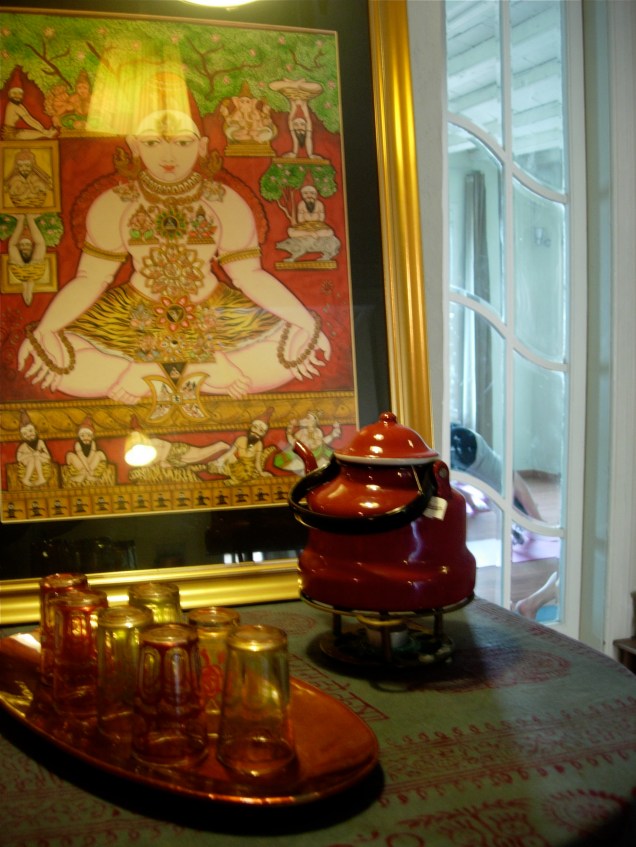
Have you ever entered a space and just felt it was something special?
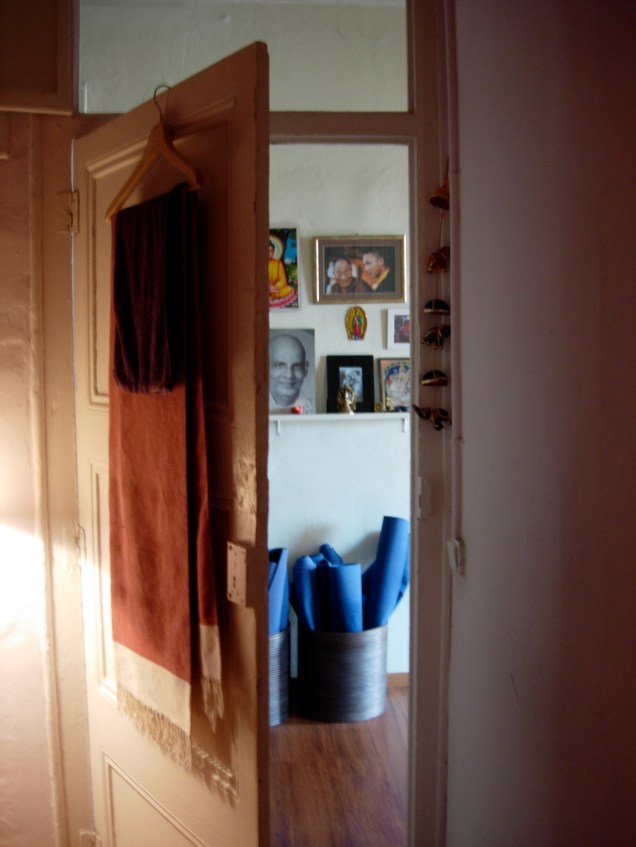
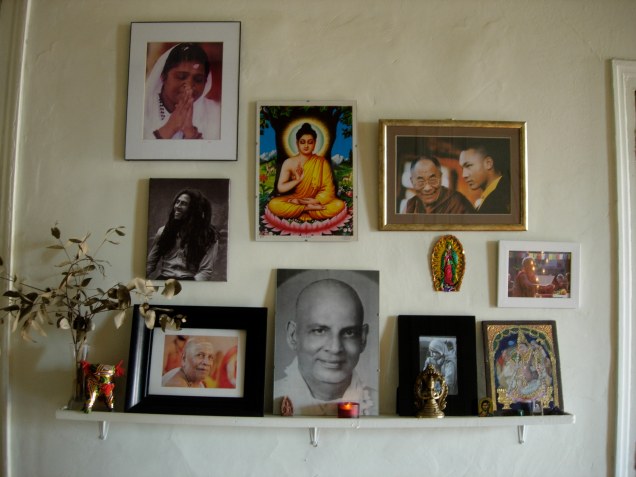
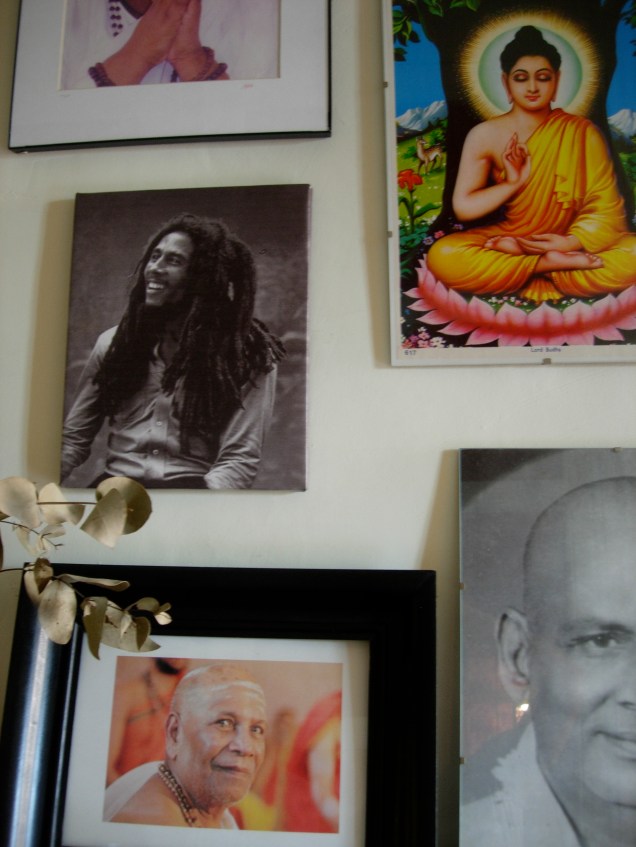
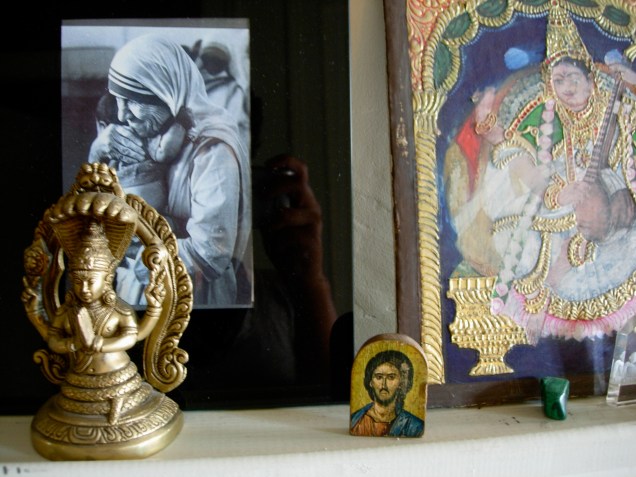
I couldn’t stop wandering around, looking in wonder at every little thing: the fabric mats; the incense; the photo of Bob Marley alongside the Dalai Lama, Mother Theresa, Jesus, Buddha, and other spiritual inspirations.
Smitten doesn’t begin to describe it.
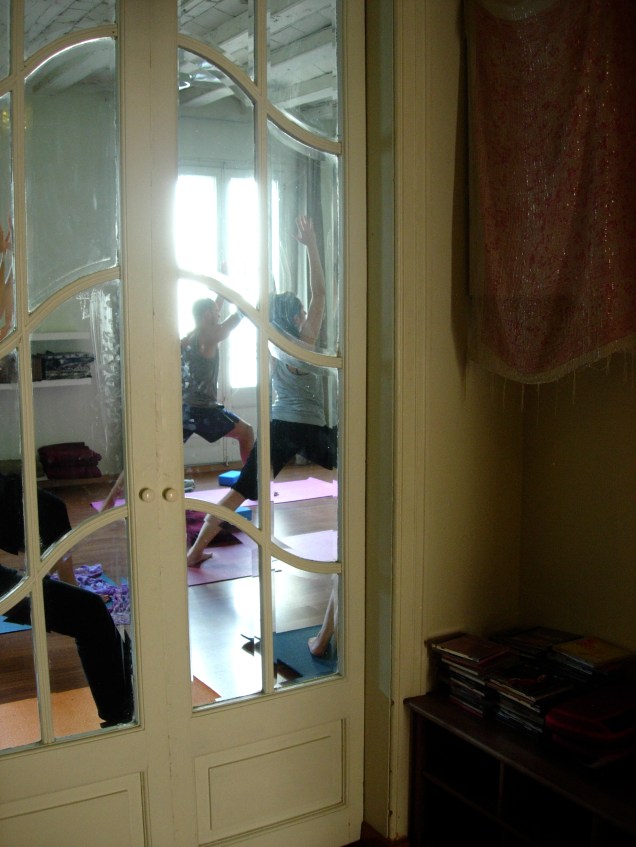
So when I decided to settle in Barcelona for a month, and wanted to sign up for a yoga class instead of a gym membership, I happened to know just the right place.
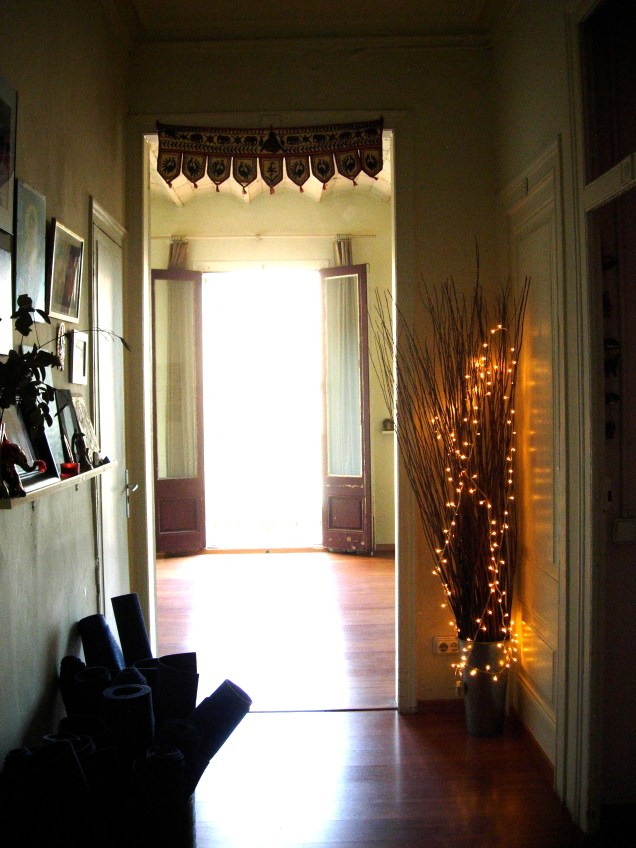
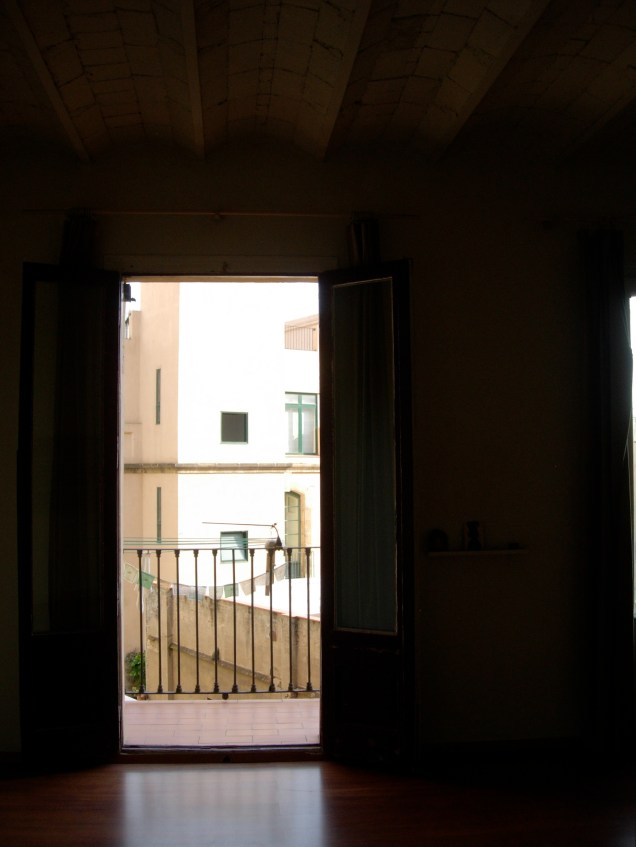
Owned and operated entirely by women teachers (though students of all genders attend), the studio has clean, airy rooms; fresh lilies every week; chandeliers; rooibos tea; a small library of works on yoga, India, and Buddhist philosophy; and extremely hardcore asanas.
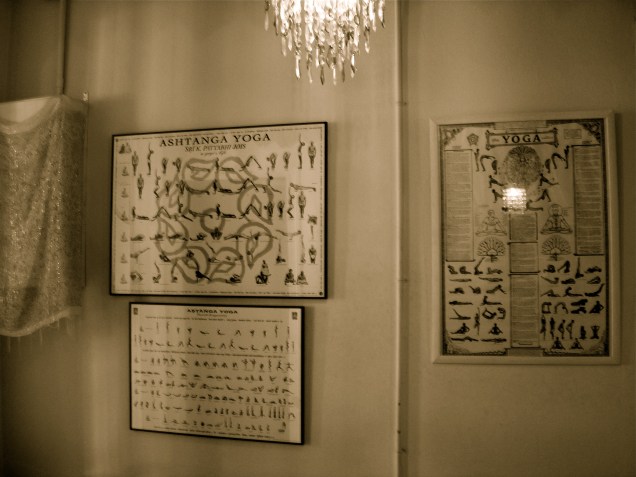
Every time I go, I arrive an hour early to read, and leave drenched in sweat, floating down the street. The two-and-a-half hours in between are filled with an almost palpable sense of caring — a bright, loving, permeating awakeness. And each time, thanks to the book or the practice or both, I come away having learned something valuable about how to live. Really.
Not all yoga joints are like this, believe you me.
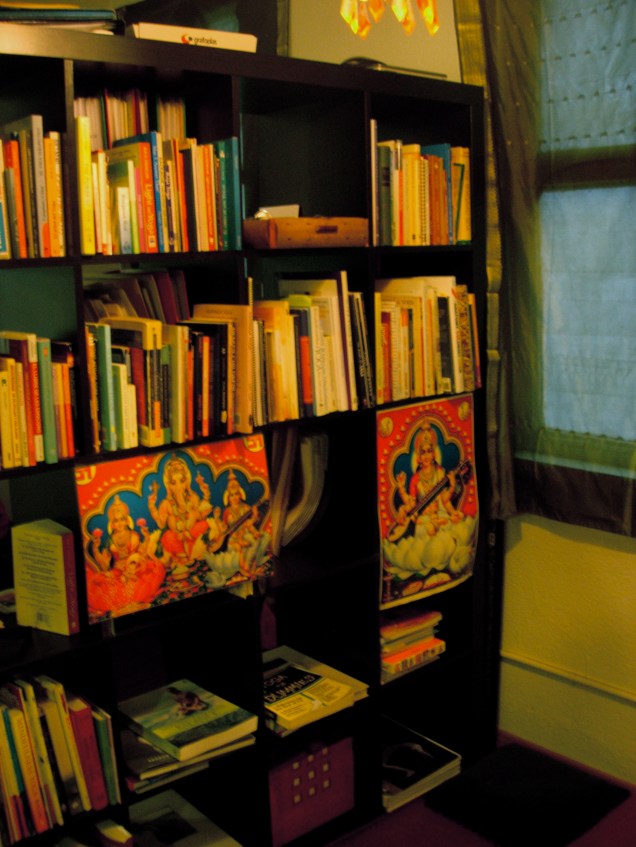
I hope you’ve found your own places like Mandiram. Sanctuaries. Places where the most mundane objects, gestures, and even open spaces seem luminous. Leave you feeling spacious, yourself, even (especially) when you return home and – bam! – your roommate convenes a Dirty Dishes Conversation.
Deep thanks to Gloria, Alex, and all the people who have given me, and others, this haven and springboard.


Further Death Of The Cool

An American study shows that “optimistic women” have better heart health and greater longevity than “cynical women who harboured hostile thoughts about others or were generally mistrusting of others.”
The findings echo results of Dutch research indicating similar correlations between attitude and health among men.
Lead researcher Dr Hilary Tindle, assistant professor of medicine at the University of Pittsburgh, said: “The majority of evidence suggests that sustained, high degrees of negativity are hazardous to health.”
But, I mean, what if they had found the opposite? Should we then try to be as cynical and pessimistic as possible, so that we’d have more years to fill up with misery?

Folks, I’m getting a familiar whiff of The Cool, here. According to The Cool’s logic, being negative is worthwhile because you gain things by it: things like protection (via mistrust); righteousness (from hostility, making someone else the ‘enemy’); or realism (you’re the anti-Pollyanna/up on the news/nobody’s fool).
If we accept this logic, then we might ask whether positivity has its own compensatory benefits.
And wouldn’t you know: it does! So science adds another tally to the “pro” side of happiness: “Being positive helps you live longer.”
But…do you see where I’m going with this? Can you smell what I’m cookin’?
Being positive helps you live better, for however long.
Ultimately, none of the supposed ‘benefits’ of negativity that The Cool promises us are true benefits at all. They’re simply variations on what The Cool loves best: more coolness. Even longer lifespans can be a form of Cool.
Now, of course, blind optimism never helped anyone, either. Nobody needs to live in denial. Optimism and realism can, and should, go together. All I’m saying is…when it comes to positivity versus negativity, there’s really no contest. Chuck the pro/con list and take a page from the book of these beautiful abuelas.

Or, if you prefer, heed the wise words of De La Soul:
And stop frownin like you hostile
You know that it’s a booger rubbin up against your nostril
Heh. Can you get much realer than that?
Hat tip to Junot for the article.
Malalai Joya and a Gandhian Paradox

My dear friend Adaner posted this article on Facebook: an interview with Afghan women’s rights activist Malalai Joya. Barely out of her twenties, Joya continues to courageously oppose Taliban and warlord oppression, expose U.S. propaganda, and inspire thousands of people — at the cost of her own personal safety. Though her efforts have been completely non-violent (illegally educating girls and speaking her mind as an elected representative) the resulting death threats have forced her to live under constant armed guard, sleeping in a different house every night and adopting a pseudonym to protect the identity of her family.
It’s a powerful interview. One point in particular stuck with me, in conversation with my recent reading on the life of Gandhi, to whom these words are attributed:
“Whatever you do will be insignificant, but it is very important that you do it.”
Joya is expressing the same idea, I think, when she says,
“I am young and I want to live. But I say to those who would eliminate my voice: ‘I am ready, wherever and whenever you might strike. You can cut down the flower, but nothing can stop the coming of the spring.'”
Just as a flower is not a season, but an expression of it, a good activist is not a hero, but an expression of a greater heroic impulse. At some point or another, almost everyone I know who has worked for social justice in some way has confronted this paradox. We want to contribute; we want to do our duty; we want to give. But how do we do this, knowing that though we may work ourselves literally to death, ultimately our contribution will be insignificant?
What we give may be minuscule, but that we give, and give purely, is what matters. To give purely means to be guided by something greater than ourselves, our clever ideas, our generosity, our solidarity, our unflagging commitment. To give purely means simply surrendering ourselves to the heroic impulse. After that, the gift will express itself in whatever form it wants to.
But of course, self-surrender is one of life’s most difficult goals. Requires an enormous amount of faith.
In Joya’s case, much of her faith seems to rest in other people. She trusts them to continue, even if she cannot.
“If I should die, and you should choose to carry on my work, you are welcome to visit my grave. Pour some water on it and shout three times. I want to hear your voice.”
Caj Chai and Café Politics
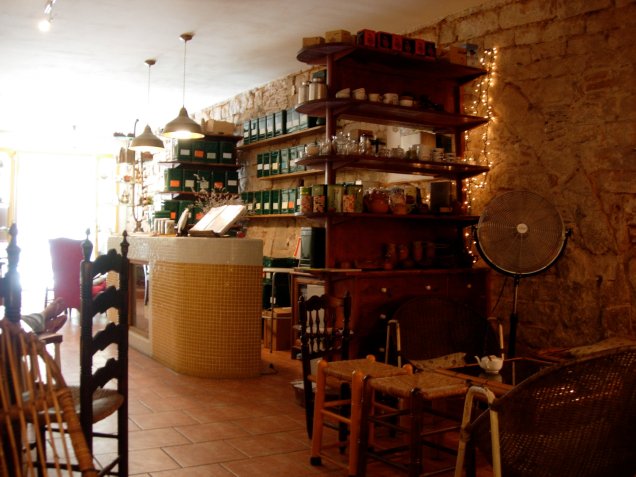
Since a friend of a friend turned me on to it way back in February, I’ve had many memorable and lucid moments in this place, my favorite little tea joint in Barcelona.
The name, I think, basically means “Tea Tea”: “Čaj” in Croatian (?) and “Chai” in Hindi. Staffed by Spaniards, Argentinians, Americans, and others; furnished with lovely old mis-matched chairs and tiny lamps; and offering teas from China, Japan, Korea, India, Nepal, Morocco, South Africa, Argentina, etc., it’s the kind of eclectic den whose global-grab-bag spirit might give off a bad vibe (hello, appropriation)…if it weren’t for the genuine sense of goodwill infusing the space as a whole. Cozy, welcoming, unpretentious, filled with music (from Oumou to ‘Trane and folks I don’t recognize), and featuring stunning work by local artists on the walls. Sort of embarrassingly similar to the kind of spots I like to frequent back in the States. But hey, that’s where I’m at, for now.
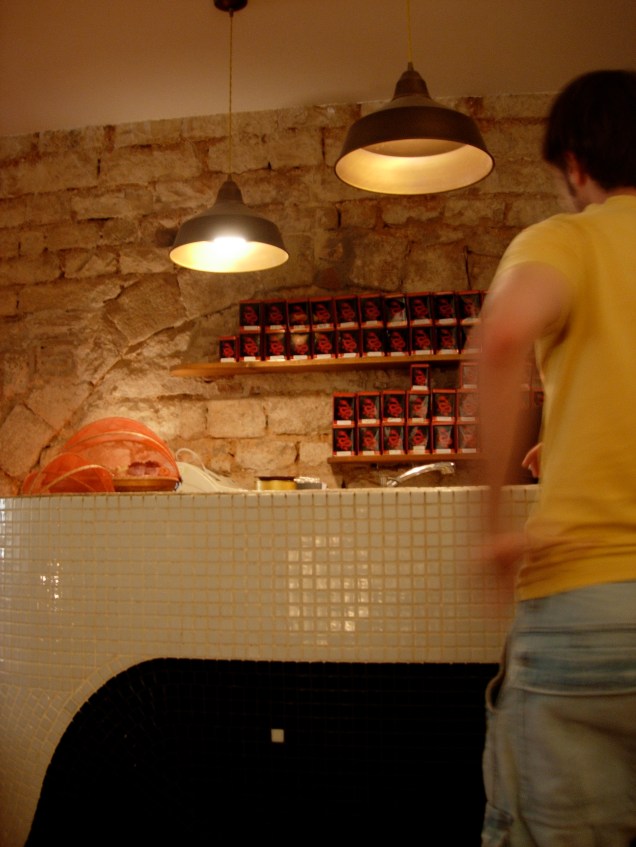


The feeling of being here reminds me of the feeling I get speaking English with a new friend in Spain or France or, better yet, India. The legacy of imperialism, colonialism, and linguistic hegemony makes me sad. But I’m also grateful to be able to connect with people through a shared language. Especially when spoken with love.
On the other hand, no matter how charming these nooks appear, or how much camaraderie they harbor (wealthy shade-seeking tourists mixing with local homeless dudes reading Shelley in Castellano), there’s still the question of their origin in other people’s labor. Who grows and picks the tea we enjoy here? Who cuts the cane to make the sugar? What are their lives like?
I don’t know how much of the stock at Caj Chai is fair-trade. Next time I go, I think I’ll ask. But even though the Fair-Trade label is somewhat reassuring, it’s no absolute guarantee. Besides, along with “Certified Organic,” here in BCN as in cosmopolitan USA, it’s become something like a fashion-designer label. And we all know fashions aren’t made to last.
There’s a lot to consider about our everyday places. Even when we’re not (as I happened to be, the day I took these photos) reading up on the life of Gandhi. :)



Birthday Wish

Guess what, friends? Tomorrow I turn 23. Normally I don’t ask for gifts, but this year my birthday wish is for you to answer this question:
What kind of person do you want to be?
Leave a comment, shoot me an email, post it on Facebook or Twitter, record a video, write a poem…or send a message in a bottle. Any way you please.
What kind of person do you want to be?
Tell me, and you’ll make my birthday the best one yet.
May y’all be happy (that’s my other birthday wish),
katie
Love And Happiness
Today’s 5th-most-emailed NYT article (copied in full below the fold) is a truly profound “Modern Love” column by Laura Munson: a woman who saved her own marriage using insight into happiness. Her summary: “I don’t love you anymore,” my husband said, but I survived the sucker punch.
It’s a perfect illustration of the ideas I used recently, during my own troubles with love. (Thanks again, by the way, to everyone who wrote with well-wishes and comfort after my weepy post from Paris.)
When Munson’s husband, demoralized by a mid-life crisis and a tanking job, came to her talkin’ bout rescinding his affections and wanting out of the deal, her response was, “I don’t buy it.” Which basically means, she recognized that this was his issue, not hers. So she didn’t take it personally. Instead, she tried to think of structures and solutions to help give him what he needed. (Space.) And she waited until the crisis passed. She refused to make herself responsible for his happiness, and at the same time took responsibility for maintaining her own — not blaming or resenting him for threatening to destroy their family.
Despite what most of the R&B songs tell us, love isn’t about being somebody’s “rock” and assuming the weight of their burdens. Ultimately, love is about giving them the space, time, and tools to stand on their own.
So when my friend in China confessed that he’d been concealing a new relationship from me, even though it stung, I was also able to recognize that it was not my problem to solve. It really had nothing to do with me. He was the one who felt confused and scared enough to hide the truth about something so natural and innocent: loving more than one person at once. Given the cultural shame around this kind of situation, keeping quiet about it for so long may have been ignoble or short-sighted on his part, but it’s also very understandable — not to mention totally commonplace.
And you know, it’s funny. Once we let go of our blaming and victimhood, a situation like mine or Munson’s can reveal itself as an extraordinary opportunity to learn. We can learn how to rebuild something broken, and even do it in a gentle, playful way. Her: planning middle-class summer vacations with the kids; me: proposing long-distance trust-rebuilding games.
And even more importantly, we can learn how to give love without expecting anything in return. Which is really the true nature of love, when you get down to it.
Munson’s ability to keep a level head and compassionate heart in the face of dysfunction in a marriage, of all systems, makes her story tremendously inspiring. And we can apply the same lessons to all sorts of loving relationships — whether with friends, lovers, spouses, or blood kin. Giving people space to be as they are is nothing less than a radical act of humanity. It doesn’t mean being a pushover. I don’t accept dishonesty, and Munson didn’t accept recklessness. But neither do we fight. No blaming, no struggle. Just seeing the situation for what it is, and finding ways to live it as lovingly as possible.
This is what the Buddha means in one of his notoriously challenging suttas about blame. From the Dhammapada:
“He abused me, he beat me, he defeated me, he robbed me,”
in those who harbor such thoughts hatred is not appeased.“He abused me, he beat me, he defeated me, he robbed me,”
in those who do not harbor such thoughts hatred is appeased.Hate is not overcome by hate; by Love alone is hate appeased.
This is an eternal law.
Wishing you luck in giving and receiving space to be,
katie
K and Silent Blog

. . .
;)
 Kloncke