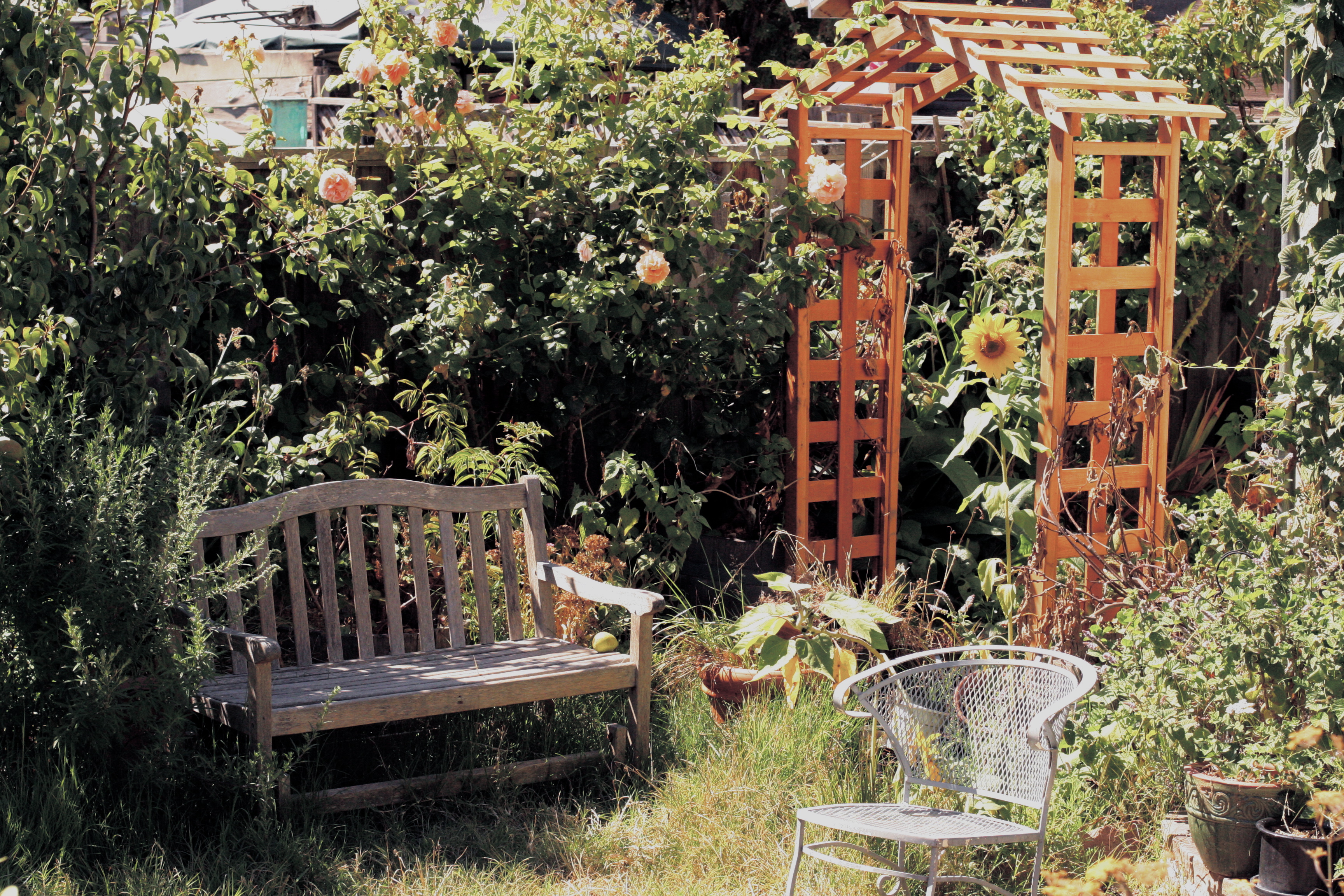
For the past two months, I was subletting a beautiful bedroom, in a beautiful house, with a beautiful backyard garden. On the few occasions when I invited friends over, nearly all of them marveled at the house. The splendid plants, the white piano, the cozy front-porch armchair, the kitchen swimming in sunlight. Each time, my stomach would turn, and I would shrink with awkwardness. It’s the same experience I have, sometimes, in a gorgeous, hip little coffeehouse in a gentrifying Bay Area neighborhood. The glass terrariums with their jewel-like moss and succulents. The indoor hanging bike racks and convenient public tire pump. The fancy teas in Mason jars on worn wood tables. The queer styles and asymmetrical haircuts. I enjoy these places, and I often avoid them (and not just for my wallet’s sake). They induce a special queasiness, the disquieting pleasantness of displacement.
This house — the house where I was staying: the landlords/housemates who owned it (1) run a nonprofit that “celebrates the earth-based traditions of Judaism,” and (2) have deep ties to community in Israel. Neither of these two facts poses an inherent problem. But I wondered, and I worried. Was my live-in landlords’ earthy loveliness part of the soft face of oppression?
Determined to “make the desert bloom”, an international organisation — the Jewish National Fund-Keren Kayemet LeYisrael (JNF-KKL, or JNF) planted forests, recreational parks and nature reserves to cover over the ruins of Palestinian villages, as refugees were scattered far from, or worse, a few hilltops away from, the land upon which they and their ancestors had based their lives and livelihoods.
Today, as Israel portrays itself as a “green democracy”, an eco-friendly pioneer in agricultural techniques such as drip irrigation, dairy farming, desert ecology, water management and solar energy, Israeli factories drain toxic waste and industrial pollutants down from occupied West Bank hilltops into Palestinian villages, and over-pumping of groundwater aquifers denies Palestinians access to vital water sources in a context of increasing water scarcity and pollution.
For me, this echoes painfully with the doctrine of “manifest destiny,” and the US colonizer history that continues to romanticize the “purple-mountain majesty” of a land bloodied by genocide and slavery. Again — not that all environmental groups endorse or perpetuate (whether tacitly or overtly) colonialism and genocide. But some have, and some do.
How did my landlords understand this pattern of greenwashed settler colonialism, and view their connection to it as US Jewish leaders practicing earth-based spirituality in deep community with people in Israel/Palestine?
I couldn’t ask. I was afraid. Not so much of what they would say, but of the potential fracas that might ensue from even raising the question. A fracas that would probably mean bad news for a certain tenant.
For similar reasons, the entire time I was staying in their house I avoided bringing friends around. What if they criticized Israel within earshot of the people who owned my home?
I mentioned my landlord quandary the other day to a friend of mine — a friend whose political opinions I deeply respect, and who has done organizing work around Boycott-Divest-and-Sanction of Israel (BDS) in solidarity with Palestinian people. At first, he pushed back and questioned why I hadn’t raised my concerns with my housemates soon after moving in with them.
In general, I agree — if Person A has a problem with Person B, it’s far better to ask Person B about the issue directly. Otherwise, Person A will likely go on making assumptions, resigning themselves to semi-resentful eggshell walking — if not all-out passive-aggression.
I also agree with my friend that if I wanted to, I could potentially use my Jewish ancestry — Holocaust, distant family in Israel, etc. — to make certain arguments in a way that could be somewhat easier for my housemates to hear. Maybe.
And yet. California legislators lump together well-founded criticism of the state of Israel with attacks on Jewishness itself. Was it unreasonable to infer that my landlords may share this belief? They may not — I absolutely grant that possibility. But was I willing to risk outraging them to find out?
My answer: no. At least not alone, not while I was living under their roof (without an easy fallback plan), and not while the potential payoff was so limited. After all, these are not folks with a ton of power (I don’t think), and neither are they people with whom I anticipate remaining in community. If they were my family, or my sangha, or big-time school administrators, it might be a different story.
Raised fist via Colorlines“Maquila: Sweatshop” by Favianna Rodriguez
Janie found out very soon that her widowhood and property was a great challenge in South Florida. Before Jody had been dead a month, she noticed how often men who had never been intimates of Joe, drove considerable distances to ask after her welfare and offer their services as advisor.
“Uh woman by herself is uh pitiful thing,” she was told over and again. “Dey needs aid and assistance. God never meant ’em tuh try tuh stand by theirselves. You ain’t been used tuh knockin’ round and doin’ fuh yo’self, Mis’ Starks. You been well taken keer of, you needs uh man.”
Zora Neale Hurston, Their Eyes Were Watching God
The representation of her sources of language seems to be her principal concern, as she consciously shifts back and forth between her “literate” narrator’s voice and a highly idiomatic black [sic] voice found in wonderful passages of free indirect discourse. Hurston moves in and out of these distinct voices effortlessly, seamlessly … It is this usage of a divided voice, a double voice unreconciled, that strikes me as her great achievement, a verbal analogue of her double experiences as a woman in a male-dominated world and as a black person in a nonblack world, a woman writer’s revision of W.E.B. DuBois’s metaphor of “double-consciousness” for the hyphenated African-American.
Henry Louis Gates, Jr. in the Afterword
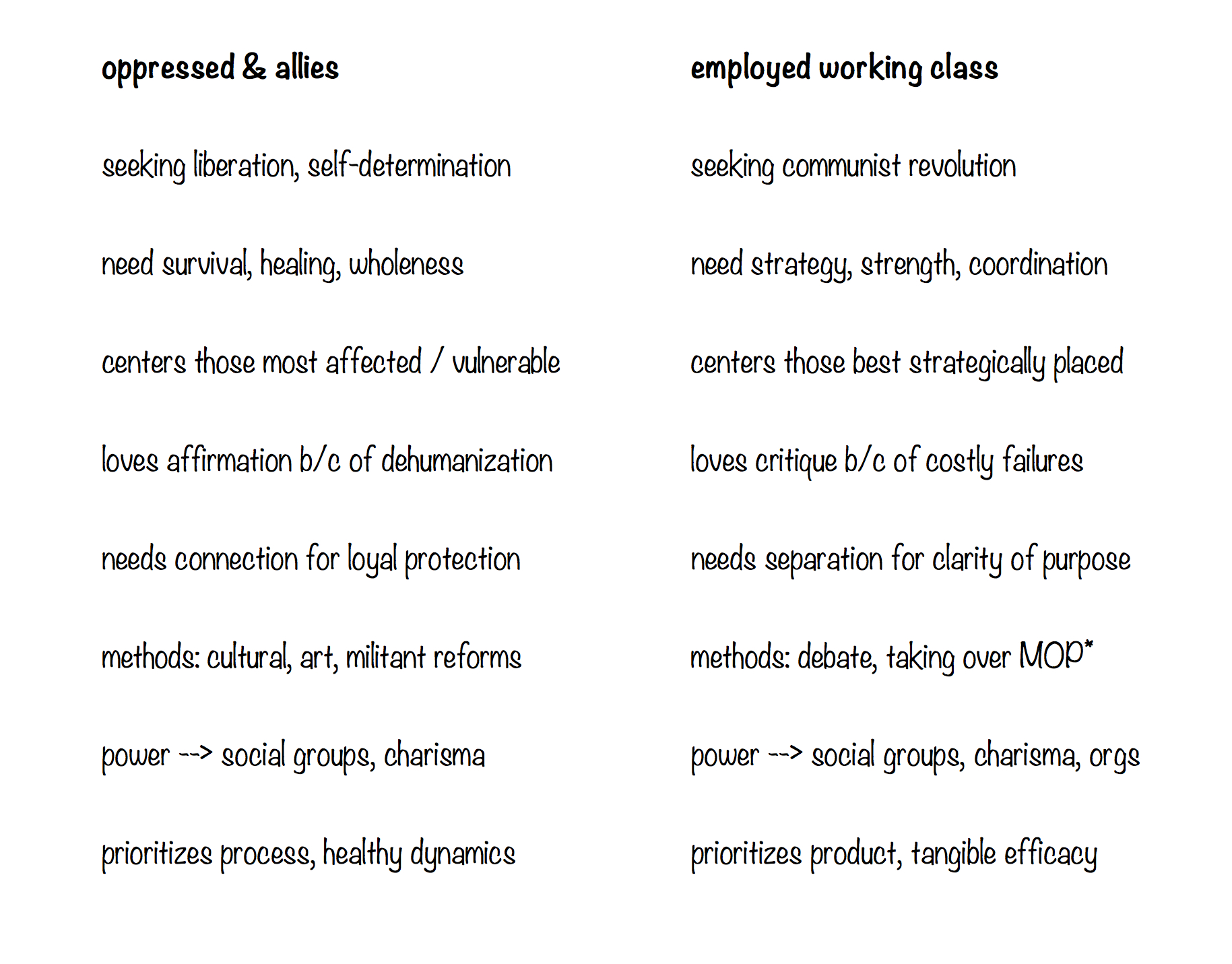
Binaries are false, and suck in many ways. Categories, even when there are more than two (black white yellow red brown; astrological signs) still inherently oversimplify. And yet, in the midst of an embattled year of trying to figure out where I belong within radical traditions, what a great relief it is to me to create two nice neat columns and try to map out some ideas. (Non-column schemas in the works.)
“Malcolm X” by Favianna Rodriguez“Everything Counts” by Favianna Rodriguez
These categories came as blessings from this weekend’s Everything For Everyone conference, a festival for radical anti-capitalists that was hosted in Seattle and attracted militants from across the country. In their closing plenary speeches, Mike Ely of the Kasama blog and Kali Akuno of the Malcolm X Grassroots Movement each raised the importance of “building alliances” between the oppressed and the employed working class.
But before I can think about building alliances, I want to try to understand the two groups. Who are they, exactly? How are they delineated — different from one another? As a first step I want to deeply and compassionately ‘interview’ these groups. Ask, in my mind, what they want. And to be clear, these groups and their characteristics Do Not Exist In The Real World in any sort of neat and tidy way. It’s just that the categories represent patterns I’ve witnessed in the Left/radical movements I’ve been around, and witnessed within myself, too.
*MOP = Means Of Production, the land, water, machines, and other material resources human beings use to keep ourselves alive, to reproduce our society.
These categories are not necessarily or always in opposition to one another! Which is what makes them tricky to puzzle out. I’ve seen revolutionaries try to reconcile them by pointing to certain common examples of overlap.
1. Indigenous/Latin@ Immigrants & Economically Displaced People
In the US, economically displaced workers from central and south america who toil at miserable jobs play a key role in the national economy. They are both “most affected” by and “vulnerable” to certain strands of racist, gender-oppressive, and economic persecution, and strategically positioned within the economy to fuck shit up for capitalism for real, as we’ve seen in beautiful explosions like the enormous immigrant strike on May Day 2006.
2. Queers Queer Liberation Is Class Struggle, a piece put out a minute ago by members of Unity and Struggle, lays out this argument super thoroughly, and in many dimensions: critique of the heteropatriarchal family, re-visibilizing the queer working class, exposing the ways labor disciplines our gender expressions, etc. One part I’ll come back to in a second:
I’ve heard vague calls for queers to [ally] with labor.
…
An “alliance” or “intersection” should not even be necessary, it is only made necessary by the fact that the union bureaucracy dominates “labor” and the gay elites dominate “queerness.” If we can break down these twin dominations then it will be much easier to build an “alliance” because most queers already are labor and many laborers are queer. This involves struggle and organizing.
3. Women
Women make up the majority of the world proletariat, comrades remind us. Furthermore, capitalism deploys patriarchy as a kind of leverage or bonus round for surplus labor, systematically labeling women’s work as “unskilled” and “domestic,” which conveniently justifies paying little or no wages for it. To organize for the liberation of women as a group, or even just “Black and Brown” women, the argument goes, is to make tremendous headway in organizing the working class as a whole.
But the working class is not a monolith. Over the weekend, for the first time in my memory, I heard revolutionary comrades start to use the term “employed working class” as a way of being more specific about which part of the working class they’re talking about. Before, I’d usually hear a broad-sweeping definition of the working class as “Those of us who have nothing to sell but our ability to work.” This broader definition, while sometimes helpful in pointing out what we share in common, and who our opposition is, frequently glosses over important strategic differences within the working class.
Some of us, whether because of racist systems of criminalization (got a felony? much harder finding a job), heteropatriarchal gender coercion (want to present transgressive gender or dramatically transition your gender at work? again, not easy in most cases), disabilities, or other reasons, cannot sell our ability to work. When the U&S piece says that “most queers already are labor and many laborers are queer,” this may be true, and yet transgender folks face double the average rate of unemployment in the US. Folks with non-normative gender or sexuality presentations are often only precariously employed.
Industrial Workers of the World
It is this harsh material reality that helps maintain informal economies (selling sex, drugs, under-the-table labor) and is also prompting large-scale experimentation in solidarity economies: ways of taking care of one another when the labor market rejects us. Networks of survival have always existed for those on the margins, but as Kali from MXGM pointed out, at this moment even more Black and Brown people are transitioning out of “surplus labor” populations (think: bringing in scabs of color to break up white strikes) into “disposable” populations, more like First Nations people and other resisters of genocide. No longer are Black folks needed in the US as a labor-substitute threat which helps maintain downward pressure on working conditions. Increasingly, this is a role brown migrant and undocumented workers play, terrorized under the threat of ICE. (again, i’m oversimplifying since black and brown aren’t always separate. Also, it’s possible that if and when the migrant surplus population organizes to strike as well, capital will call in a second reserve army: people in cages / prisons.)
The scale and speed of this process, marginalizing the criminalized and oppressed poor to the point of barring access to basics like food and shelter, is serious enough that oppressed groups are innovating systemic new ways of coping, or new versions of old forms. These innovations fit the logic of survival and sometimes even self-determination (Maker movement, urban farming), but rarely do they seem to translate into revolutionary threats to the capitalist system as a whole.
And this is where I often feel stuck, or torn. As a person of African descent in the US, should I set aside my people’s struggles simply because large numbers of us no longer occupy a central or strategic place as the employed working class, like we did in auto plants of Detroit in the 60s? Should revolutionary queers de-emphasize queer liberation just because anti-assimilationist queers are excluded from the formal labor market? Should people with disabilities that make wage labor impossible sit on the sidelines of revolutionary transformation? How will the dispossessed fight both to stay alive and to help make communist revolution in the US?
Arundhati Roy interviews guerilla fighters of the Communist Party of India (Maoist), 2010
I feel this double-consciousness within myself. I don’t know how to choose between, nor how to reconcile the two.
I read and read, but nothing seems to quite capture it. Blogs like Mia McKenzie’s Black Girl Dangerous exemplify the Self-Determination-Of-The-Oppressed logic, quite beautifully and sharply at times, as in her Open Letter to Folks of Color.
Despite your children being gunned down by cops like every single day, despite your mothers being sent to prison for “stealing” public education, despite your sisters dying in the heat of the desert while “sneaking” into a land that belongs to your own ancestors, not to mention being deported from that same land in record numbers, despite the CONSTANT beatings inflicted on your souls, you somehow still have souls. That’s fucking amazing. I mean, I’m not surprised. Your ancestors couldn’t have survived slavery and genocide without some damn serious sturdy genes. But still. It’s impressive.
I love you for all of these things.
From cultural workers and artists to Non-Profit-Industrial-Complex warriors, I see oppressed people and allies pouring heart and soul into defending and uplifting one another: trying to fight off reactionary laws, plant community gardens, bash back, feed bellies that need filling, pull teeth that need pulling. Not always doing it wisely, but coming on some level from different types of love.
Other pieces of McKenzie’s take a flip side of the POC-love coin, throwing a sharp tongue at ignorant white people and white queers. Today on a Facebook thread, two talented Bay Area queer revolutionaries called on McKenzie for “a bigger analysis” of white supremacy that “strives to look at the totality of the system, the capitalist patriarchal system, and the ways it has created and oppressed queers through placing us outside of the system.” Defying my categorized columns above, one of them argues, “Writing and writing our truths in particular is healing and important work. But I am also needing some strategy for liberation.”
But despite the brilliance that comes from so many writers, cultural workers, and organizers resisting oppression and developing new ways of being together, I have yet to see anywhere a strategy of communist revolution, even from revolutionaries in a Marxist tradition, that stems from an anti-oppression analysis, framework, and spirit more deeply rooted than the happenstance overlap of the oppressed and the employed working class. Folks in the anti-oppression liberation tradition tend to be amazing at critiquing the system, often with highly sophisticated analysis. Oppressed people articulate the cruel ironies of capitalism, a system that supposedly generates innovation and abundance but in practice murders, exploits, degrades and immiserates the majority of beings and the earth, reserving special forms of torture for different groups. This is true and important. But I don’t know how we propose to move from critique to strategy, without switching modes and focusing by default on the employed working class. I haven’t seen this done in the US. Have you?
I can’t reconcile the contradiction here. My impression is that many communist revolutionaries believe that the employed working class is in the best strategic position to overtake the means of production, a key step in making a worldwide revolution to overthrow capitalism and usher in a better system of social relations. This, then, becomes the focus of their strategy. Although many groups aim to “race, gender, and sexuality seriously,” this cannot ever equal the commitment of a Black person to the Black Liberation Movement, or a queer mujerista to the abolition of gender oppression.
“Distribution of the Arms” by Diego Rivera
Meanwhile, I am not sure what the focus of revolutionary strategy is for oppressed people seeking to overthrow oppression. A lot of the work seems to be in building faith in the worthiness of the oppressed (so systemically denied and crushed, ideologically and in the stupidity of everyday work — that’s real), building their/our autonomy, resisting attacks from capitalists and fellow working-class people, and having faith that they/we will discover for ourselves how to build new systems of social relations autonomously, even under capitalism. Eventually, we will transform society for the better. At the very least, we want to survive with dignity and exuberance.
I do not take this goal lightly. And yet, and still, I feel stuck.
When Skip Gates lauds Hurston for achieving unity of two unreconciled voices in her writing, he fails to mention that even within this double-ness, hierarchy persists. There is a reason that the white voice is the narrator (third person, omniscient) and the Black voice is the dialogue. Can you imagine reversing them? Can you imagine that a book with a Black-idiom omniscient narrator and white dialogue would make it in a white-controlled publishing market? Can you imagine it would sell in a white-dominated literary industry, as anything other than a curiosity (probably with porn themes)?
Similarly with revolutionary double-consciousness, I sense an implicit hierarchy. When people call for building alliances between the oppressed and the employed working class, I think oftentimes they really mean, organize the oppressed to support the employed working class so it can make the biggest moves to abolish class altogether.
I can empathize with this reasoning.
At this moment, I believe that the Employed Working Class perspective has a more plausible strategy for putting an end to the exploitative social relations of capitalism.
But this perspective seems extremely weak in its methods and strategy for sustaining healing and liberation from social oppressions that won’t automatically disappear even if we someday kick out capitalism. And it is therefore fundamentally limited in its ability to transform the world for the better. Not only limited, but self-undermining in its own quest for freedom, and tending to subordinate the struggles of the oppressed. They matter strategically only insofar as they link up to the employed working class.
This is not only a problem for the future, but a conflict right now.
Am I alone in thinking and feeling this? Do you agree? Disagree? Have you felt this revolutionary double-consciousness? Is Maoism an attempt to reconcile these two logics? What the fuck is even going on? Please help — I am rambling on too long. :)
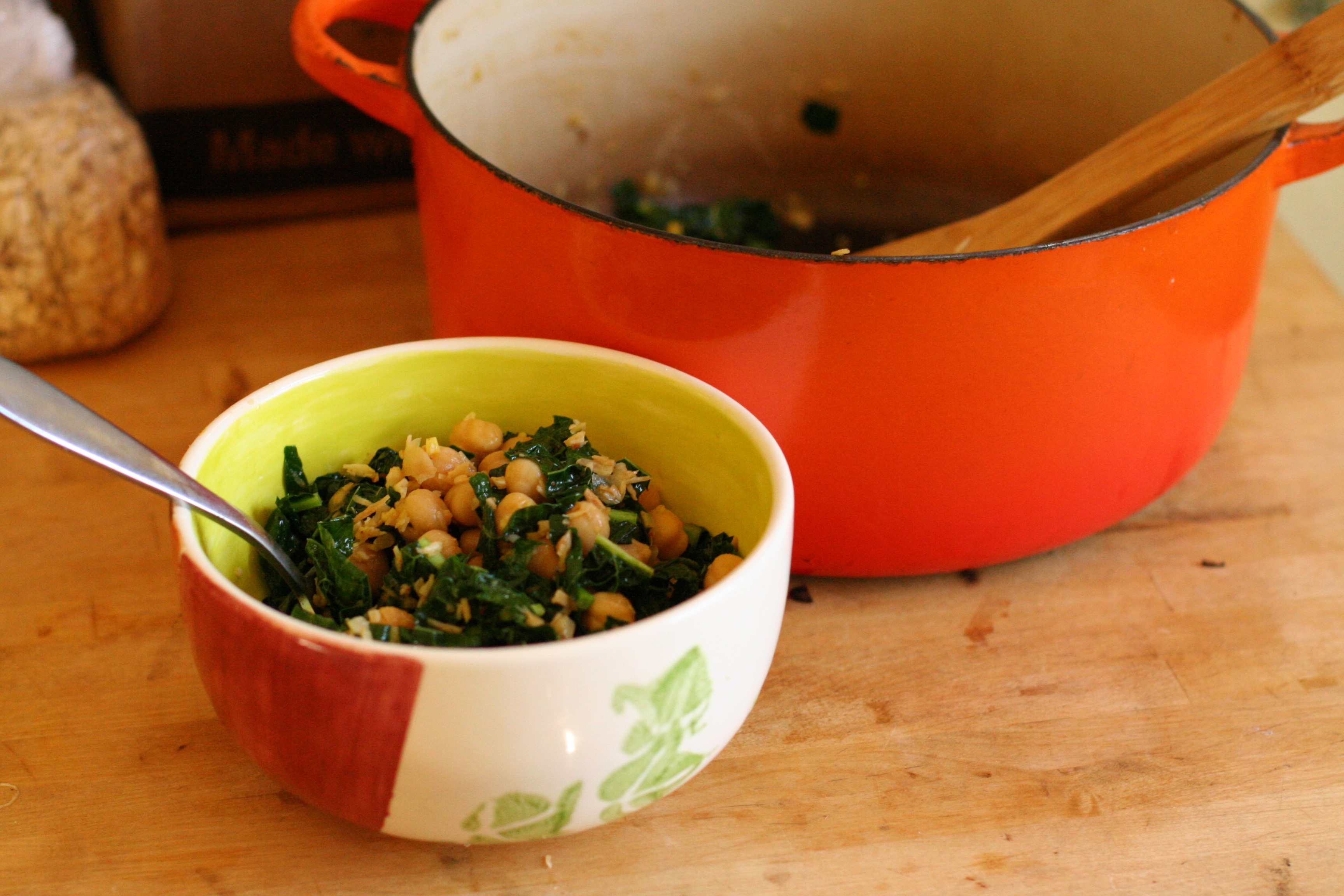
sometime this week when i get a chance, i wanna write about what we’re learning in the foreclosure-fighting study group. for now, it’s green that gets me through the week.
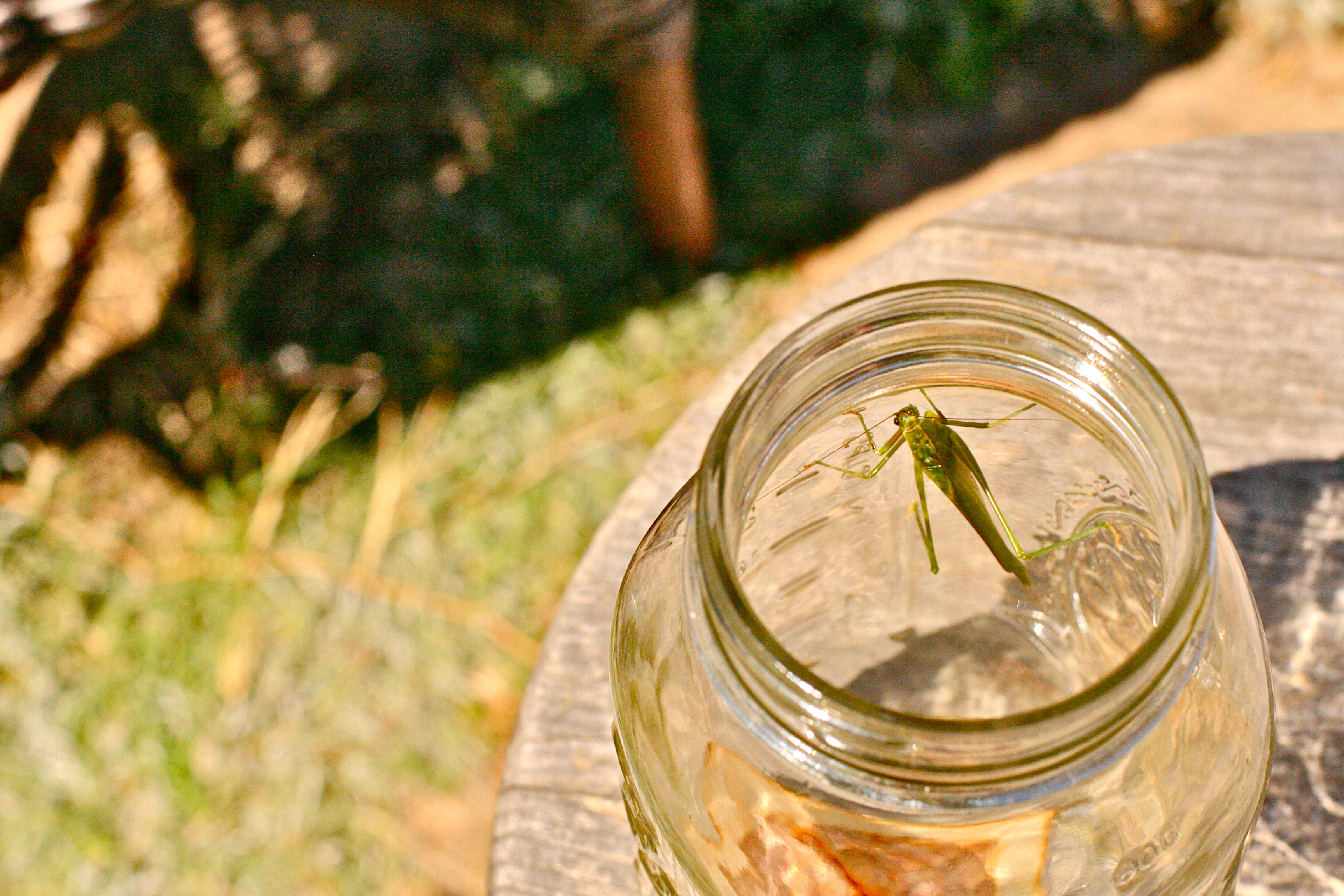
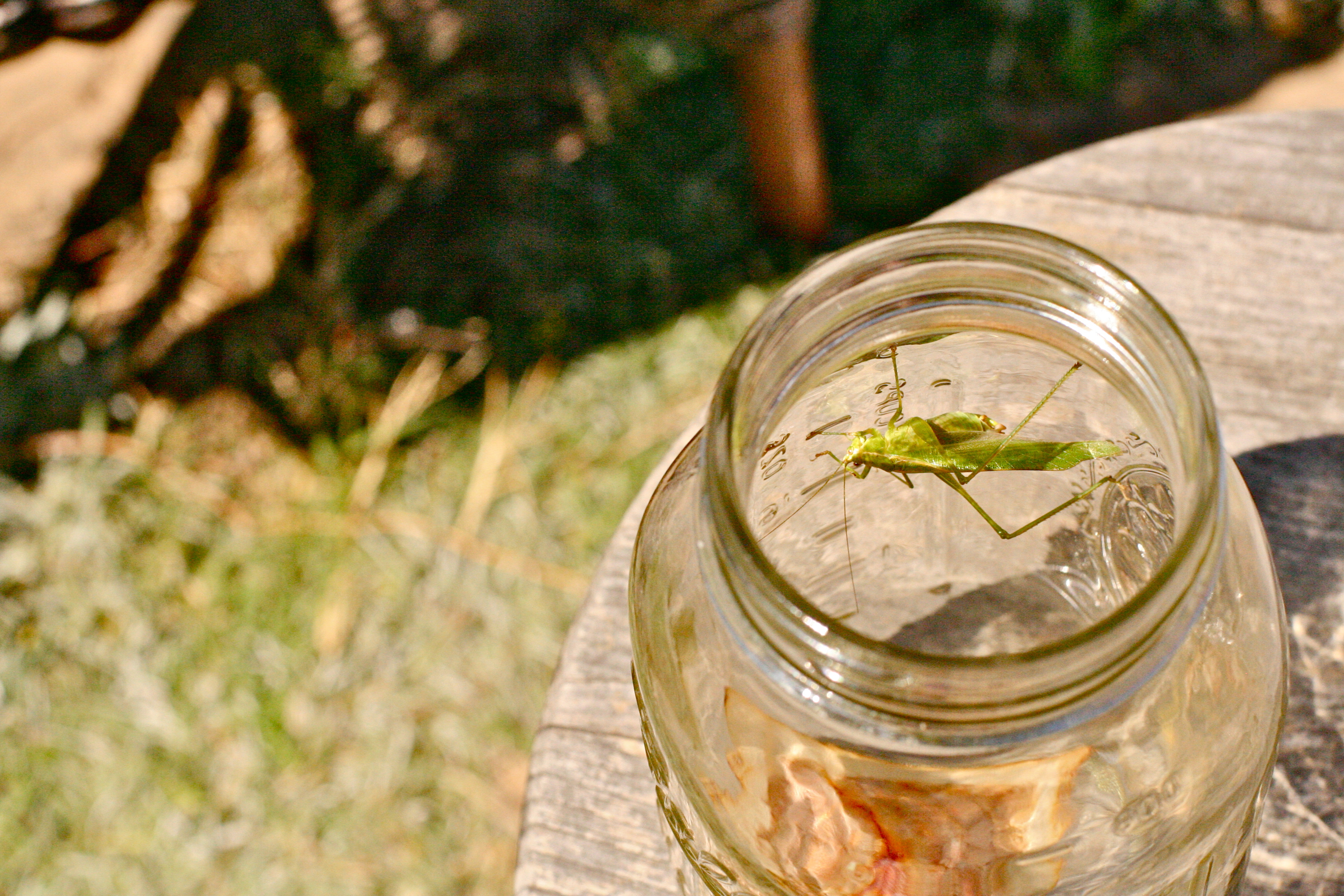
Kale and chickpeas with toasted coconut, ginger, and garlicA loud-clicking and uncatchable insect made a home in my bedroom for three days, until I finally nabbed him in my tea glass.
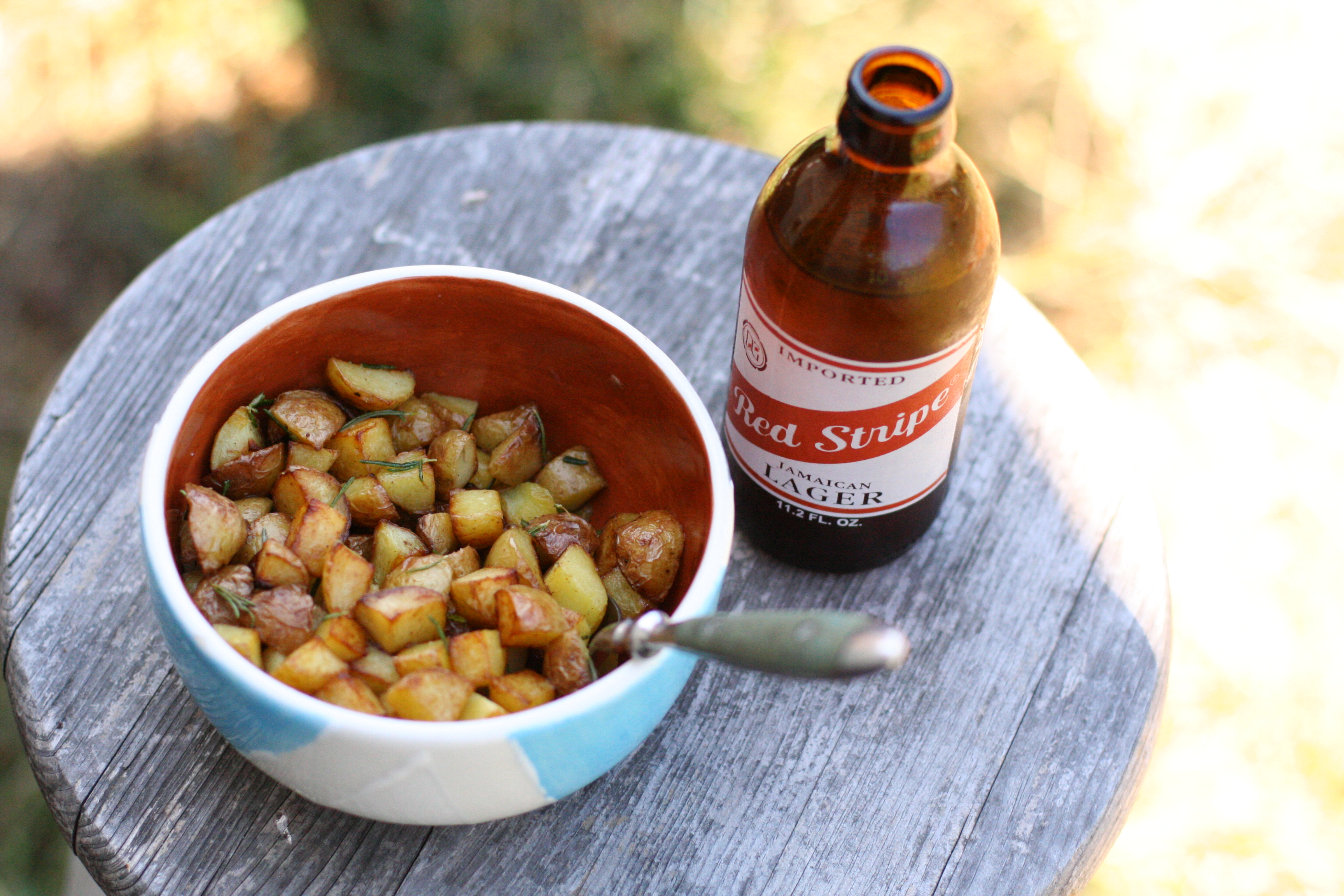
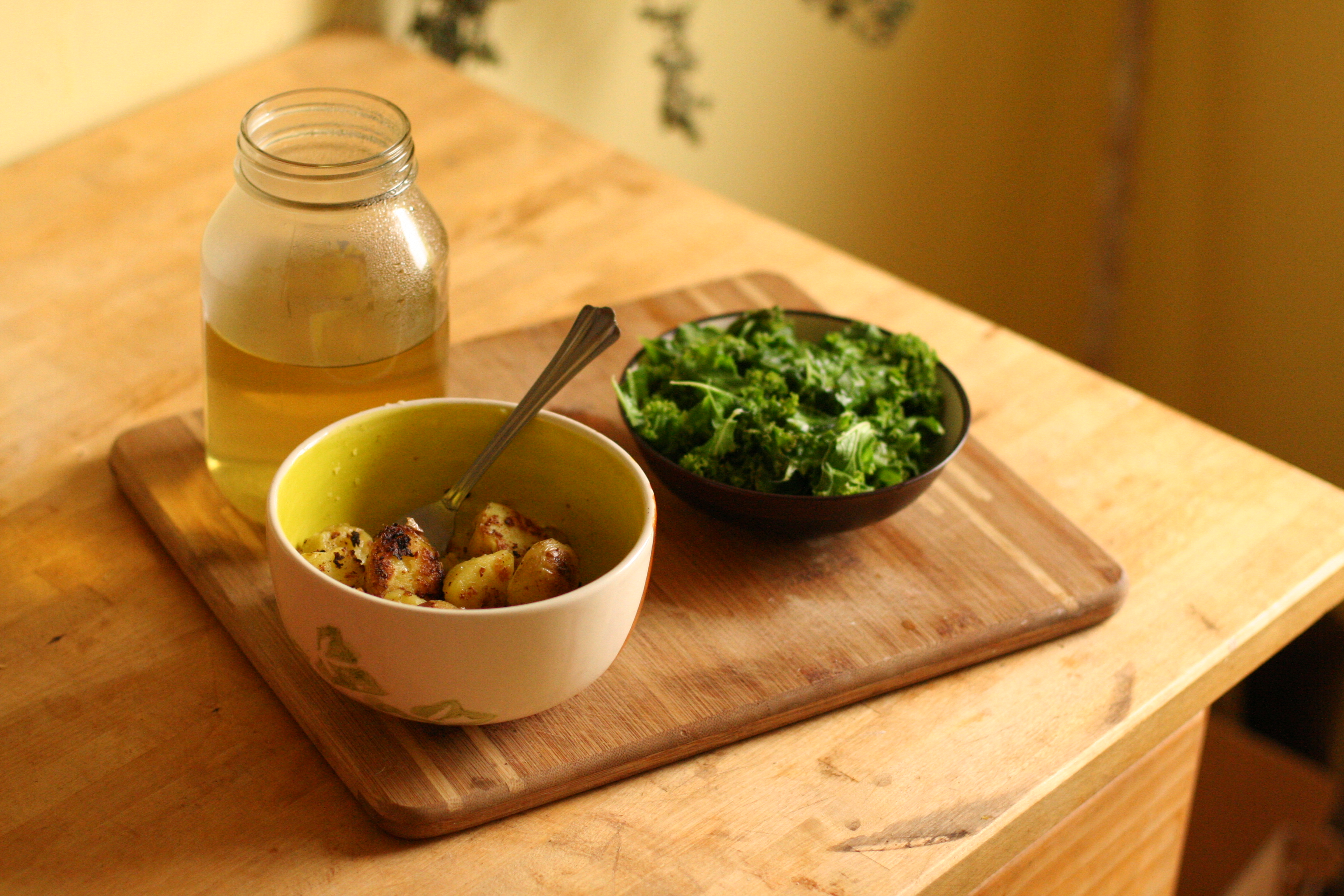
Breakfast this morning: genmai cha, little gold potatoes, and steamed kale.
When I feel weak, or lost, or unworthy of love, I’ve learned to expand my focus.
This doesn’t mean squashing or shutting up the painful parts. It just means paying close attention to what else is there. That way, the loud, dramatic emotions don’t dominate the scene. Grief and despair are not my only guests.
The Guest House
This being human is a guest house.
Every morning a new arrival.
A joy, a depression, a meanness,
some momentary awareness comes
as an unexpected visitor.
Welcome and entertain them all!
Even if they’re a crowd of sorrows,
who violently sweep your house
empty of its furniture,
still, treat each guest honorably.
He may be clearing you out
for some new delight.
The dark thought, the shame, the malice,
meet them at the door laughing,
and invite them in.
Be grateful for whoever comes,
because each has been sent
as a guide from beyond.
~ Rumi
Today, it was tantrums.
When someone I love told me, to my face, in a backyard garden, surrounded by roses and mint and blueberries and artichokes and rosemary and grape vines, that they don’t love me anymore, tantrums arose.
Oh, tantrums a-ROSE.
At first they rattled me, bat-swooping around my internal kitchen. But I neither repressed nor expressed the thoughts. I watched them.
Don’t believe everything you think.
~ Thomas Kida
And yeah, internal-tantrum-dialogue exists. Tears exist. You know what else exists? roses and mint and blueberries and artichokes and rosemary and grape vines. these are also real.
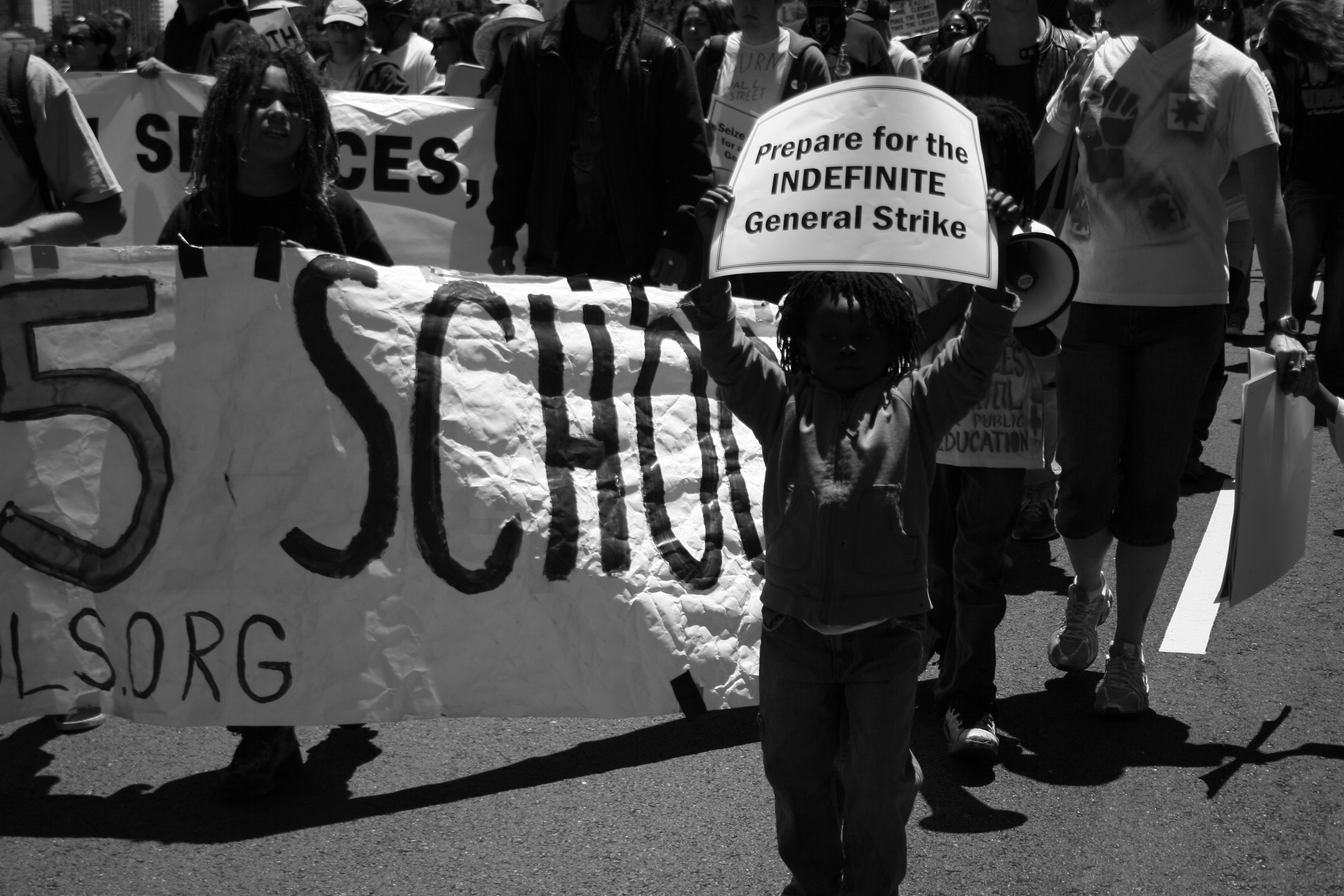
so are other things i’ve seen lately. beautiful students, parents, and teachers fighting against Oakland school closures; demanding education; rallying after police shut down their free summer school.
This slideshow requires JavaScript.
and so is this poem, written by children.
The Ways Of Yeast
No one is the boss of yeast.
It doesn’t listen.
It doesn’t talk.
It smells like warm dusty yellow water.
Abelina, Miles, Reece, Francesca, and Natane
There are also neutral things. The corners of boxes. Unscented air. A teacher advised me to acknowledge those, too.
By insisting on the totality, I re-establish myself in a landscape greater than the strong emotions. Not to make those emotions go away, but to be able to take better care of them. As Larry Yang says, awareness practice and lovingkindness are ultimately the same thing. Neither avoiding nor indulging tantrums (ooh, I don’t even dare to publicly write the thoughts that were bubbling up in my skull!!!), in offering awareness we offer ourselves.
A bat trapped in an unexpected kitchen swoops around in part because it is scared. My tantrums are not unrelated, I think, to the fears that many women of color experience, that we will never truly be worthy of love. And that the people we love, or on whom we rely for love, will hurt us. And somehow it’s our fault. Descendents of African slaves in the US have been fed this message countless times over the centuries. We are unlovable. We are less than human. No matter how hard we try, we will never succeed. (This, I think, keeps many Black people vicariously invested in Obama, despite the routine murders of innocents that he, through his job, carries out.)
But no one is the boss of yeast, and my fears are not the boss of me — no matter how deep they run.
Expanding the focus, I listen closely, and insist on the totality. Feels like more freedom.
Let me tell you a story from the meditation retreat last week.
One bright afternoon, lunch had ended and I was in the zone. Aware of each step, feeling the weight of the swinging doors and the giddy lightness in my legs after sitting on the floor so long, I glided out of the dining hall and turned to where the sky meets the hills.
I decided I wanted to sit at one of the old wooden picnic tables and watch the breeze ripple the sunnygolden grasses. This would put me even further in the zone. Deeper and deeper (that’s the root of the word “profound”: toward the fundus — bottom, or foundation).
To unlock the mysteries of my fundus, not just any old grass-gazing spot would do. Even in noble silence, I needed some extra solitude. A yogi VIP position. So I passed by the picnic tables occupied by one or two meditators, and chose the very last one in the row: empty, simple, and inviting.
Except for one slight problem.
____
If I were to sit on the bench of this lovely old rustic picnic table, the best, most poetic view of the hills would be slightly obscured by a leafy bush.
Undeterred, I came up with a solution. Instead of sitting on the bench, I would sit on the table top itself. Perfect! Ingenious! Mildly rebellious! At the very thought, I could feel my fundus draw nearer.
____
Eyes locked on that poetic spot in the hills, I felt my way around to the head of the table.
And as I gave a graceful hop up and back, pushing myself into the perfect perch, I noticed a sudden, unexpected sensation.
Splinters.
The Pacific Ocean is extremely cold in these parts.
Not stuck directly into the back of my legs, fortunately, but dozens of splinters, of various sizes, poking through my long skirt and sticking my skin.
And so, rather than grass-gazing meditation, the next forty-five minutes became a splinter-removing meditation.
Which, honestly, gave me as good and frank a look at my fundus as would anything.
__
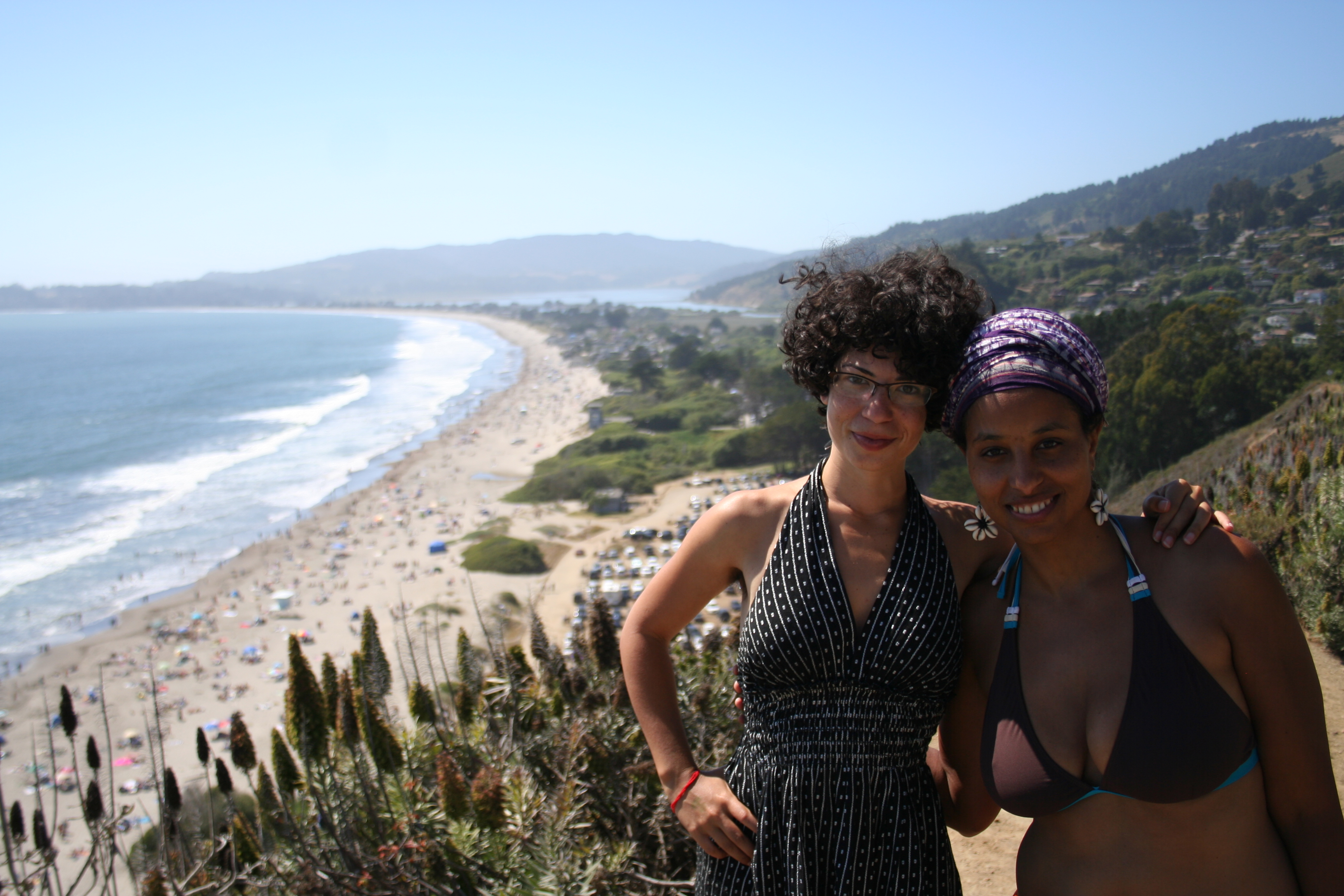
Now, Sierra and I, our spontaneous trip to Stinson Beach went the same, in a way. After a string of gray mornings, we awoke on a Saturday to a brilliant blue North Oakland sky. We had to get to some kind of water, we determined. So we packed a picnic and set out, across the Richmond bridge to Marin. Delicious drive. Not a whisper of a cloud anywhere.
Until the coast came into view.
Each of us felt the other’s heart sink as we saw it. A layer of fog thick as buttercream, like some cosmic cake decorator had piped icing right along the shore.
But that’s what’s amazing about traveling with a dhamma buddy. You are learning how to laugh at your own expectations. You remember the teachings: most of the time, we humans live our lives only through the angle of Gratification. We seek pleasure: the perfect view, sunshine at the beach. We remain oblivious to the second angle of reality — Danger (splinters, fog) — until it smacks us directly upside the head. Even then, we forget the next time, and the next. We always keep a fresh supply of disappointment.
__
But the third angle of reality — Freedom — releases us from the disappointment. We learn how to loosen our grip on our own expectations.
__
After debating turning around, Sierra and I decided to stay, eat our lunch, and see what happened next.
Liberated from the craving for immediate sunshine, we were free to notice other things. And we found that despite the fog, the sand was warm. And the chill was fading. And eventually, the clouds rolled out to sea completely.
applying for studio apartments gives me a sad about racism, transphobia, displacement, the prison industrial complex, and the whole system of property, among other things. still, here’s hoping i can find a good nest for the next year or so. may a new refuge support my / our work for freedom. ♥
Dear friends,
If you are going to read this article, please read the entire comment thread, as well. People have brought up some important points that give essential political context to any discussion of Black masculinity and sexuality. Rich and clarifying offline conversations have also happened. As Black women, the author and I welcome contributions and criticisms in the spirit of liberating our people, all beings, and the earth. Peace!
[You may have noticed that, despite having studied sexuality in college, I don’t write about sex on this blog anymore. That’s because of some family stuff. But since sex positivity remains important to me, I wanted feature this really interesting guest blog from my friend, comrade, and fellow engaged Buddhist Skyla. Thanks Skyla!
If reading sexually graphic material on my blog will make you uncomfortable, please skip this one. Thanks!
–Kloncke]
__
Dear David,
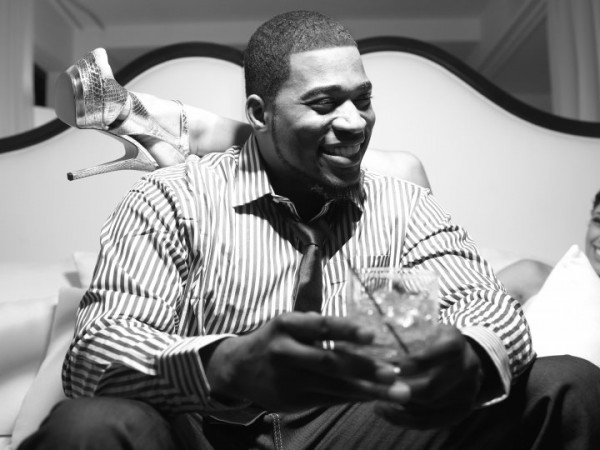
May I call you David? Thanks. I thought you’d feel that way. You seem eager to develop the intimacy between us. At least, that’s what I gleaned from what you said in your interview on MadameNoir.com, which was supposed to be about rapping with respect for women. Since the video title declares, “David Banner Speaks Exclusively To Women,” and I count myself in this category, and since you look at me through the camera and say things like, “I’m here to love you … touch you … hold you …”, I’m gonna go ahead and take your word for it that you are trying to make some sort of connection with me. Which, great! You seem smart and goofy, which I like, and in an interview about Trayvon Martin you talk about class war in a way that made me cheer out loud.
So David, since we’re fostering this connection, I want to offer some feedback about your analysis of your own song, “Play” — a song you refer to in the MadameNoire interview as “actual commentary” on your sex life, as well as “one of the dirtiest songs in the world.” And you’re right — this song is hella explicit!
(Static uncensored video and lyrics after the jump: NSFW)
Now, in your interview you lament the fact that most people missed the point of this song. They got too distracted by all the sexed-up language and missed your message: a message of respect for women. In your words:
Most men when they make songs it’s like “Girl come get in the car [etc etc I’ll fuck this, fuck that, throw you out the car, etc etc].” I said, I want to make a song where a man is telling a woman what he wants to do to make her happy. … But, you know, it’s about respect. And it’s about making a woman feel comfortable with herself and with her sexuality and with her body. And if you can do that without making her feel violated, she’ll do whatever she can — and that’s what “Play” was. And people missed that!
But where does that leave us? Honestly, to me it comes off as just another feminist holla, or a way of indirectly bragging on your own masculinized prowess by being like, “yeah, do this, do that, i’m awesome because i enjoy making you / watching you cum.” I mean, like I say, that’s maybe better than “I’m awesome because I’ll beat the pussy up in a way that gives me pleasure and status regardless of how it makes you feel.” At the same time, it’s neither easy nor simple to escape the ‘male gaze’: in other words, the ways in which women’s pleasure primarily gains value and meaning insofar as it is seen through the eyes of men, and helps get men off. Like spectacle lesbianism. Know what I mean?
Maybe what would’ve changed that for me is if the song had contained more of a tone of wonder, unknowing, appreciation and active learning about sexuality and what makes people cum. (Or, more broadly, what makes people feel happy and fulfilled sexually.) Personally, I get turned on more by a relationship and communication of caring / responsiveness. The vibe I get from “Play” is more like, “I already know what’s going to make you feel good, so I don’t even need to bother learning your particular body.”
This comes across in the visual language of the commercial music video, too, where all the exercising/stereotypically hot women are presented as interchangeable. We don’t need to know why you find them hot; the ‘objective’ fact of their hotness makes them special as a category but interchangeable as individuals. (I won’t even go into the ways that the whole workout / personal trainer theme totally undermines your point about making women feel more comfortable with their bodies … I’ll just give you the benefit of the doubt and assume you fought against your manager or whoever it was who insisted on that video concept.)
Adding to the sense of all-the-sameness, there’s also the standard line, “bring your friends over,” which, as usual in pop, omits any artistic details (emotional, aesthetic, or otherwise) of how that orgy might actually feel in real life. It’s just supposed to be what heteros do to get freaky. (Never hear these male pop/rap stars asking if they can bring their homeboys over to join them and the girl tho …)
To me real eroticism is about the details, the particulars — colors, textures, shapes, sounds, sensations. Being present and open enough to be surprised. And maybe “surprise” partly means what Audre Lorde defines as eroticism: powerful nonrationality. A nonrationality which, like women’s cumming, achieves much of its social value through the ways that it benefits men.
As women, we have come to distrust that power which rises from our deepest and nonrational knowledge. We have been warned against it all our lives by the male world, which values this depth of feeling enough to keep women around in order to exercise it in the service of men, but which fears this same depth too much to examine the possibilities of it within themselves. So women are maintained at a distant/inferior position to be psychically milked, much the same way ants maintain colonies of aphids to provide a life-giving substance for their masters.
In addition to exploiting/constraining feminine sexuality, I also think this know-it-all, feminist-holla swagger impoverishes masculine sexuality. Ultimately it becomes about marketing a repertoire of sexual skills, with no need to demonstrate responsiveness, mindfulness, and openness to the many permutations of sexuality that might actually exist! Like, sure i might care if you can fuck me hard or get me wet or eat me out in some artisinal way, but i’m more concerned about how you’ll respond if i feel like i want to ask permission to cum for the first time with you. Or to lie on my stomach in a weird and possibly unflattering position. will that freak you out? turn you off? will you respond supportively? can you ask questions and aim to learn?
that relational component of sexuality also feels, to me, somehow related to subverting the masculine/feminine, male/female binary. trans and intersex embodiment, as well as genderqueerness, can help us learn how to value and prioritize the asking of questions, honoring and enjoying people’s self-determinations and peculiarities, and not assuming that we know all about someone’s body going into sex.
Which, to me, is not about having lifestyle-activism sex. But about having hotter, more creative, fun and mindful sex — unlike the boring, cookie-cutter, fake-sweaty T&A that your music video producers are giving me.
Suzuki Roshi puts it well in his classic, Zen Mind, Beginner’s Mind. “In the beginner’s mind there are many possibilities, but in the expert’s there are few.”
Give me some more possibilities, please, David. That is, unless I’m someone who gets turned on when you dictate to me what I do or don’t enjoy.
But how will you find that out about me if you already think you know?
Tough to feel deserving of any positive blogging recognition when my updates here have been so scattered the past few months. But as always, I’m honored and humbled by this shoutout from the wonderful engaged Buddhist writer and activist Maia Duerr. You know how some people are mad talented at giving compliments? Maia is one of those people. She’s so thoughtful and specific when she names what she appreciates about people’s work. You can tell she’s really moving with what they’re putting out; not just scattering praise for feel-good purposes. Of Kloncke.com, she writes
Katie Loncke’s blog is, to me, the perfect intersection of spirit, politics, and heart.
Is that sweet or what? Really tho.
And the best part about being tagged with this kind of blogly award? Passing it on. Since Maia put her own spin on the shoutout selection by limiting her list to women, I’m going to create my own parameters, too. My list consists only of people I know and build with (politically, spiritually) in person.
infaquerical: a term created by my friends Candy and Castro,* who did not identify with either monogamy or polyamory, and wanted a new framework for thinking and living their coupledom. After writing out the aspects of their relationship that matter to them, together they birthed this word.
in: indigenous
fa: familia (chosen, community, & biological)
que: queer, querida
r: revolutionary, radical
ical: magical
Since its inception, they’ve been using infaquerical as a touchstone as they navigate complexities of a nontraditional, gender-bending and anti-capitalist romance. Castro might say to Candy: querida, I really want to spend my time with you: it’s been a hard week and my instinct is to retreat with you into our little world. But since we’re in an infaquerical relationship I think it’s important for me to spend some time with my homies, rather than defaulting into monogamous isolation.
Or Candy (feminine-centered) might relish opening doors for Castro.
Or Castro (masculine-centered) might enjoy sitting on Candy’s lap in public.
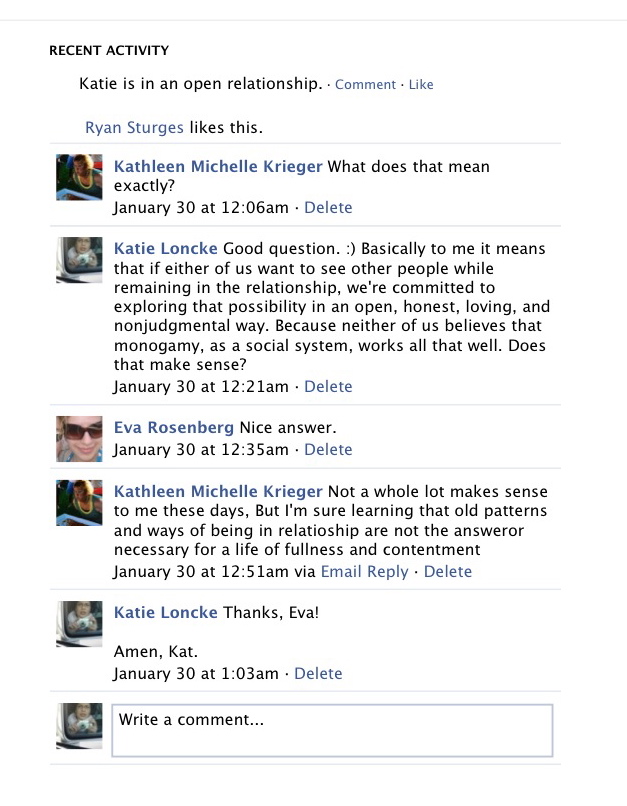
As you might imagine, I instantly fell in love with this dope-as-hell word. Not only for the meanings it carries, but for the process of intention that shaped it, and the ways it might live through people’s loving thoughts and actions. Reminds me a bit of the way Ryan and I attempted to (re)define our “Open Relationship” Facebook status in the early days.
Now, over two years later, Ryan and I have decided to end our time as a couple. And I think the way we’re doing it reflects the infaquerical qualities of our time together.
Non-blaming. It so happens that our breakup is nobody’s fault. If a couple (or group) decides to split up because one person wants to have children and the other(s) don’t, is anyone to blame? Ryan’s and my situation differs in specifics, but the gist is similar: our needs and desires just don’t happen to match up. Since we’ve spent over two years together responding to our conflicts with compassionate listening rather than defensive blaming, the breakup conversation, too, remained drama-free.
Supporting. In addition to harboring no resentment, we each have an inclination to actively (and carefully!) support one another. I say “carefully” because you know what? It’s easy for us sensitive-type humans to deceive ourselves, during a breakup, into thinking that the best form of support is sustained contact and connection. We want to show our former partner that we still care. So we stick around. (This has usually been my instinct, personally.) For some people this might work out well; I’ve seen it happen once or twice. But for many of us, “supporting” our former partner may actually mask our own desire to feel needed, wanted, and less-than-dispensable. More important than soothing them is ensuring they have the tools they need to heal independently. For cohabitants: do they have a place to go if they don’t want to stay at home with you? Can you stay with a friend for a while to make space for your partner? The stresses of making rent under capitalism can add a whole other level of stress to co-habitating couples splitting up. Can you have conversations about housing and property that stem from a place of “from each according to ability; to each according to need”? Instead of trying to be the main person emotionally supporting your former partner, can you enlist others? (Which brings us to:)
Community building. Typically when we think of a community supporting a couple, we might imagine a wedding (if we’re more mainstream) or a, Octavia-Butler-esque collective of people (and/or vampires), romantically and non-romantically involved, sharing resources and helping to raise the next generations. But it seems to me that for infaquerical relationships, the breakup is also an important moment to deepen community ties and trust. Especially when, as is the case with Ryan and me, the former partners share friends/comrades and important projects. Like Candy and Castro, Ryan and I have always felt it’s important to encourage each other to deepen friendships even while remaining anchored in a primary partnership. Now I see the fruits of this orientation. The day Ryan and I decided to separate, I later ran into one of his friends on the street, and as we were chatting it came quite naturally to me to ask this friend to check in on Ryan, to let him know that he’s loved and cared for. I know Ryan would do the same for me.
Enlightening. One of the most precious aspects of our relationship — and one that I’ll carry with me — was the way Ryan and I supported each other’s Buddhist practice. And as Thanissaro Bhikkhu says, “This is what we’ve been practicing for: the situations where the practice doesn’t come easily,” a.k.a. crises, or “storms.” A breakup like ours encourages us to cultivate paramis (positive qualities) of patience, generosity, acceptance, compassion, and determination. And while it may not hold true for everyone, I’ve noticed that for me, times of disorientation and big emotion (Pema Chödron famously calls this “groundlessness“) can actually flow spontaneously into deeper dhamma practice. When the mind and heart get overloaded, it can be easier to escape the tyranny of cognitive thought. Notice more sensations; notice the quality of change itself.
When green leaves turn in the wind
I vow with all beings
to enjoy the forces that turn me
face up, face down on my stem
~Robert Aitken Roshi, a senryu verse from The Dragon Who Never Sleeps
Naturally, separating from someone we love brings pain. Not tryna deny that sadness. Splitting up with Ryan means losing my best friend. But if I’ve learned anything from dharma and visionary politics, it’s that within crises — inside the instabilities: of gender, of capitalism, of heteropatriarchy, of the mind — we can also find opportunities for liberation.
With deepest gratitude to everyone who has loved and supported me and Ryan, as a couple and as independent people: you bring infaquerical to life!
love,
katie
–––––––––––––––––––––––––––––––
* Sweet corrections from Castro:
[M]y my housemate Ray, Candy and I all thought we should re-name and re-define our reality by creating an evolving framework and term that speaks to our lived experiences. So, infaquerical was a trio effort which is why it is also so wonderful because as Candy pointed out, the way we defined our reality included another person (Ray) not just the two of us.
In: Indigenous
fa: familia (chosen, community and biological)
que: querida/queer
r: radical/revolutionary
ical: magical
Infaquerical: a magical, radical, revolutionary and romantic relationship between two non-gendered conforming people; they live to restore humanity instead of living to make profit; have the desire to decolonize their mind and to abolish male supremacy; value familia (biological, chosen and communidad) and challenging male supremacist ways of thinking.
So amazing, right? Have you experienced or witnessed dynamics of infaquerical in your life? (Hehe, I know the answer is Yes because so many of y’all are dope livin-yr-politics messy queer feminist beauties) Please feel free to share testimony! I’ll be sure it makes its way back to Candy and Castro. :)

 How did my landlords understand this pattern of greenwashed settler colonialism, and view their connection to it as US Jewish leaders practicing earth-based spirituality in deep community with people in Israel/Palestine?












 Kloncke