After the happy madness of last week (school deadlines, dog-sitting, asleep by midnight and up by 4 some mornings for work, the Fools’ annual fundraising dinner — which involved, among other delights, facepaint, paella, and what seemed like six hours of assembling empanaditas), I’m ready to welcome the relative calm and spaciousness of April. Off to a great start yesterday, with the second gathering of a super-solid and heartwarming Marxist feminist study group, right up in the Fools’ Court.
Today, I’m re-anchoring myself with a few staples.
Feasting on the veggie soup I made last night in a fit of domesticity following a week of no home cooking.
Maybe a little yoga.
And as a bonus, a lecture at Golden Gate Law School on bloggers’ rights. (Which is especially neat since I got a sweet little reminder/invite from a couple of friends I made when teaming up with the law school’s ACLU club in the buildup organizing for SF March 4th.)
At right is the cover of a book recently compiled by my Uncle John: a collection of the letters, writings, and photos of his godmother, Nellie Briscoe Perry. His introduction to the book names the “why’s” of the project:
This compilation of writings is my way of sharing with others a rare opportunity to 1) learn about the lifestyle of African-Americans living in the historic Shaw district of Washington, D.C., which was rich in culture and the arts in the 1940s; 2) understand how the events of the early 1940s impacted all walks of life; and 3) know the feelings and thoughts of an African-American woman as she lived through and was affected by the events of those times. Most of the contents of this book are in Nellie’s own words. So too is the title, Forever Waiting, which was a loving message she used to end many letters to her future husband, Mutt. You are invited to take this journey and hopefully find it to be an enlightening and enriching experience.
This week, Uncle John (known affectionately to me as “Tall Meat”) will be meeting with the Historical Society of Washington, D.C., which is interested in housing the letters and photos in their collection. What were once personal articles will now become public pieces of shared history.
I haven’t had a chance to read the book yet, and nonetheless it’s been heavy on my mind the last few days. Mainly, I wonder: what if Nellie’s documentation and communication didn’t take the form of old letters, but a modern blog? Would their social value and interest change? Diminish? In general, when do we treasure personal communications, diaries, and scrapbooks, and when do we dismiss them as trivia or junk? What makes the difference?
Yesterday, during a haven’t-seen-you-in-a-year reunion adventure (involving a puppy, a car, a gorgeous hike, and a gas station clusterfuck), my friend Ivan called me out as only he can.
I was recounting my experience outing myself as “a blogger” at Goddard. That’s where you made your mistake, he said. You’re not a blogger; you’re a writer who happens to self-publish online.
Our friendly ensuing debate and the questions it raised have stuck with me. Are there significant structural factors that differentiate bloggers from journalists, essayists, or memoirists? Why do I call myself a mindful blogger? And, conversely, why don’t I call myself a writer? Why is it that, in the past six years, I’ve never really pursued publishing my own writing in any forms other than blogs? What is that about? Preference for a certain form? Fear of rejection from more traditional, established publications? Too lazy to write a column? Or too enthusiastic to stop making posts and helping to shape online spaces?
There’s too much to sort through in one post, so I think this will become a theme of inquiry for the week. Maybe longer. One clue to the question of what distinguishes blogs as a literary medium came to me, a few days ago, through an unexpected messenger: a Buddhist quarterly magazine called Tricycle.
Zenshin Michael Haederle’s article “Dharma Wars” (illustrated with the delightful collage above) takes stock of the rocky dramas unfolding online in many American, mostly-convert Buddhist communities.
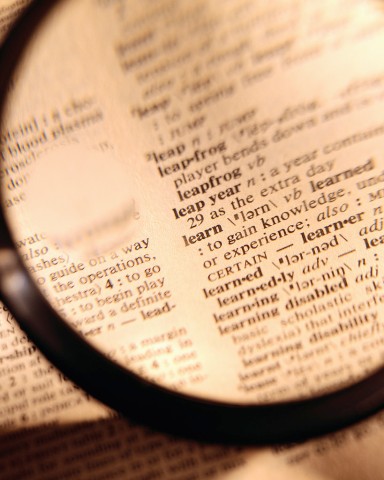
Knowledge and wisdom, far from being one,
Have ofttimes no connection. Knowledge dwells
In heads replete with thoughts of other men;
Wisdom, in minds attentive to their own.
Knowledge, a rude, unprofitable mass,
The mere materials with which wisdom builds,
Till smoothed, and squared, and fitted to its place,
Does but encumber whom it seems to enrich.
Knowledge is proud that he has learned so much;
Wisdom is humble that he knows no more.
According to the NYT, a recent study measuring correlations between living conditions and happiness in America found that they’re very strongly linked. More thoughts on that in a minute. But an informational byproduct of the study was a ranking of states from most to least happy.
At the bottom of that list?
Let’s just say that Jay-Z and Alicia Keys might not be pleased.
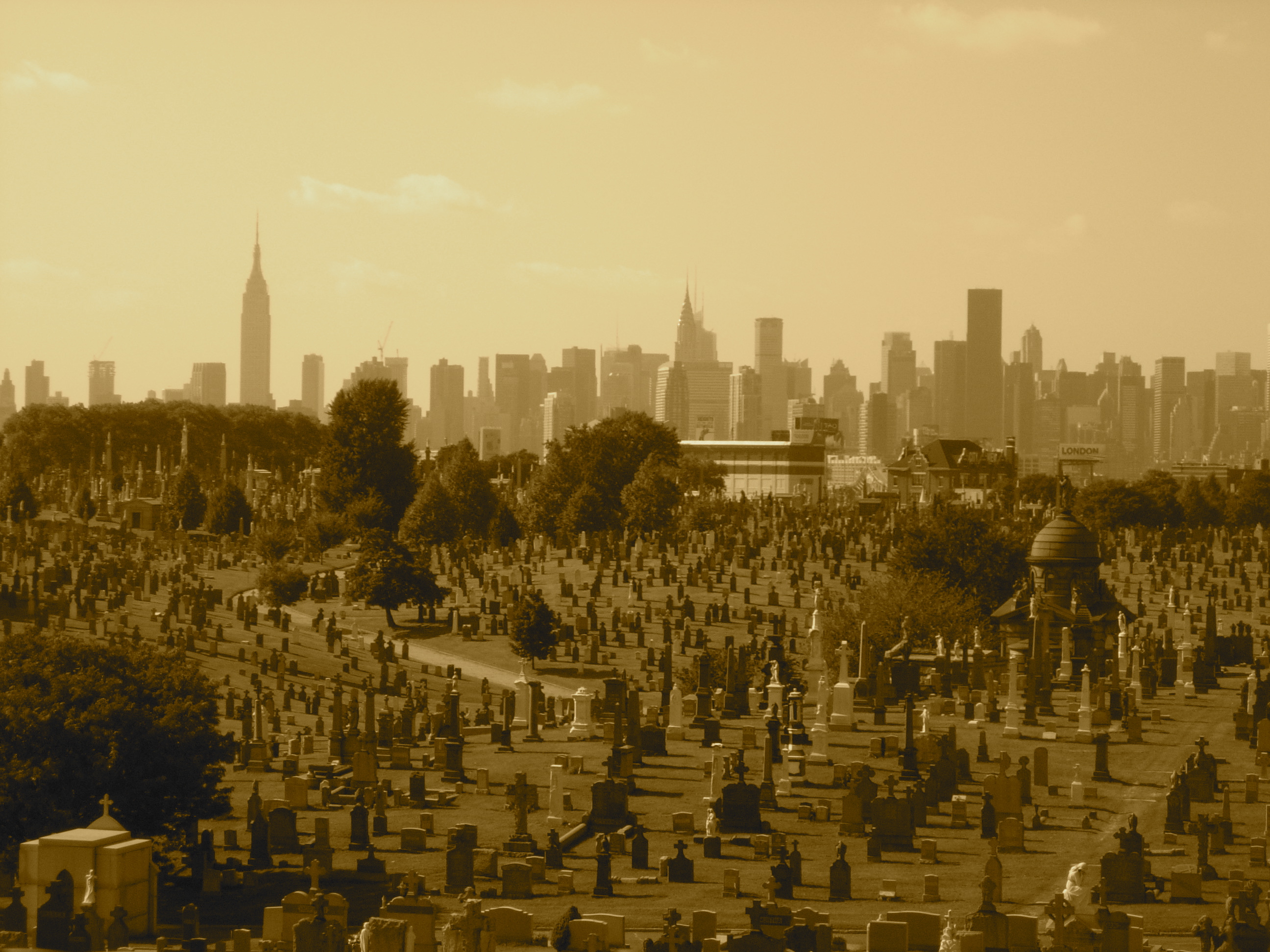
Sure, it’s important to avoid conflating New York City with the state as a whole. But it does give me an excuse to finally share my photos from September’s week-long visit.
To return to the main point of the study, though, and the article covering it: this journalist dude takes on a strange, pseudo-sarcastic tone in defending New York, and in so doing seems to be talking out of two sides of his mouth: (a) objecting that Poor people in those higher-ranked places can’t really be happy — they must be faking! and (b) defending unhappiness as a catalyst for great artistic achievement.
Let’s take the second point first. This is actually a pretty common attitude, right? Haven’t you ever known someone who seems to derive great satisfaction from their misery and solemnity, from complaining about it, or from constantly striving for bigger and better achievements, never satisfied with what they have?
Such attitudes or habits of mind aren’t limited to artists by any means — in fact, all of us fall into similar patterns from time to time. Even if we don’t particularly like feeling unhappy, we cling to an identity of unhappiness because it seems solid and somehow justifiable. Or maybe we’re terrified of what might happen if we let go of it. So we want to analyze it just so, and relate it back to our whole life history, beginning with childhood, etc.
With art, though, or “creativity” more broadly, this normal fascination with unhappiness is particularly easy to rationalize, since part of artistry involves representing human misery faithfully, accurately, and poignantly.
But all I’m saying is, if Michelangelo were a close friend of mine, and he had a choice between finding happiness and creating the Sistine Chapel, I’d encourage him to put away his brushes.
I mean, would we really wish unhappiness on another person — or on ourselves — just so that we could enjoy some good art?
It’s the same flawed logic I laughed about in another study, which implied that being a hostile and unhappy person might be worth it if it increased your longevity.
Mm.
As for Haberman’s first point, being dubious about the poor yet satisfied, here’s how I see it. His attitude reflects the common American notion that greater material wealth — and its attendant perks — grants us more happiness. But the quality-of-life measurements used in the study included a wide variety of factors, including “climate, taxes, cost of living, commuting times, crime rates and schools.”
Now, having a lot of money does expand one’s options, meaning that you, an individual, could choose to move to a place like Louisiana (the state ranked highest in happiness) and enjoy its sunshine and other non-monetary advantages. But simply having a load of money and living in a cold, dismal, rat-race, no-one-knows-their-neighbors and people-spend-half-their-day-in-traffic suburb ain’t gonna cut it.
Similarly, just because a state has a lot of financial wealth doesn’t mean it’s allocating it in ways that boost people’s well-being. More likely, it’s using it to further enrich the ruling class and imprison huge numbers of people of color. (Side note: I wonder if prisoners were surveyed for this study?)
The issue that interests me more, though, is why Americans’ happiness is so closely tied to predictable environmental factors of any kind — financial, structural, social, or otherwise.
I wonder whether a Buddhist country, for example, where dominant cultural wisdom might encourage disaggregating happiness from material conditions, would show similarly strong correlations.
Anyhow, The City was my first stop back in the States, and even though I find it stressful and would never want to live there myself, it sure was pretty to look at for a week in early autumn.
Hey y’all, hope you enjoyed the penultimate weekend of August. Me, I can’t believe September is almost here. In less than 10 days, I’ll be back in the States! Mercy.
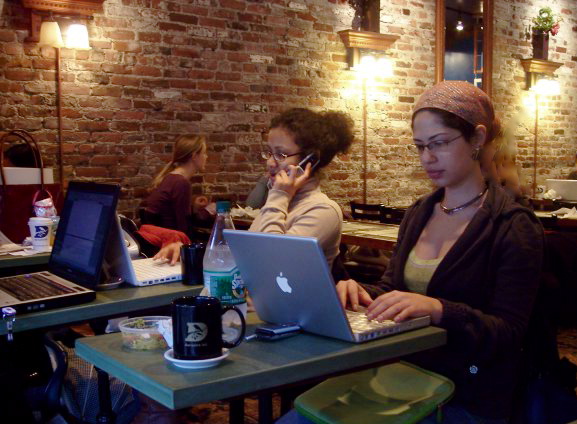
July marked the first time in almost six months that I’d lived in places with 24-hour, 7-days-a-week internet access. And it’s been both interesting and unnerving to watch my own habits morph back into cyber-centrism. Used to be, my first morning destination was the meditation pillow — followed by breakfast, then reading a book or writing a letter. Later in the day, I’d go somewhere outside the home to get online. Now, my morning Vipassana practice has slipped. The pull of the laptop is incredibly strong, and by the time I finish catching up on correspondence, reading, lurking, and mindless browsing, I’m all anxious to go do something — not sit still on the floor for an hour.
How about you? Is checking email your first major morning activity? Do you want it to be? If you could design your ideal start-the-day ritual, what would it look like? (Or if you’re already living your ideal, what does it look like?)
Personally, I think that my internet habits have a lot to do with my daily schedule — what time I go to bed, and what time I get up. When I sleep and wake early (like 9 or 10pm to 5 or 6am), I’m less likely to spend nighttime hours wandering Facebook, and the quietude of the deep morning facilitates deliberateness. Time before sunrise feels sacred, like every action carries the weight of real ritual.
This week I think I’ll experiment by returning to an early-to-bed, early-to-rise orientation, and seeing if it affects the browsing addictions. I’ll let you know how it goes.
Quickly, since it’s been on my mind, I just want to give a nod to two very different but equally historic and fascinating stories in world-class running.
First, of course, there’s Bolt — and his two record-breaking times, including the 9.58 seconds that blew history’s last best 100-meter run completely out of the water. Unbelievable.
But this week in running, there’s “unbelievable,” and then there’s “unbelievable.”
Hence the story of another winner, 18-year-old Caster Semenya. An unknown who exploded to World Championship victory in the women’s 800-meter race, Semenya’s legitimacy as a competitor is now under investigation.
An American study shows that “optimistic women” have better heart health and greater longevity than “cynical women who harboured hostile thoughts about others or were generally mistrusting of others.”
The findings echo results of Dutch research indicating similar correlations between attitude and health among men.
Lead researcher Dr Hilary Tindle, assistant professor of medicine at the University of Pittsburgh, said: “The majority of evidence suggests that sustained, high degrees of negativity are hazardous to health.”
But, I mean, what if they had found the opposite? Should we then try to be as cynical and pessimistic as possible, so that we’d have more years to fill up with misery?
Folks, I’m getting a familiar whiff of The Cool, here. According to The Cool’s logic, being negative is worthwhile because you gain things by it: things like protection (via mistrust); righteousness (from hostility, making someone else the ‘enemy’); or realism (you’re the anti-Pollyanna/up on the news/nobody’s fool).
If we accept this logic, then we might ask whether positivity has its own compensatory benefits.
And wouldn’t you know: it does! So science adds another tally to the “pro” side of happiness: “Being positive helps you live longer.”
But…do you see where I’m going with this? Can you smell what I’m cookin’?
Being positive helps you live better, for however long.
Ultimately, none of the supposed ‘benefits’ of negativity that The Cool promises us are true benefits at all. They’re simply variations on what The Cool loves best: more coolness. Even longer lifespans can be a form of Cool.
Now, of course, blind optimism never helped anyone, either. Nobody needs to live in denial. Optimism and realism can, and should, go together. All I’m saying is…when it comes to positivity versus negativity, there’s really no contest. Chuck the pro/con list and take a page from the book of these beautiful abuelas.
Or, if you prefer, heed the wise words of De La Soul:
And stop frownin like you hostile
You know that it’s a booger rubbin up against your nostril
Read this, from The Huffington Post. It’s the first half of an interview with Susan Smalley, Ph.D., who, like Dr. Jill Bolte Taylor, had a life-threatening personal experience that pushed her to tap into the non-rational part of herself. (The second part of the interview was published yesterday, if you want to check it out.)
PF:What was your life approach before this heightened awareness?
SS: I didn’t think about trying to heighten my sense of consciousness in any way. I thought, yeah, learn more, read more, study more, talk to people, everything’s in books, everything’s out there in a reason-based world. Just follow it.
I gave zero time to places that would increase intuition, or enhance insight, ignoring what is probably a core component of wisdom. I was just running around constantly doing, doing, doing, and trying to soak up knowledge from books and experiments and science.
Sound familiar? Sure did to me.
Dr. Smalley goes on to describe the nature of her “mystical experience,” and how she worked to integrate the insights she gained into the ‘real life’ she still needed to maintain.
In particular, this part hit home like woah, in the decisions I’m facing right now:
My quandary became that I didn’t know how to go back to work, as I had a totally different view of the world. I felt that the insights I gleaned during that 30 day period were ones that we could each discover but how do you discover them if you don’t give time for yourself to try to uncover that stuff?
Before I didn’t think that this was anything I should value … to take time for myself, to reflect on things. Or to use any kind of tools that could help you to do that.
I didn’t know what to do next and I didn’t know if I could ever go back to UCLA because I just thought it was so inconsistent with this way of seeing the world – an alternative way of knowing – a first-person experiential way vs. a third person scientific way. Both are valuable and I used to think only one was valuable for real truth, until I realized they both are valuable.
How do we find life work that promotes both of these ways of knowing?
If anyone has any suggestions, please spill. :)
And why do stories like this one garner so much attention? Why are they compelling? Perhaps it’s a rare and special case when someone so accomplished in a recognized intellectual field (especially Western medical science), but who lacks spiritual knowledge or wisdom, suddenly opens up to this new dimension of learning. Every day I feel grateful that my life took this same kind of turn.
Tomorrow I’ll post a letter I wrote to someone who helped me make the leap.
I’ll be updating regarding the blog posts, so people know what’s hap’nin here. I still have my reservations about the tool, mainly because I think it encourages extreme identification with thinking and doing at the expense of being and presence. The only way to tweet while being fully present would be to type something like, “I am typing the t key now the h key now the e key on my twitter.” And even that doesn’t cut it. You feel me? You can only really tweet about something you just did or something you’re going to do, both of which only exist in your mind (memory or projection), not in deeper reality. You can’t tweet about what you are doing right now. Impossible.
On the other hand, like TV, I think that if used wisely and cautiously, it can be helpful.













 Kloncke