I don’t want to fight my landlord
over who will pay for bed bug extermination.
I don’t want to feel relieved
when the infestation’s epicenter
turns out to be in the unit upstairs.
Those men are broke enough as it is,
trying to stay clean and sober and keep a job.
Can’t afford a thousand dollars
for liquid CO2.
I want a building, a block, a cityland
where everyone is secure
in a shelter they love
where no one feels pressed to salvage
a dubious mattress
unless they can take it to the free clinic
for thorough inspection and cleaning.
No big deal.
I want to be free and open
to share the pains of infestation:
we’re in this together.
I don’t want to fight my landlord.
I don’t want a landlord at all.
I want a world without them;
bed bugs we can handle.
Hey folks, sorry for the signal loss! It’s been mad busy around here, partly because of the following little experiment I’m planning, with the help of some good friends. In short, for one afternoon I’m going to try to translate the blog “in real life” (IRL).
The only the IRL ‘blogger’ (or blogger-heavy) gatherings I’ve attended myself have been conferences. Media conferences; technology conferences; things like that. In this type of scene, bloggers from across the country (or among many countries) not only get to expound their theories before a live, half-listening-half-Tweeting audience, but can also lock screen-addled eyes with many writers theretofore befriended — or offended — exclusively online. I’ve seen drama erupt at these idea emporiums, but I’ve also witnessed cyberdenizens leap over tables to greet each other, practically converging midair in an embrace of mutual affection, admiration, and I-can’t-believe-it’s-really-you.
For my own shindig, though, I want to go in a different direction. Very chill, more like a housewarming or offbeat birthday party than a serious networking meet-and-greet. Although there are plentyofonlinewriters and creators I’d love to meet in person someday (and many wonderful ones I’ve already had the fortune to know), most everyone invited to Kloncke IRL are people I’ve known offline for a while. Here’s the email I sent out about it (well, a slightly less colorful version) to my local peeps. Faraway compas, I love you and wish you could be here! My address has been changed for this version because, well, I don’t want it circling around, you feel me? But I’m posting it here because I occasionally meet people in the Bay who’ve read Kloncke but don’t know me personally (yet). If that’s you, shoot me an email, and come on out next Saturday! Love to have you.
dear amazing wonderful human friends.
as most of you know, i make a blog called Kloncke.
i know you know about this blog because many of you have left rad, sweet, insightful, and sometimes hilarious comments there.
i appreciate this a whole lot. i appreciate YOU a whole lot!
and so, as a small means of saying thanks for reading, sharing, linking, and just being your fabulous selves, i want to warmly e-vite you to a gathering in my home, In Real Life (IRL).
what can you expect at such an event?
live incarnates of the cyber version; including:
vegetarian and vegan homemade treats
photographs, available by donation
group meditation
a reading of my recent guest column in make/shift magazine, on buddhism, feminism, and resistance
a “blogroll” table featuring your political, artistic, and spiritual lit to share or display (bring some!)
the colorful walls of our apartment
chillin and building with other lovely folks
Kloncke IRL
Saturday, October 15th 3–5pm (Reading at 4pm) 555 33rd Street, Oakland * * *
this event will be free (of course!) but please bring your own mug or thermos (for tea) and, if you can, a cushion to sit on. (we’ll also have a handful of chairs.) unfortunately our apartment is up one flight of stairs with no elevator or ramp; please let me know if this will be a problem for you, and we can try to work something out.
also, please arrive scent-free so my peeps with Multiple Chemical Sensitivities can come and enjoy themselves without getting sick!
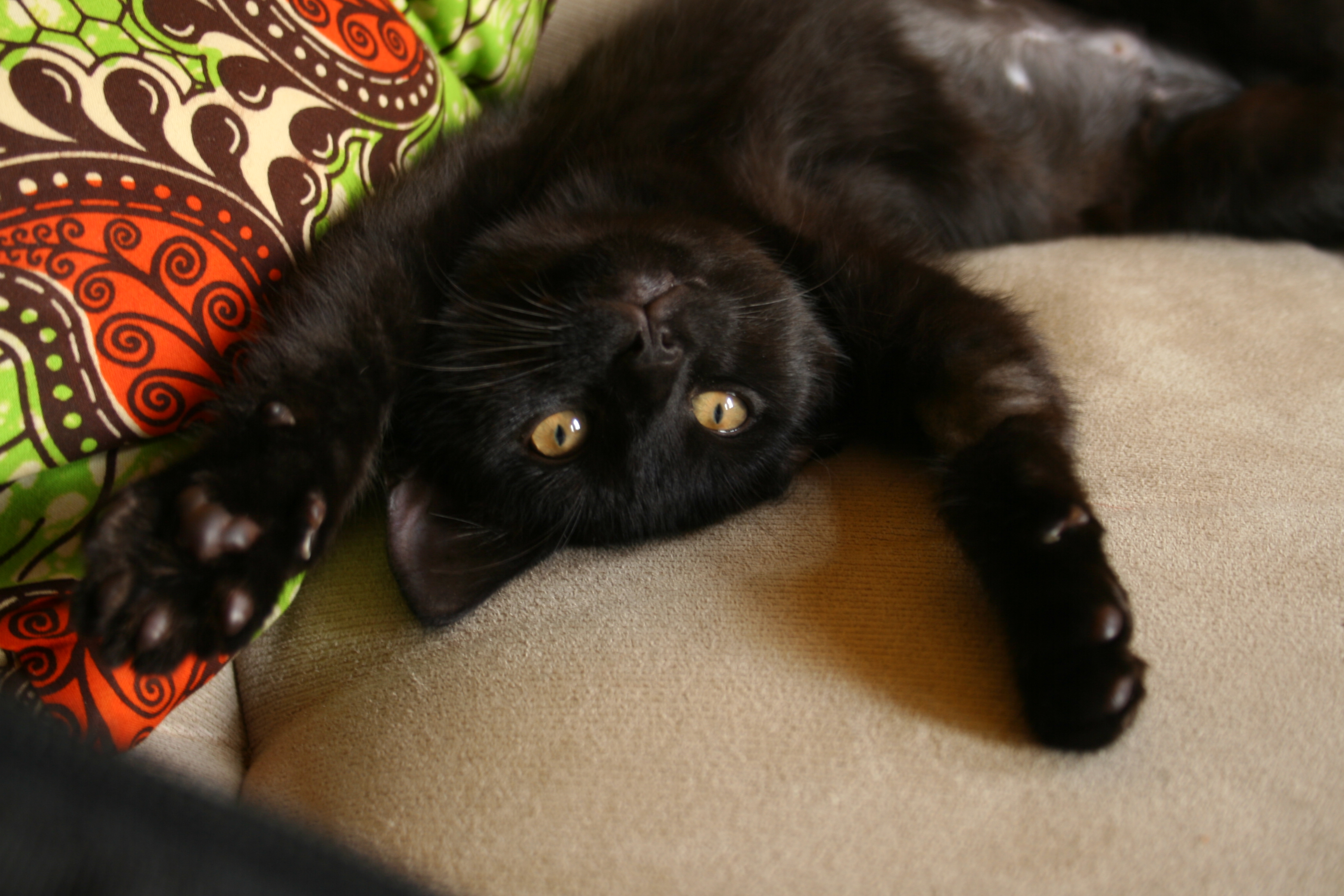
finally, Our place has limited space! Please RSVP so we can have a sense of numbers, and calculate how many walls to knock down.(j/k :) feel free to RSVP-plus-one or two, but don’t roll through with a whole posse. our kitten Eloise will be acting as bouncer, keeping careful track of the guest list.
__
thanks, love, take care, see you soon, be well, and call or e-mail me with any questions,
katie loncke
More to come this week online: the next Newsies post on how the courts are stacked against us, inspired by a frustrating but illuminating experience this morning before a judge. Stay tuned. :)
Concluding this spontaneous miniseries on companionship (or maybe not concluding it — who knows? — it’s spontaneous), we arrive at Ryan. You know, my partner, the guy from kale vs. flowers and Bad Good Romance. The other day, I read a passage from James Agee’s Southern novel A Death In the Family that reminded me of our household dynamic. Specifically, the ways that we negotiate gendered roles, try to both anticipate and discuss each others’ needs, and occasionally discover “dhamma,” or insights about the nature of things, right in the (dis)comfort of our own home.
In this scene from the book, Jay has just jolted awake in the dead of night thanks to a call from his brother Ralph, who drunkenly warns that their father may soon die from long-battled heart problems. Jay has decided to take the train up to his parents’ town, and he and his wife Mary, also awakened by the phone call, are getting him ready to leave.
“It may all be a false alarm. I know Ralph goes off his trolley easy. But we just can’t afford to take that chance.”
“Of course not, Jay.” There was a loud stirring as she got from bed.
“What you up to?”
“Why, your breakfast,” she said, switching on the light. “Sakes alive,” she said, seeing the clock.
“Oh, Mary. Get on back to bed. I can pick up something downtown.”
“Don’t be ridiculous,” she said, hurrying into her bathrobe.
“Honest, it would be just as easy,” he said. He liked night lunchrooms, and had not been in one since Rufus was born. He was very faintly disappointed. But still more, he was warmed by the simplicity with which she got up for him, thoroughly awake.
“Why, Jay, that is out of the question!” she said, knotting the bathrobe girdle. She got into her slippers and shuffled quickly to the door. She looked back and said, in a stage whisper, “Bring your shoes — to the kitchen.”
He watched her disappear, wondering what in the hell she meant by that, and was suddenly taken with a snort of silent amusement. She had looked so deadly serious, about the shoes. God, the ten thousand little things every day that a woman kept thinking of, on account of children. Hardly even thinking, he thought to himself as he pulled on his other sock. Practically automatic. Like breathing.
And most of the time, he thought, as he stripped, they’re dead right. Course they’re so much in the habit of it (he stepped into his drawers) that sometimes they overdo it. But most of the time if you think even for a second before you get annoyed (he buttoned his undershirt), there is good common sense behind it.
Ryan tells this funny joke sometimes about one method, half-conscious at most, by which person X tries to evade domestic work and pile it on a partner. “But you’re so good at [cooking, doing laundry, calming a fretful child]. If I do it, I’ll just fuck it up.” A passive-aggressive compliment-trap, which leaves the other person feeling obligated to do the thing they’re so much better at doing.
__
Obviously, this is one of the big problems with the naturalization of gender roles in heteronormative family requirements. Men are raised to believe that they don’t have to learn how to cook/clean/mend/mind children because women are so naturally good at it. Jay appears to have no clue that his wife was brought up to learn how to be a “good woman,” which means acquiring certain social and reproductive skills, including staying attuned to the needs of her socially-sanctioned husband and children. She might enjoy learning those skills; she might not. The point is, the skills aren’t endemic to her based on her gender. For a whole host of reasons that I won’t get into here, she’s not really free to self-determine her own gender identity and presentation, fertility, or (as a working-class person) the circumstances of her productive and reproductive labor.
So this is the background against which Ryan and I operate. Furthermore, Ryan works. I “work” from home on grad school (viz. this blog, or planning for EastBaySol). I spend more time at home so its levels of (un)tidiness affect me more, which makes me more inclined to change/correct them myself. Also, I like to cook more than he does. So he takes pains to counteract the assumption that just because I know how to cook, and even enjoy it, that this means it’s effortless for me, and that he’s entitled to its products, as though he were plucking a ripe plum from a backyard tree. And those times when I do wind up cooking more than 50%, he makes sure to do the bulk of the cleanup. Last week when I started washing dishes out of turn after lunch, he straight-up chased me out of the kitchen. Another morning as I slept he made breakfast and green tea, then came back to bed to cuddle me awake.
__
Maintaining mindfulness around housework distribution doesn’t have to be robotic or transactional. It’s actually a pretty emotional and tender process for us, and I think for a lot of people. The other day I was talking to a woman who lives with her girlfriend, and was telling me that even though her partner works longer hours than she does, they cook dinner together every night and split the remaining housework evenly. “I just knew I would be unhappy otherwise,” she said. I love that this negotiation takes the feeling of work into account, and not just some supposedly objective measurement of household labor — in joules, or whatever.
Jay and Mary’s middle-of-the-night crisis management takes a turn for the tender, too. I see many of my relationship dynamics reflected between them.
He sat on the bed and reached for one shoe.
Oh.
Yup.
He took his shoes, a tie, a collar and collar buttons, and started from the room. He saw the rumpled bed. Well, he thought, I can do something for her. He put his things on the floor, smoothed the sheets, and punched the pillows. The sheets were still warm on her side. He drew the covers up to keep the warmth, then laid them open a few inches, so it would look inviting to get into. She’ll be glad of that, he thought, very well pleased with the looks of it. He gathered up his shoes, collar, tie and buttons, and made for the [bathroom], taking special care when he passed the children’s door, which was slightly ajar.
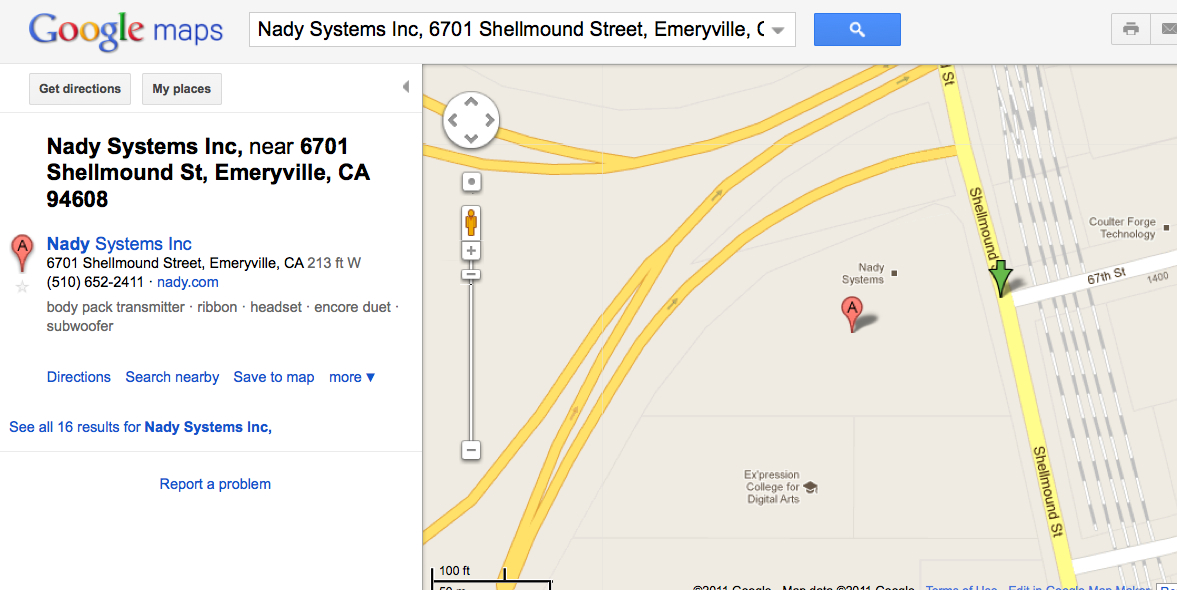
The owner of this business, which desecrated a 3,500-year-old Ohlone shellmound in order to construct its offices, now wants to build a vacation home on other sacred indigenous land: this time on Rattlesnake Island in Lake County, CA.
Don’t have much time to chat today, friends, but those of you who’ve been following Kloncke for a while will know just how jazzed I am that brownfemipower (a.k.a. bfp) is guest-blogging at Feministe. She’s taking an in-depth material look at her home state of Michigan, or, in her words:
While I’m here, I’ll be working to contextualize all the big words: “post-industrialization,” “nationalism,” “white supremacist heteropatriarchy,” “decay porn,” “borders,” “distribution systems,” etc within a framework that centers Detroit, Michigan, and the US Midwest.
Or I may just wind up posting pretty pictures. Who knows. :D
In her first post offering background on the region, bfp begins with a brief overview of the indigenous peoples from whom the land was stolen.
It’s important to know about Michigan’s history of colonization because indigenous peoples in Michigan are still still struggling with the vestiges of colonization. They are also leaders in the fight against corporate violence against the land and the people. There is often a false idea that the violences of industrialization play out almost exclusively in urban areas. But those serene lakes and beautiful mountains we all like going to for our week vacation are the same places that keep the urban factories up and running.
Yep, primitive accumulation, and capitalists’ access to natural resources, has everything to do with imperialism, colonization, genocide, enslavement, and misogyny and heteropatriarchy. Advance the Struggle had a good post a while back touching on this link between pro-communist struggle and indigenous land defense, using as an illustrative example the recently successful defense of Sogorea Te / Glen Cove, up in Vallejo (photos of the encampment at the end of that post) — in which Ryan, I, and other East Bay Solidarity friends played a very small supportive role.
Now it looks like we and EastBaySol may have another opportunity to support the defense of indigenous sacred land from bourgeois development. (The aggressor’s business, Nady Electronics, has offices in Emeryville, about a mile away from Ryan’s and my apartment, located right on top of an Ohlone sacred shellmound. The guy just won’t let up, apparently.) I received this press release in my email today. The money quote:
Supervisor Comstock, the Lake County Board Supervisor who cast the deciding vote, commented, “I’m a huge proponent of private property rights.” He added, “My family’s been living in Lake County for 150 years- you can’t get more native than that”.
Yet another example of institutional white supremacy and heteropatriarchy supporting the accumulation of capital & resources to the (historically white, patriarchal) ruling class. Time to remind this dude, through direct action and defense, that yes, you can get more native than that. Entire press release after the jump.
Continuing in the vein of plants, pets, and partnership — or the ways in which companions both reflect the quality of our treatment, and express their own nature independent of us — in the past 20 hours since we brought her home, our newly adopted kitten Eloise has proven both delightfully surprising and shockingly predictable.
At the city shelter where we adopted her, the staff warned us that Eloise would probably be extremely shy. She and two siblings were found in a car (not sure whether this makes them stray or semi-feral), terrified of the long human arms reaching down to nab them. Within the cat pound’s contained visiting space, surrounded by cages, she seemed calm enough on our betoweled laps, but didn’t purr or rub her head against us like some of the older cats did. One of the women on staff wore a foreboding face when she advised us to handle the kitten as much as possible once we got her home, so that hopefully she would grow comfortable with humans. Sobered but optimistic, we left her over the weekend to be spayed Monday morning. Following that surgical ordeal, we anticipated a drugged bundle of quasi-hostility retreating to the remotest corners of our bathroom for the first days or weeks.
Sure enough, the minute we lifted her from the vet-issued cardboard carrying case and set her on our bathroom tiles, she fled to the farthest (and dirtiest) corner (straight past the cat bed I so lovingly fashioned for her out of a cardboard box and an accidentally-shrunken cashmere sweater). There she remained, cowering behind the dusty toilet.
Love this image from Mingus' site, labeled "watercolor painting of an octopus done in greens, yellows, oranges and pinks."
To me, femme must include ending ableism, white supremacy, heterosexism, the gender binary, economic exploitation, sexual violence, population control, male supremacy, war and militarization, and ownership of children and land.
Yesterday: downtown Oakland is in full Art-And-Soul festival mode, and a small squad of us from East Bay Solidarity Network gather outside its gated entrance to do our own jovial yet serious work. Once we finally locate one another in the crowd (who has whose cell numbers?), it’s on to the business of distributing xeroxed posters and tape (did we bring enough tape? it sucks to run out), and divvying out areas to flyer. Some of us are slow and others are impatient. Caught in between as an unofficially appointed problem solver, I feel my face edge toward a scowl. Luckily, though, our little gang laughs together more and more as months pass. And laughter is nature’s aspirin for the headache of logistics. Besides: no one’s getting paid here, and there are no managers or fears of getting fired and losing that paycheck, so we’re more free to move at our own pace.
Have I told you about our current fight? Mel Hill was a security guard working for ABC Security. After working at a number of different locations, he was stationed way, way out at a bus yard, miles from any public transport. The way Mel puts it: “I had leg muscles big as Popeye from walking to and from work.” He posted up in a little World War II tin shack (“hot when it’s hot; cold when it’s cold”) with no heat, electricity, water — nothing. Leaks in the roof let the rain in. Misery. After months of enduring this, with no administrative response to his complaints, he began bringing a yellow blanket along on his shifts, to keep himself warm. This, he was told by management, is “unprofessional” and unacceptable. Eventually Mel was fired, and brought his case to us, the East Bay Solidarity Network. We explained that in order for us to take on his fight to win his job back and improve site conditions, he would have to join the network and agree to be there for other people’s fights, as well.
There’s more than enough fights to go around.
Economic need compels people who don’t own the means of production (a.k.a. the vast majority of us) to work in conditions that are often terrible for our bodies. Job conditions are set up that way in order to save time and production costs (including wages). If we object, as Mel did, we get the message (implicitly or explicitly) that (a) we’re lazy, or (b) our bodies are the problem; our bodies are defective. Look: other people can do it. Why can’t you? Stop bringing the blanket. It’s unprofessional.
What can we do about this core of ableism within the exploitative, competitive, profit-driven system?
Master of not-fitting: Chican@ queer & disability scholar Gloria Anzaldúa
Wrote This On a Plane to Houston, On My Way To Guatemala
I like to pretend sometimes,
that I got this hunching spine
from working so meticulously at my craft.
Each day carefully placing my toolbox on the table,
unfolding the lid and curling my soft pink fingers into their positions
to forge these words into some kind of weapon,
to whittle at these ideas until they pierce the chest.
I like to pretend sometimes
that this glow is a kiln,
I wipe my brow, and it makes no matter
that my hand comes away dry.
Because this feels like the work of a workman,
and I make like I’m adjusting my spectacles
and gripping my tweezers
as I deftly shift another syllable.
I like to pretend sometimes
that I’m just like that man I watched
crack firewood with ballet strokes,
cut grass finely with a dull machete,
coax coffeebeans to fall with massaging fingers,
like the spider spindling the fly.
From Elizabeth Gurley Flynn’s The Rebel Girl: An Autobiography, about her experiences as an agitator and organizer with the Industrial Workers of the World (IWW, or “Wobblies”) at the peak of its power, in the 1910’s:
Foster’s campaign against dual unionism was aided by Tom Mann of England, who came over on a speaking trip in 1913.
. . .
Never had I heard such a flow of fast-spoken, picturesque and colorful oratory, charged with tremendous fervor and fighting spirit. It was a hot night and after he finished some English weavers took him away with them, promising to bring him to the railroad station to make an eleven-thirty train back. They came rushing him along at the very last minute, bubbling with reminiscences of where they knew him and had heard him speak before. We asked, “What did you do, Tom?” and he said cheerily, “They took me for warm ale. There’s nothing like it after a speech.” He was a living example of joy in struggle and proved that a light heart makes the road shorter and the load easier. He lived to be over 80—oratorical, exuberant and vital—a great agitator to the end.
How do we nurture joy in struggle? For me, it’s a dialectical question. How do we struggle? Strategically, which courses do we choose? And how do we nurture joy? What traditions and methods do we adopt, adapt, learn, preserve, and transform? And how do we live joy in our struggles? And how do we live struggle through our joy?
Friends, as many of you know, yesterday was my birthday. (Thanks for all the Facebook love!) Is a links list the geekiest self-gift of all time? Possibly. And here we go.
Crazy Wisdom (“A film about the life and times of Chögyam Trungpa, Rinpoche”). I can already tell I’ll have issues with this film (the trailer shows Pema Chödron justifying Chögyam Trungpa’s sexual affairs with students by saying “he never hid them” — and I’m like, OK, and how did his wife feel about them? And how did it affect the students?), but he’s one of those figures I can’t write off, emotionally. Messy.
Twenty-five feels a bit hazy so far, but I’m pluggin’ away. To all you incredible beings, past and present, who continue to bless me with honesty, support, quotidian hangouts (love those), compassion, food, wisdom, class-struggle education, patience, quirks, meditation, music, and humor . . . thank you.
I have to thank Goddard advisor Rick Benjamin for singing this poem to us yesterday. It’s about time I overcame my prejudice against poetry, don’t you think?
to my friend, Jerina
listen,
when i found
there was no safety
in my father’s house
i knew there was none
anywhere. you are right
about this, how i nurtured
my work not myself, how i left
the girl wallowing in her own shame
and took on the flesh
of my mother. but listen,
the girl is rising in me, not willing
to be left to the silent fingers
in the dark, and you are right
she is asking for more than
most men are able to give,
but she means to have what she has earned,
sweet sighs, safe houses, hands she can trust.







 Kloncke