Thank Heaven For Disasters

NeEddra James’ blog, PARAMECultureWorks, entered my life at a great moment.  She’s a sharp writer and an incredibly insightful soul — and the email conversation we recently struck up reminds me why Internet ‘connections’ can be worthwhile.  You should check out her blog in its entirety, but here I wanted to crosspost a piece that’s been particularly helpful to me over the last few days.

NeEddra’s illustration of the value of wake-up calls gets at the heart of the Buddhist teaching that ultimately there is no good or bad, merit or demerit.  Because every uncomfortable, unpleasant, or downright excruciating event has something to teach us.  It’s a doorway leading to the higher dimension of consciousness attained through nonjudgmental acceptance of what is.  Total awareness and presence of mind. So with the valuable teachings that moments like these can offer, how can we really label them “bad?”

Putting this understanding into practice is no easy feat, obviously.  But little by little, moment to moment, and with the help of reminders like NeEddra’s parking ticket saga, we get there.

Hope you’re having a peaceful day, folks.  Whatever catastrophes (a.k.a. opportunities) come your way.

Offering To The Döns

“Practice offering to the döns* by welcoming mishaps because they wake you up.”

I always read my monthly horoscope on the first day of the month. On Dec. 1 Susan Miller told me the full moon, which reaches its apex today on the 12th, would occur in my third house: the house of other people’s money. She went on to say that I’d be writing a big, non-negotiable check, and with “Saturn in hard angle to the moon…there will be no way to avoid acknowledging one’s responsibility or alternatively, accepting a loss and moving on.”

And so it is.

Continue reading

DIY “Acceptance Speech”

The tradition of the acceptance speech appeals to me for a few reasons.  It happens in the context of community — a community honoring the achievements of its members.  Often it inspires others to persevere through their own challenges, knowing that someone else managed to overcome great obstacles or do something extraordinary.  And most of all, acceptance speeches are about gratitude.  Expressing gratitude to everyone who contributed to what, superficially, might seem like an individual feat, but is actually the culmination of much effort by many people. (And by greater powers, if that’s how you feel about it.)

Given the loveliness of this tradition, I don’t see why it should be limited to celebrities.  Or, even, like, “winners” in the traditional sense.  Don’t need to tally votes to know that every day, ordinary people like you and me do good things with the help of others.  So why not give ourselves, and them, a little recognition?  Why not deliver our own mundane acceptance speeches?

I thought about this a lot back in the spring, when I was feeling particularly grateful for a phenomenon that honorees often mention in this oratory ritual: “being where I am today.”  I started thinking of all the people without whose help I could never have reached Spain, and the meditation center that radically transformed the quality of my life.

I thought of these people, and then I started writing to them.

Here, transcribed from my notebook, is one of the first letters in my multi-phase acceptance speech.  To Canadian author Alice Munro, whose short stories quite literally changed my life.  Obviously, it doesn’t matter whether or not the letter actually reaches the intended recipient — I had a hell of a time trying to dig up a mailing address for this notoriously reclusive writer, and six months later my lovingly hand-stamped envelope is probably still floating around in the UK postal system.  But the main point of the practice is the intention.

So, friends, do me this favor: take the concept and run with it.  Reach out to somebody who’s helped you achieve something wonderful.  (And yes, I guarantee that you have achieved something wonderful in the last year. ;) )  In a letter, in a Facebook post, in a phone call, over coffee.  Just try it.  You might like it.  Good luck, and let me know how it goes!

* * * * * * * * * * *

15 March, 2009

Dear Ms. Munro,

Continue reading

Back To Barcelona!

Feels like coming home.

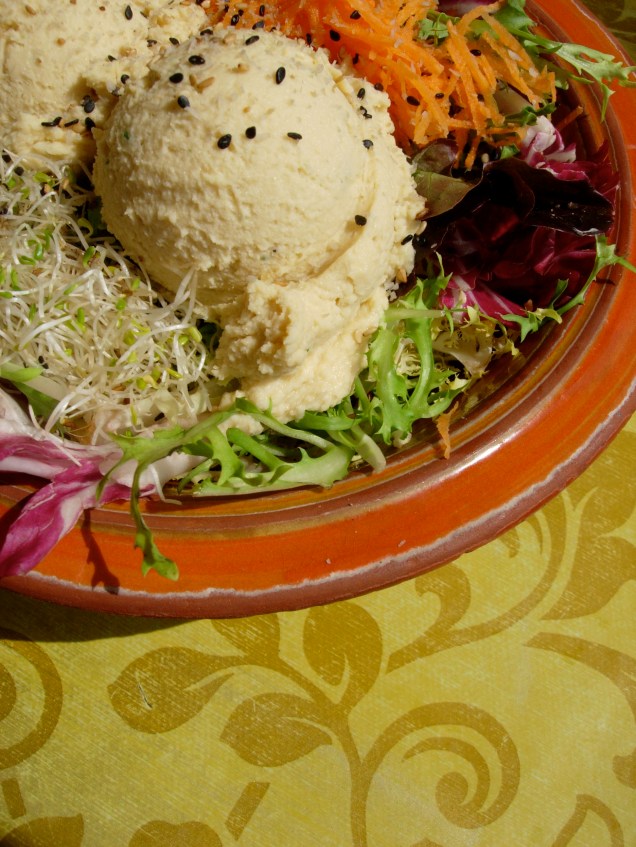
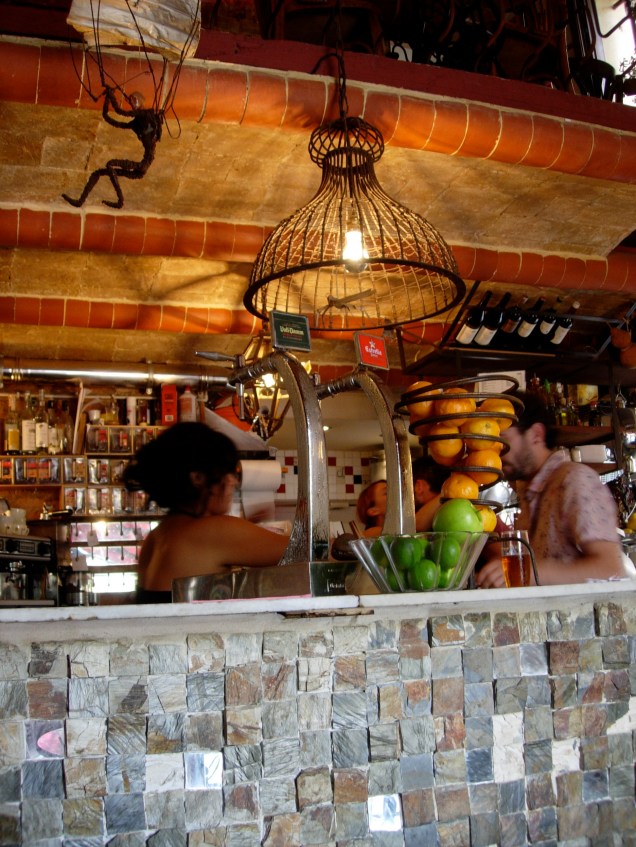
It’s ninety degrees Fahrenheit, people on the street are smiling, and I’m back at my favorite café, ordering the usual: best hummus salad this side of Switzerland.

It’s so good to be back.

Today I was gonna post about a letter I wrote to one of my favorite authors.  Someone whose books actually altered the course of my life in a meaningful way. I was really jazzed about it, but now…now I’m still excited, but I want to take my time.  Ease back into the city, enjoy the gorgeous day here.  So we’ll save that particular goodness for Monday.

Enjoy the weekend, y’all!  Especially your favorite haunts.

love,

Mixed greens, carrots, cherry tomatoes, sprouts (sprouts! in Spain! praise heaven). Creamy, delicious, fresh hummus. Sesame seeds. Lots of olive oil. Excitement.
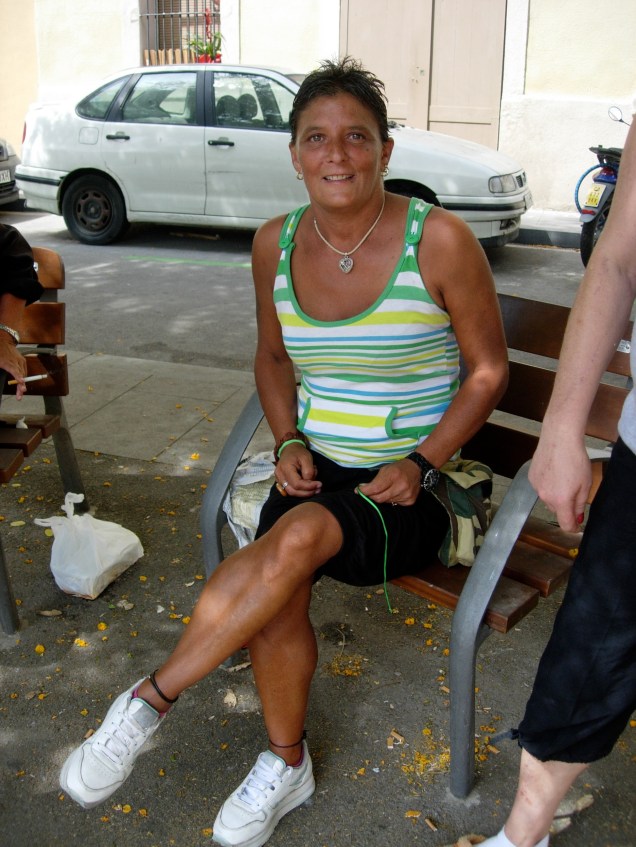
Chatted with this lovely woman a while back, outside the café.  She's seen some hard times, drugs and homelessness, but has this real warmth about her.  Meeting her was a pleasure.
Chatted with this lovely woman a while back, outside the café. She's seen some hard times, drugs and homelessness, but has this real warmth about her. Meeting her was a pleasure.

Black Girl Dancing Alone

Today, at the park near Notre Dame, I was the only one dancing.

It’s true.

The young-white-guy jazz players, with smiles like jukebox pages flip-flapping between smugness and delight, asked so nicely.  Get up from the benches, everyone.  Get up and dance.

And the boy next to me put down his sandwich (from the Subway by the Seine) and stood alongside me for the first couple minutes, clapping.  But somewhere along the way, he disappeared.

And that was it.  The drummer kept soliciting; I gestured to people to join in; but no one budged from behind their cameras.  Taking pictures, video.  Two months from now, finally getting around to uploading their vacation photos, they’ll rediscover these and say, “Oh, darling, remember that jazz band?  They were so talented.”

What does it mean when a plaza full of people who are free to dance, free to engage with real people playing music, cannot bring themselves to participate?

And why was I so acutely aware of this freedom as freedom?

Nowhere have I felt my Blackness so self-consciously as here in Paris.  Maybe that’s why dancing today, 15 minutes of white gaze on my sore-thumb body, felt like I was just barely getting away with something.  Almost an act of defiance.  These things start small, you know?

As usual, Toni Morrison’s got something deep to say about all this.  Why art (literature) requires both solitude — the ability to dance alone — and community — an environment safe enough to dance at all.  And why we have to secure these conditions for art to go on living.

Please, let’s dance when we can.  And let’s ensure that everyone else can, too.

From the National Book Foundation website, her 1996 acceptance speech for a National Book Award.

*  * * * * * * * * *

Toni Morrison
Winner of the 1996
DISTINGUISHED CONTRIBUTION TO AMERICAN LETTERS AWARD
The Dancing Mind
November 6, 1996

Book jacket designed by Carol Devine Carson; photo © Helen Marcus.

There is a certain kind of peace that is not merely the absence of war. It is larger than that. The peace I am thinking of is not at the mercy of history’s rule, nor is it a passive surrender to the status quo. The peace I am thinking of is the dance of an open mind when it engages another equally open one–an activity that occurs most naturally, most often in the reading/writing world we live in. Accessible as it is, this particular kind of peace warrants vigilance. The peril it faces comes not from the computers and information highways that raise alarm among book readers, but from unrecognized, more sinister quarters.

I want to tell two little stories– anecdotes really–that circle each other in my mind. They are disparate, unrelated anecdotes with more to distinguish each one from the other than similarities, but they are connected for me in a way that I hope to make clear.

The first I heard third or fourth-hand, and although I can’t vouch for its accuracy, I do have personal knowledge of situations exactly like it. A student at a very very prestigious university said that it was in graduate school while working on his Ph.D. that he had to teach himself a skill he had never learned. He had grown up in an affluent community with very concerned and caring parents. He said that his whole life had been filled with carefully selected activities: educational, cultural, athletic. Every waking hour was filled with events to enhance his life. Can you see him? Captain of his team. Member of the Theatre Club. A Latin Prize winner. Going on vacations designed for pleasure and meaningfulness; on fascinating and educational trips and tours; attending excellent camps along with equally highly motivated peers. He gets the best grades, is a permanent fixture on the honor roll, gets into several of the best universities, graduates, goes on to get a master’s degree, and now is enrolled in a Ph.D. program at this first-rate university. And it is there that (at last, but fortunately) he discovers his disability: in all those years he had never learned to sit in a room by himself and read for four hours and have those four hours followed by another four without any companionship but his own mind. He said it was the hardest thing he ever had to do, but he taught himself, forced himself to be alone with a book he was not assigned to read, a book on which there was no test. He forced himself to be alone without the comfort of disturbance of telephone, radio, television. To his credit, he learned this habit, this skill, that once was part of any literate young person’s life.

Toni Morrison receiving the Medal for Distinguished Contribution to American Letters at the 1996 National Book Awards. Photo: Robin Platzer.

Continue reading

One Year Later, A Different Vagina Dialogue

Hey, friends. Today I’m going to do something a little unusual.

Over a year ago, on another blog, I wrote a piece about my transforming body. A number of people responded to it in heartwarming and wonderful ways, for which I’m still very grateful. In the many months since then, far more than I’ve thought about my particular physical change, I’ve often thought about the way I immediately accepted its arrival.

At the time, I recognized this acceptance as so extraordinary, so unexpected, and so profoundly bad-ass that it could not have come from just “me.” I, alone, was not strong enough to understand such an event so deeply and so quickly. My insight, as I said, owed itself to many teachers and inspirations in trans and feminist communities.

Now, though, there’s a new angle. Looking back on what I wrote, in addition to transfeminism I recognize another perspective: a budding consciousness of dhamma — the teaching of the Buddha. Nothing is permanent. Everything changes. So it’s best to accept the change, and learn to let go of the appearance of things. Learn directly.

This is probably one of the most powerful examples, in my own life experience, of the practical benefits of dhammic wisdom. In Pali, bhavanamayapanya — the wisdom gained by one’s own direct experience. Not because I heard it; not because I puzzled it out; but because, at the level of the body, I felt it. And it helped me.

So here, re-posted, is the piece I wrote. Offered in hopes that it might continue to help! And offered with thanks to more teachers, probably, than I even remember.

* * * * *

Trans Feminism And My Vagina: A Love Story

Today at 1pm, the hearing for HB1722, “An Act Relative to Gender-Based Discrimination and Hate Crimes,” is going down at the State House. As always, Quench is on top of it. The following is a highly untheoretical, personal expression of tremendous, joyous gratitude to everyone who struggles against transphobia. Oversharing for a greater purpose, you might call it.

Reclining, legs stiffly spread, during my routine Pap test a couple of months previous, the nurse had neared the end of her business, and I’d asked, with as much nonchalance as one can muster in such a position, whether she’d happened to notice that thing in there…kind of like a swelling?

Trundling out of UHS into another icy December afternoon, I couldn’t remember the medical term she used. Just that it sounded a lot like “cyst.”

And now here I was, back at my laptop, staring at the blank white Google Search box. What did she call it? I knew “cyst” was off — it wasn’t going to help my search. Instead, hesitantly, I typed in a few related words: “bulging bladder vagina.”

Bingo.

Continue reading

How To Stop Accepting Presents

Hey friends! Hope you had a fabulous weekend.

The recent exchange with Oh Please, here on the Twitter thread, reminded me of a wonderful story that I’ve been wanting to share with y’all for a long time.  Paraphrased from my meditation teacher, S. N. Goenka, who heard or read it somewhere else, it’s been the single most helpful lesson I’ve learned from him so far, when it comes to dealing with everyday situations.  I hope you might find it useful, too!

Here goes.

At the time of the historical Buddha, Siddhartha Gotama, not far from his ashram there lived an old brahmin and his family.

Continue reading

Start The Week Off “Right”

Bonjour, mes amis!  Those of you in the U.S., hope y’all had yourselves a fun Independence Day.

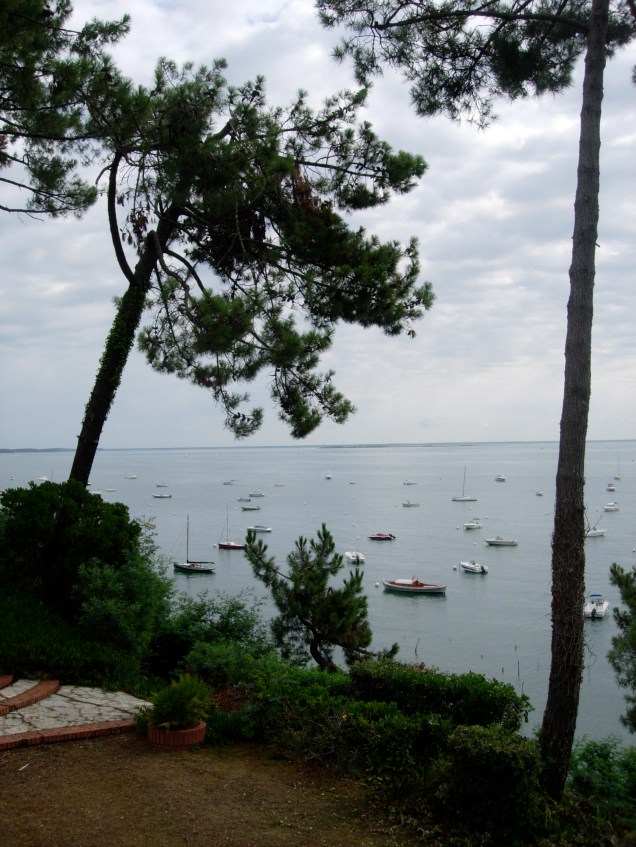
So here I was this morning in Cap Ferret (which, I now realize, is a kind of French version of the way I imagine the Hamptons would be). I’m back up on the blog, organizing my photos and getting ready to publish today’s post.  Then I noticed a new email in my inbox.

At first I almost deleted it.  I didn’t recognize the sender’s name or the names of other recipients, and the text preview showed only French.  Who would send me an email all in French?  But instead of erasing it, I opened it.  Still uncomprehending, I clicked the link.  Where was all this leading?

Watch the video (English with French subtitles), and you’ll hear the story of Dr. Jill Bolte Taylor and her own “Independence Day.”  From what tryant did she gain independence?  Her own mind.  Her “self.”  Her ego.  Thanks to a brain hemorrhage, the experience of which she describes in vivid and hilarious detail, this neuroscientist experienced what the Buddha called anatta — “no self.”  For one day, in her words, she “found nirvana.”

I remember shelving Dr. Taylor’s memoir when I worked at Harvard Book Store.  I never read it, though.  Never even thumbed through it.  Now I’m thankful to have had another chance to hear her story, which expresses, in essence, the aims of my own meditation practice, travels, blogging, and being.  Thanks, Dr. Taylor.  And to the French Email Angel, whoever you are, Merci Beaucoup. :)

Email 4, Part 5: Newly Armstrong/Watermelon Woman

From email update May 5th:

NEWLY ARMSTRONG/ WATERMELON WOMAN

I’ve had a lot of different muscles in my life. Golf muscles, gym muscles, bharata natyam muscles, yoga muscles. So far, these volunteer muscles from the meditation center are my favorites. Stirring mammoth cake batters gives you serious triceps, folks.

And in other news of changing bodies, my head now looks like a watermelon. Not in a bad way, just in the sense that I have no hair, because a friend buzzed it off for me. The effect is somewhere between the Dalai Lama and Ani DiFranco. And it seems to have heightened the ethnic ambiguity. But it’s wonderful, tingly, and perfect for a pilgrimage (see “WALKIN’ “), where showers will be scarce and too much hair would prove a nuisance.

————————————-

Well friends, that’s it for now! Wish me luck — at least half of what I wish for you.

Con amor y abrazos,

katie

Meanwhile, A Metta Post

I did things a bit bass-ackward today and started blogging before I started reading blogs. So I just want to say that I didn’t mean to touch any sore spots on the whole feminism tip: I didn’t know about the latest difficult conversations happening in The (R)WOC Blogosphere, since I pretty much only read FlipFloppingJoy these days, and I didn’t make it  over there til now. It seems like people are hurting as a result of those discussions, and I don’t want to exacerbate that at all.

So in that spirit, a new tradition here at Kloncke: Metta posts.

Continue reading