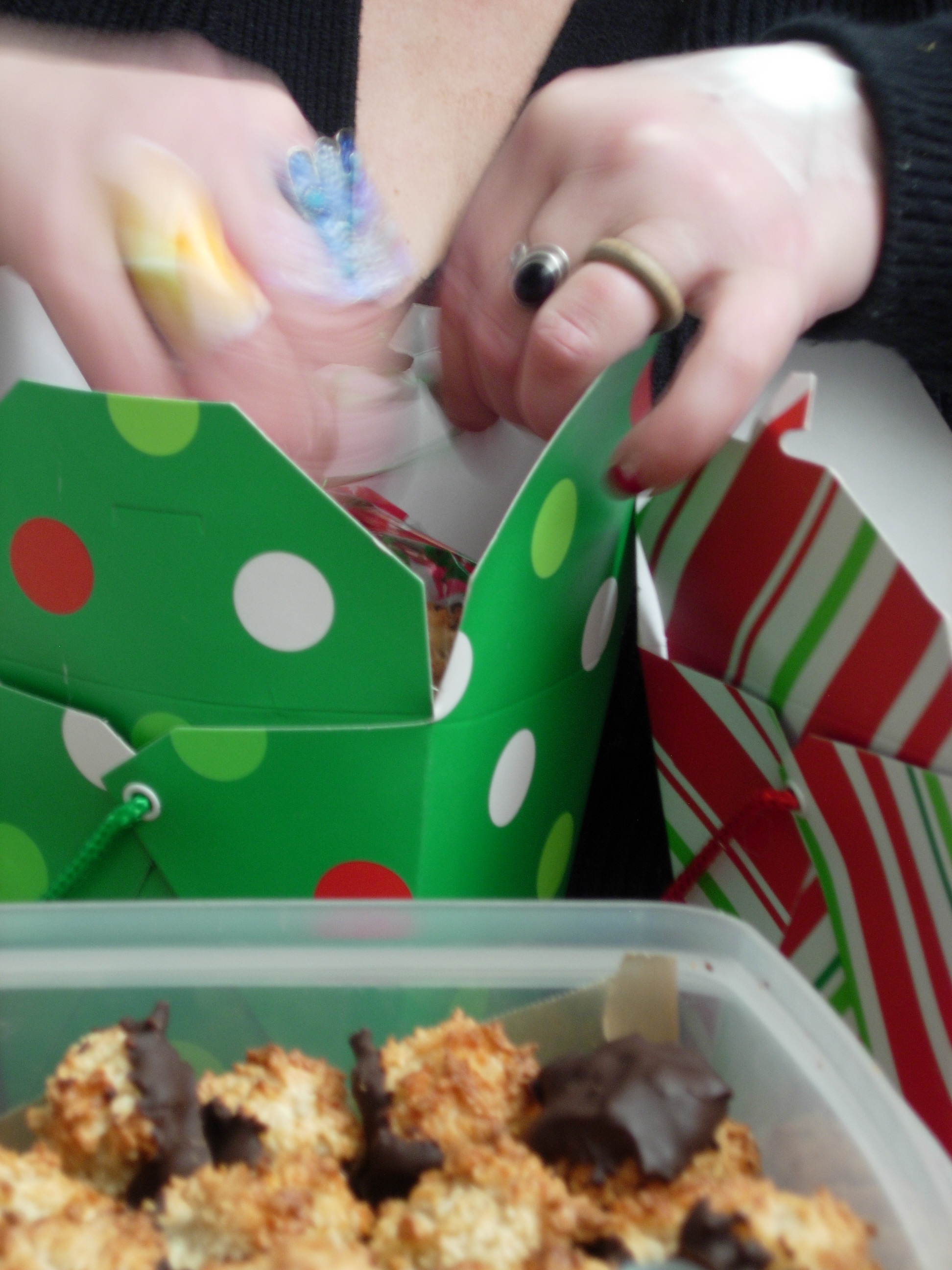
Marcie packaged homemade cookies as gifts for her family.
Enjoy the day, y’all, wherever you are, whatever you’re doing.
As much as this time of year often seems to be ‘about’ spending time with friends and family, lately I’ve noticed in myself a strong urge to be alone.
It could be because I’d grown so accustomed to accompanying my own self through the days in Spain. Now that I’m settled in San Francisco, levels of social stimulation have skyrocketed.
And it’s not that I’m feeling irritated, necessarily, or claustrophobic. It’s more like an active, positive desire to spend time with myself, immersed in some silence and solitude, and see what happens.
Whatever I find, whether beautiful or harrowing, helps me to bring my best self to others.
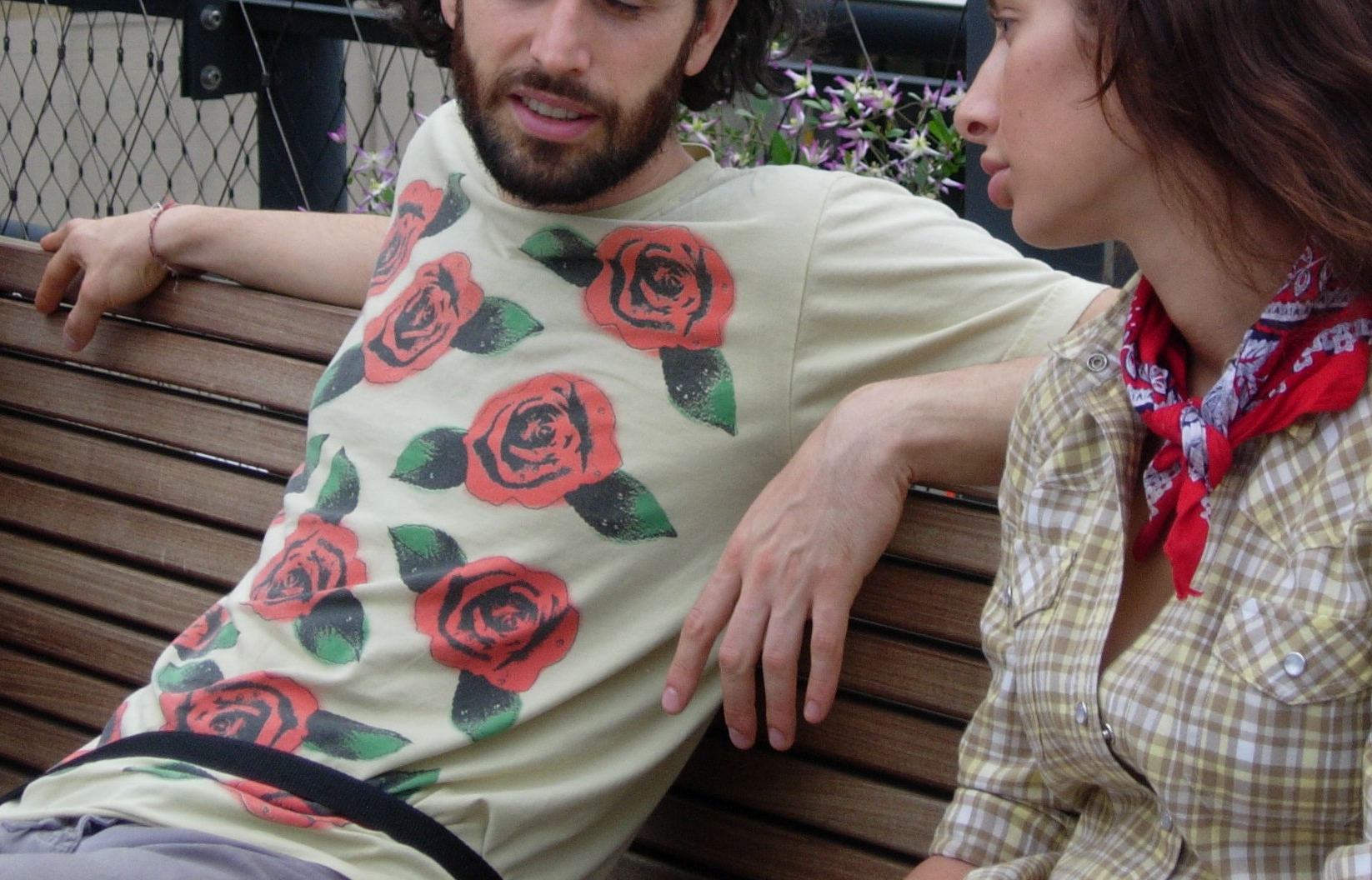
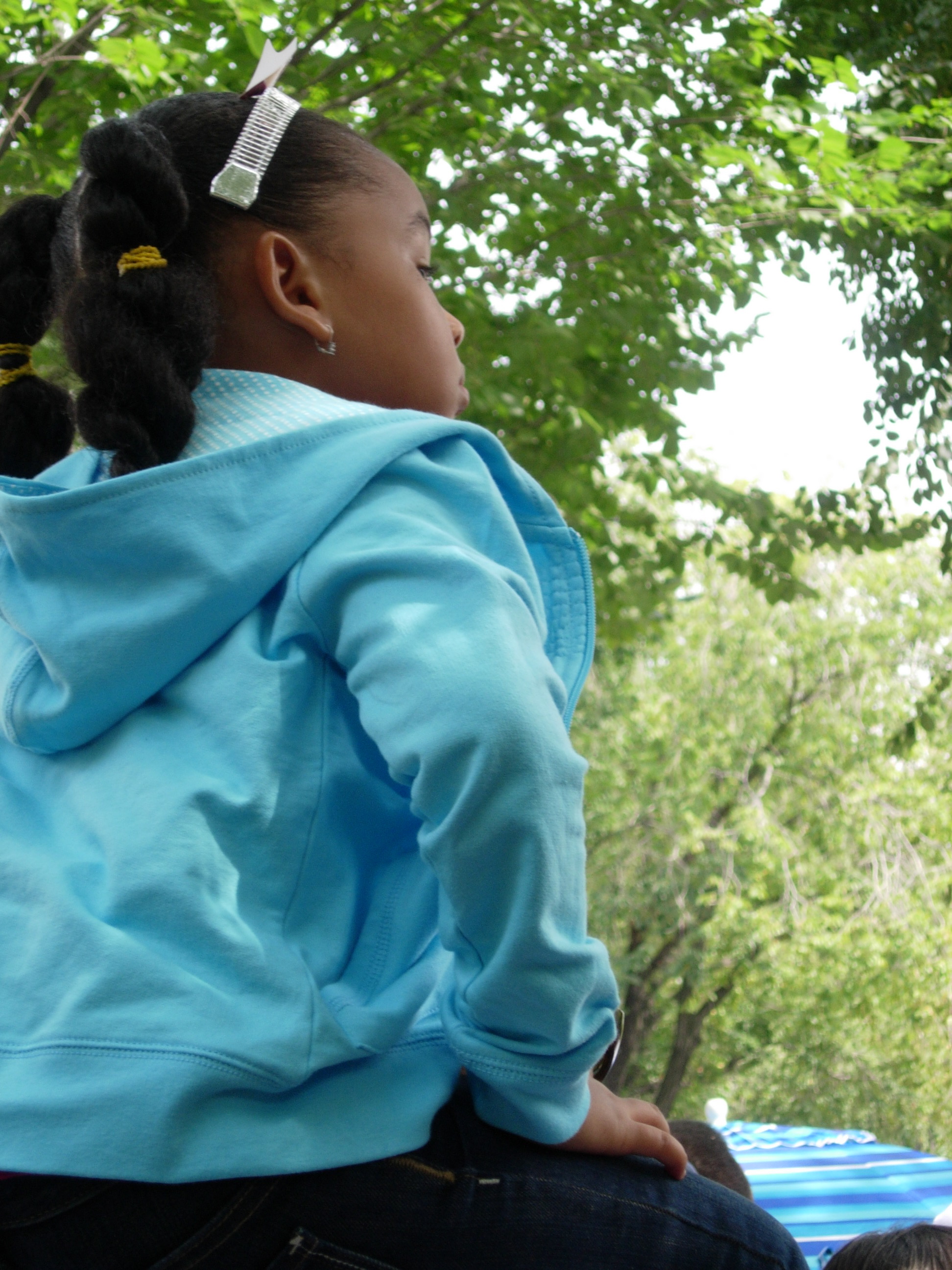
A great example of this solitary/social link is Marcie (pictured), a friend from the Faithful Fools. Her courageous decision to enter a dual-diagnosis rehab program this year (talk about the ultimate solitude and self-reckoning), and her success in staying committed, have opened up space for her to connect more deeply with her family.
I’m not saying that relationship improvement should be the main motivator for choosing to spend time alone. There are plenty of good reasons for solitude. Even when it gets lonely, or frightening. (To a point, of course.) Silence and stillness are necessary conditions for certain kinds of insights too subtle to penetrate our typical mental autopilot, the white noise of everyday extroversion.
May these holiday weeks bring us strength to face and accept, with compassion, all parts of ourselves.
That’s the kind of Christmas Miracle I’m talking about.
According to the NYT, a recent study measuring correlations between living conditions and happiness in America found that they’re very strongly linked. More thoughts on that in a minute. But an informational byproduct of the study was a ranking of states from most to least happy.
At the bottom of that list?
Let’s just say that Jay-Z and Alicia Keys might not be pleased.
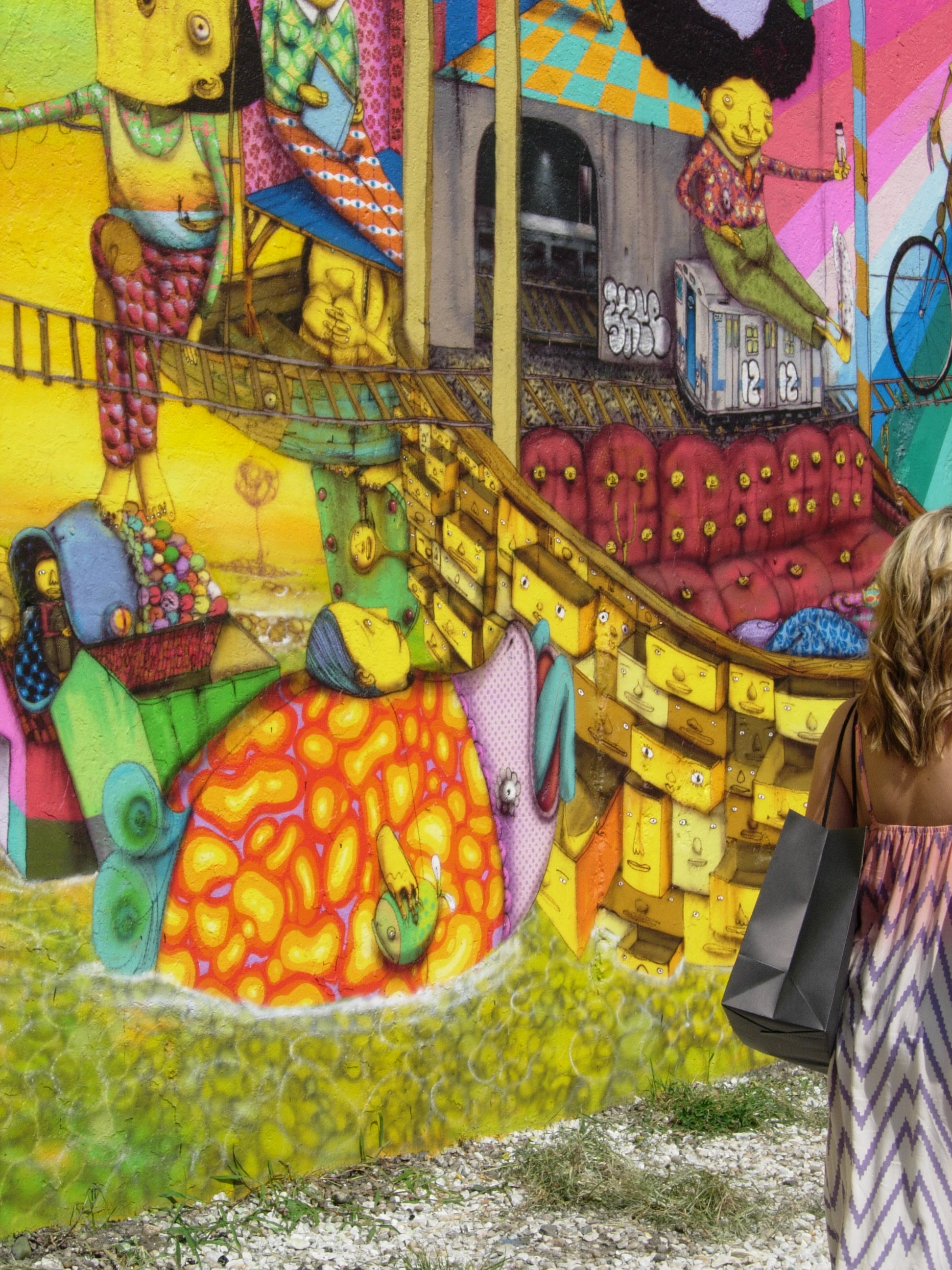
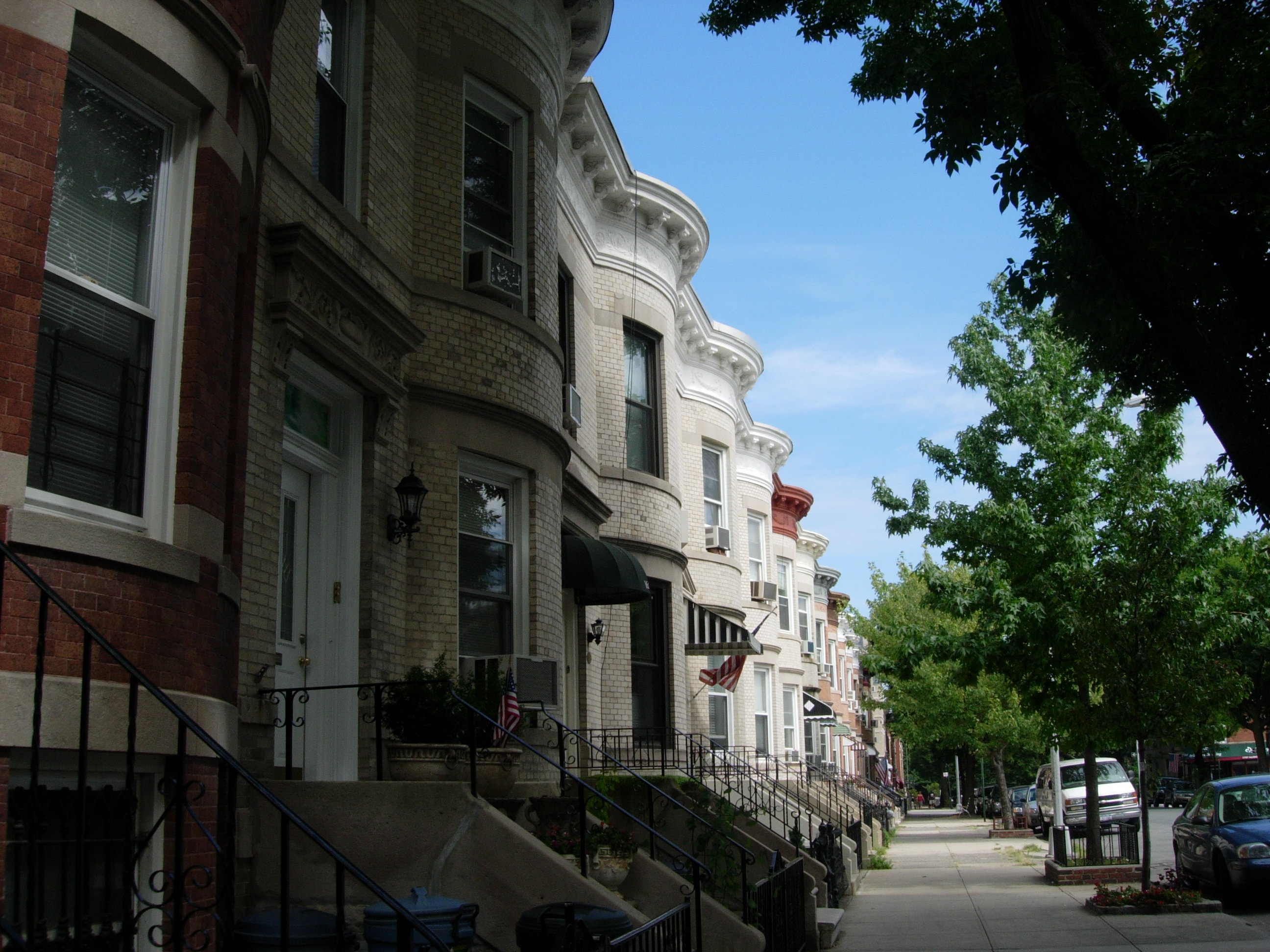
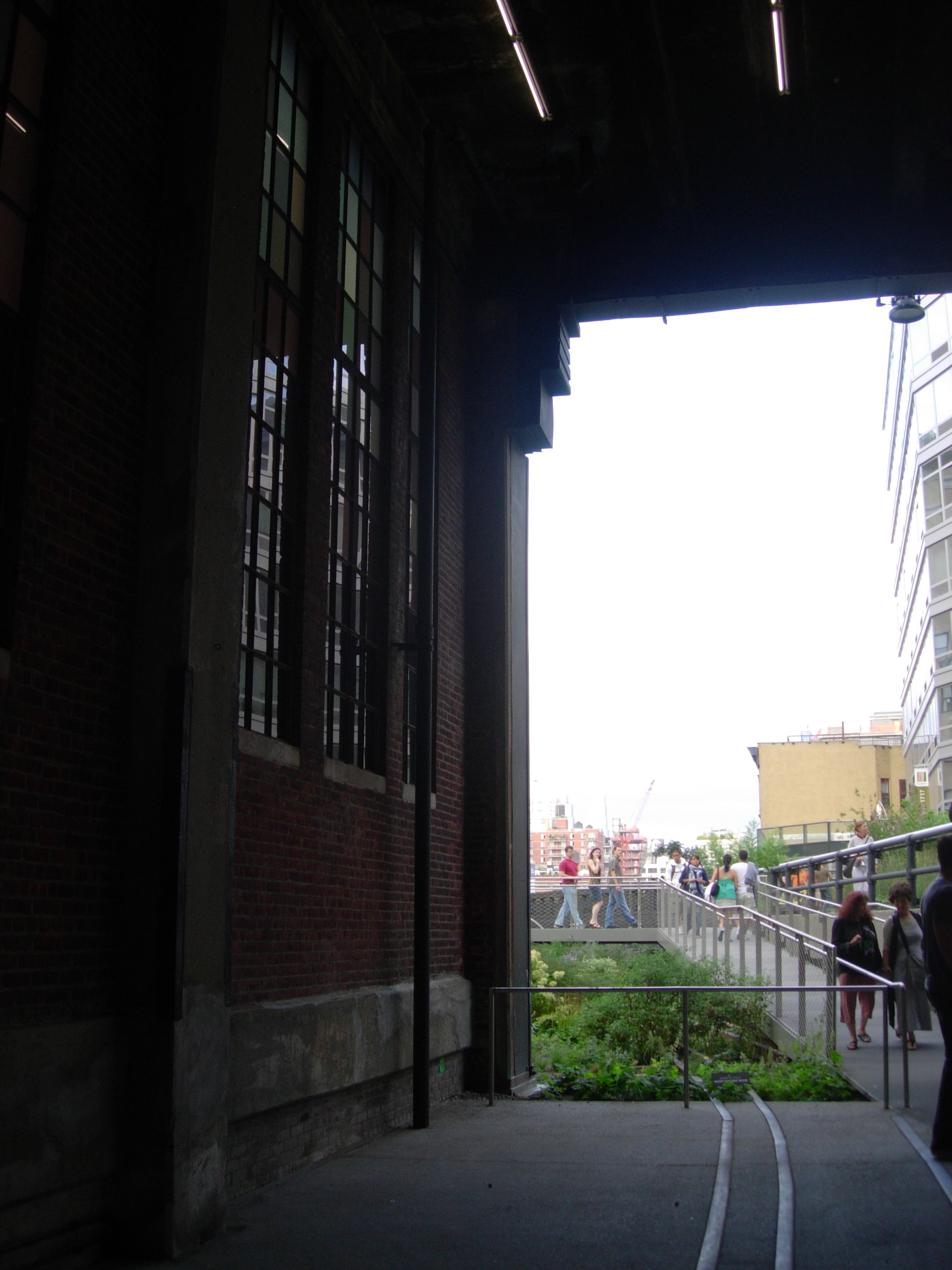
Sure, it’s important to avoid conflating New York City with the state as a whole. But it does give me an excuse to finally share my photos from September’s week-long visit.
To return to the main point of the study, though, and the article covering it: this journalist dude takes on a strange, pseudo-sarcastic tone in defending New York, and in so doing seems to be talking out of two sides of his mouth: (a) objecting that Poor people in those higher-ranked places can’t really be happy — they must be faking! and (b) defending unhappiness as a catalyst for great artistic achievement.
Let’s take the second point first. This is actually a pretty common attitude, right? Haven’t you ever known someone who seems to derive great satisfaction from their misery and solemnity, from complaining about it, or from constantly striving for bigger and better achievements, never satisfied with what they have?
Such attitudes or habits of mind aren’t limited to artists by any means — in fact, all of us fall into similar patterns from time to time. Even if we don’t particularly like feeling unhappy, we cling to an identity of unhappiness because it seems solid and somehow justifiable. Or maybe we’re terrified of what might happen if we let go of it. So we want to analyze it just so, and relate it back to our whole life history, beginning with childhood, etc.
With art, though, or “creativity” more broadly, this normal fascination with unhappiness is particularly easy to rationalize, since part of artistry involves representing human misery faithfully, accurately, and poignantly.
But all I’m saying is, if Michelangelo were a close friend of mine, and he had a choice between finding happiness and creating the Sistine Chapel, I’d encourage him to put away his brushes.
I mean, would we really wish unhappiness on another person — or on ourselves — just so that we could enjoy some good art?
It’s the same flawed logic I laughed about in another study, which implied that being a hostile and unhappy person might be worth it if it increased your longevity.
Mm.
As for Haberman’s first point, being dubious about the poor yet satisfied, here’s how I see it. His attitude reflects the common American notion that greater material wealth — and its attendant perks — grants us more happiness. But the quality-of-life measurements used in the study included a wide variety of factors, including “climate, taxes, cost of living, commuting times, crime rates and schools.”
Now, having a lot of money does expand one’s options, meaning that you, an individual, could choose to move to a place like Louisiana (the state ranked highest in happiness) and enjoy its sunshine and other non-monetary advantages. But simply having a load of money and living in a cold, dismal, rat-race, no-one-knows-their-neighbors and people-spend-half-their-day-in-traffic suburb ain’t gonna cut it.
Similarly, just because a state has a lot of financial wealth doesn’t mean it’s allocating it in ways that boost people’s well-being. More likely, it’s using it to further enrich the ruling class and imprison huge numbers of people of color. (Side note: I wonder if prisoners were surveyed for this study?)
The issue that interests me more, though, is why Americans’ happiness is so closely tied to predictable environmental factors of any kind — financial, structural, social, or otherwise.
I wonder whether a Buddhist country, for example, where dominant cultural wisdom might encourage disaggregating happiness from material conditions, would show similarly strong correlations.
Anyhow, The City was my first stop back in the States, and even though I find it stressful and would never want to live there myself, it sure was pretty to look at for a week in early autumn.
Today at the beach, I got stung on the right foot by a bee.
I won’t lie: the shit hurt.
It was also marvelous.
I used to get this feeling as a kid, enthroned in a big blue plastic armchair in a small white plastic office guarded by tepid watercolor cows wearing dainty yellow ribbons around their throats. Blood test time. (I had half a lifetime’s worth of bloodwork done before the age of 10.) Despite the creepy environs and foreboding application of the tourniquet, when the moment arrived for the big jab I would watch in fascination as they stuck in the needle and sucked out the sample, thick and luxurious, like red chocolate milk. It was something close to magic.
It’s amazing how often we allow the sensation of pain to dominate our interpretation of rich, multi-faceted experiences. But if we can make a little room around our discomfort, we start to notice all the wondrous or lucky aspects of uneasy incidents.
Here’s a short list from this afternoon’s hymenopteran encounter.
1. The bugger stung me and not my friend beside me, who is severely allergic and would have had to rush to the emergency room.
2. Watching your own foot turn purple is totally engrossing.
3. Opportunity to test that theory about scraping the stinger out with a credit card. (More or less successful)
4. Watching your own foot swell is totally engrossing.
5. Ideal placement of the sting on the foot (i.e. not on the sole, and free from flip-flop irritation).
6. Watching the swelling subside is totally engrossing.
7. Great conversation starter: gender and pain tolerance; the species evolution of defense mechanisms and “protective reputations;” and that time at circus camp when a counselor got stung in the mouth by yellowjackets — twice in two weeks.
8. Did I mention that observing a bee sting can be totally engrossing?
9. Impetus to learn about bee sting therapy: “A folk remedy for treating arthritis, back pain and rheumatism for 3,000 years in China.”
10. At least one of us is still living. RIP, little guy.
Happy adventures, y’all — here’s to the magic of misfortunes.
If you could keep your heart in wonder
At the daily miracles of your life,
Your pain would seem no less wondrous than your joy…
Last night was a night of dealing with domestic abuse. (A friend of a friend.) So today I’m tired and needing some solitude, reading, and yoga. But I wanted to share real quick this inspiring website, Advance The Struggle, which my friend Ryan, from San Francisco, was kind enough to introduce to me here.
Click here for pamphlet
The blog focuses on marxist politics — analysis and praxis — in a thoughtful, energetic, well-balanced way. And this pamphlet they produced (worth viewing as a PDF, if you can, for all the stunning artwork), is a great place to start: an insightful commentary on the radical organizing vacuum following the police murder of Oscar Grant back in January. Follow it up with the response article by Bring The Ruckus, super useful, in my opinion, for adding the concept of “strategic and lasting” institutions, or “dual power.” Selma James’ 1975 essay, “Sex, Race and Class,” reprinted in full, is another good read. And of course, don’t forget to check out the comments on the posts — there’s fruitful discussion in there, too.
I’ll share my own thoughts and responses tomorrow, or when I’m feeling up to it. Maybe link it to Glenn Greenwald’s must-read rundown of the CIA’s 2004 Inspector General Report, recently released, on the U.S. torture of suspected terrorists. Meantime, if you’re feeling what they’re saying on A/S, click and comment allá!
Love this story. Hip-hop pioneer Roxanne Shante, the breakthrough female artist behind the hit song “Roxanne’s Revenge,” has succeeded in forcing an unwilling Warner Brothers Music company to honor its contractual agreement to fund her continuing education. Having earned a PhD in psychology from Cornell, Dr. Shante now practices therapy in urban Black communities.
[Warner Brothers] finally agreed to honor the contract when Shante threatened to go public with the story.
Shante earned her doctorate in 2001, and launched an unconventional therapy practice focusing on urban African-Americans – a group traditionally reluctant to seek mental health help.
“People put such a taboo on therapy, they feel it means they’re going crazy,” she explained. “No, it doesn’t. It just means you need someone else to talk to.”
Shante often incorporates hip-hop music into her sessions, encouraging her clients to unleash their inner MC and shout out exactly what’s on their mind.
“They can’t really let loose and enjoy life,” she said. “So I just let them unlock those doors.”
Shante, 38, is also active in the community. She offers $5,000 college scholarships each semester to female rappers through the nonprofit Hip Hop Association.
She also dispenses advice to young women in the music business via a MySpace page.
“I call it a warning service, so their dreams don’t turn into nightmares,” she said.
Fabulous. Now if we can just secure access to higher ed for folks without Warner Bros. contracts…
And here’s the 1984 single — a response to UTFO’s “Roxanne Roxanne” — that changed the game.
Hey y’all, hope you enjoyed the penultimate weekend of August. Me, I can’t believe September is almost here. In less than 10 days, I’ll be back in the States! Mercy.
July marked the first time in almost six months that I’d lived in places with 24-hour, 7-days-a-week internet access. And it’s been both interesting and unnerving to watch my own habits morph back into cyber-centrism. Used to be, my first morning destination was the meditation pillow — followed by breakfast, then reading a book or writing a letter. Later in the day, I’d go somewhere outside the home to get online. Now, my morning Vipassana practice has slipped. The pull of the laptop is incredibly strong, and by the time I finish catching up on correspondence, reading, lurking, and mindless browsing, I’m all anxious to go do something — not sit still on the floor for an hour.
How about you? Is checking email your first major morning activity? Do you want it to be? If you could design your ideal start-the-day ritual, what would it look like? (Or if you’re already living your ideal, what does it look like?)
Personally, I think that my internet habits have a lot to do with my daily schedule — what time I go to bed, and what time I get up. When I sleep and wake early (like 9 or 10pm to 5 or 6am), I’m less likely to spend nighttime hours wandering Facebook, and the quietude of the deep morning facilitates deliberateness. Time before sunrise feels sacred, like every action carries the weight of real ritual.
This week I think I’ll experiment by returning to an early-to-bed, early-to-rise orientation, and seeing if it affects the browsing addictions. I’ll let you know how it goes.
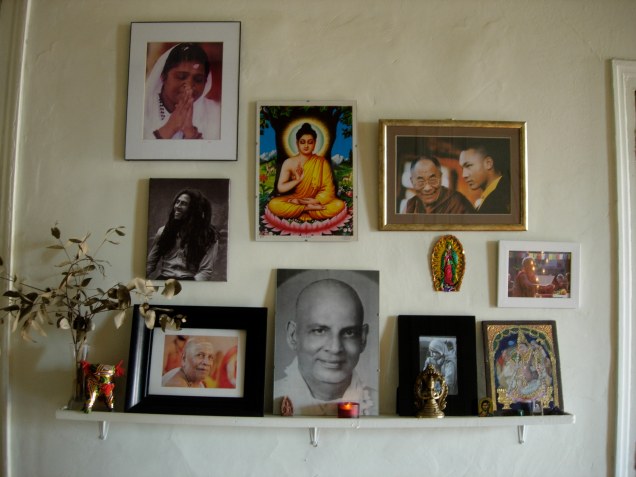
These days I’m back into yoga, 3 to 5 times a week. I found the studio, or it found me, quite by accident. Vipassana students are encouraged to organize weekly group sittings in their communities, just silently sitting together for one hour to support one another in the practice. So when I was kickin’ it in BCN for a couple of weeks back in June, I went with a friend to check out the Sunday evening gatherings, held in an unassuming apartment building right off of Plaza Catalunya.
Have you ever entered a space and just felt it was something special?
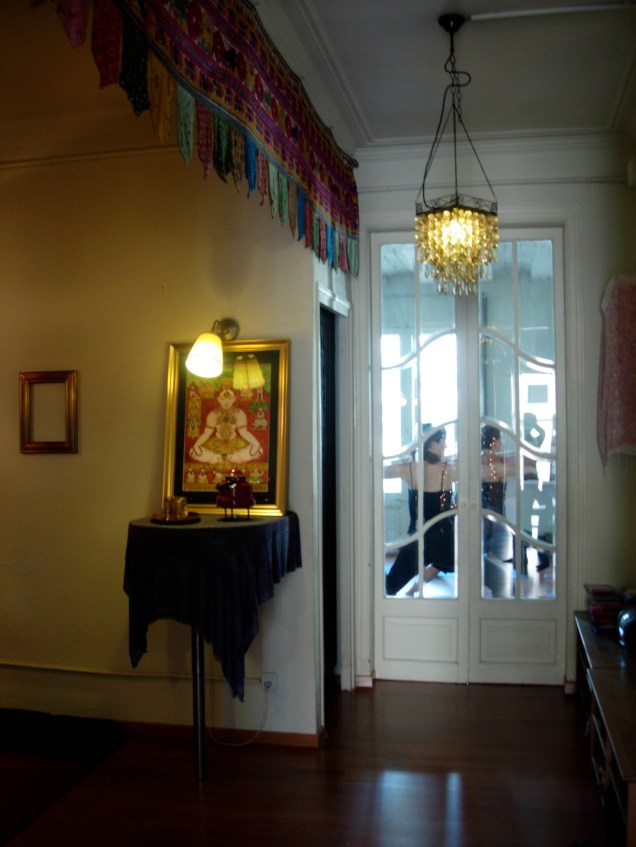
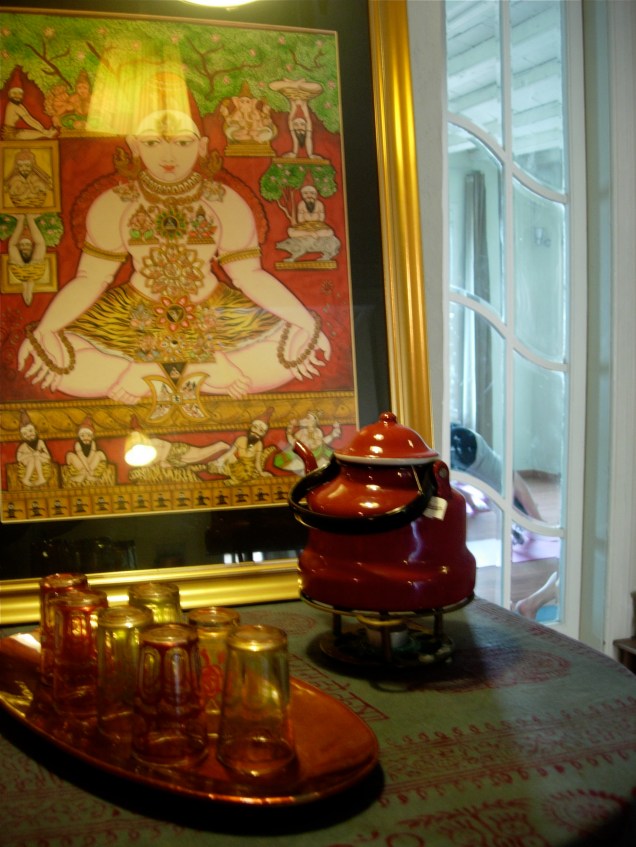
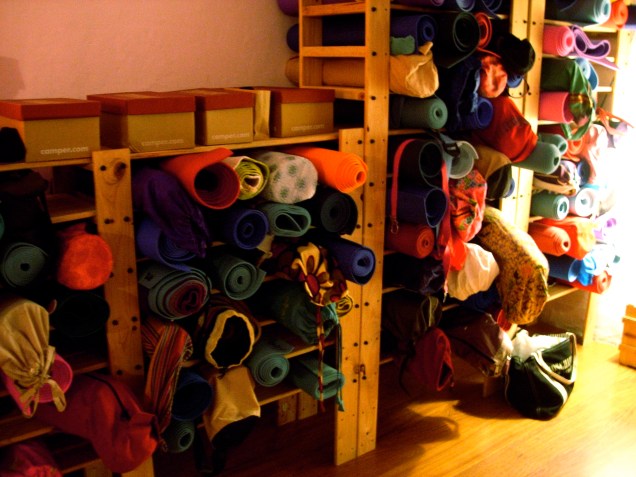
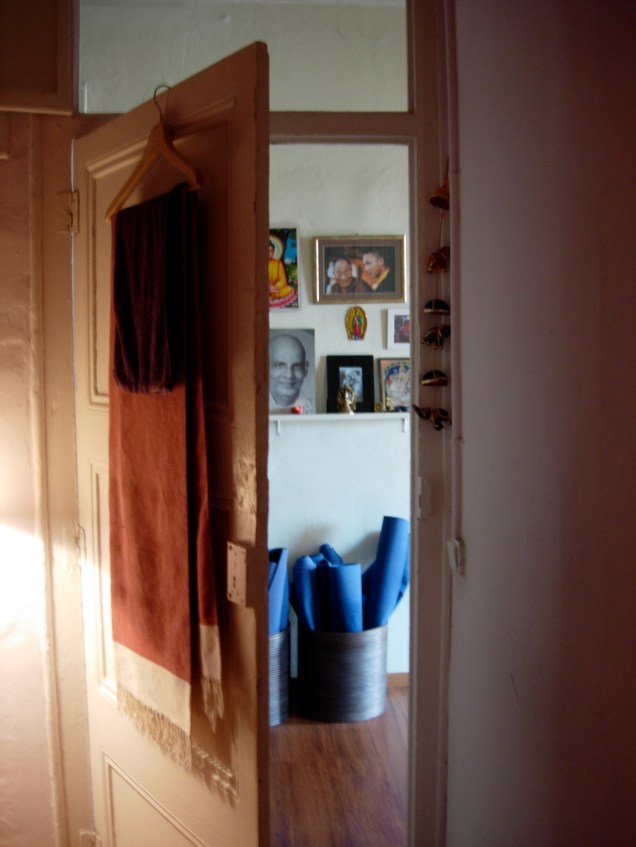
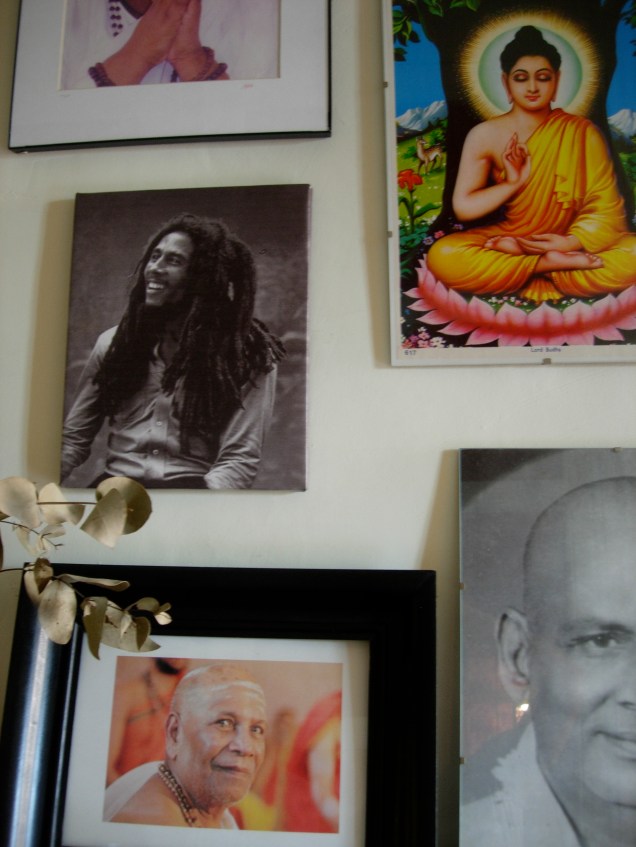
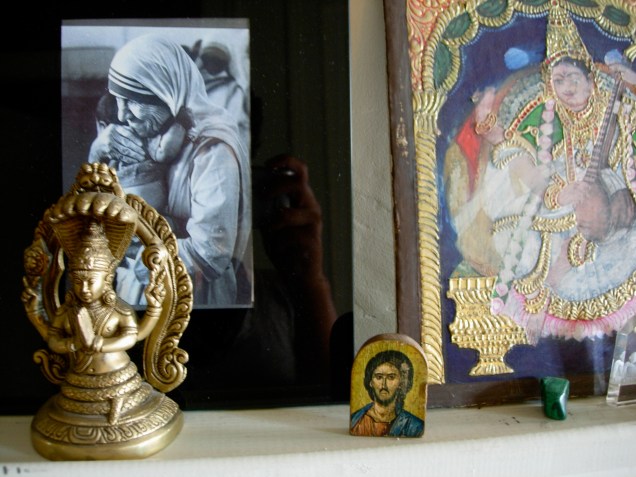
I couldn’t stop wandering around, looking in wonder at every little thing: the fabric mats; the incense; the photo of Bob Marley alongside the Dalai Lama, Mother Theresa, Jesus, Buddha, and other spiritual inspirations.
Smitten doesn’t begin to describe it.
So when I decided to settle in Barcelona for a month, and wanted to sign up for a yoga class instead of a gym membership, I happened to know just the right place.
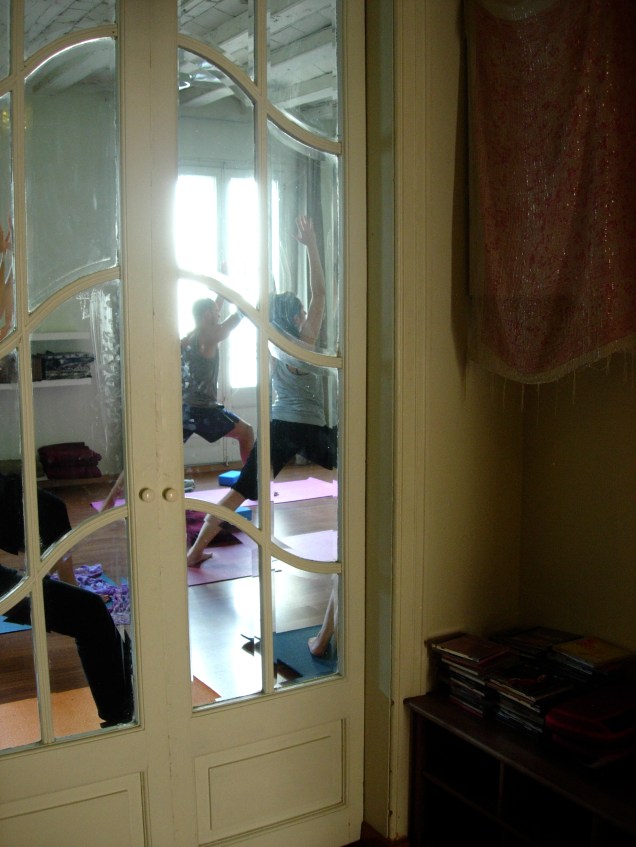
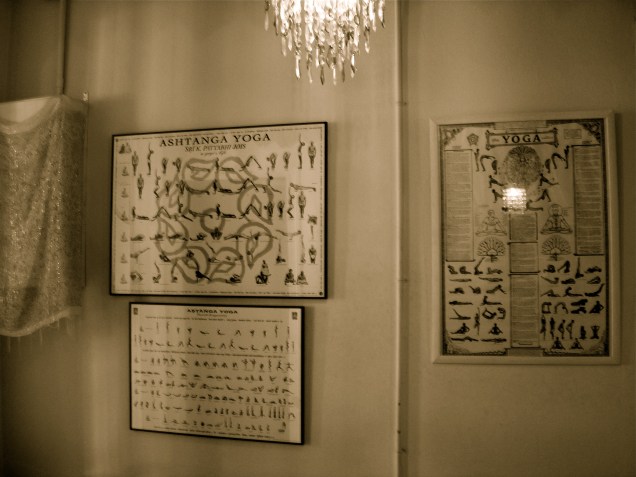
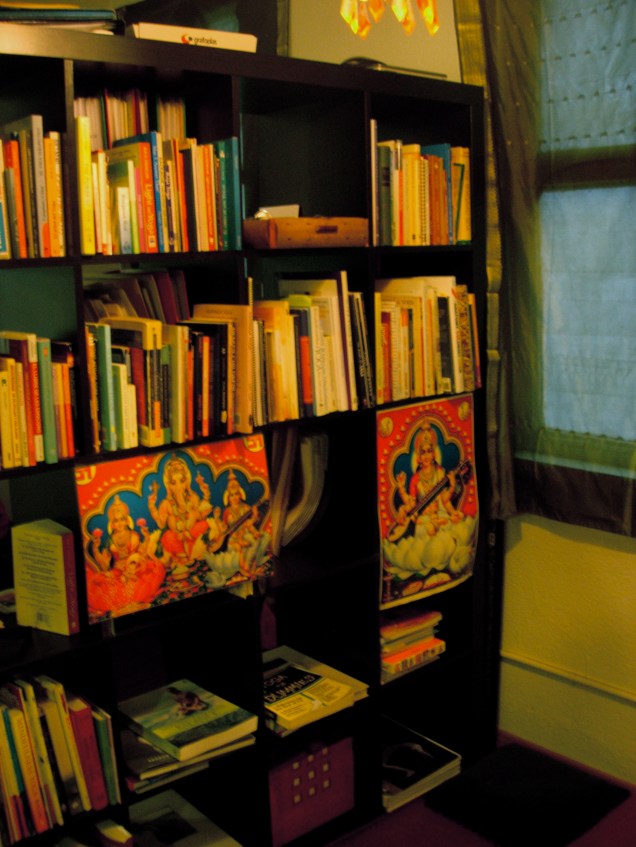
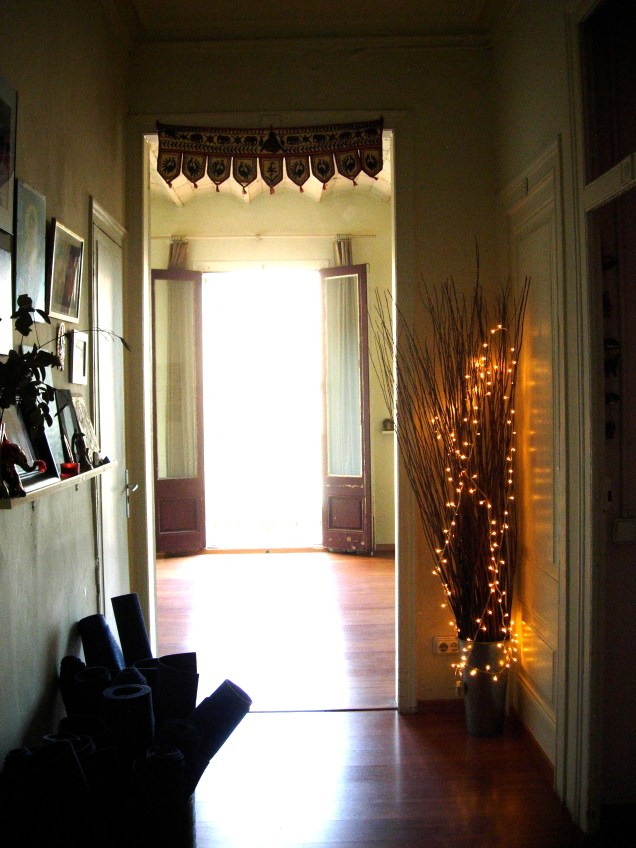
Owned and operated entirely by women teachers (though students of all genders attend), the studio has clean, airy rooms; fresh lilies every week; chandeliers; rooibos tea; a small library of works on yoga, India, and Buddhist philosophy; and extremely hardcore asanas.
Every time I go, I arrive an hour early to read, and leave drenched in sweat, floating down the street. The two-and-a-half hours in between are filled with an almost palpable sense of caring — a bright, loving, permeating awakeness. And each time, thanks to the book or the practice or both, I come away having learned something valuable about how to live. Really.
Not all yoga joints are like this, believe you me.
I hope you’ve found your own places like Mandiram. Sanctuaries. Places where the most mundane objects, gestures, and even open spaces seem luminous. Leave you feeling spacious, yourself, even (especially) when you return home and – bam! – your roommate convenes a Dirty Dishes Conversation.
Deep thanks to Gloria, Alex, and all the people who have given me, and others, this haven and springboard.
An American study shows that “optimistic women” have better heart health and greater longevity than “cynical women who harboured hostile thoughts about others or were generally mistrusting of others.”
The findings echo results of Dutch research indicating similar correlations between attitude and health among men.
Lead researcher Dr Hilary Tindle, assistant professor of medicine at the University of Pittsburgh, said: “The majority of evidence suggests that sustained, high degrees of negativity are hazardous to health.”
But, I mean, what if they had found the opposite? Should we then try to be as cynical and pessimistic as possible, so that we’d have more years to fill up with misery?
Folks, I’m getting a familiar whiff of The Cool, here. According to The Cool’s logic, being negative is worthwhile because you gain things by it: things like protection (via mistrust); righteousness (from hostility, making someone else the ‘enemy’); or realism (you’re the anti-Pollyanna/up on the news/nobody’s fool).
If we accept this logic, then we might ask whether positivity has its own compensatory benefits.
And wouldn’t you know: it does! So science adds another tally to the “pro” side of happiness: “Being positive helps you live longer.”
But…do you see where I’m going with this? Can you smell what I’m cookin’?
Being positive helps you live better, for however long.
Ultimately, none of the supposed ‘benefits’ of negativity that The Cool promises us are true benefits at all. They’re simply variations on what The Cool loves best: more coolness. Even longer lifespans can be a form of Cool.
Now, of course, blind optimism never helped anyone, either. Nobody needs to live in denial. Optimism and realism can, and should, go together. All I’m saying is…when it comes to positivity versus negativity, there’s really no contest. Chuck the pro/con list and take a page from the book of these beautiful abuelas.
Or, if you prefer, heed the wise words of De La Soul:
And stop frownin like you hostile
You know that it’s a booger rubbin up against your nostril
Today’s 5th-most-emailed NYT article (copied in full below the fold) is a truly profound “Modern Love” column by Laura Munson: a woman who saved her own marriage using insight into happiness. Her summary: “I don’t love you anymore,” my husband said, but I survived the sucker punch.
It’s a perfect illustration of the ideas I used recently, during my own troubles with love. (Thanks again, by the way, to everyone who wrote with well-wishes and comfort after my weepy post from Paris.)
When Munson’s husband, demoralized by a mid-life crisis and a tanking job, came to her talkin’ bout rescinding his affections and wanting out of the deal, her response was, “I don’t buy it.” Which basically means, she recognized that this was his issue, not hers. So she didn’t take it personally. Instead, she tried to think of structures and solutions to help give him what he needed. (Space.) And she waited until the crisis passed. She refused to make herself responsible for his happiness, and at the same time took responsibility for maintaining her own — not blaming or resenting him for threatening to destroy their family.
Despite what most of the R&B songs tell us, love isn’t about being somebody’s “rock” and assuming the weight of their burdens. Ultimately, love is about giving them the space, time, and tools to stand on their own.
So when my friend in China confessed that he’d been concealing a new relationship from me, even though it stung, I was also able to recognize that it was not my problem to solve. It really had nothing to do with me. He was the one who felt confused and scared enough to hide the truth about something so natural and innocent: loving more than one person at once. Given the cultural shame around this kind of situation, keeping quiet about it for so long may have been ignoble or short-sighted on his part, but it’s also very understandable — not to mention totally commonplace.
And you know, it’s funny. Once we let go of our blaming and victimhood, a situation like mine or Munson’s can reveal itself as an extraordinary opportunity to learn. We can learn how to rebuild something broken, and even do it in a gentle, playful way. Her: planning middle-class summer vacations with the kids; me: proposing long-distance trust-rebuilding games.
And even more importantly, we can learn how to give love without expecting anything in return. Which is really the true nature of love, when you get down to it.
Munson’s ability to keep a level head and compassionate heart in the face of dysfunction in a marriage, of all systems, makes her story tremendously inspiring. And we can apply the same lessons to all sorts of loving relationships — whether with friends, lovers, spouses, or blood kin. Giving people space to be as they are is nothing less than a radical act of humanity. It doesn’t mean being a pushover. I don’t accept dishonesty, and Munson didn’t accept recklessness. But neither do we fight. No blaming, no struggle. Just seeing the situation for what it is, and finding ways to live it as lovingly as possible.
This is what the Buddha means in one of his notoriously challenging suttas about blame. From the Dhammapada:
“He abused me, he beat me, he defeated me, he robbed me,”
in those who harbor such thoughts hatred is not appeased.
“He abused me, he beat me, he defeated me, he robbed me,”
in those who do not harbor such thoughts hatred is appeased.
Hate is not overcome by hate; by Love alone is hate appeased.
This is an eternal law.
Wishing you luck in giving and receiving space to be,












 Kloncke