Confronting Capitalism through Feminist Fat Acceptance

Despite being a longtime denizen of the feminist blogosphere, it wasn’t til last year that I learned about the Fat Acceptance (FA) movement. (Also called Health At Every Size (HAES) or Fat Liberation. Fat Fu, The Fat Nutritionist, Fatshionista, and Shapely Prose are good places to start if you’re unfamiliar.)

The connection clicked immediately.  In our society, fat people get discriminated against (and dehumanized) in ways that intersect with gender and other dimensions of body politics.  Duh.  Bonus: the fatosphere bloggers I’ve come across are funny and really good writers.

And today, thanks to a post by wickedday, a guest blogger at Feministe, I made another big thinky-type connection: this time between fat-shaming and capitalism.

Basically, what the fat-shaming helps to do is obscure the bald hypocrisy of a capitalist society that claims to care about people’s dietary health (e.g. fighting “the obesity epidemic” on the level of ‘education’ and personal lifestyle choices), while generating enormous profits from food industries that are fundamentally health-hazardous, environmentally devastating, and/or horribly inhumane (processed and genetically modified foods; hormone-filled factory meats; subsidized corn for corn syrup, etc. etc. etc.).  And using super-exploited immigrant labor to do a lot of it.

Now, this isn’t a new argument among FA feminists, but my perspective extends wickedday’s outline of the parallels between slut-shaming and fat-shaming, placing a greater emphasis on the historical and material basis for both.  By most FA accounts I’ve read, fatphobia comes from some combination of hatred, thin privilege, and jealousy: as wickedday puts it, the idea that “it is agonising to look at someone ignoring the rules that you punish yourself with, and still being happy.”

At the moment I’m more curious about bigger-picture causes.  The macro-relationships.  Because, as I say in my comment (copied below), as much as we might argue that our bodies are none of their business, as long as we live under capitalism, their business is precisely what our bodies are.

kloncke 9.7.2010 at 5:31 pm

Loving this post, and wondering if anyone else is interested in bringing the analysis toward the realm of political economy? I’m trying to figure out plausible, material reasons *why* the hegemonic discourse is so concerned with fat-shaming and slut-shaming.

Because on one hand, from an ethical perspective, “my body” (in terms of its size and sexual activity) is none of “your business.”

But from a point of view of class struggle in a capitalist context, “my body” as a vehicle for the commodity of labor-power (and/or the reproduction of labor-power; i.e. childbearing and domestic work) is *precisely* “your business” (“you,” the capitalist class) — in the sense that it is the source of the surplus value that capitalists (who are almost entirely men) extract as profit. No wonder the state (largely synonymous with the capitalist class) monitors the bodies of its labor force a.k.a. profit machine.

Continue reading

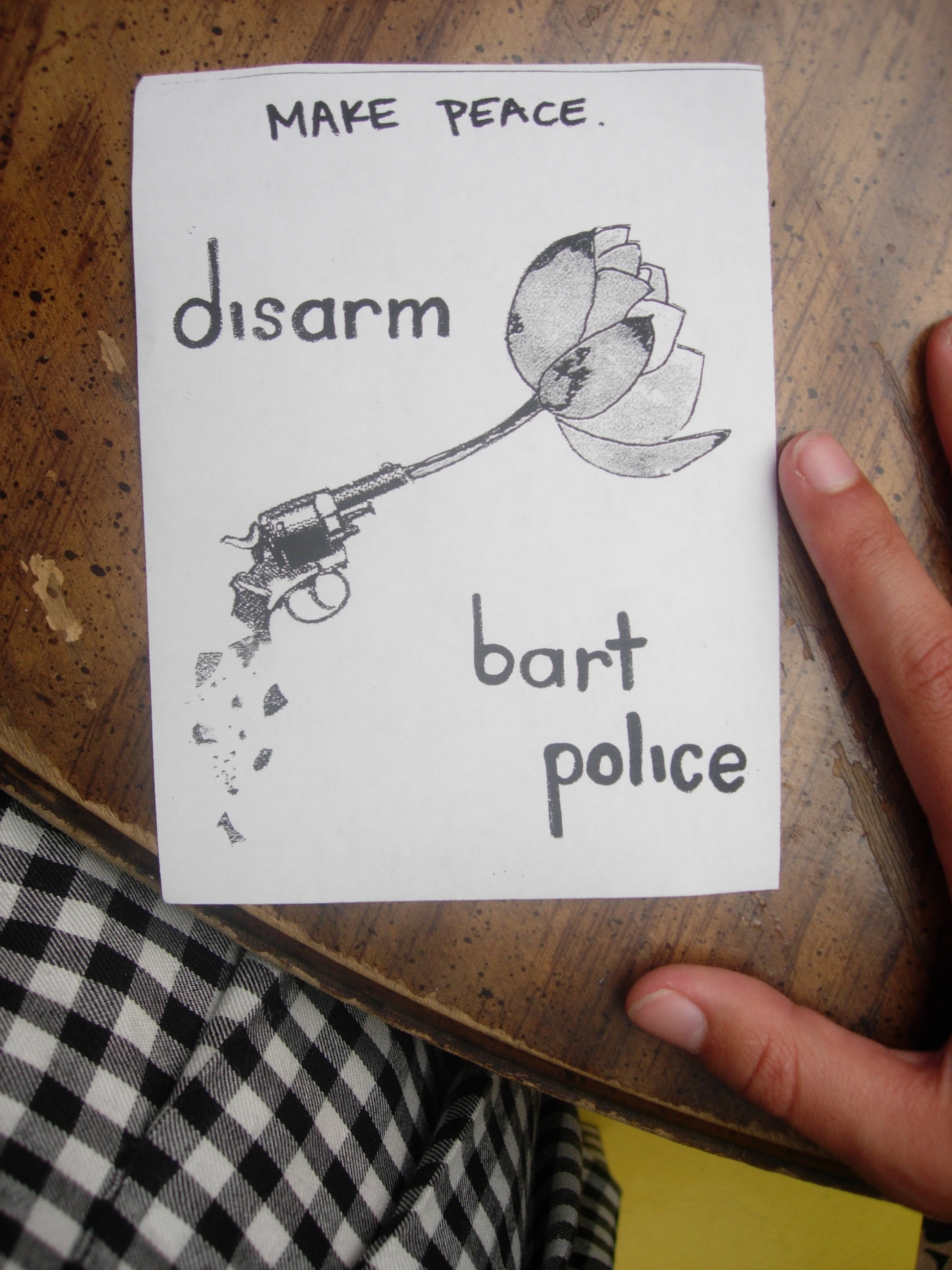
Disarm BART Flyer #1

Simple, clean, sincere. Inspired by Burmese monastics who, when demonstrating in the streets against the military, chant: “May all beings be free from killing one another. May all beings be free from torturing one another…”

[Update: I forgot to mention, but if you’re in the bay area and are interested in passing out some flyers on your BART travels, hit me up at katie (dot) loncke (at) gmail (dot) com and I’ll get you a batch! Or, even better — take some inspiration and make your own, and let the rest of us know about it.]

(Bar) Mitzvahs For Everybody

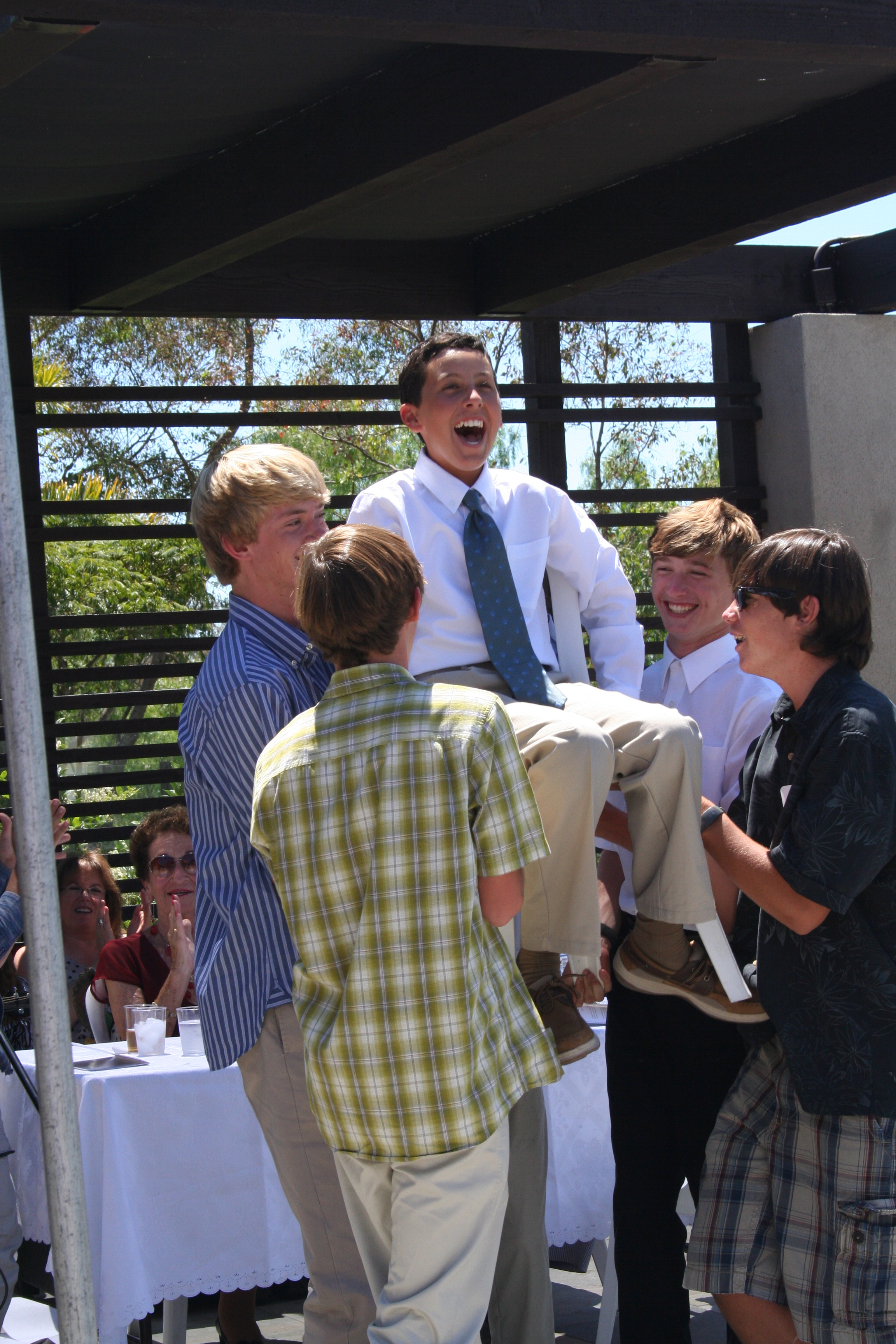
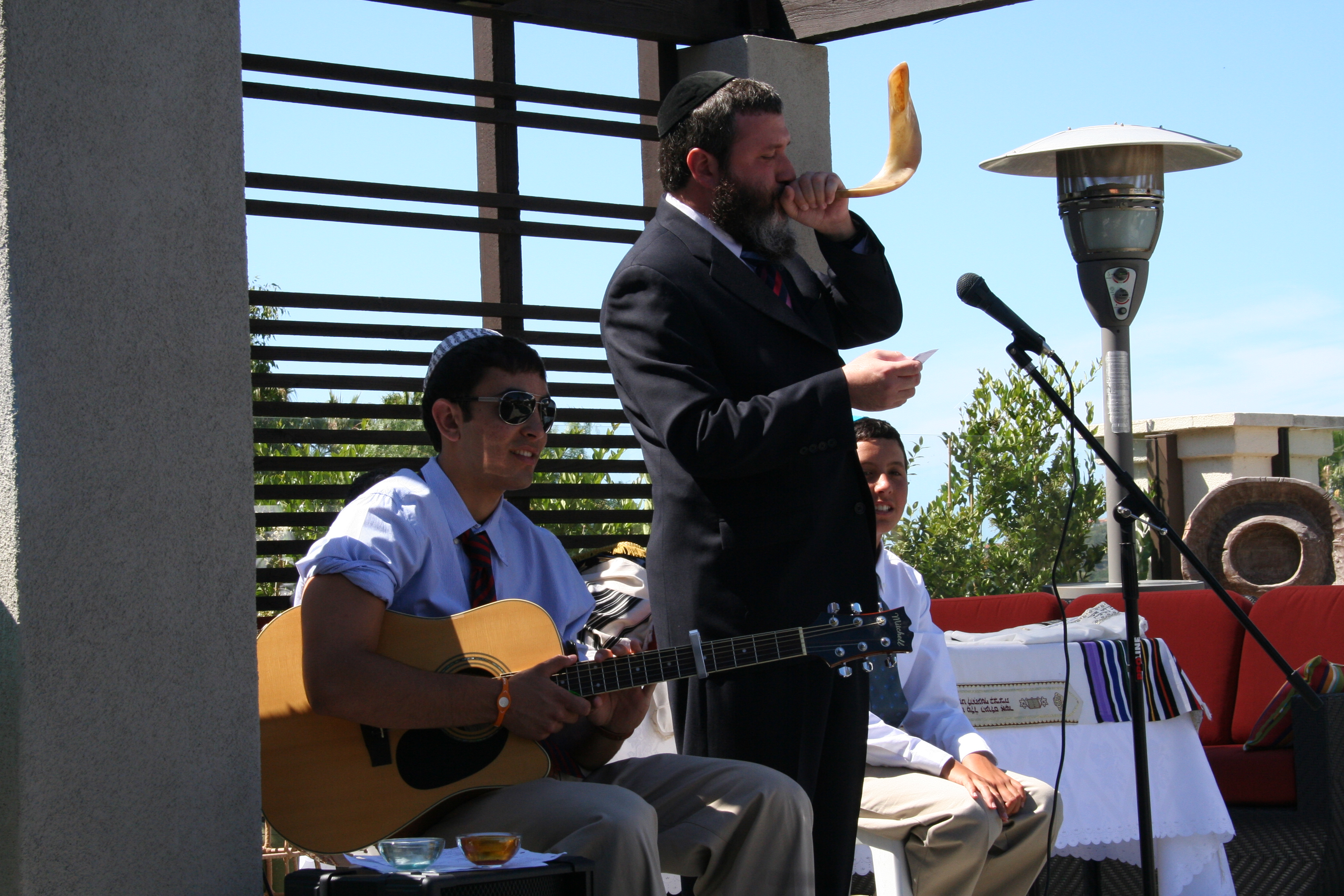
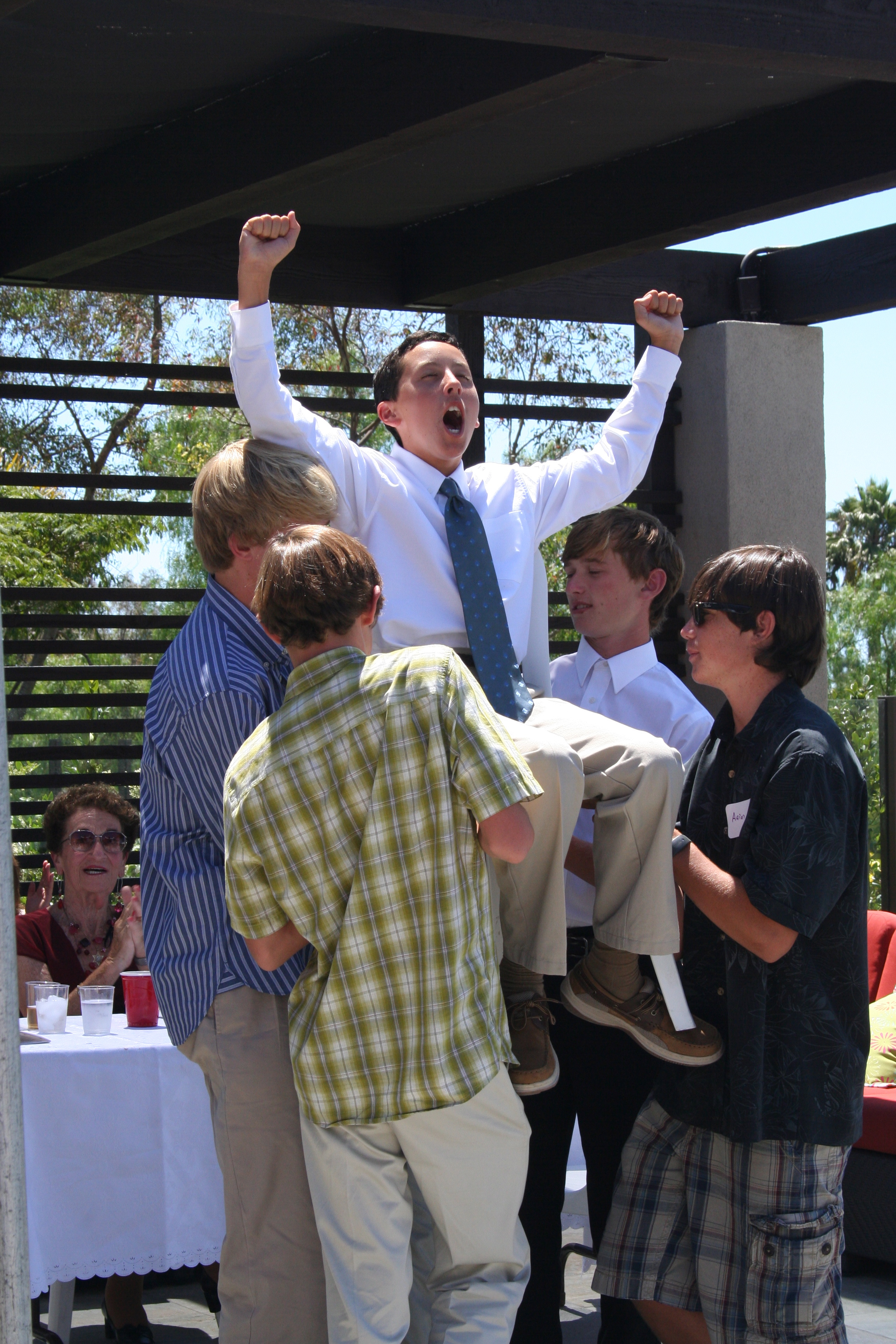
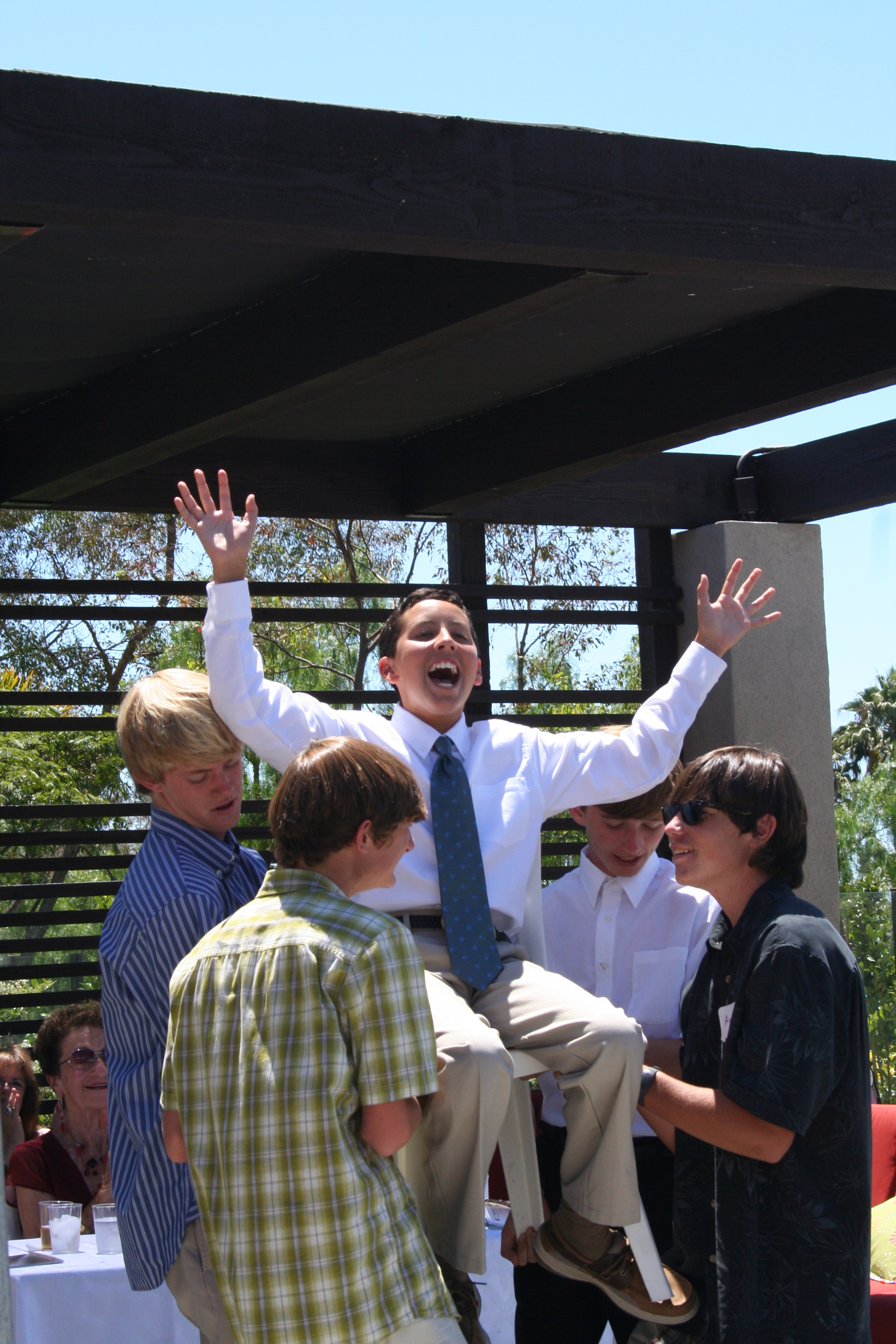
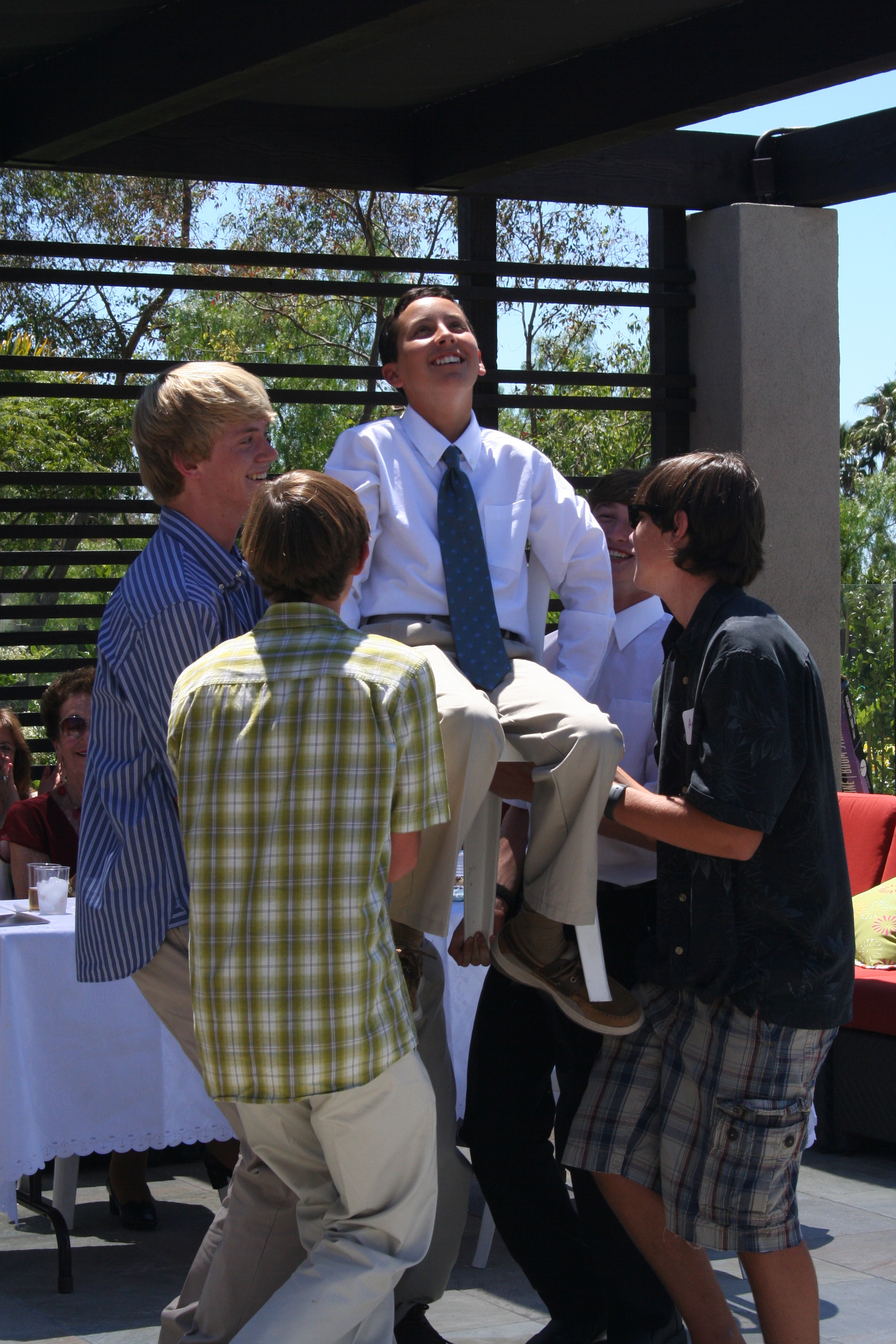
Feminism teaches us that “accommodating” people’s differences and dis/abilities doesn’t have to be a chore. In fact, it often leaves everybody better off. Prime example, my cousin Alexsander’s bar mitzvah last weekend.

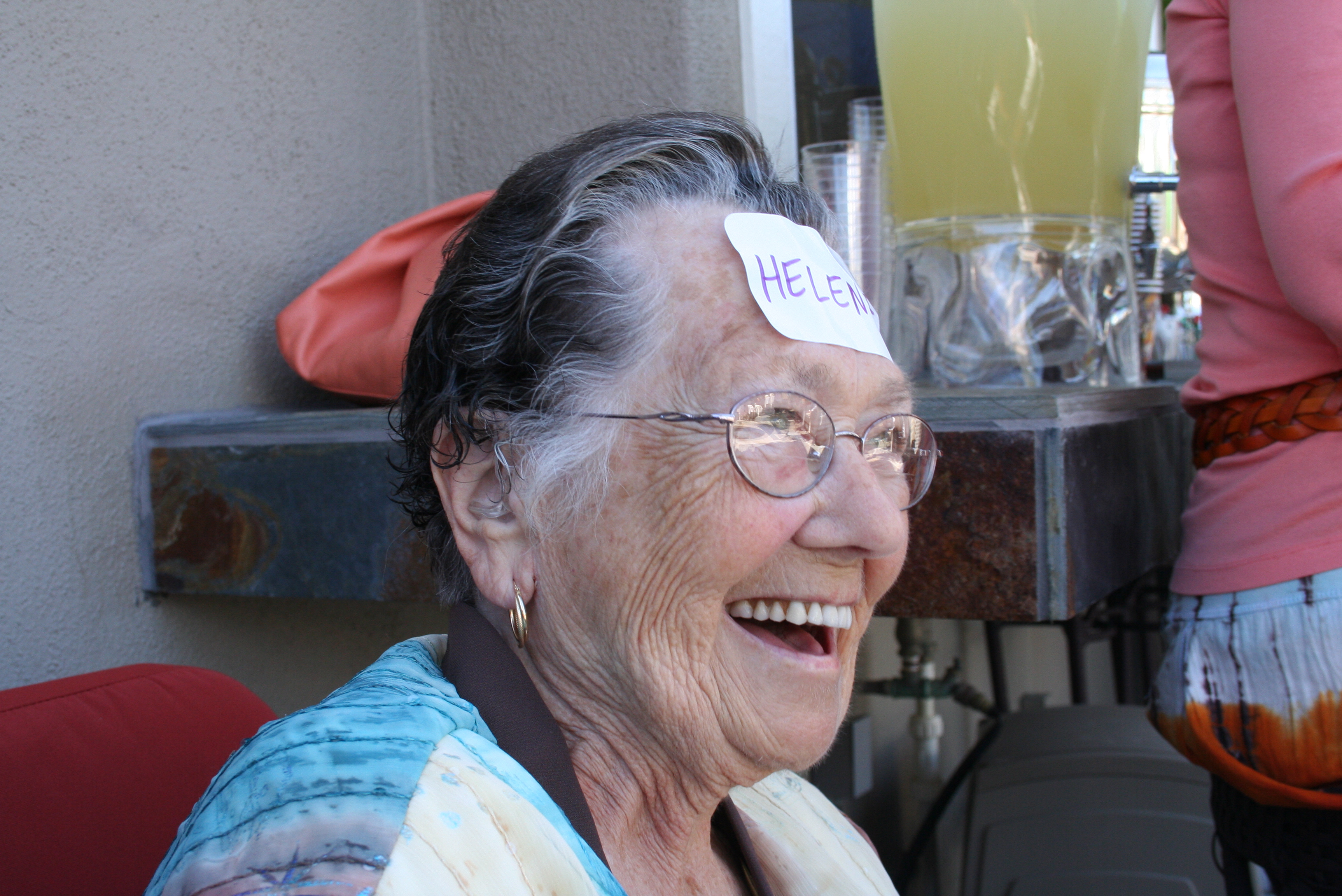
Oma (my grandmother) being silly and wonderful

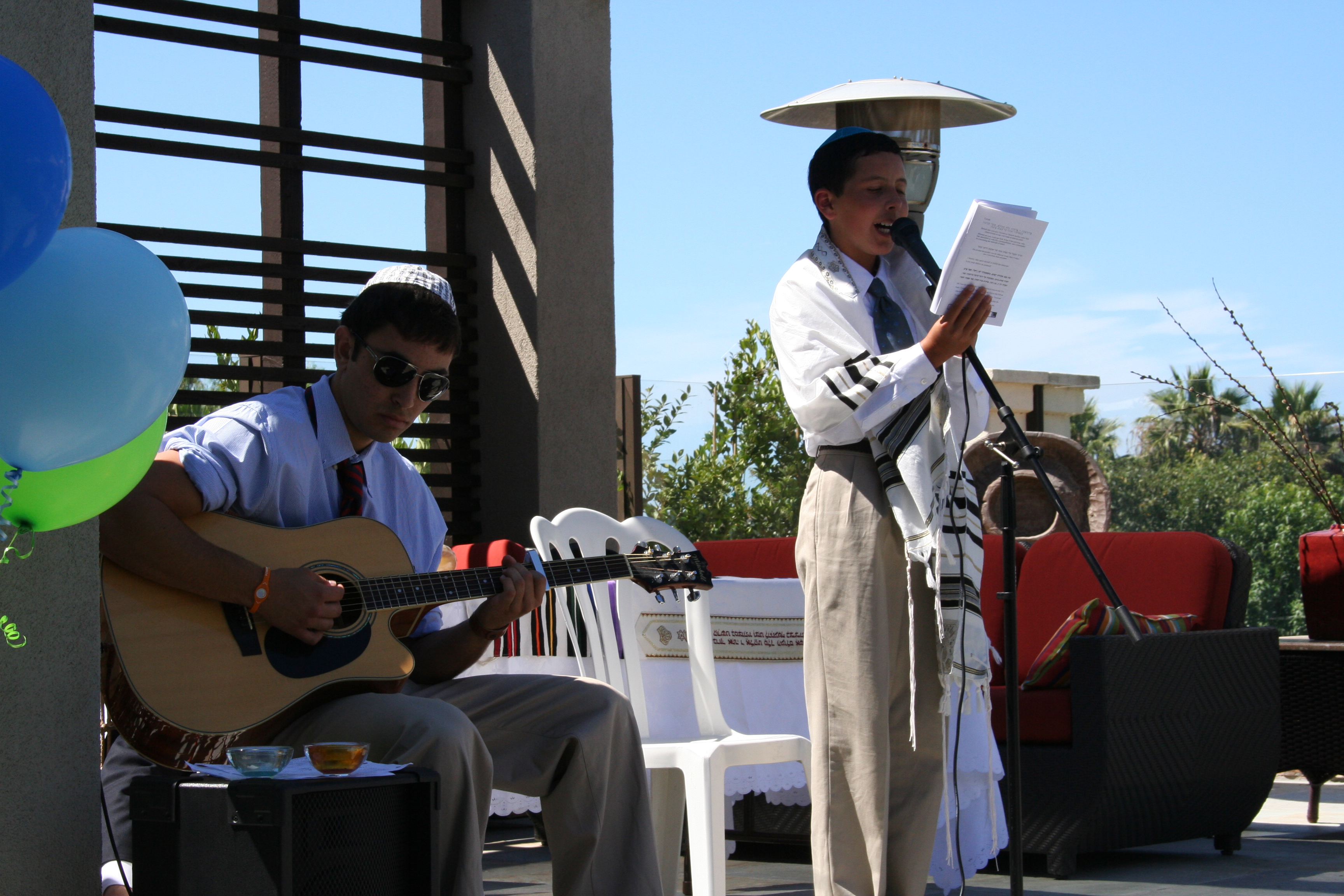
I haven’t attended a ton of these ceremonies, so I don’t have a huge sample for comparison, but I can say that this was one of the most fun, heartfelt, and moving coming-of-age traditional ceremonies I can imagine. Musical, personal, participatory. Precious community and sympathetic joy in abundance. And Sander took to the mic like anything.

Much of the brief ceremony featured Sander's beautiful singing of prayers.

Sander wasn’t the only one in attendance whose bar mitzvah was a special celebration of triumph. His grandfather, Hans, risked his own life in World War II by performing his bar mitzvah in a concentration camp. As my oma would say, “Can you imagine?”

New-man Sander lets out a kingly yawp.

Of course, the whole event was emotional, but the moment that really wrung the tears out of me was the speech by Sander’s mom, my cousin Suzie.

Today Alexsander becomes a man and yet it seems like yesterday when we sang nursery songs together, took stroller walks and read Dr. Suess books. It is from the Dr. Suess book “Gerald McBoing Boing” that I wish to paraphrase to describe my pride in our son, Sander.

They say it all started when Sander was two.

That’s the age kids start talking-least, most of them do.

Well, when he started talking, you know what he said?

He didn’t talk words- he went “meow” instead!

And as little Sander grew older, he found when a fellow repeats

No one wants to give him treats.

When a fellow goes “skreek” he won’t have any friends,

For once he says, “clang, clang, clang,” all the fun ends.

And as the story goes, Rabbi Mintz seeks out Sander’s talent.

“Your Hebrew is terrific, your pitch is inspired!

“Quick – come to Friendship Circle, Sander! You are admired!”

Now his proud parents are able to boast

That their son’s singing is known coast to coast.

Now Sander has friends, and makes his bed

‘Cause he sometimes speaks words but mostly sings instead.

[A note about the title: while a bar mitzvah or bat mitzvah refers to a particular Jewish rite of passage, colloquially a “mitzvah” can also mean an act of human kindness. For me, Sander’s bar mitzvah was a great reminder of the many mitzvahs we can all do for each other every day, simply by accepting and honoring each other as we are.]

Otsu: Yes, It’s As Good As It Sounds

ahhhhhhh bowl o' otsu

Time for another favorite recipe.  Courtesy of (surprise) Heidi Swanson’s 101cookbooks.com.

I made this the other night for a semi-potluck, and as usual,* it was a hit.  Sesame-ginger-honey-lemon-cayenne dressing over buckwheat soba noodles, diced cucumbers, and pan-fried tofu, finished with sesame seeds and with green onions and cilantro, if I’ve got ’em on hand.

Swanson actually got this recipe from a restaurant here in San Francisco called pomelo.  The in-store version is mighty tasty (their tofu is especially nice), but it’s simple enough to make at home — no outlandish ingredients or particularly finicky prep.  (A food processor does come in handy, though.)

My minor tweaks: more cayenne, more cucumber. (I’ll use 1.5 or 2 cucumbers instead of one-half.)

I could eat this every day for a week, people.

Well, that’s true about a lot of foods.  But this one especially.

Enjoy!

————————————————————

*One fairly disastrous exception was the time I tried to make it for my wonderful CouchSurfing hosts in Barcelona.  The effort was doomed by my inability to find Japanese ingredients in Catalunyan grocery stores.  The result was a brownish, ginger-less spaghetti slop with rock-hard tofu nuggets.  Pretty humiliating.  But they were totally sweet about it, bless their hearts.  Maybe someday they’ll visit me in San Francisco and I can redeem myself with a proper version.

“To the lumpen mass…” From Deluche

Just a comment I wrote on a cross-post thread over on Advance The Struggle.  Original post at …or does it explode?

It’s worth reading the entire A/S thread, but I thought I’d copy my piece here since it speaks to my 9-month experience at the Faithful Fools.  (Damn, that long already?)  A truly wonderful, radically humanist group, rare among non-profits in terms of the depth of its sustained connection to individuals in a community.

Ever since I started living and working here, I’ve wondered what kind of political organizing might take shape in the TL.  In San Francisco lately there’s been some solid direct action around occupying empty buildings on behalf of eviction victims and homeless folks.  At the same time, most people I see here are basically just struggling to survive and heal.  Which, as I say in the comment below, deserves respect and recognition.

Thanks for posting this here — and thanks to Deluche for writing it.

I’m appreciating all the analysis from Icarus and a comrade. Much to think about.

Apart from the political-economic analysis, another current I was seeing in the original post is some attention to the lived experience of tremendous suffering that is happening in “surplus populations” within US urban ghettos, and their overlap with the working class.

Like Deluche says, without blaming or taking out anger on individuals within surplus populations, we can see the ways that being forced to live outside of a formal, legal economy — chronically unemployed, corralled, imprisoned — would (a) foster desperation and (b) support self-medicating addictions, both of which extend a chain of violence.

I don’t know enough about proper definitions of “lumpenproletariat” or surplus populations to comment on Icarus’ objection to an overly narrow focus on drug dealers and sex workers. But to speak just on my own experience living and working in the Tenderloin neighborhood of SF with a homeless community: criminalized addiction, exploitative sex work (amplified by transphobia), and stigmatized mental illness are definitely major factors dominating the scene around here.

At the same time, along with this enormous suffering and harm is the potential for astonishing healing. I haven’t even been working here that long (9 months), and already I’ve seen some incredible, long-time-coming shifts. Folks choosing to move forward in addiction recovery, dealing with depression and PTSD, making beautiful art, showing great generosity to others, and getting their feet on the ground — largely because a group of people stood by them and for years showed committed care, love, and faith in the face of an entire society that tells them they’re worthless and, yes, “parasitic.”

This kind of healing, even on an individual or small community level, is quite inspiring. Can we allow it to inform revolutionary organizing? Can we allow it to illuminate the healing work already taking place (often un-compensated and un-heralded) within the working-class itself, buttressing its power for economic and social transformation?

Seems to me that it’s easier for folks to dis those with no labor-power leverage when we take revolution of capitalism as the sole redemptive struggle in life. In truth, revolutionaries interested in building a better society for humans, animals, and the earth might benefit from learning about the inter-related struggles and healing among the ‘lumpen.’

Bad Good Romance

text from Ryan
From my partner, after a week-and-a-half without seeing each other

For a variety of reasons, I often feel shy about celebrating this relationship. Given all the bullshit, grief, and even trauma that most of us young people endure in our love lives (and I’ve had my share, with more to come in the future, no doubt), it feels weirdly rude or dissonant when somebody speaks in detail about a marvelous partnership.  Cute couple-y photos, fine; wedding or baby announcements, ok.  But in general, no news is good news.  Conversations are for commiserating over heartache, analyzing a transgression, or dishing about a new lover.

Besides, it’s a little difficult to even define what I mean by a “marvelous partnership.” I don’t mean pleasurable, necessarily, though it certainly is that. But for me, the relationship’s best attributes aren’t your typical high highs — the dizzy, heady, mind-blowing, earth-shaking, dare I say passionate feelings.

Instead, there’s deep comfort. Profound mutual respect and care. Trust. Confidence. Generosity. Wonder. Humor. Steadiness. Openness — which means both closeness and spaciousness. And the kind of love that radiates outward, illuminating not only the partnership itself but our engagement with others, too.

Culturally, many of us young people are quite savvy and adept at analyzing relationship dysfunction. (Avoiding the dysfunction is another story.) But when it comes to flourishing romance, the best we can do, it seems, is chalk it up to luck, destiny, or maybe hard work. (“Relationships take work,” I’ve often heard — with little elaboration on what that work entails, save for some intimations about compromise, gift-giving, ‘communication,’ and remembering anniversaries.)

Another reason I’m loathe to laud my situation is that I don’t want to reinforce pernicious myths about the supremacy of monogamy.  We’re taught that qualities like trust and love come from monogamous relationships (and monogamous relationships only), rather than being brought to them.

I’m no relationship expert, but I do have eyes.  And from what I’ve seen, very few people in our culture can develop healthy monogamous partnerships.  Especially not without the benefit of some ethical, non-grasping, non-monogamous loving experience, or at least openness to that framework for intimacy.  Not to mention some genuine comfort with being alone.  Personally, I probably strengthened my relationship skills the most during the year when I was single and celibate, traveling solo and studying dhamma (including Thich Nhat Hanh’s Teachings On Love, on loan from my friend Erin).

See?  There I go again, gettin’ all squirrelly writing this post about ‘my relationship WIN.’  Well it’s not a win, it’s just what’s happening, and there’s patience and enthusiasm and true love involved, and those are pretty great things.

Have a wonderful weekend, friends!  See you Monday.

When Blogging, Just Blog.*

[Cross-posted at Feministe.]

To say that blogging can be dhammic is not to claim that it can substitute for formal techniques of spiritual practice. Those techniques are designed to help bring us face-to-face with the hard lessons — otherwise, it becomes just another feel-good affair (or, as I once heard Mary Ann Brussat call it, “salad-bar spirituality”). Still, with any spiritual teaching, it’s easy to get too wrapped up in literalism and formalism. So we have to remember to engage creatively with the mundane — the materials already before us. Whether that’s blogging or boxing or BDSM roleplaying.

Yesterday I talked a bit about how sexism keeps us from taking journal blogging seriously. Today, 5 reasons the medium suits dhamma practice terrifically, with particular advantages as a new form of spiritual autobiography.

Continue reading

On Not Writing For A Minute

reservoir

Friends! The lucky spell continues. I was fortunate enough to go take a hike on Wednesday with Ryan. A recurring joke from me along the trail: Can I borrow your internet phone to check Feministe comments?

But really, as much as I love spending upwards of 8 hours a day engrossed in writing and reading, it’s especially important at those times to be able to unplug, step away, and reconnect with life around me. (Thanks for that reminder, Wisdom 2.0.)

What a beautiful land I’m living in, and how grateful I am to be able to witness it.

reservoir
stairs
me and ryan

Vintage Reading

To celebrate submitting my application to Goddard last fall, I went to a batting cage.

To celebrate completing my first semester at Goddard last week, I…read some fiction.

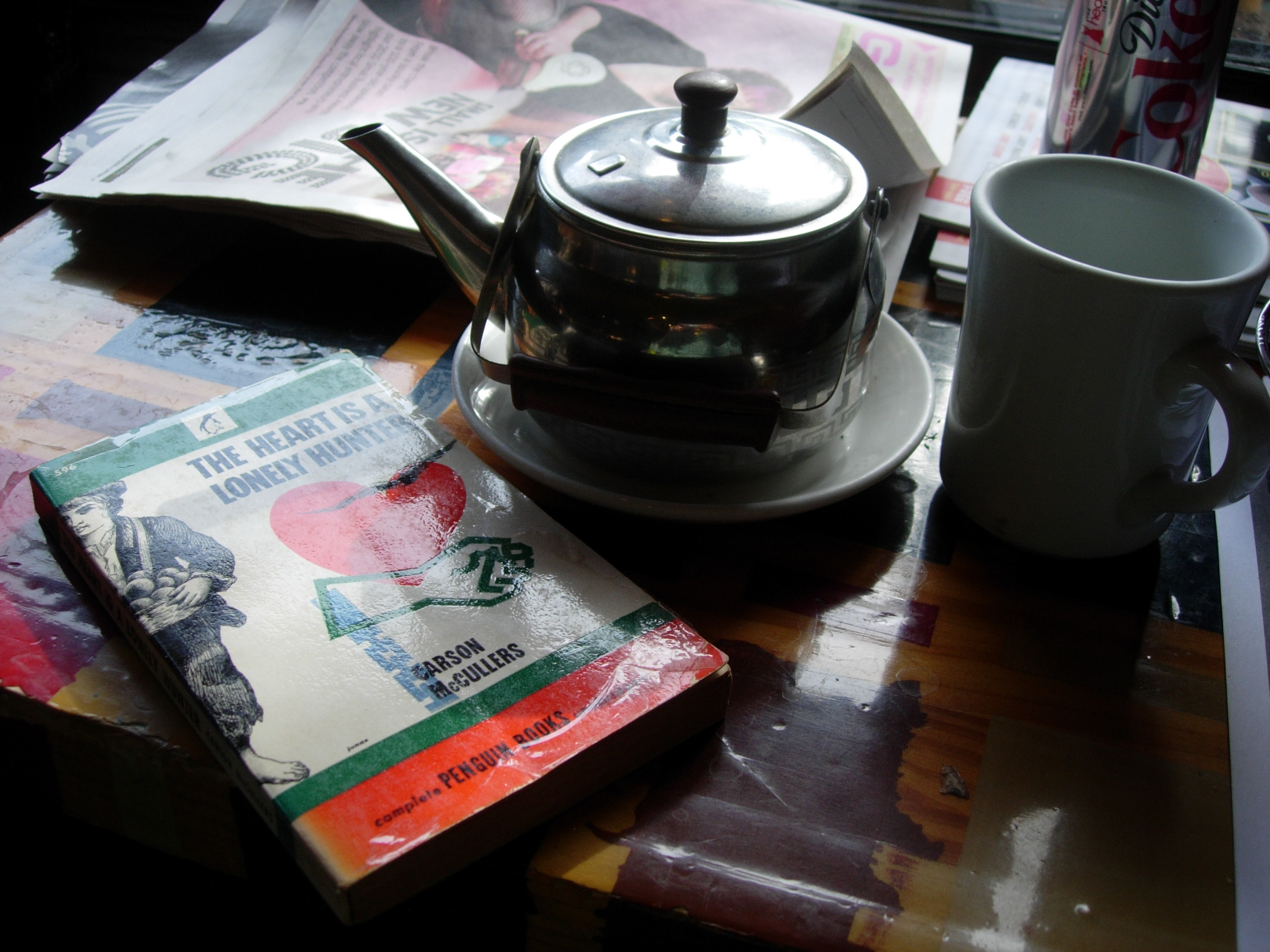
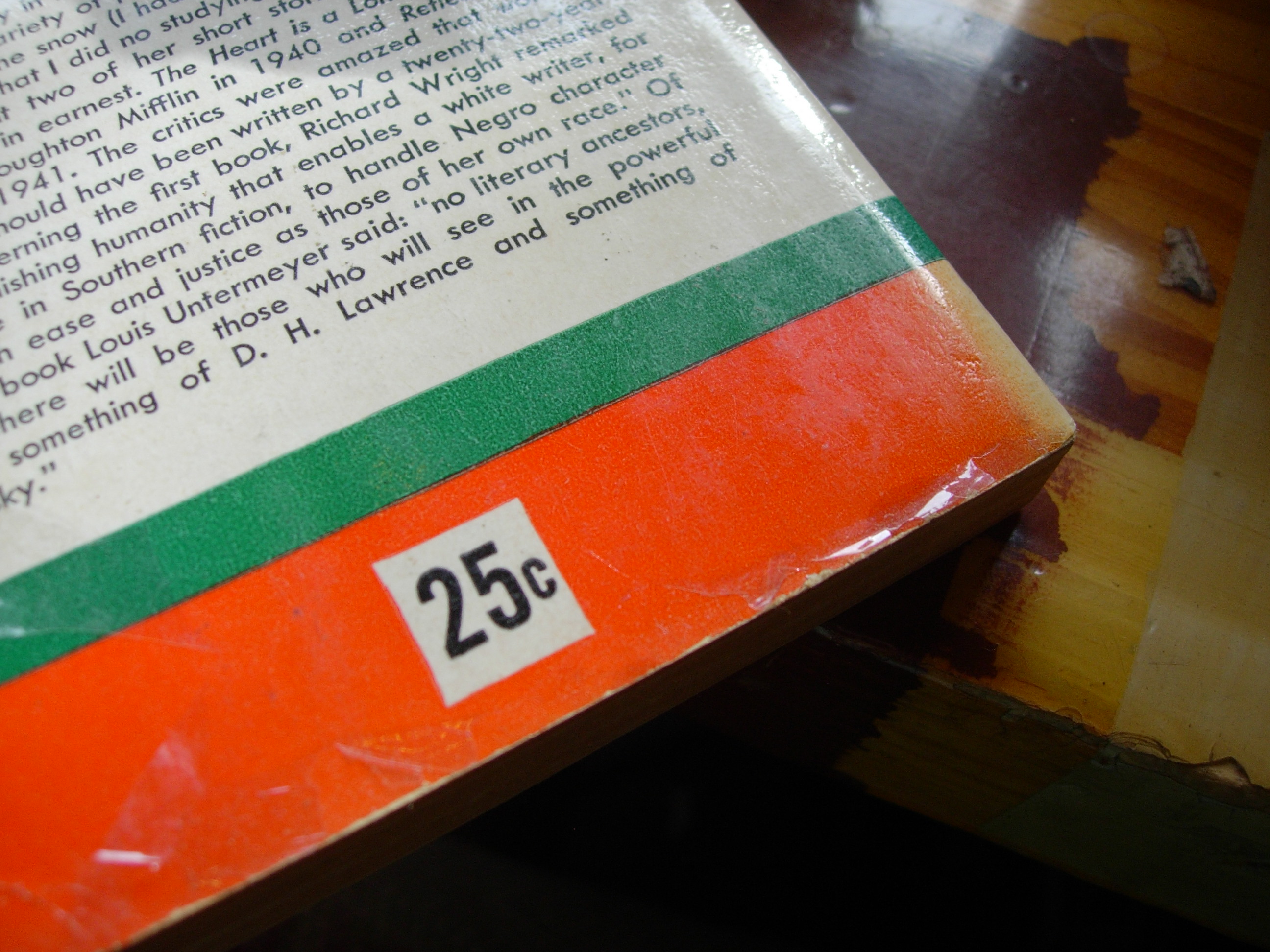
But not just any fiction!  This gorgeous copy of The Heart Is A Lonely Hunter, a 1946 edition: older than my own mother.

Isn’t she handsome? And I love the candor of the text on the back cover:

Born in Columbus, Georgia, in 1917, Carson McCullers has been writing since she was sixteen. For several years before that her main interest had been in music and her ambition to be a concert pianist. When she was seventeen she went to New York with the intention of studying at Columbia and Julliard. However, on the second day she lost her tuition money on the subway. Thereafter she was hired and fired from a variety of jobs, and went to school at night. “But the city and the snow (I had never seen snow before) so overwhelmed me that I did no studying at all.” The year after that Story bought two of her short stories and she settled down to writing in earnest. The Heart Is A Lonely Hunter was published by Houghton Mifflin in 1940 and Reflections in a Golden Eye in 1941. The critics were amazed that works of such maturity should have been written by a twenty-two-year-old girl. Concerning the first book, Richard Wright remarked on “the astonishing humanity that enables a white writer, for the first time in Southern fiction, to handle Negro character [sic] with as much ease and justice as those of her own race.” Of the second book Louis Untermeyer said: “no literary ancestors, although there will be those who see in the powerful situations something of D. H. Lawrence and something of Dostoievsky.”

I’m only five chapters in or so, partly because McCullers’ prose is so marvelously simple and vivid and penetrating that it makes me want to close the book and go meditate.

Speaking of which, time to sit and go to sleep!  Night y’all, see you next week.