On the morning ten years ago when we in Sacramento heard the news, I remember my dad driving me to school. Us listening to the radio. I didn’t really understand what was happening (then again, who did?), but I remember starting to cry when I realized that people in other parts of the world live in fear of bombings every day.
What does it mean to hope and pray for a better society, free from imperialist wars, patriarchy, racism, and class, without rejecting or wishing away the current reality?
To me, it means: now (the present) is the best and only time we have in which to try our hardest. To keep building toward the freedoms we wish for all beings.
We may not live to see it, but we can help create it.
Love this image from Mingus' site, labeled "watercolor painting of an octopus done in greens, yellows, oranges and pinks."
To me, femme must include ending ableism, white supremacy, heterosexism, the gender binary, economic exploitation, sexual violence, population control, male supremacy, war and militarization, and ownership of children and land.
Yesterday: downtown Oakland is in full Art-And-Soul festival mode, and a small squad of us from East Bay Solidarity Network gather outside its gated entrance to do our own jovial yet serious work. Once we finally locate one another in the crowd (who has whose cell numbers?), it’s on to the business of distributing xeroxed posters and tape (did we bring enough tape? it sucks to run out), and divvying out areas to flyer. Some of us are slow and others are impatient. Caught in between as an unofficially appointed problem solver, I feel my face edge toward a scowl. Luckily, though, our little gang laughs together more and more as months pass. And laughter is nature’s aspirin for the headache of logistics. Besides: no one’s getting paid here, and there are no managers or fears of getting fired and losing that paycheck, so we’re more free to move at our own pace.
Have I told you about our current fight? Mel Hill was a security guard working for ABC Security. After working at a number of different locations, he was stationed way, way out at a bus yard, miles from any public transport. The way Mel puts it: “I had leg muscles big as Popeye from walking to and from work.” He posted up in a little World War II tin shack (“hot when it’s hot; cold when it’s cold”) with no heat, electricity, water — nothing. Leaks in the roof let the rain in. Misery. After months of enduring this, with no administrative response to his complaints, he began bringing a yellow blanket along on his shifts, to keep himself warm. This, he was told by management, is “unprofessional” and unacceptable. Eventually Mel was fired, and brought his case to us, the East Bay Solidarity Network. We explained that in order for us to take on his fight to win his job back and improve site conditions, he would have to join the network and agree to be there for other people’s fights, as well.
There’s more than enough fights to go around.
Economic need compels people who don’t own the means of production (a.k.a. the vast majority of us) to work in conditions that are often terrible for our bodies. Job conditions are set up that way in order to save time and production costs (including wages). If we object, as Mel did, we get the message (implicitly or explicitly) that (a) we’re lazy, or (b) our bodies are the problem; our bodies are defective. Look: other people can do it. Why can’t you? Stop bringing the blanket. It’s unprofessional.
What can we do about this core of ableism within the exploitative, competitive, profit-driven system?
Master of not-fitting: Chican@ queer & disability scholar Gloria Anzaldúa
Been a little under the weather, on and off, over the last few days. Downsides: pain. Upsides: opportunities to observe pain, and taking time to lie low and read hella articles on the Innernet. Here are three of them which happen to be about self-defense.
Colorlines has a meticulously researched article about the secrecy and opacity shrouding Oakland police personnel reports. Some say that if the public had access to these files, they could be used to weed out ‘loose cannon’ cops before their aggression leads to fatal shootings. But problems with policing go way deeper than that, if you ask me — including pro-ruling-class trends in the laws that police are paid to enforce as an arm of the state. In any case, responses to OPD brutality seem to fall into three camps: individual lawsuits; accountability/reform measures; and resistance/defiance. I was sensing some author bias toward accountability, but you can read for yourself. One of the only mentions of on-the-streets resistance to OPD brutality, the riots following Oscar Grant’s murder, is glossed over in a somewhat awkwardly placed sentence: “Rachel Jackson, an organizer of the Bay Area protests of Oscar Grant’s killing, says the indictment on murder charges of ex-BART Officer Johannes Mehserle, following widespread public outcry, is proof of the point: ‘If there’s street heat, they’ll do something.’” [Emphasis mine.] On one hand, I appreciate that the author is illuminating OPD murder cases besides Grant’s. On the other hand, the lack of elaboration on Jackson’s crucial political claim seems, uh, strange. Given that we regard OPD murder patterns as a problem (to say nothing of other types of police-on-people violence, like sexual assault), what are our best strategies for self-defense? Shouldn’t we discuss that underlying orientation?
In a very different and awesome take on community safety and protection:
__
Wrote This On a Plane to Houston, On My Way To Guatemala
I like to pretend sometimes,
that I got this hunching spine
from working so meticulously at my craft.
Each day carefully placing my toolbox on the table,
unfolding the lid and curling my soft pink fingers into their positions
to forge these words into some kind of weapon,
to whittle at these ideas until they pierce the chest.
I like to pretend sometimes
that this glow is a kiln,
I wipe my brow, and it makes no matter
that my hand comes away dry.
Because this feels like the work of a workman,
and I make like I’m adjusting my spectacles
and gripping my tweezers
as I deftly shift another syllable.
I like to pretend sometimes
that I’m just like that man I watched
crack firewood with ballet strokes,
cut grass finely with a dull machete,
coax coffeebeans to fall with massaging fingers,
like the spider spindling the fly.
From Elizabeth Gurley Flynn’s The Rebel Girl: An Autobiography, about her experiences as an agitator and organizer with the Industrial Workers of the World (IWW, or “Wobblies”) at the peak of its power, in the 1910’s:
Foster’s campaign against dual unionism was aided by Tom Mann of England, who came over on a speaking trip in 1913.
. . .
Never had I heard such a flow of fast-spoken, picturesque and colorful oratory, charged with tremendous fervor and fighting spirit. It was a hot night and after he finished some English weavers took him away with them, promising to bring him to the railroad station to make an eleven-thirty train back. They came rushing him along at the very last minute, bubbling with reminiscences of where they knew him and had heard him speak before. We asked, “What did you do, Tom?” and he said cheerily, “They took me for warm ale. There’s nothing like it after a speech.” He was a living example of joy in struggle and proved that a light heart makes the road shorter and the load easier. He lived to be over 80—oratorical, exuberant and vital—a great agitator to the end.
How do we nurture joy in struggle? For me, it’s a dialectical question. How do we struggle? Strategically, which courses do we choose? And how do we nurture joy? What traditions and methods do we adopt, adapt, learn, preserve, and transform? And how do we live joy in our struggles? And how do we live struggle through our joy?
I have to thank Goddard advisor Rick Benjamin for singing this poem to us yesterday. It’s about time I overcame my prejudice against poetry, don’t you think?
to my friend, Jerina
listen,
when i found
there was no safety
in my father’s house
i knew there was none
anywhere. you are right
about this, how i nurtured
my work not myself, how i left
the girl wallowing in her own shame
and took on the flesh
of my mother. but listen,
the girl is rising in me, not willing
to be left to the silent fingers
in the dark, and you are right
she is asking for more than
most men are able to give,
but she means to have what she has earned,
sweet sighs, safe houses, hands she can trust.
The following is from a friend and neighbor of mine. Not sure yet how the resistance and response (alongside healing) will unfold, but I wanted to, first and least of all, amplify their story.
Last night my friend and I were physically assaulted by the security guards at the Q-Bar.
They busted my shoulder and elbow. They damaged my iPod. They called us bitches and laughed at our faces after they slammed me to the ground and dragged me out of the bar.
I am 5’2″ and 115 lbs. The two male security guards were around 6′ tall and 200 lbs. I was sober, no one was drunk or wasted. We were not threatening and we were leaving the bar because the bartenders were calling us bitches and refusing to serve us. DURING DYKE MARCH OF ALL NIGHTS!
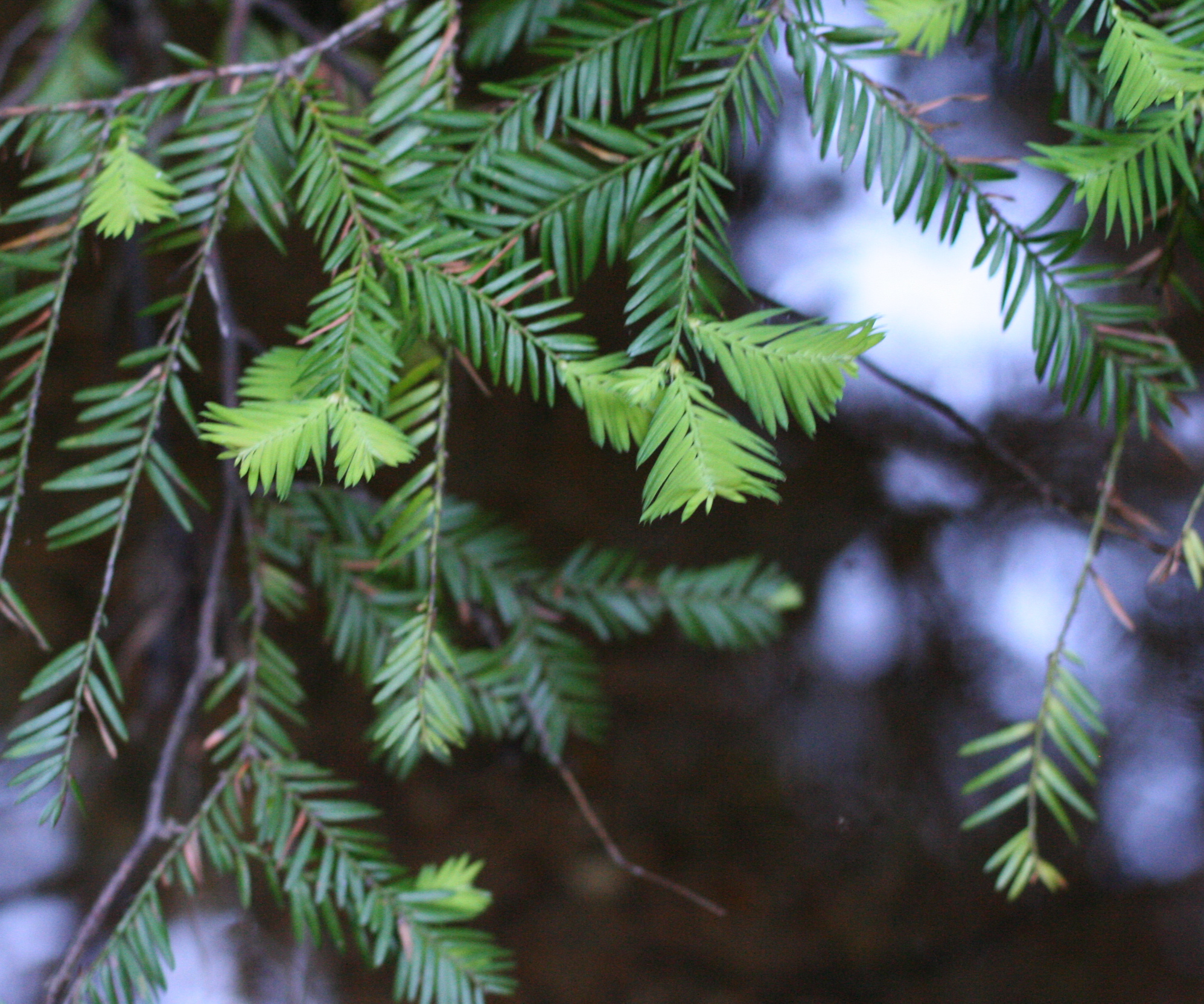
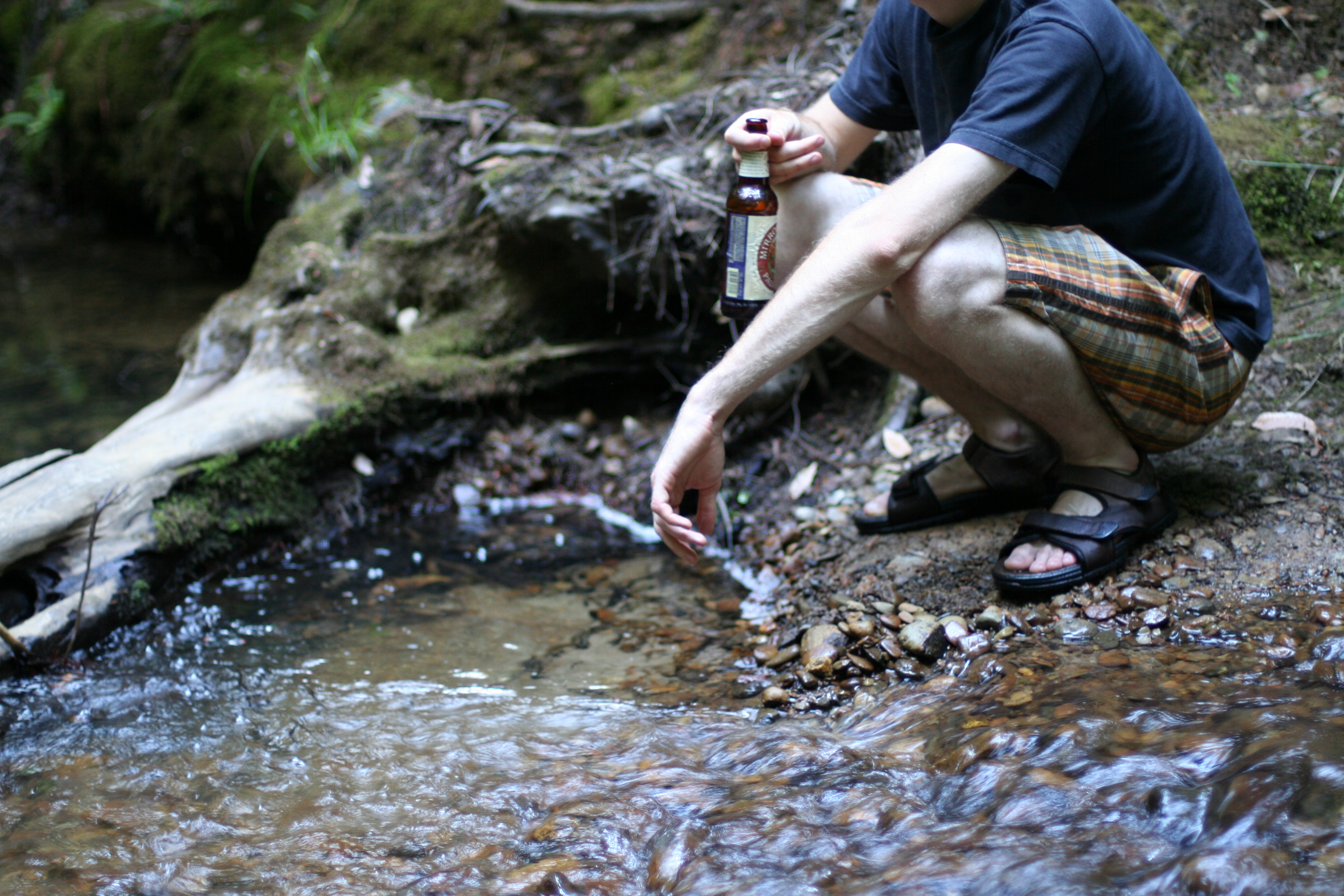
A beautiful catch-up conversation with my friend Junot has got me viewing photos of this week’s camping trip with new eyes.
As we reconceptualize our ideas of care and stress relief, striving to integrate our healing and fighting work, I feel challenged to question my relationship to this restorative vacation in the redwood forest. Not “question” like browbeat myself about it, but firmly and lovingly investigate my own views.
Do I see these hikes as a kind of spiritual refueling? Do I see them as material for photographs? Do I view the trees and streams and skies as teachers, as providers of wisdom, about impermanence, identity, and borders? Do I see myself as responsible to these paths? These non-wildernesses? Are we in dialogue, or am I looking for an uncomplicated, friendly, comfortable, and shallow “mothering”? Is the earth a being with rights? Is the earth a being beyond rights?
Hi friends. Howya been? This will be a quick thought-note, to try to get myself back in blogging mode.
Friday I attended a panel on solidarity unionism organized by the Wobblies (International Workers of the World), and it got me thinking about unconventional workplace struggles, unconventional unions, and unconventional workplace demands.
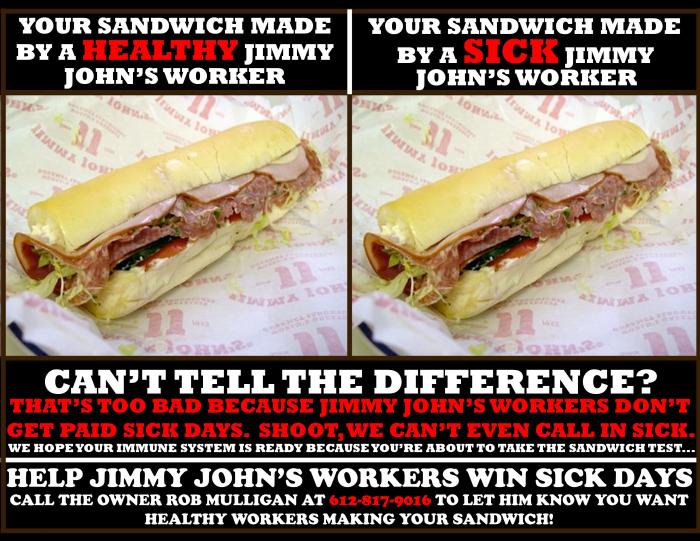
One common demand that many organizers (both worker/self-organizers and paid/professional organizing staff) mentioned during their talks was sick days. The workers’ union at Jimmy John’s in Minneapolis (a sub sandwich chain similar to Subway) plastered the whole town with these clever, zippy posters illustrating their sick days fight.
_
When the panel finished, I thought: it sucks to have to go to work sick. It also sucks to have to go to work the day after you’ve been raped, or the day after you’ve been verbally assaulted because of your gender presentation, or the day after you discover you’ve got an unplanned pregnancy, and need some time to figure out how to approach that situation. I’m pretty sure most doctors won’t write you a sick-day-verification note for these conditions? (That is, if you even have a doctor.)




 Kloncke