My friend Aaron recommended this piece to me (a historical essay written by local Laney College Student Unity & Power folks) as an encouraging example of demands done well.
We are often confronted by a legacy of the Panthers as either a detoothed community service organization or all claws. But the BPP experience at Peralta shows the work of a multifaceted organic expression of a specific section of Oakland’s working class to overturn institutions that claim to serve them and remake them into bases for struggle. When the Panthers spoke of occupying a building, it wasn’t (only) to appeal for more funds from the state, but to keep the state away from self-organized community programs. This meant not simply a negation of racist, authoritarian educational institutions, but their redefinition and reuse. As the editorial of the first issue of The Grapevine wrote,
To the continuing students and student-workers, right-on to the work you have done and the work you have inspired your communities to do, right-on to your moves to secure your community institution, to moving for freedom from oppression, to moving to make this a real community college – in practice. We still have work to do, but we have reached a higher level of organizing and our work will be even more effective in the future. We will win our fight to keep our community college and control it.
This is a message to today’s student movement. Beyond “demand[ing] affordable, accessible and quality education” or “keep[ing] California’s original promise of higher education” lies the seizure and re-invention of these institutions around fundamental principles of self-determination, self-management and freedom from oppression.
If you’re looking for an account of the Zen Peacemakers’ Symposium on Western Socially Engaged Buddhism — hosted last month in pastoral Montague, Massachusetts — from a reputable, authoritative, or well-known source, I can tell you right now: you’re barking up the wrong bodhi tree. The Symposium was chock-full of dharma celebrities; I am not among them. I’m not a Roshi, Bhikkhuni, Director, Founder, or Professor. I am a Nobody. At least in this context.
But, you know, a Nobody isn’t such a terrible thing to be. You get a very interesting vantage point as a Nobody. You see things that others don’t get to see.
For example, as a Nobody with No Money, I witnessed the gestation and birth of the volunteer program for the Symposium. Back in January, when I first learned of the national event from an ad in Tricycle magazine, I called up the ZP folks and said, “Hello! I’m interested in socially engaged Buddhism, but I don’t have $600 for registration fees. What can I do?”
Months later, after a few rounds of phone tag (and the beginning of a friendship with fellow young’un and ZP Media Master Ari Pliskin), a Volunteer Application Page was added to the website. Something like 40 people applied to fill 15 slots. And sure enough, the 15 of us who would show up a day early and work the whole week had two things in common.
We were broke, and we were Nobodies.
Except, instead of being Nobodies, we were now Volunteers. A select team.
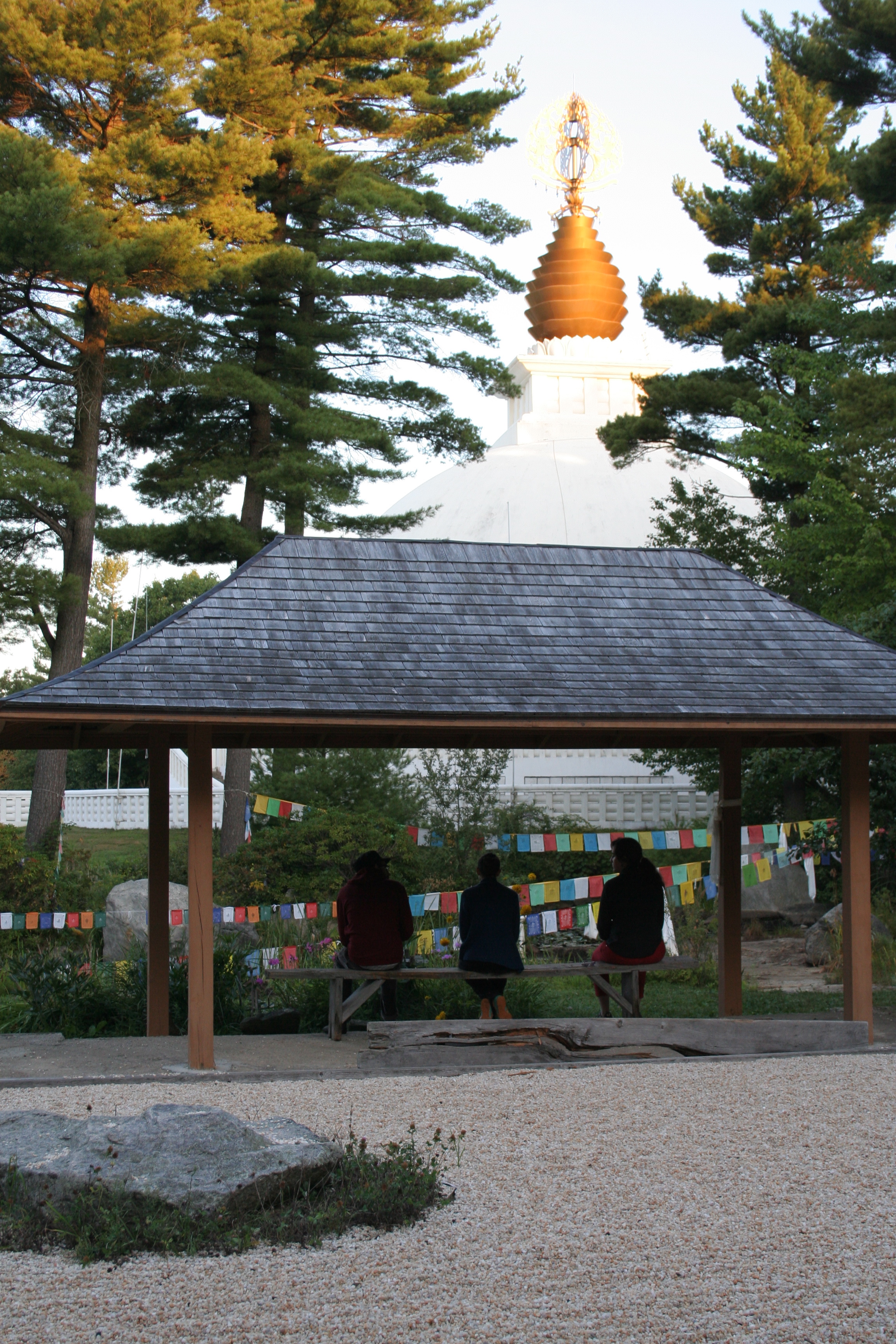
Volunteers Seth Josephson, Ashley Berry, and Jane Gish take a sunrise trip to the Peace Pagoda
And we had fun! We stayed in the beautiful ZP farmhouse — beneficiaries of amazing hospitality and generosity from the residents. We joked and collaborated and griped and ate together, bonding over tasks and talks. We even went on group field trips, a couple nights and dawntime mornings. Truly, the Volunteers were a vibrant, splendid bunch, with stellar direction from a pair of unpaid volunteer coordinators, who as far as I’m concerned accomplished the work of five people between the two of them.
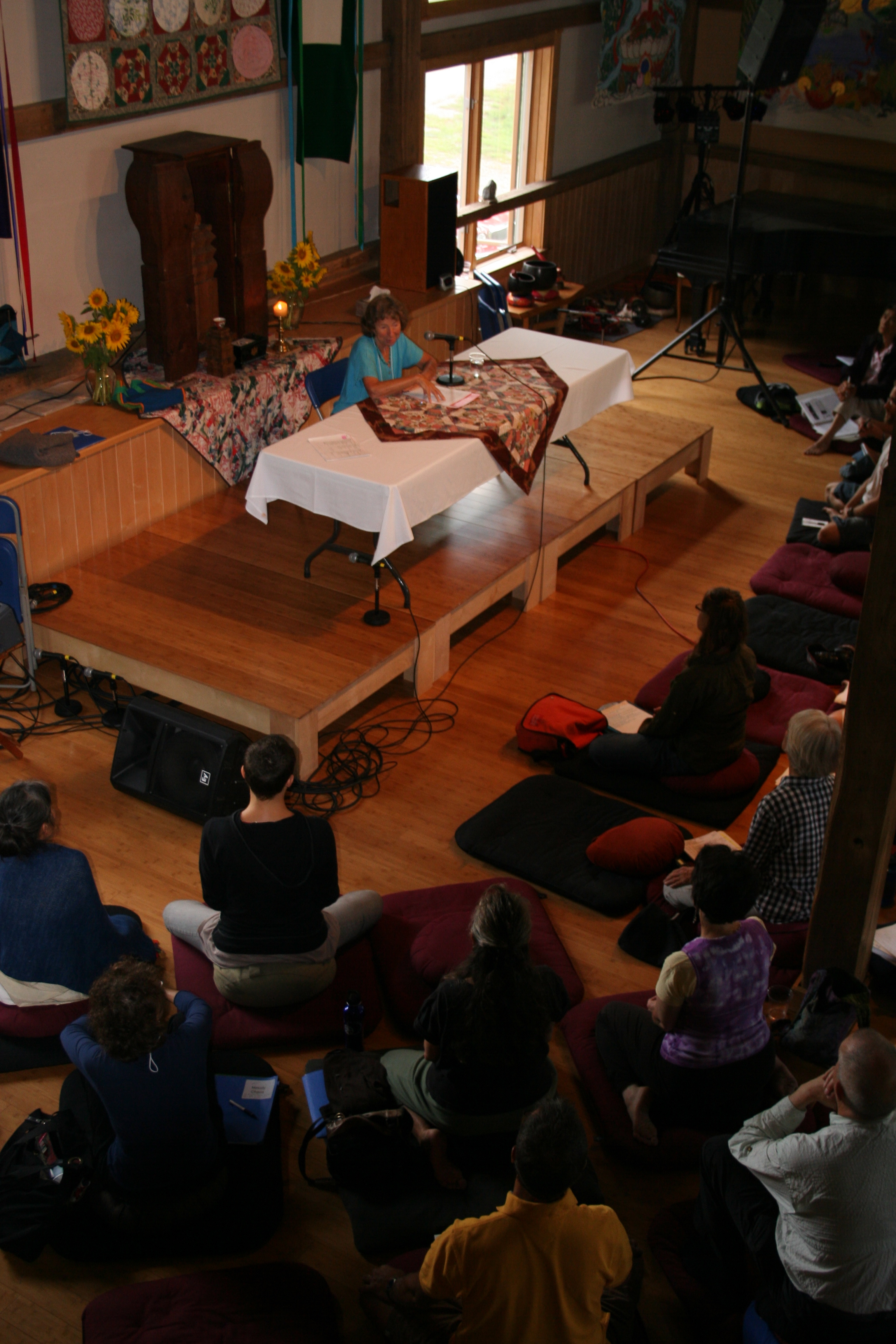
And like paying participants, we got to hear and join in the week’s rich conversations, beautifully facilitated and well-crafted (if a little heavy on the lecture-vibe for my tastes). We asked questions, mingled, savored those jolts of mutual recognition with kindred spirits. We also got to discuss with some of our dharma heroes. For me that included Roshi Joan Halifax, Jan Willis, David Loy, Bhikkhu Bodhi, Alan Seunake (who I already knew from the Bay Area), Matthieu Ricard, and Frank Ostaseski.
Still, unlike participants, and unlike presenters, we were Volunteers.
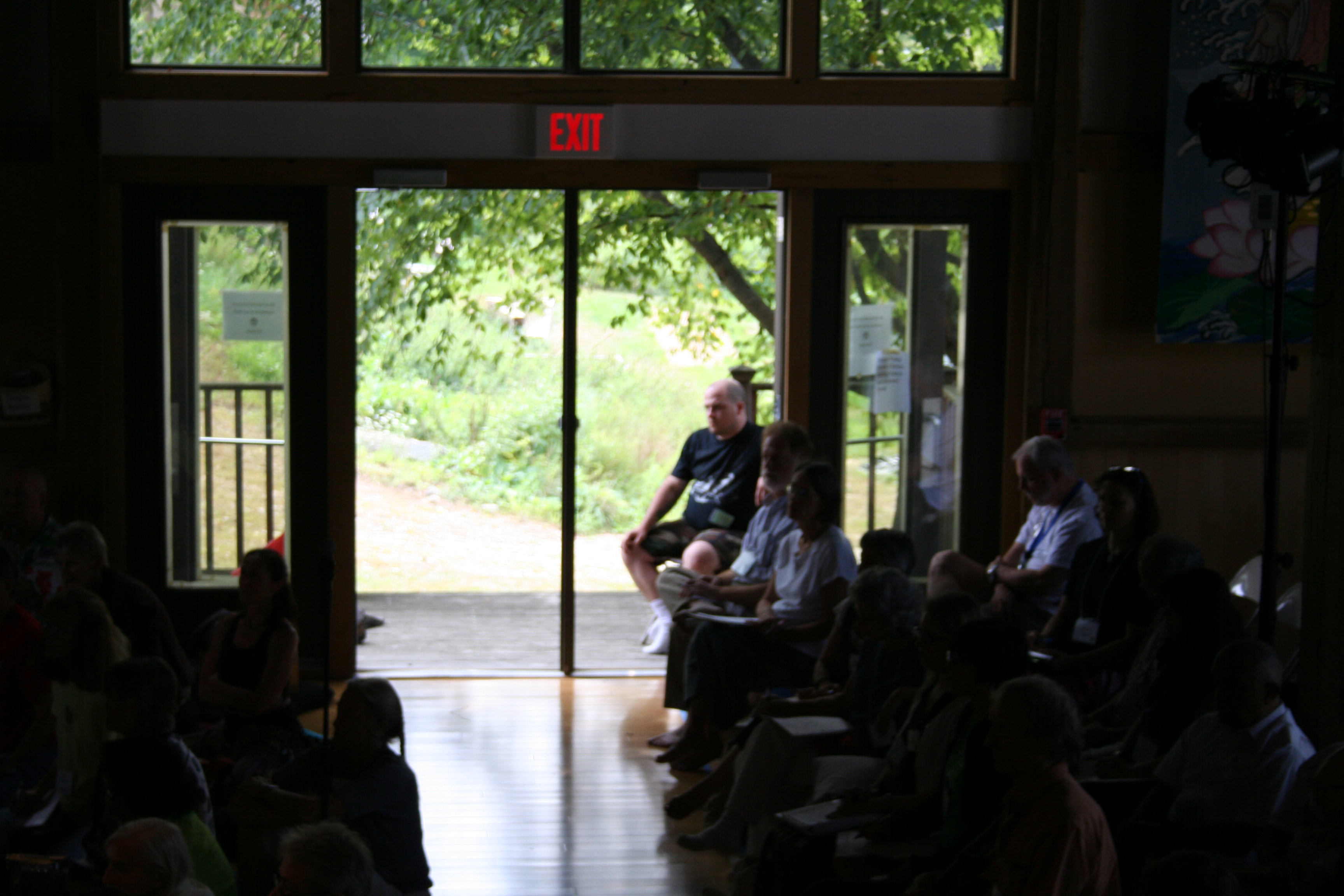
Volunteer and founder of Boston Dharma Punks, Sean Bowers, listens to a talk from just outside the door
Part of being Volunteers meant a waived registration fee, with all our meals and lodging covered. Everyone felt extremely grateful to the Zen Peacemakers for welcoming us so fully into the household.
But another part of being Volunteers meant taking on responsibilities that prevented us from participating on an equal basis in the week’s events.
Frequently we had to leave presentations early in order to go work a shift.
Occasionally we missed entire morning programs, assembling bag lunches in the caterer’s basement restaurant in nearby Amherst.
Because of a Volunteers meeting, a few of us got pulled out early from the breakout discussion group on Diversity: the sole mini-program, out of a whole 6 days, dedicated to race and all other types of demographic categories. As a Nobody among Nobodies (I may very well have been the only person of color under 30 years old, out of a conference of hundreds), in that moment I felt particularly lonely.
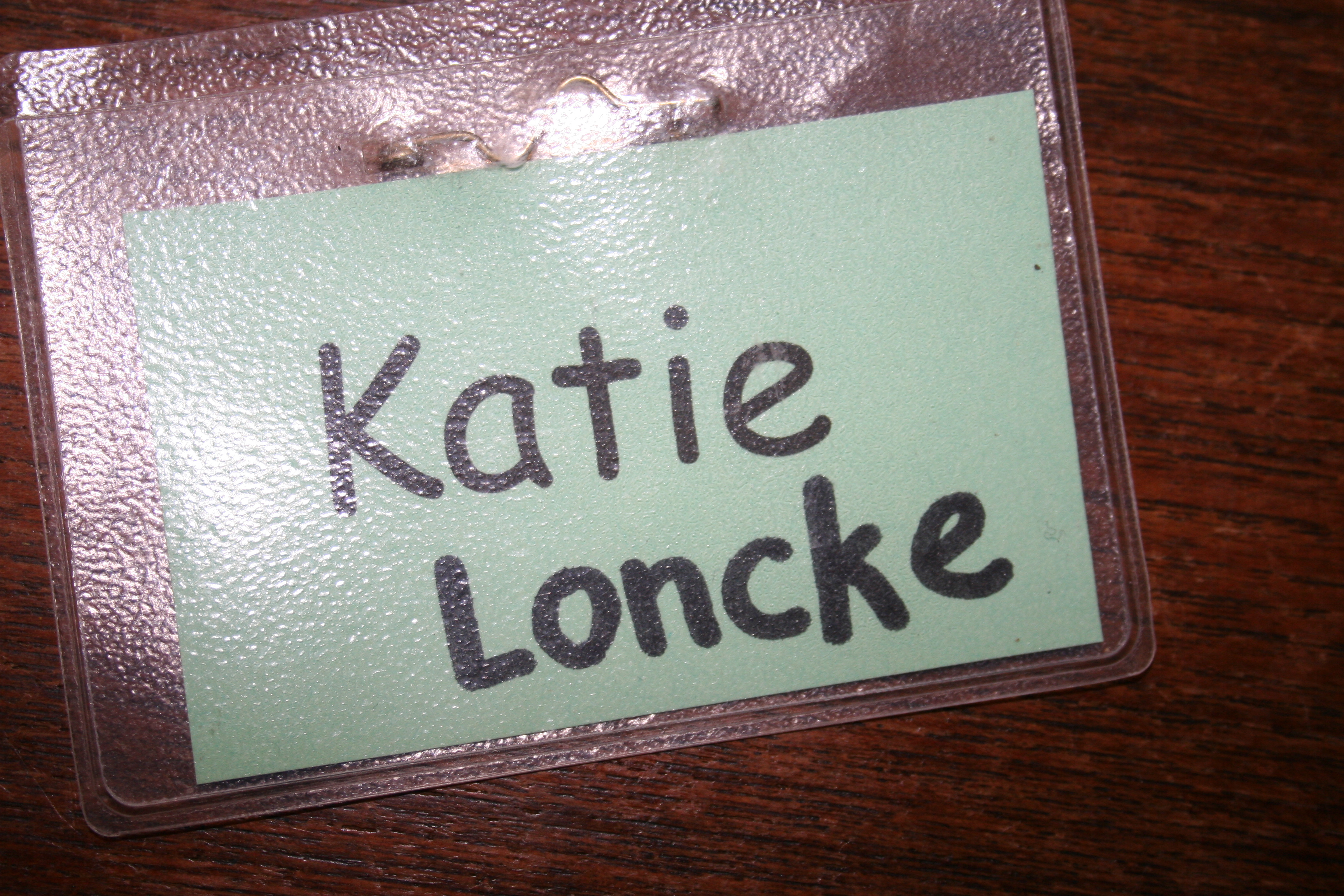
And finally, being a Volunteer meant having a green-colored nametag for the week. Participants had white nametags and presenters had blue ones.
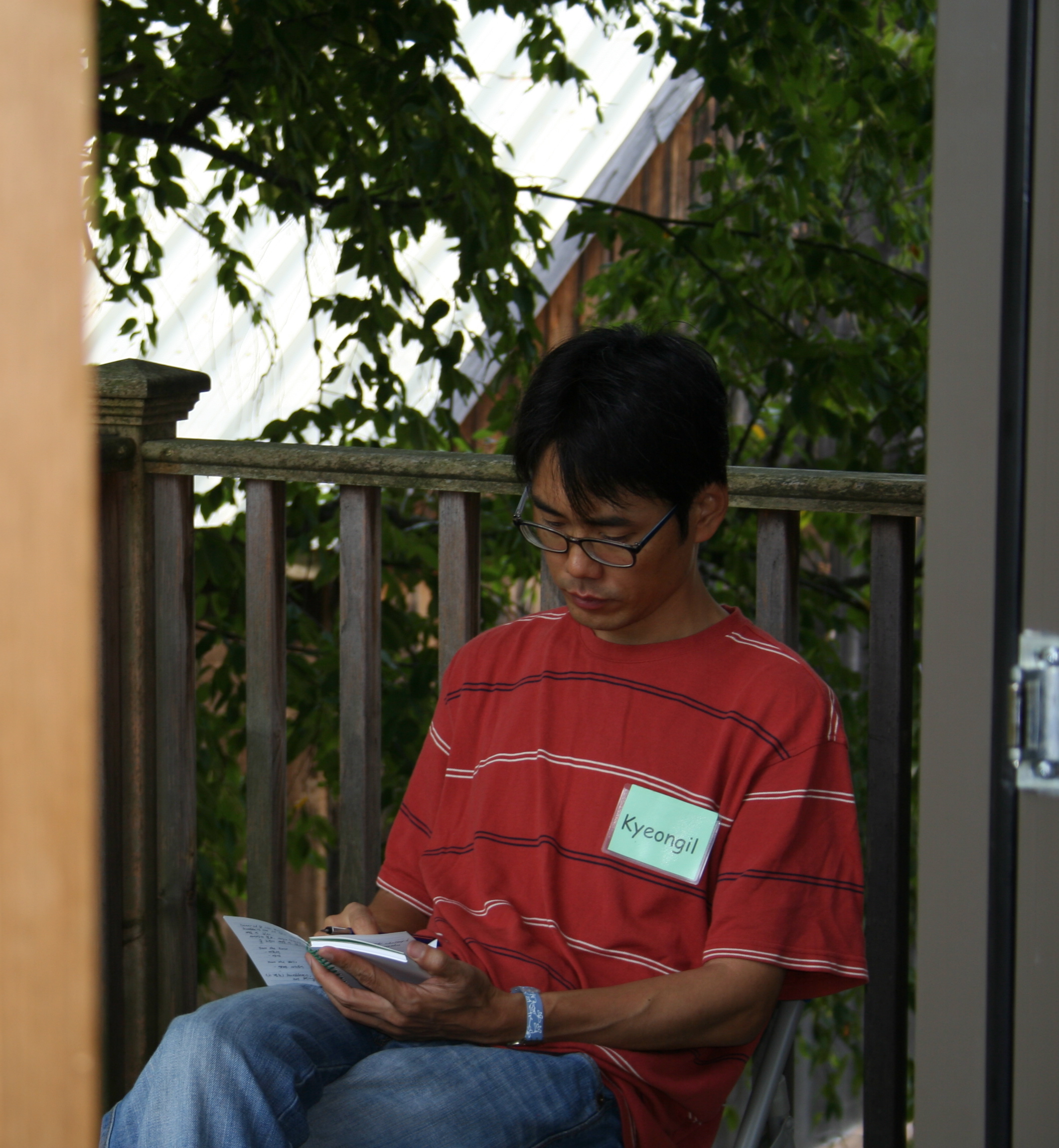
But while everyone else had their first and last names (helpful for recognition and networking purposes), ours had only our first names. Melissa. Karen. Sean. Kyeongil.
(Weeks later, when I told my dad about the Volunteers’ nametags, he said to me, “And I’ll bet you took a marker and wrote in your last name yourself.” Knows me well, that man!)
Now, I really don’t want to paint a negative picture of this tremendous event. And I don’t want to give a false impression: in my human-to-human experiences, no one ever treated me as less-than. On the contrary, it was one of the warmest, most jovial conferences I’ve ever attended. I left feeling inspired to organize a radical sangha in my own community, to collaborate with existing groups in the Bay Area, and to keep up the work of socially engaged dharma with renewed vigor.
In the Zen Peacemakers farmhouse
But the nametag thing, inconsequential though it might seem, really underscored for me the subtle class hierarchy between workers (Volunteers) and participants. My goodness! If, consciously or unconsciously, we continue to reproduce class divisions and mental/manual labor splits in the name of advancing “Socially Engaged Buddhism,” then it’s almost certainly a doomed movement.
I understand the need to raise funds. I do. But fundraising, while vital to movement building, must never be conflated with it. As much as possible, especially in a Buddhist or dhammic context, we should endeavor to collect what’s needed by promoting dana (generosity), a sense of interdependence, and erosion of the economic and social hierarchies stratifying our society.
Across many different social change movements, this common problem emerges. People with less material wealth automatically wind up washing dishes to ‘earn their place’ in the big annual strategy session. Unfortunately, this is sloppy generosity, and serves no one.
At the same time, washing dishes together can be a great way of strengthening community and camaraderie! Collective manual labor is indispensable to healthy movement activity.
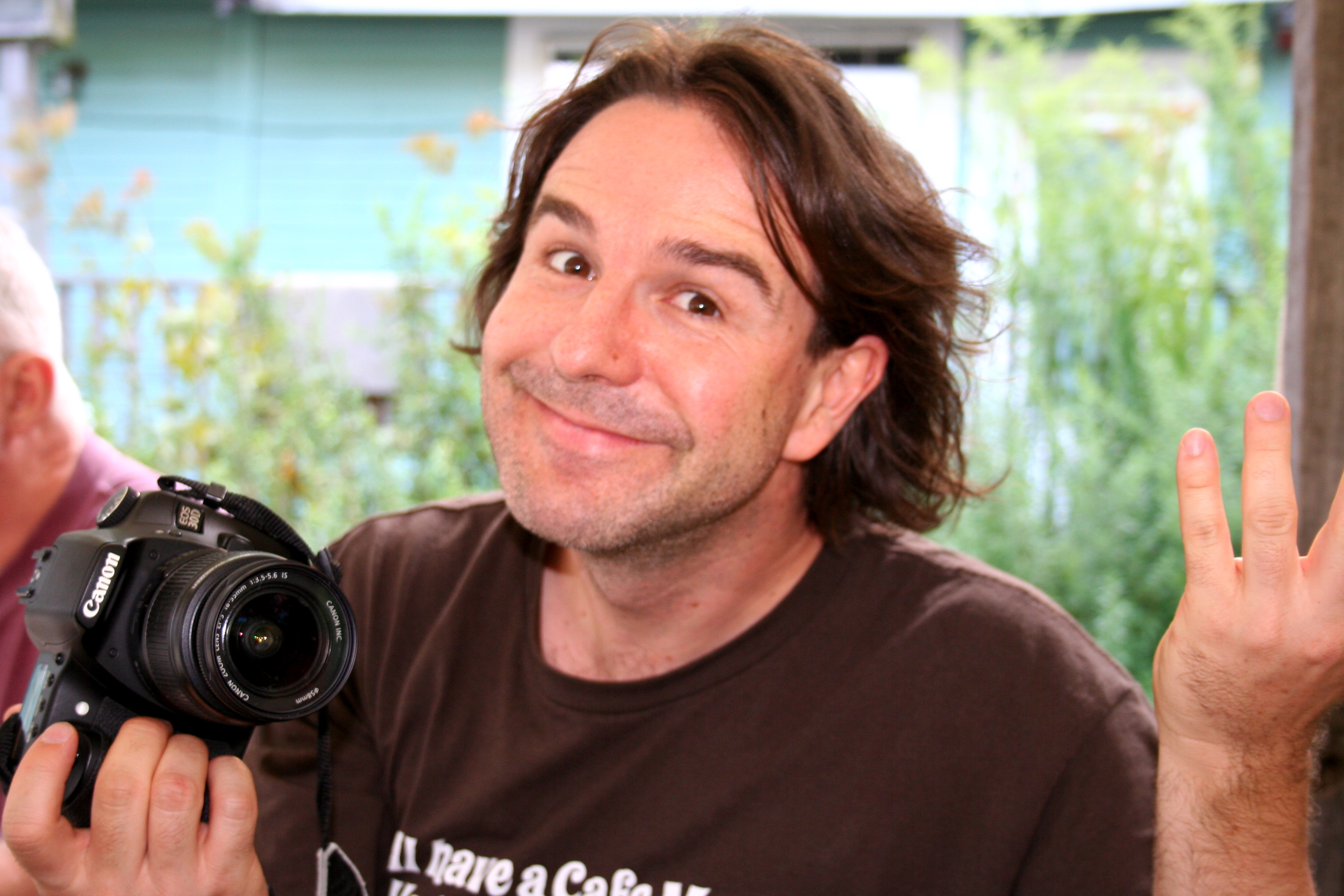
Volunteer event photographer Clemens Breitschaft worked tirelessly! And brought smiles to everyone, too.
The issue isn’t the volunteer work itself, but whether or not it hinges on obligation — explicit or implicit. There’s a big difference between (1) registering as an event volunteer in order to get in the door, and (2) entering like everyone else, and then signing up, along with anyone else who wishes, to do the work that needs to get done.
Furthermore, the work-exchange problem isn’t only a matter of economics, but diversity, too.
Volunteer Jane Gish expresses her 'social engagement'Volunteer Kyeongil Jung reflects
Low-income people, the ones most likely to rely on work-exchanges, are disproportionately young, of-color, queer, criminalized, and marginalized. If we want a diverse movement, we need to make sure everyone enters on as equal a basis as possible.
Many organizations inside and outside of Socially Engaged Buddhism are finding cool, creative ways of solving the money problem for giant gatherings.
Some run almost exclusively on dana (donations), or institute a very manageable sliding-scale fee. Others charge for tickets while encouraging all buyers to purchase an extra for someone who otherwise wouldn’t be able to afford it. Donations (of food, lodging, advertising space) often play a key role.
As Larry Yang of the East Bay Meditation Center says of its dana-based system, the basis is not an economy of exchange. It’s an economy of gift. And what a treasured legacy, passed down through various lineages, spiritual and otherwise.
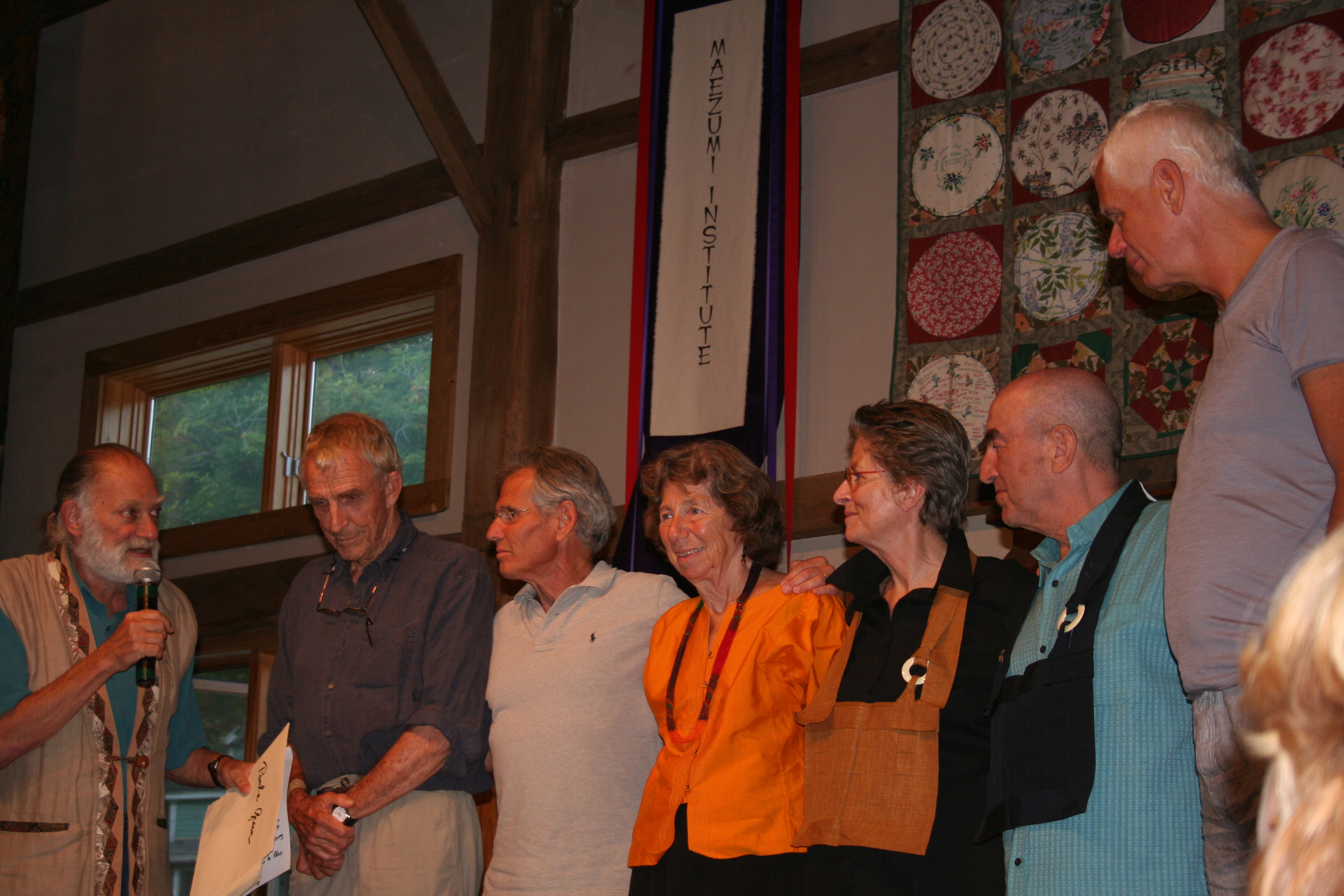
ZP founder Bernie Glassman honors U.S. Socially Engaged Buddhists
Would it really be feasible to host an event as large and snazzy as the Symposium using dana or suggested donations alone? Honestly, I don’t know. Maybe we’d need to give up some of the scope and the snazz for the sake of inclusivity and fairness. My hope is that last month’s event will act as a jump-starter for higher sustained levels of regional collaboration among socially engaged and politically active dhamma practitioners.
Mayumi Oda with one of her gorgeous thangkas in the background. Image by Dennis A. Landi
And maybe the next time we get together on a national level, our enthusiasm, commitment, resourcefulness and generosity will generate a door large enough for everyone to enter as guests; not customers.
In the exquisite Zen Peacemaker spirit of bearing witness, not-knowing, and compassionate action, I believe we can learn from the worldly divides between haves and have-nots, investigate our own blind spots, and skillfully improve on eradicating these hierarchies — the echoes of capitalism — within our own organizations and initiatives. Our means and our ends can better align.
Together, we can move from Nobodies and Somebodies toward Anybody and Everybody.
Despite being a longtime denizen of the feminist blogosphere, it wasn’t til last year that I learned about the Fat Acceptance (FA) movement. (Also called Health At Every Size (HAES) or Fat Liberation. Fat Fu, The Fat Nutritionist, Fatshionista, and Shapely Prose are good places to start if you’re unfamiliar.)
The connection clicked immediately. In our society, fat people get discriminated against (and dehumanized) in ways that intersect with gender and other dimensions of body politics. Duh. Bonus: the fatosphere bloggers I’ve come across are funny and really good writers.
And today, thanks to a post by wickedday, a guest blogger at Feministe, I made another big thinky-type connection: this time between fat-shaming and capitalism.
Basically, what the fat-shaming helps to do is obscure the bald hypocrisy of a capitalist society that claims to care about people’s dietary health (e.g. fighting “the obesity epidemic” on the level of ‘education’ and personal lifestyle choices), while generating enormous profits from food industries that are fundamentally health-hazardous, environmentally devastating, and/or horribly inhumane (processed and genetically modified foods; hormone-filled factory meats; subsidized corn for corn syrup, etc. etc. etc.). And using super-exploited immigrant labor to do a lot of it.
Now, this isn’t a new argument among FA feminists, but my perspective extends wickedday’s outline of the parallels between slut-shaming and fat-shaming, placing a greater emphasis on the historical and material basis for both. By most FA accounts I’ve read, fatphobia comes from some combination of hatred, thin privilege, and jealousy: as wickedday puts it, the idea that “it is agonising to look at someone ignoring the rules that you punish yourself with, and still being happy.”
At the moment I’m more curious about bigger-picture causes. The macro-relationships. Because, as I say in my comment (copied below), as much as we might argue that our bodies are none of their business, as long as we live under capitalism, their business is precisely what our bodies are.
Loving this post, and wondering if anyone else is interested in bringing the analysis toward the realm of political economy? I’m trying to figure out plausible, material reasons *why* the hegemonic discourse is so concerned with fat-shaming and slut-shaming.
Because on one hand, from an ethical perspective, “my body” (in terms of its size and sexual activity) is none of “your business.”
But from a point of view of class struggle in a capitalist context, “my body” as a vehicle for the commodity of labor-power (and/or the reproduction of labor-power; i.e. childbearing and domestic work) is *precisely* “your business” (“you,” the capitalist class) — in the sense that it is the source of the surplus value that capitalists (who are almost entirely men) extract as profit. No wonder the state (largely synonymous with the capitalist class) monitors the bodies of its labor force a.k.a. profit machine.
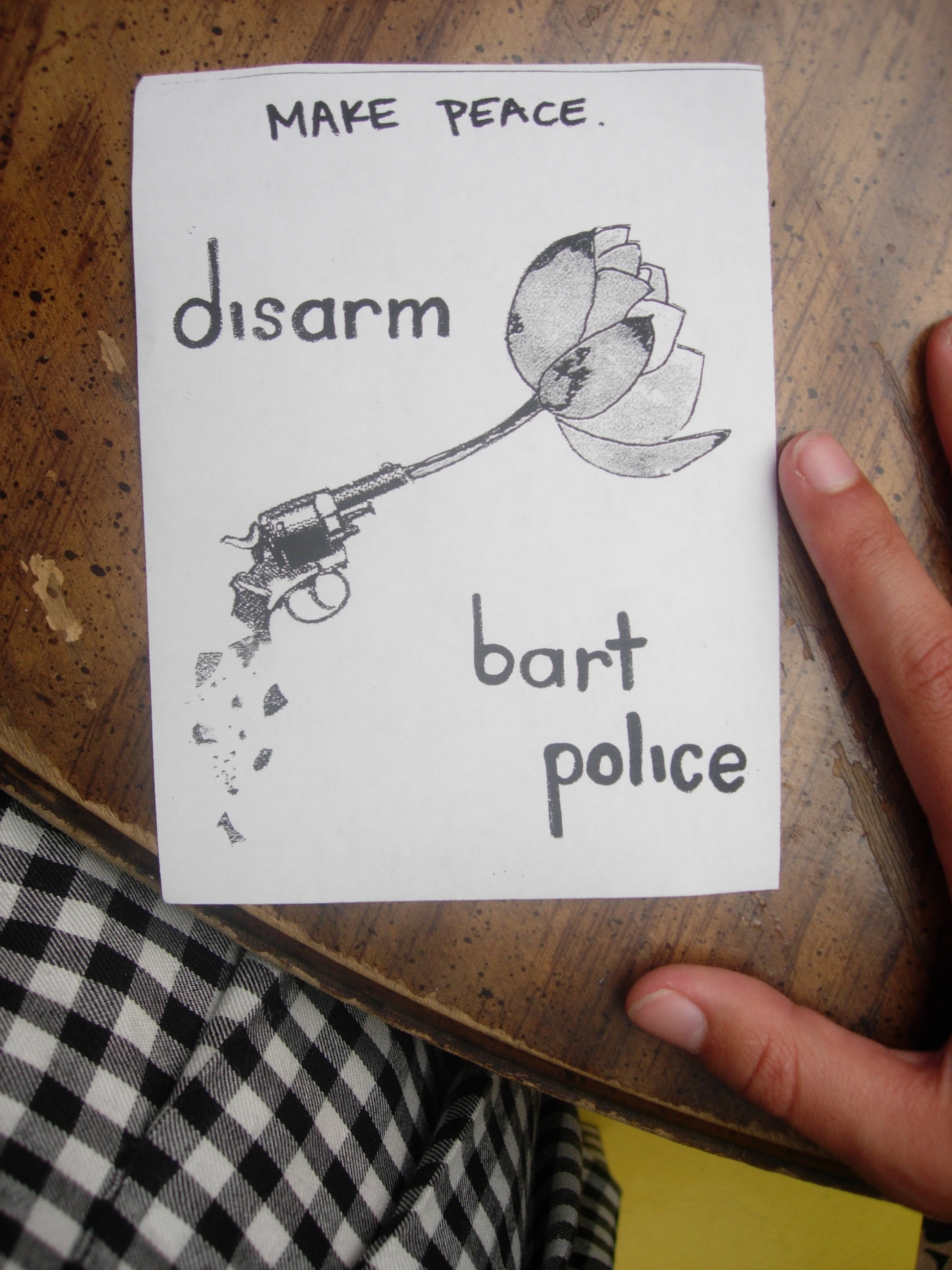
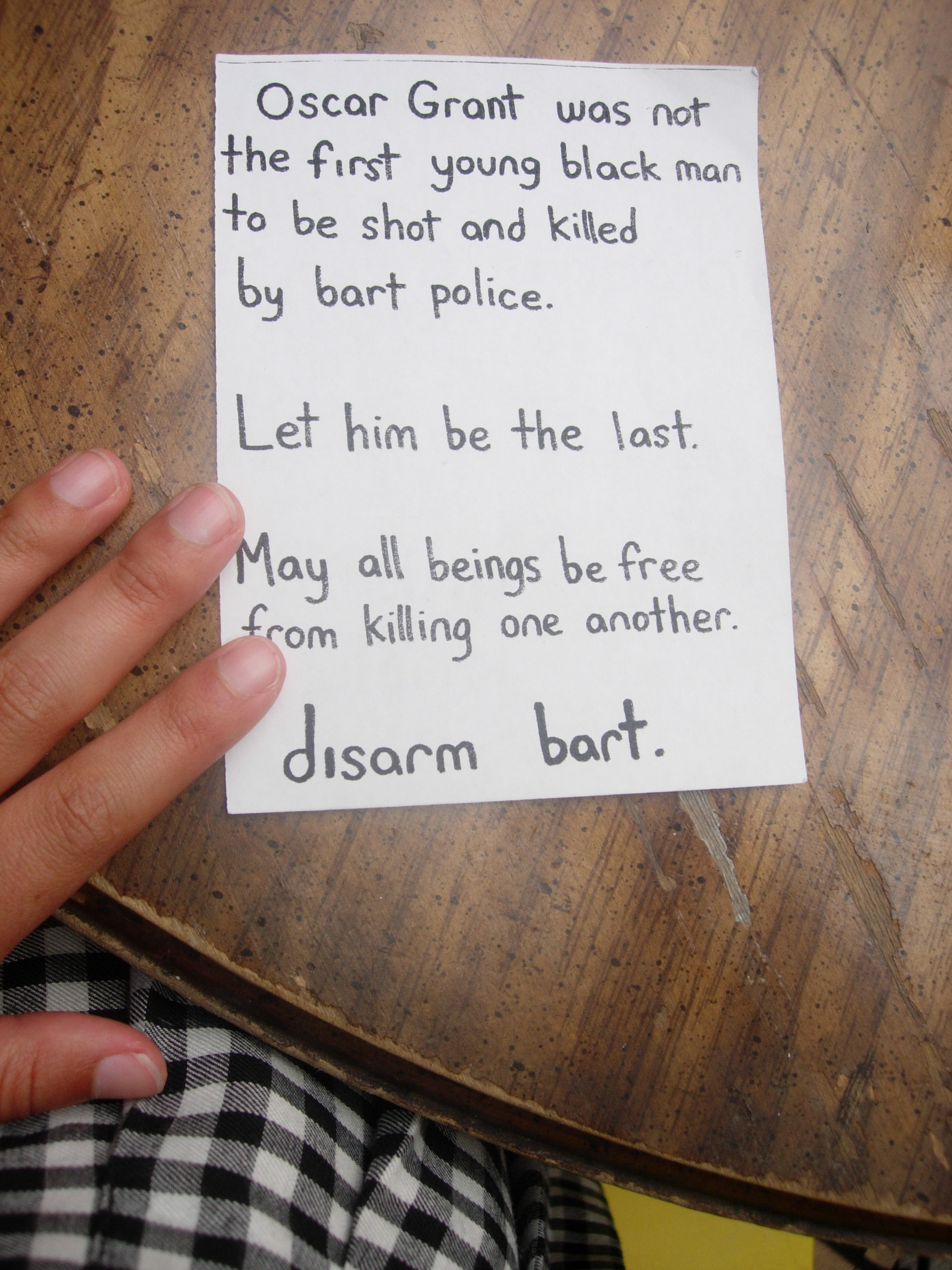
Last night on my way home from Oakland to SF, I boarded the bart train with no intention of handing out any flyers. It was late; I was tired; also feeling a little shy.
I’d been burned the day before while trying to hand out a different flyer on a similar theme. This one announced an October 23 rally sponsored by the Oakland/SF local (Local 10) of the ILWU longshoremen’s union, in solidarity with the Oscar Grant movement. The ILWU has a history of militant, class- and race-conscious organizing: to challenge apartheid South Africa, they shut down the shipping yards along the whole US West Coast. It’s a pretty inspiring labor-community connection (more explanation over at Advance the Struggle blog), and I was jazzed to be talking to folks about it at the Ashby BART seller’s market on a sunny Saturday afternoon.
But you know, rather than talking politics, most of the men I approached were more interested in hitting on me.
Now. As I’ve discussed here before, hollering doesn’t alarm me too much and I generally respond with friendliness or neutrality rather than coldness or anger. But this day, man, I was not in the mood. The previous night I’d been up at a radical politics discussion in Oakland from 9pm til 3 in the morning. Exhaustion left me exposed and tender, with little energy to break through the banter and engage the humans behind the Gaze.
I wanted to write and tell you that directly but I can’t find any contact info. So if you are reading this, please know that I am sending you all kinds of mental hugs and mental bows and mental incense and mental plantains (yum!), and thanking you so very deeply for your work and inspiration.
Simple, clean, sincere. Inspired by Burmese monastics who, when demonstrating in the streets against the military, chant: “May all beings be free from killing one another. May all beings be free from torturing one another…”
[Update: I forgot to mention, but if you’re in the bay area and are interested in passing out some flyers on your BART travels, hit me up at katie (dot) loncke (at) gmail (dot) com and I’ll get you a batch! Or, even better — take some inspiration and make your own, and let the rest of us know about it.]
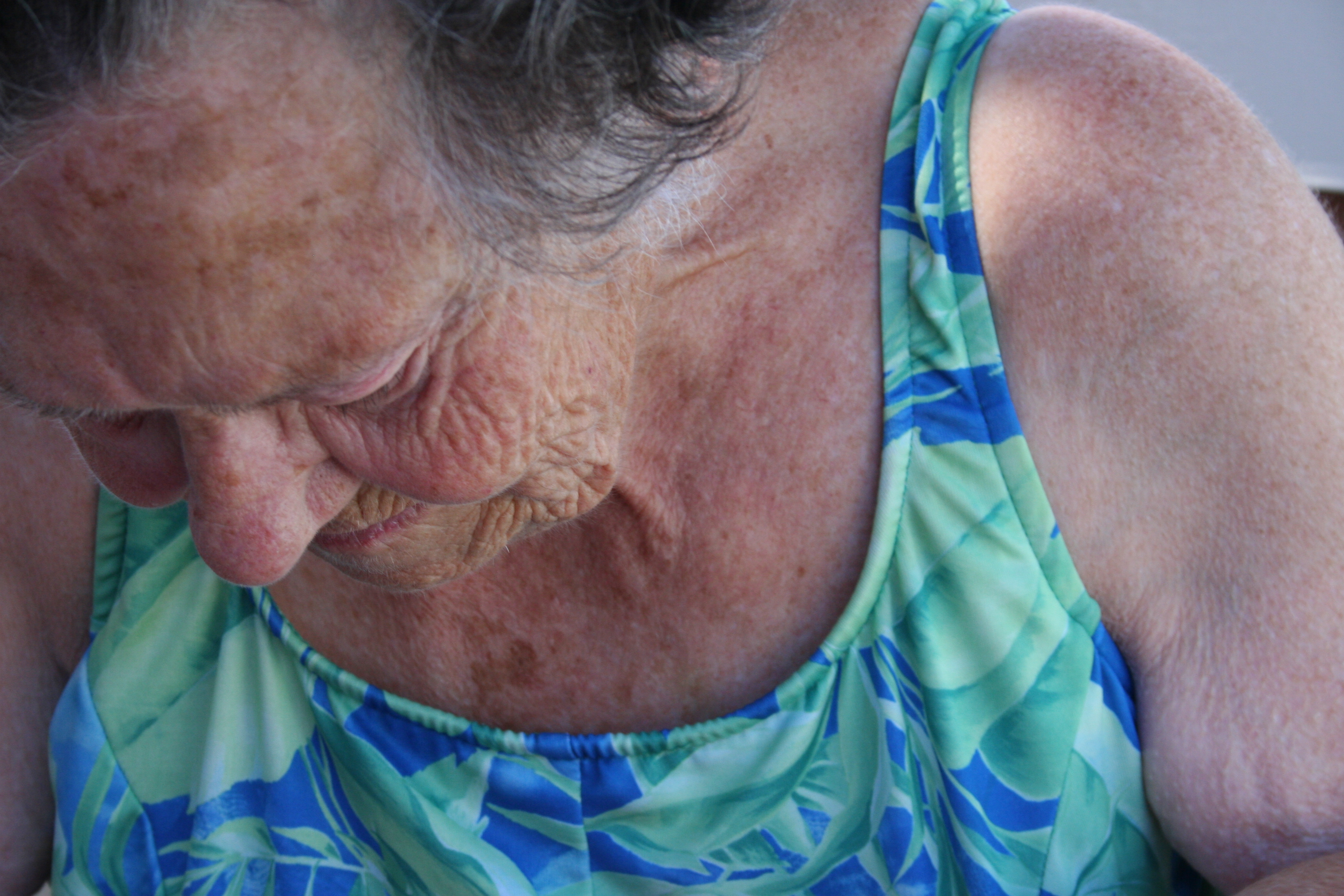
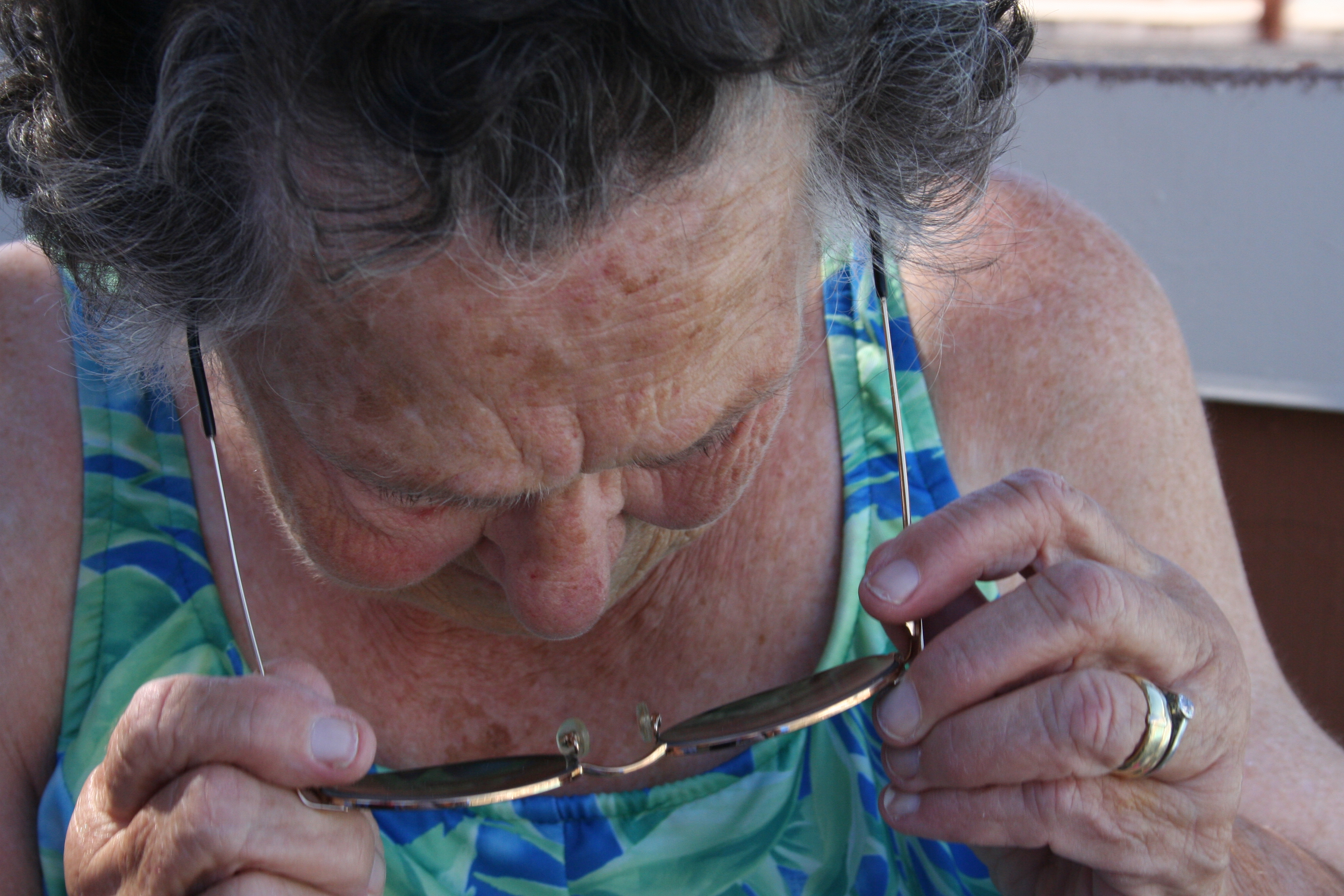
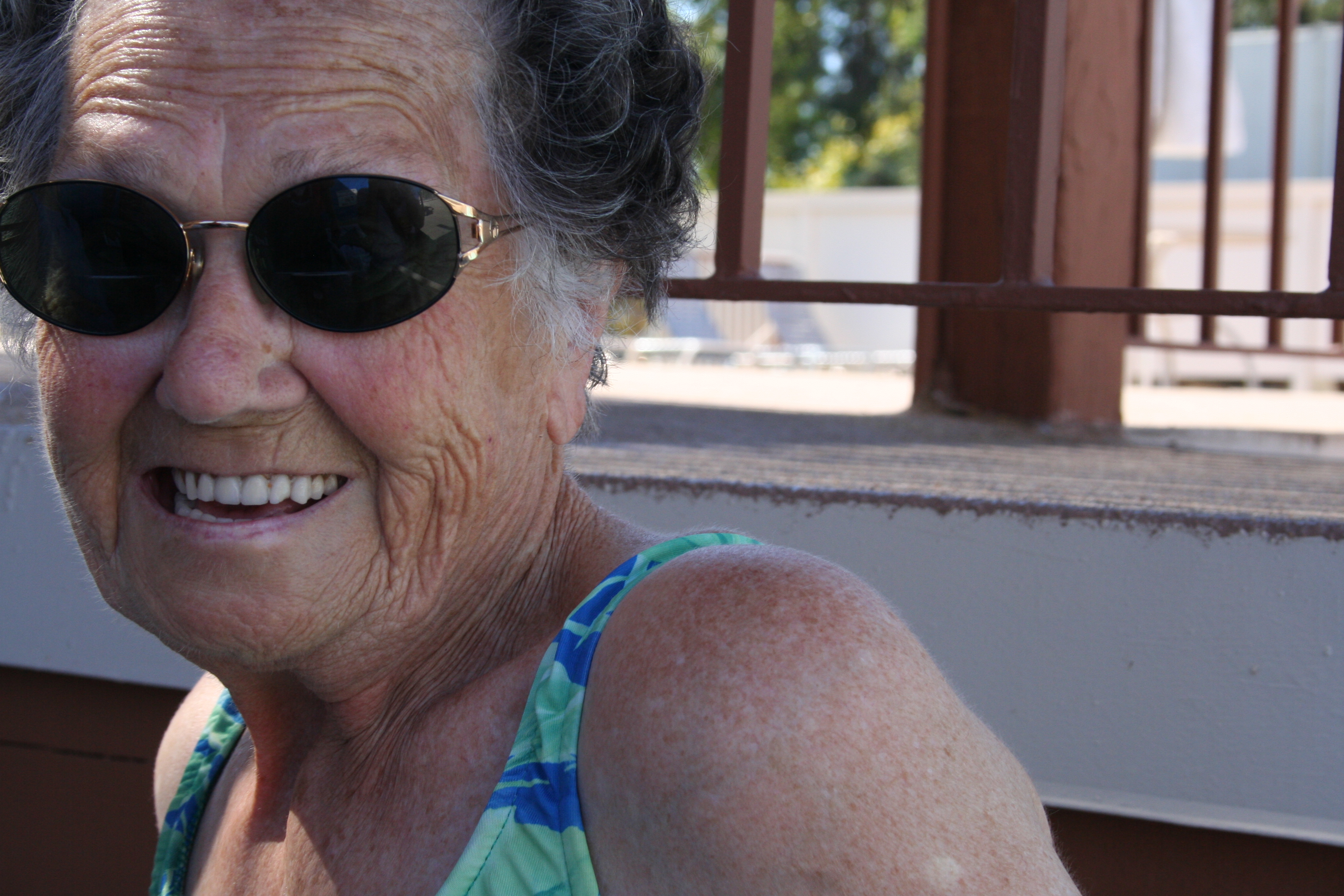
Oma, my maternal grandmother, during our weeklong visit this month. She is a goofball.
I thought I knew Oma’s stories. Back in middle and high school, when we were tasked with writing oral histories or interviewing elders, Oma was my go-to source. Growing up poor in Vienna. Marrying a camp-surviving Jewish man 20 years her senior, after the war. Emigrating in 1949 on a refugee boat and landing in New Orleans on Labor Day, only to wait another day on the ship because all the dock workers were on holiday. Being overawed at the opulence of Safeway on her first US grocery shopping trip. Discovering with horror that the racism she thought she had escaped was still being visited here on Blacks and “foreigners.” Even in America.
This story never made it into my school reports, though. I don’t remember when she started telling it (meaning, most likely, at what age she felt I was old enough to hear it). But now she repeats it on every visit. (What a perfect jigsaw-fit for aging: losing her short-term memory while vividly recalling her childhood. The ‘intelligent design’ of transmitting elder wisdom, huh?)
It goes like this.
*Trigger warning: rape, war, threatening with weapons, and vicarious trauma.*
As Maia at The Jizo Chronicles also notes, in US media, the deafening silence around Pakistan’s tragedy continues.
Death and disaster are a part of life, of course, but catastrophes are compounded by structural and personal oppression, and a lack of self-determination.
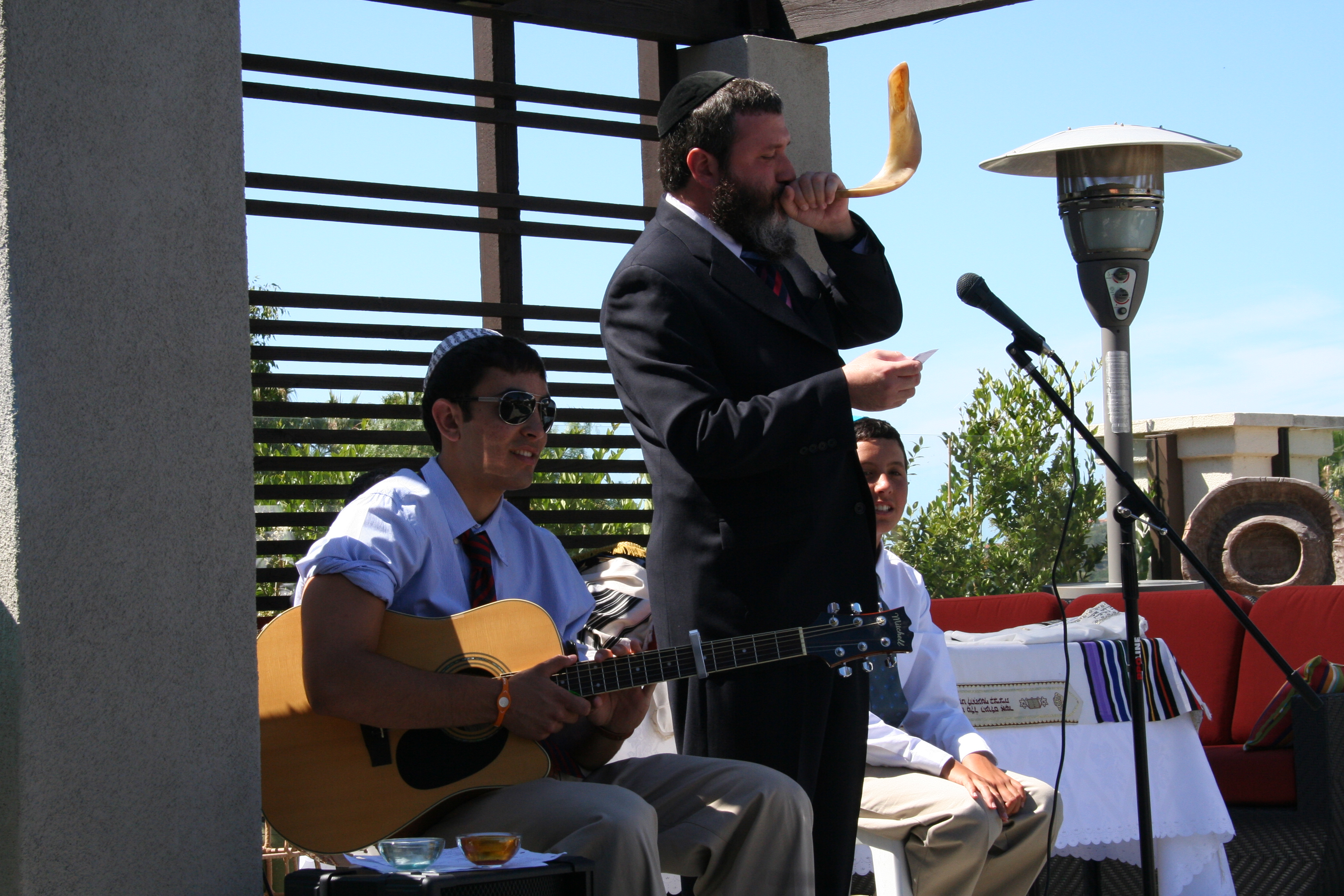
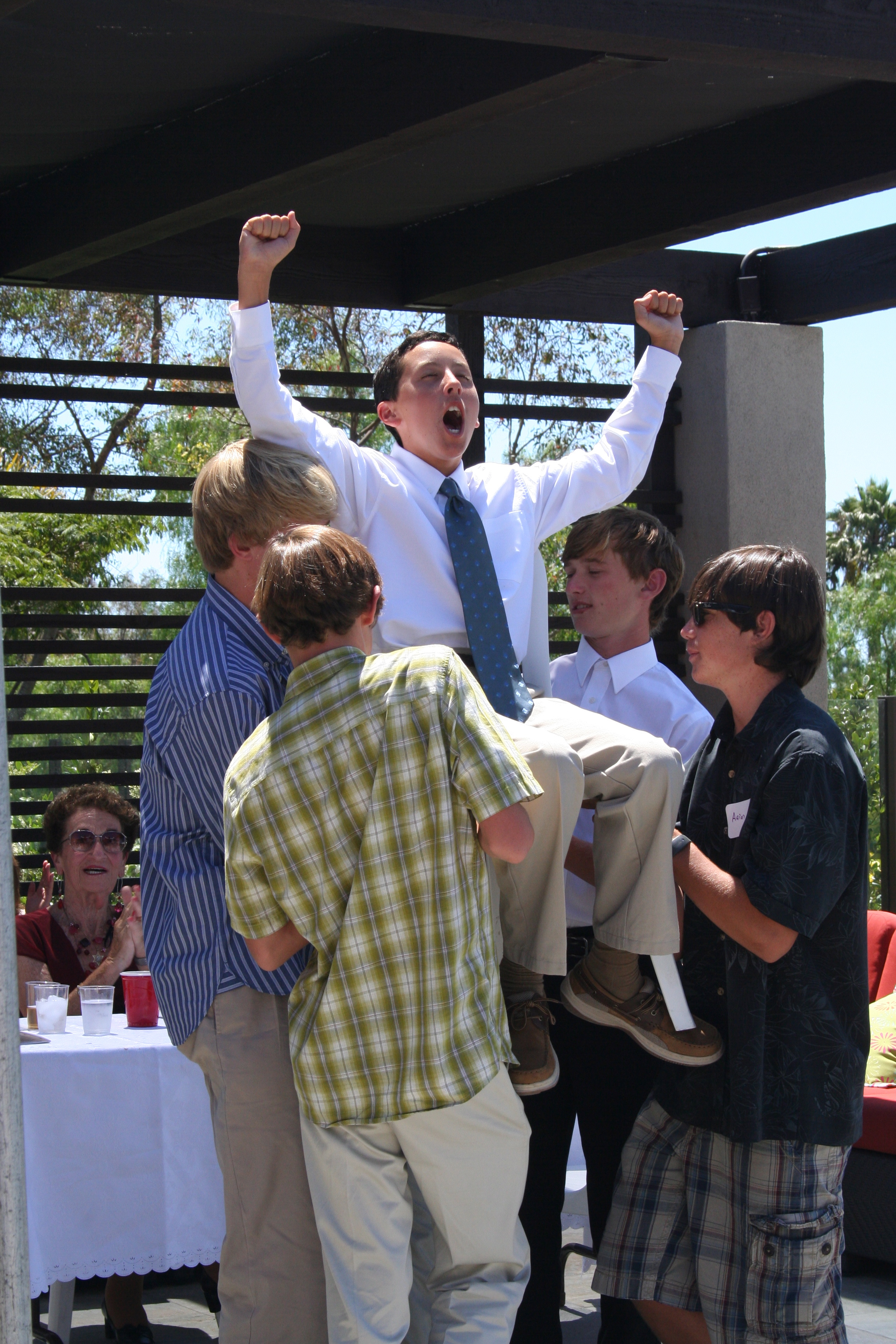
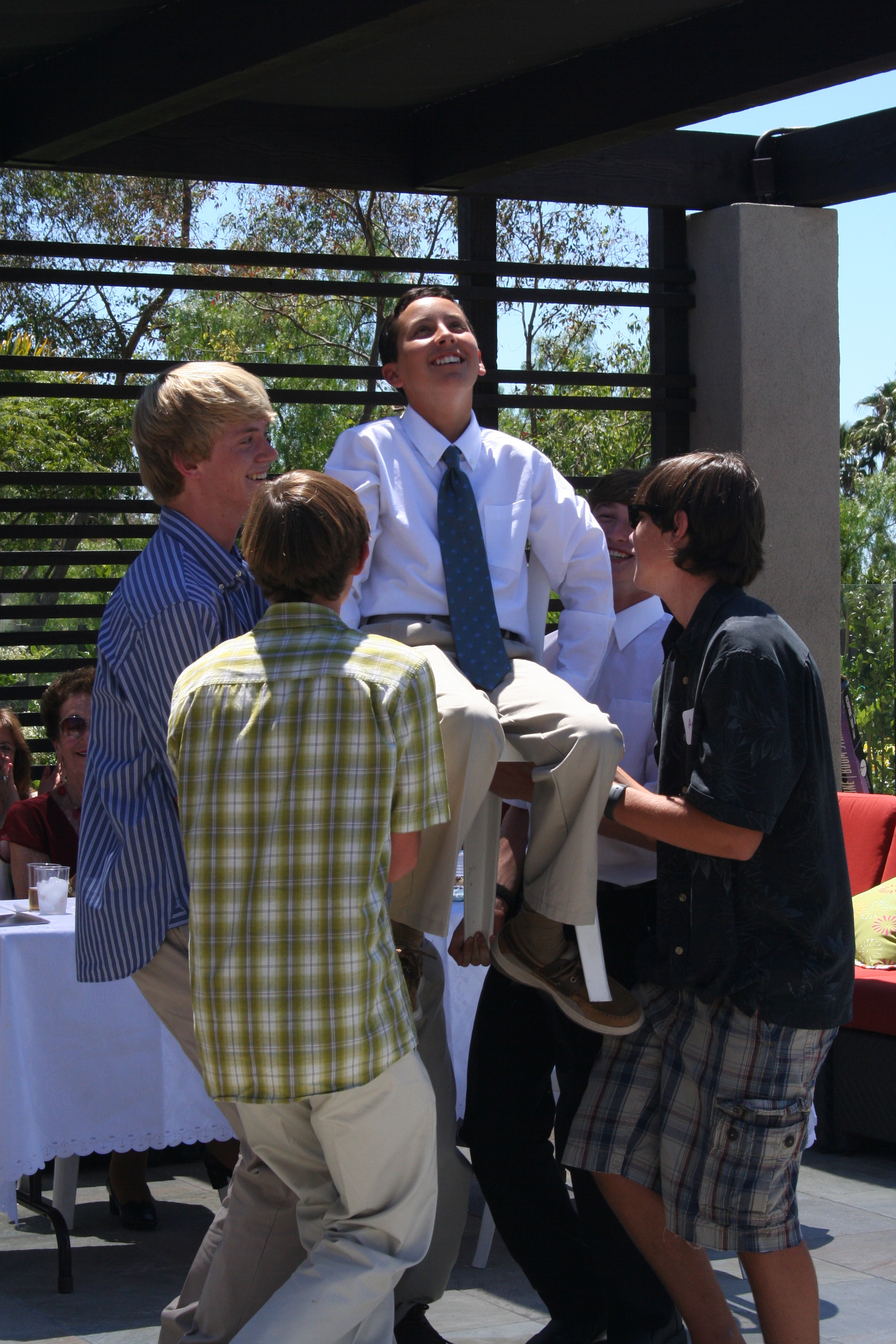
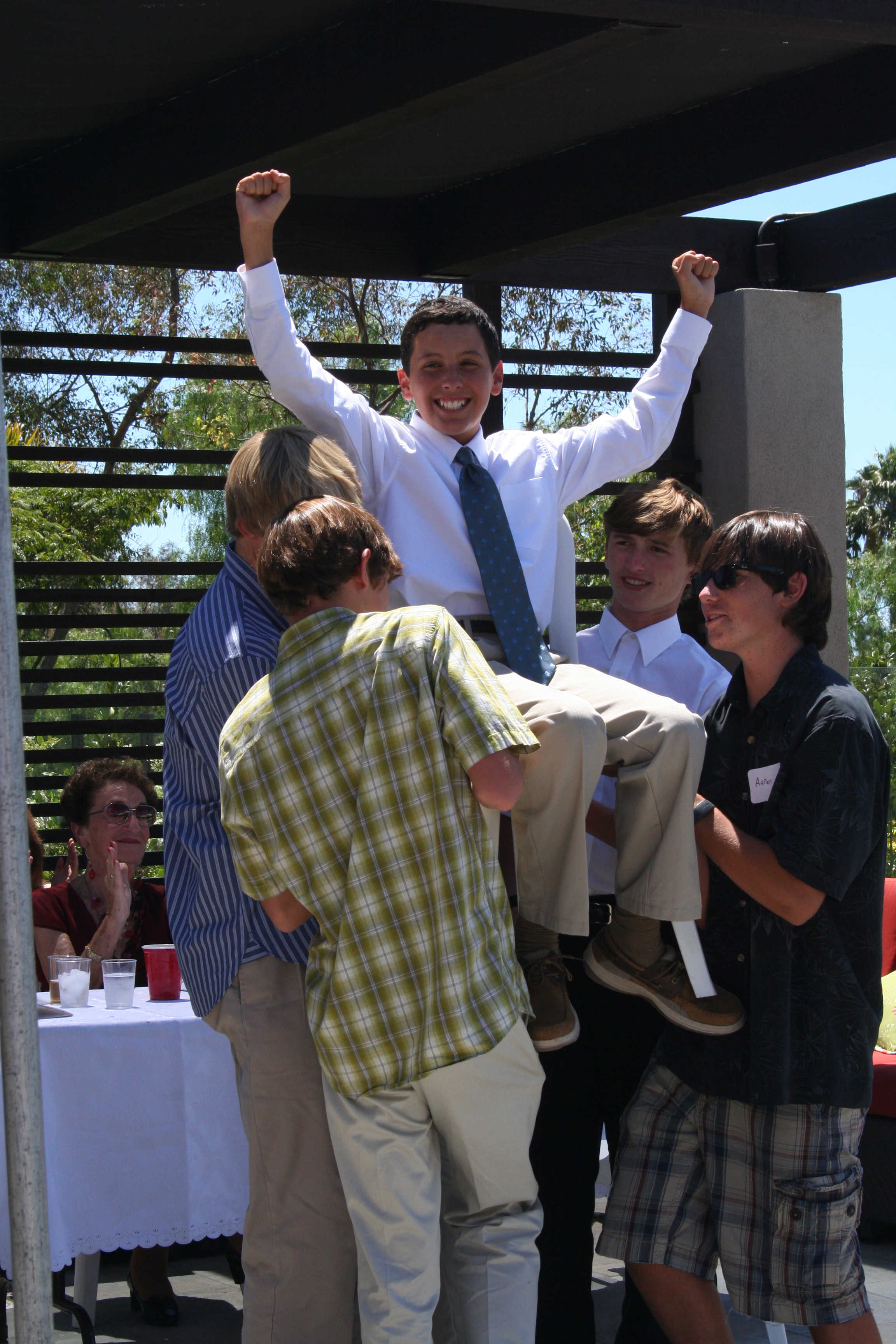
Feminism teaches us that “accommodating” people’s differences and dis/abilities doesn’t have to be a chore. In fact, it often leaves everybody better off. Prime example, my cousin Alexsander’s bar mitzvah last weekend.
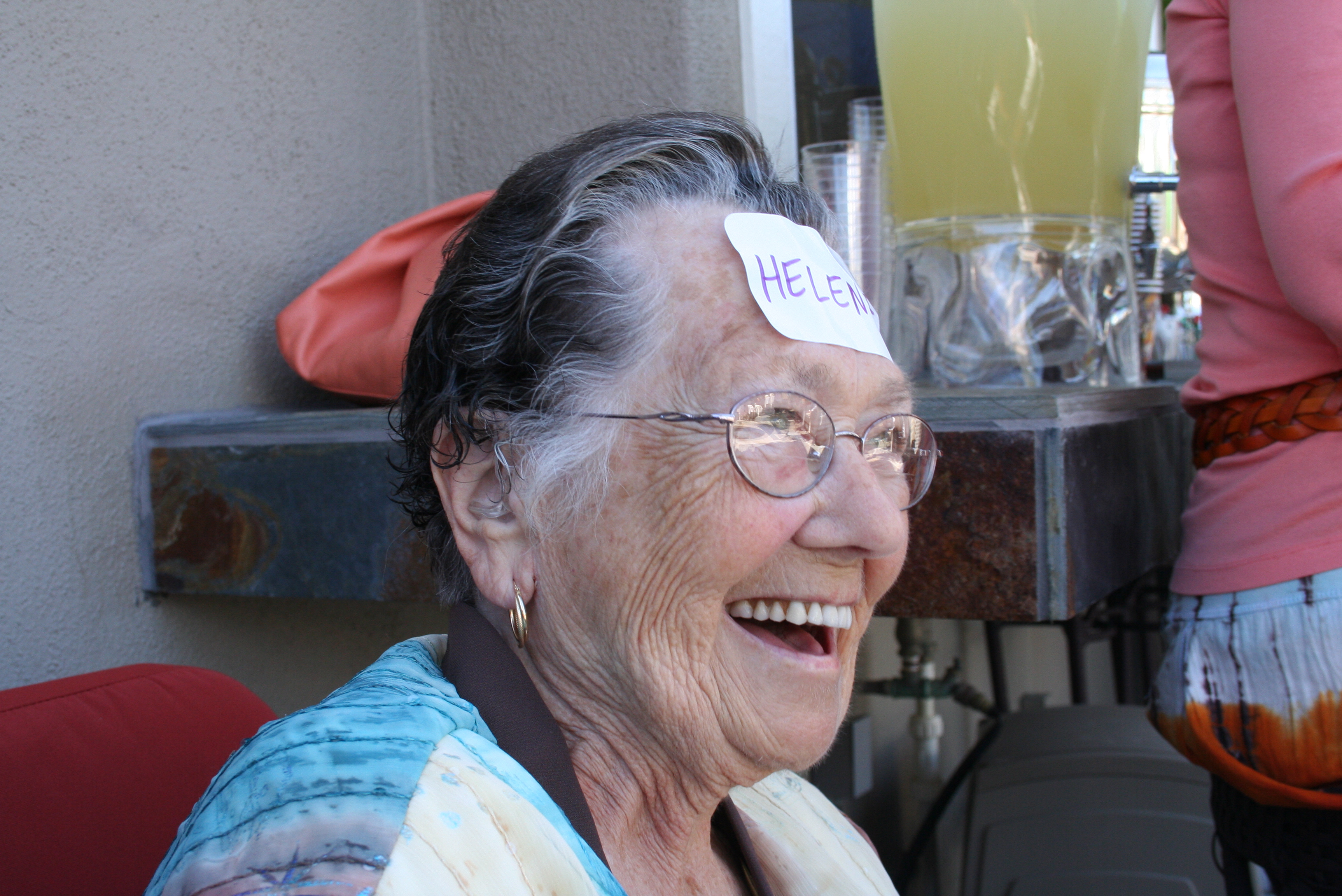
Oma (my grandmother) being silly and wonderful
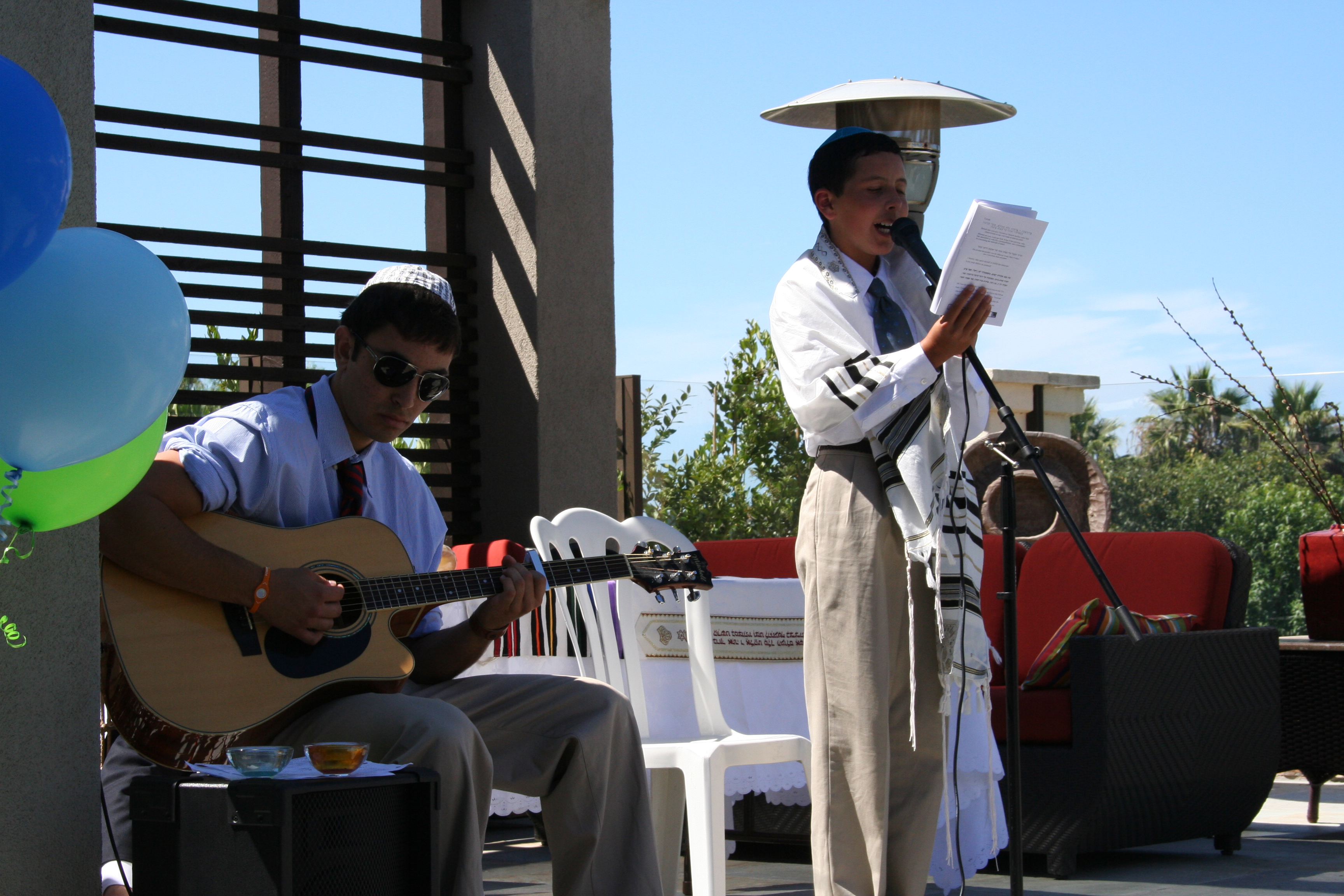
I haven’t attended a ton of these ceremonies, so I don’t have a huge sample for comparison, but I can say that this was one of the most fun, heartfelt, and moving coming-of-age traditional ceremonies I can imagine. Musical, personal, participatory. Precious community and sympathetic joy in abundance. And Sander took to the mic like anything.
Much of the brief ceremony featured Sander's beautiful singing of prayers.
Sander wasn’t the only one in attendance whose bar mitzvah was a special celebration of triumph. His grandfather, Hans, risked his own life in World War II by performing his bar mitzvah in a concentration camp. As my oma would say, “Can you imagine?”
New-man Sander lets out a kingly yawp.
Of course, the whole event was emotional, but the moment that really wrung the tears out of me was the speech by Sander’s mom, my cousin Suzie.
Today Alexsander becomes a man and yet it seems like yesterday when we sang nursery songs together, took stroller walks and read Dr. Suess books. It is from the Dr. Suess book “Gerald McBoing Boing” that I wish to paraphrase to describe my pride in our son, Sander.
They say it all started when Sander was two.
That’s the age kids start talking-least, most of them do.
Well, when he started talking, you know what he said?
He didn’t talk words- he went “meow” instead!
And as little Sander grew older, he found when a fellow repeats
No one wants to give him treats.
When a fellow goes “skreek” he won’t have any friends,
For once he says, “clang, clang, clang,” all the fun ends.
And as the story goes, Rabbi Mintz seeks out Sander’s talent.
“Your Hebrew is terrific, your pitch is inspired!
“Quick – come to Friendship Circle, Sander! You are admired!”
Now his proud parents are able to boast
That their son’s singing is known coast to coast.
Now Sander has friends, and makes his bed
‘Cause he sometimes speaks words but mostly sings instead.
[A note about the title: while a bar mitzvah or bat mitzvah refers to a particular Jewish rite of passage, colloquially a “mitzvah” can also mean an act of human kindness. For me, Sander’s bar mitzvah was a great reminder of the many mitzvahs we can all do for each other every day, simply by accepting and honoring each other as we are.]
To make it clear I am against discrimination of any kind, but to oppose the oppression without analysis of the fight back is not scientific and not conducive to progressive results. A similar case can be found in the debate over “Don’t Ask Don’t Tell.” (DADT) Of course I want equality but I also will not hold back in discussing that entering the army means entering an institution, bankrupt of morality, that serves as the state imperialist arm as it seeks to find capital through expansion, genocide, and exploitation. We must have open criticism to have a successful movement, because all oppression and exploitation is connected under the world capitalist system and we cannot afford to gain at the cost of others.
Does this now mean that I am against gay marriage and should join the West Borough Baptist Church as the claim that god hates fags? No. That’s the same foolishness and dogma, which draws these “pro gay”/ “anti gay” binaries, that has kept the discussion and critical thought at a minimum. This entire posting merely means that I am against the state objectification of social relations for the strengthening of capital. If people choose to couple monogamously that is their choice as is the opposite. However, bourgeois society has conditioned us to think negatively of the latter and believe that the former is perfected in a union under the state. And since the battle for liberation is also a battle for transformative thought, it is a dis-service to the movement to remain silent.









 Kloncke