Introducing Eloise (with video)

 Day 1: napping on my lap, arm bandage from blood test
__

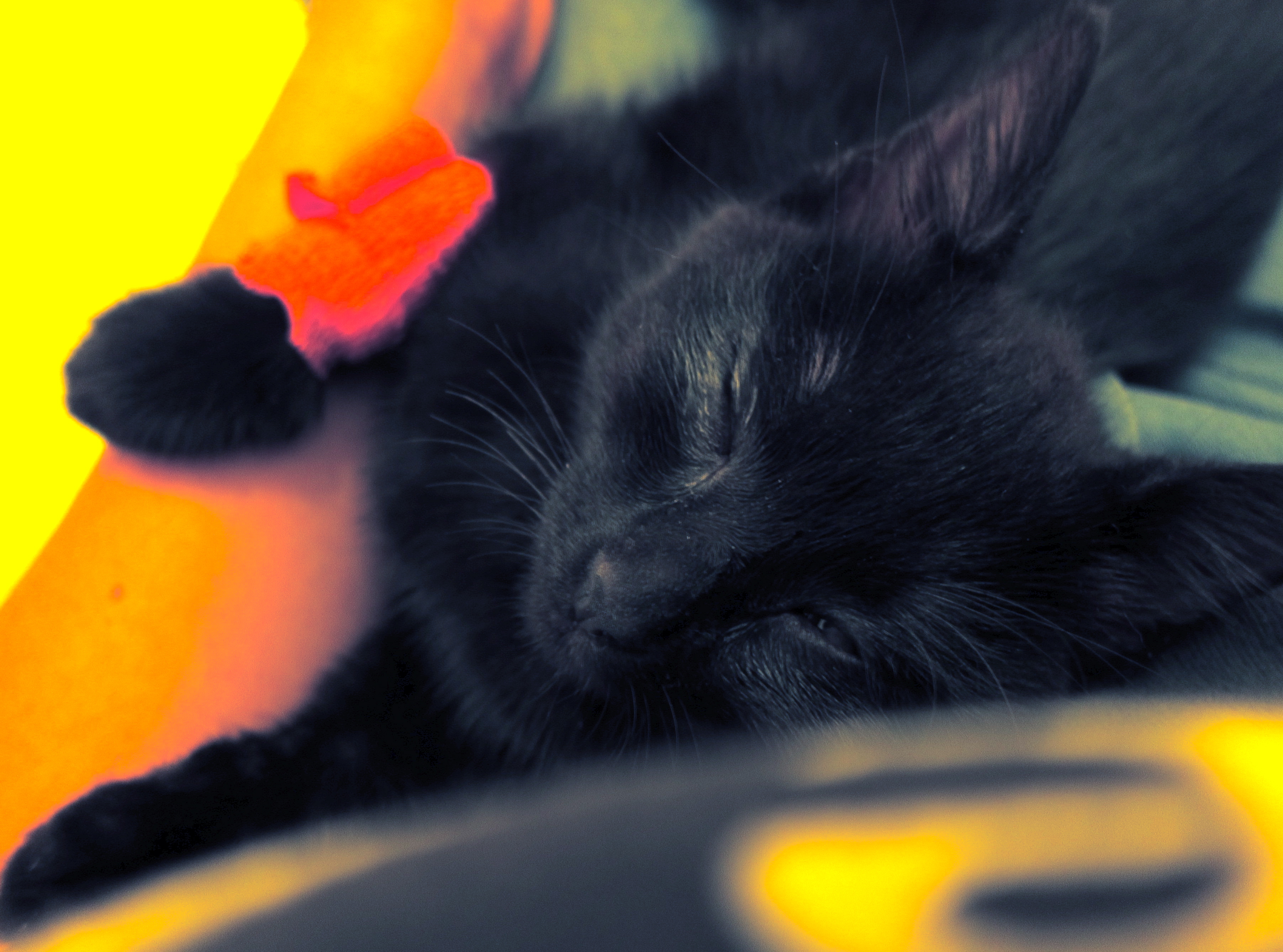
Continuing in the vein of plants, pets, and partnership — or the ways in which companions both reflect the quality of our treatment, and express their own nature independent of us — in the past 20 hours since we brought her home, our newly adopted kitten Eloise has proven both delightfully surprising and shockingly predictable.

At the city shelter where we adopted her, the staff warned us that Eloise would probably be extremely shy. She and two siblings were found in a car (not sure whether this makes them stray or semi-feral), terrified of the long human arms reaching down to nab them. Within the cat pound’s contained visiting space, surrounded by cages, she seemed calm enough on our betoweled laps, but didn’t purr or rub her head against us like some of the older cats did. One of the women on staff wore a foreboding face when she advised us to handle the kitten as much as possible once we got her home, so that hopefully she would grow comfortable with humans. Sobered but optimistic, we left her over the weekend to be spayed Monday morning. Following that surgical ordeal, we anticipated a drugged bundle of quasi-hostility retreating to the remotest corners of our bathroom for the first days or weeks.

Sure enough, the minute we lifted her from the vet-issued cardboard carrying case and set her on our bathroom tiles, she fled to the farthest (and dirtiest) corner (straight past the cat bed I so lovingly fashioned for her out of a cardboard box and an accidentally-shrunken cashmere sweater). There she remained, cowering behind the dusty toilet.

Continue reading

New Plants, New Kitten, (Re)New(ed) Partnership

__

I hear that in Narcotics Anonymous, they advise people starting or re-starting recovery to avoid taking a lover. Human relationships are complicated and fraught. First, start with a plant. If you can keep a plant alive and healthy, then you might be ready to adopt an animal. If you can care for the animal for a good while, then you might open to the possibility of a romantic partner.

In some ways, companions are mirrors for our own behavior. Can we water a plant faithfully? Can we walk a dog consistently, and clean out a cat litter box regularly? Can we respond reliably to the needs of another being?

And in other ways, companions remain true to their own nature. For instance, if a cactus plant needs to be constantly avalanched with sunlight, it might just go ahead and die in our small dark Seattle apartment. No matter how tender our plantly serenades, or how perfectly calibrated our soil-dampening schedule, this thing needs sun, and sun we ain’t got.

__
__

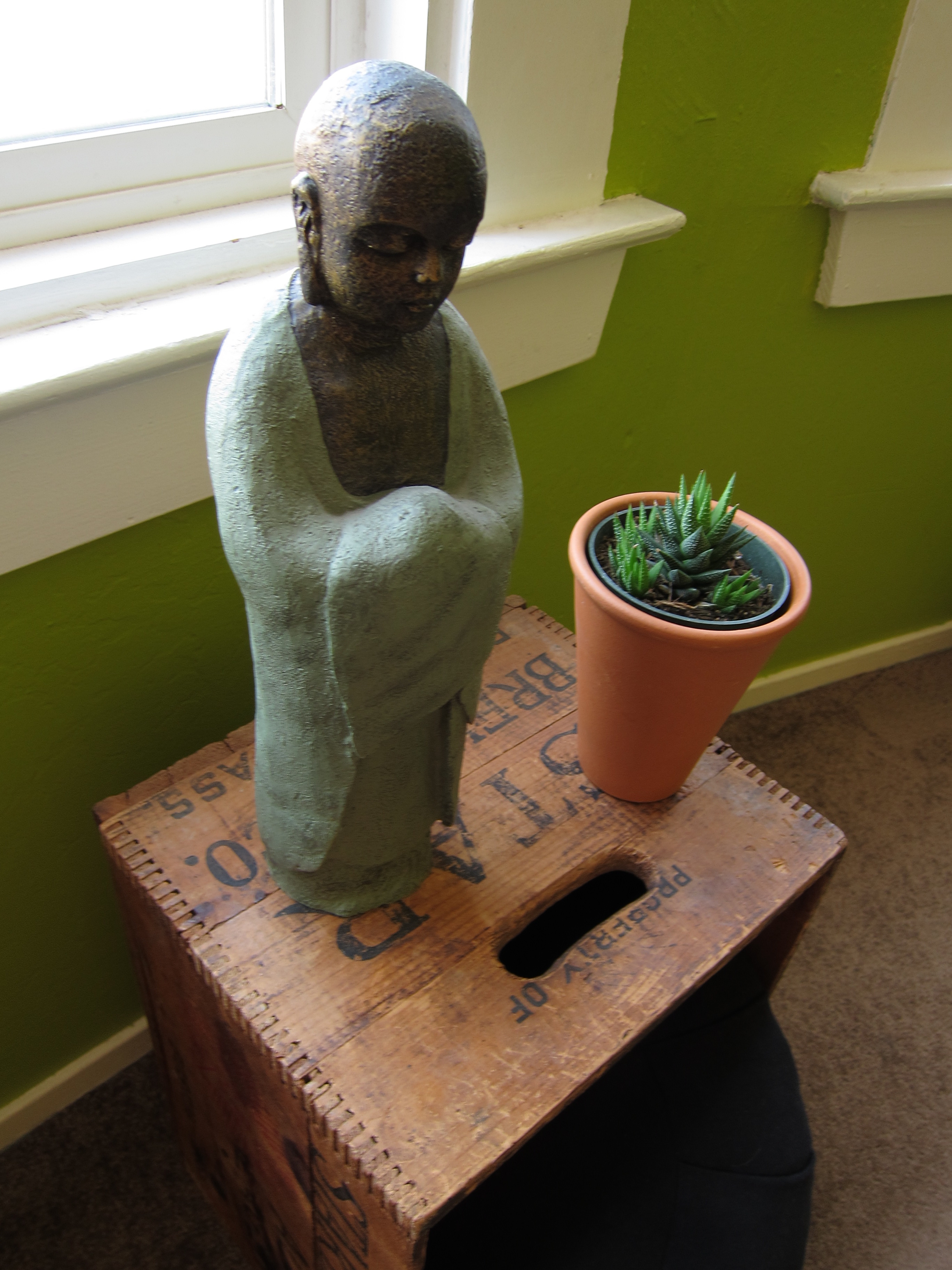
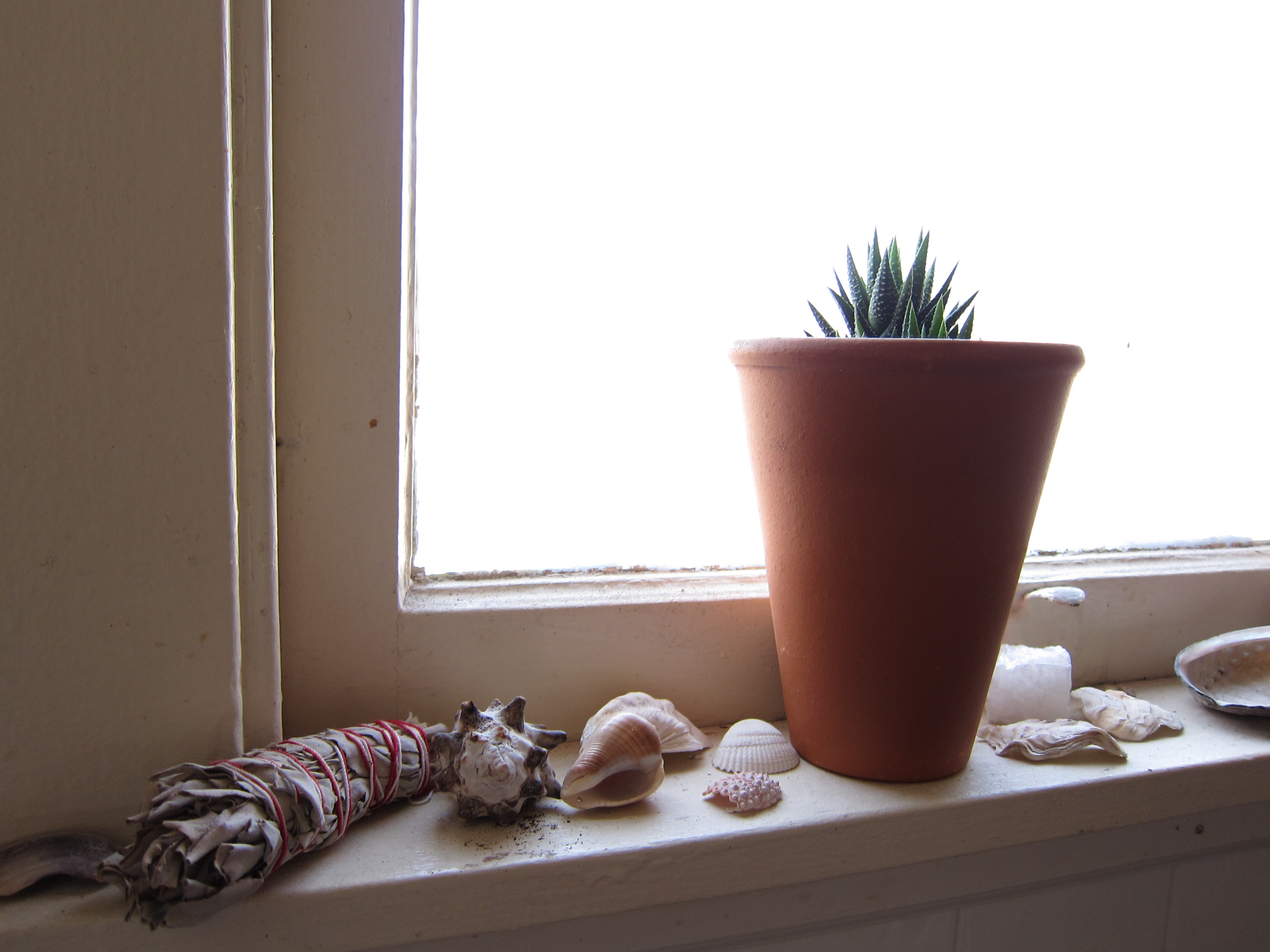
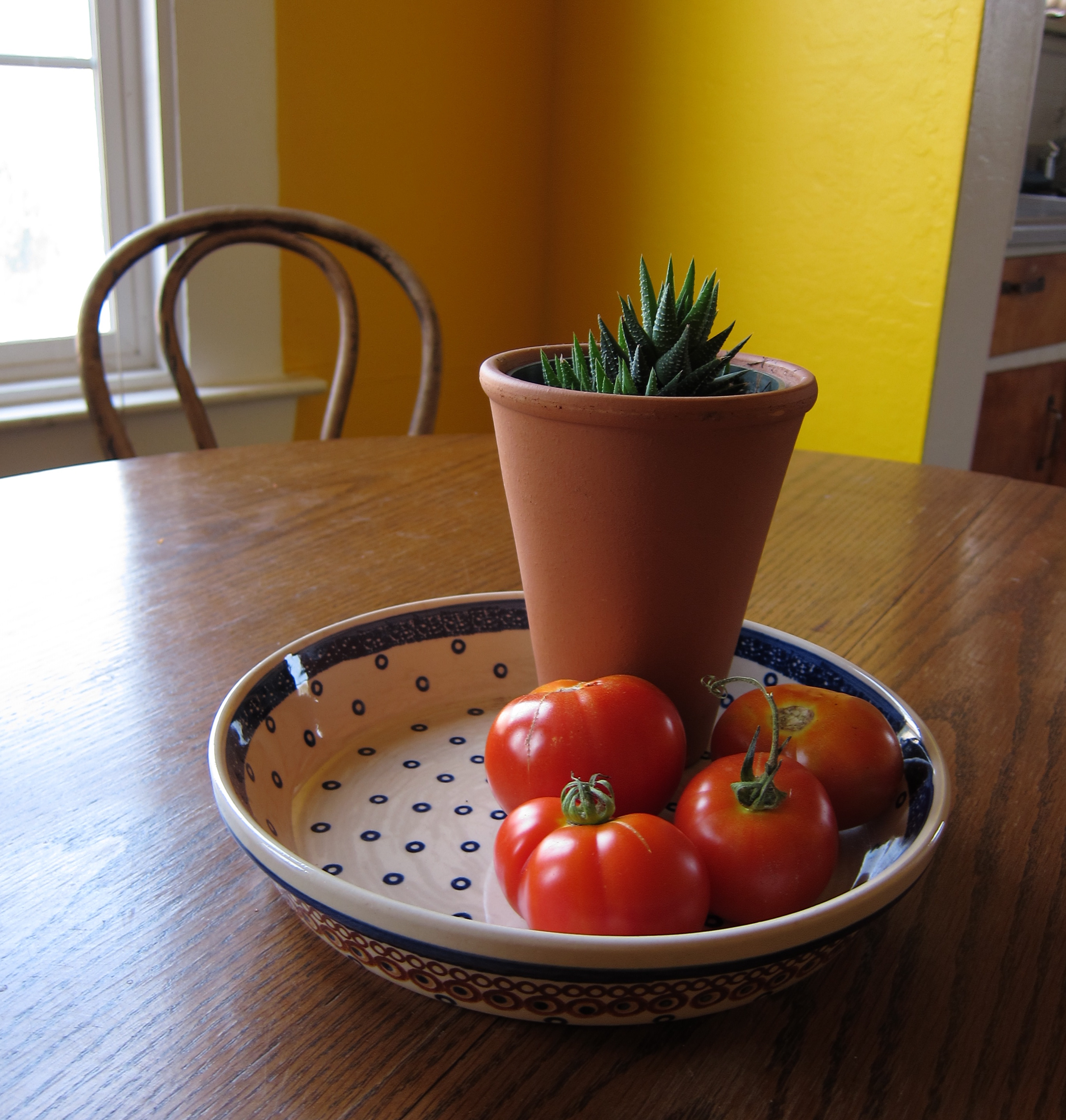
Last week I brought home three Haworthia plants, of a genus native to Southern Africa. I’m not sure how well they’ll do in our house: one on the kitchen windowsill, one on the dining table, and one in our bedroom, brightening our meditation space (which I’ve temporarily surrendered to a small but persistent faction of the invasive Argentine ant supercolony that has overtaken the West Coast).

__

On Thursday, Ryan and I went to the Berkeley city animal shelter with our friends Kate and Rane, and after hours of tough deliberation (so many cats to love = virtually impossible to select just one), signed the paperwork for a semi-feral black kitten, two months old. She’ll be spayed Monday morning and then come home with us, sequestered in the bathroom until she gets comfortable enough with us, her bed, litter box, etc., to finally roam the apartment. I hope she likes it here.

So yeah, co-adopting an animal. How adult-like. It’s nearly two years that Ryan and I have been together, including nine months in this apartment. He’s lived with a partner before. First time for me. I watch myself adjusting to coupledom.

[To be continued . . .]

I Know It’s Science, But It Feels A Lot Like Magic

our 10" pan, after stripping and de-rusting

Having finished and submitted a grad school paper today, I am rewarding myself with another round of re-seasoning our cast-iron skillet.

Did you know that it’s virtually impossible to find out how to properly season one of these puppies just by looking it up on the Internet? Oh, sure, you’ll find instructions and opinions, but they differ wildly from person to person, sharing only the barest of fundamentals: you need to put oil in the pan and heat it up; then the pan will be smooth and non-stick.

But how? Why? Really?

Sheryl’s Blog explains. Fantastically. Scientifically. Read and be amazed.

On Self Defense from Cops, Men, and Slumlords

Been a little under the weather, on and off, over the last few days.  Downsides: pain.  Upsides: opportunities to observe pain, and taking time to lie low and read hella articles on the Innernet. Here are three of them which happen to be about self-defense.

  • Deadly Secrets: How California Law Has Shielded Oakland Police Violence
    Oakland Police Headquarters in Downtown Oakland, CA. (Photo by Jorge Rivas/Colorlines.com)

    Colorlines has a meticulously researched article about the secrecy and opacity shrouding Oakland police personnel reports.  Some say that if the public had access to these files, they could be used to weed out ‘loose cannon’ cops before their aggression leads to fatal shootings.  But problems with policing go way deeper than that, if you ask me — including pro-ruling-class trends in the laws that police are paid to enforce as an arm of the state.  In any case, responses to OPD brutality seem to fall into three camps: individual lawsuits; accountability/reform measures; and resistance/defiance.  I was sensing some author bias toward accountability, but you can read for yourself.  One of the only mentions of on-the-streets resistance to OPD brutality, the riots following Oscar Grant’s murder, is glossed over in a somewhat awkwardly placed sentence: “Rachel Jackson, an organizer of the Bay Area protests of Oscar Grant’s killing, says the indictment on murder charges of ex-BART Officer Johannes Mehserle, following widespread public outcry, is proof of the point: ‘If there’s street heat, they’ll do something.’” [Emphasis mine.]  On one hand, I appreciate that the author is illuminating OPD murder cases besides Grant’s.  On the other hand, the lack of elaboration on Jackson’s crucial political claim seems, uh, strange. Given that we regard OPD murder patterns as a problem (to say nothing of other types of police-on-people violence, like sexual assault), what are our best strategies for self-defense? Shouldn’t we discuss that underlying orientation?

  • In a very different and awesome take on community safety and protection:
    __

    Continue reading

East Bay / SF Solidarity Network Potluck

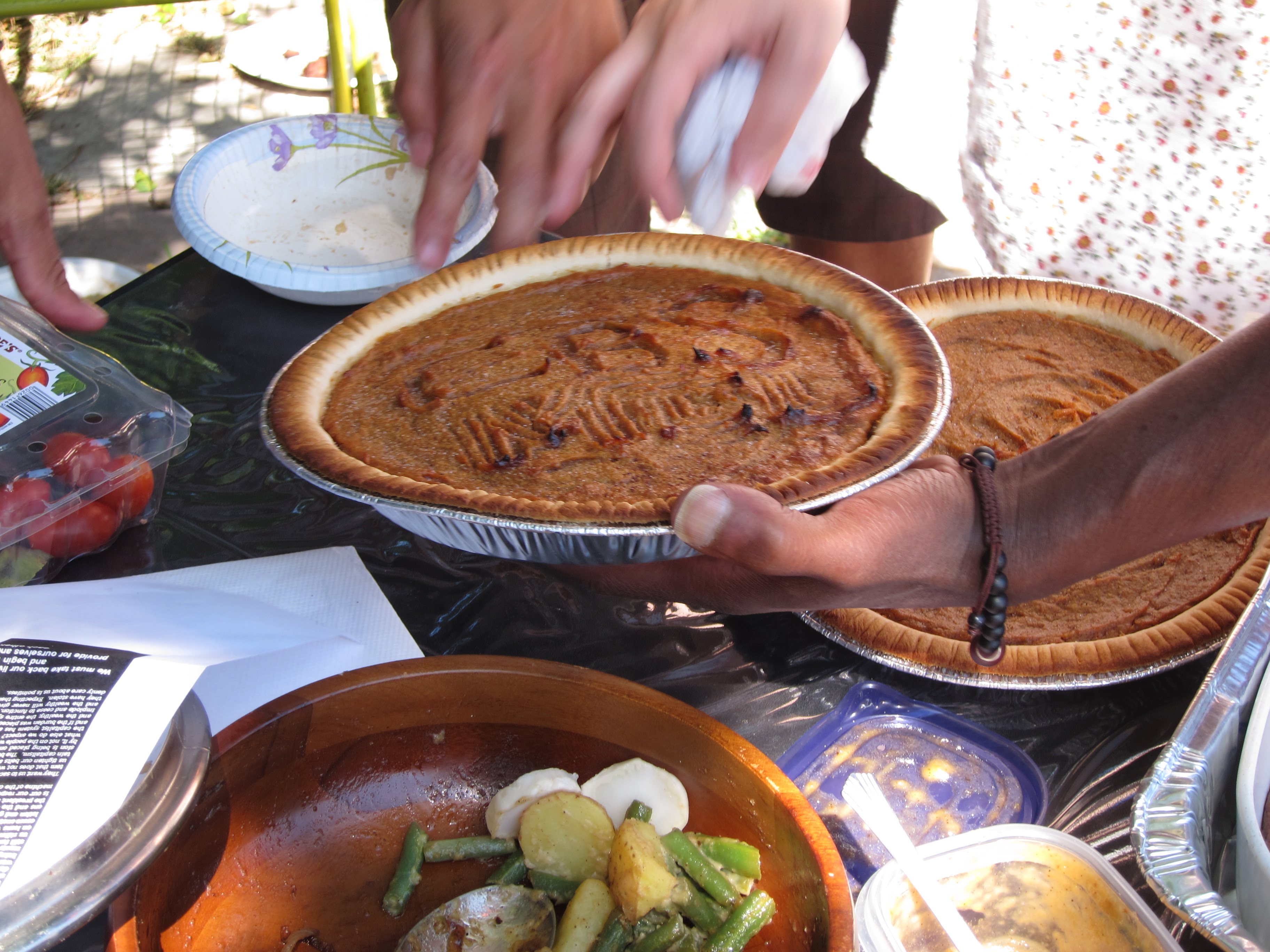
Feeling a bit sick today, but wanted to share a few fotos from this weekend’s meeting-slash-potluck. Originally conceived as a mini reportback and collaborative skillshare between San Francisco Solidarity Network and East Bay Solidarity Network, only one SF member was able to show, so we pumped her for a lot of info. :) And sat around eating homemade vegan cornbread, spicy green bean and potato salad with caramelized-onion-mustard dressing, vegan mango lassi, risotto, brownies, and Mel’s sweet potato pie that will “make your arms go up in the air.”

This slideshow requires JavaScript.

Birthday Presence

___

Friends, as many of you know, yesterday was my birthday. (Thanks for all the Facebook love!) Is a links list the geekiest self-gift of all time? Possibly. And here we go.

Looking forward to:

*   *   *   *   *

And grateful for the presence of:

Twenty-five feels a bit hazy so far, but I’m pluggin’ away.  To all you incredible beings, past and present, who continue to bless me with honesty, support, quotidian hangouts (love those), compassion, food, wisdom, class-struggle education, patience, quirks, meditation, music, and humor . . . thank you.

love,

katie

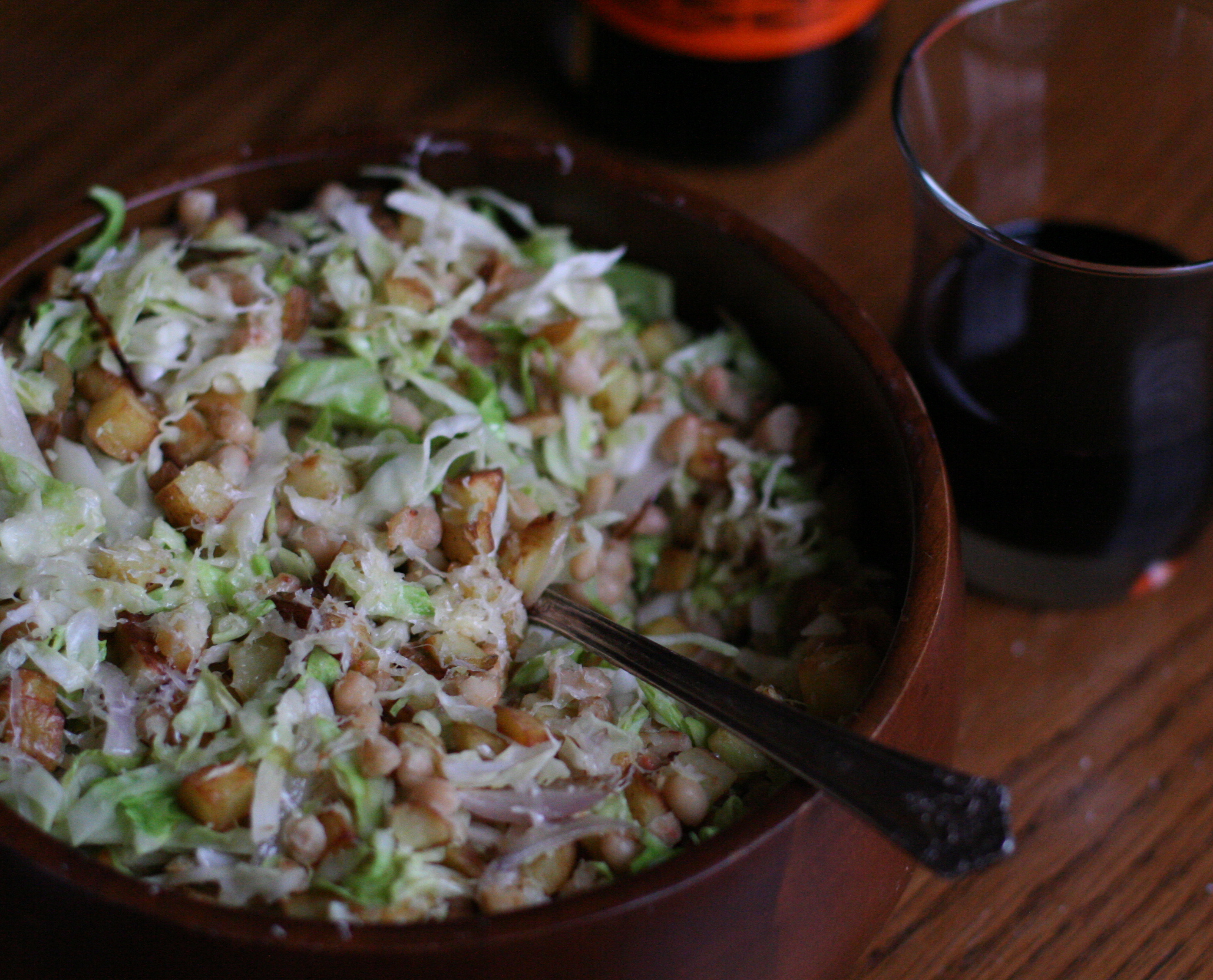
White Beans and Cabbage

Dinner.  Cover recipe from Heidi Swanson’s new cookbook, Super Natural Every Day. The flavors here are more subtle than I’m used to (normally I just douse everything in lemon juice and pile on the cayenne and cumin), but once I lasered in, I found a lot to enjoy. Slight spiciness of the barely-cooked cabbage plays off the creamy sweetness of the beans (I used canned fagioli) and tiny diced Yukon Gold potatoes. I actually smiled at a burst of tangy-smokiness from the sauteed shallots.  It’s the kind of dish where each ingredient matters because it all comes together quite quickly in one pan, so you can fully taste the fresh produce* without relying a lot on spices. And because each flavor is independent, every spoonful yields a slightly different taste combination.  Which is dangerous, because it makes me curious to eat more and more even after I am so so full!

Here’s what I did, adapted from Heidi’s formula.

12 oz. fagioli white beans from a can, rinsed and drained
6 or 7 small Yukon Gold potatoes, each about golf-ball-size
1 large shallot
Half of 1 medium green cabbage
4 glugs extra virgin olive oil
two big pinches of salt
Parmesan cheese (optional)

Wash the potatoes well and dice them into tiny cubes. In a big frying pan (I used 2 skillets to ensure maximal crusty browning action) glub in 2 glubs of olive oil (that’s 2 each if you’re using 2 pans) and turn the heat to medium (5–6 on my burner dial). When the oil is hot, add the potatoes, sprinkle with the salt, and toss to coat. Cover and set a timer for 2 minutes; when it goes off, toss them again to help brown on all sides. Cook for a total of 5–7 minutes or until tender and golden.

Meanwhile, slice the shallot very thin, and chop/slice the cabbage thin, also. When the potatoes are cooked, add the shallot and the beans, and spread the beans on the bottom of the pan so they get a chance to get nice and crusty, too. (Scrape around the bottom of the pan to loosen all the crusty bits.) Let ’em hang out for a few minutes, finish chopping your cabbage, then add the cabbage and stir to warm through — just enough so it wilts a little and goes bright green.

When it all looks and smells tantalizing, turn out into a serving dish and serve with a dusting of parmesan cheese, or as-is for a vegan feast. Hell yes.  

————————————
*Under communism, I am told, everyone will have fresh produce because there won’t be the kind of leave-the-unprofitable-extra-produce-to-deliberately-spoil bullshit that currently goes on, and instead we will grow food for use, not profit. Yay!

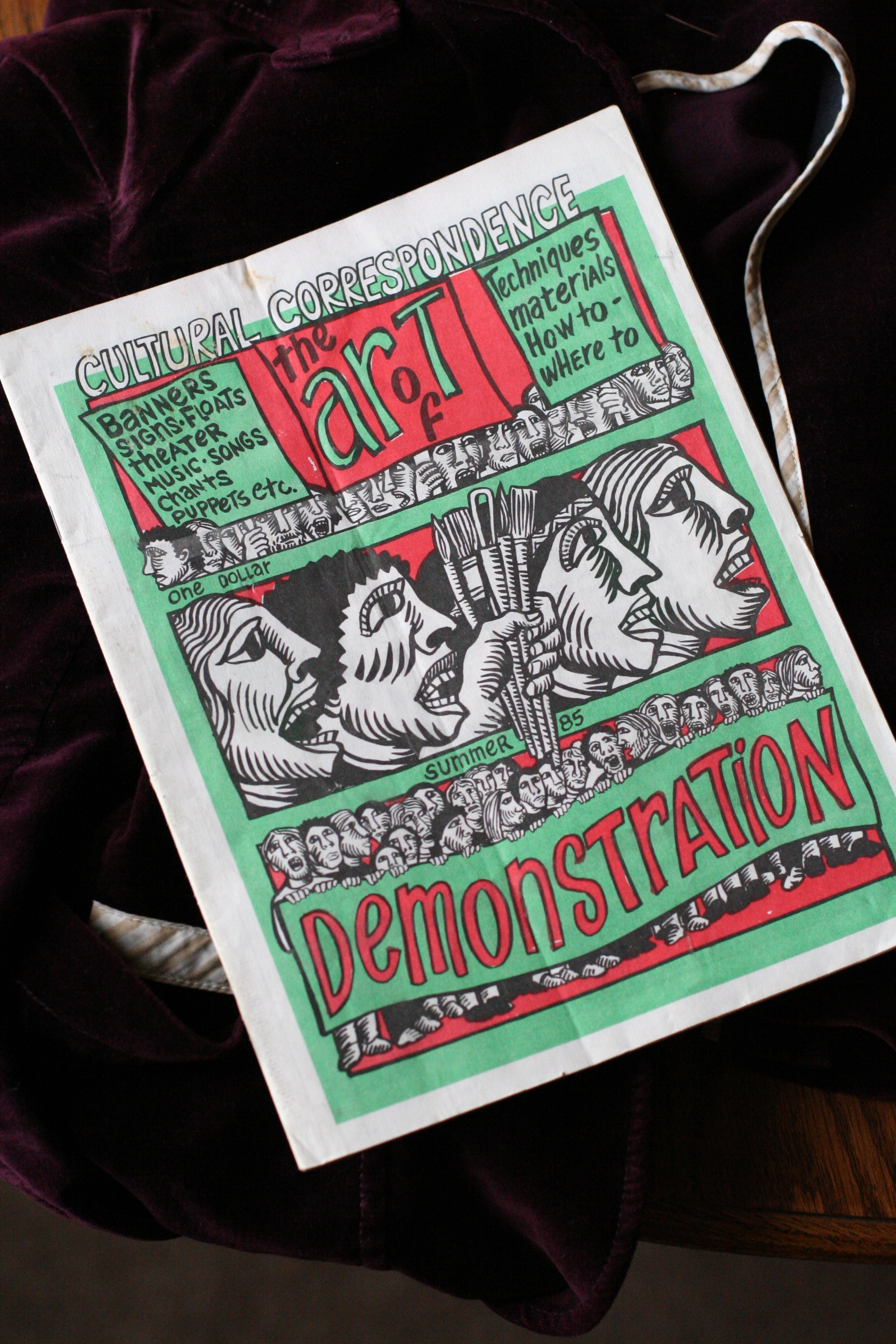
Zine Week Day 5: The Art of Demonstration by Cultural Correspondence, 1985

Final zine, y'all! This one arrived to me in the mail as a gift (among many!), along with the usual scholarly correspondence, from my amazingly heartful, talented, and fly poet / professor / academic advisor / friend, Gale P. Jackson.

I love it because

  • Its content is both instructive and creative, showing “Techniques, materials, How to / Where to [of] Banners, Signs, Floats, theater, Music, songs, chants, puppets, etc.”
  • It was published in 1985, making it one year older than me
  • The illustrations and layout are incredible
  • Some content is time-specific and local, making it political propaganda as well as a DIY manual.

I’ll try to let this one speak for itself. With deep gratitude and appreciation to Gale! Hopefully some of the specific contents will infuse themselves into my organizing, and be reflected there.


Continue reading

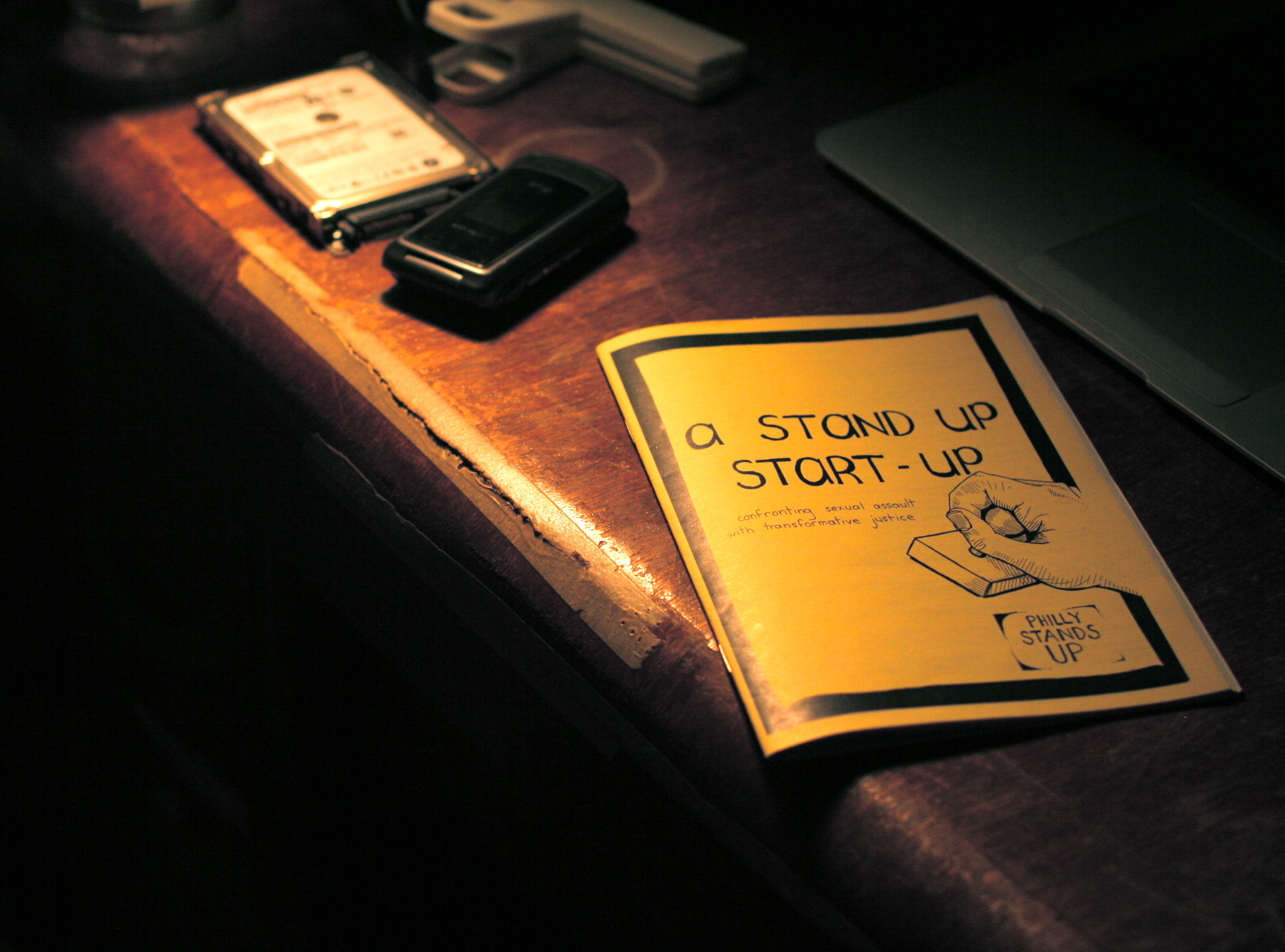
Zine Week Day 3: A Stand Up Start-Up: Confronting Sexual Assault with Transformative Justice by Philly Stands Up

Last month I talked a little bit about transformative justice and the dope workshop that folks from the Philly Stands UP collective offered here in Oakland. This zine is one I picked up at that workshop: kind of like a primer for the PSU model.

There’s a lot I like about this zine.  Its unpretentious candor.  The ways it contextualizes itself, pointing to overlapping work that others are doing. (The final chapter is an excerpt from Color of Violence: the INCITE! Anthology.) The way it foregrounds survivor support in its Points of Unity:

We are a group that survivors can come to for help and support.  We will always support survivors and ensure survivor autonomy, where they will always be in control of how a situation is dealt with.

. . .

We do not support the prison system as a viable means of rehabilitation for perpetrators, but we will always support a survivor’s wishes and engage the legal system on any level necessary.

Continue reading