
sometime this week when i get a chance, i wanna write about what we’re learning in the foreclosure-fighting study group. for now, it’s green that gets me through the week.
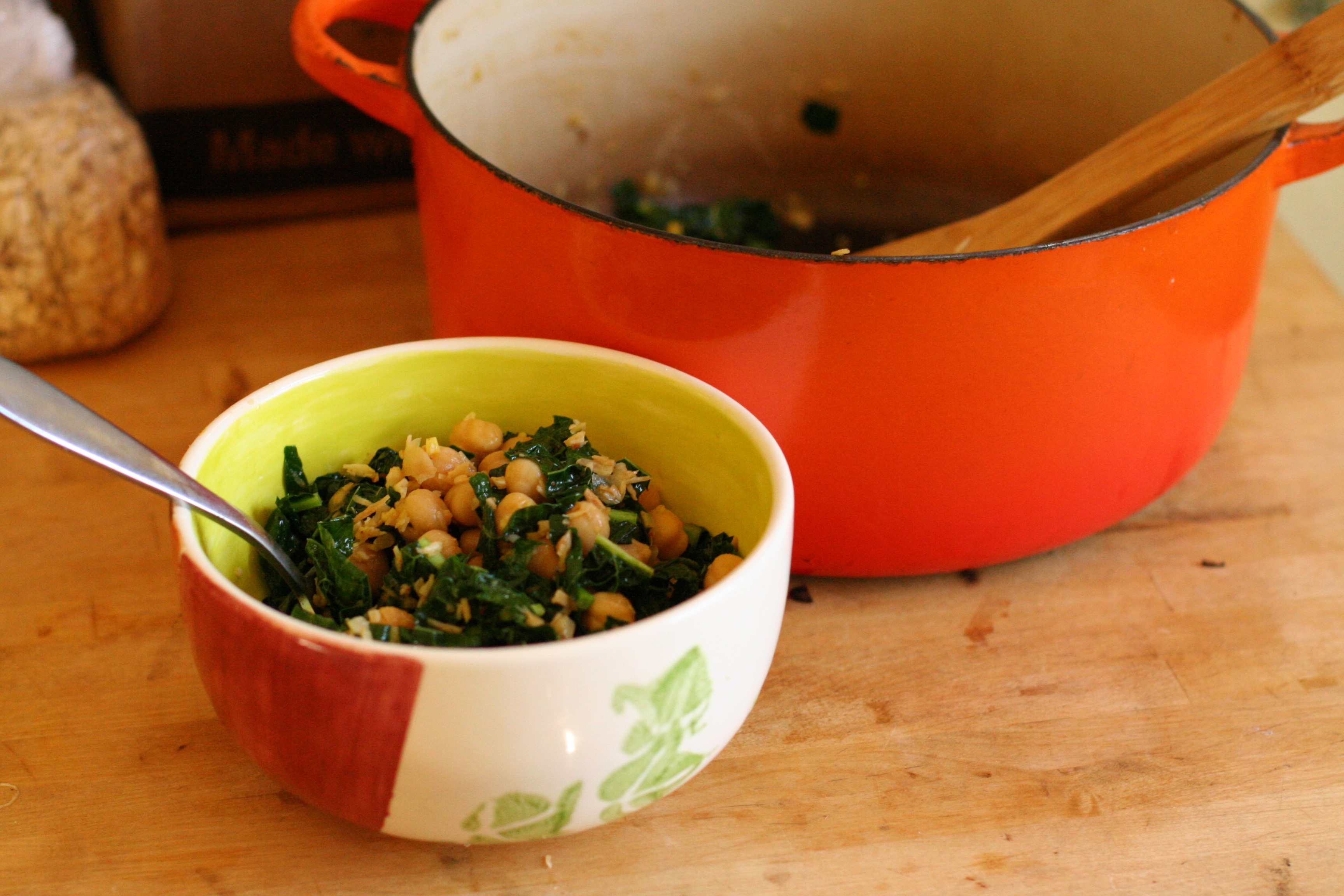
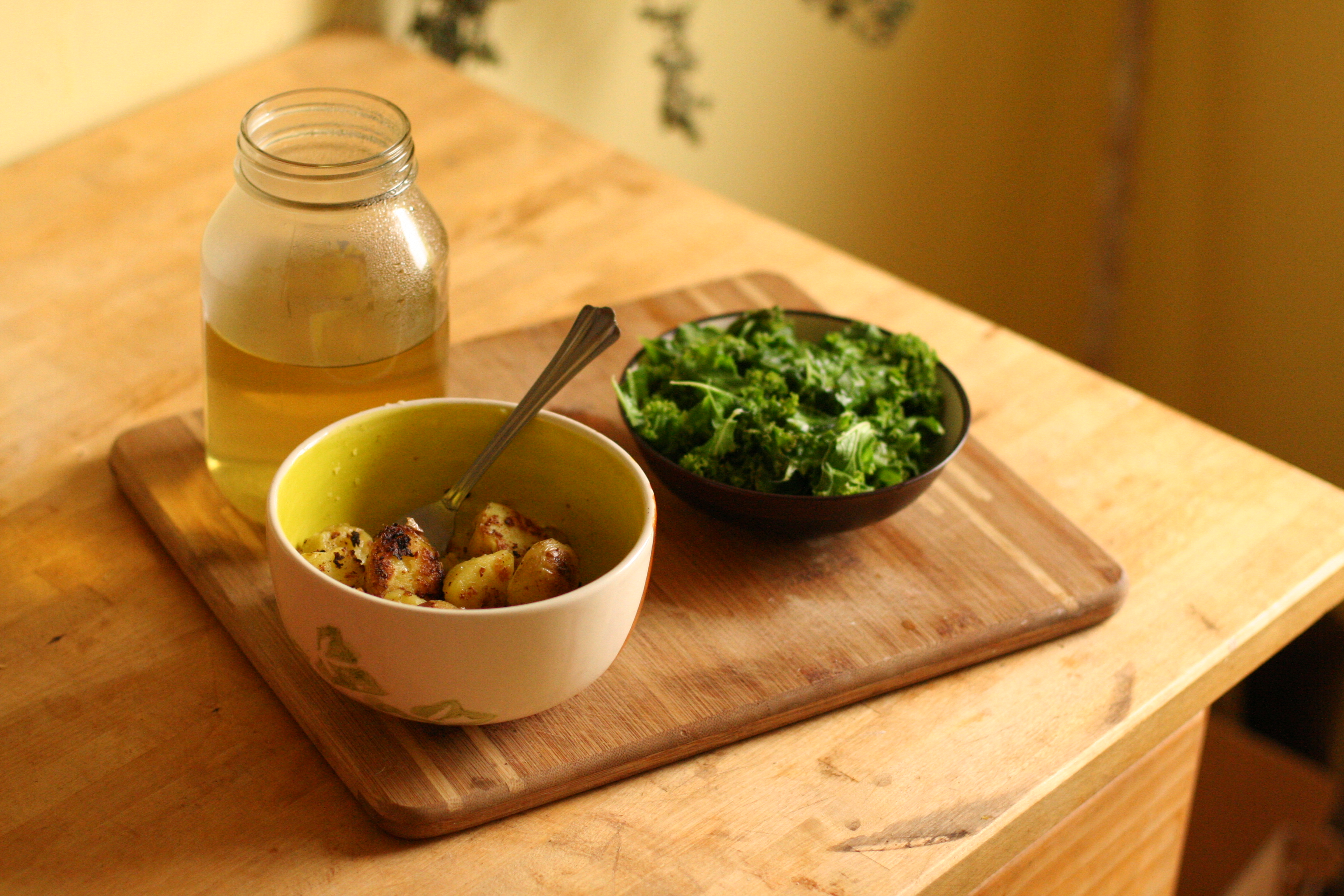
sometime this week when i get a chance, i wanna write about what we’re learning in the foreclosure-fighting study group. for now, it’s green that gets me through the week.

Trigger Warning: discussions of fatphobia and sexual assault.
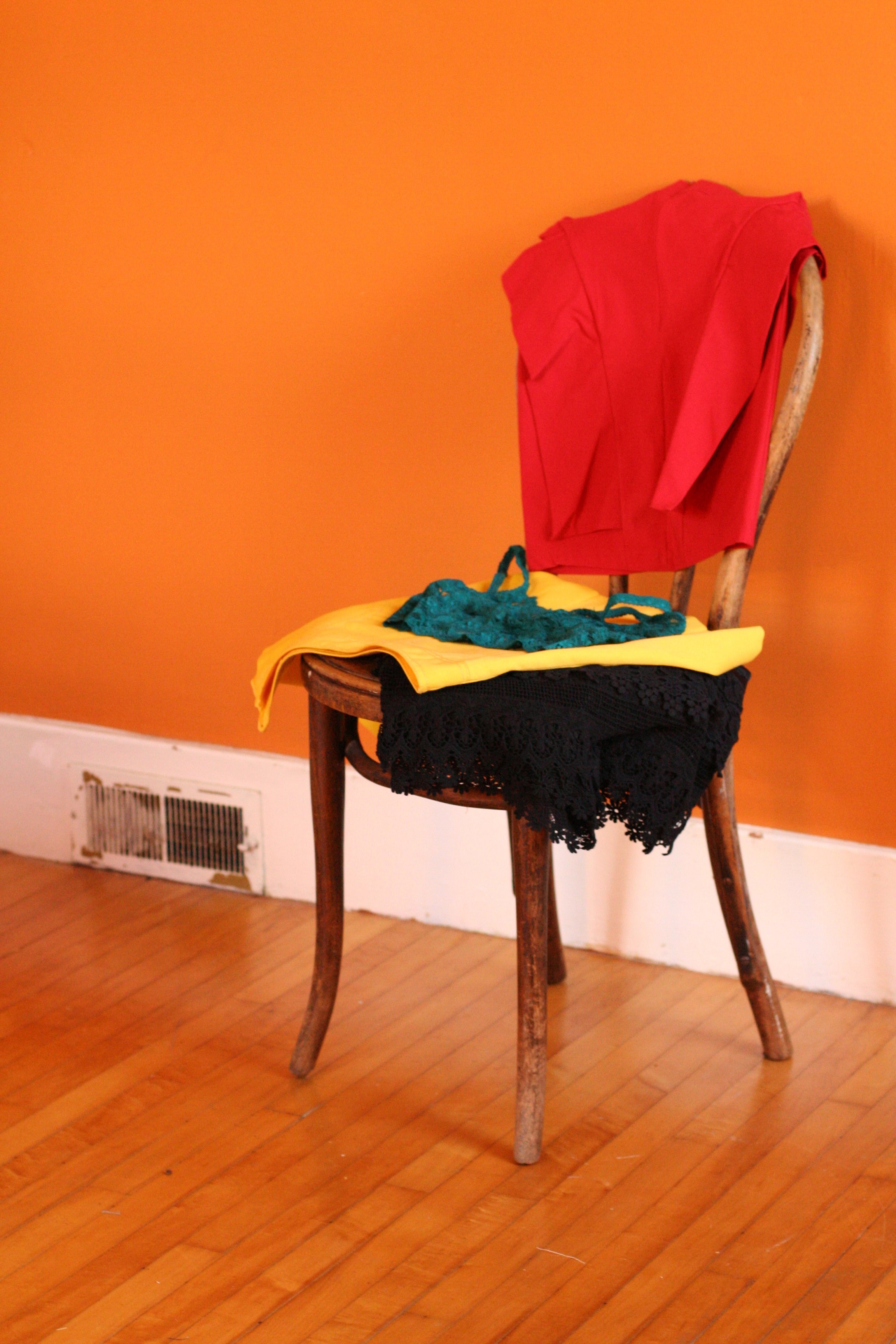
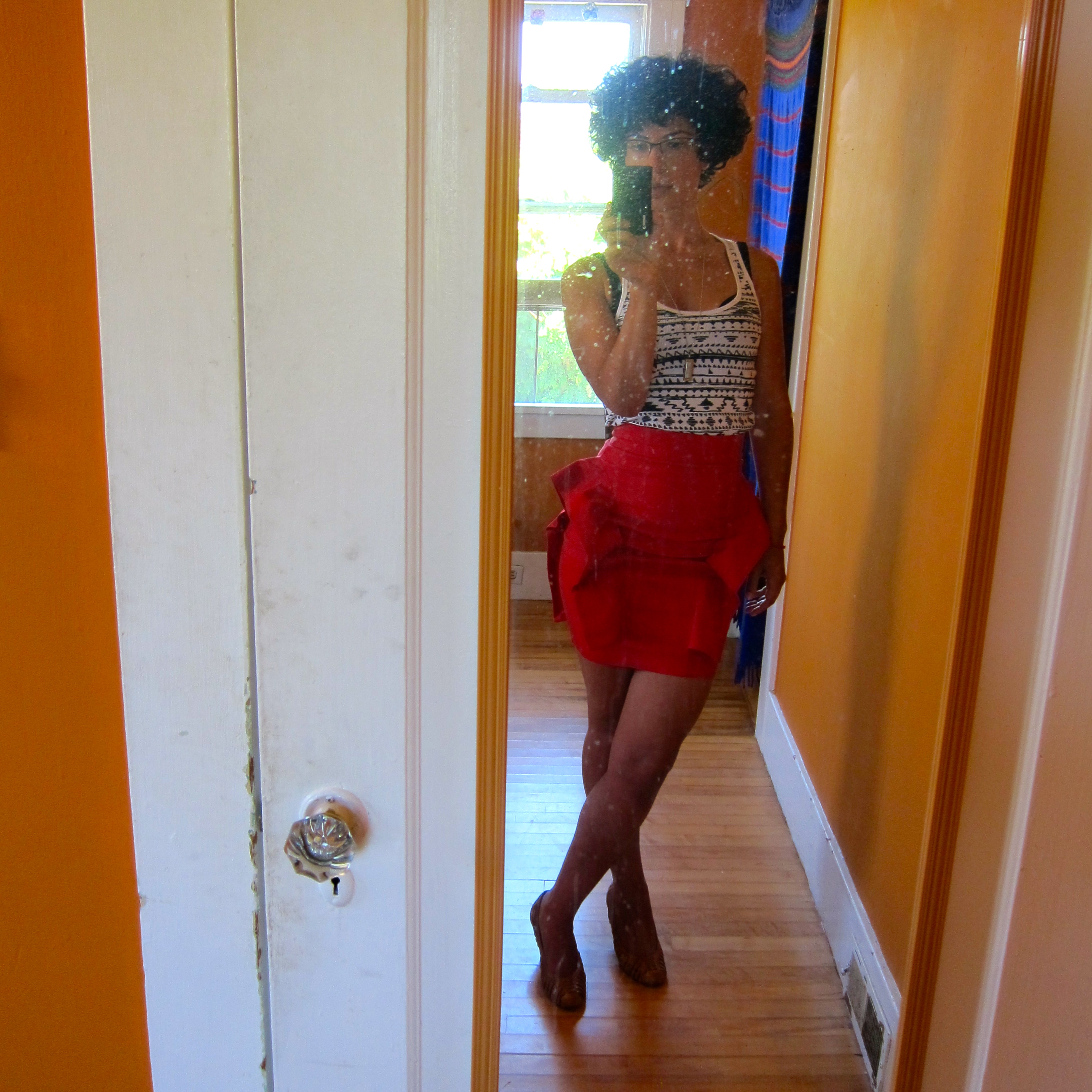
This week I made a What Not To Wear intervention on my own wardrobe. Based on my own preferences, but preferences I tend to sideline when I don’t really take the time to find separates that fit and interest me. Which leaves me with a closet full of stretched-out t-shirts in solid colors. Browsing the few stores I visited, I had to keep telling myself: no solid t-shirts. Only things that are nice and snug in the waist. And if something has to be solid, let it be an interesting fabric or shape. (Hence the red skirt.)
There are many reasons I shy away from dressing in a style I think of as “hard femme.”
Wanting to be taken seriously.
Wanting to avoid extra harassment.
Wanting to be able to hop a fence at a moment’s notice.
Wanting to bike around and sweat and cartwheel (difficult in heels and a pencil skirt).
Not wanting to confront my body image issues.
Not wanting to encourage fatphobia in myself or others: feeling a twinge of pleasure and the ghost of shame when people compliment me on losing weight.
At a certain point, after my 3 months living and working at the meditation center in Spain, I was even concerned that presenting my body in a more stereotypically “hot” or hard-femme way might cause more suffering for others: playing into a sex-saturated culture that doesn’t give us the tools to examine our own lust, or our own desire for approval.
Even as my internal debates swirl, I also realize (again, with some sadness) how fortunate I am that the styles I prefer are pretty much socially approved for the body that I have. On Fathers’ Day, my dad and I had a conversation about the violence that often happens when someone discovers that a person’s physical makeup, or sex, doesn’t fit with what they had expected, based on reading their gender. The discoverer becomes enraged. I am safe on the transphobic score, though I also know that the average US person would much more likely blame me if somebody ever raped me while I was wearing an outfit like this, versus a stretched-out t-shirt and wide-legged corduroys. In summer, when my skin is darker, the blame (or lack of compassion) might be worse.
Obstacles.
For right now, though, I am trying this on. Results so far (internally, and from others) have been mostly positive, supportive, fun. I actually felt extra confident doorknocking to fight foreclosures last night (not in the outfit above, but something along similar lines.)
We’ll see how it goes.
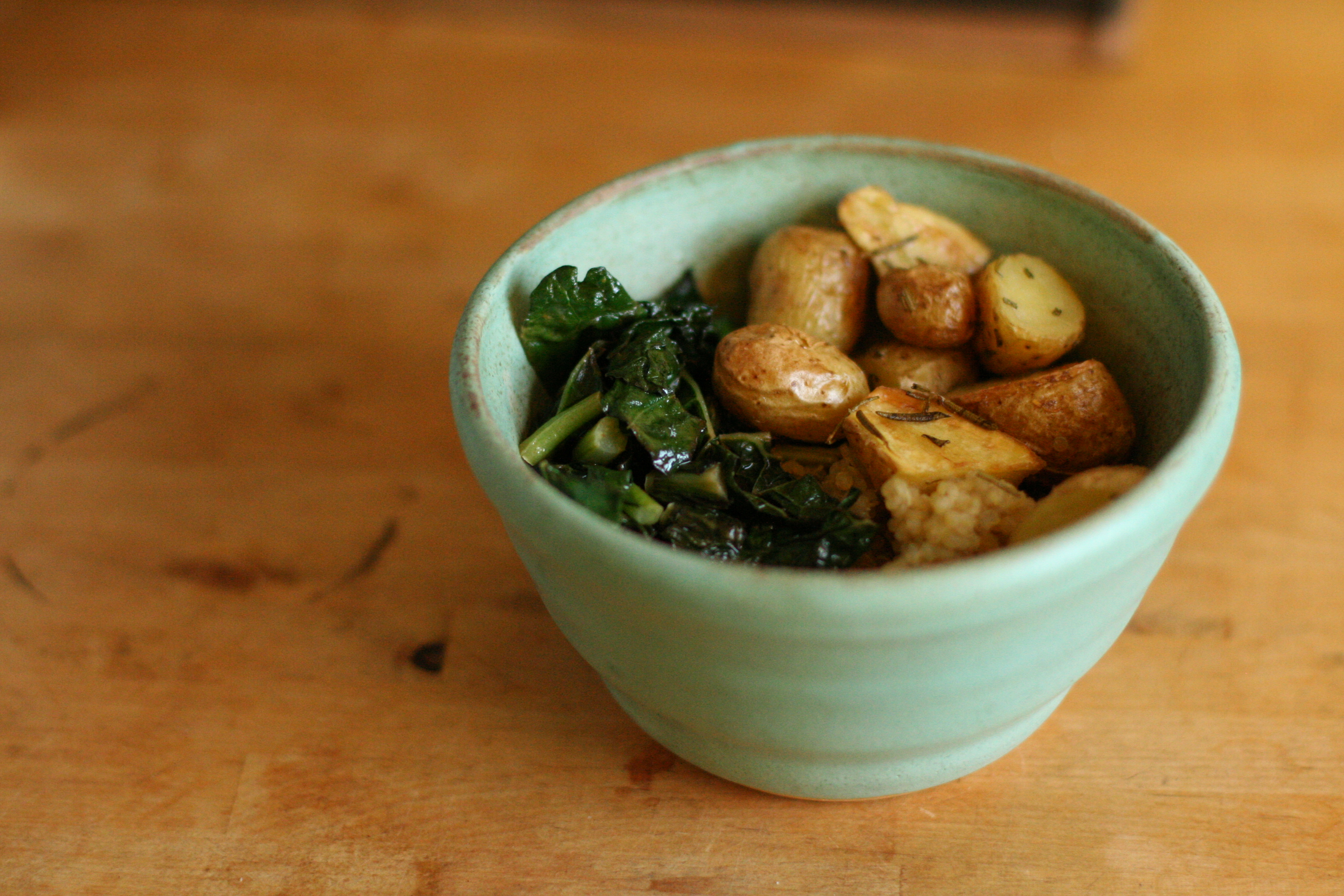
Back from retreat: new house, new kitchen. Usual suspects: quinoa, kale, lemon, garlic. Each small potato wrinkles perfectly and tastes like a dream. Rosemary fresh from the new backyard.
Leora, Noa, Cat, Nuria, many others with whom I’ve cooked: I love feeling you with me at the stove and cutting boards.
Aneeta, I thought of your eating meditation. “Thank you.” [next mouthful.] “Thank you.”
This earth, and all the people who work to farm and harvest it: you amaze me. Things are bad right now, I know. I love you and want us to be free. Let’s keep trying to make it happen.
* * *
cooking — simple cooking — is becoming something of a devotional practice for me. i’m realizing more and more that food is a miracle, even while the process of creating it for human consumption is full of exploitation and suffering.
by the time food reaches me, it is caked with the invisible pain of others, saturated with the grim labor of thousands. this accumulated degradation is harder to remove than the wax off an apple, or the gerrymandered genes from a cup of Monsanto rice.
but maybe, somewhere along the line, the food has also been blessed by the whispers and motions of resistance. maybe the diggers of these potatoes are meeting secretly, to organize. maybe the truckers and dock workers are forming alliances. maybe the grocers in the produce section are imagining a world where the beets belong to everyone.
so i want to treat the food with love, to honor not only the bad, but the good and neutral of its past. may it fuel me, and others, toward collective liberation.
this week, life is prompting me to bring my email / internet life back into balance. prompting me in pleasant ways; prompting me in unpleasant ways.
among the unpleasant: multiple times i’ve handed my laptop to a friend to borrow, and watched them go bug-eyed at the number of tabs constantly open in my browser. “i feel like i’m having a sympathy panic attack,” one half-joked. yikes.
on the pleasant side: a scheduled meditation retreat at the end of this month comes at a perfect time, reminding me that at times in my young adulthood i’ve survived weeks or even months without checking email. of course, work and livelihood looked very different then. still, retreat time helps in that way. helps un-narrow the focus, relax the grip of habit.
i like this person’s advice on Coping with Email Overload:
I bulk process my email three times a day in 30-minute increments, once in the morning, once mid-day, and once before shutting down my computer for the day. I use a timer and when it beeps, I close my email program.
…
Here’s what I’ve found: I don’t miss a thing.
In fact, it’s the opposite. I gain presence throughout my day. I am focused on what’s around me in the moment, without distraction. I listen more attentively, notice people’s subtle reactions I would otherwise overlook, and come up with more ideas as my mind wanders. I’m more productive, more sensitive, more creative, and happier.
sometimes it helps me to imagine analog metaphors for digital activities. in this case, it really does make much more sense to ‘open your mailbox’ just a couple times a day. see if there are any letters, bills, deliveries. sort them. appreciate the sweet ones. handle the rest.
right?
applying for studio apartments gives me a sad about racism, transphobia, displacement, the prison industrial complex, and the whole system of property, among other things. still, here’s hoping i can find a good nest for the next year or so. may a new refuge support my / our work for freedom. ♥
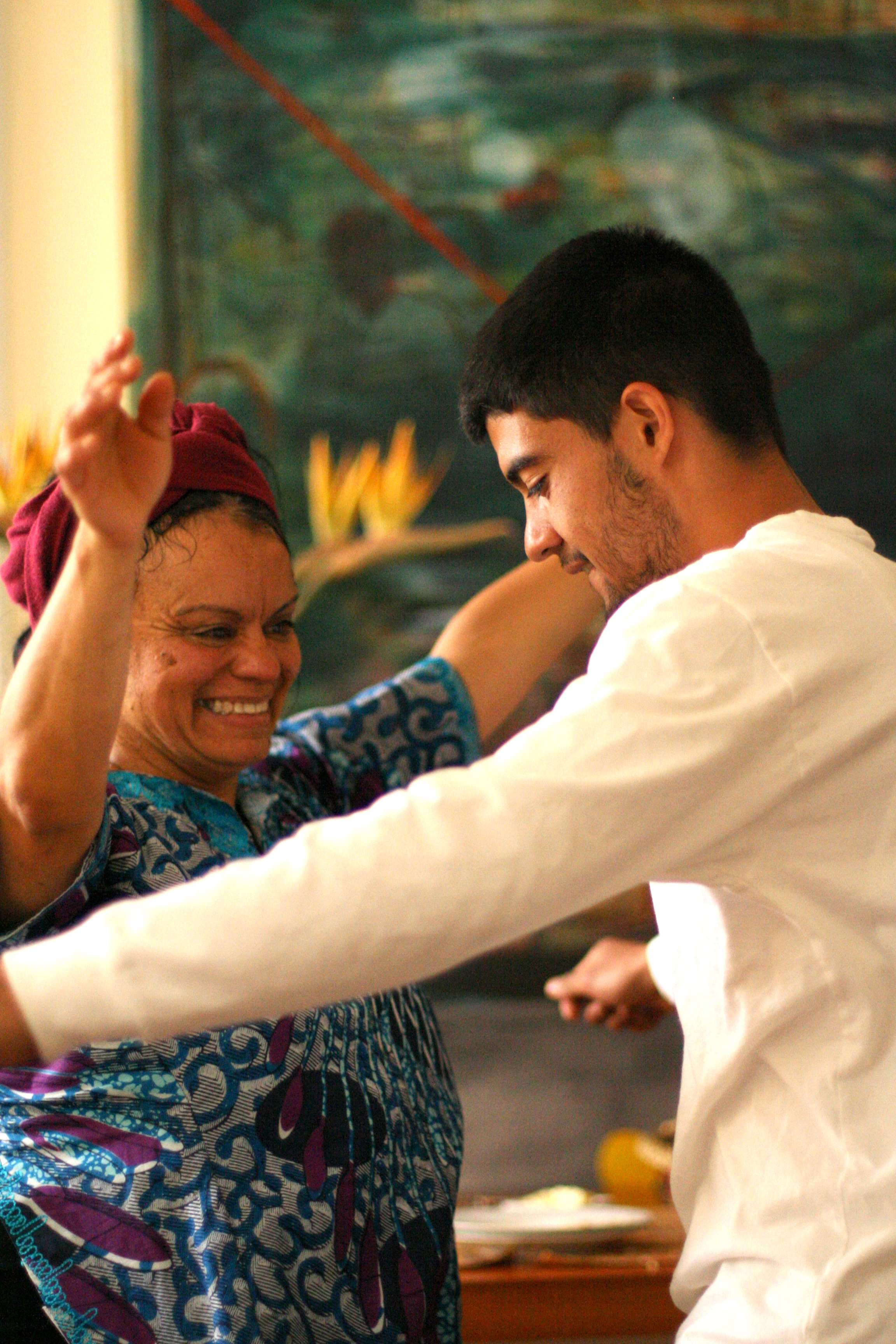
Gratitude for:
lessons on filling and eating arepas;
pan-toasted, pestle-ground cardamom
for sprinkling into cocktail glasses;
how do so many smiles
fit under one roof?
and so many curls
(and kinks)
how did these women learn to dance
and drum
(ah, before my eyes
people teach each other salsa
in the kitchen);
“are you a lesbian?” he asks shyly,
hoping for a no;
“you know she’s single,” auntie whispers;
people teach each other
new ways to move.
infaquerical: a term created by my friends Candy and Castro,* who did not identify with either monogamy or polyamory, and wanted a new framework for thinking and living their coupledom. After writing out the aspects of their relationship that matter to them, together they birthed this word.
in: indigenous
fa: familia (chosen, community, & biological)
que: queer, querida
r: revolutionary, radical
ical: magical
Since its inception, they’ve been using infaquerical as a touchstone as they navigate complexities of a nontraditional, gender-bending and anti-capitalist romance. Castro might say to Candy: querida, I really want to spend my time with you: it’s been a hard week and my instinct is to retreat with you into our little world. But since we’re in an infaquerical relationship I think it’s important for me to spend some time with my homies, rather than defaulting into monogamous isolation.
Or Candy (feminine-centered) might relish opening doors for Castro.
Or Castro (masculine-centered) might enjoy sitting on Candy’s lap in public.
As you might imagine, I instantly fell in love with this dope-as-hell word. Not only for the meanings it carries, but for the process of intention that shaped it, and the ways it might live through people’s loving thoughts and actions. Reminds me a bit of the way Ryan and I attempted to (re)define our “Open Relationship” Facebook status in the early days.
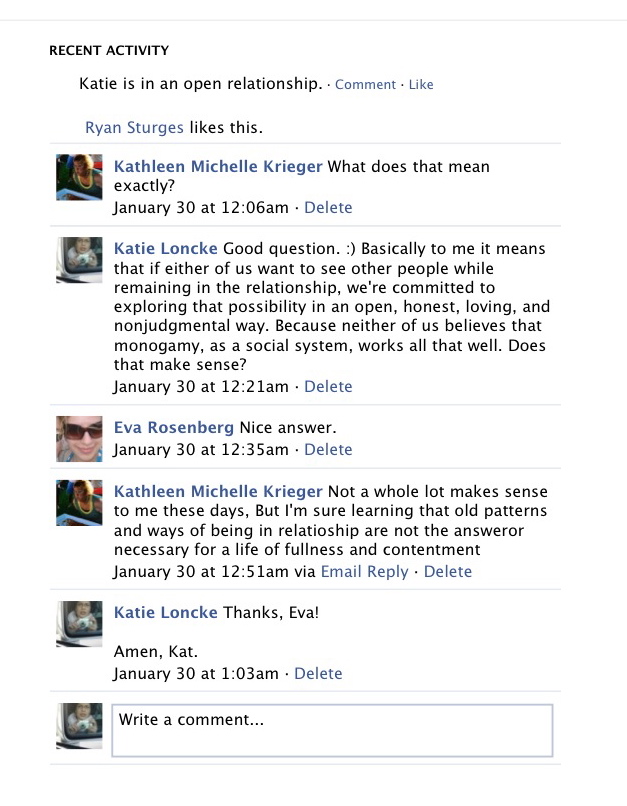
Now, over two years later, Ryan and I have decided to end our time as a couple. And I think the way we’re doing it reflects the infaquerical qualities of our time together.
When green leaves turn in the wind
I vow with all beings
to enjoy the forces that turn me
face up, face down on my stem~Robert Aitken Roshi, a senryu verse from The Dragon Who Never Sleeps
Naturally, separating from someone we love brings pain. Not tryna deny that sadness. Splitting up with Ryan means losing my best friend. But if I’ve learned anything from dharma and visionary politics, it’s that within crises — inside the instabilities: of gender, of capitalism, of heteropatriarchy, of the mind — we can also find opportunities for liberation.
With deepest gratitude to everyone who has loved and supported me and Ryan, as a couple and as independent people: you bring infaquerical to life!
love,
katie
–––––––––––––––––––––––––––––––
* Sweet corrections from Castro:
[M]y my housemate Ray, Candy and I all thought we should re-name and re-define our reality by creating an evolving framework and term that speaks to our lived experiences. So, infaquerical was a trio effort which is why it is also so wonderful because as Candy pointed out, the way we defined our reality included another person (Ray) not just the two of us.
In: Indigenous
fa: familia (chosen, community and biological)
que: querida/queer
r: radical/revolutionary
ical: magicalInfaquerical: a magical, radical, revolutionary and romantic relationship between two non-gendered conforming people; they live to restore humanity instead of living to make profit; have the desire to decolonize their mind and to abolish male supremacy; value familia (biological, chosen and communidad) and challenging male supremacist ways of thinking.
So amazing, right? Have you experienced or witnessed dynamics of infaquerical in your life? (Hehe, I know the answer is Yes because so many of y’all are dope livin-yr-politics messy queer feminist beauties) Please feel free to share testimony! I’ll be sure it makes its way back to Candy and Castro. :)
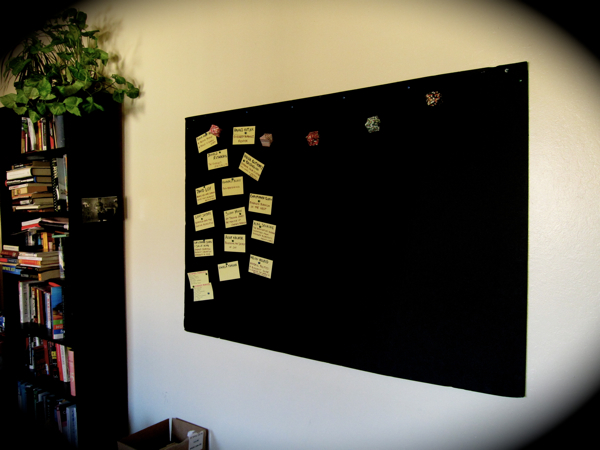
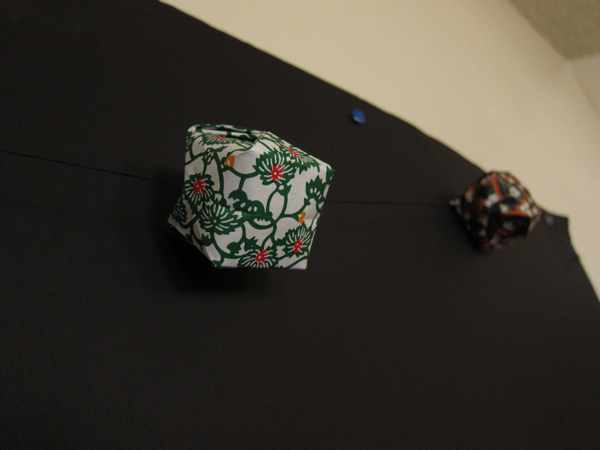
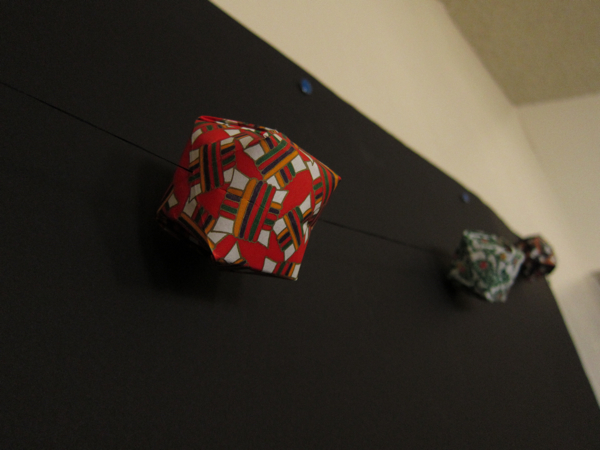
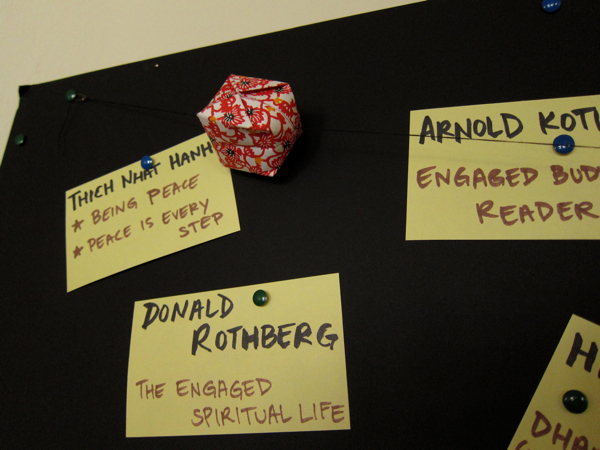
If you’re dorky like me, you might enjoy mapping ideas and authors onto foamcore, and adding origami balloons just for kicks.
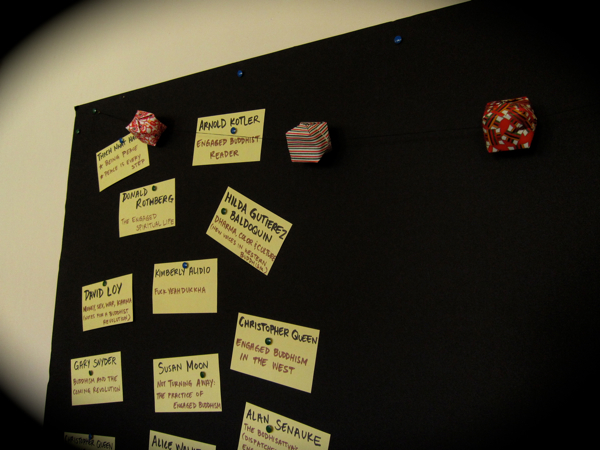
Housemate Aneeta and I just began mapping a few days ago. Spatial funtimes with Socially Engaged Buddhism for me; radical history timeline for her (starting with themes of Palestine and capitalism). Maybe soon she’ll give me permission to post some photos of her map.
At this stage, these are seedling projects. I hope to be conversing with my map for the next year or so. We’ll check back in after a little while, and you can see how it changes and grows!

Got any helpful tips about this kind of thing? I’ve never done one before. I’m on the lookout for the book Mapping the Intelligence of Artistic Work; An Explorative Guide to Making, Thinking, and Writing, recommended by two Goddard faculty. Any other resources come to mind? Or lessons from your own experience? (Sycorax, I’m looking at you. ;)
Also, I’m always on the lookout for great books, articles, videos, art, etc. about Socially Engaged Buddhism (loosely defined), so if you got ’em, send ’em my way plz!
love,
katie
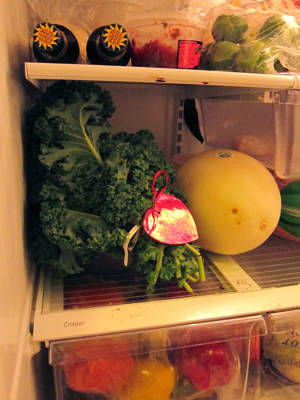
Long-time readers will immediately understand the significance of this gift from Ryan. :)
 Kloncke