Cartoon by Dave Walker. Find more cartoons you can freely re-use on your blog at We Blog Cartoons.

Oh man, I’ve been there. ;)
Have a great weekend, y’all — bloggable or not.
Cartoon by Dave Walker. Find more cartoons you can freely re-use on your blog at We Blog Cartoons.
Oh man, I’ve been there. ;)
Have a great weekend, y’all — bloggable or not.
This song — and this particular performance — has stuck in my mind for over a year now. The lyrics actually evoke, for me, a delicious physical feeling of awareness, attention, and anticipation. “People get ready/ There’s a train a-comin’.”
Plus, The Reverend’s smile is just infectious.

It’s been a lovely Wednesday. Bánh mì sandwiches and reading in Golden Gate Park with Ryan; trees and sun and tea and vegan coffee-whiskey-fudge gelato. Plus, I finished Jan Willis’ memoir, Dreaming Me (wisely re-subtitled, I think, in a later version: Black, Baptist And Buddhist — One Woman’s Spiritual Journey).
It’s well past my grandmotherly bedtime and I’m too tired to get into the autobio too much, but I will say it spoke to me, and I enjoyed it. Raised in the 1950’s in a Klan-rife Alabama town, Willis attended Cornell as one of the first waves of black Ivy League students. (She and my dad, apparently, likely rubbed shoulders during the Straight Takeover — in which an armed Black Students Association occupied the student union in the spring of ’69, protesting a local cross burning and demanding an Africana Studies department.) After graduating, she faced a soul-rattling decision between joining the Black Panther Party (the obligation, she believed, of “any thinking black person” in the U.S. at the time) or traveling to Nepal to study Buddhism. Gotta love choices like that.
One of my favorite passages:
Of course, the next day things would return to normal and I’d find myself again in a divided camp, with whites on one side and blacks on the other. This spiritual connection with all things did not erase the racism of the everyday world I inhabited.
Yup. And:
Talking with the Dalai Lama brought this truth home again. Buddhism was a process; one did not need to delude oneself or pretend to be other than oneself, and one did not have to become completely passive in order to embrace the notion of peace. Choosing peace did not mean rolling over and becoming a doormat. Pacifism did not mean passivism. Still, patience and clarity were essential.

And finally:
[Baptists] knew that misery and joy can stand side by side. Indeed, it is this very knowledge that black people call “the blues.”
…
The teachings, at least as interpreted by these African-Americans, were about overcoming suffering, about patience, strength, and the cultivation of true love. And they were delivered with compassion.
Amen.

At right is the cover of a book recently compiled by my Uncle John: a collection of the letters, writings, and photos of his godmother, Nellie Briscoe Perry. His introduction to the book names the “why’s” of the project:
This compilation of writings is my way of sharing with others a rare opportunity to 1) learn about the lifestyle of African-Americans living in the historic Shaw district of Washington, D.C., which was rich in culture and the arts in the 1940s; 2) understand how the events of the early 1940s impacted all walks of life; and 3) know the feelings and thoughts of an African-American woman as she lived through and was affected by the events of those times. Most of the contents of this book are in Nellie’s own words. So too is the title, Forever Waiting, which was a loving message she used to end many letters to her future husband, Mutt. You are invited to take this journey and hopefully find it to be an enlightening and enriching experience.
This week, Uncle John (known affectionately to me as “Tall Meat”) will be meeting with the Historical Society of Washington, D.C., which is interested in housing the letters and photos in their collection. What were once personal articles will now become public pieces of shared history.
I haven’t had a chance to read the book yet, and nonetheless it’s been heavy on my mind the last few days. Mainly, I wonder: what if Nellie’s documentation and communication didn’t take the form of old letters, but a modern blog? Would their social value and interest change? Diminish? In general, when do we treasure personal communications, diaries, and scrapbooks, and when do we dismiss them as trivia or junk? What makes the difference?


Some of you may know about my unbridled affection for clouds.
Behold: a new favorite website. My Valentine’s Day gift to you.
Have a great weekend, friends! See you Monday.
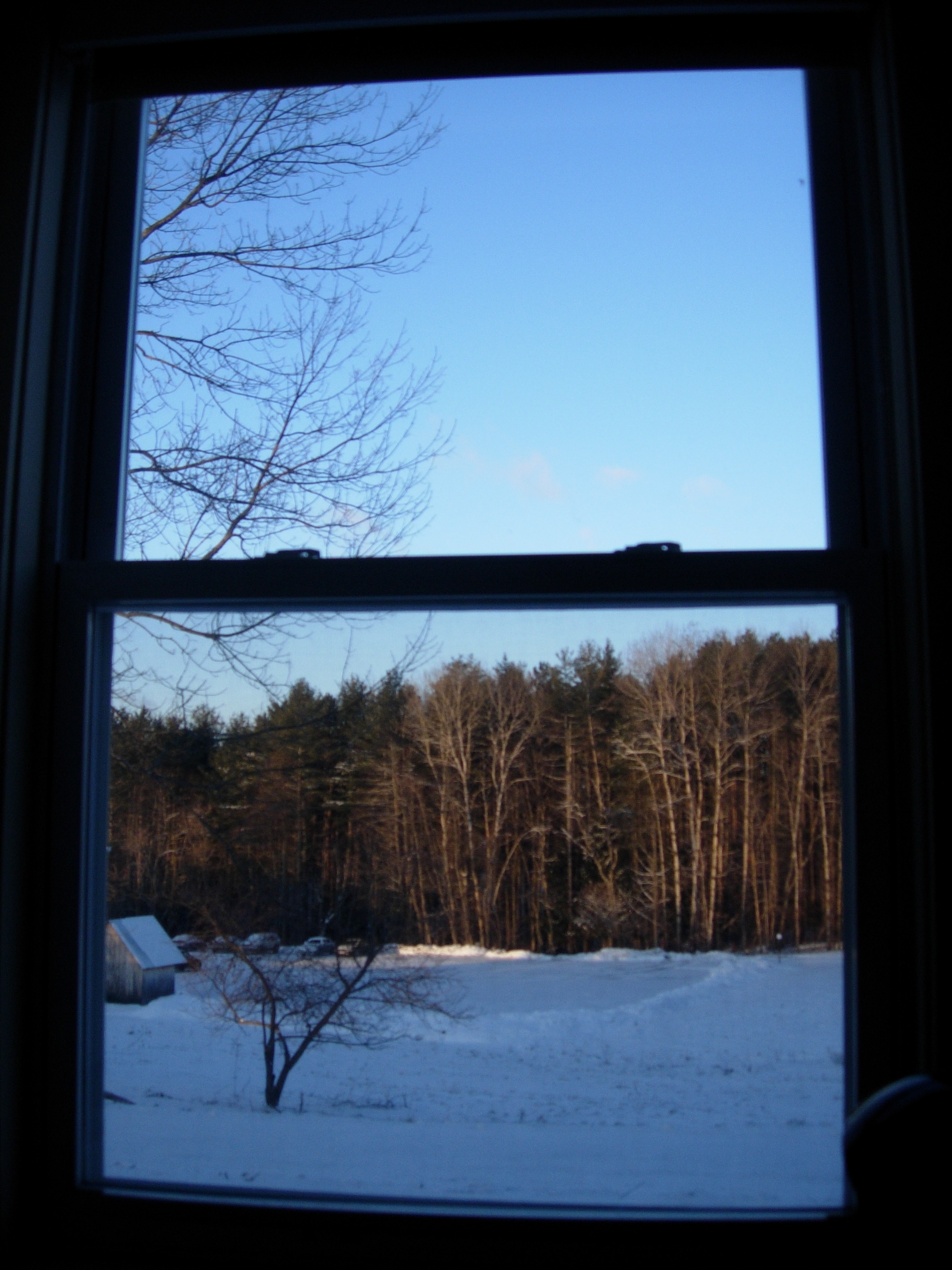
It’s my first day at Goddard in the MFA program for Interdisciplinary Arts, and I have never in my life felt this excited to start school.
The Vermont residency is breathtaking this morning, after a big snowstorm yesterday.
And here we go. Wish me luck!
This poem gave me strength today.
—–
—–
—–
Ame ni mo Makezu
by Kenji Miyazawa
Japanese
—–
雨ニモマケズ
風ニモマケズ
雪ニモ夏ノ暑サニモマケヌ
丈夫ナカラダヲモチ
慾ハナク
決シテ瞋ラズ
イツモシヅカニワラッテイル
一日ニ玄米四合ト
味噌ト少シノ野菜ヲタベ
アラユルコトヲ
ジブンヲカンジョウニ入レズニ
ヨクミキキシワカリ
ソシテワスレズ
野原ノ松ノ林ノ蔭ノ
小サナ萱ブキノ小屋ニイテ
東ニ病気ノ子供アレバ
行ツテ看病シテヤリ
西ニツカレタ母アレバ
行ツテソノ稲ノ束ヲ負ヒ
南ニ死ニソウナ人アレバ
行ツテコワガラナクテモイイトイイ
北ニケンカヤソショウガアレバ
ツマラナイカラヤメロトイイ
ヒデリノトキハナミダヲナガシ
サムサノナツハオロオロアルキ
ミンナニデクノボウトヨバレ
ホメラレモセズ
クニモサレズ
ソウイウモノニ
ワタシハナリタイ——-
——-
Transliteration
——-
ame ni mo makezu
kaze ni mo makezu
yuki ni mo natsu no atsusa ni mo makenu
jōbu na karada wo mochi
yoku wa naku
kesshite ikarazu
itsu mo shizuka ni waratte iru
ichi nichi ni genmai yon gō to
miso to sukoshi no yasai wo tabe
arayuru koto wo
jibun wo kanjō ni irezu ni
yoku mikiki shi wakari
soshite wasurezu
nohara no matsu no hayashi no kage no
chiisa na kayabuki no koya ni ite
higashi ni byōki no kodomo areba
itte kanbyō shite yari
nishi ni tsukareta haha areba
itte sono ine no taba wo oi
minami ni shinisō na hito areba
itte kowagaranakute mo ii to ii
kita ni kenka ya soshō ga areba
tsumaranai kara yamero to ii
hideri no toki wa namida wo nagashi
samusa no natsu wa oro-oro aruki
minna ni deku-no-bō to yobare
homerare mo sezu
ku ni mo sarezu
sō iu mono ni
watashi wa naritai—–
—–
Translation
—–
not losing to the rain
not losing to the wind
not losing to the snow or to the heat of the summer
with a strong body
unfettered by desire
never losing temper
cultivating a quiet joy
every day four bowls of brown rice
miso and some vegetables to eat
in everything
count yourself last and put others before you
watching and listening, and understanding
and never forgetting
in the shade of the woods of the pines of the fields
being in a little thatched hut
if there is a sick child to the east
going and nursing over them
if there is a tired mother to the west
going and shouldering her sheaf of rice
if there is someone near death to the south
going and saying there’s no need to be afraid
if there is a quarrel or a suit to the north
telling them to leave off with such waste
when there’s drought, shedding tears of sympathy
when the summer’s cold, walk in concern and empathy
called a blockhead by everyone
without being praised
without being blamed
such a person
I want to become—–
—–
—–
(ps: I’m not tryin to front — I can’t read Japanese characters or transliterations. Just including them for those of you who can. :) )
Been doin a lot of reading, reflecting, and relaxing the last few days. I’ll try to share some thoughts once I get them better-formulated: on “resistance” as understood in politics and dharma; on greed and its tricky disguises; on a radical interpretation of the “no stealing” precept in Buddhist ethics; maybe even on sex and sexuality, since I haven’t talked about it hardly at all this entire year.
But today I’m more into reading and listening than writing, so here are a couple more lovely songs, from one of my favorite guitarists.
I saw Lionel Loueke (born in Benin) with a friend in New York in the fall of 2006, in a tiny hallway of a venue. On top of falling for his music, I remember my delighted amazement when, midway through the performance (with his group at the time, Gilfema), he called spontaneously to a woman sitting in the row ahead of us, and she just stepped up on stage and started singing brilliantly along with the ensemble. Just like that — from listener to performer. It’s so easy to get mesmerized by the person onstage and forget that we might be sitting in an audience of musical geniuses.
Well, it was gonna be a Monday Musiq Video, but my favorite version of “Just Friends (Sunny)” (to which Ryan recently reintroduced me) got nixed from YouTube. What can you do.
So here, instead, something that’s been in heavy rotation on my laptop lately. I wish I could upload the version from my own library (slightly gentler, more a cappella, with only the lightest touch of instrumentals — just breathtaking), but it’s “protected” and alla’ dat nonsense. Anyway, this one’s gorgeous, too.
Here’s wishing you some of that slow Sunday luminosity.
Jay Smooth gets it right on. Now this is real metta (lovingkindness). As Sharon Salzberg says,
The practice of lovingkindness is, at a certain level, the fruition of all we work toward in our meditation. It relies on our ability to open continuously to the truth of our actual experience, not cutting off the painful parts, and not trying to pretend things are other than they are.
Unrelenting pressure to be positive is not real love or kindness, even if it’s coming from good intentions. It’s only when we let go of expectations for joy or peace that real, honest listening and caring can occur.
Take care, y’all, and I’ll see you Monday.
– – –
love,
katie
 Kloncke