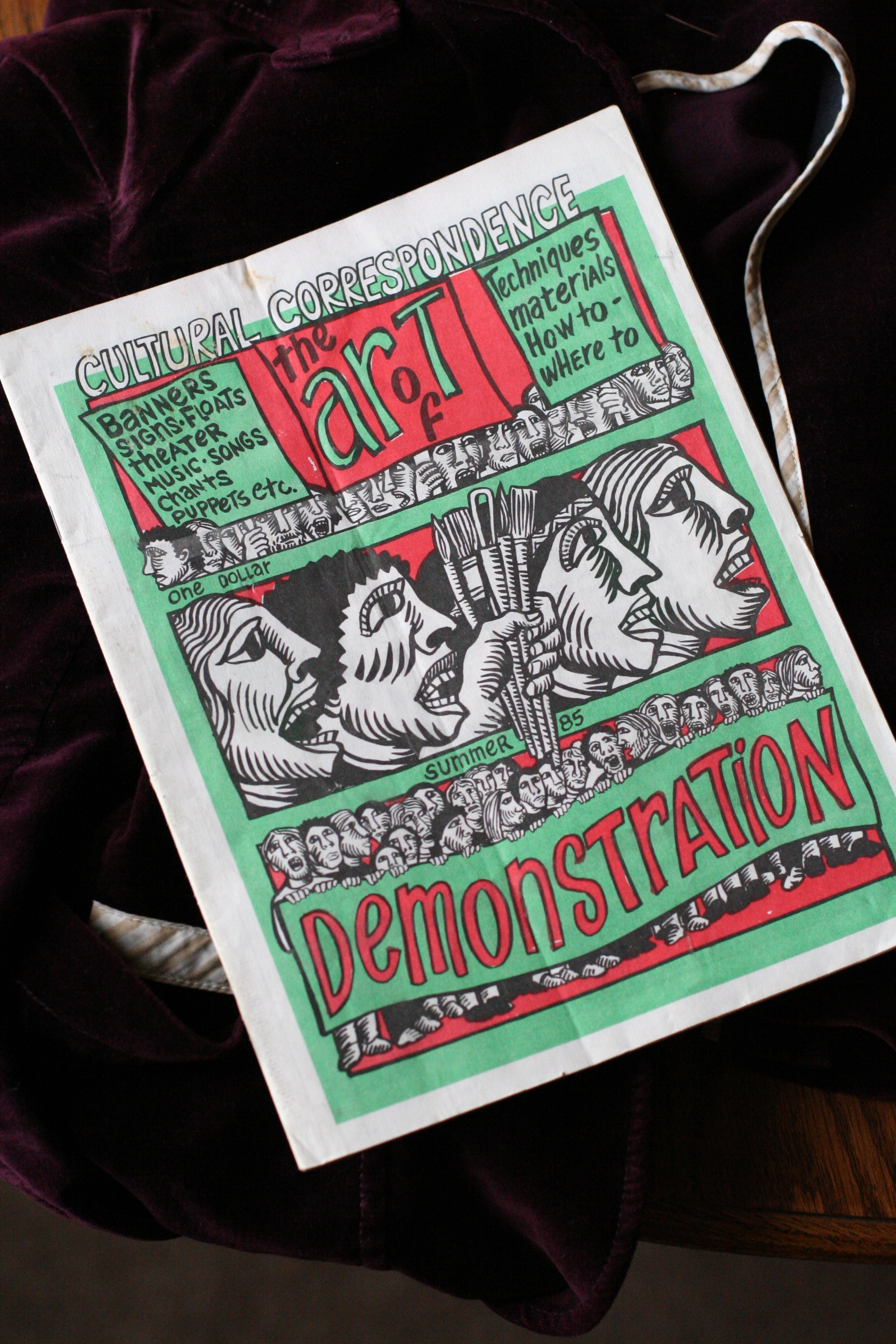
Final zine, y'all! This one arrived to me in the mail as a gift (among many!), along with the usual scholarly correspondence, from my amazingly heartful, talented, and fly poet / professor / academic advisor / friend, Gale P. Jackson.
I love it because
Its content is both instructive and creative, showing “Techniques, materials, How to / Where to [of] Banners, Signs, Floats, theater, Music, songs, chants, puppets, etc.”
It was published in 1985, making it one year older than me
The illustrations and layout are incredible
Some content is time-specific and local, making it political propaganda as well as a DIY manual.
I’ll try to let this one speak for itself. With deep gratitude and appreciation to Gale! Hopefully some of the specific contents will infuse themselves into my organizing, and be reflected there.
What, you thought Zine Week would adhere to linear time?
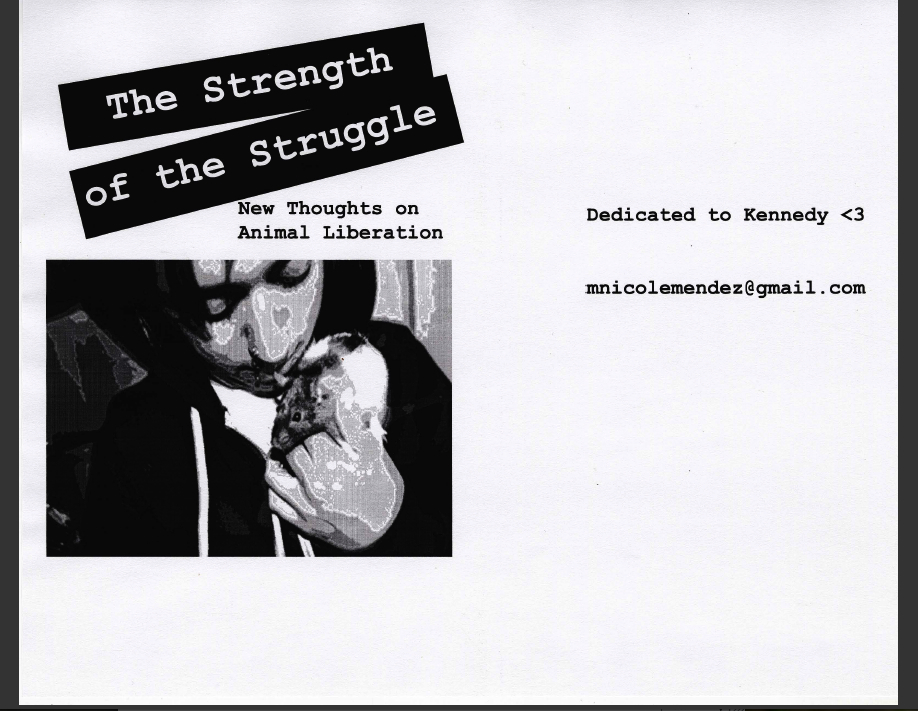
Just kidding; sorry for the lapse! Today’s zine, from a member of Austin-based group ¡ella pelea!, is especially exciting for its application of class consciousness theory from Advance the Struggle’s Oscar Grant pamphlet (featured on Zine Week Day 2) to the Animal Rights Movement (ARM) in the U.S.
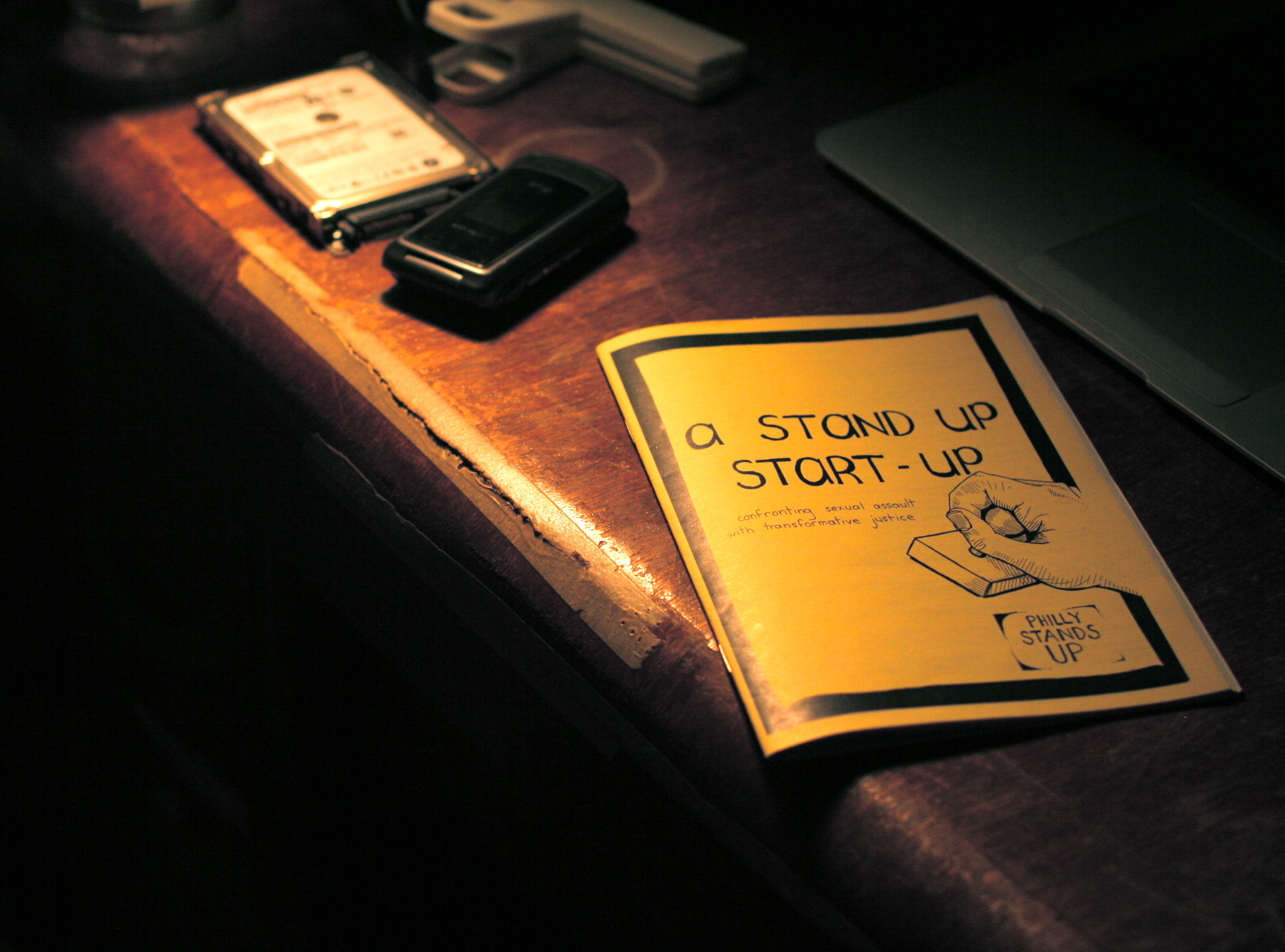
Last month I talked a little bit about transformative justice and the dope workshop that folks from the Philly Stands UP collective offered here in Oakland. This zine is one I picked up at that workshop: kind of like a primer for the PSU model.
There’s a lot I like about this zine. Its unpretentious candor. The ways it contextualizes itself, pointing to overlapping work that others are doing. (The final chapter is an excerpt from Color of Violence: the INCITE! Anthology.) The way it foregrounds survivor support in its Points of Unity:
We are a group that survivors can come to for help and support. We will always support survivors and ensure survivor autonomy, where they will always be in control of how a situation is dealt with.
. . .
We do not support the prison system as a viable means of rehabilitation for perpetrators, but we will always support a survivor’s wishes and engage the legal system on any level necessary.
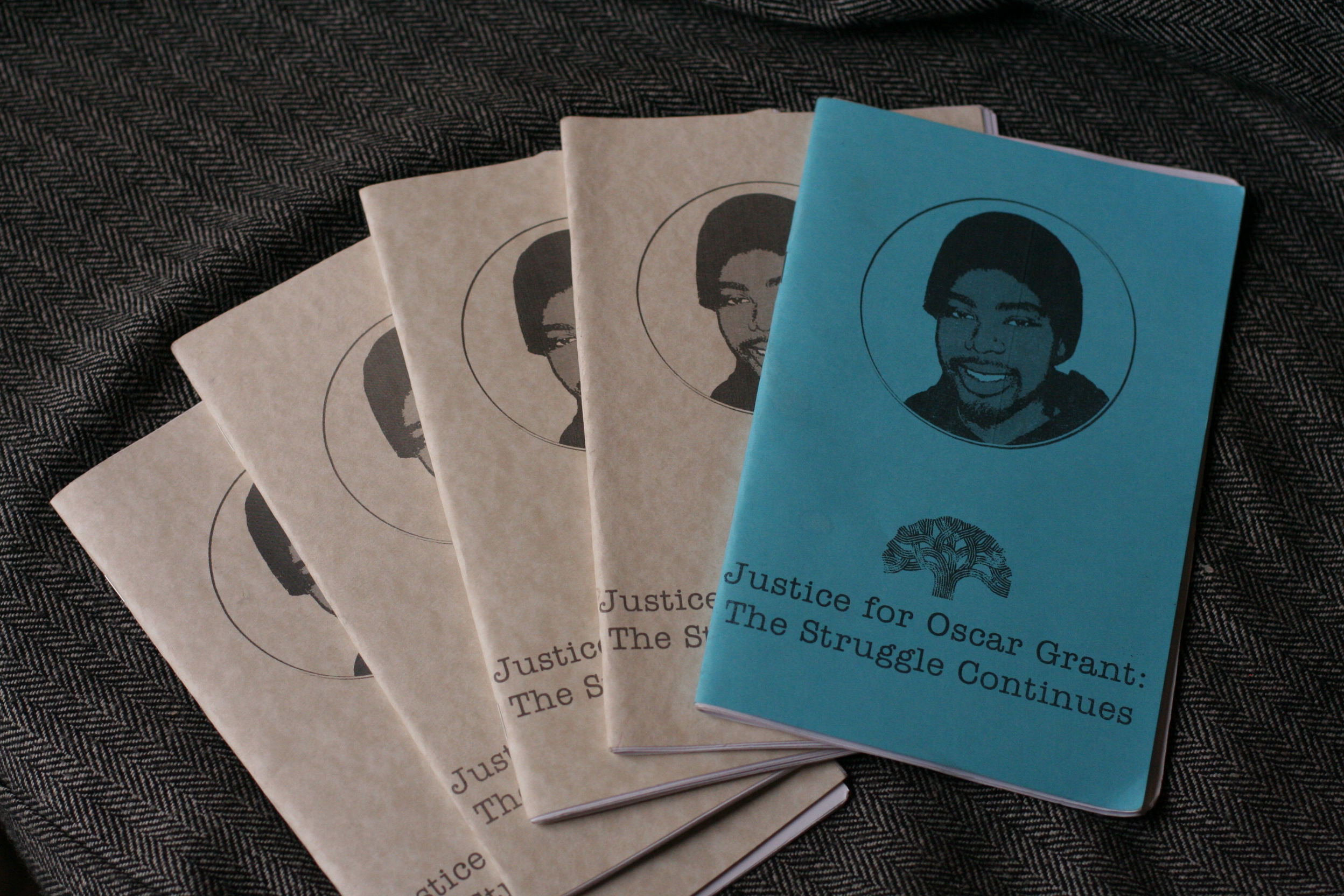
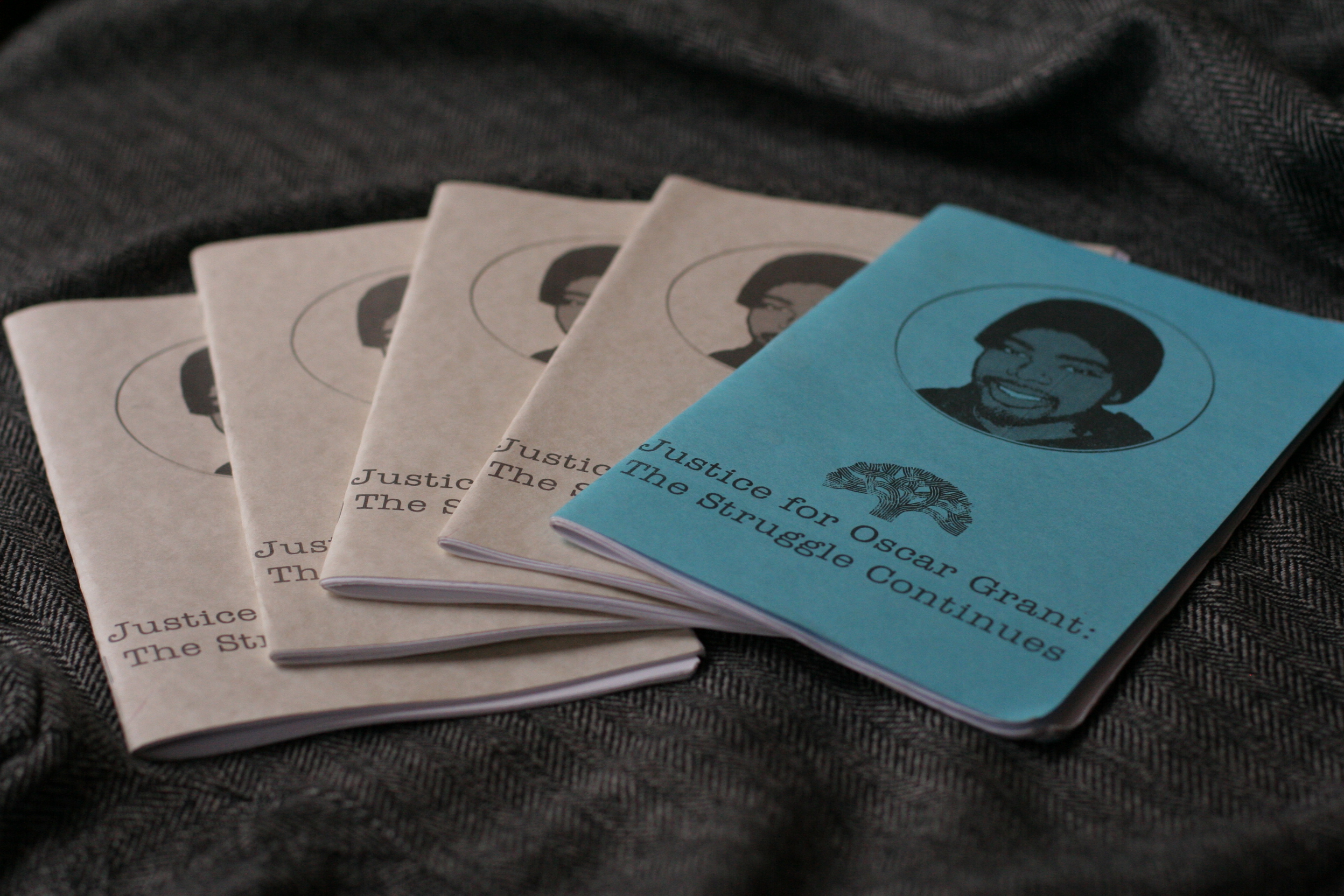
Sorry for the late post again! Today’s zine is already a Bay Area radical classic, examining the politics around the recent wave of struggle following a caught-on-tape police murder. A white cop shot a young Black Oakland resident in the back, while the young man was lying face-down on a subway platform. (This officer, by the way, may be released from prison next month, having served less than a year of his 2-year sentence.)
Published in its original version back in mid-July of 2009, the new updated edition contains the same dope analysis of the role of nonprofits, histories of rioting, racist policing and more, plus a new preface, more art, and a supplementary article: “Moving Beyond Violence vs. Nonviolence.”
In my forthcoming guest column in make / shift magazine, I draw on A/S’s analysis of the Oscar Grant movement to illustrate my own alternatives to liberal, relativist interpretations of Buddhist teachings. You’ll have to wait til the magazine comes out to read my application of their deft explications, but in the meantime why not throw down a few dollars for a copy (just click the Donate button on the Advance the Struggle blog) and print the primary source material yourself? :)
Ink drought in your printer? No worries; you can read the web version, too. Still donate, though!
I’m not really sure why it took me so long to get into zines. Even now I’m not particularly ‘into’ them, to tell the truth — which is strange, considering that I love handmade objects, and I obviously love informal self-publishing. True zine-ophiles (ha! xenophiles!) might cringe at overly broad definitions of the form, but to a layperson like me, the essence of zines seems to be (a) self-manufacture and (b) text and images. Why wouldn’t a blog count? (Unless, of course, you’re a stickler about the handmade-object thing, which, really, I wouldn’t blame you, because as I said, I have a crush on handmade objects.)
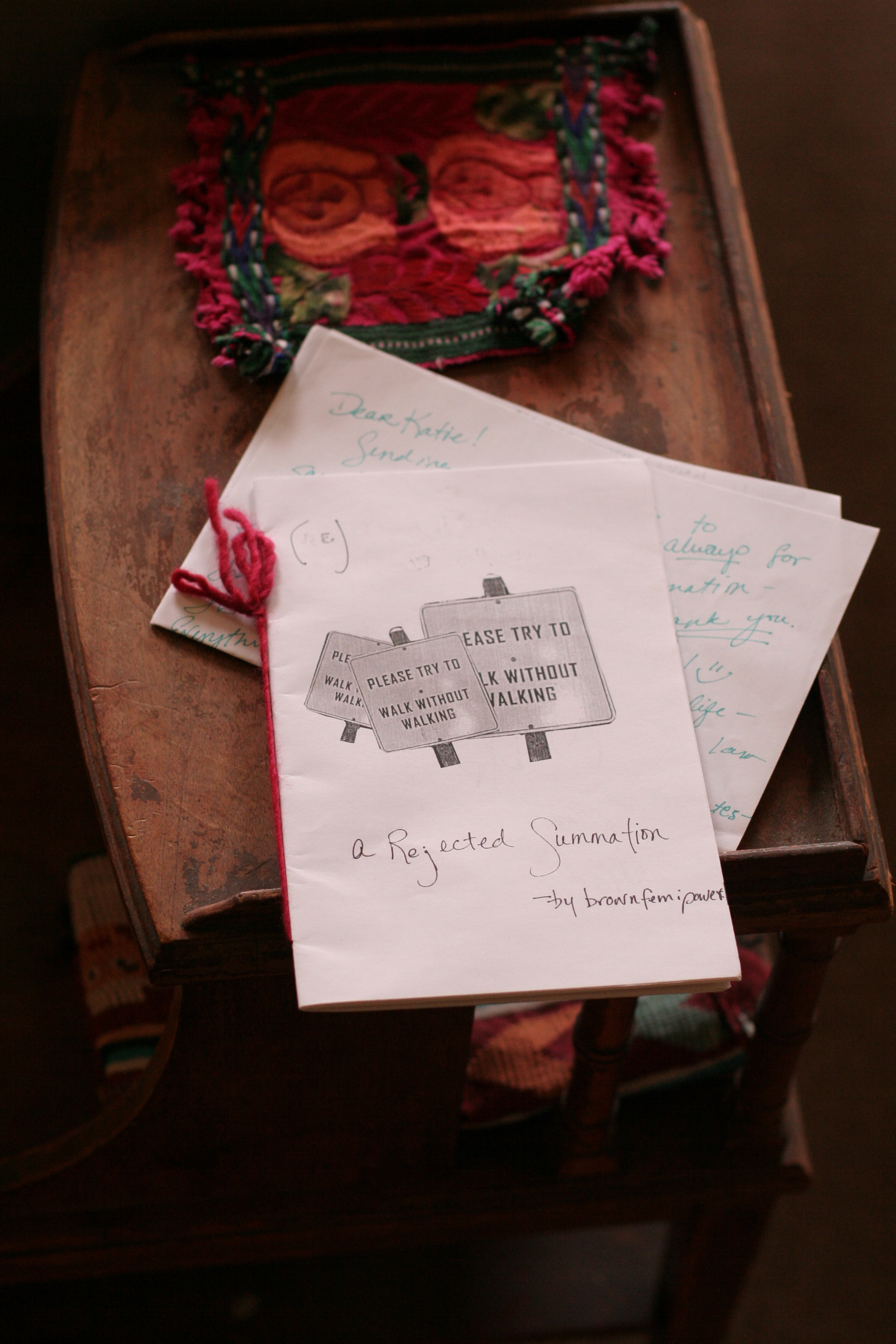
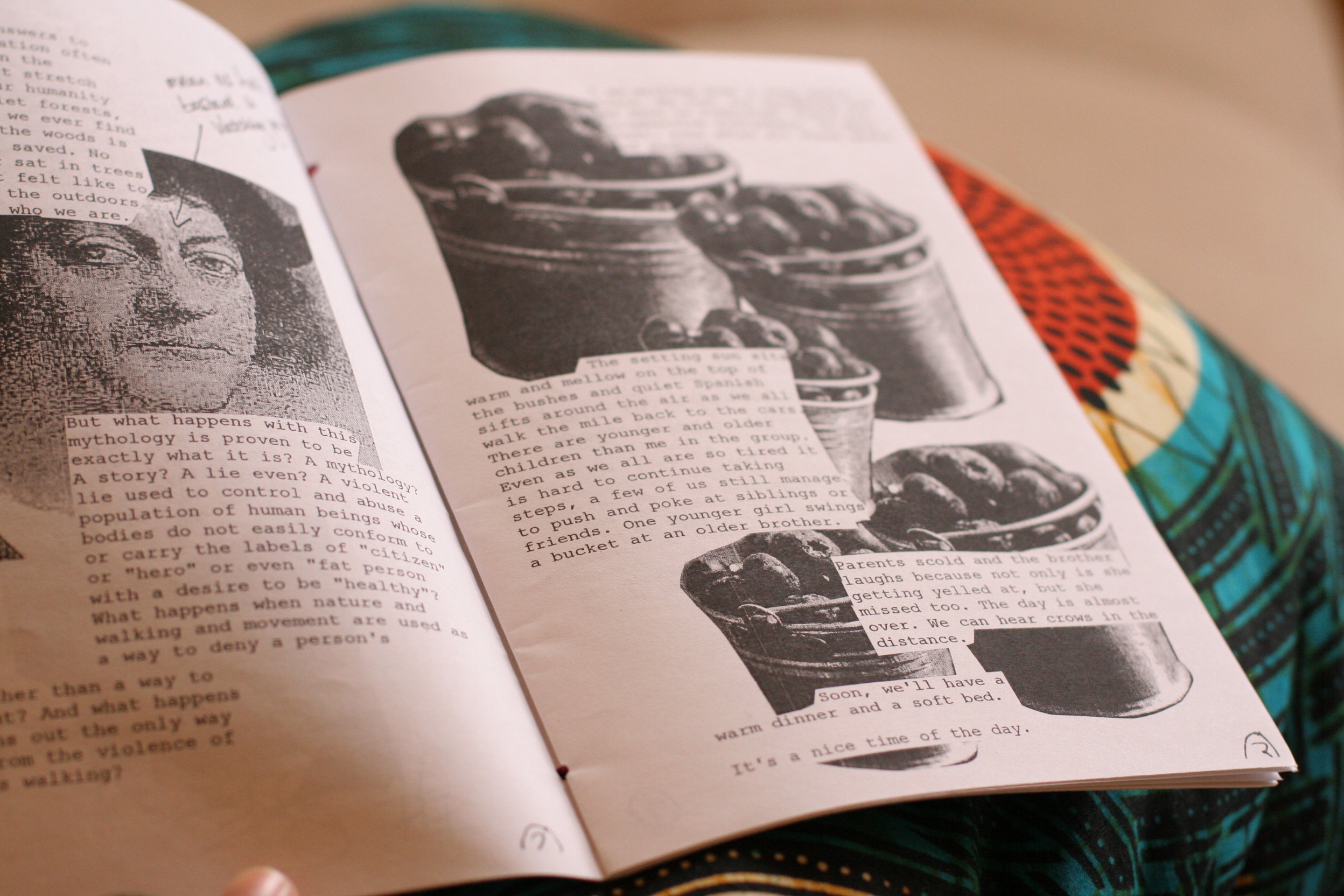
Today’s zine captured my heart immediately, not only because it was made by one of my all-time favorite bloggers / writers, who goes by brownfemipower (or bfp for short), but also because it arrived at my home in the mail as a gift, all the way from Ypsilanti, Michigan, accompanied by a beautiful note in sky-blue ink.
Loving the first reading from a new Socially Engaged Buddhist study group that’s getting started this month: chapter 11 of Nalin Swaris’ book The Buddha’s Way To Human Liberation: A socio-historical approach. Swaris argues that karma is not properly understood (either in terms of actual functioning, or in terms of how the historical Buddha explained it) as an individual inheritance of bad or good deeds committed in past lives that determines one’s social station in this birth. Such commonplace/hegemonic conservative interpretations are basically ruling-class ideology, serving to legitimize the group(s) in power. “You were born a brahmin/king/rich light-skinned dude? You must’ve accumulated lots of merit in past lives. You were born ugly/a woman/poor/Black? You must’ve done some bad shit in a past life.”
Instead, Swaris defines karma as the inherited social and material conditions fashioned by previous generations of humans as a group, which then delimit but do not determine individual and collective actions in the present. Essentially, he locates Marxist historical materialism and dialectics within the original teachings of the Buddha. Dope! And kind of hilarious, in a makes-me-giddy-but-I-take-it-seriously sort of way.
Human Agency – A Species Potential
To understand what is meant by the ‘species nature’ of humans, one must turn to Karl Marx who introduced the concept. This recourse to Marx may seem like an attempt to read into the Buddha’s teaching on interpretation of kamma which has no basis in the canonical scriptures. I ask the reader to bear with me, follow the theoretical clarification and see its relevance to understand the Buddha’s extraordinary elucidations of human nature and human agency.
Check the latest at the EastBaySol blog — we had a fun, spirited picket that brought together militant workers from domestics to teachers to students to hotel and warehouse workers. I don’t have a photo of the flyer we used but I’ll try to get one and add it soon.
PICKETING AOII
This slideshow requires JavaScript.
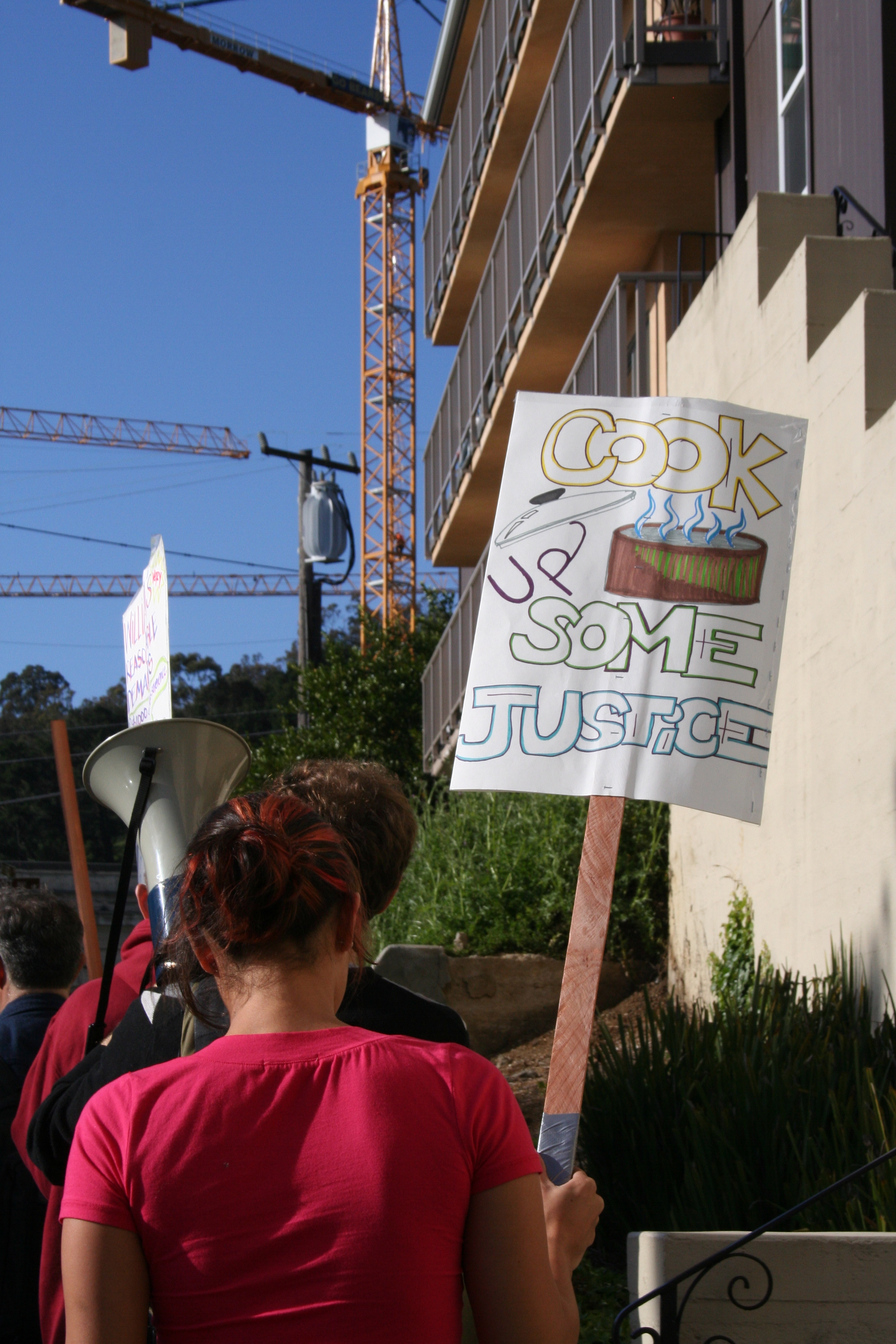
Monday afternoon Bay Sol East kept up the fight in solidarity with former sorority “houseboy” William over in Berkeley, staging an informational picket at Alpha Omicron Pi’s weekly meeting. With handmade signs, a bullhorn, and half-sheet flyers for the sorority sisters, our group of a dozen or so created quite a spectacle on the quiet hillside street. Chants called for “Justice For Domestic Workers!” and urged AO∏ to “Exceed the Expectation” (their motto) and “Cease the Exploitation!”
To cap off the action, we collectively delivered a petition signed by 82 neighbors who support our fight. We’re grateful to local student co-ops for their enthusiasm!
In an extra-special demonstration of solidarity, we were joined on the line by a leader from the ongoing boycott at the Hotel Frank in San Francisco, as well as two visiting members of ¡Ella Pelea!, an Austin-based organization of “students and community members, both queer and straight, multi-gendered and multi-racial” who are fighting for democratic control over the University of Texas Austin. All told, our group included warehouse workers, teachers, students, hotel workers, grocery workers, mothers, writers, and more — demonstrating the diversity of labor that’s possible with a solidarity network model.
If you didn’t get an email or phone call about this action and wanted to receive one, our bad! We’re working hard to get our phone tree to reliably bear fruit. Feel free to send us a strongly worded email demanding that we hit you up next time.
Sorry for the late post again — feeling pretty drained, with a lot of heavy stuff coming up this week. But! I am buoyed, so soulfully buoyed, by my mama, my partner, my peeps in organizing from the Bay to Seattle, friends near and far, the Oakland sunlight, the air, and troves of loving, radical praxis that I’m discovering, really trying on, for the first time.
The primary situation I’ve been directly engaging today is delicate and requires confidentiality. So instead of talking about my own ish, I just want to point to a resource that’s been a true blessing for me: the transformative justice (TJ) work of Philly Stands Up! (PSU), a volunteer collective in West Philadelphia.
What is TJ? From their web site, here’s PSU’s explanation:
Transformative Justice has no one definition. It is a way of practicing alternative justice which acknowledges individual experiences and identities and works to actively resist the state’s criminal injustice system.
Transformative Justice recognizes that oppression is at the root of all forms of harm, abuse and assault. As a practice it therefore aims to address and confront those oppressions on all levels and treats this concept as an integral part to accountability and healing. Generation FIVE does a great job of laying out the main goals, principles and questions of Transformative Justice. These are their words:
The goals of Transformative Justice are:
Safety, healing, and agency for survivors
Accountability and transformation for people who harm
Community action, healing, and accountability
Transformation of the social conditions that perpetuate violence – systems of oppression and exploitation, domination, and state violence
The principles of a Transformative Justice approach to addressing all forms of violence include:
Liberation
Shifting power
Accountability
Safety
Collective Action
Respect Cultural Difference/ Guard against Cultural Relativism
Sustainability
Transformative Justice invites us to ask:
How do we build our personal and collective capacity to respond to trauma and support accountability in a transformational way?
How do we shift power towards collective liberation?
How do we build effective and sustainable movements that are grounded in resilience and life-affirming power?
PSU, Generation FIVE, INCITE! Women of Color Against Violence, and other like-minded TJ groups are helping to co-construct, through community, some of the most exciting, uplifting, and inspiring praxical contributions to “collective liberation” that I have seen in a long time.
“Liberation” is a big, important, but tough-to-pin-down word for this blog, and it may not mean the same thing in dhammic/Buddhist and radical political/power contexts. Liberation from suffering in samsara requires different strategies and approaches (8-Fold Path as Buddha’s “program”? :) than liberation from capitalist imperialist heteropatriarchy. And yet, to my mind, especially in the realm of sila (morality, or basically how to live a “good” and wholesome life), there is room for tremendous, tremendous overlap.
Thanks to a workshop and texts from PSU and AORTA (Anti-Oppression Resource and Training Alliance), this afternoon I sensed some possibilities for synthesis between these two paths. A meticulous practice of compassion recommended by an erstwhile Indian prince over 2500 years ago, and a working model for confronting intimate violence — forged from the crucibles of so many struggles against racist heteropatriarchy, the State, and their interwoven, often co-morphous manifestations.
Buddhist suttas warn practitioners against heavy-handedness in concentration training (the focus should neither be too loose, nor too tight), and meditation teachers urge us over and over to be “firm yet gentle” with our chattering monkey minds, gradually teaching ourselves to rest our attention on the meditation object (in my tradition, that’s usually the breath). Is this mere people-pleasing packaging? Some sort of dogmatic or (what is probably the same thing) careless Middle Way-ism? No. The firm-yet-gentle combo doesn’t just sound nice and “balanced” — it points to an actually hospitable environment for difficult intentional transformation. Too gentle, and we get lazy, restless, defensive, or shut-down. Too firm, and we become dogmatic, dulled, judgmental, tightly-wound, and generally prone to missing the whole “compassion” boat, or burning out altogether.
Similar principles, it seems to me, apply to TJ work. If our goal is to foster transformation, we need to be firm yet gentle — not too loose, and not too tight. This is a radical departure from the punitive model of justice on which the US legal system is based (and irregularly, prejudicially, oppressively applied). It invites us, as the above definition says, to “respond” to trauma, not react. Rather than “cracking down” on people who commit violent behaviors, we stop excusing, minimizing, and supporting those behaviors. We work instead to “water the good seeds” (as Thich Nhat Hanh says of inclinations in the mind) of meaningful accountability (in other words, a process with real milestones, material structure, boundaries, consequences, goals, etc.) and support.
Is this all making sense? So very new and tender shoots, these are. I’m no urban gardener but I’m trying the best I can.
Check out the zine by Philly Stands Up!, “A Stand Up Start Up.” Let me know what you think.
take care, friends,
katie
———————————————————— Update: For a great list of oppression-denying and -compounding behaviors (“excusing, minimizing, and supporting”), I’ve added a link to a post by NellaLou on “Sex and the Sangha,” looking in part at the various types of responses to the recent exposure of some Zen teachers’ sexual misconduct with their students. It’s a really wonderful resource for naming the harmful and frustrating apologistic dynamics that often accompany the outing of intimate abuse, and NellaLou also points toward restorative justice as an alternative model. Thanks, NellaLou!
[Update 2:30pm: Just wanna say I love posting about this just as this year’s Safety Fest is getting underway! Safety Fest is an annual weekend of events organized by Communities United Against Violence (CUAV), supported this year by Critical Resistance, on the theme of queer and trans power, anti-violence at the intimate, community, and state levels, and abolition of the prison-industrial complex (PIC). Awesome!]
For the 10th anniversary issue of Left Turn Magazine, anti-imperialist organizer Clare Bayard offers a wonderful look at “demilitarization as rehumanization” work in the US. Her examples are varied and informative, from youth-of-color-led anti-recruitment efforts in Bay-PEACE Oakland, to community-based transformative justice approaches to intimate violence, to indigenous people’s and immigrants’ movements to stop US imperialism at home and abroad. Her primary example, relating to work she herself has been doing with US Iraq Veterans Against the War (IVAW), highlights a thought-provoking and politically visionary approach to war resistor organizing. It’s called Operation Recovery: Stop the Deployment of Traumatized Troops (OpRec).
The underlying strategy is IVAW’s basic model: organizing GIs to withdraw their consent from wars. Its success in stopping deployment of troops with severe trauma would incapacitate the occupations of Afghanistan and Iraq by knocking out 20 to 50 percent of the fighting force. It’s a dilemma campaign. If we win, the wars are hamstrung. Or, if the military continues deploying wounded troops, this visible criminal negligence will hurt their legitimacy and ability to keep recruiting. Either way, we also improve our capacity to provide our own community-based care, which is needed far beyond just the veterans’ community. An element of the campaign is developing survival programs, inspired by the Black Panthers, to address the needs of people whose ability to resist their command often depends on access to support.
Operation Recovery exposes the silenced crises of Military Sexual Trauma (MST), Traumatic Brain Injury (TBI), and Post-Traumatic Stress Disorder (PTSD). IVAW, partnered with the Civilian-Soldier Alliance, has a strategy to win on multiple fronts. Demanding the right to heal is a point of leverage to challenge the institution, as well as a survival need within this community. OpRec has begun targeting base commanders who have the power to make immediate decisions preventing deployments. Here, even “damage control” means fewer lives destroyed.
Amplifying the voices of traumatized troops deepens awareness of the scope of disaster in these wars. After last fall’s media exposure of Afghanistan “kill teams,” IVAW member Ethan McCord responded, “You’re taking soldiers who are on psychotropic drugs for PTSD or TBI, and you’re putting a weapon in their hand and sending them right back to where they were traumatized and telling them to go kill Afghans. What did you think was going to happen when you place these soldiers in that same situation?”
The dual strategy of withdrawing worker power from the war machine while simultaneously building alternative structures for healing and recovery that do not depend on the state represents, to me, a beautiful synthesis of peace work and anti-imperialism. Not a superficial synthesis as in a combination of two stereotypically gendered approaches (macho “war resistors” and feminine “healing”), but the real, dialectical synthesis represented in one of the mottos of UBUNTU, a women-of-color and survivor -led community network against sexual violence in Durham, North Carolina:
To resist, we must heal; to heal, we must resist.
In her chapter of The Revolution Will Not Be Funded, Paula X. Rojas advocates the same kind of approach, modeled in many of the people’s struggles in Central and South America: using politicized horizontal organizations that meet community needs as a leverage point against militarized state power. The politically-infused practice of building people’s power to form their own schools, justice systems, food supplies, squatter organizations, and so on, articulates base building not in terms of recruiting people out of their homes into some new hierarchical organization or corps, but “thinking beyond the state, and even beyond an alternative vision of current institutions, by politicizing every aspect of everyday life and alternative forms of dealing with them.” (202) We can see how this resonates with Bayard’s articulation of using OpRec to “improve our capacity to provide our own community-based care” for traumatized veterans, as well as act as a “point of leverage to challenge the institution.”
Having heard so much hype about using Buddhist meditation practices for healing, it’s so refreshing to encounter this articulation of wellness that names the elephant in the room: ambient institutional violence in a militarized, imperialist culture. Not everyone is impacted in the same ways, or to the same degrees, and yet we are all responsible for transforming this reality. As Clare says, “Affirming everyone’s humanity and centering the importance of healing capsizes the logic of militarism.”
In these terms, healing is not an “escape” from worldly troubles, just as meditation is not an exercise in stopping pesky thoughts from arising. Rather than chase after some imaginary permanent spa day, a life in the realm of the gods that is also ultimately impermanent, we turn toward suffering and confront militarization as one of the the primary mechanisms for the maintenance of class society. Not only in manifestations of, as Lenin called them, “special bodies of armed men,” but also in the patriarchal, hierarchical, and punitive tendencies — subtle and overt — that we each bring to our organizing collectives.
One last dimension I love about Bayard’s piece, that I think is relevant to the “Socially Engaged Buddhism” discourse, is the focus on GI leadership. Often, it seems to me, in progressive Buddhist thinking, we see strains of liberal logic of “empowerment” or “responsibility” manifesting as a kind of self-centeredness. For example, my friend Maia over at the Jizo Chronicles recently resolved to face her own “hypocrisy” as someone who is against US wars but also pays taxes that support them. Now, I know that Maia wasn’t trying to propose some sort of program for ending the wars — it was more of an exercise in self examination and transformation — but I hear this angle echoed a lot in white liberal anti-war circles. As I understand it, this line of thinking looks at the ways in which we are each individually accountable, through our own actions, and seeks to use our individual power to change our behaviors. Kind of an aggregate approach — if enough people follow suit, there will be a big shift. I respect and admire some of the ideas there, but on strategic grounds I disagree with centering them. What does it mean that such war resistance efforts can happen totally divorced from relationships with GIs? Clare touches on this problem in her discussion of the challenges of veteran organizing, describing not only separation but “friction between GI resistance and majority white and class-privileged peace movements,” also exacerbated by “the carefully designed race and class makeup of the military.”
Now, I hear a lot of emphasis placed on war spending (read: electoral politics) and weapons manufacture as points of intervention for peace/anti-war work, but that doesn’t mean that other organizing tacts don’t exist in Buddhist circles that I don’t know about! Anyone have a lead on veteran-led anti-war work supported by organized Buddhists?
In the meantime, please give Clare’s whole article a thorough read, and feel welcome to share insights, reflections, and disgreements here.







 Kloncke