Fresh Pennies For Sale, or: A Perfectly Foolish Morning

A little before 10 this morning I’m headed down the block to the donut shop to pick up our weekly Thursday dozen-and-a-half for interfaith Bible Study.  And on my way back, just a few doors down from home, I see a man sitting on the sidewalk, spreading pennies on the ground and dusting them with baby powder.

“Fresh, clean pennies!  One for a nickel!”

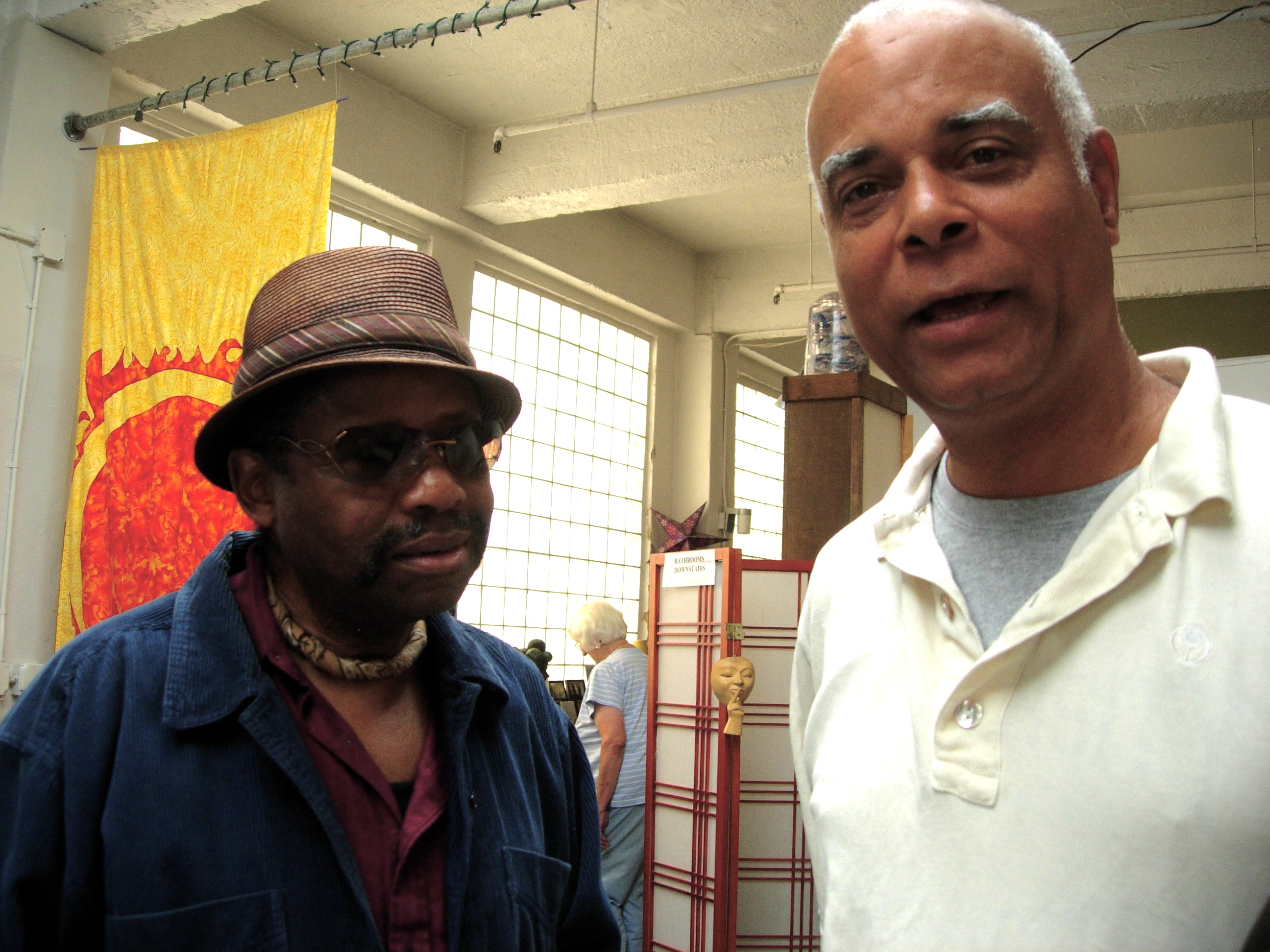
I couldn’t help but laugh.  Now who could pass up a deal like that?  So I ran inside, grabbed a nickel and my camera, and was treated to a long conversation with the salesman, a sweet guy and born storyteller who calls himself Hobo Joe.

Turns out we'd met on the block before and warmly recognized each other. Love when that happens.

And Bible Study was beautiful, too: all the familiar faces, laughing and singing and sharing from our various Christian, Jewish, Buddhist, pagan, and Unitarian Universalist perspectives.

For those who’ve recently tuned into Kloncke, I should explain that I both live and work at this community center/homeless outreach nonprofit/street ministry called Faithful Fools. So Thursday morning Interfaith Bible Study (which follows the morning meditation in our downstairs Street Zendo) is both work and home for me.
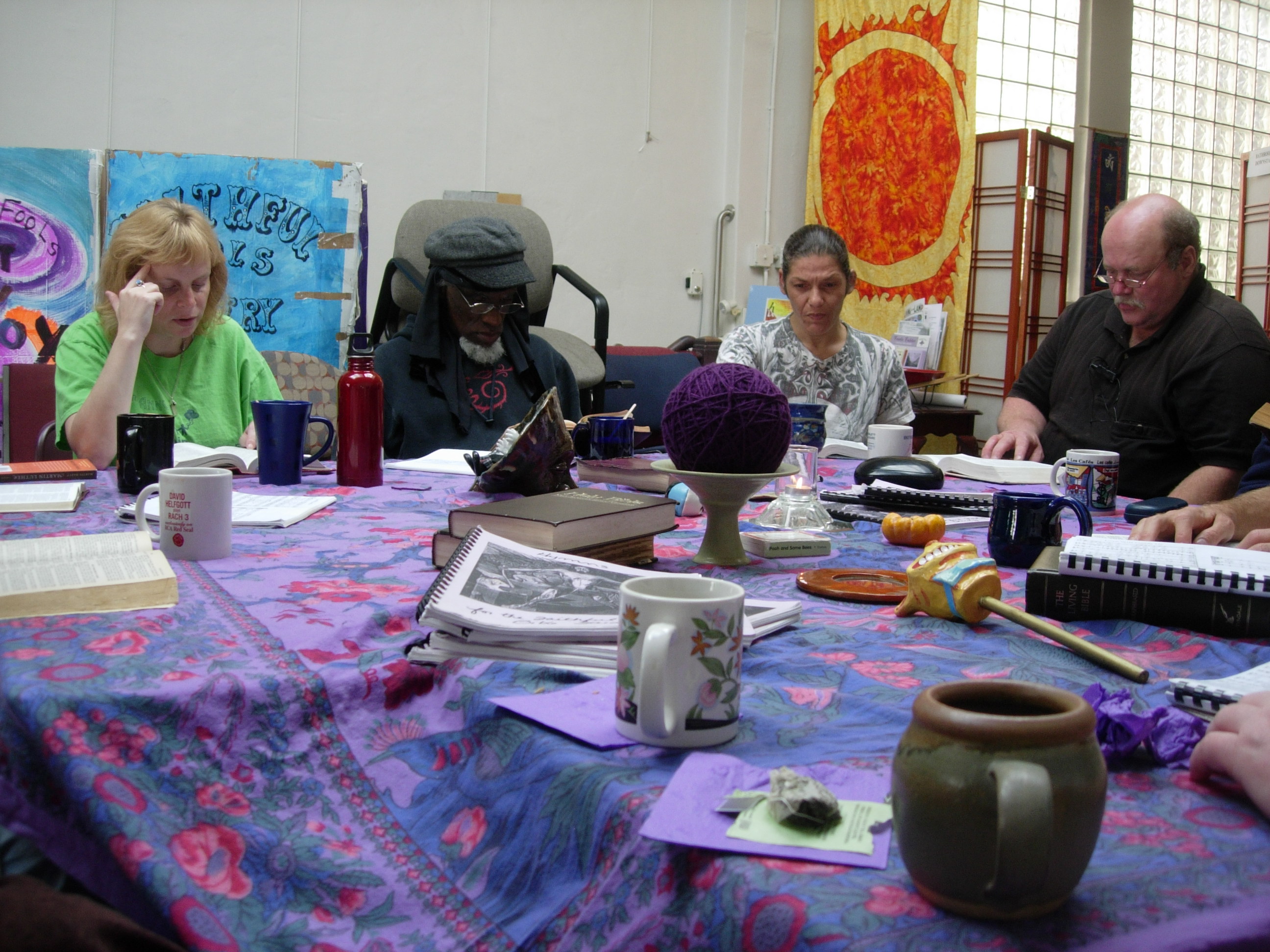
From left: Abby, Ra Mu, Gina, and Bobby

Don’t know what brought it on, but I felt especially lucky and honored to be here this morning.
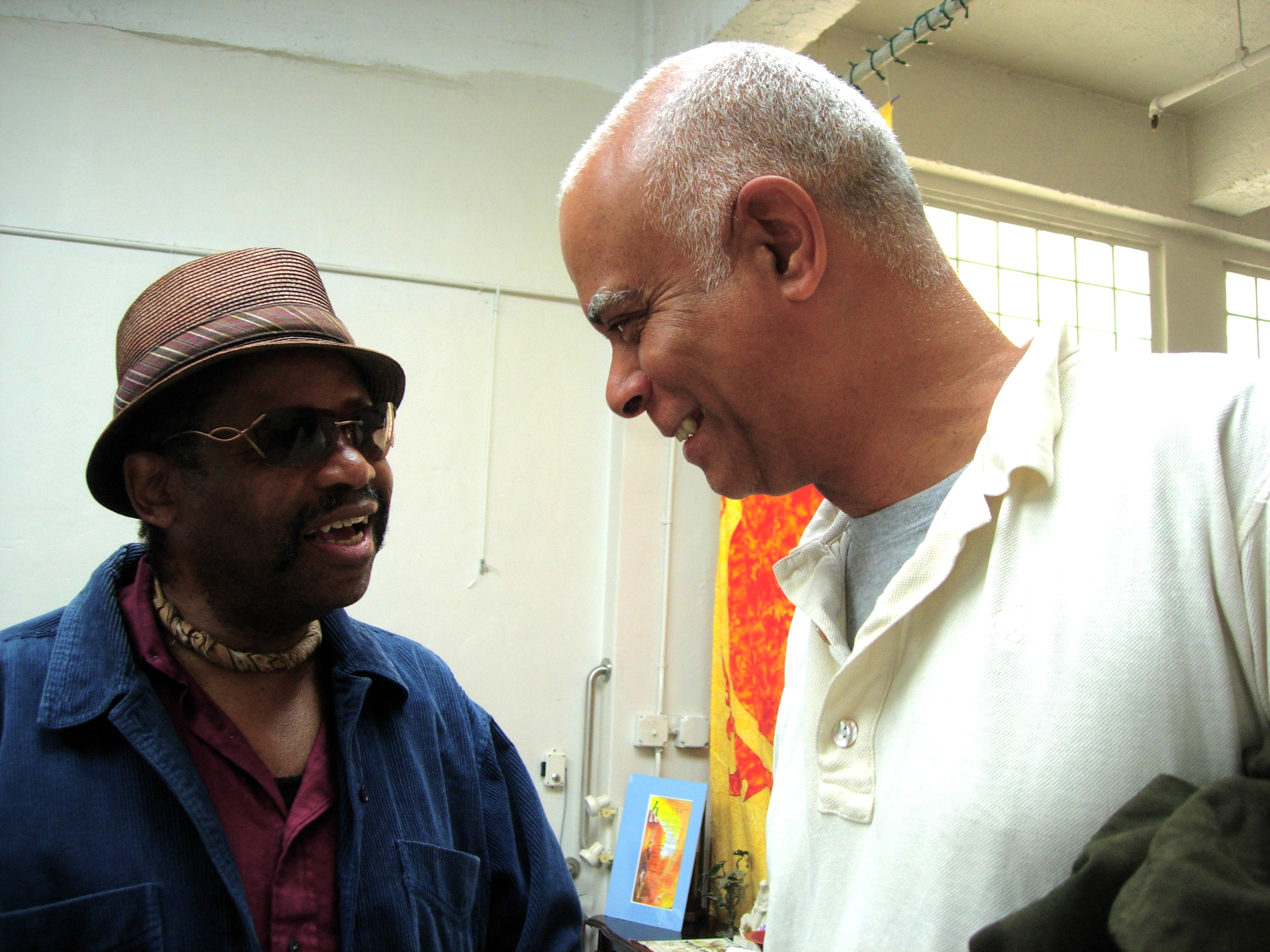
JR and Charles causin trouble as usual
Two great artists, philosophers, theologians, and very cool cats.

Well This Is Challenging

From A Policy of Kindness: An Anthology of Writings By and About The Dalai Lama:

From a deep point of view, while we don’t have our independence and are living in someone else’s country, we have a certain type of suffering, but when we return to Tibet and gain our independence, then there will be other types of suffering.  So, this is just the way it is.  You might think that I’m pessimistic, but I am not.  This is the Buddhist realism.  This is how, through Buddhist teaching and advice, we handle situations.  When fifty thousand people in the Shakya clan were killed one day, Shakyamuni Buddha, their clansman, didn’t suffer at all.  He was leaning against a tree, and he was saying, “I am a little sad today because fifty thousand of my clansmen were killed.”  But he, himself, remained unaffected.  Like that, you see (laughter).  This was the cause and effect of their own karma.  There was nothing he could do about it.  These sorts of thoughts make me stronger; more active.  It is not at all a case of losing one’s strength of mind or will in the face of the pervasive nature of suffering.

Family Resemblence At Police Confrontations

Now this is pretty amazing.

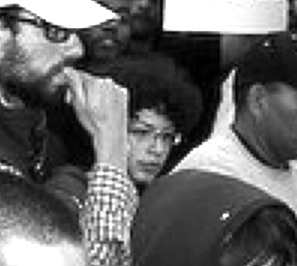
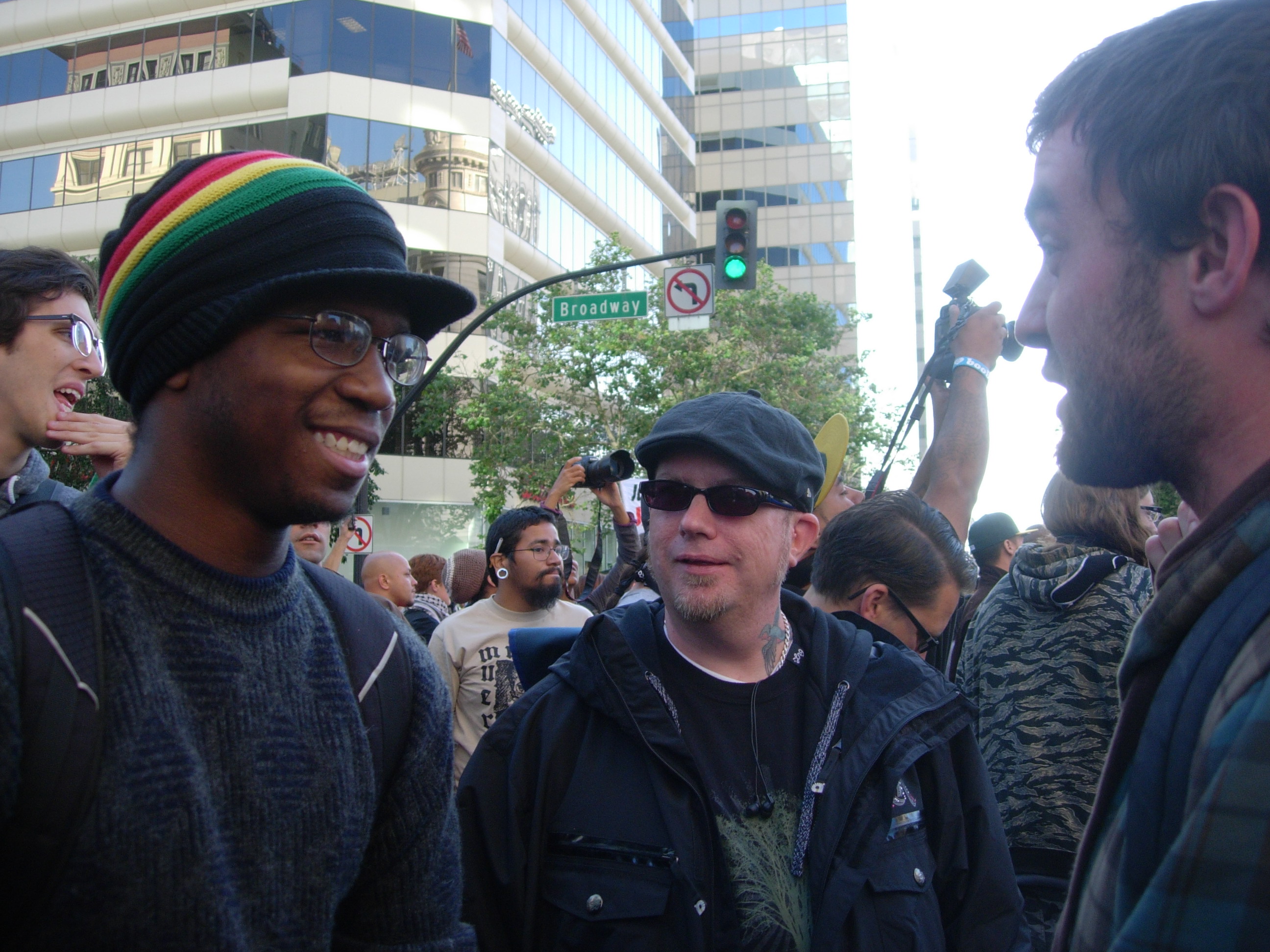
Me last week at the Mehserle verdict demonstration, among a crowd facing an enormous swarm of riot police; my dad in 1969 at Cornell University, when a group of Black students armed themselves and took over a campus building.

Not that the two situations are comparable in terms of danger, of course — it’s a miracle the Willard Straight Takeover didn’t explode into a bloodbath, whereas in Oakland, despite all the state weaponry, I never really believed that the cops would kill us right there on the spot.

But what an uncanny visual of a family lineage — the twin furrowed brows, the calm mouths, the keen watchfulness. Taking it in. Trying to solve the problem at hand, to find a peaceful but effective way forward.

There’s a story here about non-dualistic inheritance: a story about how none of us is really our own discrete self.  How each individual, living in the present moment, also spans generations into the past.  Reading Thich Nhat Hanh’s Teachings On Love last year brought this idea home for me for the first time.  The subtle ways we manifest traumas, neuroses, wounds, strengths, and gifts from our ancestors.

And when Rumi says, “This being human is a guest house/ Every morning a new arrival,” I suppose that leaves room for your own father to drop in for a spell.

Oscar Grant, Audre Lorde, Chögyam Trungpa Rinpoche and the question of loving our enemies.

Cross-posted at Feministe. As the verdict approaches, I find myself thinking more and more about the relationships between state violence and intimate violence. In what ways our focus on state violence, and mechanisms for resisting it, jive and don’t jive with methods for dealing with intimate violence. Aaron Tanaka made a wonderful comment on the original post — as always, Aaron, I’m truly grateful for your insights and questions, and their organic connection to the great work you do.

Just yesterday, only 20 minutes after a conversation about police alternatives, as my friend Noa was dropping me off at home, we found ourselves in an impromptu cop watch. Four officers were arresting three men on my block — two of whom I recognized as regulars on the corner, and one with whom I’ve tossed a football across Hyde Street traffic. When I saw the cops lining the men up against the fence, I just stepped out of Noa’s car onto the sidewalk and inserted myself. After one of the officers attempted to intimidate Noa by calling in her plate number (we’d been stopped and talking in the car inside a red parking zone), she drove around the block, parked, came back and joined me for the next half hour as we watched these three men get yelled at, cuffed, and loaded into a police van.

I’ll maybe write up a full summary tomorrow, because the effect of our intervention on the cops’ behavior was pretty interesting, as well as the conversation we struck up with two male officers. For now, here’s my Feministe piece from Sunday.

————————–
————————–

Continue reading

When Blogging, Just Blog.*

[Cross-posted at Feministe.]

To say that blogging can be dhammic is not to claim that it can substitute for formal techniques of spiritual practice. Those techniques are designed to help bring us face-to-face with the hard lessons — otherwise, it becomes just another feel-good affair (or, as I once heard Mary Ann Brussat call it, “salad-bar spirituality”). Still, with any spiritual teaching, it’s easy to get too wrapped up in literalism and formalism. So we have to remember to engage creatively with the mundane — the materials already before us. Whether that’s blogging or boxing or BDSM roleplaying.

Yesterday I talked a bit about how sexism keeps us from taking journal blogging seriously. Today, 5 reasons the medium suits dhamma practice terrifically, with particular advantages as a new form of spiritual autobiography.

Continue reading