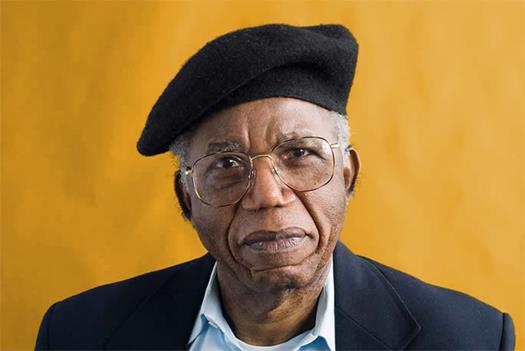
RIP, Chinua Achebe

Even as we strive for liberation,
any truly emancipatory struggle must also be its own reward.

“To answer oppression with appropriate resistance requires knowledge of two kinds: in the first place, self-knowledge by the victim, which means awareness that oppression exists, an awareness that the victim has fallen from a great height of glory or promise into the present depths; secondly, the victim must know who the enemy is. [They] must know [their] oppressor’s real name, not an alias, a pseudonym, or a nom de plume!” —Chinua Achebe (Nov. 16, 1930 – Mar. 22, 2013)

215830_10151358255944677_779397493_n

 
via Julia Wallace of SU/LU.


Working-Class Self-Activity, Reform, and Ableism

IMG_8899

Reform and revolution: I’ve got questions; you’ve got answers! (?)

From Truth and Revolution, which I’ve mentioned here before:

‘Working class self-activity is working-class autonomy — autonomy from capitalism,’ argues [Lee] Holstein. Her problem with advocates of trade-union reform efforts, such as Moody, is that they ‘mush together the reform and revolutionary aspects of resistance and insurgency, treating forms of resistance and insurgency which are confined within the framework of capitalism in the same way as those which break out of that framework.’ For Holstein, by contrast, ‘self-activity is not just resisting and attacking, but resisting and attacking in a way that undermines capitalist power, destabilizes its institutional framework, and foreshadows and demonstrates, in the form and content of the current struggles, the potential of the workers to be rulers.’ (284–85)

Two questions for today, and then I promise I’ll get back to grad school work. ;)

Continue reading

What Do We See In Steubenville? Imagining Justice Outside the Courts

4345191-Steubenville_OH_and_the_steel_factory_upriver_Steubenville-560x350

In Steubenville Ohio, a juvenile court judge will decide the fate of two young men who allegedly participated in the rape of a 16-year-old girl.  But it will be up to the supporters of Jane Doe — especially working-class fighters — to determine the path forward: toward true justice, toward a world free from sexual assault, toward a society ridding itself of the bastions of power that, like stagnant ponds where mosquitos multiply, support the proliferation of rape culture.  Steubenville seems to have the passion, the courage, and the determination: but do they have a plan?  And what will it be?

From an outsider’s perspective, I see three key assets enriching the Steubenville rape-culture resistance.

  1. A critical eye toward court-determined “justice”
  2. A horizontal network of bold, moral people eager to get involved
  3. An orientation toward media and education by the people, for the people

Rape culture is about power, and the Steubenville case has opened up serious questions about how people in a community can take back the power to safeguard their own well-being — free from the small-scale despotism of patriarchal cops, coaches, or classmates.

1. No Justice, “Just Us.” 

Continue reading

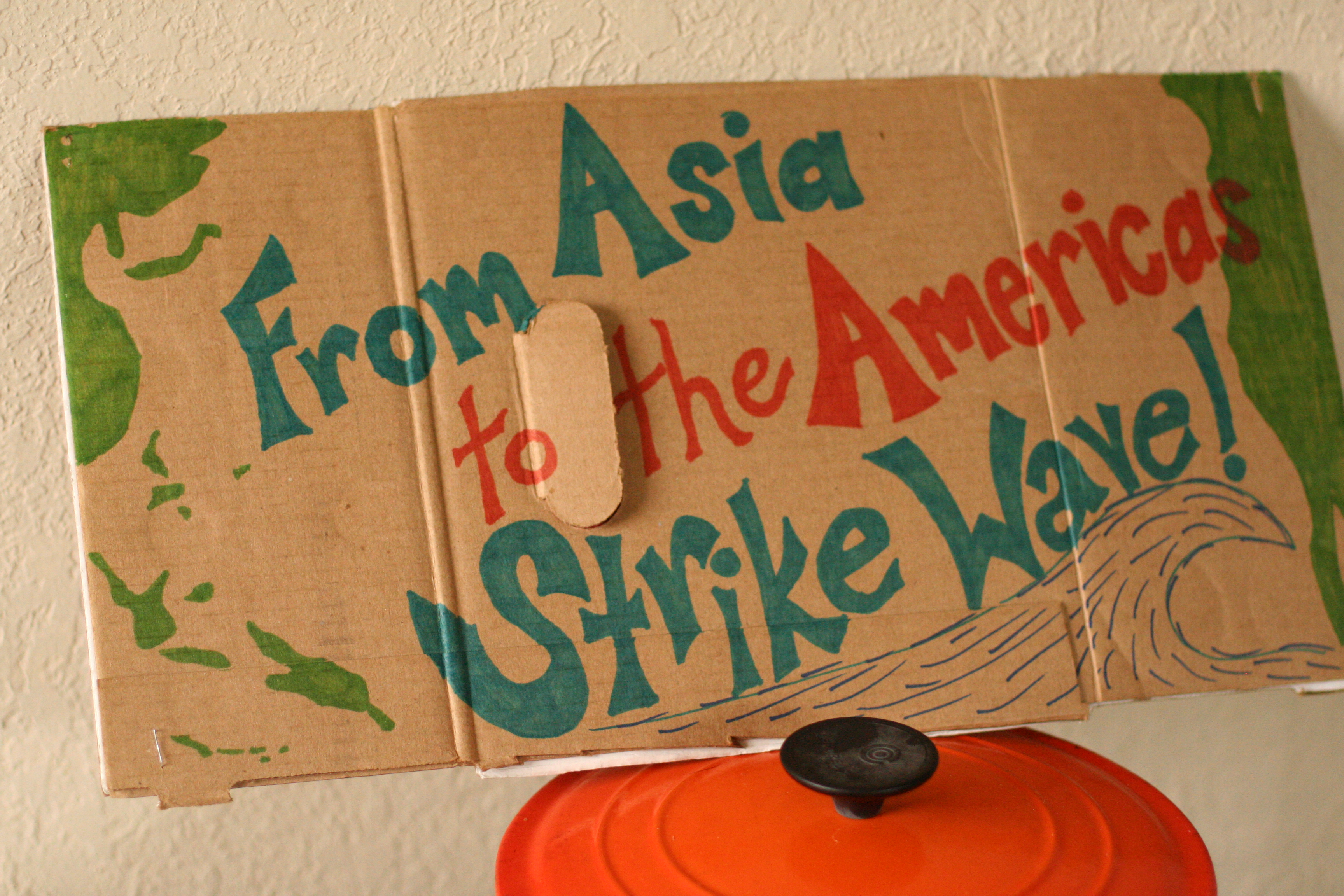
Valentine’s Day Action

 
Update 28/2 8pm: Ah, some context might be useful since you can’t read the description on YouTube from over here!  Heh, my bad.

From Truthout.org:

Valentine’s Day sometimes brings chocolates and sometimes flowers. But Valentine’s Day in Oakland, California, brought angry women out to the Mi Pueblo supermarket in the heart of the barrio. There they tried to speak to the chain’s owner, Juvenal Chavez, not about love, but about the sexual harassment of women who work there.

Mi Pueblo worker Laura Robledo’s story, in her own words:

Hello, my name is Laura Robledo. I am a single mother of three children. Last October I started working for Mi Pueblo Foods at the McLaughlin Avenue Store, in San Jose. Recently I was suspended and later-on fired for alleged misbehavior.
During the first few weeks of employment, a co-worker began to sexually harass me on a constant basis.

The company allegedly conducted an investigation on this matter finding no apparent cause for disciplinary action against the alleged harasser. It seems that the individual that harassed me still works at Mi Pueblo. This makes me feel humiliated.

I believe management fired me because I decided not to remain silent. There could be more women that have been sexually harassed but are too afraid to speak up.

Last December I attempted to hand deliver a letter to Juvenal Chavez, the owner of Mi Pueblo Foods. But I was stopped by several male security guards at the entrance of Mi Pueblo headquarters in San Jose. In this letter I challenge Mr. Chavez to talk to me in person so I can tell him what it really means for female employees to work at Mi Pueblo Foods.

On Valentine’s Day, 2013, supported by members of local group Dignity & Resistance; workers organizing in Walmart retail stores; and union members and staff of UFCW, Laura again tried to deliver her letter, and again security guards blocked the way. Undeterred, workers and community members will continue finding ways to fight not only sexual harassment in Mi Pueblo Foods, but also discrimination against African-Americans, e-verify attacks on undocumented workers, and attacks on workers who wish to form a union at Mi Pueblo.

================================

If I could instantly acquire two new digital skills, they would be:

Knowing How To Code

Knowing How To Make Good Videos.

As it stands, I know zero about the former, and above is my latest attempt at generating media from an action around the Mi Pueblo Grocery fight, an ongoing campaign that I’ve been working on for some months here in Oakland.

Learning, slowly learning.

The action was nice, if a little gender-simplistic.  (Queers and gender-nonconforming folks, if they can get work at all, also face hella sexual harassment on the job; it’s not just women.)

Still, the fierce women trabajadoras in the video inspire me.

Moving, patiently and persistently.  Patiently and persistently.

MLK & Obama Inauguration Day

Jacob Lawrence, from the Toussaint L’Ouverture Series, “To Preserve Their Freedom.”

i don’t begrudge my friends and family their joy, but since 2008 i have lost my belief in a patriotism dressed up in charming blackness.

instead, may blackness continue to serve as an impetus toward universal freedom, fundamentally challenging all harmful power structures (including the u.s. government).

may blackness fill us with the vision, love, and spiritual strength necessary to fight for a classless society, a society of equals, where leaders are not idolized but trusted — and directly accountable.

much gratitude to all who have struggled and are struggling for real, worldwide liberation.

so humbling and exciting.

=====================

Top: “Steeped in African American history while growing up in Harlem during the Harlem Renaissance, Jacob Lawrence launched his career at age 21 with a 41-panel series about an important black hero, Touissant L’Ouverture, who led the slave rebellion to liberate Haiti from French rule. Years later, he reprised the series in screen print, including the dramatic ‘To Preserve Their Freedom,’ 1986, a reminder that American blacks were still not liberated.”

Inspiring Pedagogy from STO

Today was a great day.  In part because I got to learn (and talk to friends) about this teaching model, from the revolutionary Marxist US group Sojourner Truth Organization (STO).  So helpful in clarifying some of the qualities I’ve been craving in study groups.  More mentorship, active & fruitful diversity of political views.  I’m a little skeptical of the way STO seemed to view critique and debate as the only way of co-refining political positions (might write more on that later), but for now, just happily geeking out on the pedagogy.

From Truth and Revolution: A History of the Sojourner Truth Organization, 1969–1986, by Michael Staudenmaier (AK Press, 2012):

For Bill Lamme, the appeal as a potential member was the way in which competing views were allowed to contend openly with each other inside the group:

I was particularly attracted to the fact that there was a significant number of very strong intellects with good positions in the group. It was not a single-leader type group, you know, where everybody else is kind of carrying out the [orders] from a very narrow central committee. Debate was so wide ranging, and I had had enough exposure to that early on, that I thought, this is cool. This is cool, because I don’t have to say anything I don’t think, you know, I’m not obligated to mouth somebody else’s position. And what’s more, some of these people are quite brilliant, and I can probably learn a lot in this group. And the fact that there’s more than one brilliant person, that means I’m not just going to eat what one person is shooting out there because there’s nothing else. In fact, there’s a lot of ideas contending. I think that is part of STO’s greatness, as great as it ever was: the fact that it had some really outstanding revolutionary thinkers who were able to butt heads in a very constructive way.

…Still, the situation was never perfect. Many members had long complained about the dominating presence of a handful of intellectual ‘heavies’ who frequently monopolized political debate, whether intentionally or not. Hamerquist, Ignatin, and (after he joined the group in 1976) Lawrence were most frequently identified in this category, and all three of them were well aware of the problem. By the mid-seventies, they and the rest of the organization determined that something needed to be done. While STO, like most other left groups of the era, had long prioritized collective study of key political texts, the group took this emphasis to a new level. Around 1977, Ken Lawrence was initially assigned the task of developing an intensive political education course on dialectics. The explicit goal was to avoid approaching students as empty vessels waiting to be filled with knowledge. At the same time, there was no pretence that all participants had the same level of understanding. Instead, the idea was to train STO members, especially newer ones, in the methods of critical thinking that were essential to the work of theorizing and implementing revolutionary politics.

Taking its cue from the Bolshevik study of Hegel and dialectics, the curriculum began by quoting Lenin’s observation that “People for the most part (99 percent of the bourgeoisie, 98 percent of the liquidators, about 60–70 percent of the Bolsheviks) don’t know how to think, they only learn the words by heart.” Of course there were clear limits on what could be accomplished in a single course of study, but the immediate objective for students was to gain a “functional ability to use Marxism. This is quite different from the usual introductory course which intends to convince the newcomer of the value of Marxism and to familiarize her/him with its terms and scope, but on the whole to leave the important decisions to the more advanced.” Toward this end, participants in the course were encouraged to continue their study, both individually and collectively, and to judge their own progress in the realm of social struggle rather than abstract knowledge. The dialectics course was intended to be “armament, preparation for battle. The test of that will be in our political practice.”

Part of what made the dialectics course unique was its combination of length and intensity. By the time the curriculum was published in Urgent Tasks in 1980, it contained nine distinct parts, which were generally taught more or less continuously over a fairly short time-frame. Hal Adams recalled years afterward that “people had to go for a week, five days or seven days or something, and it was all day long. Other people had to cover for your political work, you had to take your vacation time to go, and it would be in some rural setting. The materials were distributed ahead of time, and you were expected to read them. There were study questions and you would go over them.” The sections covered topics like “Base and Superstructure In Motion,” “How Revolutionaries Are Made,” and “The Marxist Method.” Extensive readings from Marx, Engels, and Lenin were interspersed with selections from a wide range of other thinkers and writers, both historical and contemporary: Hegel, Luxemburg, Gramsci, Lukacs, Mark Twain, CLR James, WEB DuBois, George Rawick, among many others. STO itself was represented by short pieces from both Ken Lawrence and Noel Ignatin. A standard course had perhaps a dozen total participants, with roughly four “teachers” and eight “students.” This allowed for both the competing views among instructors that Bill Lamme appreciated and for individualized attention for each new participant. While the eventual goal was to level the intellectual playing field inside STO, the dialectics course deliberately reflected the reality of uneven development within the group. According to Adams, for each session,

there would be one of the leaders who would be in charge of organizing the discussion, and people were encouraged to talk. They made a big thing that it wasn’t just a circle discussion, because a lot of what was going on in the left at that point was open circle discussion and no matter what anybody said, it was accepted as equal. And this wasn’t that, because there was stuff that was hard to understand… So that there was a role for a teacher to play in the thing.

In the end, STO’s dialectics courses took on a modest life of their own, and managed to far outlast the organization that initiated them; in the last decade, several versions of the course have been offered in multiple cities across the US, with the help of a handful of former STO members. Certainly the course changed the self-understanding of many of the participants. Former member Carol Hayse credits Lawrence in particular with having insisted that he could “make theoreticians out of all of you.” Although she initially refused to believe it was possible, she acknowledges that, in fact, “that son-of-a-bitch made a theoretician out of me!” And she was certainly not the only one.
Death; Let It Shine

yolo-againThis new year found me thinking a lot on death. Not because I’ve recently lost someone close to me. It feels more like a natural pull toward deepening my spiritual study and practice. Marking the passing of 2012, I know I’m one year closer to my own eventual death, and the deaths of everyone I love. It’s also the anniversary of the murder of Oscar Grant at the Fruitvale BART in Oakland: a death that symbolized much and galvanized many, at the time.

Reflecting on death is an important practice within the Theravada Buddhist tradition, related, as I understand, to pre-Buddhist Hindu methods of graveyard observation. The Mahāsatipaṭṭhāna Sutta advises hanging out in the charnel grounds, noticing the nine different phases of a decomposing corpse. Benefits of developing this intimacy with death and decay range from deepening one’s understanding of impermanence (one of the Three Marks of Existence), to, on a perhaps more pragmatic level, icing down a particularly hot lust-wave that might be interfering with your ability to meditate properly. Go look at some rotting flesh for a while; you’ll calm down.

Another classic reward for contemplating death — one I’ve been experiencing these past few days — is how it can help us appreciate the preciousness of the life we’ve got. Whether or not we believe we “only live once,” this life is still an incredibly fleeting opportunity, not to chase endlessly after pleasure, but to make as many positive choices as we can. To let our little light shine. What’s been surprising for me, though, is that instead of increasing my sense of urgency, this sobering reflection seems to be kind of slowing me down — in a good way. Less frantic; more focused. It’s like I can understand now, at a body level, that a rush-rush-rush approach won’t always yield better, more brilliant light. What’s needed are quality, rigor, and vigor; not necessarily speed. There’s a difference.

So, on we go. For how long in this form, who knows.

Love Defined, Love Enacted

It has not been simple for black people living in this country to know love. Defining love in The Road Less Traveled as “the willingness to extend one’s self for the purpose of nurturing one’s own or another’s personal growth,” M. Scott Peck shares the prophetic insight that love is both “an intention and an action.” Using this definition of love, and applying it to black experience, it is easy to see how many black folks historically could only experience themselves as frustrated lovers, since the conditions of slavery and racial apartheid made it extremely difficult to nurture one’s own or another’s spiritual growth. Notice, that I say, difficult, not impossible. Yet, it does need to be acknowledged that oppression and exploitation pervert, distort, and impede our ability to love.

—bell hooks, “Living To Love” (1993)

Vibrato Politics

where is the body roll in our politics?
the funky precision
the rigor and relaxation

unforced
but so strong and steady
sweeping brightness, gentle unrelenting buoyancy.

erykah could make a career off of like 5 notes.
with that vibrato,
shoot.

to get it,
you have to ease up
and you have to work your ass off.

i would like a funky precision
a rigor and relaxation
a body roll in my politics.

===============================

References:

Erykah

Video on vibrato

Buddhist South Park video on “Prickles and Goo”