Paramis of Mass Arrest

Update: new photo, borrowed from another protest-reflection post on the fabulous new blog Kissing In The Dark, made by the Bay Area revolutionary powerhouse chakaZ.

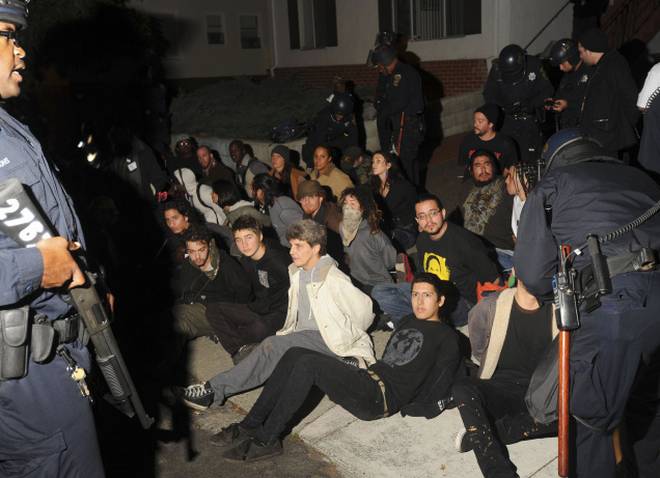
Protesters are arrested in Oakland. Note the giant gun in the officer’s hand on the left. Image from The Hindu.

Paramis, or Paramitas, also called the Ten Perfections, are qualities that dhammic practitioners try to cultivate on the path to enlightenment.

I found myself thinking about the Paramis throughout a long Friday night and Saturday, when I was arrested, along with 152 others, for “unlawful assembly”: marching in the streets of Oakland to protest police violence and impunity. I was held in custody for about 20 hours; some people still haven’t been released. (Please consider donating to legal aid for protester defense.)

A concrete detention cell might seem like a strange setting for reflecting on the attributes leading to Buddhahood. A far cry from the bucolic campuses of well-funded meditation centers. On the other hand, many people have famously developed their spiritual practice while incarcerated, or even while being tortured. I’m not saying that every setting is equally optimal for developing every part of dhammic practice. But once you’ve learned some of the basics in a more controlled, safe environment, it’s interesting to see how they can manifest in non-stereotypical situations.

Generosity (dana)

He straps on a second backpack, belonging to his friend, who doesn’t have papers, to afford more mobility for avoiding arrest.

They trade jokes and soggy jail cookies.  They offer room for one another on the concrete benches of the cramped holding cell.

Lawyers work for free to get the protesters out of jail.  The work can take months, for folks facing trumped-up charges.

And on and on.

Morality/Integrity (sila)

From Thich Nhat Hanh: For A Future To Be Possible

FIRST PRECEPT
Aware of the suffering caused by the destruction of life, I vow to cultivate compassion and learn ways to protect the lives of people, animals, plants, and minerals. I am determined not to kill, not to let others kill, and not to condone any act of killing in the world, in my thinking, and in my way of life.

SECOND PRECEPT
Aware of the suffering caused by exploitation, social injustice, stealing, and oppression, I vow to cultivate loving kindness and learn ways to work for the well-being of people, animals, plants, and minerals. I vow to practice generosity by sharing my time, energy, and material resources with those who are in real need. I am determined not to steal and not to possess anything that should belong to others. I will respect the property of others, but I will prevent others from profiting from human suffering or the suffering of other species on Earth.

Renunciation (nekkhamma)

In jail, they give us plasticized bologna and surprisingly good oranges.  Over twelve hours later, they’ve given nothing else.  We practice responding to this harm without suffering.  We practice fasting.  We explore the limits of our basic needs.

In jail, when we ask at 5am how much longer they think we’ll be here, we are told: Ask me how much longer, and I’ll hold you here an extra hour.  Ask me again, and I’ll hold you two more hours.  We practice responding to this harm without suffering.  We practice abiding.  We explore the limits of our basic needs.

Knowing the risks, we have nevertheless stood up for what we believe.  Some of us are better accustomed to making do in these conditions.  All of us are being reminded that we are more than our comforts.

Wisdom (pañña)

This is a complex one.  Can we understand the nature of impermanence, egolessness, and unsatisfactoriness of phenomena?  Can we respond to the relative world of material harm, while still practicing diligently on our inner liberation from needless suffering?

As the zip-tie handcuffs cut off circulation and my shoulders begin to ache and tingle, I summon my meditation practice, explore the pain, and try my best to observe the present moment with equanimity.  After three hours or so, the handcuffs are cut off.

Effort/Strength (viriya)

As we are blocked in by riot police, some with machine guns, on a residential Oakland street, we keep chanting:

WE ARE ALL OSCAR GRANT!

As we are handcuffed and lined up seated on the pavement, we keep chanting:

WE ARE ALL OSCAR GRANT!

As my 20-hour family sits in our women’s holding cell, hour after long hour, we cheer and applaud as each individual is released.  The cops try to intimidate us, say they’ll keep us there longer if we keep up the noise.  Same for the adjacent women’s cell, where we can hear them yelling.  We all keep on celebrating.  And together we chant:

WE ARE ALL OSCAR GRANT!

Patience (khanti)

Patience is best when combined with sound strategy.  Do I hope to move beyond marches?  Yes.  Do I want to help grow the movement against police violence, proliferating it in different sectors with the power to disrupt the economy in big ways?  Yep.  Do I want to simultaneously develop community-based safety systems that are actually accountable, healthy, and responsive to the needs of participants?  Hell yes.  Will all this take time?  You bet.  Waiting it out in jail is only one small part of the process.

Truthfulness (sacca)

Bearing witness directly is a wonderful antidote to media spin and misinformation.  Contrary to sensationalist reporting, this was not a violent, roaming mob.  We were trying to march to the Fruitvale station where Oscar Grant was killed, and menacing riot police hemmed us in at every turn, so we improvised the route.  This is not marauding; it is a snake march.  Which authorities don’t like very much, because they are not in total control of it.

Again, contrary to reporting, the purpose of our demonstration was not to wreak havoc.  The super, super, nearly total majority of people, including every single person I knew, damaged no property.  And even those who may have, engaged in no violence that I saw.  Property destruction is very different from violence. And even though I don’t support the former in this case, I don’t want it irresponsibly conflated with the latter, the way the mainstream media consistently has in its coverage of the Oscar Grant case.

You know what’s violent?  Denying a woman in custody access to her chemotherapy treatment.  She was only one of many people I witnessed being denied medical attention — to antidepressants, to necessary medications.  And when the woman who was ill from missing her chemo finally got transferred to a cell with a pay phone, called the National Lawyers Guild to tell them what was happening, and half an hour later the cell door rolled open . . . the cops berated her for “costing them a lot of time and money,” and informed her that because of what she’d done, they would delay her release.

Another interesting element around truth: When they had us cornered, just before they arrested us, the police declared a crime scene and instructed everyone from the press to disperse, while still preventing the rest of us (who wanted to go peacefully) from leaving.  Nearly all the professional journalists crossed the police line to depart.  Kind of chilling, given that the event that catalyzed all this was documentation of an act of police violence against an unresisting, restrained person.

A final truth: From what I saw, and this is only my own personal impression, many of these cops appear to be deeply scarred people.  The one who kept me in line on the arrest scene before we boarded the paddy wagons wouldn’t even look me in the eye at first.  The internal damage and delusion of a jailer is cyclical: one must already be suffering in order to lock someone up and deny them food or medicine for twelve hours (whether the denial is polite and bureaucratic or spiteful and direct is largely irrelevant).  And participating in that process itself produces more delusion, more scarring, more habit patterns.

Determination (adhitthana)

From Rev. Dr. Martin Luther King’s Letter From A Birmingham Jail:

But though I was initially disappointed at being categorized as an extremist, as I continued to think about the matter I gradually gained a measure of satisfaction from the label. Was not Jesus an extremist for love: “Love your enemies, bless them that curse you, do good to them that hate you, and pray for them which despitefully use you, and persecute you.” . . . Perhaps the South, the nation and the world are in dire need of creative extremists.

Lovingkindness (metta)

Much gratitude to all my fellow detainees who made my time in custody human and even fun.

Much gratitude to all who have offered their support from the outside.

Much gratitude to all those who continue to oppose oppression, even when doing so is unpopular.

May all beings be safe.  May no human be trapped in a cage.   May no human be psychologically conditioned to harm others in an effort to make themselves feel more powerful and secure.  May we abolish prisons and end policing as we know it, replacing them with participatory processes that care for people and treat all living beings with dignity.

May you be safe.  May you be happy.  May you be free. 

On the Day of Mehserle’s Sentencing: A Feminist Vow

[Today, former BART police officer Johannes Mehserle was sentenced to 2 years in prison, with 146 days already served, for the involuntary manslaughter of Oscar Grant. The Grant case marked the first time in California’s history that a peace officer was tried for murder.]


Whereas

We as women, transgender people, two-spirit people, queers, gender-oppressed people, and allies of the Bay Area mourn the loss of Oscar Grant;

Whereas we recognize that this young man was just one of countless victims of police violence;

Whereas we understand and experience police repression, particularly in poor, queer, and working-class communities of color;

Whereas we know that police violence both enables and enacts rape, brutalization, and degradation;

Whereas police violence compounds the dangers we face in domestic violence, sex trafficking, and homophobic and transphobic hate crimes;

Whereas police enforce the criminalization of our disabilities, addictions, and mental illnesses;

Whereas police enforce the criminalization of our skin color, sexualities, style of dress and speech, gender identities, religious practices, and nations of origin;

Whereas police violently enforce our subservience to an economy that enriches elites, while slaughtering, starving, sickening, and stealing from us as workers, child-rearers, and culture creators;

Whereas the rich and influential deploy police to violently crush our efforts toward self-determination, from queer social spaces to workplace strikes;

Whereas the rich and influential deploy police to kill or capture our leaders and heroes, like the recently deceased political prisoner Marilyn Buck;

Whereas police are employed to do as they are ordered;

Whereas police violence comes 10% from individual bigotry and improper training, and 90% from a capitalist state system designed to protect property, not people;

Whereas such a property-focused police system, controlled by the rich and influential, enacts and supports gender-based and sexual violence;

And Whereas such a system can never be adequately reformed, based as it is in the fundamental inequality borne of a patriarchal capitalist system:

We maintain compassion for individual police officers who both experience and inflict suffering; who face and enforce mortal danger.

We vow, in the effort to end sexist violence throughout the world, to eradicate the police system of the United States as we know it; and to transcend the misogynist capitalist system that demands this type of policing.

We undertake this mission with no hatred in our hearts toward individual police officers or those who support the police system.

We accept this responsibility out of love for all people, and the unquenchable desire for universal freedom and equality.

In the service of this calling, we will sing, strike, fuck, fight, rest, write, rebel, and rebuild until we achieve liberation for all beings.

Sidewalk Sit

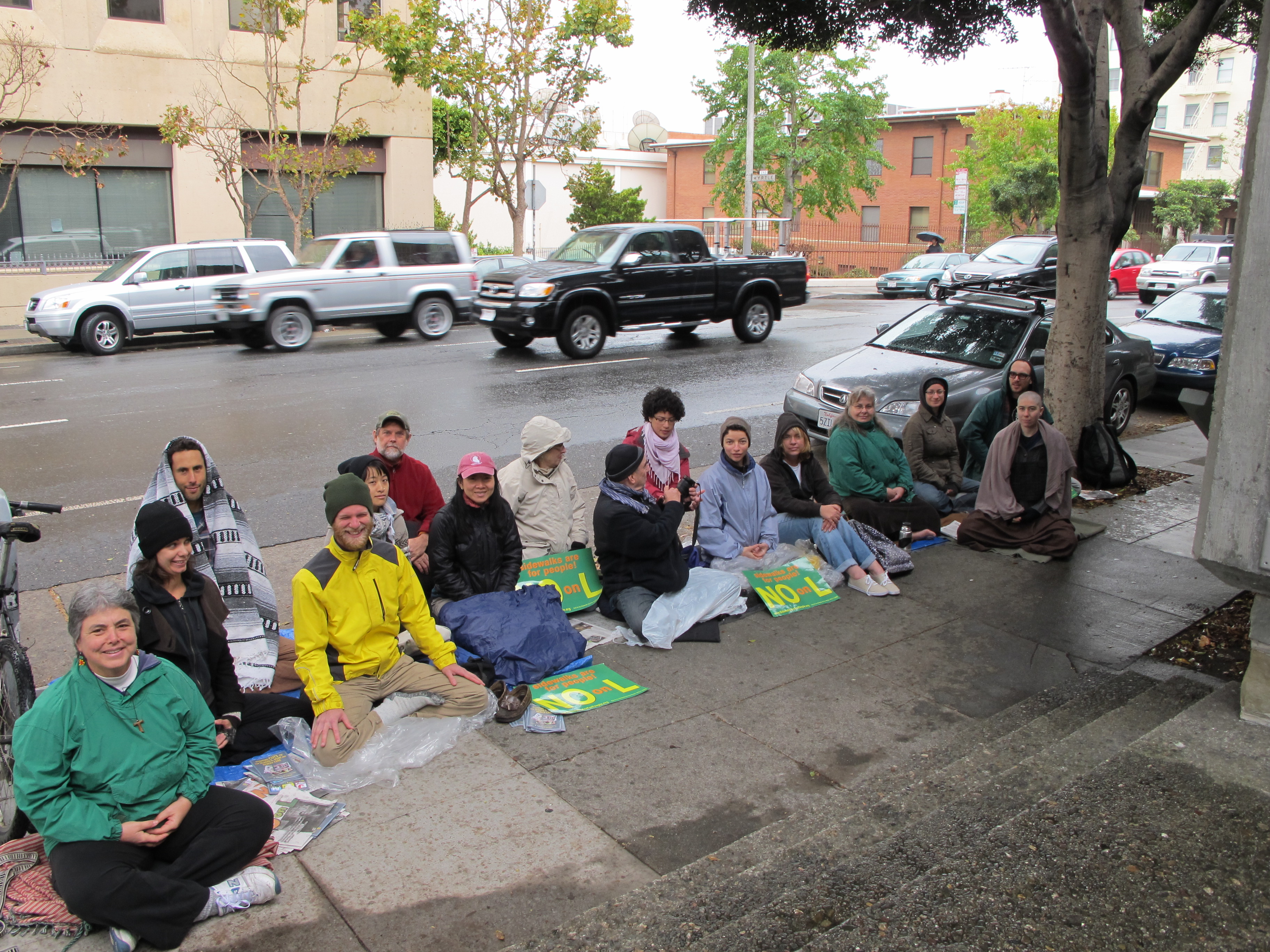
Sarah Weintraub, Michael Bedar, Tyson Casey and Michaela O'Connor Bono sitting off of O'Farrell Street, with a sign reading "sidewalks are for people; NO on L." photo by Sr. Carmen Barsody

Sorry I didn’t get a chance to post on Friday, folks — this weekend was a particularly busy one. Starting Friday evening, we (at the Faithful Fools) hosted about 16 participants in a three-day gathering for Buddhists and friends dedicated to social justice. “Working for Liberation,” we called it: the culmination of, oh, about six months of co-planning between me and the lovely Tyson Casey of the Buddhist Peace Fellowship, with guidance from Carmen of the Fools and Alan Senauke of Clear View Project (also vice-abbot of Berkeley Zen Center and author of the newly published The Bodhisattva’s Embrace: Dispatches from Engaged Buddhism’s Front Lines).

I wanna say more — much more — about the weekend, but I gotta run back to Sacramento. So for now I’ll leave you with these two images of our final weekend ‘activity’: a performative outreach effort in the Sidewalks Are For People Campaign, or “No on Prop L.” A grey, drizzly Sunday morning; chilly but thoroughly enjoyable.

Sixteen of the eighteen meditators sitting on wet Franklin Street sidewalks, sheltered under neighborhood trees. photo by Sonny of the UU Church


Neighborhood Happenings: Housing Occupation

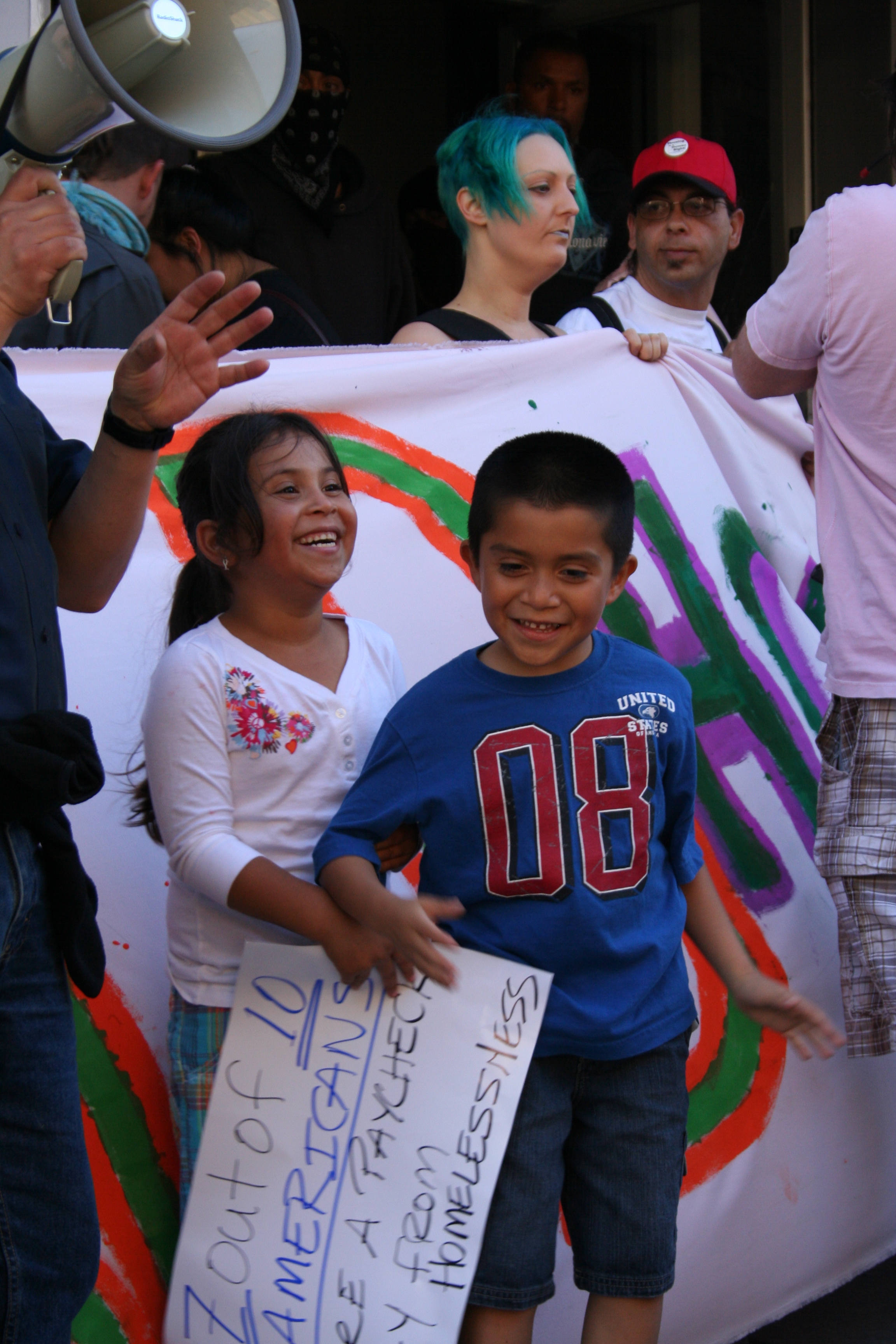
Today, in honor of World Homeless Day, folks with Homes Not Handcuffs and other groups hosted a “Creative Housing Liberation”: a rally, unpermitted march, and occupation/liberation of a 68-unit apartment building that has been vacant for years now. Coincidentally, that building happened to be right around the corner from our home at the Faithful Fools — a stroke of luck that allowed us to run back and grab a couple of “donations” (a chair and a vase of flowers) to offer to the building.

The event was really well done, and so far everything has gone off without a hitch. Crowd energy was strong; the occupiers had the banner drops all ready for us as our march turned the corner down Eddy Street; they had a dope sound system, powered by a generator, that transformed the corner into a dance party; Food Not Bombs even hooked it up with a tasty dinner for everyone.

Also fortunate: the landlord could not be reached by the police. And since the cops can’t break in and apprehend people without first getting the go-ahead from the landlord, the occupiers will hold the building at least until tomorrow morning.

This slideshow requires JavaScript.

Tomorrow, if I have time, I’ll try to add a bit more of my own perspective and analysis on housing occupation as a response to racist, heterosexist state violence in the form of denying people adequate housing. According to the event organizers, 30,000 housing units remain vacant in San Francisco, a city with 15,000 people living in homelessness. In light of this, does occupation of empty buildings seem morally wrong?

More germane to my line of questioning these days: what role can fun, vibrant, direct actions like today’s play in a larger strategic movement to transcend an economic system where, as Introducing Capitalism: A Graphic Guide puts it in a euphemistic half-truth, “the means of production are privately owned”?

(Note: very first chant of the march, as we took the streets? “Homelessness is not a crime! Capitalism IS a crime!”)

Happy Failures

Some of the smartest people I know — including my friend Ivan, and what I’ve read/heard by Suzuki Roshi — excel at failing.  They know how to fail in ways that allow the flow to continue, if you know what I’m saying.  The failure is not crippling, but just part of taking on a difficult challenge.  Generally speaking, I think that people with scientific minds (including serious meditators) are pretty good at failing happily.  Failing in ways that reveal new opportunities, even as they foreclose the ones we thought we wanted.

Endeavoring to improve on my ability to fail doesn’t mean tackling tasks that seem doomed from the start.  That would be too easy!  The kind of failure I’m talking about does not come cheap.  I am invested.  I want to succeed.  Each attempt, each step, is made with confidence, commitment, and openness.

Suzuki Roshi says that this is how we move toward enlightenment.  Through repeating small moments of enlightenment — those moments of a letting-go mind, a mind that is being, not chasing — while at the same time working hard to deepen and strengthen our practice.

I hope this is somewhat clear, what I’m trying to say.  As an example of a recent, happy failure of mine, I wanted to share a letter I wrote to all the people I’d talked to with an interest in building a disarm BART police campaign.  My intention in sending it was (1) to let folks know that I would no longer be pursuing the courses I’d proposed (for instance: organizing a direct action of civil disobedience for the day of Mehserle’s sentencing), and Why; and (2) to thank them for the inspiring connections we’d made in the course of the (eventual) failure.

It felt good to write this letter, not only because I have a lot of admiration and goodwill toward each of the recipients (including those with whom I disagree politically), but also because it was an exercise in observing and accepting reality as it is — rather than as I would like it to be.  A little inroad into rooting out dukkha.

I’d love to know your thoughts, resonances, and criticisms.

Hello everybody,

Hope this note finds you well!

Over the past couple of months, I’ve been talking with BART workers, Oscar Grant movement organizers, Oakland peacekeepers, Marxist feminists, reverends, priests, meditators, lawyers, non-profiters, poets, anarchists, communists, peace activists, radicals, progressives, friends, and random strangers about the possibility of coalescing a campaign toward disarming the BART police. I and others envisioned this as one small step in aiding a shift from weaponized, racist, capitalist-serving security culture toward community-controlled safety initiatives, dual power, and restorative justice.

Continue reading

Repost: Panthers at Peralta

My friend Aaron recommended this piece to me (a historical essay written by local Laney College Student Unity & Power folks) as an encouraging example of demands done well.

Boy, is it good.

I’ll quote from the conclusion, but really — read the whole thing (and check the other re-post, with commentary, at Advance the Struggle).

We are often confronted by a legacy of the Panthers as either a detoothed community service organization or all claws. But the BPP experience at Peralta shows the work of a multifaceted organic expression of a specific section of Oakland’s working class to overturn institutions that claim to serve them and remake them into bases for struggle. When the Panthers spoke of occupying a building, it wasn’t (only) to appeal for more funds from the state, but to keep the state away from self-organized community programs. This meant not simply a negation of racist, authoritarian educational institutions, but their redefinition and reuse. As the editorial of the first issue of The Grapevine wrote,

To the continuing students and student-workers, right-on to the work you have done and the work you have inspired your communities to do, right-on to your moves to secure your community institution, to moving for freedom from oppression, to moving to make this a real community college – in practice. We still have work to do, but we have reached a higher level of organizing and our work will be even more effective in the future. We will win our fight to keep our community college and control it.

This is a message to today’s student movement. Beyond “demand[ing] affordable, accessible and quality education” or “keep[ing] California’s original promise of higher education” lies the seizure and re-invention of these institutions around fundamental principles of self-determination, self-management and freedom from oppression.

Rethinking “Classism”

Friends, I am running around all day today, but wanted to share a half-formed thought that’s been germinating for the last few days.

What the hell is “classism” supposed to mean?

Seriously though.  I know it’s a fixture in the litany of “isms”: sexism, racism, ableism, heterosexism, colorism, etc.

But isn’t the notion of “discrimination on the basis of social class” a little . . . redundant?

Don’t the existence of social classes already imply discrimination?

Like, oh, it’s okay that you remain lower-class, as long as I don’t make fun of you for being lower-class, or exclude you entirely from my middle- or upper-class institutions.

. . . ?

Does classism boil down to cultural chauvinism, and not much more?  That’s the impression one might get from the “Classism” section (nestled between the “Racism” section and the “Homophobia/Heterosexism” sections — there’s that familiar chorus, again) in famous U.S. feminist Jessica Valenti’s book, Full Frontal Feminism.  I’ll quote it in its entirety.

Classism

I’ll tell you a little story about something that made me acutely aware of classism—it was the craziest wake-up call ever.  I went to a public high school in New York that tested students for entry (it was kind of a dorky math and science school).  The majority of my friends in high school were Jewish gals from the Upper West Side of Manhattan.  They had awesome apartments and college-educated parents who were professors, artists, judges, and so on.  I grew up in Long Island City, Queens, which at the time was not considered the best neighborhood in the world.  My parents grew up in Queens and Brooklyn, got married when they were still teenagers, and never went to college.

But hey, it was all good to me.  My friends were my friends, and we were all the same.  Then one day, after a couple of my girlfriends spent some time at my house after school, one of them remarked, “Your mom is so cute!  Her accent sounds so . . . uneducated!”  They all laughed.  I don’t think she meant it to be cruel, or even realized what she was saying.  But after that moment, it was difficult to be around my high school friends.  I had this overwhelming feeling of not belonging.  I didn’t know if they were laughing at my potty-mouthed jokes because I was funny, or because I was playing up the Italian Queens girl stereotype.  I wondered, when they told me they didn’t like something I was wearing, whether it was because of a difference in taste, or because they thought I looked “trashy.”

Later, in college (at a private Southern university—I lasted a year before transferring back to New York), I would try to tone down the behavior I thought marked me as “lower class.”  I tried to drop cursing so much, the Queens accent slowly disappeared, and I continued to hang out with kids who went to boarding schools and to pretend I knew what the hell “summering” was.  But you can’t pass for long.  I would later realize that a lot of the hellishly sexist experiences I went through in college were completely tied up with classism.  I was called a slut not only because I had the gall to sleep with a guy I was dating, but because I dressed differently, talked differently (no matter how I tried to hide it), and was seen as the trashy Queens girl on scholarship.

So I know this is a little more personal than academic, but hey—the personal is political, right?

I understand that the experience of class stratification manifests partly in moralized judgments, ridicule, vitriol, and warped denial of other people’s humanity.  This is the flavor of class ideology.  But what about the structure?

Perhaps classism is not the real problem.

Perhaps CLASSES are the problem.

From Wikipedia:

The most basic class distinction is between the powerful and the powerless.[1][2] Social classes with a great deal of power are usually viewed as “the elites” within their own societies. Various social and political theories propose that social classes with greater power attempt to cement their own ranking above the lower classes in the hierarchy to the detriment of the society overall. By contrast, conservatives and structural functionalists have presented class difference as intrinsic to the structure of any society and to that extent ineradicable.

What do you think?  Classes, ineradicable?  So we should swell the middle class as much as possible, knowing there will always be people systematically and categorically deprived of equal power because of their economic and social standing?

Reality is weird, people.  Very weird.

Meantime, happy Friday!  And here is a lovely song for you.  See y’all on Monday.

Elaboration on the BARS Banner

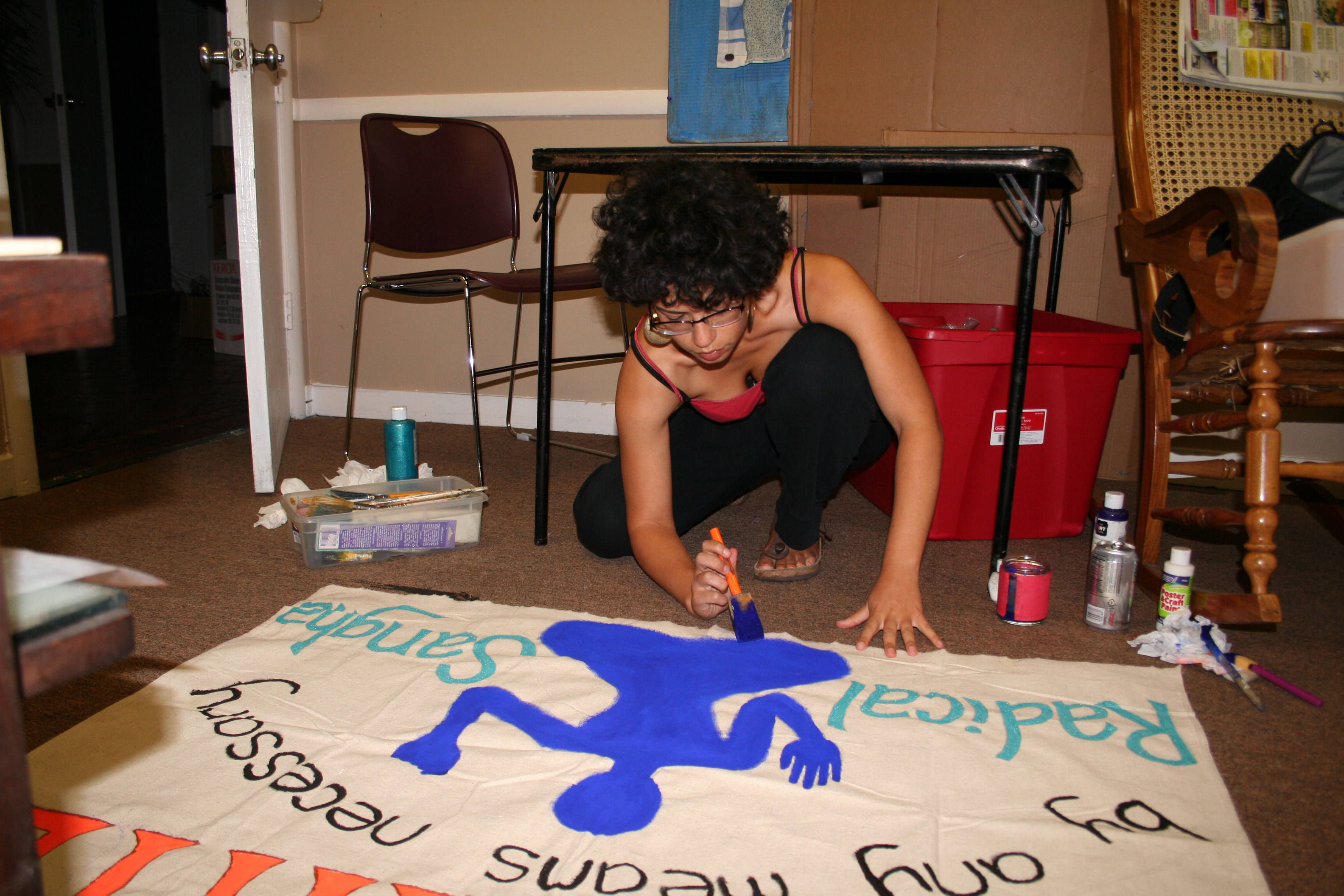
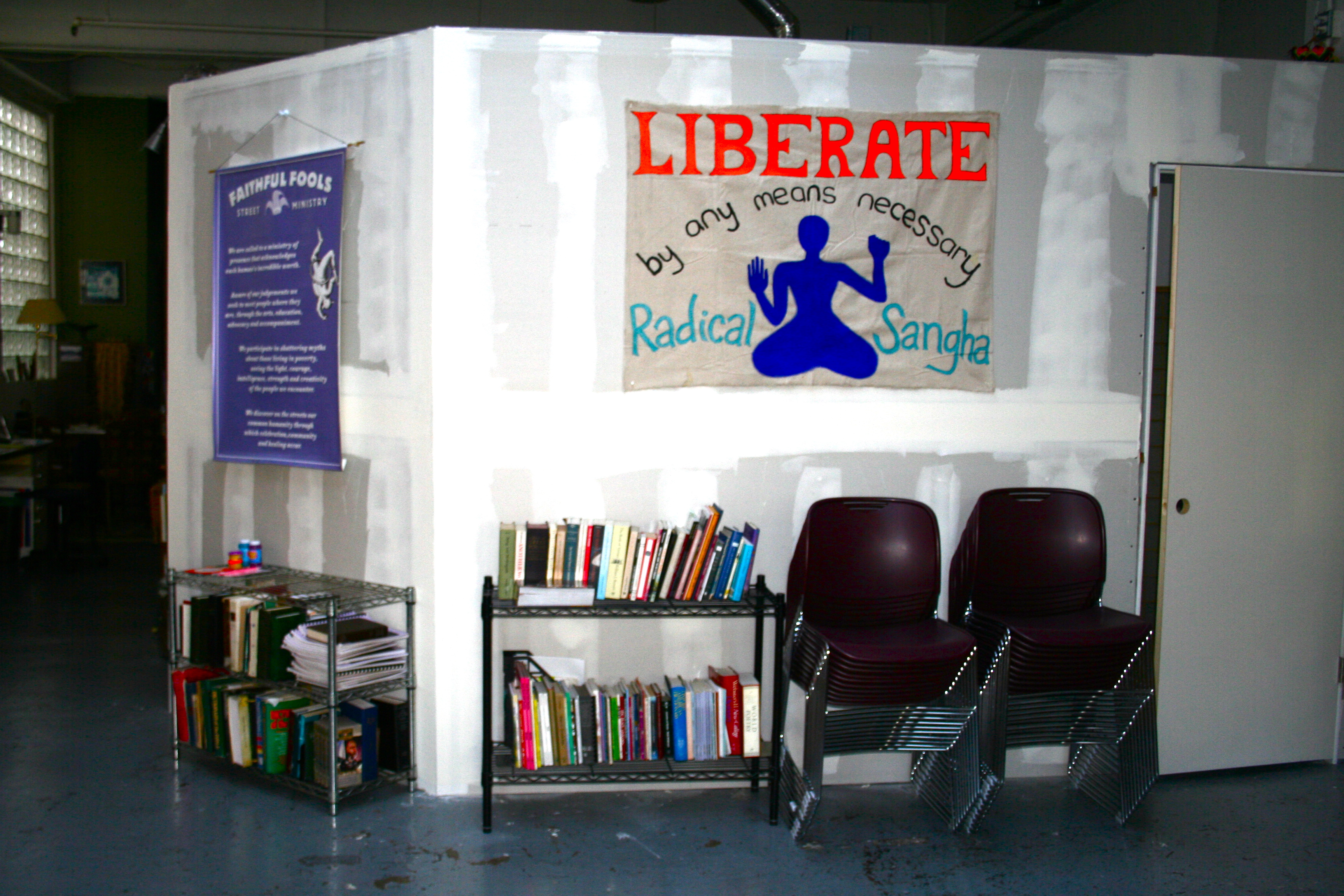
The Radical Sangha banner (also pictured in Monday’s post) has raised a few questions. This might be a good space to engage with some of them.

1. What’s a sangha?

I’ve heard a couple different translations for sangha, which is a Pali word. Loosely, it means something like “community.” In a Buddhist context, it’s one part of the Triple Gem in which practitioners take refuge. Triple Gem includes “buddha” (the historical Siddhatha Gotama from around 500 BC, as well as other buddhas or enlightened folks); “dhamma” (the teachings of the buddha; truth; or practices that lead to understanding truth through direct experience); and “sangha” (sometimes explained as an advanced practitioner to whom we might look for inspiration; other times explained more as a supportive community or assembly of practitioners). So sangha is a group of two or more people practicing dhamma, and helping one another to discover deeper and deeper truths about reality.

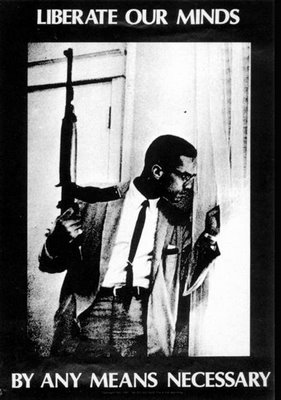
2. What’s your understanding of the phrase, ‘by any means necessary?’

Good question. I associate the phrase with Malcolm X and Black liberation movements that bucked norms by insisting that they had a right to use violence, among other tactics, to win their social freedom.

Put in a dhammic context for the banner, I love the apparent tension between the imperative to “Liberate,” and the famous militant phrase. The way I think about it, the Buddha himself did not rule out violence as a means to liberation. He didn’t rule out any means, and indeed gave a good honest try to many of the highest spiritual trainings available to him in his youth. He explored for himself (and encouraged all of his students to explore) the ways that mental negativity (almost always concomitant with doing acts of violence) undermines the quest for liberation from suffering.

What I would love to see among politically active dhamma practitioners in the Bay is a greater spirit of bold experimentation, in the tradition of the Buddha and other awakened folks. Too often we get stuck with a closed-case of nonviolence, or even pacifism. Too often this justifies and hides our fear of confrontation. Fear of conflict. Fear of pain.

And even among the dhammic people who exhibit extraordinary courage and commitment in the face of violent oppression — submitting to arrest and imprisonment for months or years at a stretch, over and over again — I still think we could use a little more of the “any means necessary” mentality. After all, the “necessary” part means what is necessary to win. Not just what feels good to us. Not just what mimics established forms. What works!  Right?

3. I recognize the fist, but what’s with the other hand?

Excusing, if you will, my mediocre drawing skills, the right hand of the figure is supposed to be an abhaya mudra: a gesture of friendly greeting, peace, benevolence, and the dispelling of fear.

For us to liberate (ourselves and each other) requires fortitude and oppositional stances; but it also calls for the special kind of fearlessness that comes from compassion. With compassion, free from delusion, we recognize the good in the opponent. We also see and tend lovingly to the hatred, fear, and greed within ourselves. This compassion inspires and guides our action just as much as strategy; just as much as the urgent wish to “smash” harmful systems.

——————————————

So there’s a little explanation of where I was coming from. Thoughts?  More questions?

love,

katie

Radical BBQ, Radical Sangha

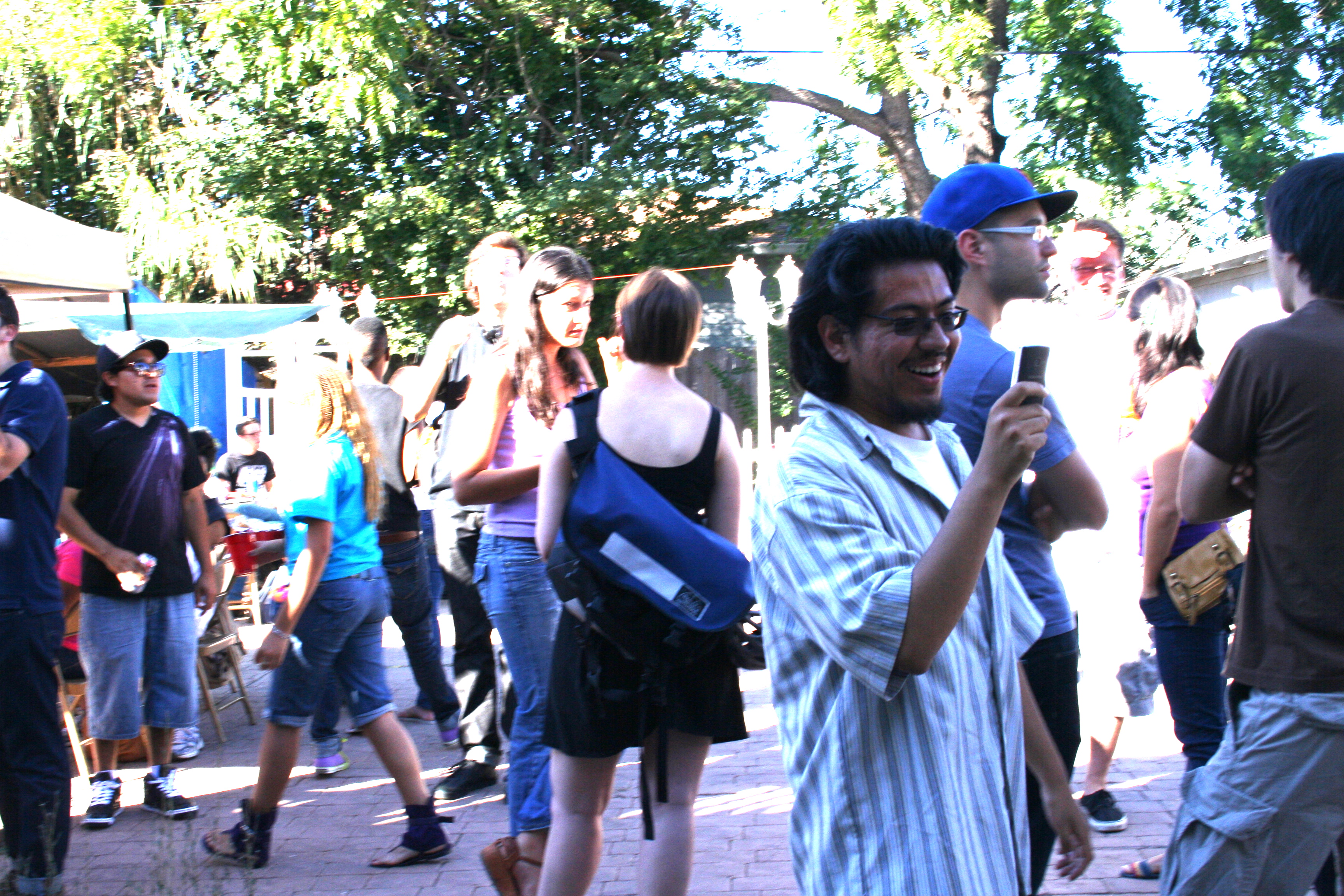
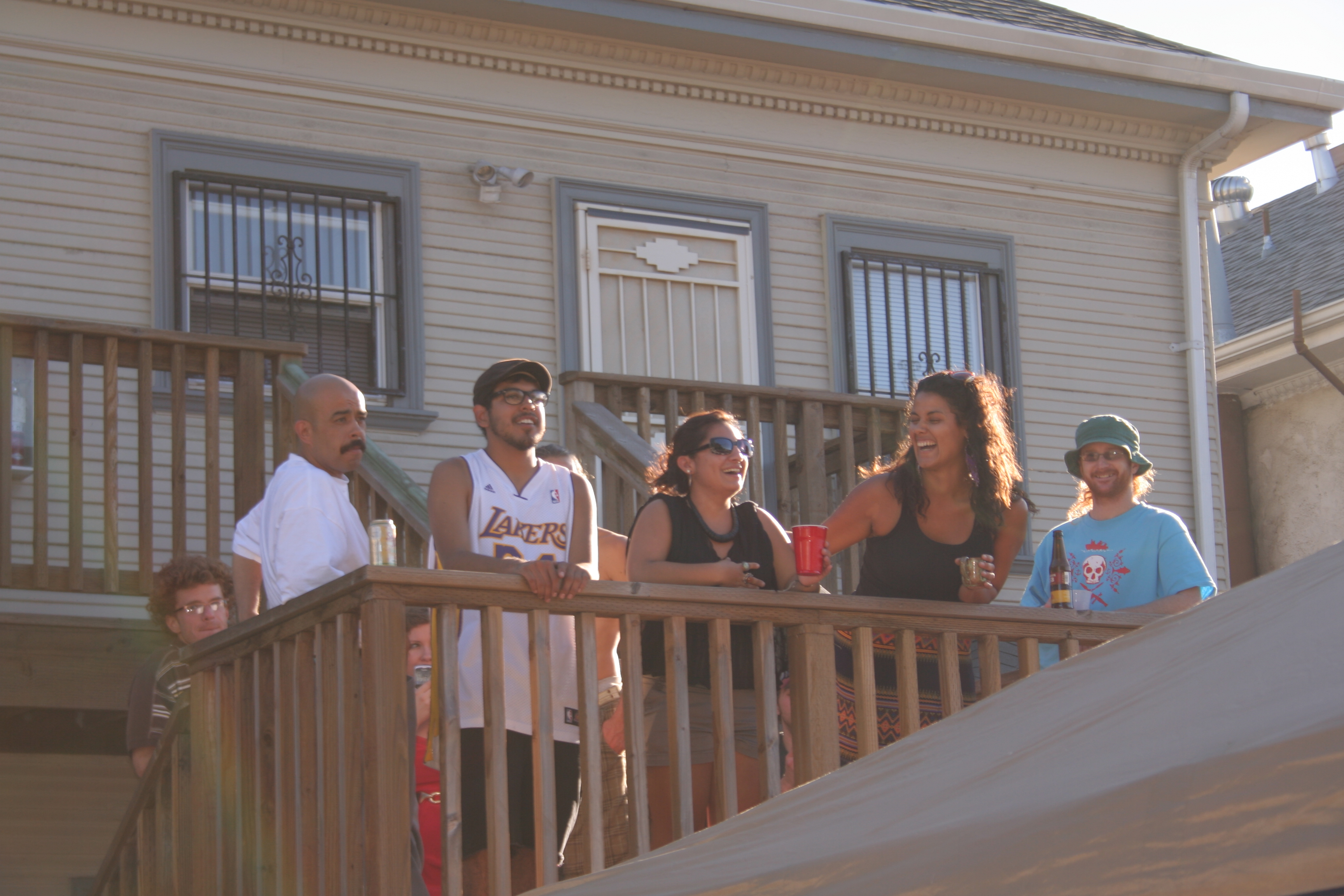
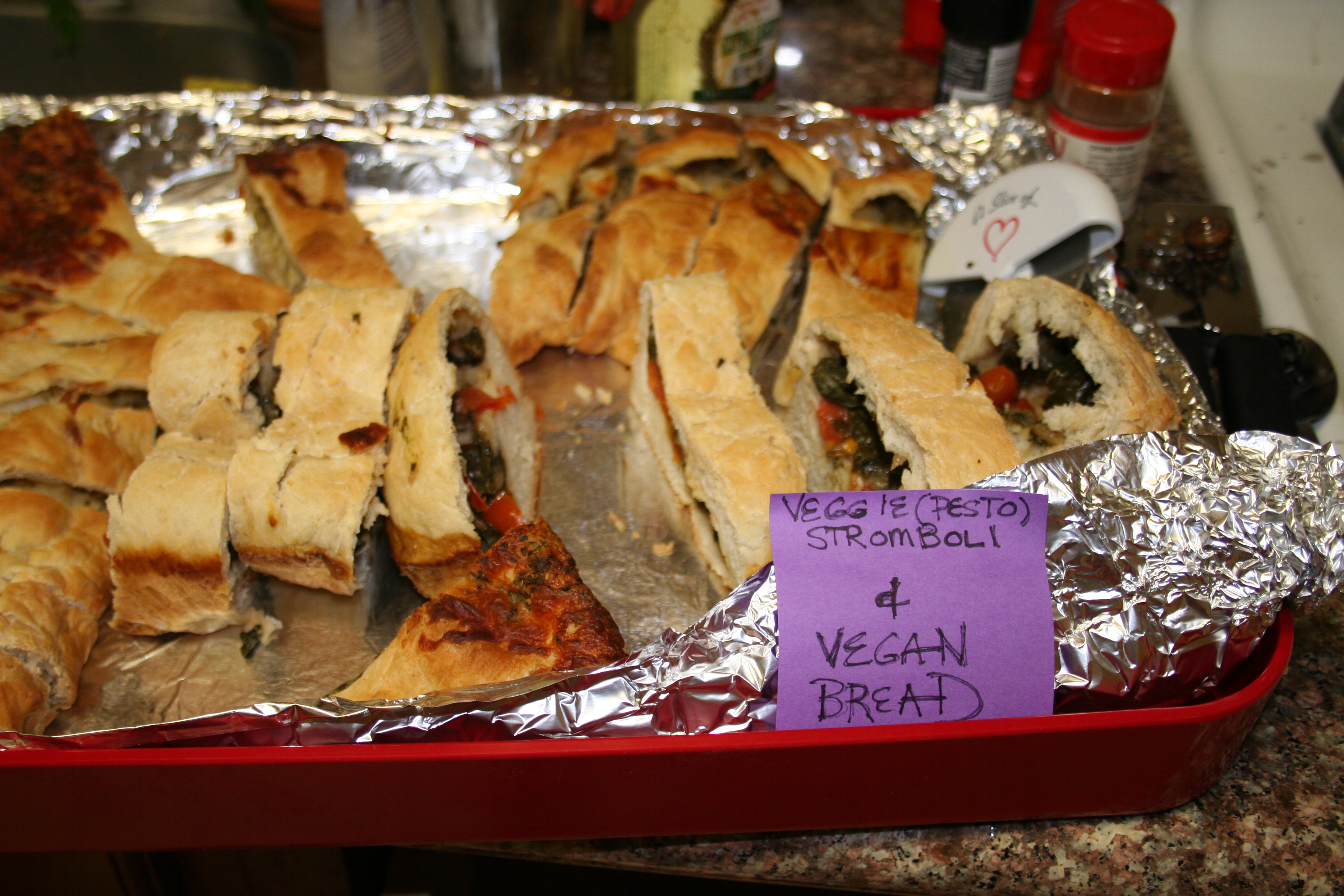
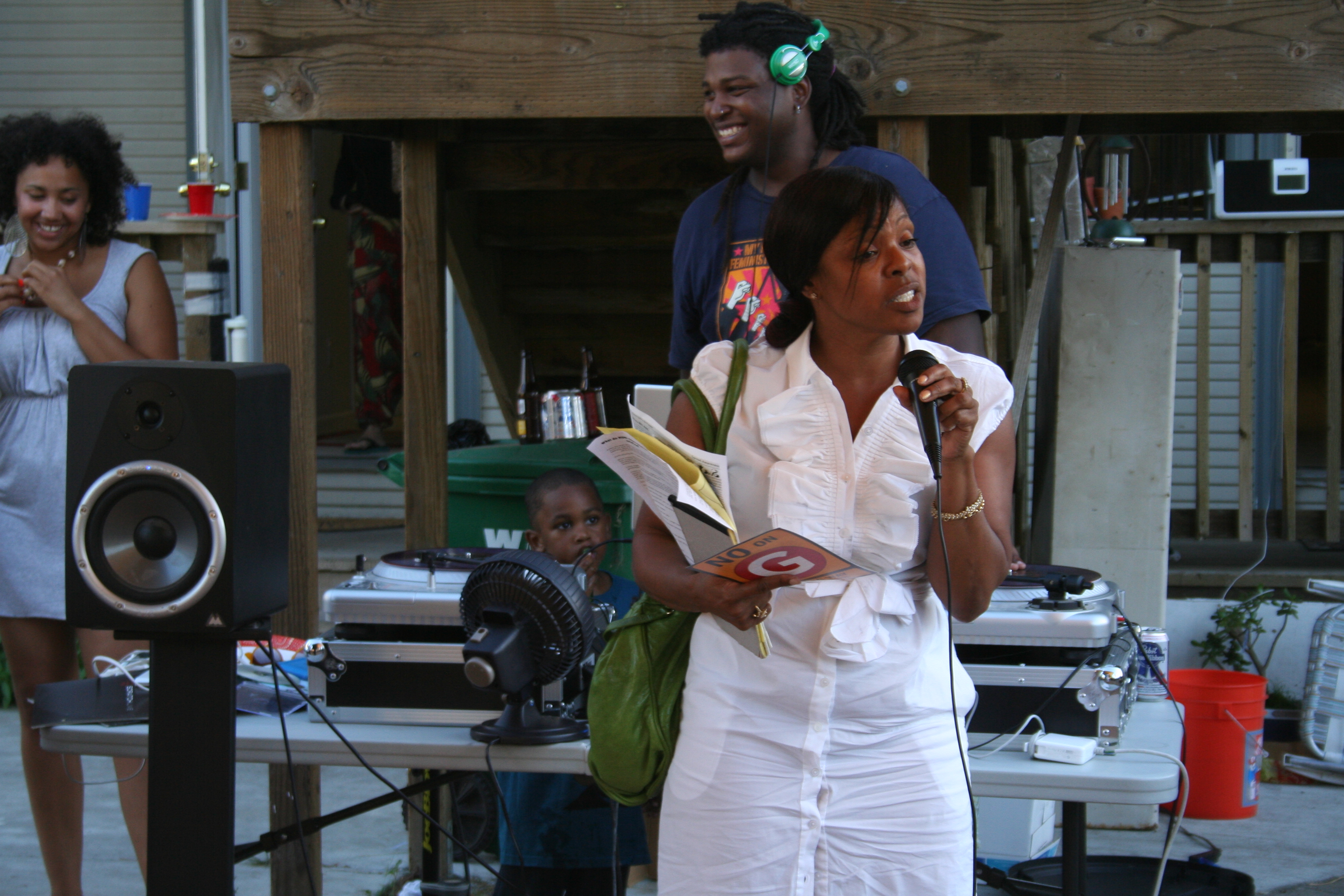
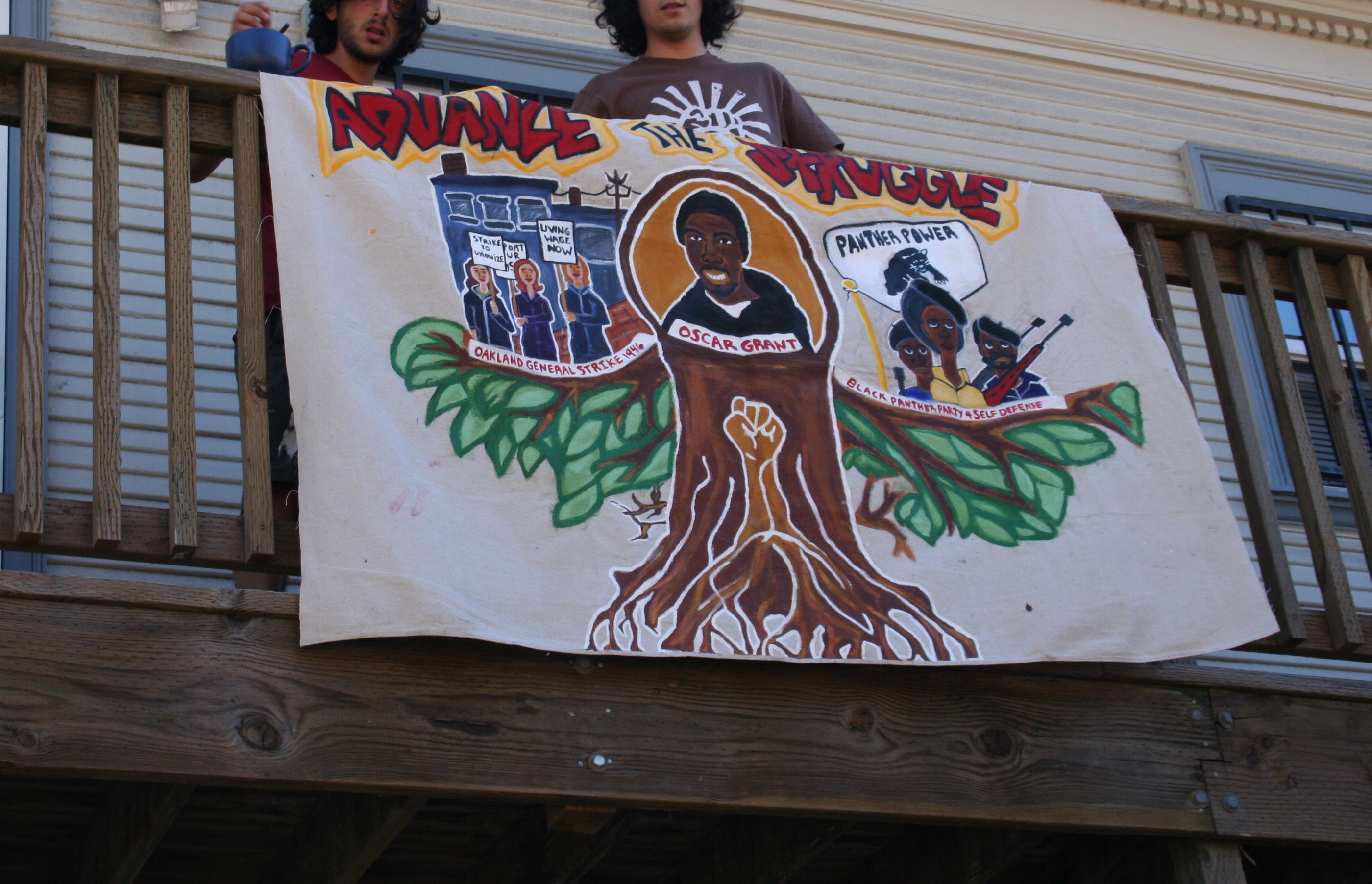
Some friends threw an utterly beautiful “Radical BBQ” yesterday in Oakland. Young and old, different races, different genders and presentations, fun, kind, relaxed, co-operative, joyful, political. Food (good heavens — Dani made these amazing stuffed stromboli and vegan bread from scratch); music and dancing; a speech from a MUNI driver (SF public transit) on the struggles they’re facing among the rank-and-file; wonderful art (check the Advance the Struggle banner: gorgeous). And they even provided art supplies for people to do their own thing. I took advantage and sketched out a small banner to use for Radical Sangha. Took it home and spent the night painting and finishing it up.

The banner may come in handy tomorrow evening, as the scheduled Radical Sangha will be meeting and then carpooling to San Quentin prison to join the protest of the first death-penalty execution in California in four years. Albert Greenwood Brown is scheduled to be killed by the state on Wednesday. The decision to resume executions (backed by Jerry Brown) was sudden, and has shocked a lot of folks who’ve been doing anti-death-penalty work for years. I only heard about it last Thursday, through folks in Oscar Grant organizing.

I’ll be writing up some thoughts and questions soon on tactics and strategy for radical organizing (sparked in part by an event the Faithful Fools catered yesterday: a talk by lifelong activist and frequent prisoner Father Louis Vitale, a Franciscan priest who works around anti-nuclear intervention and the School of the Americas Watch). Part of me feels ambivalent about attending a protest of the death penalty, with no clear mechanism for affecting this structural, state violence. But I also feel that with the proper perspective, and in tandem with different types of tactics and organizing, it can be a fruitful part of a holistic, loving, politicized life.

What really bugs me is that I won’t be able to make it to another dope event featuring my friend’s mom: An Evening of Solidarity with Women of Haiti. If you’re in the Bay area and not coming to the execution protest, think about hitting this up instead.

And a good Monday to y’all.

More Dangerous Compassion

I’m running around today with errands and work, following a long night of community dialogue/police brutality meetings yesterday. But quickly wanted to share this Huffington Post article: a summary of a weekend dialogue “exploring both the personal and the transpersonal challenges and possibilities of this question: How Can We Bring About a Compassionate Society?”

It’s another example, I think, of the specific problems I talked about in Dangers of Compassion.

Mystified mechanism:

As the hard inner work of contemplative practice transforms an individual, the ethical and altruistic qualities developed in such practices spill out into life with each and every action and interaction.

Root vs. Radical:

The path to a compassionate society arises from the intentions and actions of individuals within that society.

Social Change Relativism:

One small act of kindness and generosity … one act of tenderness … one act of selflessness … each of these moments makes a difference. No act is too small. Strung together, each kind gesture becomes a pearl that makes a beautiful strand of loving kindness with which to encircle self and other, close family, friends, coworkers, community, strangers and world.

Again, I sympathize with the idea that a lot of this compassion stuff is subtle, and can’t be ‘legislated.’ In a way, it really does depend on individual commitment and work. No one can cultivate compassion for us; we need to do it for ourselves.

But as I’ve emphasized, individuals do not exist in material and political vacuums. Pumping up our compassion while neglecting to develop our analysis and political program leaves us lopsided and spinning in circles. Like pushing a cart with one giant wheel and one tiny one.

Also want to note that I think that the Upaya Zen Center, where this “compassionate society” program took place, does beautiful work and includes wonderful people who clearly ‘get it,’ like Maia Duerr of Jizo Chronicles. So it’s not to say that the work of building a compassionate society is useless. (The two times I’ve seen Roshi Joan Halifax speak in person it made me want to run off and meditate 12 hours a day for three years or something — she’s that inspiring.)

Y’all know where I stand. Awakening takes devotion, and I respect that enormously. Bridging awakening with the desire to build a better society is where it’s at. And in order to do that, we have to step up our game on articulating precisely what kind of material society we want, and how we plan to get there.

Anyway, something to chew on for the weekend. Take care, everybody — see you Monday.