Offerings For The Pro-Choice March

This slideshow requires JavaScript.

Back at Harvard, I learned two twin currencies for liberal political engagement: prestige and critique. In order to make the most important, sophisticated contribution to your community, you should try to do one or the other. (Or, in my case, kind of switch back and forth between them.)

Prestige meant planning events with lots of endorsements by student and Real World groups; generating lots of publicity (including Real World media, if possible); and generally capitalizing on linkages with nodes of power, with the aim of Getting Big Things Done.

Critique meant showing up to a prestigious event and eviscerating it with progressive analysis. Pointing out that it reifies X Y and Z oppressive dynamic, invizibilizes A B and C communities, and generally fortifies neoliberalism and hierarchies of privilege.

Something like that. Now, I’m not saying that other approaches didn’t exist at Harvard (Harvard Progressive Action Group was probably doing things at least a little differently; and same for the Student-Labor Action Movement), but these were the ones that most affected me, in my thinky liberal way of moving through the world.

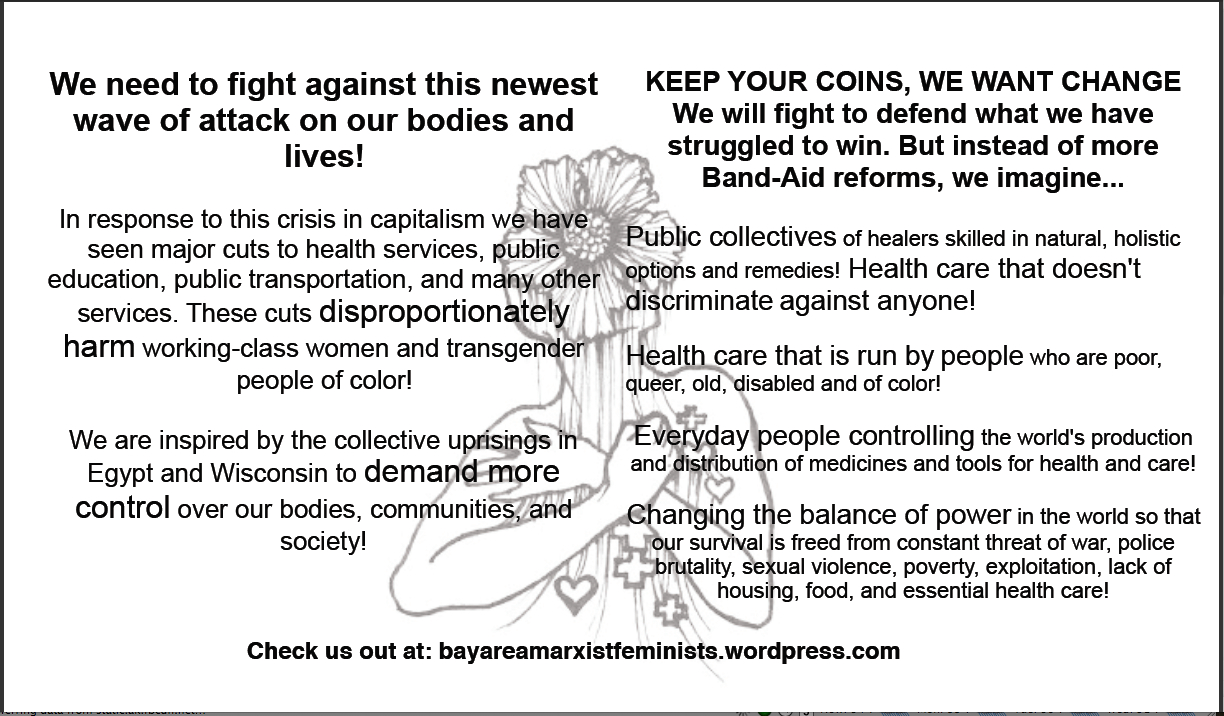
And so, yesterday, when six of us from the Marxist-Feminist study group arrived at a Bay Area Pro-Choice march armed with flyers that we had each played a part in creating, I thought to myself, This is a good offering. We chanted, we participated, we were a part of what was happening, and I felt tremendously grateful to all the people who have fought before us for the right to legal abortions. Some of the signs people carried gave me chills: “ABORTION ON DEMAND, WITHOUT APOLOGY”; “Rape Survivor For Choice [because I didn’t have one]”; and of course, the iconic coat hanger. At the rally, women shared personal stories about terminating their pregnancies, making real and visible the object of our shared struggle. No doubt, there was bravery here. This was something we wanted to support.

We were not, however, blind to the limitations of the event. A narrow focus on defending abortion rights completely overlooked the ways that austerity measures here in California are generally pummeling working-class people’s access to sexual health care. This myopia has long been a problem of largely white, middle-class reproductive rights movements. Surveying the crowd and listening to the speeches, I felt a little pessimistic about how our half-sheets would go over, fingering capitalism as a major part of women’s oppression and choicelessness.

But instead of standing on the sidelines hating (read: critiquing), we engaged. When the organizers opened up the stage for anyone to take the bullhorn, two of us got up and articulated our comparatively broader analysis. And the crowd was feelin it!

After that, flyering was easier and less awkward. People came to us.
This n That Friday

Yesterday morning, the street in our neighborhood where organizing saved a woman's house

What a week, folks. A week that included:

  • Going to a reading discussion about the League of Revolutionary Black Workers (the subject of Detroit: I Do Mind Dying), attended by two former League members (one of whom worked thirty years on an auto assembly line…..DAMN), still fiery and utterly inspiring
  • Flyer from a similar LRBW event
  • Huffing, puffing, and grinning up Berkeley hills on my gorgeous new bike

  • Feeling grateful for warm, dry, cozy home-shelter from the winter rain
  • Feeling furious, though not really surprised, at the redoubled repression of US prisoners: disappearing resistors and expanding prison labor to fill the gaps in state budgets
  • Making plans to read aloud to our incredibly fly and friendly 80-something-year-old neighbor, Mr. Posie
  • Being there for friends while they cry, and asking friends to be there for me while I cry
  • Brainstorming ways of bringing revolutionary perspectives to this weekend’s efforts to defend sexual health care
  • Showing up with Ryan at a 6am anti-eviction action, a few blocks from our apartment, to find out that it had already won: once the media started contacting Wells Fargo for comment, they backed down (for now) from taking away this woman’s home

That’s it for me, folks. Hope your week was filled with ups, as well as downs — but most of all, spaciousness enough for both. See you Monday!

Interdependence, Colonialism, and Commodity Fetishism

In Buddhist parlance, we often encounter the word “interdependence.”  It comes up in many contexts.  One way I often hear it invoked (in dhammic as well as New-Agey spaces) is as a kind of feel-good spiritual brainteaser.  Isn’t it amazing and beautiful how we are all connected?

Here’s a good example, from my own life.  I was attending a conference about spirituality and technology: the Wisdom 2.0 Summit.  One of the keynote speakers, Tony Hseih, CEO of the online retailer Zappos, gave a talk about the culture of happiness at his company, and how attention to the human connections between merchant and consumer fosters better, more lucrative business.  The title of his book sums it up nicely: Delivering Happiness: A Path To Profits, Passion, and Purpose.

When it came time for Q&A, I raised my hand and got the mic (standing up, semi-terrified, before this large crowd of very successful techno-seekers). I thanked Tony for his work, and then asked what he thought — and what all of us present thought — about the happiness of the people who produce the technology we use.  The people working in the factories that make our phones, our laptops, our desktops.  The people mining the minerals for all of these.  What about their happiness?

It’s all well and good to look at interdependence as a network for human kindness and beneficence.  But the fact is, it is just as much (if not more) a network for exploitation: of humans, animals, and the earth.

In his newest book, The Boddhisattva’s Embrace: Dispatches from Engaged Buddhism’s Front Lines, Hozan Alan Senauke of the Clear View Project cuts to the core of exploitative interdependence in the conclusion of a beautiful essay on the shipbreaking industry in Bangladesh.
Continue reading

What Do You See?

These images come from “Women of Egypt,” a Facebook collection by Leil-Zahra Mortada, someone I don’t know but to whom I’m grateful.

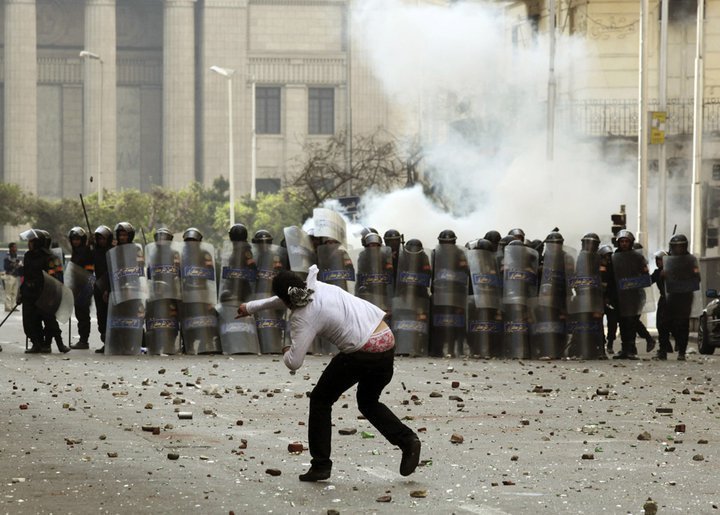
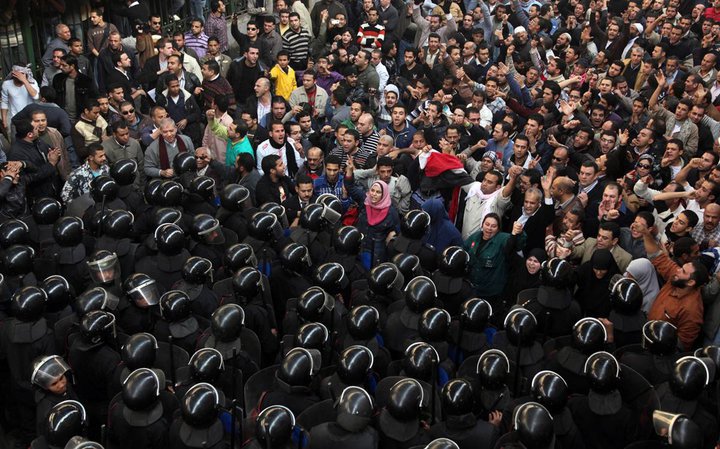
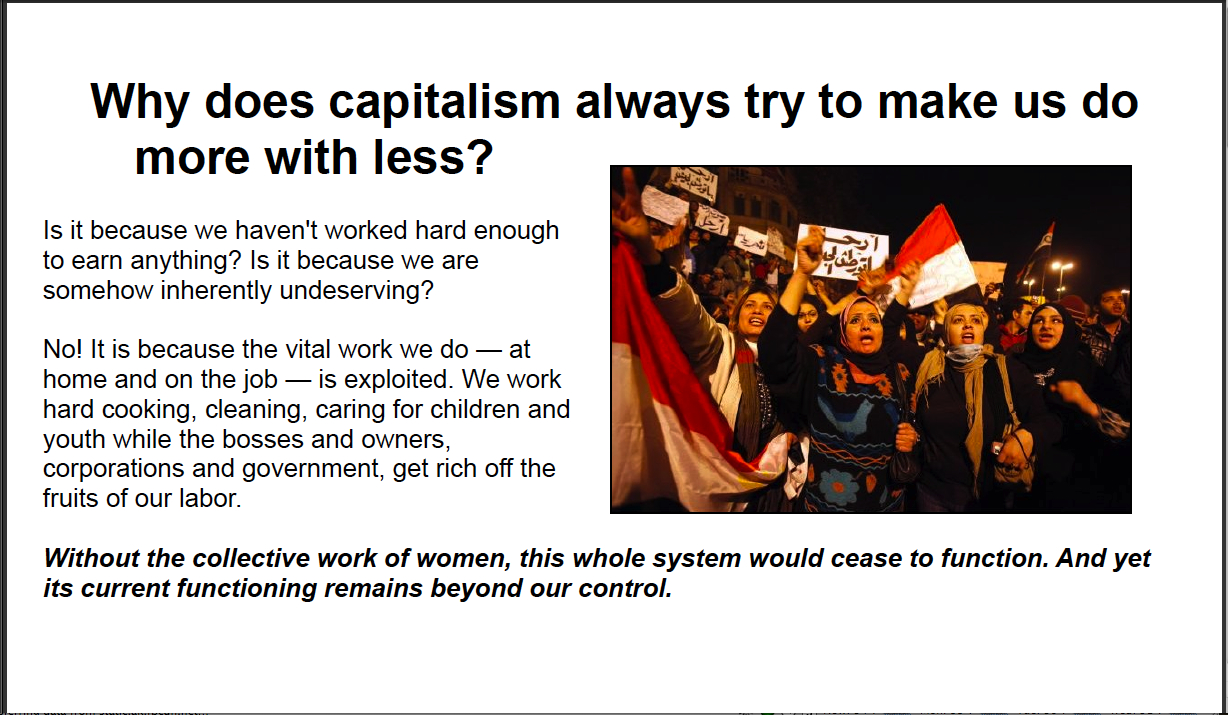
There are so many powerful photos emerging now. These three from Mortada’s album especially resonated with me. How we view the stories in them depends so much, I think, on our own (often complex) experiences with police, and our analysis of state violence.

Class Traitors, Class Transitions

I wonder whether Moses, after being kicked out of the palace and downgraded to the slave caste, ever felt nostalgic for his royal upbringing. Same for Siddhartha, who left his princehood by choice and became an ascetic. Did St. Francis of Assisi, who shunned his cloth merchant inheritance, ever miss strutting down a 13th-century street in a fly outfit? What was it like for St. Clare, a follower of Francis, to abandon her landowner life and found the Order of Poor Ladies?

These folks all share certain dimensions of class transition, along with some leanings toward class treason — though I hesitate to call any of them class traitors because, while they attempted to carve out alternative, anti-hegemonic lifestyles and communities for their followers, to my knowledge they did not explicitly, politically confront the existence of the class line itself. (Someone please correct me on this if I’m wrong!)

Lately in my own life, I’ve been noticing painful areas in my move away from liberalism (and/or nominal radicalism) toward a politic that actually centers the working class and the dispossessed. This process, for me, involves somewhat shameful, tender stuff.

Continue reading

What To The Radical Is Martin Luther King Day?

Alan’s got a lovely piece up at Clear View Blog (digging his jaunty-angled question: what would MLK, Malcolm X, and Paul Robeson think about being put on U.S. postage stamps?) that points to the connections between big-L Love and the effort to, in King’s words, “defeat evil systems.”

Compassion and militancy.  Neither can substitute for the other.  If you’ve got militancy but don’t practice compassion, your friends and comrades — the people upon whom you most rely, politically and personally — prob’ly won’t enjoy being around you.  Not in the long term, anyway.  And if you’ve got compassion but no critical analysis of “evil systems,” or meaningful program to defeat them, you are, as Ryan points out, utopian.

Combine the two, compassion and militancy, and you’ll get something powerful.  But you’ll also get problems.

Frederick Douglas famously asked, “What to the slave is the Fourth of July?”  We might do well to extend the same skepticism to today’s hallowed, lovey-dovey vacation day.

Beneath the hype, MLK day can serve as a reminder that people who advance the fight for radical liberation, using their own compassion and militancy, are undoubtedly risking their lives.

So if you’re among them, thank you for your courage.  May the earth continue to bless you with beauty every day. May you sometimes have a sweet picnic by the lake.

Continue reading

Buddhist Production, Feminist Effort, and the God of Work

It’s a gorgeous, crisp day outside: perfect for a ride on my pretty new bike, and no time to be stuck inside blogging til dark. So the thought-connections in this post will be loose. Maybe I’ll try tightening them up sometime.

The following are three excerpts from three different pieces: Buddhist, economic, and Marxist-feminist. All deal with the same theme: work. I’m simply interested in thinking about parallels and dissonances among them, and working toward a more holistic understanding of how work operates in reality, and how we might want it to operate.

1. Buddhist Production

Let’s start with the Buddhist one, from Tricycle Magazine online:

When explaining meditation, the Buddha often drew analogies with the skills of artists, carpenters, musicians, archers, and cooks. Finding the right level of effort, he said, is like a musician’s tuning of a lute. Reading the mind’s needs in the moment—to be gladdened, steadied, or inspired—is like a palace cook’s ability to read and please the tastes of a prince.

Collectively, these analogies make an important point: Meditation is a skill, and mastering it should be enjoyable in the same way mastering any other rewarding skill can be. The Buddha said as much to his son, Rahula: “When you see that you’ve acted, spoken, or thought in a skillful way—conducive to happiness while causing no harm to yourself or others—take joy in that fact and keep on training.”

– Thanissaro Bhikkhu, “The Joy of Effort”

Continue reading

Harmful Sexuality: Workplace Exploitation

One of the Buddhist precepts that I don’t hear discussed much in ‘official’ settings is the advice to “avoid using sexuality in harmful ways.” There’s a ton to unpack there, obviously, but one connection I’m making has to do with a meeting tonight of Bay Area radicals rallying around a friend of mine who got fired from her job.

She’s been an educator in an Oakland after-school program for a while, and a few weeks ago her boss fired her. Didn’t tell her why. (Still hasn’t.) Didn’t even bother to notify her: she came in and worked a whole day before being told that her contract had been terminated.

So what’s this got to do with sexuality? Well, even though no one has told her why she was fired, my friend has a pretty good idea: she turned down her boss’s sexual advances. For months he had been flirting with her, but as soon as she put a stop to it, the game changed. You can read her entire account on her blog.

Sexual harassment at the workplace? Clearly not okay. So tonight a bunch of us will get together and see what we can do to support. My friend already took the lead herself, by refusing to play along with her boss in the first place. (Reminds me of Robin D. G. Kelley’s Race Rebels, where he examines everyday worker resistance, and specifically names the form of struggle wherein women respond with calculated coldness to sexually aggressive male superiors.) But individual assertions of dignity are not enough. Not even when it comes to sila (Buddhist morality, including the precepts.) It takes sangha, community, to breathe life into explorations of harm and benefit.

And importantly, the precepts aren’t some kind of spiritual checklist. Don’t lie — gotcha; Don’t steal — okey dokey. If that were true, then as long as my shit is under control, I wouldn’t need to care about anybody else’s struggles with harm.

To me, rather than instruments for performance evaluation, precepts can act as guideposts for looking deeply and holistically into processes of harm and benefit.

We’ll see what we can come up with at tonight’s meeting.

A Jury Of Your Peers

Started reading a book yesterday, borrowed from my friend Anastasia, called Detroit: I Do Mind Dying — A Study In Urban Revolution. Remembering that this year’s U.S. Social Forum (with its defensive hodgepodge of Lefty traditions) was hosted in Motor City, I’m especially interested in learning about the particularly radical, revolutionary history of the place.

Just began, so don’t have much to comment on yet, but the history of one legal case struck me something serious.

It’s a retelling — an entire prologue — of the amazing case of James Johnson: a Black auto plant worker who, in the summer of 1970, after being suspended for refusing to cooperate in a work speed-up, shot and killed a Black foreman, a white foreman, and a white job setter on the factory floor.

Remarkably, “the jury found James Johnson not responsible for his actions.”

Why?

Continue reading