‘Working class self-activity is working-class autonomy — autonomy from capitalism,’ argues [Lee] Holstein. Her problem with advocates of trade-union reform efforts, such as Moody, is that they ‘mush together the reform and revolutionary aspects of resistance and insurgency, treating forms of resistance and insurgency which are confined within the framework of capitalism in the same way as those which break out of that framework.’ For Holstein, by contrast, ‘self-activity is not just resisting and attacking, but resisting and attacking in a way that undermines capitalist power, destabilizes its institutional framework, and foreshadows and demonstrates, in the form and content of the current struggles, the potential of the workers to be rulers.’ (284–85)
Two questions for today, and then I promise I’ll get back to grad school work. ;)
Sometimes when you get home after a day of airplane travel, haggard and tired, you’re still buoyed up by a song.
“Blame It On My Youth” I learned just yesterday, thanks to my friend and award-winning jazz musician Kavita Shah, who just released her debut album featuring Lionel Loueke (one of my favorites!), and whose version of this tune (she arranged it herself) is just gorgeous.
board the train (made it this time, again thanks to dana and victor). the conductor looks at my ticket, burlington to boston with a 3+ hour layover in springfield, mass. he says, “you know, it’s up to you, but you might be better off taking the bus from springfield to boston: it’s just a few blocks from the train station, and leaves every hour. not trying to drive business away, but it sucks to have to wait around so long.”
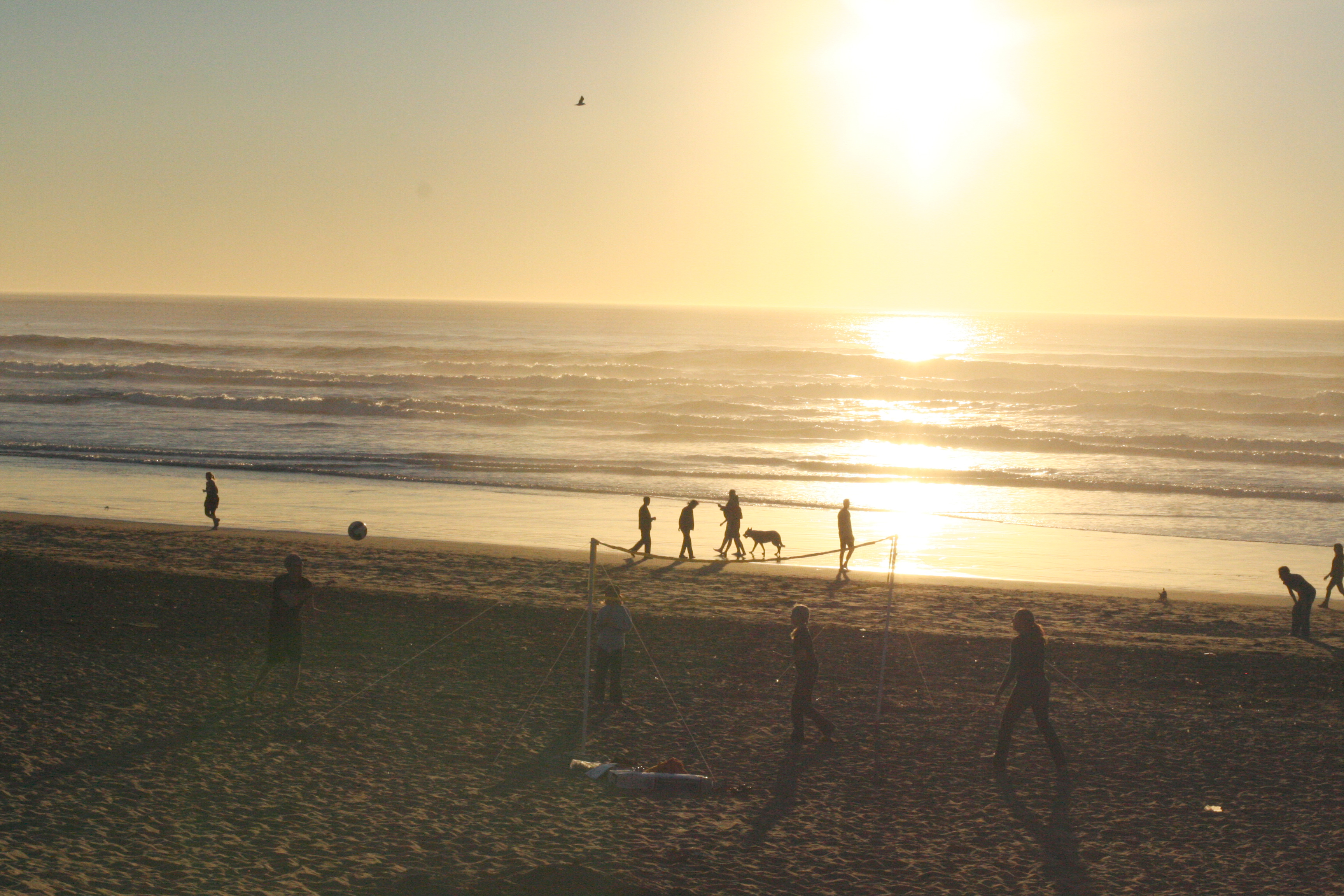
On a whim this Sunday, drove to Ocean Beach to take advantage of clear sky and strong sun. Rare are the days warm enough that removing my shirt makes sense. (not that it has to.)
Jacob Lawrence, from the Toussaint L’Ouverture Series, “To Preserve Their Freedom.”
i don’t begrudge my friends and family their joy, but since 2008 i have lost my belief in a patriotism dressed up in charming blackness.
instead, may blackness continue to serve as an impetus toward universal freedom, fundamentally challenging all harmful power structures (including the u.s. government).
may blackness fill us with the vision, love, and spiritual strength necessary to fight for a classless society, a society of equals, where leaders are not idolized but trusted — and directly accountable.
much gratitude to all who have struggled and are struggling for real, worldwide liberation.
so humbling and exciting.
=====================
Top: “Steeped in African American history while growing up in Harlem during the Harlem Renaissance, Jacob Lawrence launched his career at age 21 with a 41-panel series about an important black hero, Touissant L’Ouverture, who led the slave rebellion to liberate Haiti from French rule. Years later, he reprised the series in screen print, including the dramatic ‘To Preserve Their Freedom,’ 1986, a reminder that American blacks were still not liberated.”
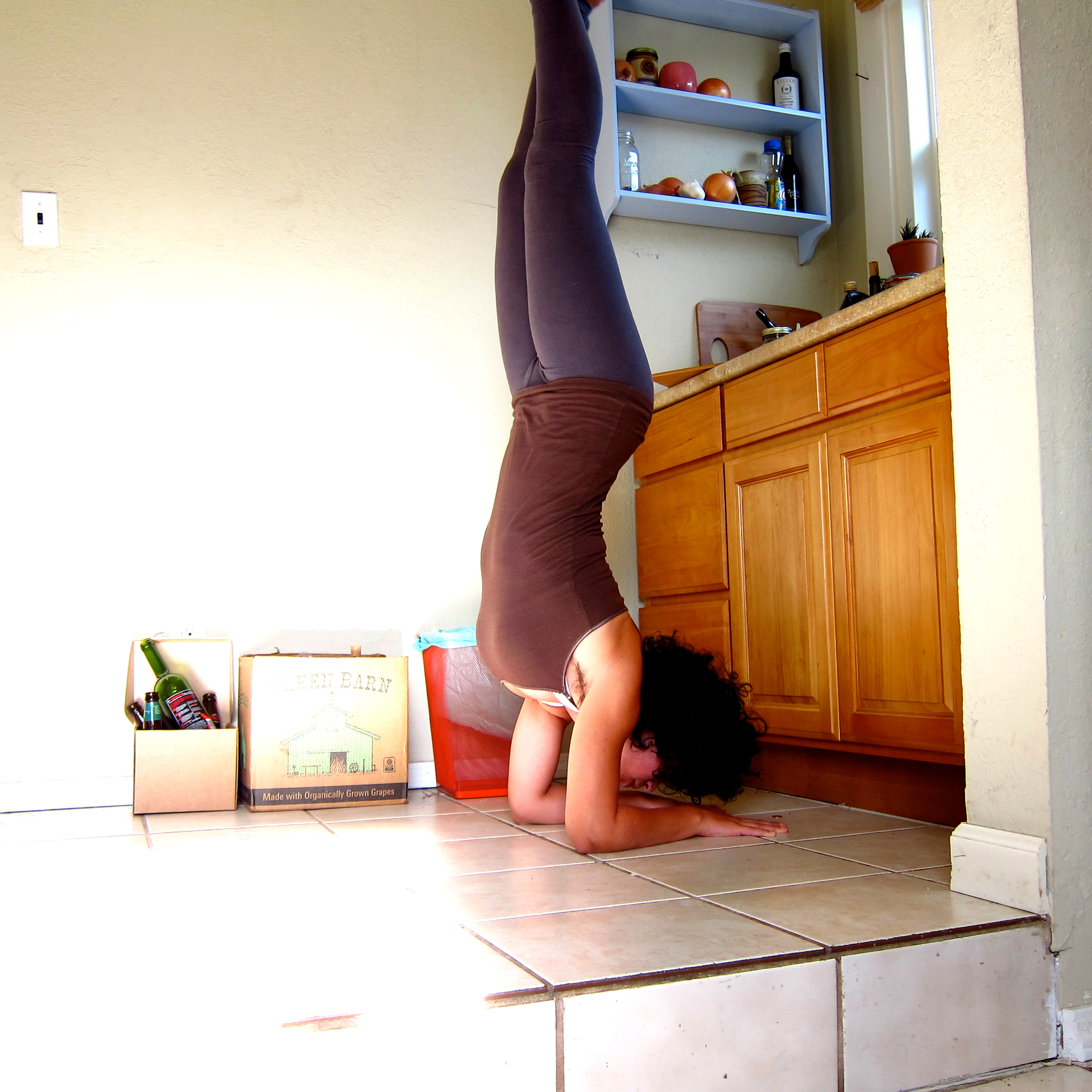
break from work; practice forearm stand. at yoga class this morning the teacher interrupted a sequence to give us all a stern 8-minute lecture about hip and ribcage alignment. (love it when teachers provide actual, knowledgeable feedback.) now i can see (and feel) the ways i tend to over-arch my spine and compress things that shouldn’t be compressed. as i adjust into correct alignment, the breath comes and goes more deeply. more to practice, with patience. ♥ #counterWoo
This new year found me thinking a lot on death. Not because I’ve recently lost someone close to me. It feels more like a natural pull toward deepening my spiritual study and practice. Marking the passing of 2012, I know I’m one year closer to my own eventual death, and the deaths of everyone I love. It’s also the anniversary of the murder of Oscar Grant at the Fruitvale BART in Oakland: a death that symbolized much and galvanized many, at the time.
Reflecting on death is an important practice within the Theravada Buddhist tradition, related, as I understand, to pre-Buddhist Hindu methods of graveyard observation. The Mahāsatipaṭṭhāna Sutta advises hanging out in the charnel grounds, noticing the nine different phases of a decomposing corpse. Benefits of developing this intimacy with death and decay range from deepening one’s understanding of impermanence (one of the Three Marks of Existence), to, on a perhaps more pragmatic level, icing down a particularly hot lust-wave that might be interfering with your ability to meditate properly. Go look at some rotting flesh for a while; you’ll calm down.
Another classic reward for contemplating death — one I’ve been experiencing these past few days — is how it can help us appreciate the preciousness of the life we’ve got. Whether or not we believe we “only live once,” this life is still an incredibly fleeting opportunity, not to chase endlessly after pleasure, but to make as many positive choices as we can. To let our little light shine. What’s been surprising for me, though, is that instead of increasing my sense of urgency, this sobering reflection seems to be kind of slowing me down — in a good way. Less frantic; more focused. It’s like I can understand now, at a body level, that a rush-rush-rush approach won’t always yield better, more brilliant light. What’s needed are quality, rigor, and vigor; not necessarily speed. There’s a difference.
So, on we go. For how long in this form, who knows.






 Kloncke