Feminism
Solar Oven
winter is coming.
winter is coming.
winter is coming and this august-born body
never did like the cold.
bad circulation
deadens my brown fingers
turns them the greenish-white
of hospital walls.
winter is coming
and i quietly beg my freckles to stay.
me and my freckles leave the hearthless apartment
to sit in my parked car, huddled
like a batch of hopeful chocolate chip cookies
in a fifth grader’s solar oven.
i hate winter.
i want heat all the time!
almost all the time.
i want enough heat to make me happy.
when winter comes i layer up
then shrink from the inside
like an old pea shriveled in its pod
like the illinois corn disastrously shriveling in its husk
as we speak,
as meantime the miners of south africa steel themselves
against the next ANC attack
and most of africa rustles inchoate
against the next round of land grabs
and everyone can see the thick-tongued famines approach.
one night
not long ago,
i was walking my parents’ dog
a dog i don’t particularly like
though dogs in general aren’t really my thing.
well i was walking the dog
in the quiet nighttime suburbs of Sacramento
and all of a sudden i looked at a lawn and thought:
“goodbye, grass”
and even though i know lawns are awful,
i felt tender toward this one
and a little tender toward the dog.
then i thought:
“this feels like a melancholy indie film.”
winter is coming
and my oven has been broken for weeks.
i told the benevolent slumlord, who replied with the usual
benevolent slumlord promises.
bugging him seems risky
since i want his permission to paint the walls
the same golden yellow i always paint
to warm up my heart when i’m indoors
and not enwindowed in a winter car.
so my oven stays broken
and i have no backup solar version
no cob alternative
i am too pessimistic, lazy, and single to attempt to construct either one.
i just want to laze in the day-drenched summer forever
on a planet full of native grass and coral reefs
a planet free of shit-snow on sacred mountains
a planet with its own miracle of clean water
and enough for everyone.
unfortunately for me,
for us,
winter is coming
resentment won’t stop it
so i guess we had better get creative.
Won’t You Be My Neighbor?
such a good day of neighbors.
building and learning some of the history of my block from a new friend who grew up in the neighborhood and whose family lived on my street up until a few weeks ago.
then tonight i check my voicemail and 88-year-old Mr Posey up the road had called to see if i wanted to come over and watch the giants. (we watched game 3 together and made cornbread.)
plus i live within walking distance to lots of fabulous people i know, and probly many more fabulous people i’ve yet to meet.
north oakland, i really appreciate getting to know you.
Waged & Unwaged Labor Struggles Are Still Feminist Fights, Y’all
 inspired by Silvia Federici’s talk tonight — where she gave a feminist take on the financialization of reproductive work, as well of an overview of reproductive sector struggles from elder warehousing to education. came home, ate cookies, put beer in the fridge. then found this resonant testimonial on the web page of Mujeres Unidas y Activas (MUA), about its Caring Hands Workers’ Association.
“Before I took the Caring Hands training, I was economically dependent on my husband. He controlled me by determining how much money I would have. He refused to give me money for the bus, so I couldn’t go out. After I took the training, Caring Hands helped me to find work and I began to earn my own money. Now, I am free.”
—Caring Hands Graduate
Poignant evidence supporting Federici’s assertion that, contrary to the criticisms of the 1970’s Wages for Housework Campaign, efforts to win remuneration for women’s reproductive labor weren’t tainting the private sanctuary of the home. Rather, domestic social relations were already constructed around the withholding of the wage from reproductive and care work, typically done by women and always systematically devalued.
In other words, the introduction of wages for housework wouldn’t distort or shape social relations in the home any more than the absence of wages for housework already does.
Good food for thought! Now to drink one of these beers, plan my garden with a friend who’s helping me, and do a little organizing work before bed.
night, y’all.
“Your Revolution Will Not Happen Between These Thighs”
i’m really proud of myself: tonight i warmly but firmly set a boundary with an older man i’d been meeting up with politically, and who seems to be lightweight hitting on me. usually i have trouble with this because i don’t want to alienate people investigating radicalism. i fear that if i crush their flirty vibes then they’ll drop the politics completely, and i will feel guilty. but tonight i told this man that even though i genuinely enjoy spending time with him, (a) my life is really busy and (b) my primary interest is that he has options of staying politically involved and connected, if not through me then through other people in my organization. he seemed to take it okay. yay for healing subtle internalized patriarchy! ♥
and here’s a little celebration / inspiration from sarah jones. happy monday, y’all.
===========
My First Marxist Feminist Rhyme
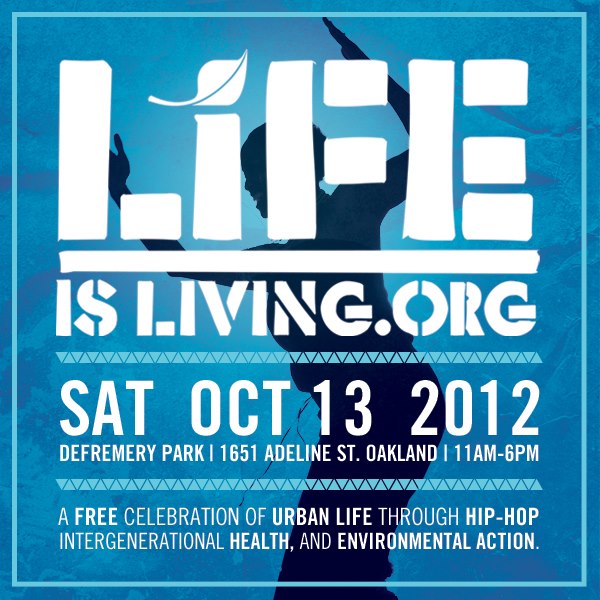 Yesterday: amazing political art by Young Gifted and Black, Isis Rising, and all kinds of other phenomenal hip-hop and soul-flavored performances at the Life Is Living festival yesterday in West Oakland (including an extended Nina Simone tribute that, during Jennifer Johns‘s take on Sinnerman, evoked a cathartic tear or two from the wildly dancing audience). On my way out of the park I watched this rhyme unfold in my head.
It started with the tradeoff of wages and prices, then meandered to attacks on reproductive care (thanks for that presentation, Becca!), the false liberation of muslim women thru u.s. imperialist war, and nuclear energy and fukushima (shouts to Umi for alerting me to the feminist working-class issues there).
So here you go — an extremely extremely rough experiment, something that will probably never amount to anything polished. Still, it represents my gratitude for all that I’m learning, every day, from comrades, artists, thinkers, ancestors, and people in struggle.
lyrics=======what they give to us in wagesthey take back in price raisesand when prices go downain’t no jobs to go aroundclass war is the struggle of haves and have notsthe haves got cops and the nots get locked upknocked uppatriarchy ain’t always a black eyeit’s that guycuttin reproductive care statewidestay wisestay appriseddon’t believe in state lieswomen’s liberation ain’t no bombs in the skyain’t no nuclear sitesclaimin power for the peoplebut indigenous displacementand radiation is the paymentthat’s why i send love to mothers in fukushimaand the elders volunteeringfor the deadly job of cleanup
Lessons from STORM
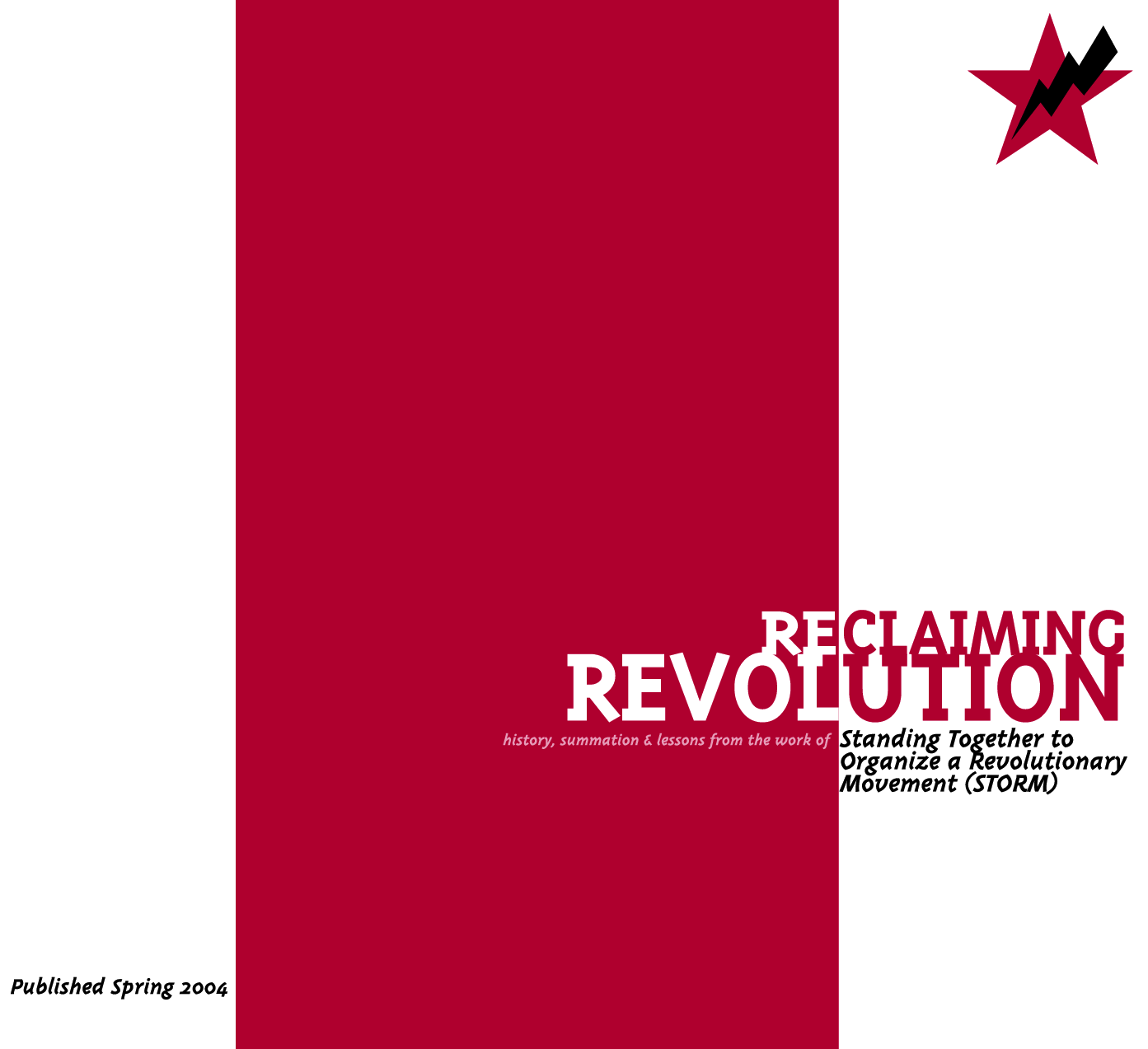 So many amazing questions raised in this piece, about what kinds of cadre are needed in our historical moment, how to practice and not just preach revolutionary feminism, the relationship between leadership and democracy and how to build revolutionary leadership in oppressed communities during a non-revolutionary period… totally daunting and absolutely essential inquiries.
A couple small points that are feeling particularly relevant and challenging for me right now:
We [STORM] also made a mistake in not considering emotional development to be a part of our members’ development as revolutionaries. We did not help our members heal from past life trauma or from personal challenges encountered during political work. Such hurt and trauma are inevitable and, if left to fester, can negatively impact our political work. STORM’s inattention to this matter allowed members’ political and practical skills to outstrip their personal capacity to handle the pressure of their work. This led to a lot of interpersonal conflict and tension with other activists.
and later:
STORM tended towards an emphasis on the common struggle of all people of color instead of a more in-depth understanding of the specific histories and roles of different oppressed communities within U.S. imperialism. Our work tended to focus only on multi-racial constituencies and organization. We neglected to build organization in and unity among specific communities with distinct interests and issues.
…
On a different — but related — topic, STORM did not create intentional spaces for members from different oppressed communities (e.g., different racial/national groups, women, queer people, working class people) to build community and political analysis around the particular issues facing their communities.
It’s just astonishing to me how, although I think they’re off the mark in some areas and self-contradictory in others, overall the people who wrote this document display such level-headed self-criticism, as well as appreciation for the strengths the group did have. (And their strengths were many.) Hindsight is 20/20, I know, but damn… nearly a decade later, these articulations still feel so relevant. Especially in the Bay Area Left.
It’s too late at night for me to form really coherent thoughts about these things, but one question I do have is: what do we mean by “emotional development” and “emotional growth,” and what do we want these things to look like? Are there universal qualities and phenomena connected to emotional development, or are there many, very different permutations that may not look alike at all? And what kind of timelines are we talking? How do we ‘measure’ emotional growth in our revolutionary development when emotional life might be irregularly cyclical, not linear? And how do we move beyond a triage model of emotional work, addressing subtleties of emotional dynamics without getting completely bogged down in them?
Sometimes I think the emotional realm is just as complex as the Marxist intellectual/theoretical realm, but we tend to not respect the complexity. We demand easy answers and go for simplistic fixes. Other times I get completely frustrated with emotional study and feel like many of us are very invested in making it seem more complicated than it actually is. We feed on the drama.
And when you’re of two minds about something like that, how can you ever know which mind to believe?
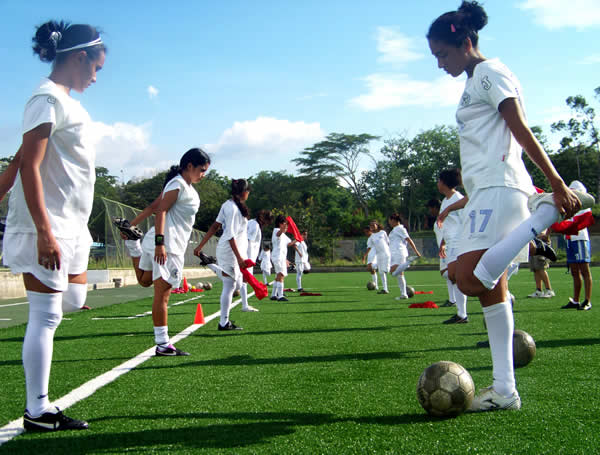
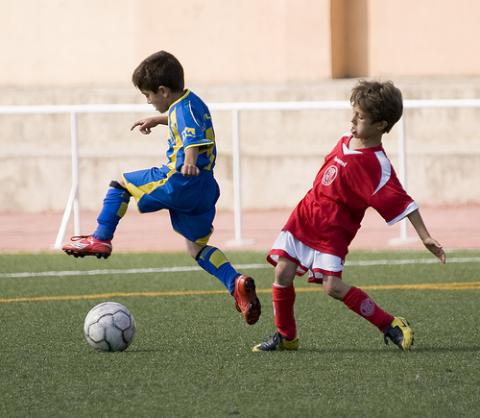
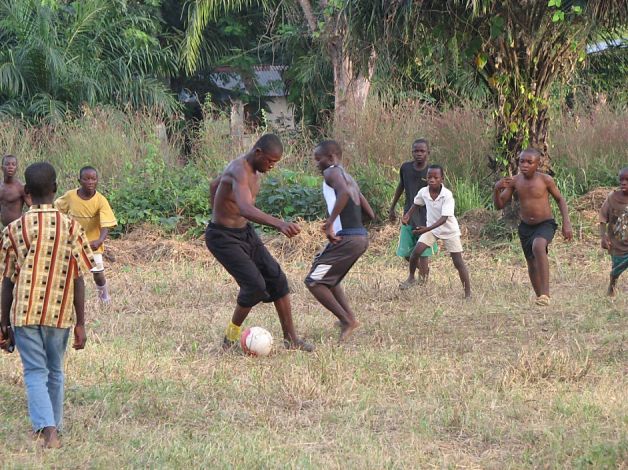
What If Organizing Were Like Soccer?

This thought has been spinning in my head all week.
What if direct-action organizing — the defensive kind against bosses, landlords, policing — were like soccer?
I’m not really talking the professional leagues, and the business of spectator sport and fandom. I’m talking the most popular game on the planet.
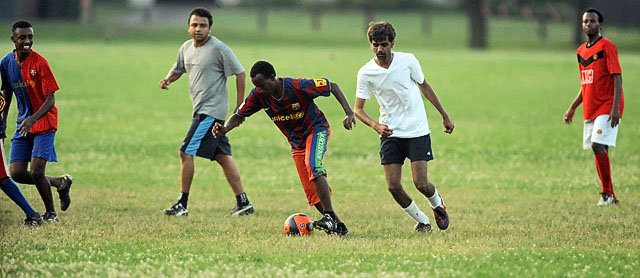
 Little kids all over the world learning to play.
Almost anywhere you go, you can find people to get down with.
Everyone knows the basics. You might have your strengths in certain roles, but you can also switch it up.
It’s like a common language you carry with you, that lets you connect with strangers.

I mean, it already happens some, right? People who aren’t professional/paid organizers still gotta get together from time to time to defend one another. Just this week here in the Bay, there’s about to be
(1) planning an action against an e-verify immigration raid on grocery store chain Mi Pueblo
(2) court support for a young queer Cuban woman facing BS injunction charges and $1 million bail
(3) a picket at Domino’s Pizza in solidarity with Australian workers whose wages got slashed by 19%
(4) a city hall protest demanding justice for Alan Blueford, a young Black unarmed man killed by cops
(5) a rally in solidarity with Grand Jury resistors in the Pacific Northwest
 And that’s only the shit that I happen to hear about! There could be much more! Not to mention the ongoing organized work around transforming and healing intimate violence, and connecting that with state violence and capitalism. That part of organizing.
Still, in my experience with this ad hoc organizing, a lot of times it feels like reinventing the wheel, or speaking completely different languages even in terms of nuts-and-bolts stuff. It’s not like I can come in and be like, “Okay you’re gonna be right forward? Cool, I’ll be goalie.” Unless you’re working within a well-established organization, nonprofit, etc (which has its own issues, and is more like the pro leagues), chances are the organizing might end up looking like four-year-olds’ soccer, with most of the kids clustered around the ball like a bunch of grapes, and a few out on their own making daisy chains or hunting for four-leaf clovers.
Which is great! …for a start. But then, you want to get hooked. You want to improve. You want to win, and you want to learn how to be a better player and teammate.
And so I have this funny dream.
Organizing as the new fútbol!
Can you imagine? It’s fun to try, anyway… :)
Things That Make Me Go Mmm

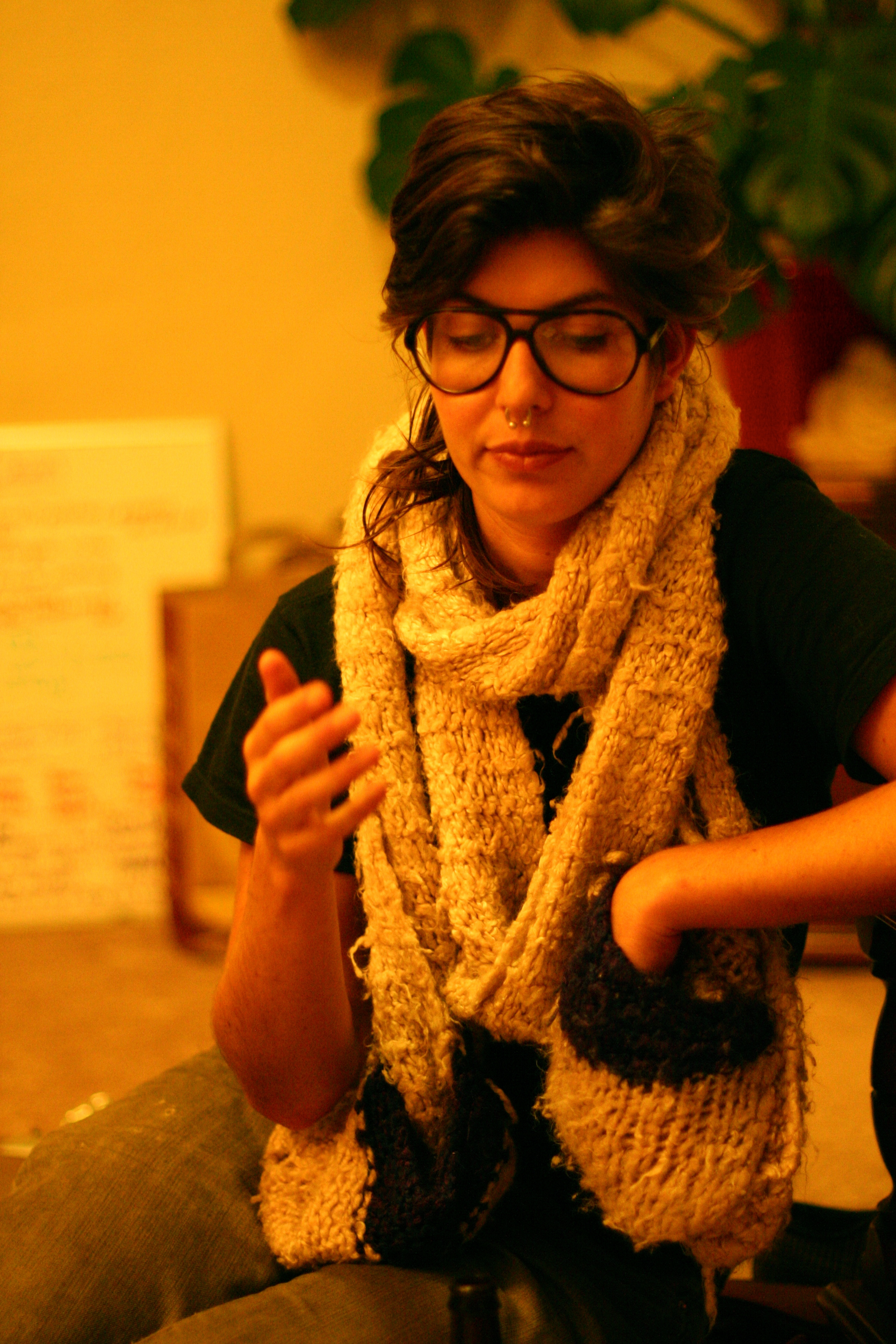 Meanwhile, on Kloncke…
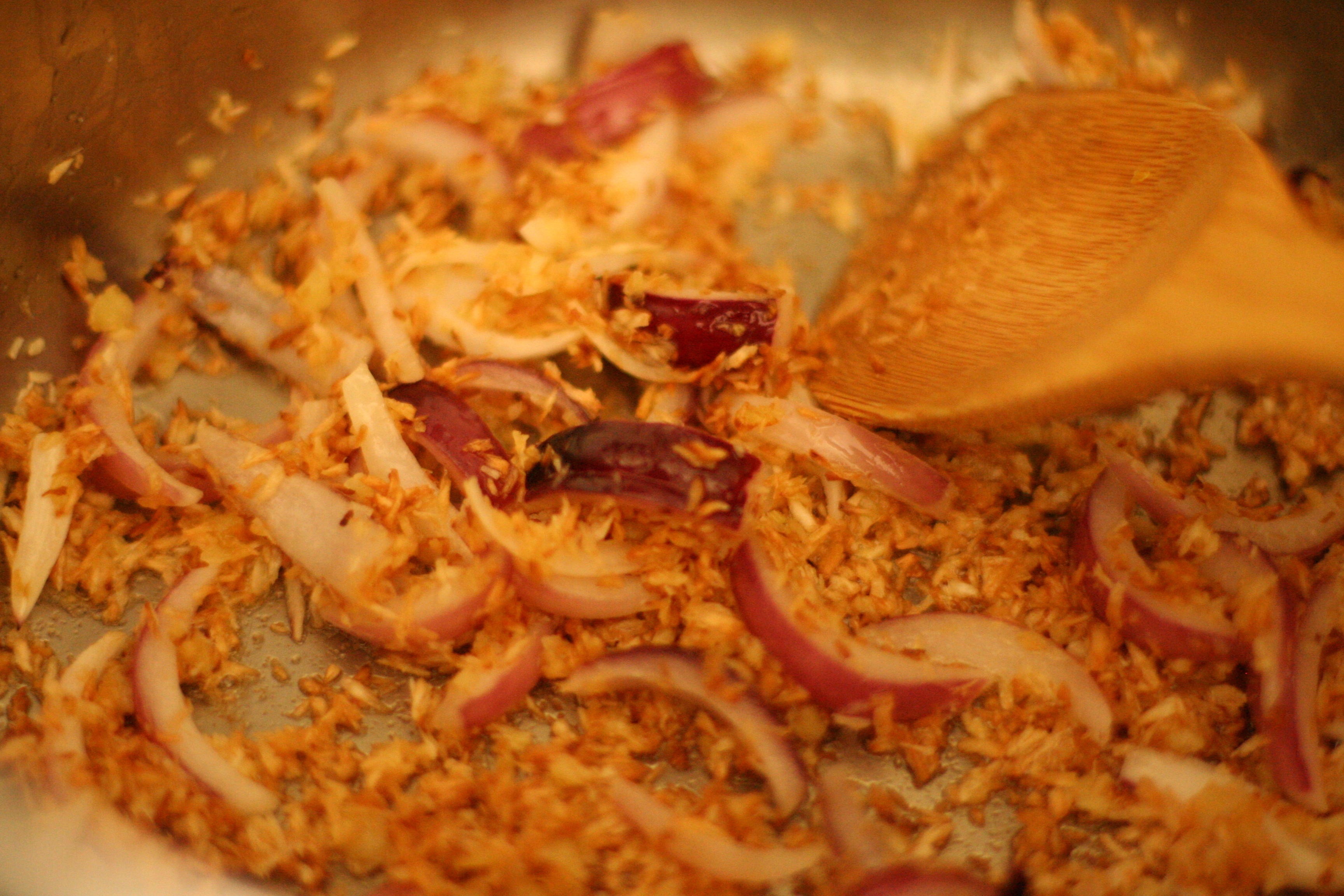
It’s shaping up to be another day of food and friend fotos, and I’m beginning to feel self-conscious.
So trivial! not militant! argh.
Fortunately, the wonders of digital archiving help refresh me on why I started this particular blog in the first place, nearly four years ago. A quick digital rifling through the earliest files, and I come across this:
You may have noticed that Kloncke contains lots of pictures. Pictures of mundane things, like the apartment. And Brassica oleracea. There’s not a lot of information, or opinion, or blueprints for fomenting feminist revolution. No hard reportage. Walking away from the world of political New Media, with its fast-paced news addictions and adrenaline rushes, is not easy on the ego, I can tell you that much. In comparison to what I used to write about, the things I now post seem frivolous and bourgie. Sharing them requires a good amount of pride swallowing: it was much easier, honestly, to write about, say, connections among environmental nativism, sexism, and anti-immigration. But my dear friend Ellen, in an email yesterday, beautifully expressed a purpose of the site that I hadn’t quite articulated to myself:
I was just reading through your blog and thinking about how healing ourselves necessarily involves elemental things like food (one of my too-many jobs right now is all about food policy, actually, and I love how it’s gently pushed me toward feeding myself better) and family and good lighting (good work w/ your place!!) and practical skills and walking/biking along riverbanks.
Ellen is right: healing is largely about getting down to basics. Which brings us back to the question of reality (what could be more basic?) and how on earth a cybernetic hallucination could bring us closer to it.
Reality isn’t a place so much as a relationship, or an attitude that each one of us can take toward what’s around us. In my experience, it’s a mixture of calm and curiosity, a kind of lilting interest. It welcomes and enjoys pleasure, but doesn’t obsess over it. It recognizes and honors pain, but doesn’t demonize it. This orientation reflects reality not because it’s one-dimensionally true, but because it allows us to see what’s really going on.
Now, what’s really going on includes, as we know:
- oppression
- violence
- injustice
- resistance
- organizing
- solidarity
- things more important than photos of what yours truly is having for breakfast
Again, this blog isn’t about acting on these Big Things. Nope. But it is about small-r reality: trying to pay attention. Joyful attention. To the things that happen offline. And as a warm, friendly space dedicated to embracing ordinary wonders, I hope it can help restore us for whatever struggles we undertake.
A list. A hallucinatory diary of genuine gratitude. A different spin on the reality-based community.
Four years later, I’ve come so far, to the exact same spot.
Things more important than what I’m having for breakfast.
Well, that’s why they call it practice, I s’pose.
Revolutionary or not, “embracing ordinary wonders” is precisely what I’ve been feeling disconnected from, these past few months. And as we know, contentment is only partly about how many Wanted Things happen to us. It’s also (or even mostly) about how much gratitude and equanimity we generate. (Hence book titles like Sylvia Boorstein’s Happiness Is An Inside Job.)
Objectively, GREAT THINGS HAVE BEEN HAPPENING TO AND AROUND ME!
Hardworking organizers and wonderful people swim in the seas I swim in!

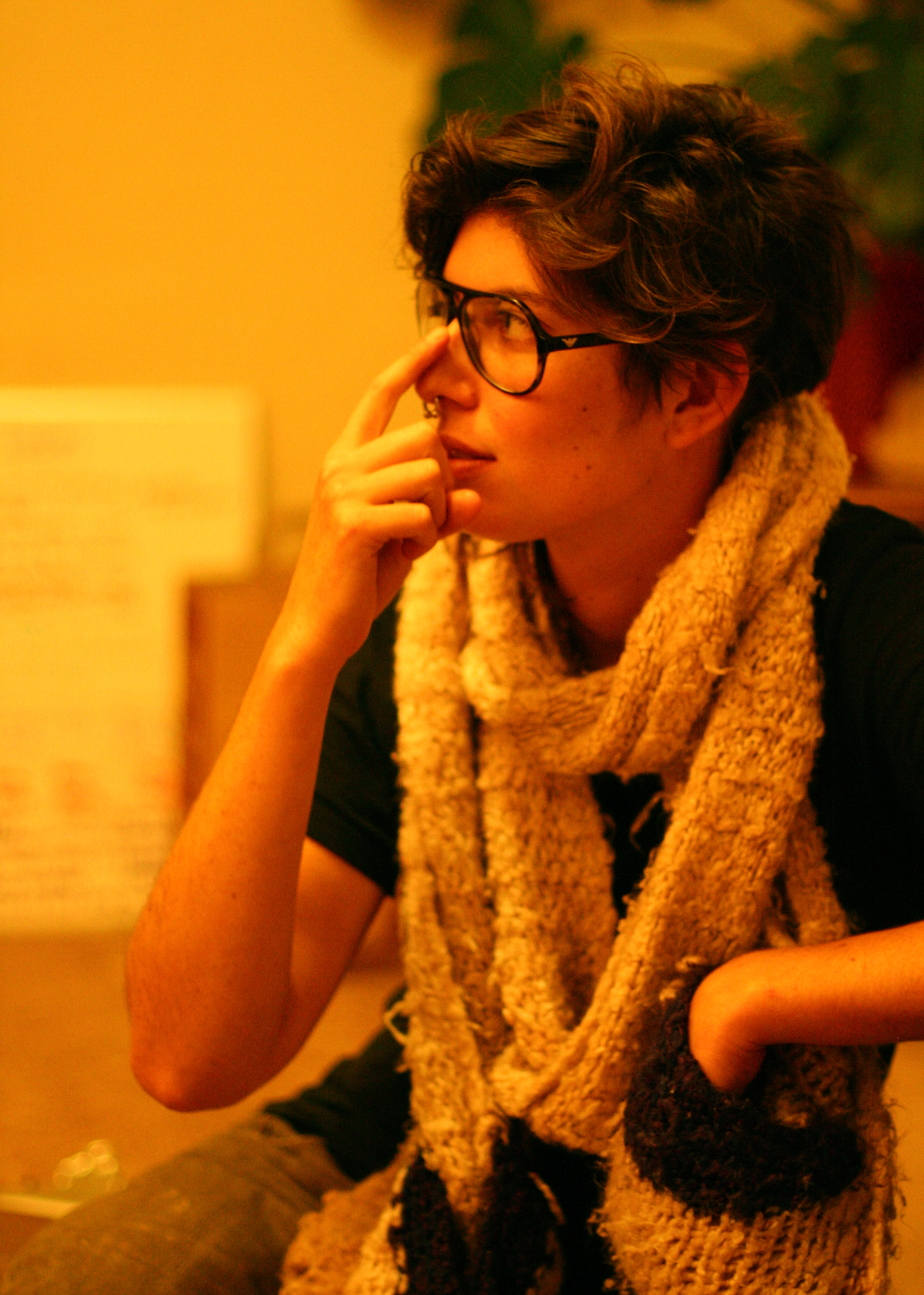
I get to go to eviction defense actions and they are interesting and successful!

(See how I snuck a militant direct action in there? Pride: sometimes you get the better of me.)
But I seem to be living as a hungry ghost. No matter how much beauty surrounds me, it’s not enough. I am not enough.
Speaking of both (a) hungry ghosts and (b) great things happening to and around me, just this Wednesday night I had the chance to see a talk by the incredible Dr. Gabor Maté, author of, among other books, In the Realm of Hungry Ghosts: Close Encounters with Addiction.

His lecture blew my mind on a few levels (maybe a whole nother post on that, sometime). But one of points he made that hit home hardest for me was the observation that political engagement, or activism, can actually serve as a kind of addiction: insofar as we use it to try to fill a personal sense of lack. He gets at a similar idea in this interview about the Hungry Ghosts book:
Question: The title of your book has its origins in the Buddhist Wheel of Life. In the Hungry Ghost Realm, people feel empty and seek solace from the outside, from sources that can never nourish. In what ways is our culture trapped in this realm? What can society learn from drug addicts who take the feelings of lack that everyone has, to the extreme?
Gabor Maté: Much of our culture and our economy are based on exploiting people’s sense of emptiness and inadequacy, of not being enough as we are. We have the belief that if we do this or acquire that, if we achieve this or attain that, we’ll be satisfied. This sense of lack and this belief feed many addictive behaviors, from shopping to eating to workaholism. In many respects we behave in a driven fashion that differs only in degree from the desperation of the drug addict.
I don’t have the presence of mind to write too much on this tonight, but I want to reflect on this observation from my own life:
When I feel no pressure to be or do any particular thing, creative growth and learning flow freely, but much of my activity tends to be apolitical. Eventually, the urge for political engagement either suddenly arises, or creeps back in like a tide.
Once I get invested in the idea of being a student of political organizing, or being a revolutionary, that free-flowing sense of self-sufficiency dies away, and I find myself wanting/needing to improve and measure up, more and more. Never enough.
Obviously, the desire to improve is not a bad thing — and I know what the healthy, natural, yet vigorous version feels like. It’s just that I don’t know what it feels like in the political realm.
And THAT probably has more to do with me, and my own issues, than ‘the political realm’ itself.
And with that, I wish you a good, good night.
love,
katie
Unassailable
This California resolution conflating criticism of Israel with anti-Semitism hits close to home … literally.
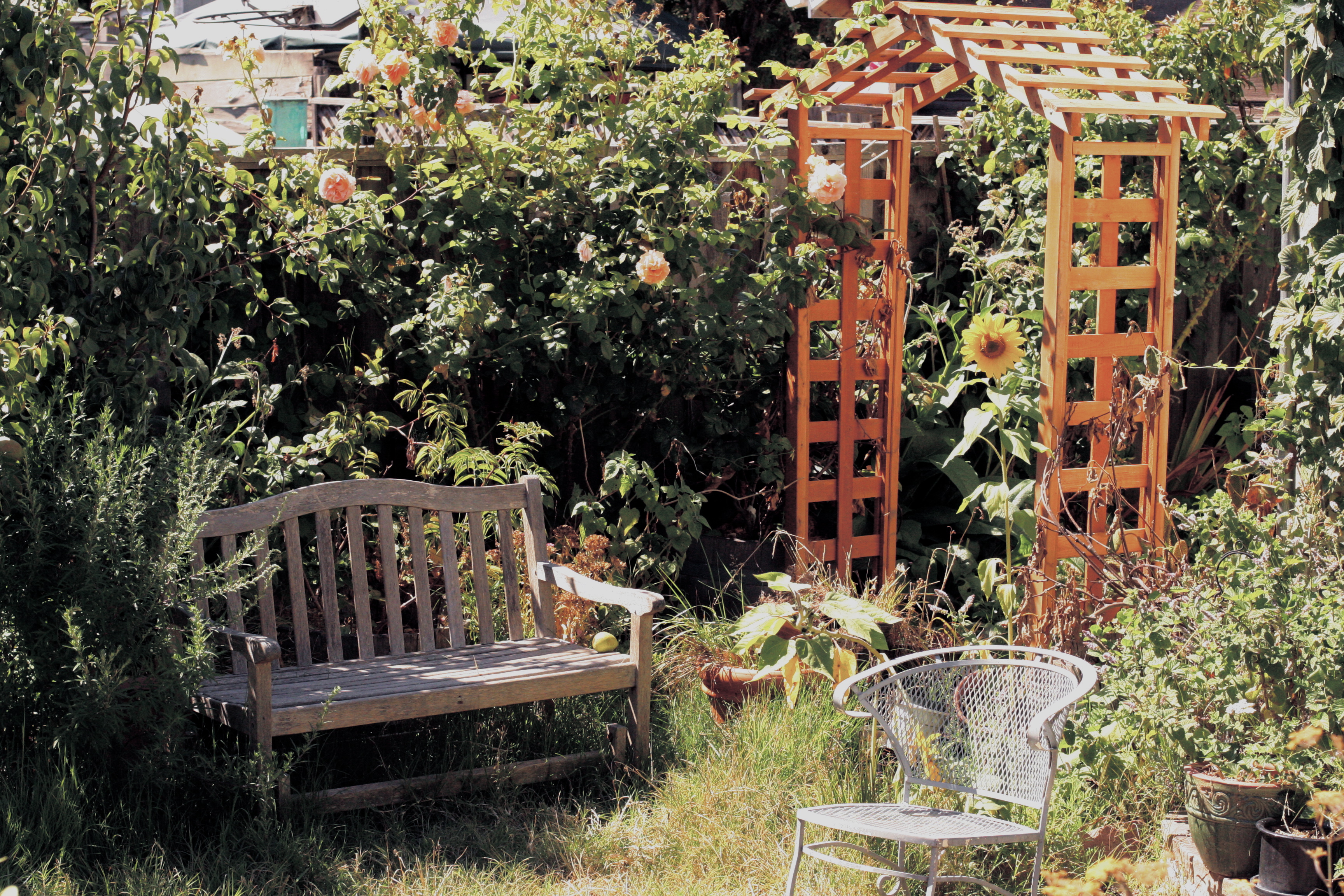
For the past two months, I was subletting a beautiful bedroom, in a beautiful house, with a beautiful backyard garden. On the few occasions when I invited friends over, nearly all of them marveled at the house. The splendid plants, the white piano, the cozy front-porch armchair, the kitchen swimming in sunlight. Each time, my stomach would turn, and I would shrink with awkwardness. It’s the same experience I have, sometimes, in a gorgeous, hip little coffeehouse in a gentrifying Bay Area neighborhood. The glass terrariums with their jewel-like moss and succulents. The indoor hanging bike racks and convenient public tire pump. The fancy teas in Mason jars on worn wood tables. The queer styles and asymmetrical haircuts. I enjoy these places, and I often avoid them (and not just for my wallet’s sake). They induce a special queasiness, the disquieting pleasantness of displacement.
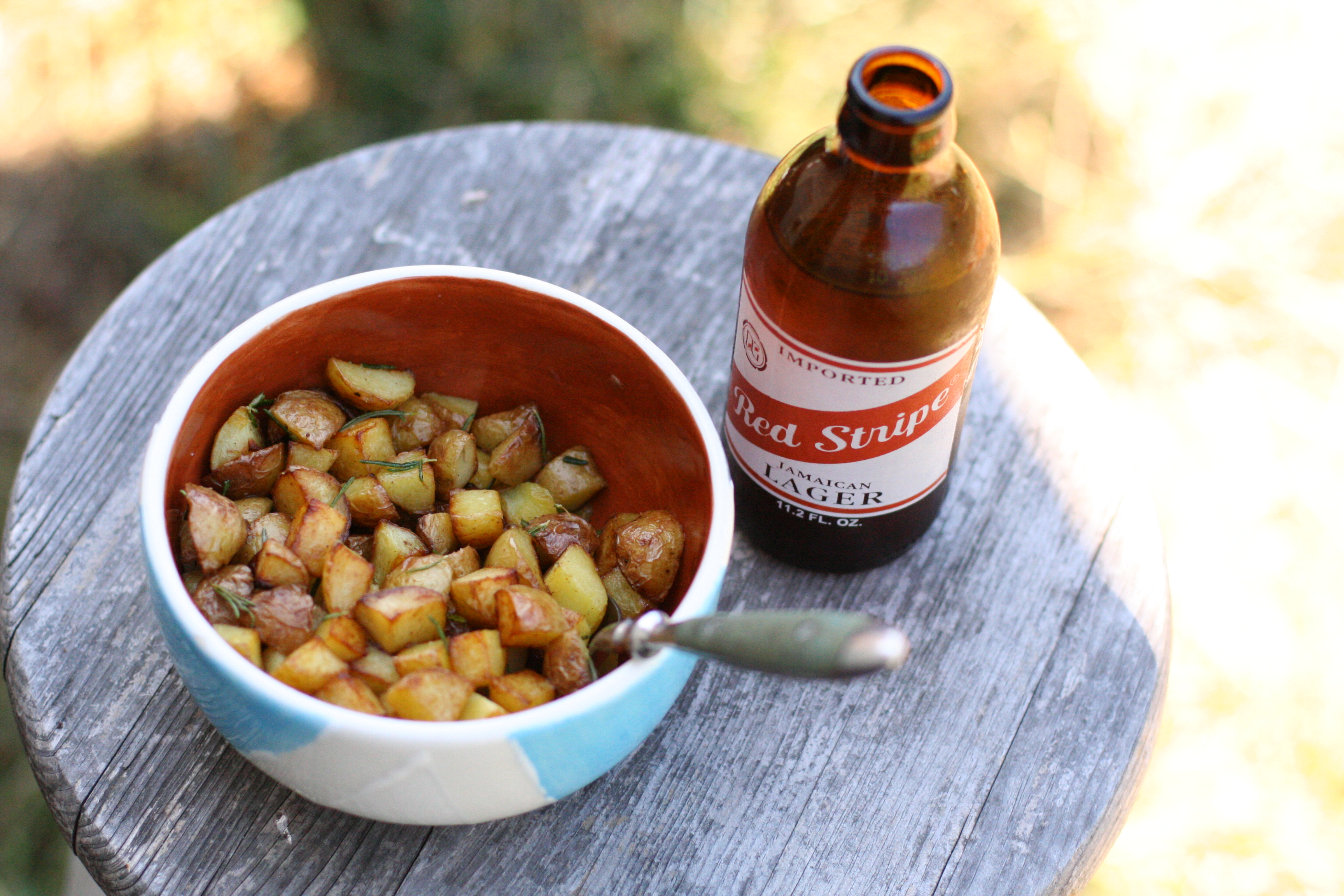
This house — the house where I was staying: the landlords/housemates who owned it (1) run a nonprofit that “celebrates the earth-based traditions of Judaism,” and (2) have deep ties to community in Israel. Neither of these two facts poses an inherent problem. But I wondered, and I worried. Was my live-in landlords’ earthy loveliness part of the soft face of oppression?
And how would I even go about finding out?

First of all, here’s why such a worry might occur to me. From what I understand, certain Israeli organizations have used environmentalism as a justification for expansionism and settler colonialism in Palestine.
Determined to “make the desert bloom”, an international organisation — the Jewish National Fund-Keren Kayemet LeYisrael (JNF-KKL, or JNF) planted forests, recreational parks and nature reserves to cover over the ruins of Palestinian villages, as refugees were scattered far from, or worse, a few hilltops away from, the land upon which they and their ancestors had based their lives and livelihoods.
Today, as Israel portrays itself as a “green democracy”, an eco-friendly pioneer in agricultural techniques such as drip irrigation, dairy farming, desert ecology, water management and solar energy, Israeli factories drain toxic waste and industrial pollutants down from occupied West Bank hilltops into Palestinian villages, and over-pumping of groundwater aquifers denies Palestinians access to vital water sources in a context of increasing water scarcity and pollution.
For me, this echoes painfully with the doctrine of “manifest destiny,” and the US colonizer history that continues to romanticize the “purple-mountain majesty” of a land bloodied by genocide and slavery. Again — not that all environmental groups endorse or perpetuate (whether tacitly or overtly) colonialism and genocide. But some have, and some do.
 How did my landlords understand this pattern of greenwashed settler colonialism, and view their connection to it as US Jewish leaders practicing earth-based spirituality in deep community with people in Israel/Palestine?
I couldn’t ask. I was afraid. Not so much of what they would say, but of the potential fracas that might ensue from even raising the question. A fracas that would probably mean bad news for a certain tenant.
For similar reasons, the entire time I was staying in their house I avoided bringing friends around. What if they criticized Israel within earshot of the people who owned my home?
I mentioned my landlord quandary the other day to a friend of mine — a friend whose political opinions I deeply respect, and who has done organizing work around Boycott-Divest-and-Sanction of Israel (BDS) in solidarity with Palestinian people. At first, he pushed back and questioned why I hadn’t raised my concerns with my housemates soon after moving in with them.
In general, I agree — if Person A has a problem with Person B, it’s far better to ask Person B about the issue directly. Otherwise, Person A will likely go on making assumptions, resigning themselves to semi-resentful eggshell walking — if not all-out passive-aggression.

I also agree with my friend that if I wanted to, I could potentially use my Jewish ancestry — Holocaust, distant family in Israel, etc. — to make certain arguments in a way that could be somewhat easier for my housemates to hear. Maybe.
And yet. California legislators lump together well-founded criticism of the state of Israel with attacks on Jewishness itself. Was it unreasonable to infer that my landlords may share this belief? They may not — I absolutely grant that possibility. But was I willing to risk outraging them to find out?
My answer: no. At least not alone, not while I was living under their roof (without an easy fallback plan), and not while the potential payoff was so limited. After all, these are not folks with a ton of power (I don’t think), and neither are they people with whom I anticipate remaining in community. If they were my family, or my sangha, or big-time school administrators, it might be a different story.
On the other hand, collectively resisting legal restrictions on criticizing Israel, mobilizing workplace/economic power in solidarity with Palestinian struggle, and creatively opposing racist pro-Israeli propaganda in our communities, strike me as great ideas.

 Kloncke