Friendly Flirtations

For a couple of years now I’ve been conscientiously experimenting with different responses to lines from men on the street or in public places.  Ignoring them, getting pissed, smiling and walking on, smiling and saying thanks.  Lots of female-bodied friends of mine experience unsolicited hollering from men, and we all have our own way of dealing with it to best preserve our personal mental health.  (Though this also gets wrapped up, at times, with a sense of social responsibility to make public spaces safer and more comfortable for all women…)

If you ask me, building sex-positive cultures doesn’t mean suppressing the urge to play, but challenging and reformulating our own basic notions of sex as a contest, power struggle, necessary outlet, or primary source of self-worth.  From that perspective, the American Apparel posters in my neighborhood, and the extent to which I allow them to impact my sense of self, might prove more dehumanizing than the dude on the corner who tells me I’m beautiful.

In my case, I rely a lot on my gut instincts rather than a strict rule, but tend to lean toward friendliness since (a) smiling feels better to me than scowling, and (b) ultimately what I want are real relationships with all kinds of people.  Finding a way to push past the sexualized overtones, especially with some of the men I see around my block on the regular, opens up more spaciousness, an opportunity for better connection.

Anyway, I love hearing, from folks of all sorts of genders, the different forms and levels of stranger flirtation that can actually feel fun and sweet. Here, two music videos (classix!) that show what respectful play might sound like.  (Hint: asking questions seems to be a key theme.)  Hat tips to Ryan and Jamal for the YouTubeage, and Noa for recent great conversations on this complex topic.

[Ps: lead-in track, “Ladies Love Cool JB (Innerlube Two),” from homo-hop pioneers D/DC: self-described “bourgeois, boho, post-post-modern, African-American, homie-sexual, counter-hegemonic, anti-imperialist, Renaissance Negroes stalling your cipher.”]

A Woman’s Work = Non-Profits?

From a Facebook Note I wrote last night.  (Friend me if we’re not friends already!)

Dear lovely people,

I hope this note finds you well! I’m writing it at the end of an exhausting day of work — cooking, grocery shopping, driving, hosting, facilitating — when all my body wants to do is sleep, but my mind’s got other plans.

Since reading Selma James’ “Sex, Race, and Class” and another work of hers and Mariarosa Dalla Costa’s (“The Power of Women and the Subversion of the Community“), both offered this week through a rad study group here in the Bay, I’ve been considering parallels between the role of nonprofits (like the one I work for, in exchange for room and board) and the un-waged domestic/reproductive/social labor of (mostly) women, as James and Della Costa explain it. Wanted to share my thoughts with y’all– as always, your insights are tremendously appreciated.

Arundhati Roy names a process by which NGO’s, in ministering to the needs created by gaps in both private and public capitalist enterprise, chill the potential for social resistance. “Non-profits’ real contribution is that they defuse political anger and dole out as aid or benevolence what people ought to have by right.” Folks who work for non-profits often acknowledge that their efforts amount to a Band-Aid approach: covering up the problem, but failing to reach its root causes. But Roy seems to reject the Band-Aid analogy. A metaphor she’d choose might be more like: taking painkillers to ‘heal’ a broken leg. The immediate pain might be numbed, but by continuing to walk on the leg, you’re only worsening the injury.

Similarly, Della Costa and James argue that both trade unions and nuclear families trap us in this painkiller predicament:

Like the trade union [or non-profit, in this case], the family protects the worker, but also ensures that he and she will never be anything but workers. And that is why the struggle of the woman of the working class against the family is crucial.

Unlike trade unions, though, which address the conditions of masculinized wage labor, non-profits often seem to institutionalize the work traditionally associated with feminized labor performed within the family. Need a hot meal? A soup kitchen will serve you one. Sick? A clinic will treat you. Want to come home to a lovely garden? No need to rely on Grandma or the wife: your local eco-NGO will build a permaculture paradise for the whole neighborhood.

There are exceptions, of course, like hotel worker unions which may parallel feminized family housework, or media non-profits that are basically mainstream corporations with an opportunistic tax status. But overall, I’m struck by the resemblance. Is the non-profit an incorporated version of James’ and Della Costa’s working-class woman? Complete with moral imperatives to ‘nurture,’ or in this case, ‘serve the community,’ all the while scraping by on allowances wheedled from donor husbands and grantmaker sugar daddies?

I know a lot of us are thinking and living similar questions right now, and I just wanted to share my own musings. Thank you for all the inspiration and strength you give me! I love all of you and miss those I don’t get to see.

hugs and more hugs,

katie

And let’s not forget that NGO work doesn’t replace the “second shift” of unpaid housework!  After coming home from the non-profit you still gotta wash dishes.  (In my case, throughout the day at the non-profit.  And we wash lots of people’s dishes.)

Happy Monday!

love,

katie

A Fool Family Affair

Friends, there’s so much goodness in my life that I don’t get to communicate here, and wish that I could.  Every day, so many small moments, big questions.  But this particular goodness, I’m very happy to be able to share.

The gist: a week or so ago, Abby, one of the Faithful Fools, got bedbugs.  Not a fun enterprise.  And though, to her enduring credit, she handled it like a champ, it’s still an enormous challenge for anyone to face — both logistically and emotionally.

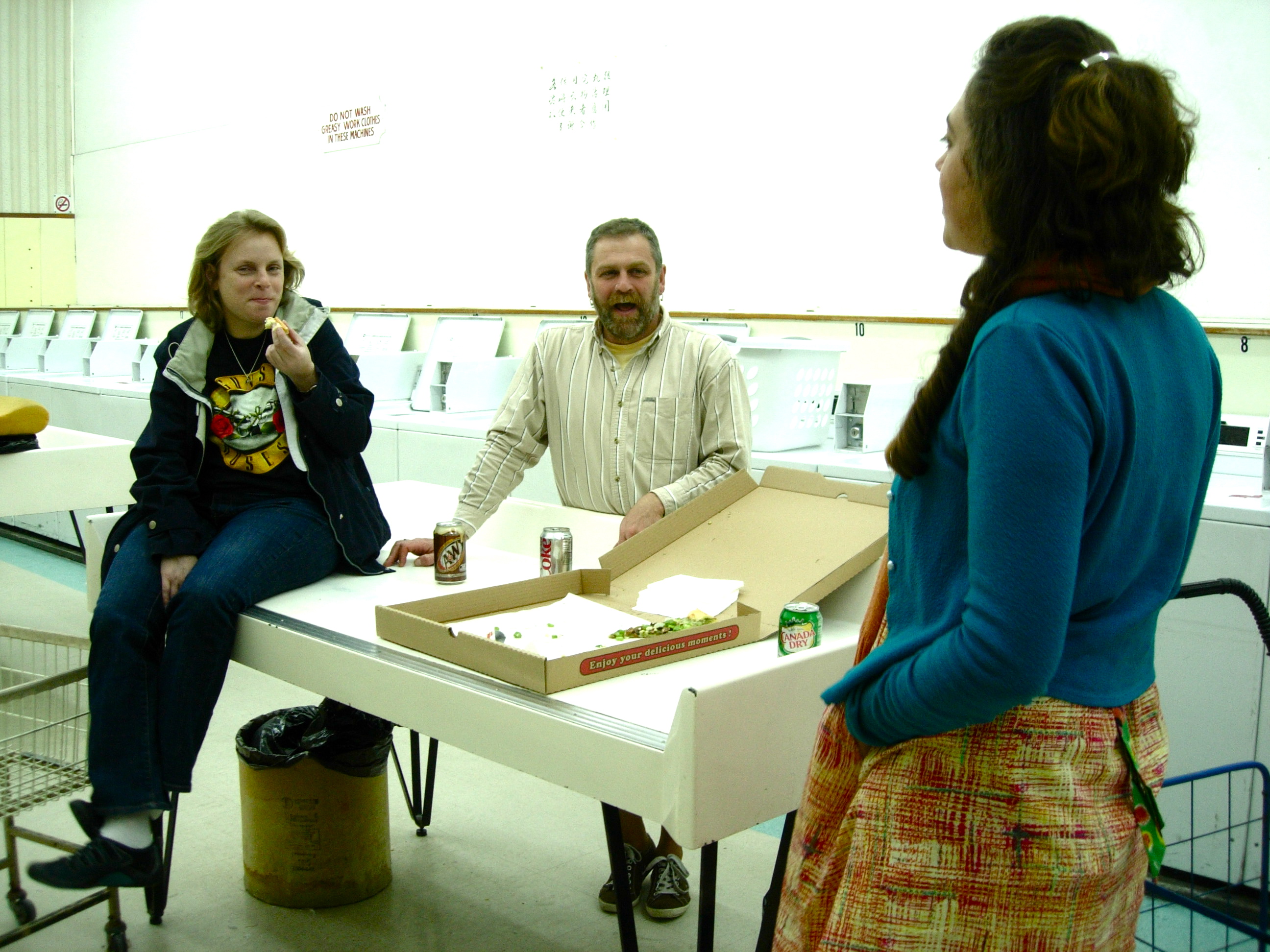
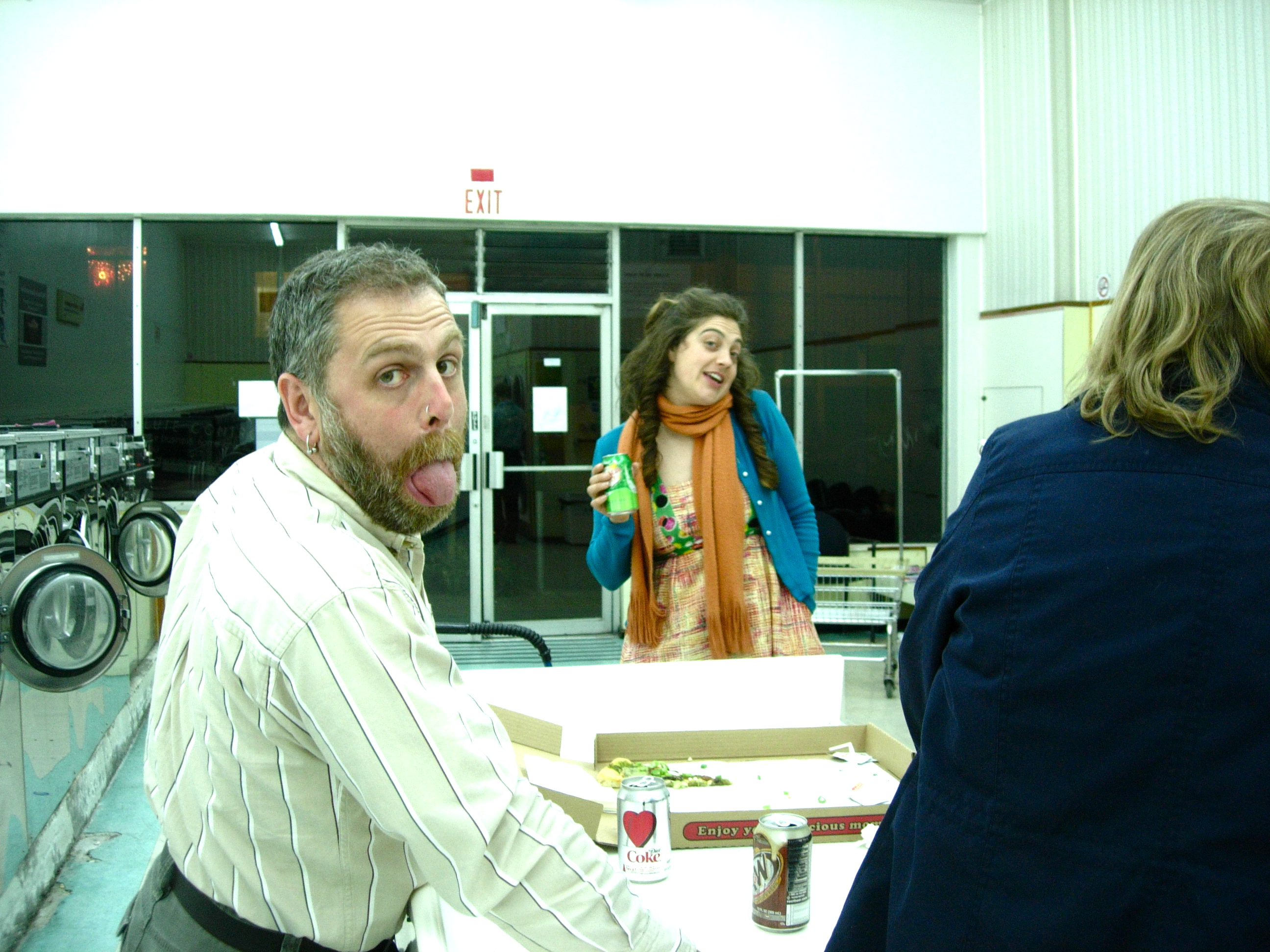
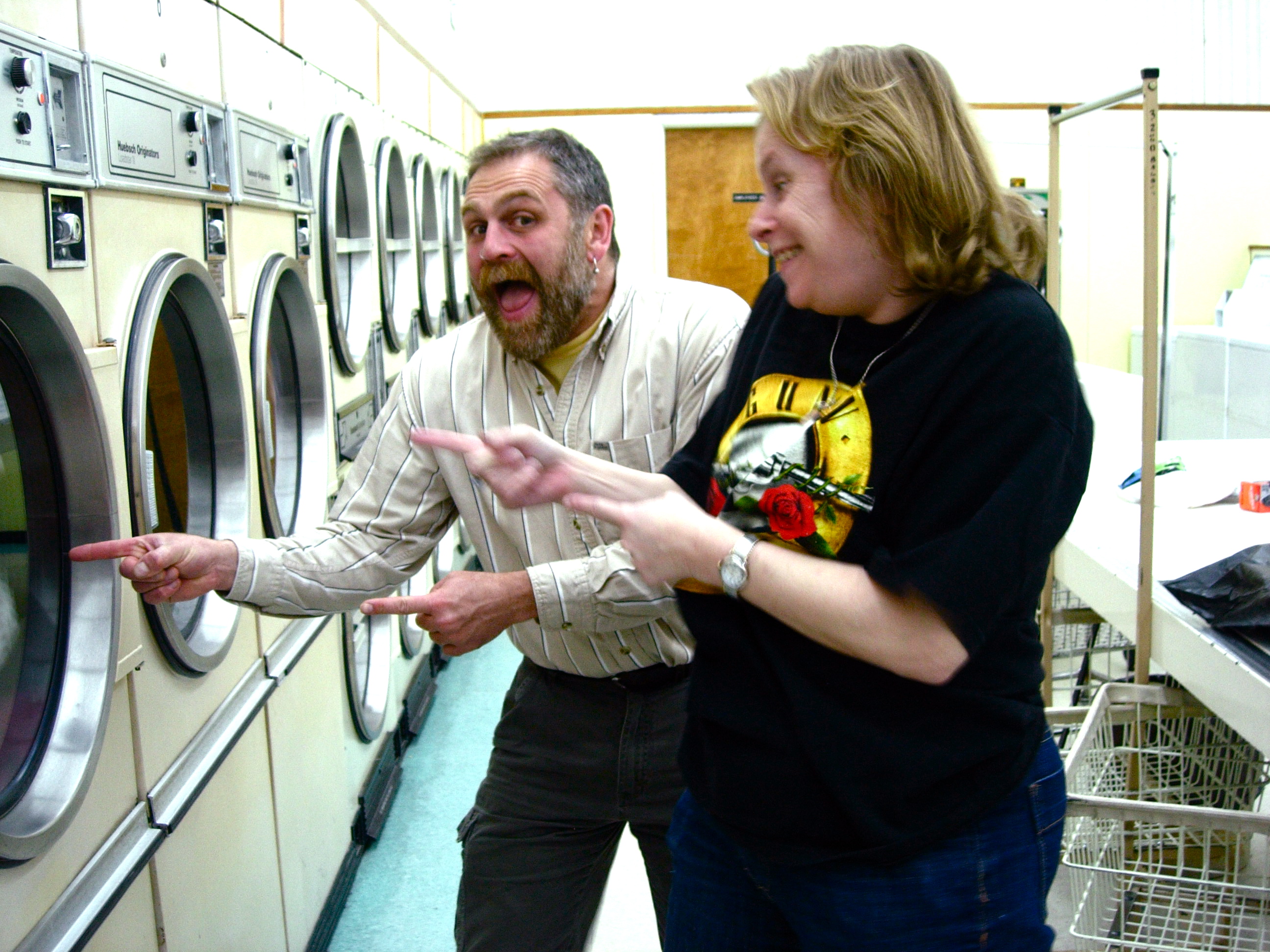
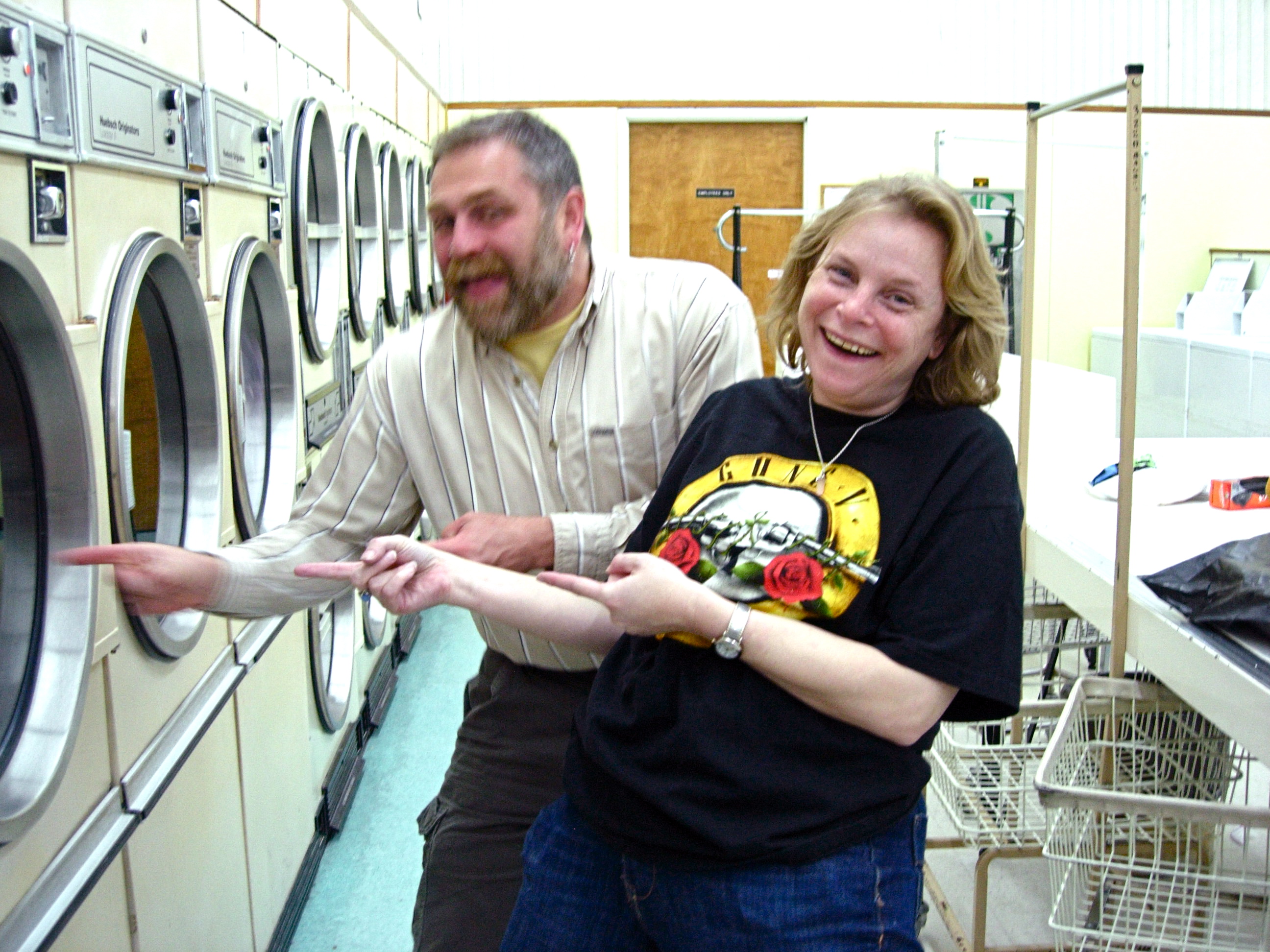
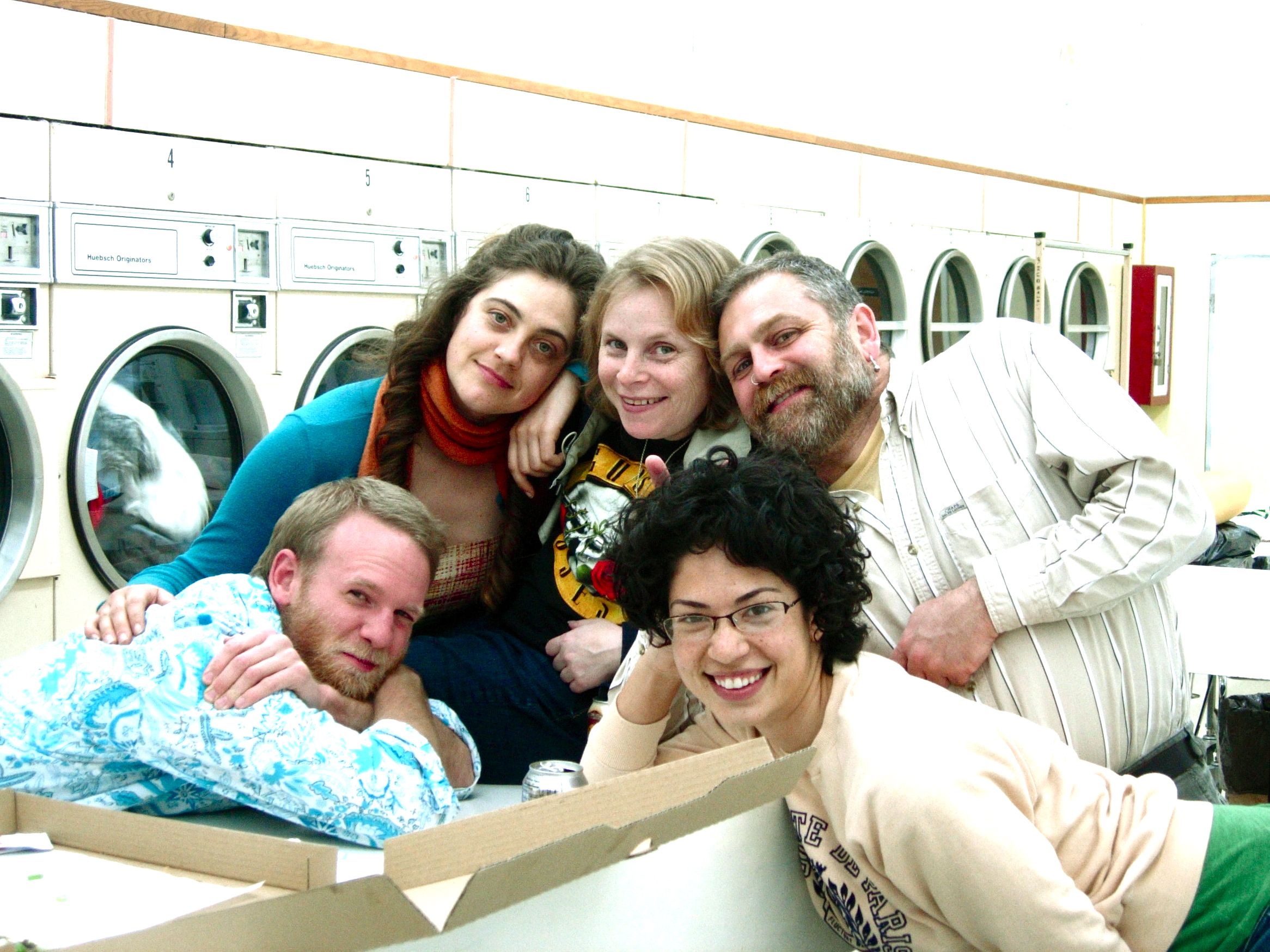
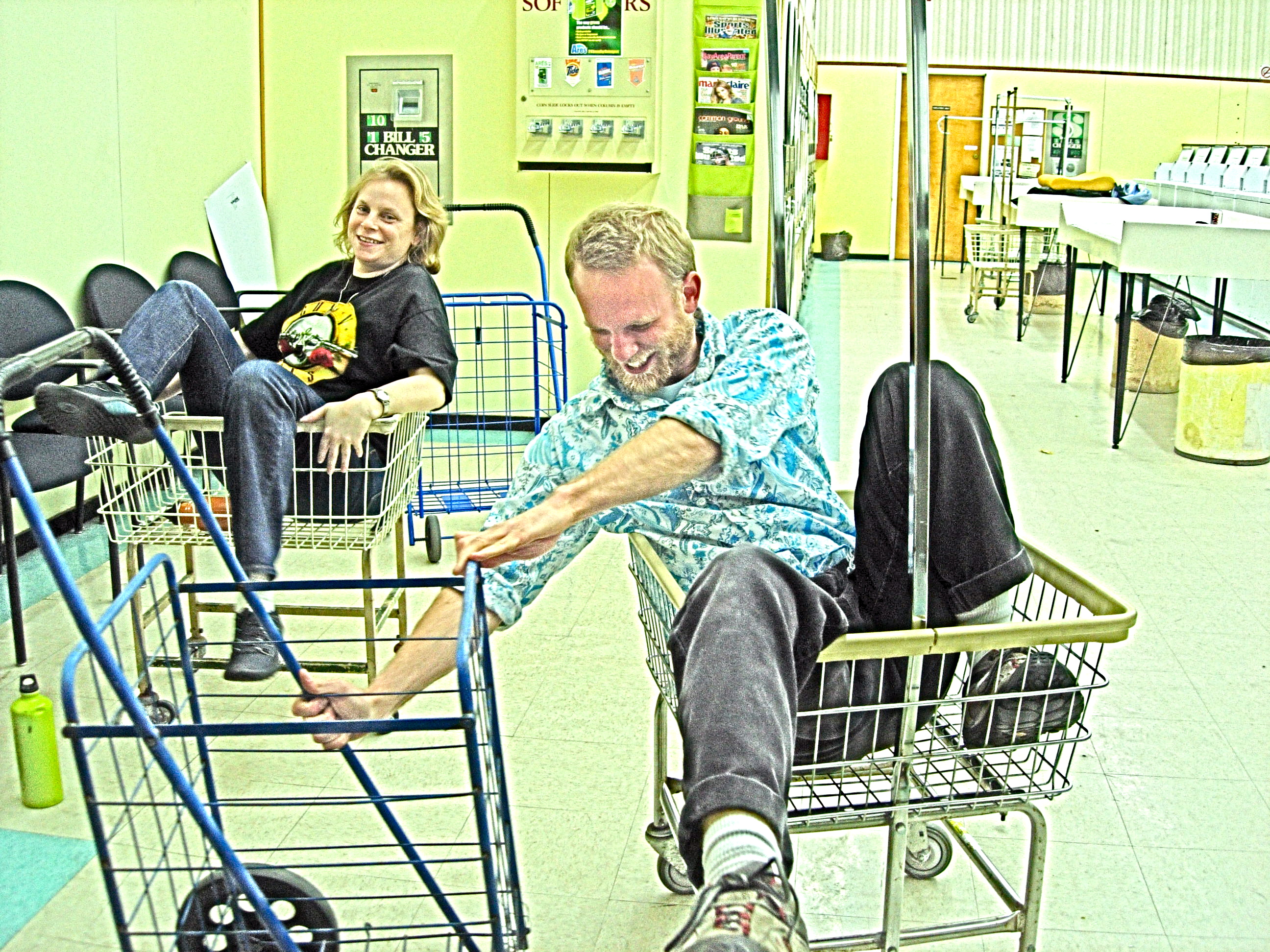
So at a time like this, what do Fools do?  Band together to completely clean out her entire studio apartment, carpeted with what looked like five years of cat hair.  (From a very cute kitty, I might add.) Host her and said kitty while the place got fumigated.  And then, tonight, throw a laundry party at her local coin-op, Amybelle’s Wash N Dry.  How’s that for (unpaid) co-worker camaraderie?

Have a wonderful weekend, y’all. ‘Til next week!

Western Socially Engaged Buddhism: At What Cost?

sigh.

When I discovered the website for the Zen Peace Center’s Symposium for Western Socially Engaged Buddhism, coming up this summer, I got all excited.  Spiritual and social liberation!  Sharing strategies!  All about it.

Then I saw the price tag.

$600 for tuition, breakfast, and lunch.  Dinner and lodging not included.  (Not to mention the cost for me to travel to Massachusetts.)

Six hundred dollars?  Probably closer to a thousand, all told?  Now where’s the social engagement in that?

Of course, this is not a dilemma unique to the Zen Peacemakers.  As nathan and I have been discussing lately, it’s a huge challenge to make a sangha’s economy reflect its philosophies.  And when I called the ZPs to inquire about a sliding scale or some other option, it was clear that they were at least considering the contradiction between the symposium’s mission and its prohibitive costs.  Within a couple of months, they had designed and posted a volunteer application, which would cover the cost of tuition — though still leaving the problem of travel and lodging.  My new friend Ari, ZP assistant to Bernie Glassman, says they’re also pursuing possibilities for free places to stay: either camping on the property or staying with local sangha members.  If you’re interested in attending, hit up the volunteer app!  (Unless, of course, you can afford to pay — in which case you’d be helping make things more affordable for the rest of us.)

It’s important to keep in mind, I think, that the point of keeping entry costs low isn’t only a matter of accessibility.  Of course, we want to make teachings and community-building events available to poor and working-class folks.  But for a group explicitly interested in social justice or “social engagement,” there is also the problem of reproducing oppressive, class-based structures.  Inclusion is not enough: we need transformation.

For example: what does it mean when social justice -oriented sanghas establish endowment funds, which invest donors’ contributions into the financial market, strengthening the capitalist structures that exploit and crush workers?

We don’t need to rely on this model.  Check out this definition of a “dana economy” from the rad-sounding Eco-Dharma Center:

All our events are offered in the spirit of dana, a Sanskrit/pali term meaning giving and gift. The ethical practice of generosity expresses the transcendence of separate selfhood and constitutes a basic ethos at the heart of creative community. The economic forms of consumerism and capitalism highly condition our relationships in the world – encouraging us to experience ourselves as discrete subjective entities, producers or consumers, insulated from responsive engagement with others. Rather than emulate this, it is our intention to support economic relationships which contribute towards a culture of sharing.

We do not intend to enter into relationship with you as the providers of a service for a consumer. We intend to enter into a wholehearted human relationship with you, as co-producers and collaborators in the transformation of ourselves and our world. To support this intention we ask for contributions to make this work possible, rather than offering our work as a service to be bought. The basic principle of the Dana Economy is, “give what you can, take what you need”.

The suggested donations in our programme reflect the very basic income required to make the events viable. We do not have any independent means of financing the events and we do need that those attending offer financial support to make the events financially viable. If you can offer more, please do. If the incoming donations for an event are insufficient we will be unable to give them freely. So, please look at the suggested contributions and enter into the spirit of this approach by giving what you can. We are also willing to discuss donations in the form of skill sharing and offers of work to support the project.

(from http://www.ecodharma.com, on "radical ecology")

I know we need to be realistic, and as Ari reminded me, most sanghas do not dedicate themselves exclusively to offering retreats, a la Goenkaji’s Vipassana centers, so that’s not a viable model for everyone.  And I want to emphasize that I’m not trying to guilt-trip anybody.  Rather, I’m eager to talk more, and more openly, about the real costs of maintaining sanghas, and how we can reproduce and sustain radical dana economies: economies of insight and generosity. I’d love to hear y’all’s thoughts.

In addition to volunteering in order to earn my way at the Symposium, I’m hoping to host a workshop on using the Internet as a tool of dharma.  So wish me luck!  Seems like it’s a popular subject these days, and I’m psyched to hear how others are theorizing it.

Meanwhile, here’s a bit of info on the ZP’s newsletter — for which they often solicit contributions.  I checked out the issue on prison meditation this month, and there were a number of really solid articles.  (Also made me that much more eager to see Dhamma Brothers: a documentary on the introduction of a Goenka-style 10-day silent Vipassana course into an Alabama prison.)

Take care, y’all!

— — — — —

Zen Master Bernie Glassman and the Zen Peacemakers invite you to enjoy

BEARING WITNESS:

A Newsletter for Western Socially Engaged Buddhism

The Zen Peacemakers founder, Bernie Glassman has created the a clearinghouse on Socially Engaged Buddhism in the West. We are pleased to invite you to receive our FREE monthly online publication.

You will learn about:

·      Who?: Profiles, links and articles on the individuals and groups practicing service and working for social justice as Buddhist practice

·      What?: Emerging service projects and social actions, including opportunities to train and get involved

·      Why?: The history, ethical bases and philosophies that inspire the global movement of Buddhist communities towards social engagement

Previous issues include Bernie’s meeting with His Holiness the Dalai Lama as well as surveys of Buddhist chaplaincy programs and work in prisons.  You are invited to e-mail submissions for our March issue featuring Dharma-based mental health programs to editor@zenpeacemakers.com.  For your free subscription, please go to: http://www.zenpeacemakers.org/subscribe

We are also building two related directories:

Groups and Activists

&

Learning Resources

It’s easier than ever to access information and to get involved!

I’m Not That Kind Of Girl…But My Boyfriend Is

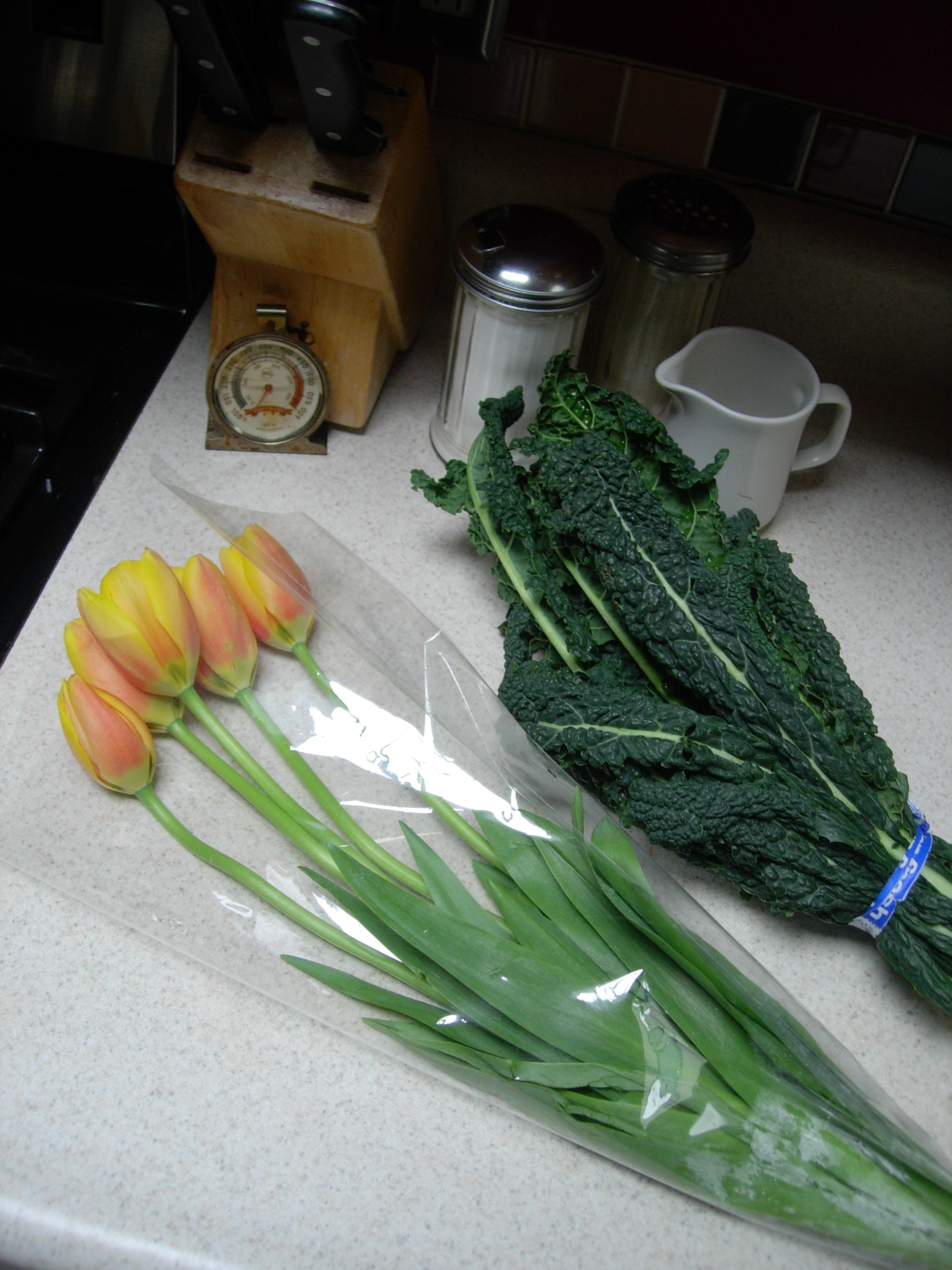
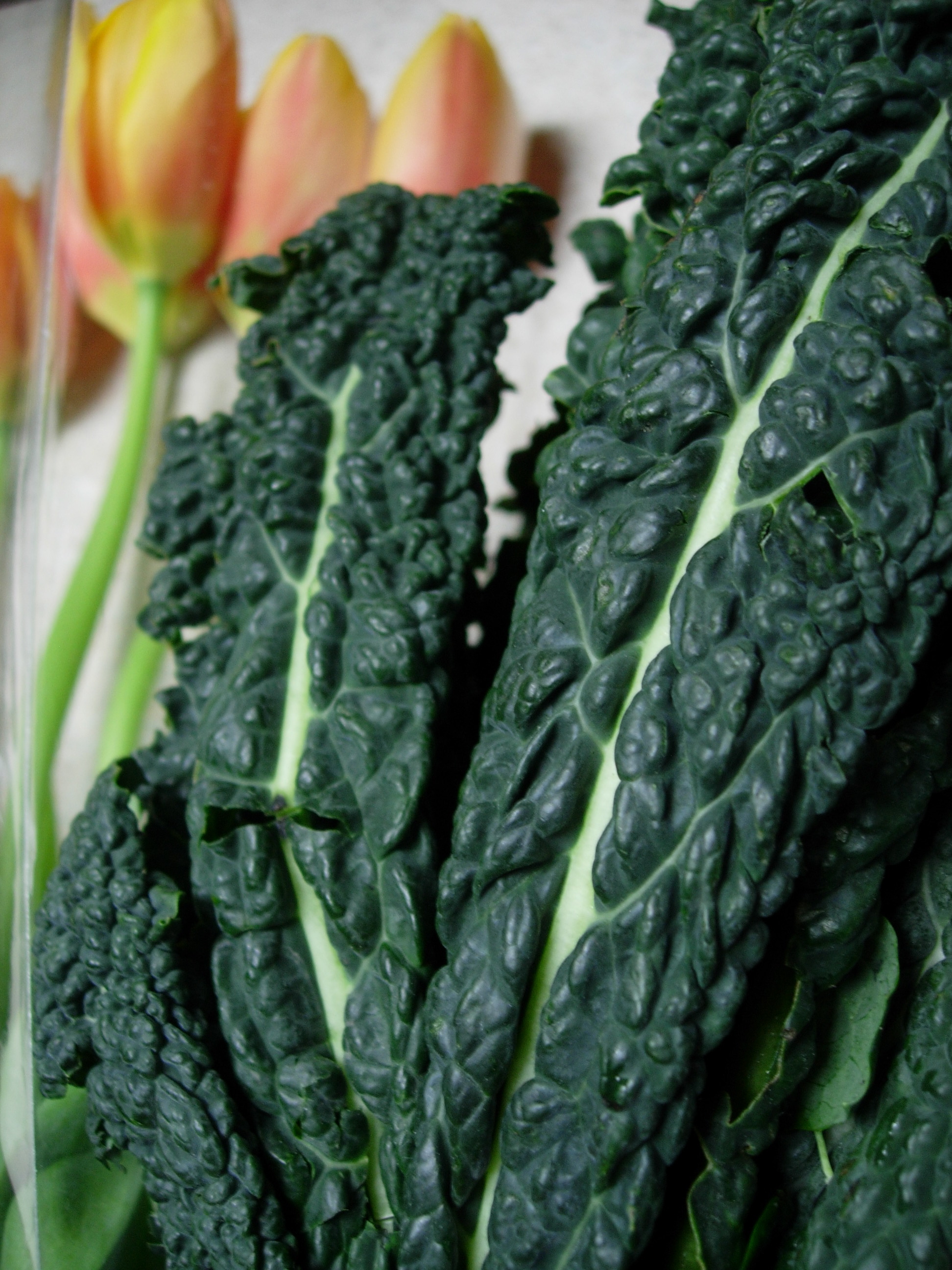
Ryan and I have come to an understanding on the subject of gift flowers.  He’s into them, insofar as he enjoys flowers in general.  Me, I like them in the wild, and in other people’s gardens or homes…but I told him if he’s ever thinking of getting me flowers, he can offer a bouquet of kale, instead.  Now that would set my heart aflutter.

Our little inside joke came to mind Saturday morning as two friends and I were drinking in the Alemany farmers’ market (best show in town, far as I’ve seen).  Small, tight brussels sprouts glowing like alabaster; giant purple-and-green sugar cane stalks; heaps of bright, cartoon-shaped carrots — well, an inventory isn’t the point.  Let’s call it heaven for shorthand.  (Especially given the row of prepared food vendors, including a lovely older lady at the helm of a large pupusa stand.)

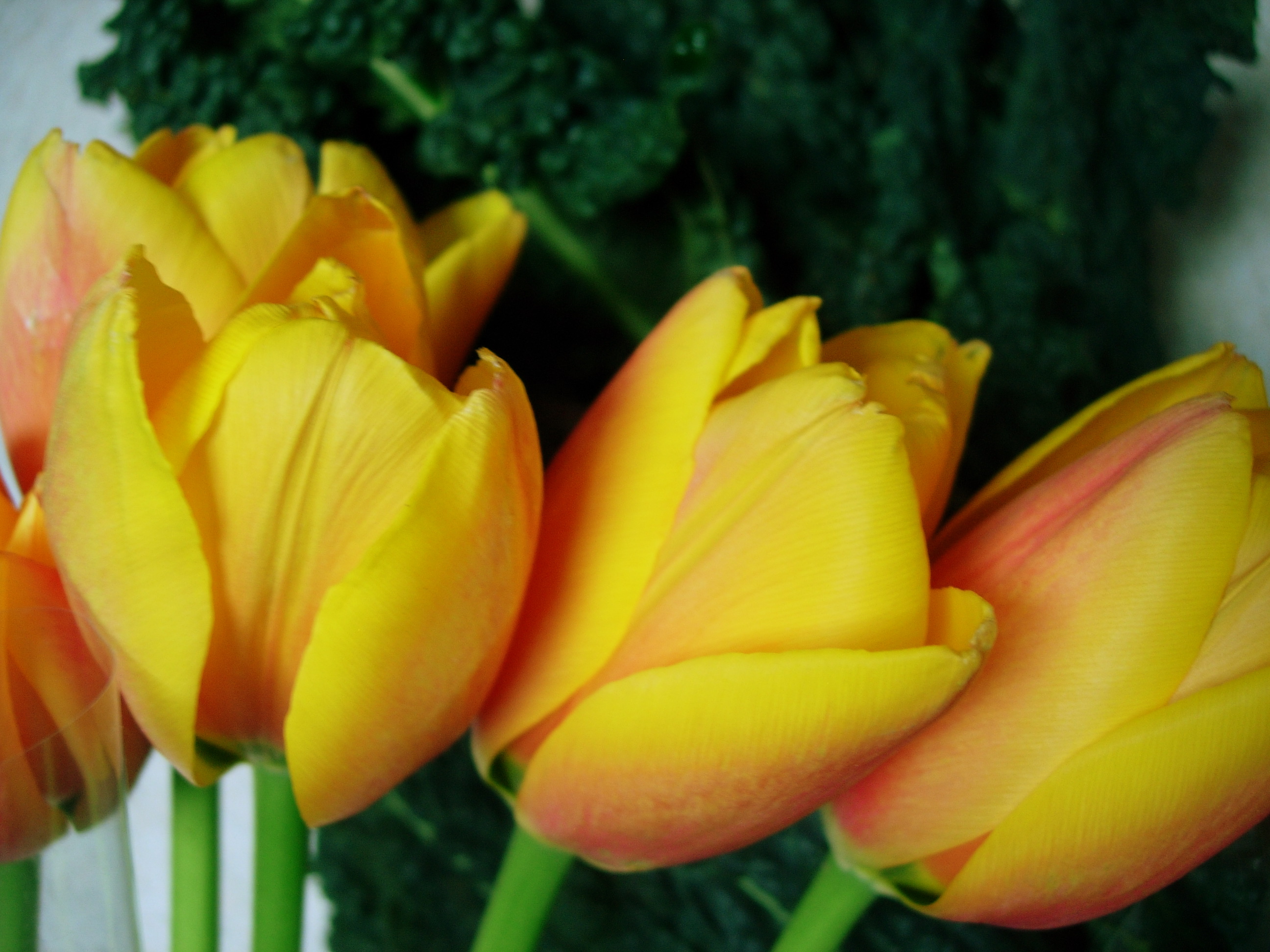
So I’m browsing and reveling, already saddled with a heavy shoulder bag of asparagus, beets, and all manner of Brassica oleracea (broccoli, cauliflower, b-sprouts, and my beloved lacinato kale), when we come upon some buckets of fresh flowers.  I picked up these beautiful tulips to give to Ryan.

Feeling cheerful and rather delighted with the low-risk gender role reversal, I parted ways with my friends and boarded the bus home to downtown SF, where Ryan and I planned to meet up on Market Street.  A fellow rider — gaunt with thick bangs and a charming toothless smile — complimented my kale and flowers, volunteering that she would actually prefer the former to the latter.  I was in good company.

When I arrived at 8th and Market and settled against a wall to wait for Ryan, I discovered another perk to the gender bending.

A much older man walked straight up to me, staring intensely.  He looked a bit off.  Started talkin all this about Do I want to spend some time, and What am I up to.  I smiled and said, “I’m waiting for my boyfriend, to give him these.”  It wasn’t exactly a brush-off or an evasion tactic — though, like many people, I sometimes have to use those with aggressive men.  Here, I was simply relating to the situation, with more warmth than irritation.

The man glanced down at the flowers, mumbled a goodbye, and strode off toward 9th.

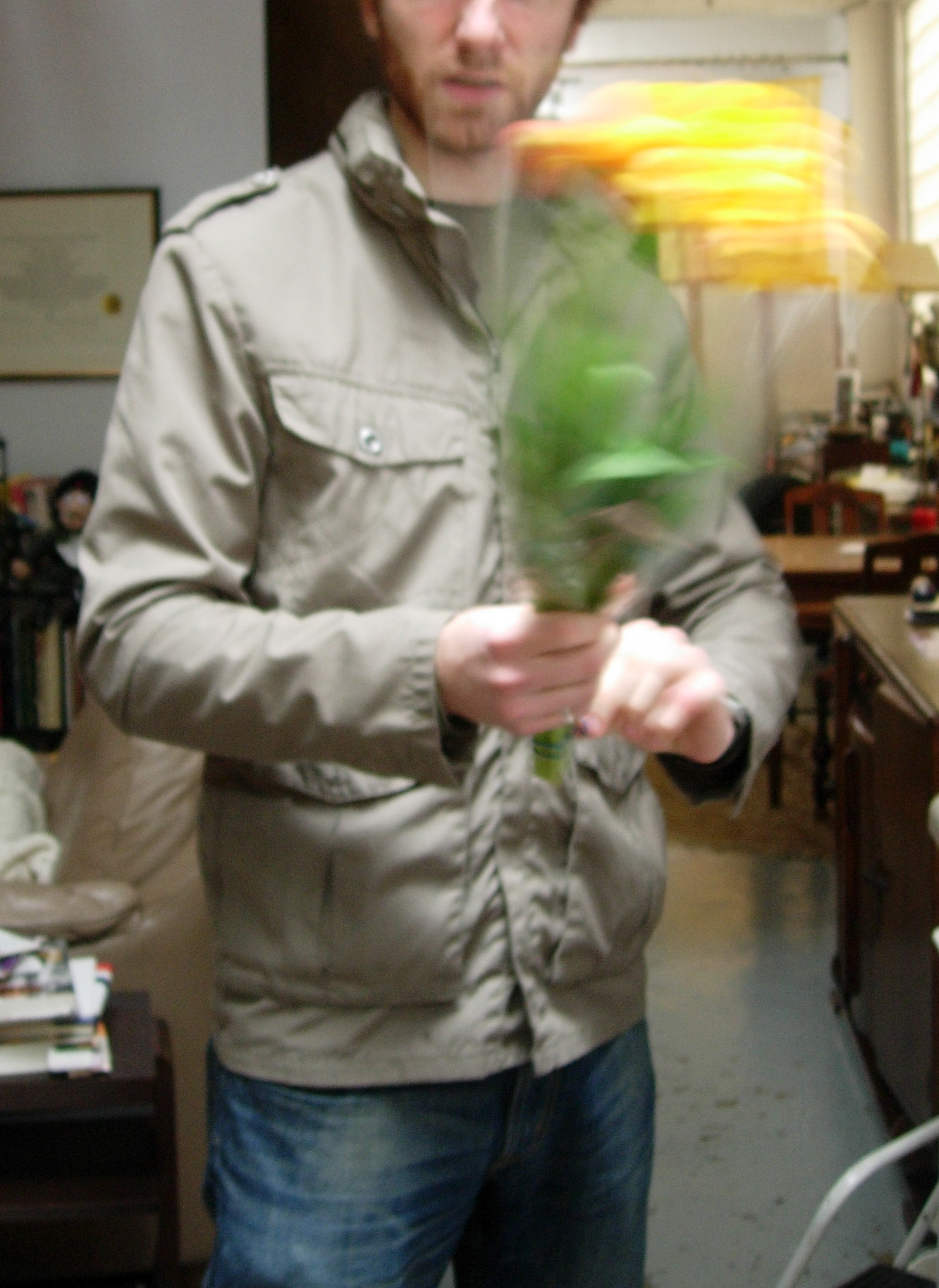
When Ryan did arrive, even though I handed him the tulips, he assumed I’d just bought them to dress up my own bedroom.  Took him a while to realize that they were for him.

And the rest of the morning we spent cooking kale.

The Trans/Woman (Blogger) Question

At right is the cover of a book recently compiled by my Uncle John: a collection of the letters, writings, and photos of his godmother, Nellie Briscoe Perry.  His introduction to the book names the “why’s” of the project:

This compilation of writings is my way of sharing with others a rare opportunity to 1) learn about the lifestyle of African-Americans living in the historic Shaw district of Washington, D.C., which was rich in culture and the arts in the 1940s; 2) understand how the events of the early 1940s impacted all walks of life; and 3) know the feelings and thoughts of an African-American woman as she lived through and was affected by the events of those times.  Most of the contents of this book are in Nellie’s own words.  So too is the title, Forever Waiting, which was a loving message she used to end many letters to her future husband, Mutt.  You are invited to take this journey and hopefully find it to be an enlightening and enriching experience.

This week, Uncle John (known affectionately to me as “Tall Meat”) will be meeting with the Historical Society of Washington, D.C., which is interested in housing the letters and photos in their collection.  What were once personal articles will now become public pieces of shared history.

I haven’t had a chance to read the book yet, and nonetheless it’s been heavy on my mind the last few days.  Mainly, I wonder: what if Nellie’s documentation and communication didn’t take the form of old letters, but a modern blog?  Would their social value and interest change?  Diminish?  In general, when do we treasure personal communications, diaries, and scrapbooks, and when do we dismiss them as trivia or junk?  What makes the difference?

Continue reading

The Need Of The Moment: Insight and Solidarity

There’s a famous haiku by Matsuo Basho that I’ve seen quoted a few times recently.

The old pond.
A frog jumps in:
Plop!

The point of the poem, as Joseph Goldstein explains in The Experience Of Insight, is to illustrate the quality of mind called “bare attention,” which he describes as “the basis and foundation of spiritual discovery”:

Bare attention means observing things as they are, without choosing, without comparing, without evaluating, without laying our projections and expectations on to what is happening; cultivating instead a choiceless and non-interfering awareness . . . No dramatic description of the sunset and the peaceful evening sky over the pond and how beautiful it was.  Just a crystal clear perception of what it was that happened . . . Bare attention: learning to see and observe, with simplicity and directness.  Nothing extraneous.  It is a powerfully penetrating quality of mind.

But even though insight is a practice in choicelessness, it still helps us to make better choices as needs arise.  Kind of like training on a treadmill, going nowhere, in order to run longer distances outdoors.

The power of insight developed through meditation helps us to take action that is informed and intelligent, yet not overthought.  It strengthens the basic clarity of perception that gives rise to truly creative processes.  So when the need of the moment reveals itself, we see it for what it is, rather than immediately forcing it into our own familiar frameworks, categories, and concepts.

Not a bad faculty for allies in political struggle.

Insight, or bare attention, proves useful in many respects when we’re dealing with reality.  (Different from memory, fantasy, imagination, theory, projection, etc.)  One of its handy effects is paring down superfluous names, theorizations, and concepts for actually existing phenomena.

A recent post over on Advance The Struggle illustrates this well.  (Read the whole thing — it’s worth it, I promise.)

Continue reading

Don’t Resist: Resist!

I’ll be the first to admit it, folks: non-resistance, one of the core elements of Buddhist or dhammic praxis, seems like a sham. On its face, non-resistance sounds like one or a combination of (a) weakness: a sort of rationalized fear of fighting back; (b) delusion: playing Mary Sunshine and pretending that there’s nothing to resist; or (c) apathy: leaving it to fate or karma or whatever to sort everything out.

With a slightly more nuanced view of non-resistance, we realize that it doesn’t so much refer to external conflict or confrontation, but has more to do with our internal states, as a tool for reducing suffering.  A British professor, a guest speaker I heard at the Cambridge Insight Meditation Center back in September, cited as an example the moment you open a delicious-looking box of chocolates, only to find that they’ve all been eaten up — except the coconut ones, which you hate.  The more we resist reality (by fantasizing about the missing chocolates; resenting the scoundrels who devoured them), the greater our suffering will become.

Ok, understandable, but something still feels off.  It was at that moment, when he pulled out the bonbon anecdote, that the thought occurred to me: This white guy has no idea of the weight of the words he’s using.

Resistance.  Struggle.

These words carry a lot of meaning for a lot of people.  How could he use them so blithely, so unawares?

Now, it wasn’t just a matter of the professor: his explanation, language and vocabulary were also tied to the audience he was addressing: largely wealthy, white, overeducated, and middle-aged. But there was also a larger context: the neighborhood in which this dharma talk was taking place.  Area 4, poor and gentrifying, a long under-resourced and heavily policed area, with lots of homeless and near-homeless people of color.

When talking about non-resistance, how often do we hear examples of irritation like sitting in traffic?  Not getting a bonus or promotion at your firm?  Undergoing chemotherapy?

In my experience, A Lot.

And how often do we hear examples of police profiling and brutality?  Eviction?  Domestic abuse?  Racist education?  Colonization?  War?

It’s a shame that so many dharma talks by convert Americans in the U.S., from what I’ve seen and read, are couched in terms of a white ruling-class (and often straight, male, cisgendered, non-disabled) experience.  Some may include the “social justice question” as an afterthought, or as a response in a Q & A, but rarely do dharmic explanations center around the people who must resist routinized oppression in order to survive.  Talks ignore these realities.  And that ignorance, willful or not, can raise a lot of skepticism about the dharma. Earlier in 2009, brownfemipower approached this same question from a different angle: the notion of submission, and whether it can ever be relevant to people who don’t really have a choice.

Fortunately, though, the way I see it, when we get to the deep meaning of non-resistance, we understand that it is totally compatible with political and social struggle.  Lately I’ve run across a few explications that speak to confronting violence or abuse.

Some psychologists, among them Tara Brach and Marsha Linehan, talk about radical acceptance—radical meaning “root”—to emphasize our deep, innate capacity to embrace both negative and positive emotions. Acceptance in this context does not mean tolerating or condoning abusive behavior. Rather, acceptance often means fully acknowledging just how much pain we may be feeling at a given moment, which inevitably leads to greater empowerment and creative change.

– Christopher K. Germer from “Getting Along” (Tricycle, Spring 2006)

Non-resistance means looking at the totality of a given situation: not denying any aspect or focusing too narrowly on one area.  And not getting lost in our own imagination, our own reactions, or our own desires to appear strong, calm, courageous, or unperturbed.  In a conversation with Pema Chödrön, Alice Walker makes a similar point about the importance of acknowledging and accepting pain when somebody tells us to “go to the back of the bus”:

The cause of someone’s aggression is their own suffering.  So we can connect with our own aggression and provocation, feel that, and exude good wishes for ourselves and others.

Let’s be clear: exuding good wishes for ourselves and others doesn’t rule out strong action.  Even physical, militant action.  In his essay “Loving the Enemy” (2002), Jeffrey Hopkins writes,

If your own best friend [suddenly, without warning],* came at you with a knife to kill you, what would you do? You would seek to disarm your friend, but then you would not proceed to beat the person, would you? You would disarm the attacker in whatever way you could—you might even have to hit the person in order to disarm him, but once you have managed to disarm him, you would not go on to hurt him. Why? Because he is close to you.

If you felt that everyone in the whole universe was in the same relationship to you as your very best friend, and if you saw anyone who attacked you as your best friend [acting harmfully],* you would not respond with hatred. You would respond with behavior that was appropriate, but you would not be seeking to retaliate and harm the person out of hatred. He would be too dear to you.

We’re not talking docility here.  What makes non-resistance so great and useful is that it’s not a prescription for action or non-action, but rather an aid to clear-sightedness that we can apply to any given situation.  It says: look at the reality in front of you.  Much as we might want to deny that our friend is brandishing a knife, he is, and that needs addressing.  Much as we might want to concoct some story of betrayal — that our friend has now become our enemy — in truth he’s only our enemy if we make him so.  Otherwise, he’s only changed from what he was before.

As my teacher Goenkaji says, Accept each moment as it is — not as you would like it to be, but as it is.

And when the moment comes to resist, you’ll resist.

——–

Have a good weekend, friends.  I know I will.  :)  More on that next week.

——–
*The original language in this piece talks about the best friend “going mad” as the explanation for the harmful behavior. As folks at Feministe pointed out while I was guest-blogging there, casually linking violence and mental illness presents a lot of problems, including exacerbating stigmas against people living with mental illness. I think Hopkins’ story is still helpful in the sense that it points to the power of a pre-existing, positive, loving relationship that allows us to choose mercy over revenge, refusing to totalize a person even based on their violent actions. At the same time, it’s also a very simplified example, evading the possibility of calculated betrayal, or an inherently predatory “best-friend” relationship. If you have time, I really recommend checking out the Feministe thread, and probing the example a bit further.
For Baybes Who Resolve To Learn Meditation

Hey friends! For any of you folks in the Bay Area, I just wanted to pass along this announcement for a *free* (donation-based, give-as-you-can) introductory course to Vipassana (or “insight”) meditation, at my local sangha, the East Bay Meditation Center. EBMC is largely run by and for queer folks and people of color (with one weekly sitting day reserved for LGBTQQI & SGL folks, and one for POC), though this workshop is open to straight white people, too.  Should be rad.

I’ll be ringing in the new decade at the Center tonight, sitting together up until midnight. Truly, there’s nowhere else I’d rather be on New Year’s. It’s an amazingly warm and wonderful space, and one of my main anchors in the Bay.

Have a safe and happy night, y’all, and thank you for reading, shaping, and encouraging the Kloncke chronicles of 2009.  Wishing you all the best things for 2010.

Into the Heart of the Moment:
Meditation for Beginners
Buddha Statue Head

with Mushim Ikeda-Nash and Kitsy Schoen

Open to all

Five Monday evenings:
Jan. 25 – Feb. 22, 2010
7:00 -9:00 pm

East Bay Meditation Center
2147 Broadway Street, Oakland, CA 94612
(near the 19th Street BART)
www.eastbaymeditation.org

About this Class Series

Are you stressed or overwhelmed, seeking ways to be more compassionate to yourself and others? How do you get your brain to work for you instead of replaying old tapes and unhelpful messages?  We don’t have to keep doing things the same way – we have choices! Based in Buddhist teachings and supported by modern science, mindfulness meditation has clear and proven benefits for health and well-being. We’ll offer basic instruction in sitting and movement meditation, interactive exercises, and support for establishing a home meditation practice.

Registration is Required and Space is Limited!
Please plan to attend all five classes in the series.  This is NOT a drop-in class.

To register, please click here, or copy and paste the following link into your web browser:

https://www.surveymonkey.com/s/7SYNGZ7

If the link does not work, reply to this email, admin@eastbaymeditation.org with your full name, requesting a registration form for the “Into the Heart of the Moment” series.


Dana, or Generous Giving

There is no registration fee for attending this event, nor most EBMC events.

However, EBMC is not independently funded.

The center and the teachers will be sustained only by your voluntary donations (the practice of generous giving, or “dana”).  Please donate generously, in proportion to your ability:

  • Either online (you will be offered an opportunity at the end of the online registration process)
  • Or at the event, in the two baskets at EBMC, one for the center, the second for the teachers.


Thank you for your generosity.  Giving together, our unique, diverse center will continue to grow and thrive!

About the teachers

Mushim Ikeda-NashMushim Ikeda-Nash teaches meditation retreats for people of color and social justice activists nationally, and she is a core teacher at East Bay Meditation Center. Known for her warm and down-to-earth approach to mindfulness practice, she brings 28 years of monastic and lay experience to her teaching, with an emphasis on integrating meditation and everyday life.   http://mushim.wordpress.com/

Kitsy Schoen

Kitsy Schoen has been practicing Vipassana meditation for 30 years. She is a graduate of the Community Dharma Leader program of Spirit Rock Meditation Center and is on the Leadership Sangha of the EBMC.  Kitsy is passionate about the integration of mindfulness and multicultural awareness.

In order to protect the health of community members with environmental illness, please do not wear fragranced products (including”natural” fragrances) or clothes laundered in fragranced products to EBMC. A list of fragrance free products is posted on the EBMC website, at
http://eastbaymeditation.org/accessibility/scentfree.html

wheelchair - lively
The East Bay Meditation Center is wheelchair accessible.