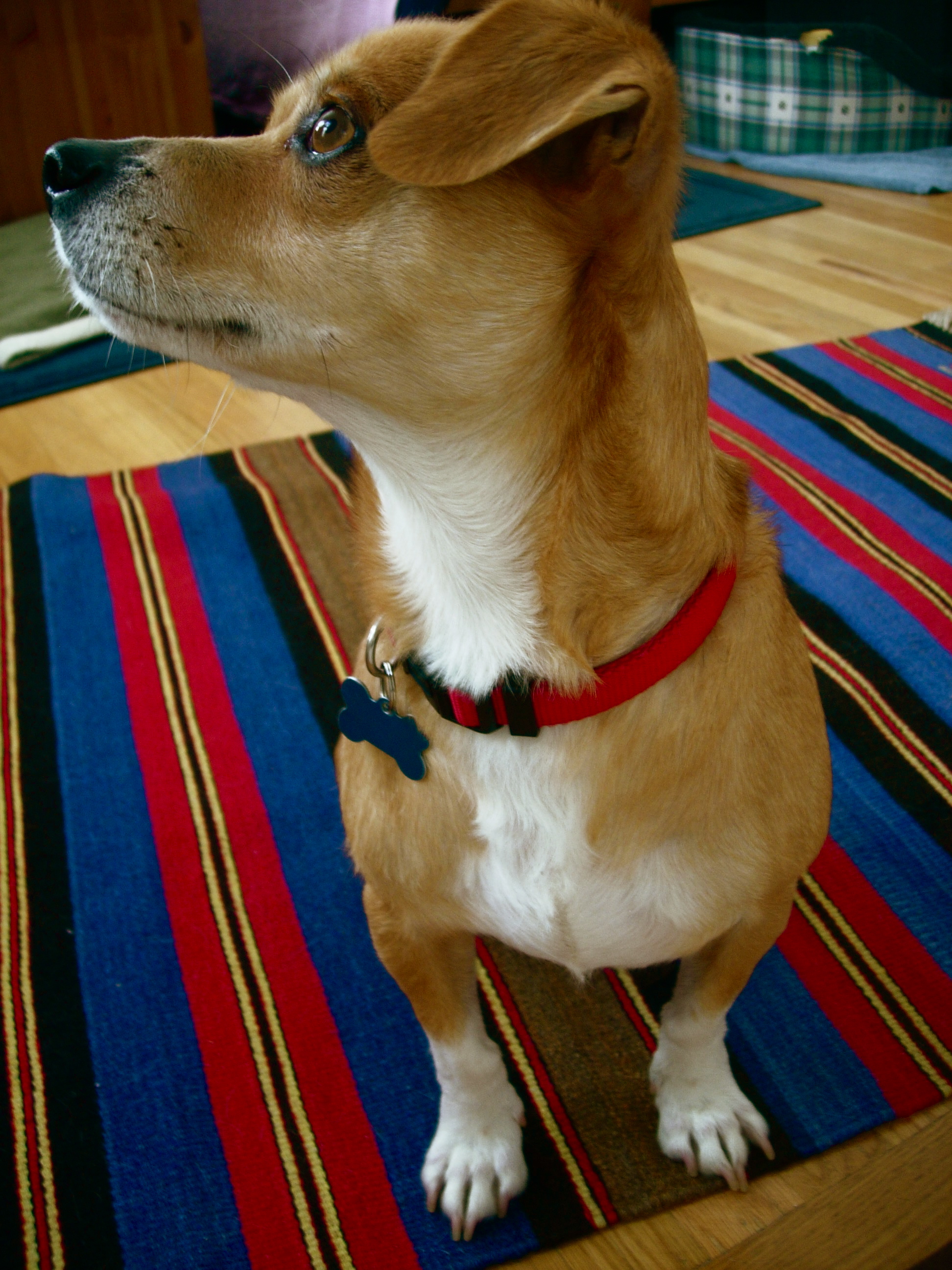
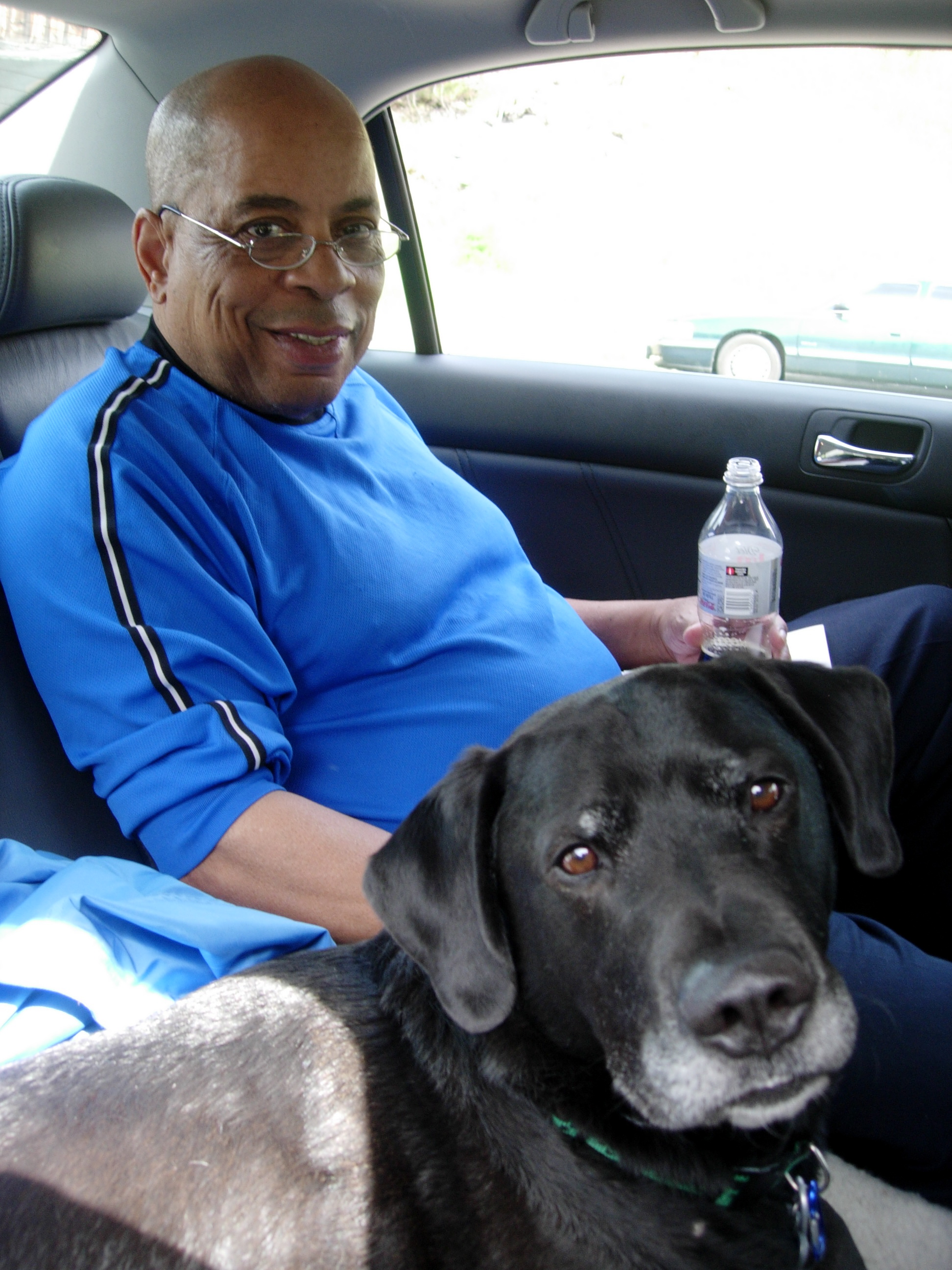
Friends, this is Buster Brown, the beagle (mix). He belongs to my dear friend Lori who, in addition to being brilliant and hilarious, is also one of the best schoolteachers I’ve ever had. (Sophomore English at C. K. McClatchy High.)
Now that Lori and I live in the same city again, we get to do fun things like team up in caring for Mister Buster. Who is a special little guy, and needs a Lot of caring.
When Lori adopted him a few months ago, she quickly realized that the boy’s endured some serious trauma, gets spooked pretty easy, and may occasionally lash out in fear. The first time I met him, things seemed to be going just swell, feeding him treats and cuddling on the couch, until I got too close and he suddenly bit me on the lip. (I know, tough to imagine a sweet-looking mug like that biting you in the face.)
And so, in the same vein as Heather the cat, though far friendlier to humans, Buster is one of those animal companions whose affection is not guaranteed. (To anyone but Lori, that is.) We continue loving him anyway, though, because who says love is a perfect give-and-take? Buster may have his challenging quirks, like anxiety around changes in atmospheric pressure, but he also has many precious ones, like the morningtime phenomenon Lori has dubbed “squishy ears.”
As poor Tamagotchi performance long ago established, I’m not a naturally maternal person in the least, and it ain’t easy for me to look after a creature — especially one without language. (No reasoning with BB when he’s feeling too skittish to take a walk; sometimes all you can do is pick him up and kinda scoot him forward toward the stairs. This clashes somewhat with my sensibilities around consent.)
But I will say this: relations with Buster calm down to the extent that I can calm down. When I stop worrying about whether he’s scared, or upset, or Not Being A Model Dog, and just accept the vicissitudes of his moods, doing what I can to offer him a good environment, then we get along just fine. I can relax and enjoy the afternoon walks; he can relax and, you know, do the puppy thing.
And as you can see, he’s reeallly good at doing the puppy thing.
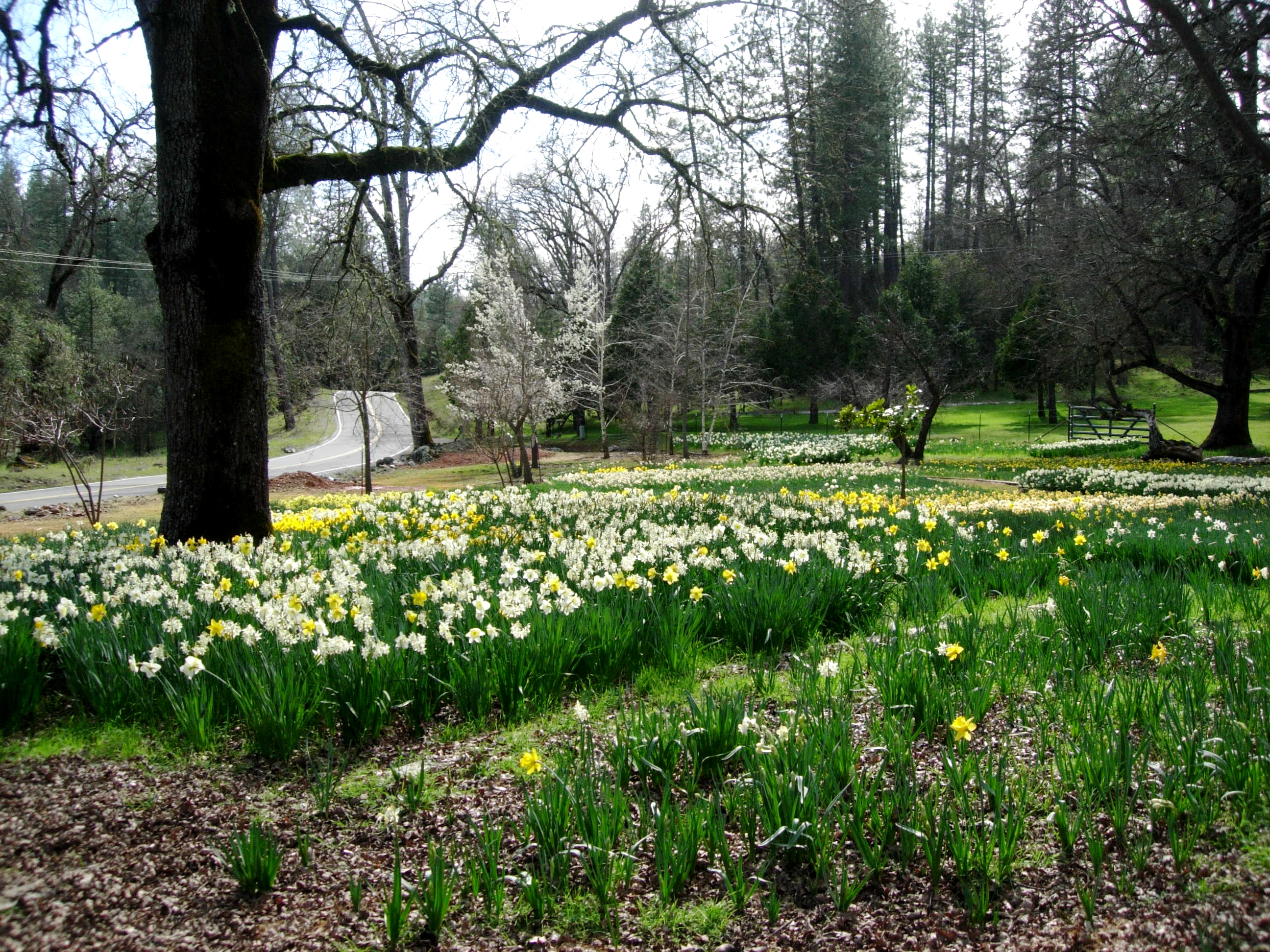
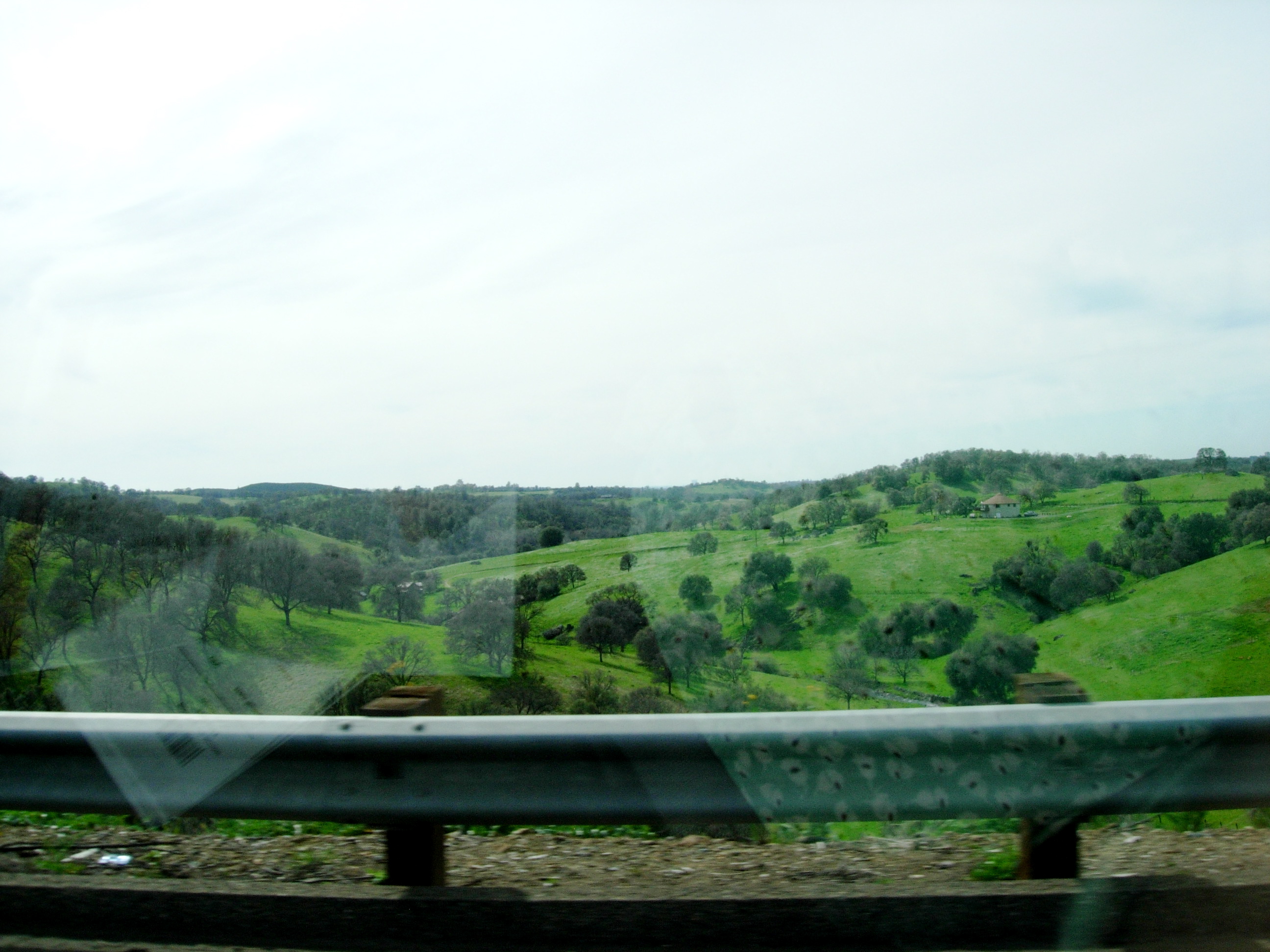
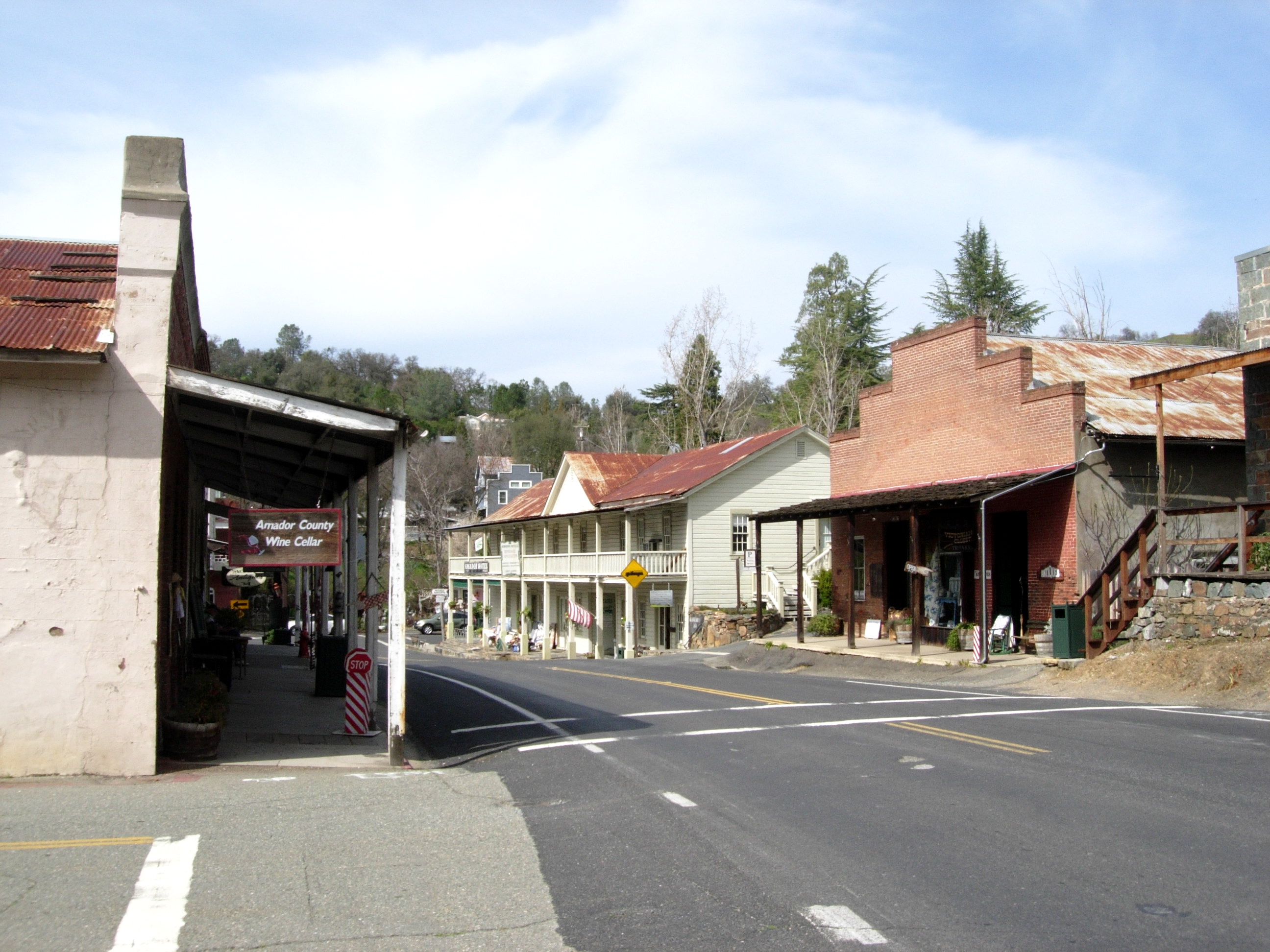
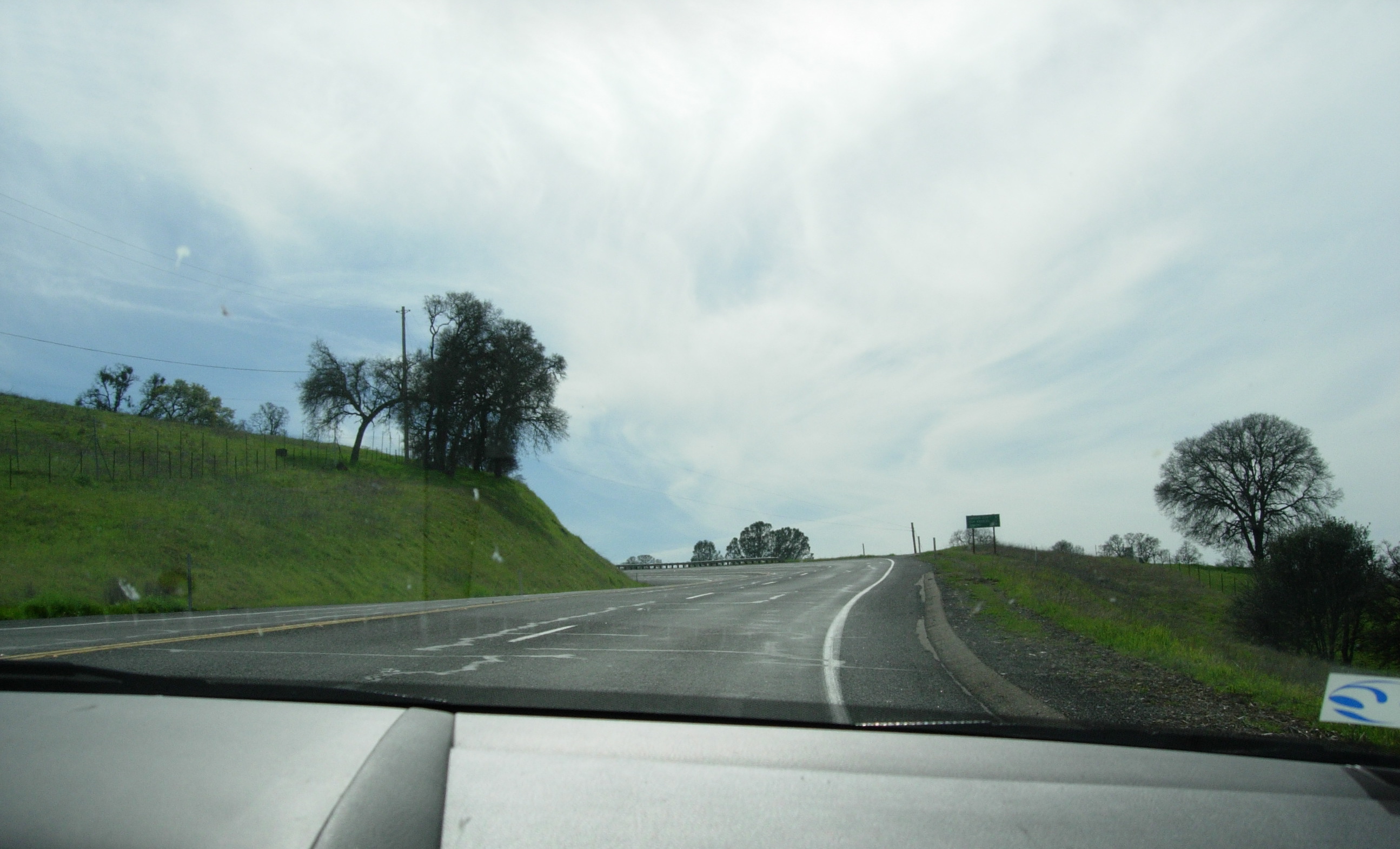
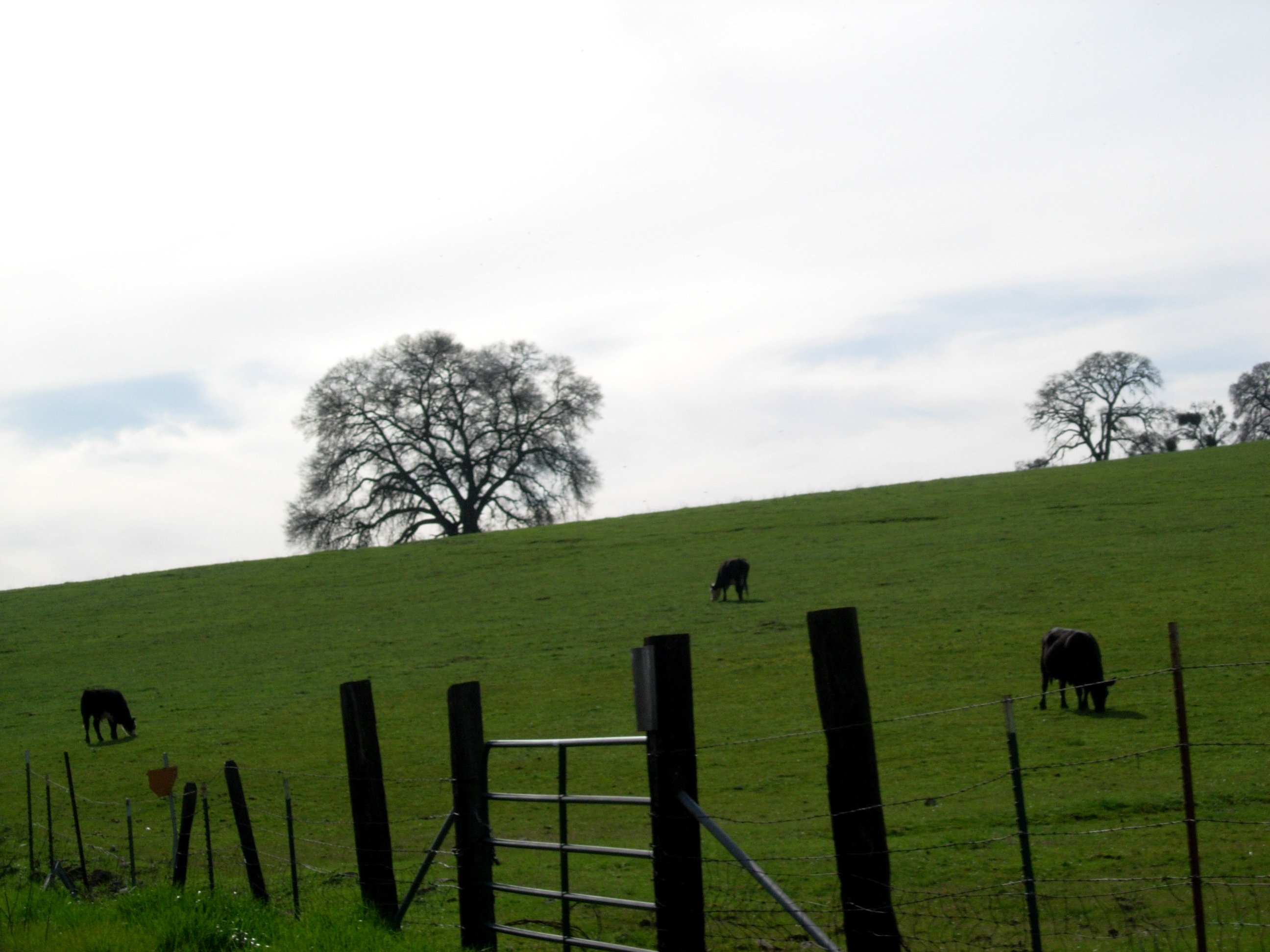
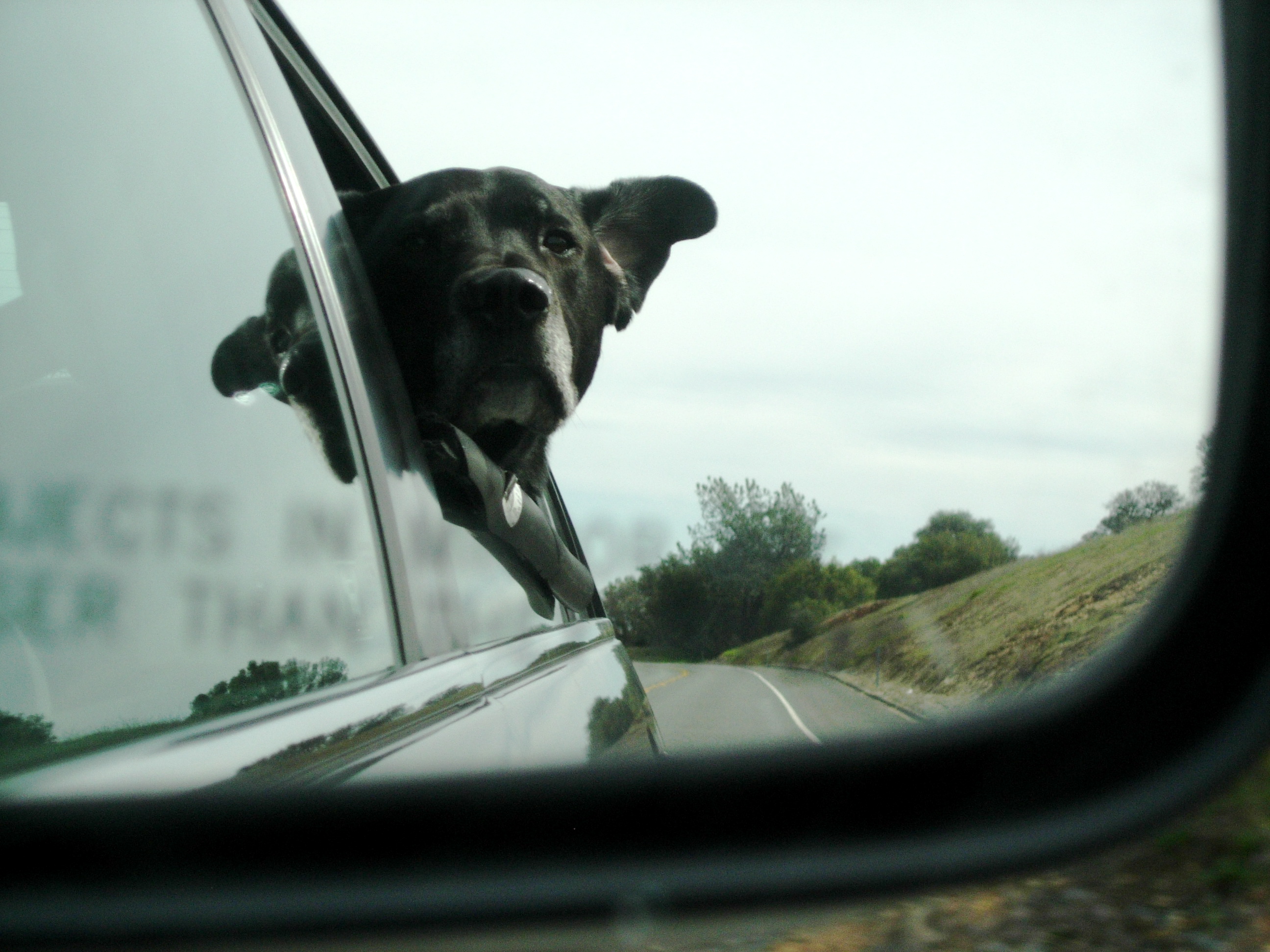
Driving with my parents and pooch through Amador County yesterday, surrounded by snowy mountain horizons and idyllic “Gold Country” scenes, I breathed the deep sigh of the escaped innercitydweller. At the same time, I found myself thinking of the difficulties of rural living.
Dusting all the “quaint” knickknacks on display in your one-street-town storefront. Chopping firewood with a bad back. The lack of “cultura,” as a new mexicana friend describes her life at the University of Wyoming — which, in its more insidious aspects, may relate to the faint queasiness in my gut whenever we had to stop the car and ask a sinewy old white man for directions. (They were all perfectly sweet, incidentally.) Absent indigenous people; invisible immigrant laborers.
Not knocking the Sutter Creek set, of course — simply checking my own tendency to romanticize the gorgeous, sweet-breezed setting. And rather than spoiling the enjoyment, my negative observations ballasted and strengthened my experience. Free from craving and projection of fantasies, the day felt even more poignant, more precious, more vivid. A truly beautiful afternoon.
View of St. Mary's Cathedral, known among Fools as "Our Lady of the Maytag," from Jefferson Park (found on flickr)
A making-breakfast conversation with Noa this morning, discussing the health benefits of ghee (she clarified — no pun intended — some of my misconceptions), somehow Back-To-The-Futured me smack-dab into 2005, the summer I turned 19 on the way to McLeod Ganj. (As opposed to the summer I turned 19 on the way to Buenos Aires…)
As a result, my walk to work at the First Unitarian Universalist was entirely double-visioned. The church, nestled in the brood of huge Christian hubs up on Cathedral Hill, became a Tibetan monastery, perched on the face of a Himalayan foothill. The southward view from Jefferson Park, a steeply sloped dogwalking destination between Turk and Eddy, flickered between a beautiful vista of San Francisco’s Mission District and the famous exile village of Dharamsala. Even the fragrance of city cherry blossoms, soft and cleansing in the warming minutes before 9am, somehow evoked the fresh air after a monsoon rain.
How clean the sidewalks are here, I realized. How wide and empty the streets! No crowds!
McLeod Ganj, not my photo: I didn't have a camera in India
That is, until we descended from the Hill back into the Tenderloin, sending off a dozen Wyoming University students on a daylong Faithful Fools street retreat. Then, my memory’s eye moved southward along the subcontinent, to the areas in Kerala where I spent most of my 10 weeks. The hustle, the stagnancy, the dirt and color. All these contrasts. Saints and thieves, or more often, a little of both playing out in one body. Drunken yogis. Warrior monks. Our many, many aspects. I wanted to greet all of them, welcome them, let them know how thankful I am for this messy, chaotic, uncomfortable, precious life.
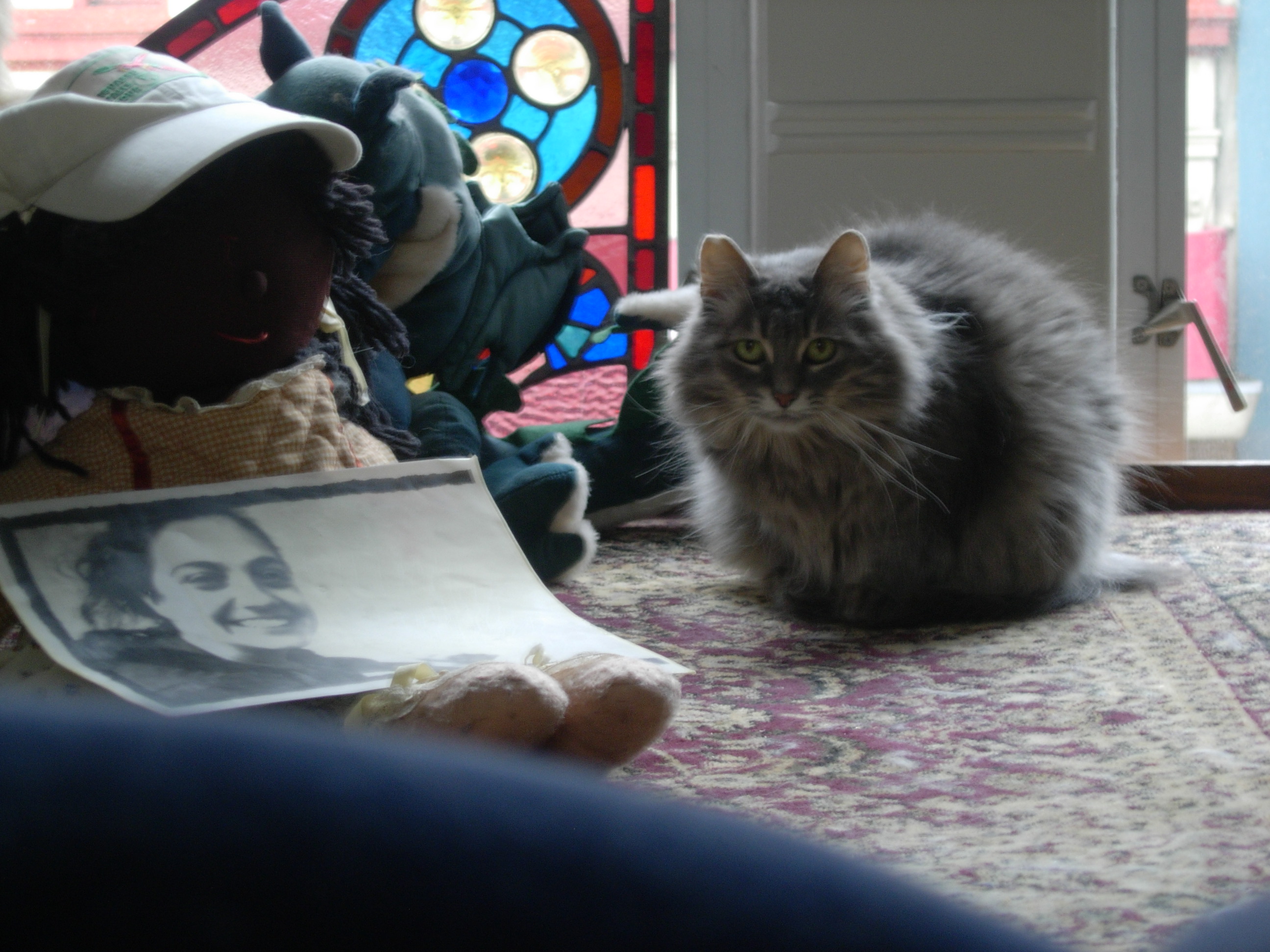
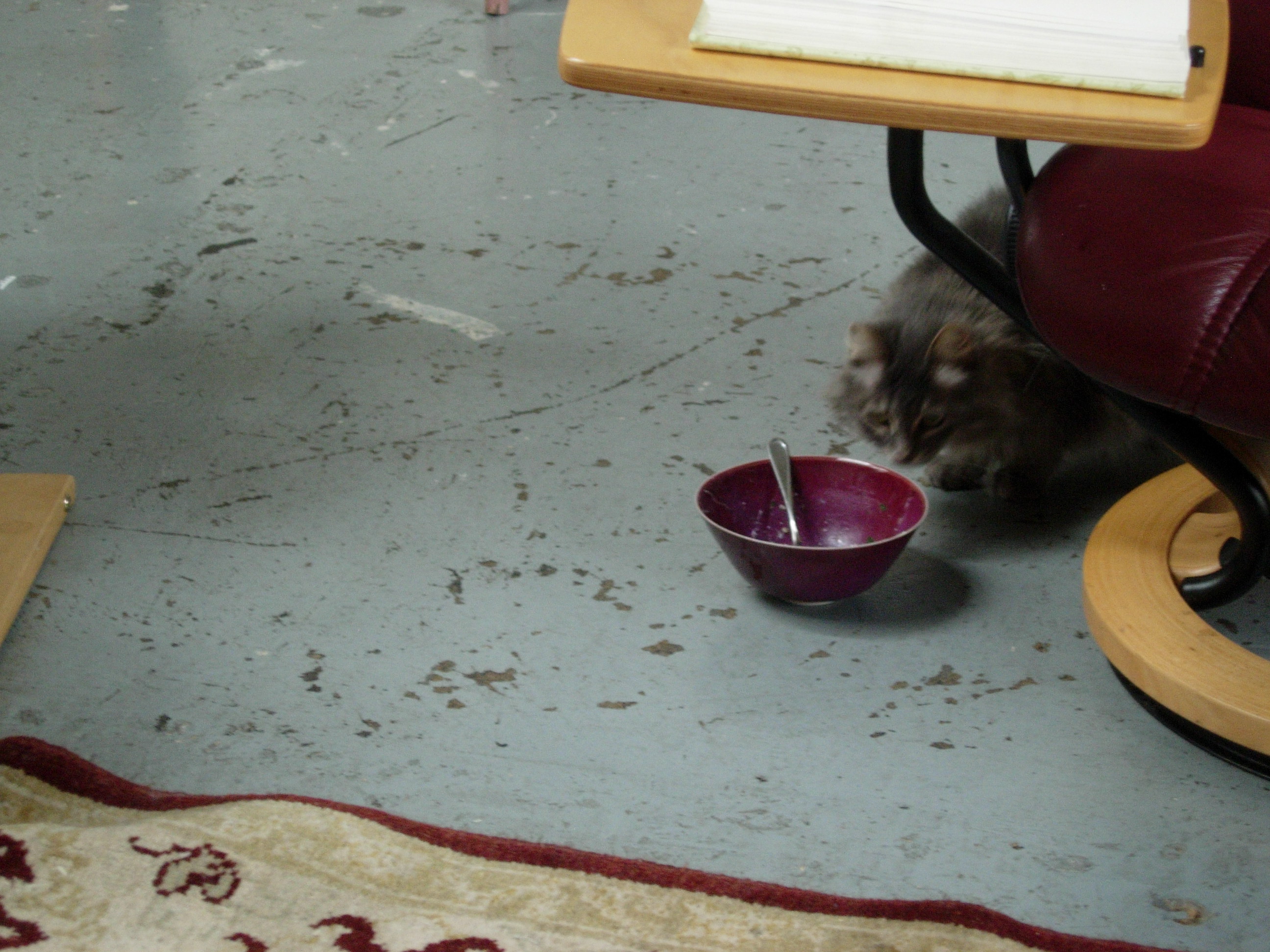
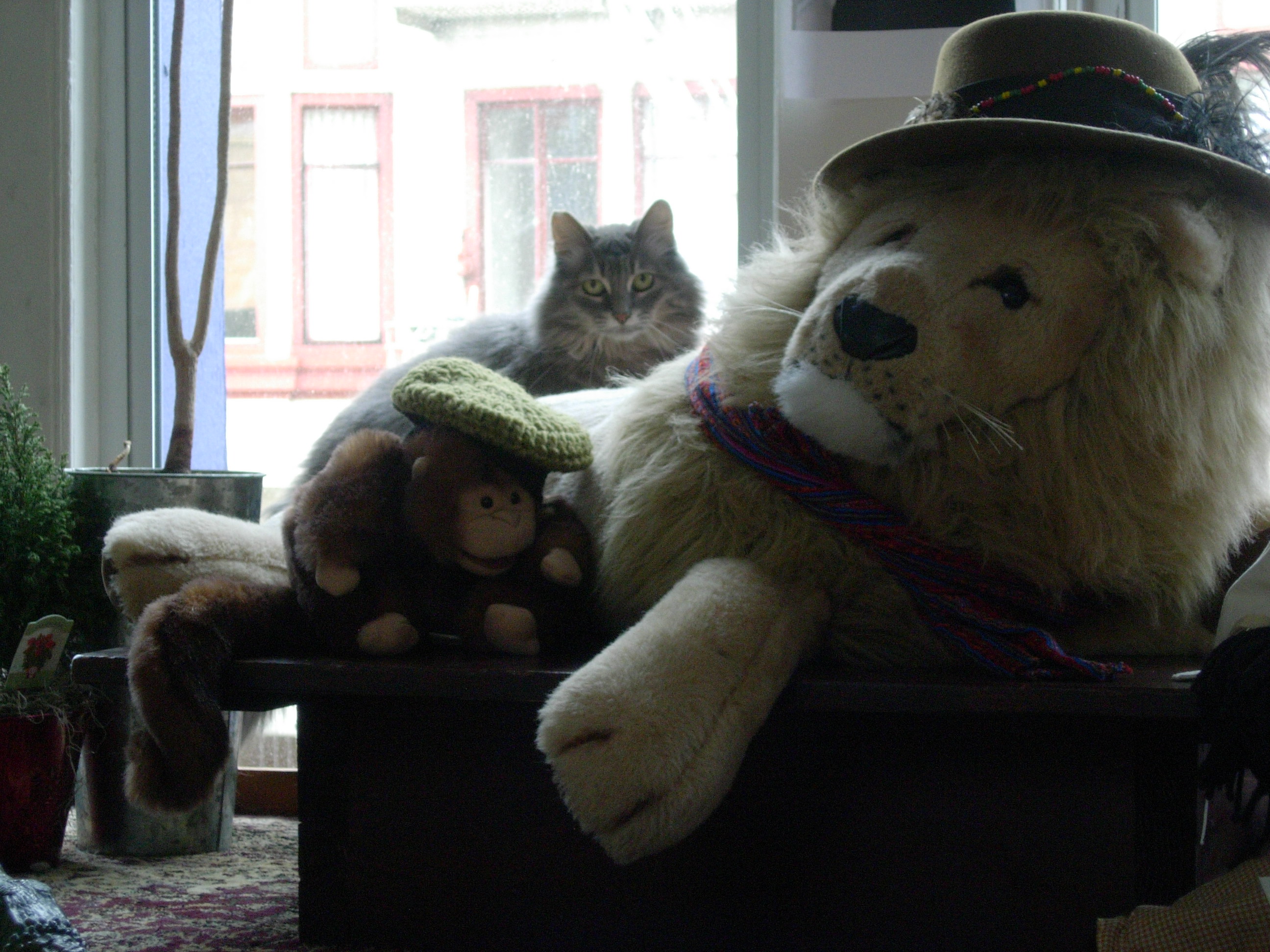
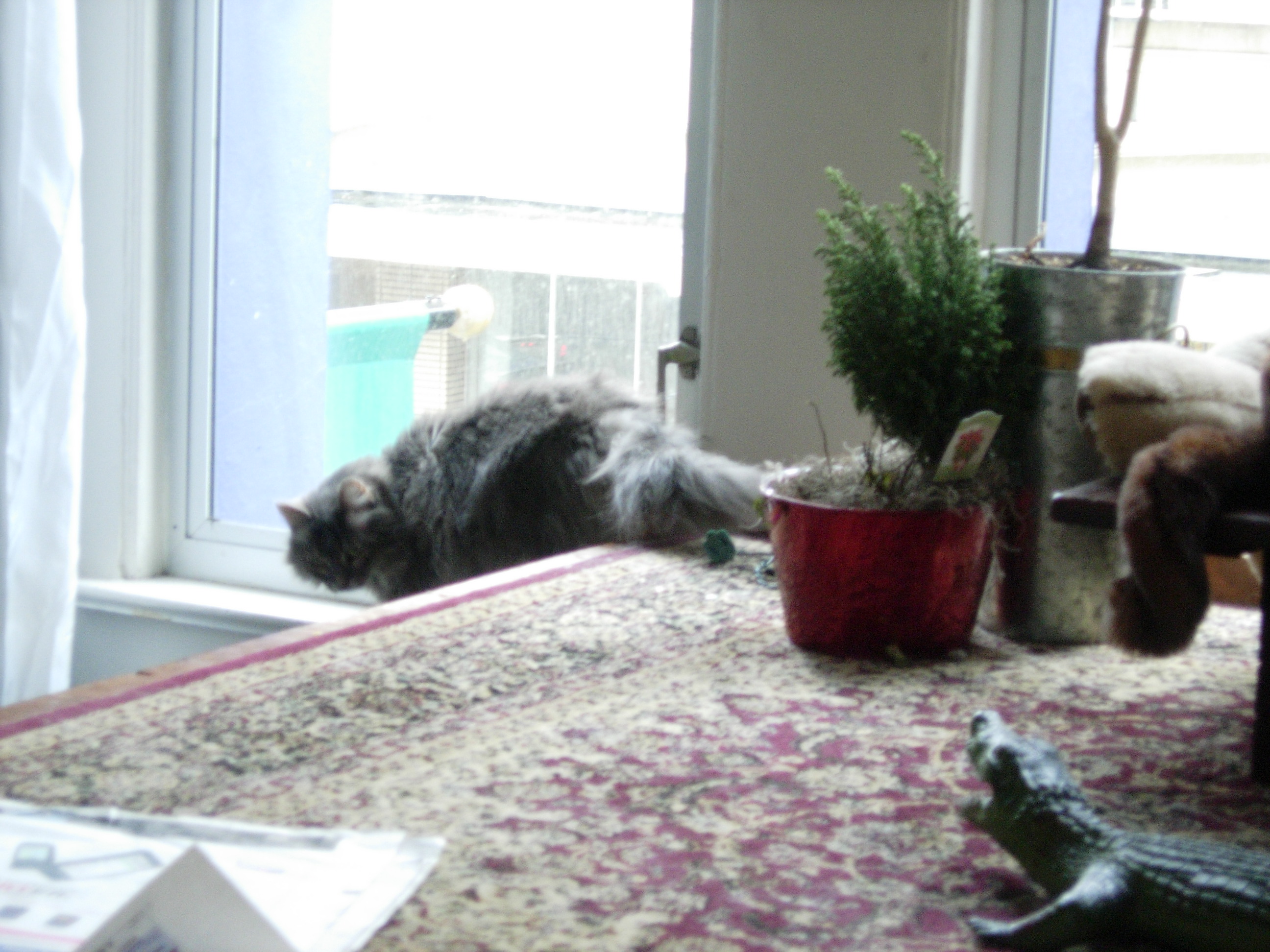
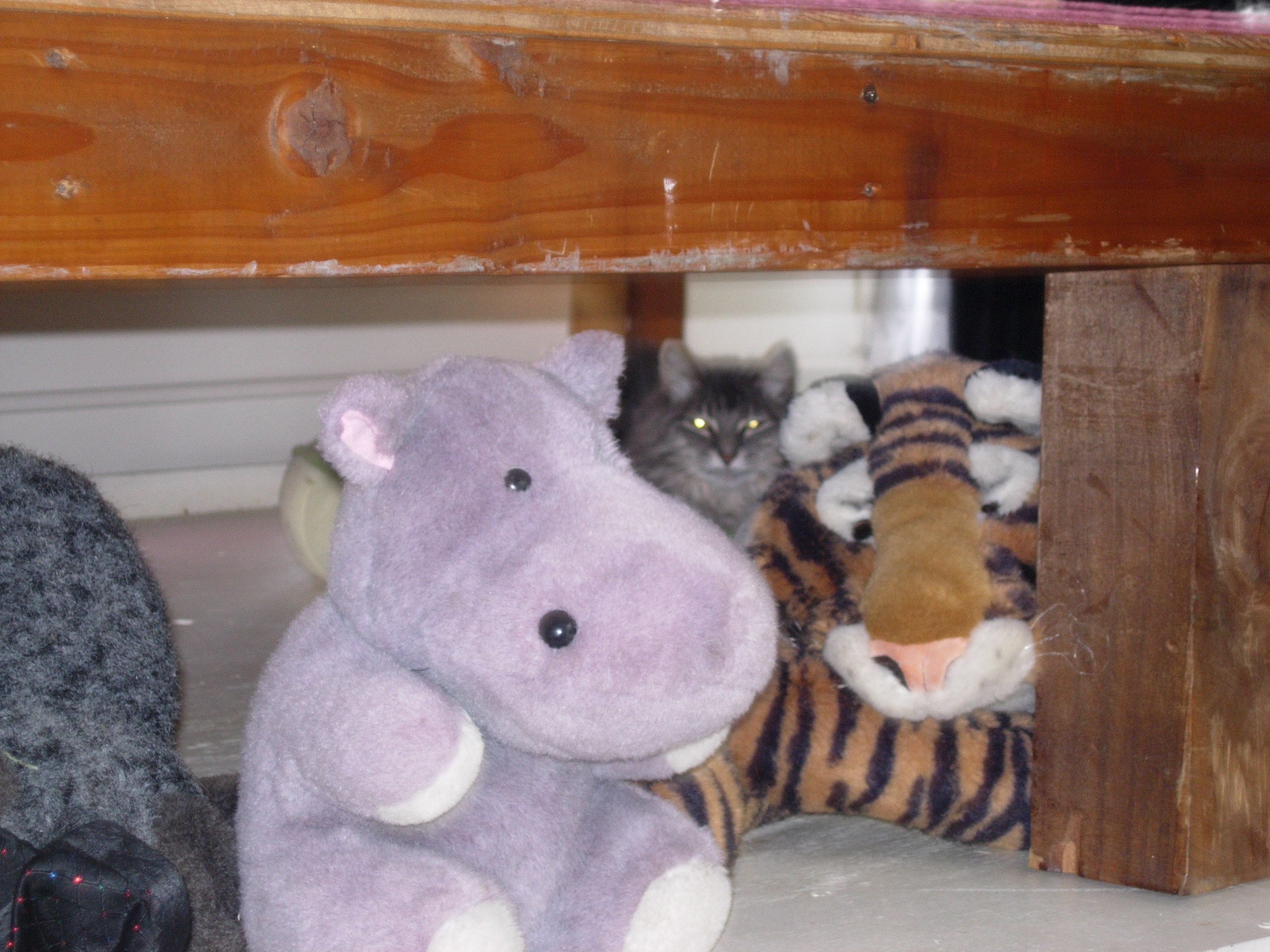
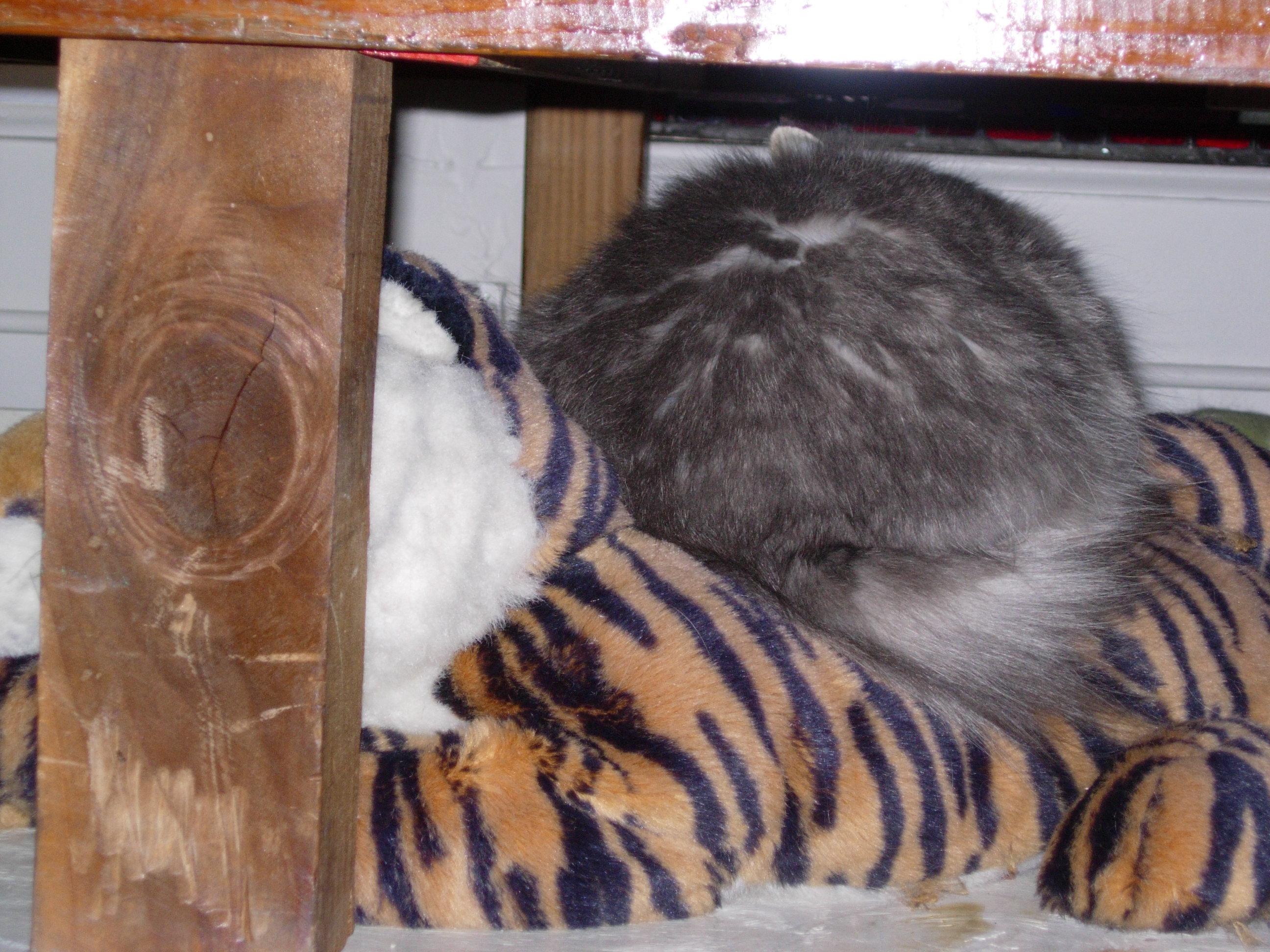
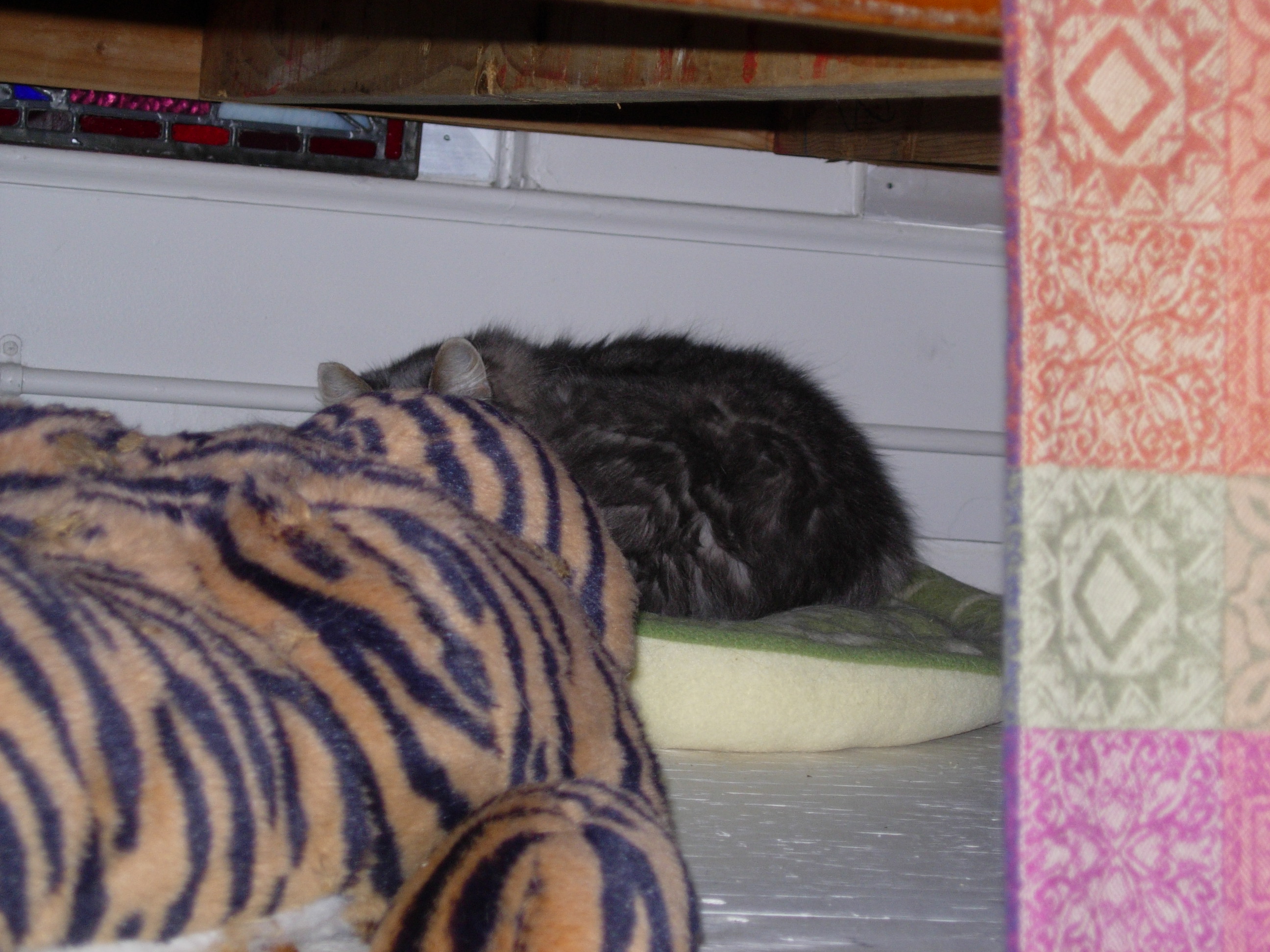
Heather is a feral cat that the Fools took in some years back, and who lives with us — slinking among the stuffed animal menagerie — in the Fools’ Court. For years, I’m told, she wouldn’t even let herself be seen. Now, she’s slowly growing bolder: eating, roaming, and claw-feasting on stuffed armchairs in full view, when there’s only a few of us around. But she’s still supremely elusive — a fact only emphasized by her absurdly gorgeous and adorable looks.
Last week, over the course of a lazy, reading-and-tea -type afternoon, I intermittently tried to take her portrait. I think some part of me hoped it would bring us closer together. Let’s just say she had her own agenda.
The Dhamma teaches that the highest form of love, real love, is when we just give, without expecting anything in return. Easier said than done, to put it mildly — especially when it comes to intelligent pets, which are often marketed in our culture as maximally efficient Affection Reciprocators. When we love ‘our’ animals, we expect them to love us back.
But despite all my coaxing and sweet-talk, pledging catnip and cuddlefests, ultimately my desire for Heather to transform into a Happy HouseCat (avid purrer, visitor of laps) had less to do with improving her life, and more to do with improving mine. Seeing this dysfunction clearly, I (to borrow a phrase from my uncle CC) had to laugh. Sometimes we get way ahead of ourselves, you know?
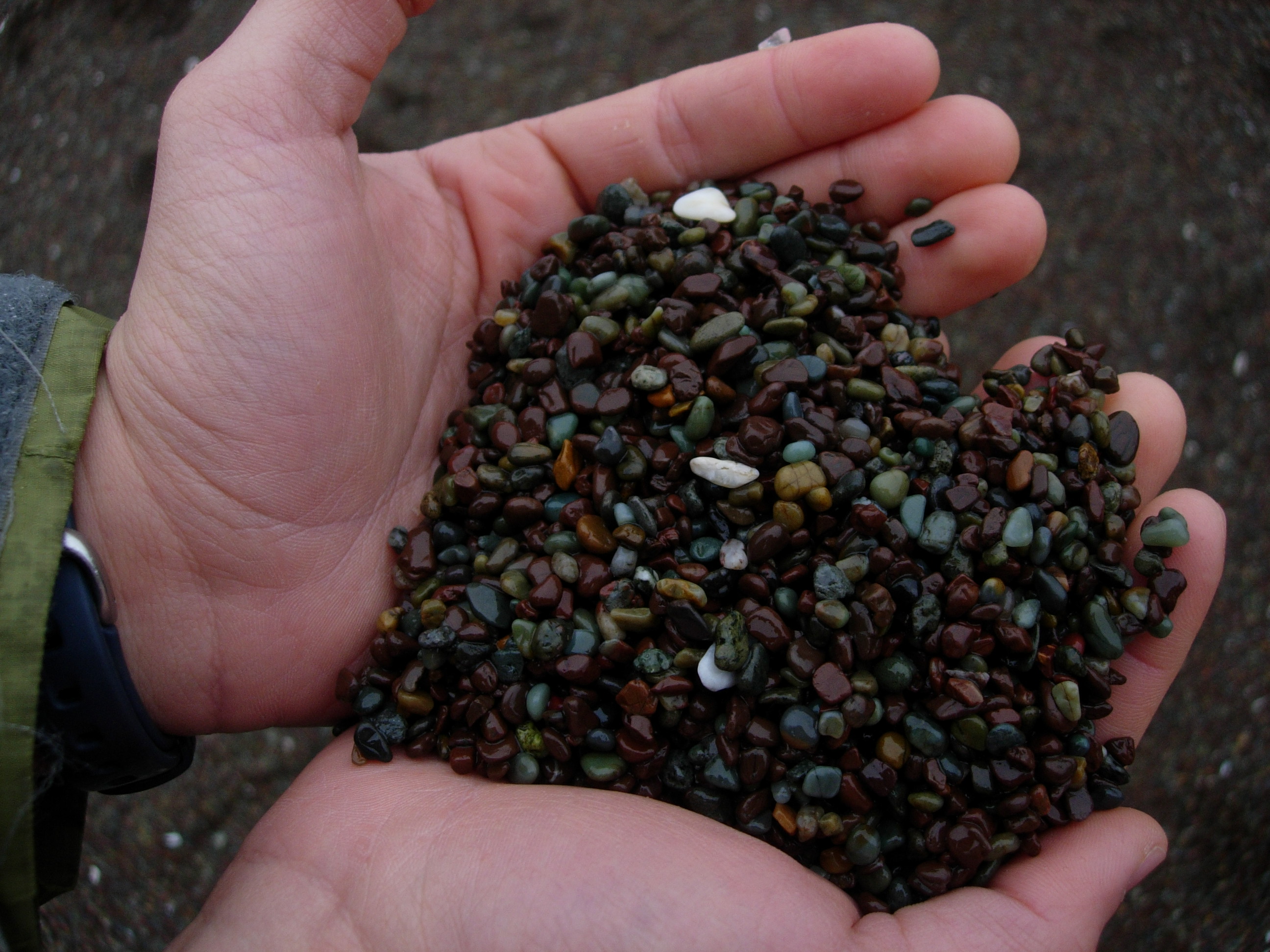
From lovely a gray morning with Cat at Rodeo Beach, where the sand is this beautiful bed of pebbles. Feels glorious to walk on, in the rain: the feet sink down just the right amount.
$600 for tuition, breakfast, and lunch. Dinner and lodging not included. (Not to mention the cost for me to travel to Massachusetts.)
Six hundred dollars? Probably closer to a thousand, all told? Now where’s the social engagement in that?
Of course, this is not a dilemma unique to the Zen Peacemakers. As nathan and I have been discussing lately, it’s a huge challenge to make a sangha’s economy reflect its philosophies. And when I called the ZPs to inquire about a sliding scale or some other option, it was clear that they were at least considering the contradiction between the symposium’s mission and its prohibitive costs. Within a couple of months, they had designed and posted a volunteer application, which would cover the cost of tuition — though still leaving the problem of travel and lodging. My new friend Ari, ZP assistant to Bernie Glassman, says they’re also pursuing possibilities for free places to stay: either camping on the property or staying with local sangha members. If you’re interested in attending, hit up the volunteer app! (Unless, of course, you can afford to pay — in which case you’d be helping make things more affordable for the rest of us.)
It’s important to keep in mind, I think, that the point of keeping entry costs low isn’t only a matter of accessibility. Of course, we want to make teachings and community-building events available to poor and working-class folks. But for a group explicitly interested in social justice or “social engagement,” there is also the problem of reproducing oppressive, class-based structures. Inclusion is not enough: we need transformation.
For example: what does it mean when social justice -oriented sanghas establish endowment funds, which invest donors’ contributions into the financial market, strengthening the capitalist structures that exploit and crush workers?
We don’t need to rely on this model. Check out this definition of a “dana economy” from the rad-sounding Eco-Dharma Center:
All our events are offered in the spirit of dana, a Sanskrit/pali term meaning giving and gift. The ethical practice of generosity expresses the transcendence of separate selfhood and constitutes a basic ethos at the heart of creative community. The economic forms of consumerism and capitalism highly condition our relationships in the world – encouraging us to experience ourselves as discrete subjective entities, producers or consumers, insulated from responsive engagement with others. Rather than emulate this, it is our intention to support economic relationships which contribute towards a culture of sharing.
We do not intend to enter into relationship with you as the providers of a service for a consumer. We intend to enter into a wholehearted human relationship with you, as co-producers and collaborators in the transformation of ourselves and our world. To support this intention we ask for contributions to make this work possible, rather than offering our work as a service to be bought. The basic principle of the Dana Economy is, “give what you can, take what you need”.
The suggested donations in our programme reflect the very basic income required to make the events viable. We do not have any independent means of financing the events and we do need that those attending offer financial support to make the events financially viable. If you can offer more, please do. If the incoming donations for an event are insufficient we will be unable to give them freely. So, please look at the suggested contributions and enter into the spirit of this approach by giving what you can. We are also willing to discuss donations in the form of skill sharing and offers of work to support the project.
I know we need to be realistic, and as Ari reminded me, most sanghas do not dedicate themselves exclusively to offering retreats, a la Goenkaji’s Vipassana centers, so that’s not a viable model for everyone. And I want to emphasize that I’m not trying to guilt-trip anybody. Rather, I’m eager to talk more, and more openly, about the real costs of maintaining sanghas, and how we can reproduce and sustain radical dana economies: economies of insight and generosity. I’d love to hear y’all’s thoughts.
In addition to volunteering in order to earn my way at the Symposium, I’m hoping to host a workshop on using the Internet as a tool of dharma. So wish me luck! Seems like it’s a popularsubject these days, and I’m psyched to hear how others are theorizing it.
Meanwhile, here’s a bit of info on the ZP’s newsletter — for which they often solicit contributions. I checked out the issue on prison meditation this month, and there were a number of really solid articles. (Also made me that much more eager to see Dhamma Brothers: a documentary on the introduction of a Goenka-style 10-day silent Vipassana course into an Alabama prison.)
Take care, y’all!
— — — — —
Zen Master Bernie Glassman and the Zen Peacemakers invite you to enjoy
The Zen Peacemakers founder, Bernie Glassman has created the a clearinghouse on Socially Engaged Buddhism in the West. We are pleased to invite you to receive our FREE monthly online publication.
You will learn about:
· Who?: Profiles, links and articles on the individuals and groups practicing service and working for social justice as Buddhist practice
· What?: Emerging service projects and social actions, including opportunities to train and get involved
· Why?: The history, ethical bases and philosophies that inspire the global movement of Buddhist communities towards social engagement



















 Kloncke