like when your neighbor texts you because she knows you’ve been gone from the apartment going on two weeks, and is concerned that your car might get a street-sweeping ticket. touched, you say Thanks so much, I was gonna ask someone to move it for me, but maybe u could, and use it to do laundry or summ? and she says Sure I. Can Move it for you, and it would be great if i could do my laundry. Lol time to wash the blankets and pillows. (you can hear her South Carolina laugh.) and you tell her how to get the spare set of car keys from the drawer of your nightstand — Heads-up so you’re not too shocked, there’s a vibrator in there along with a floral-patterned hammer and other important tools, lol.
Lol, cool, she says. Oh and I hope you’re out of danger of that storm.
=================
you think of Audre Lorde and the histories of black and mixed women caring for each other, the complexities of having access to a car, not having access to a car, to light-skin privilege, to thin-body privilege, to neighborliness, to a neighborhood where neither of you grew up.
you think of Silvia Federici and the work and planning that goes into keeping a household, from watering the plants to washing the pillows to checking on neighbors to planning the porch-evening-six-pack-of-beer thank-you, which you know your neighbor well enough to feel confident that she will enjoy.
It has not been simple for black people living in this country to know love. Defining love in The Road Less Traveled as “the willingness to extend one’s self for the purpose of nurturing one’s own or another’s personal growth,” M. Scott Peck shares the prophetic insight that love is both “an intention and an action.” Using this definition of love, and applying it to black experience, it is easy to see how many black folks historically could only experience themselves as frustrated lovers, since the conditions of slavery and racial apartheid made it extremely difficult to nurture one’s own or another’s spiritual growth. Notice, that I say, difficult, not impossible. Yet, it does need to be acknowledged that oppression and exploitation pervert, distort, and impede our ability to love.
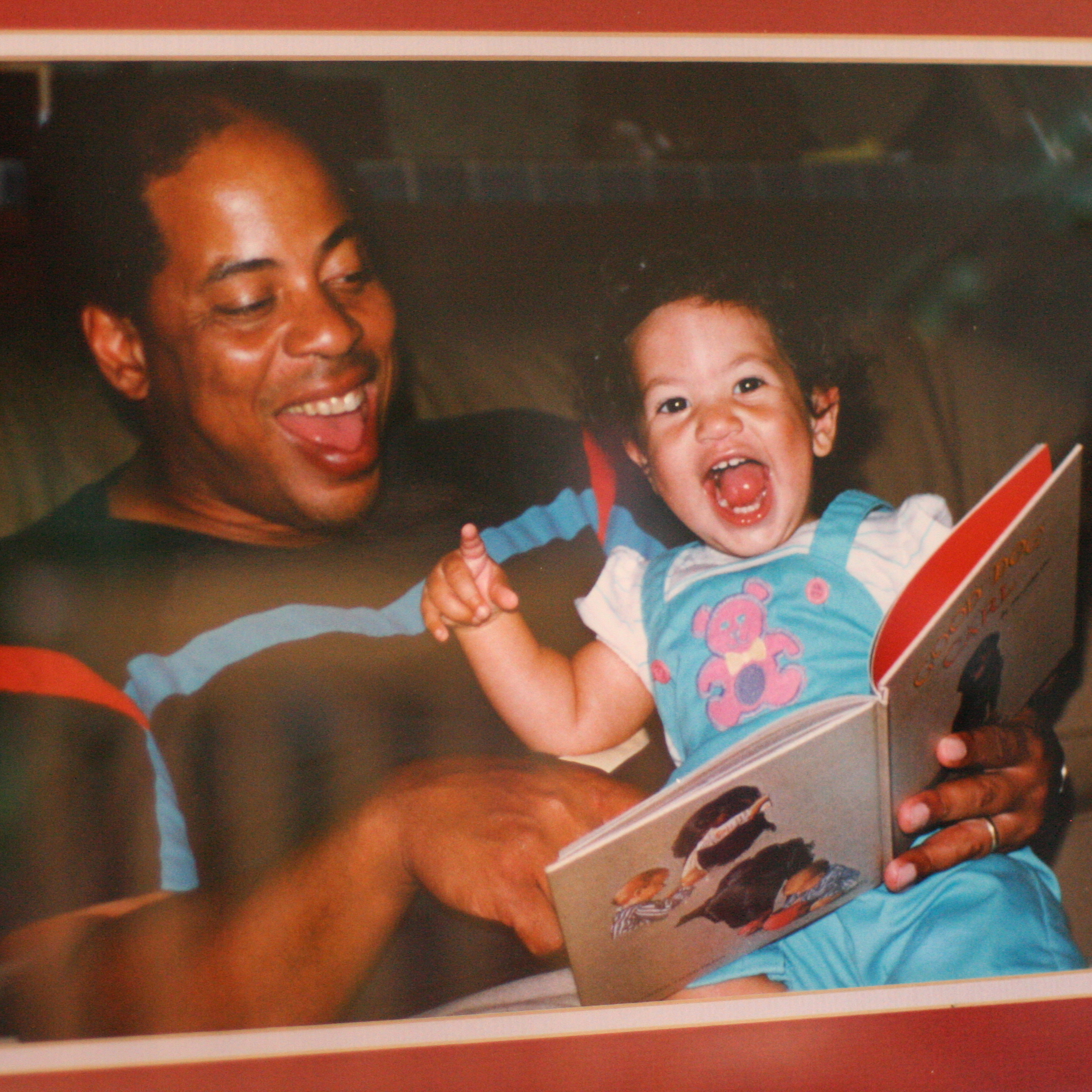
featuring my friend and beautiful leader Karega Bailey, deep & dope hip hop with some on-point politics! lots to love. ♥
history books, history crooks
without slaves, how would this history look?
let me bring yo mind to attention
take away the builders, the building is nonexistent
…
two times for the man with the white fist
who’s quite pissed
who knew that racism existed in america
but now that the color is green
ask the poor white man how he like this
big cities with nice ****
i’d like to thank y’all for stoppin by
but these problems have existed in the hood
now that they’re in your homes
you decide to occupy
In the above video, Bill O’Reilly laments a changing America where black and brown people “want stuff.”
Thing is, though, white people also want stuff.
Some of the stuff white people want is great stuff: stuff like good health care, meaningful education, a living wage, comfortable retirement, non-toxic food, decent shelter, disability justice, and help recovering from climate-change hurricanes.
White people wanting stuff in Greece. Unfortunately, some of them have turned fascist, blaming non-white people for preventing them from getting the stuff that they want.
Some stuff white people want is not so great: like preference in hiring, admissions, or promotion; cops, judges, juries, border patrols and parole officers who go easy on you relative to black and brown people; books, magazines, art, and media that almost always reflect people of your race — especially in hero positions; access to social respectability, even if that access is consciously rejected. Many white people are so used to getting this stuff that they don’t even realize they want it until it starts to go away. Even the white folks who claim to not want any stuff — the Walden Pond renunciate types, sipping dewdrops from native ferns — usually want the ability to travel anywhere they wish, relatively unquestioned, safe in the assurance that “this land is my land, this land is our land,” wherever that land may be.
Other white people who want stuff?
Rich white capitalists.
They want hella stuff! They even want the stuff they own to produce more stuff — for them — without having to work for it! Some call that “investing;” sounds like exploitation to me; either way, it seems to pretty clearly involve white people exhibiting stuff-wanting behavior.
Fortunately, however, some white people also want the end of white supremacy. Why?
(1) Because white supremacy is ridiculous, fucked-up, spiritually poisonous and currently *foundational* to our
schools
laws
police/military
media
medicine
art
jobs
parks
government
and many other institutions that shape all of us.
Some of these institutions might be eventually rehabilitated from the white-supremacy fungus; others need to be chucked altogether. Meanwhile, even in our radical organizing and communities, we face continual dangers of harming each other and undermining out own work by reproducing racist behaviors learned from these institutions. Not cute.
(2) Because racism and racial privilege keep working-class people struggling against each other. Meanwhile, the “White Establishment” (capitalist class, historically white) profits off of everyone’s work and/or stolen land.
Don’t believe me? Take Virginia in the late 1600’s.
In assessing the colonial history of Virgina in particular, Allen focused on the second half of the seventeenth century as the period when a previously mutiracial population of bond servants was divided into a pool of white workers indentured for a limited term of several years and a pool of black workers who were converted into permanent and hereditary chattel slaves. This division was, according to Allen, the result of uprisings like Bacon’s Rebellion, in which black and white bond servants sacked Virginia’s colonial capital of Jamestown in 1676. Allen’s research produced significant evidence, from primary documents such as the colonial records, demonstrating that, fearing the power of such a unified group, the colonial elite intentionally granted specific privileges to white servants—especially the eventual prospect of freedom—that were denied to blacks. The unstated quid pro quo was that white workers were expected to help police the black population, rather than unite with them in subsequent rebellions. This often took the form of white bond servant participation in armed slave patrols and militias that repressed any spark of resistance. Here, said Allen, was the origin of white supremacy as an ideology, and of the “public and psychological wage” identified by [W.E.B.] DuBois. Colonial Virginia was the birthplace of the white skin privilege. (Truth and Revolution: A History of the Sojourner Truth Organization, 1969–1986; pg. 85)
So yeah, Bill, white people want stuff. Stuff like freedom! And more and more are seeing through the false freedom of white skin privilege, understanding that lasting security can never come for working-class people — white, black, red, yellow, brown, or blue — under capitalism. For that, a much better bet will be a classless society. “A world,” as my friend Jake* puts it,
where people arent greedy and we take care of each other and nobody is fucked up to each other and everybody realizes their work isn’t any more or less important than each others and we don’t work for money but for ourselves and each other.
Yeah, that’s the stuff.
=======================
Jake’s not white, but hey, you can probly still get down with what he’s saying. If you really need a vision from a white person, I also love this simple and profound one from my anti-capitalist friend Kate, who works to bring about “the healing of the earth and all her creatures.”
building and learning some of the history of my block from a new friend who grew up in the neighborhood and whose family lived on my street up until a few weeks ago.
then tonight i check my voicemail and 88-year-old Mr Posey up the road had called to see if i wanted to come over and watch the giants. (we watched game 3 together and made cornbread.)
plus i live within walking distance to lots of fabulous people i know, and probly many more fabulous people i’ve yet to meet.
north oakland, i really appreciate getting to know you.
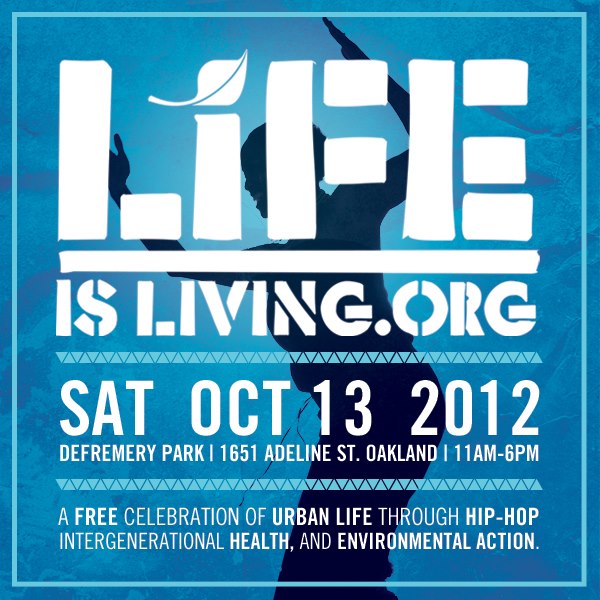
Yesterday: amazing political art by Young Gifted and Black, Isis Rising, and all kinds of other phenomenal hip-hop and soul-flavored performances at the Life Is Living festival yesterday in West Oakland (including an extended Nina Simone tribute that, during Jennifer Johns‘s take on Sinnerman, evoked a cathartic tear or two from the wildly dancing audience). On my way out of the park I watched this rhyme unfold in my head.
It started with the tradeoff of wages and prices, then meandered to attacks on reproductive care (thanks for that presentation, Becca!), the false liberation of muslim women thru u.s. imperialist war, and nuclear energy and fukushima (shouts to Umi for alerting me to the feminist working-class issues there).
So here you go — an extremely extremely rough experiment, something that will probably never amount to anything polished. Still, it represents my gratitude for all that I’m learning, every day, from comrades, artists, thinkers, ancestors, and people in struggle.
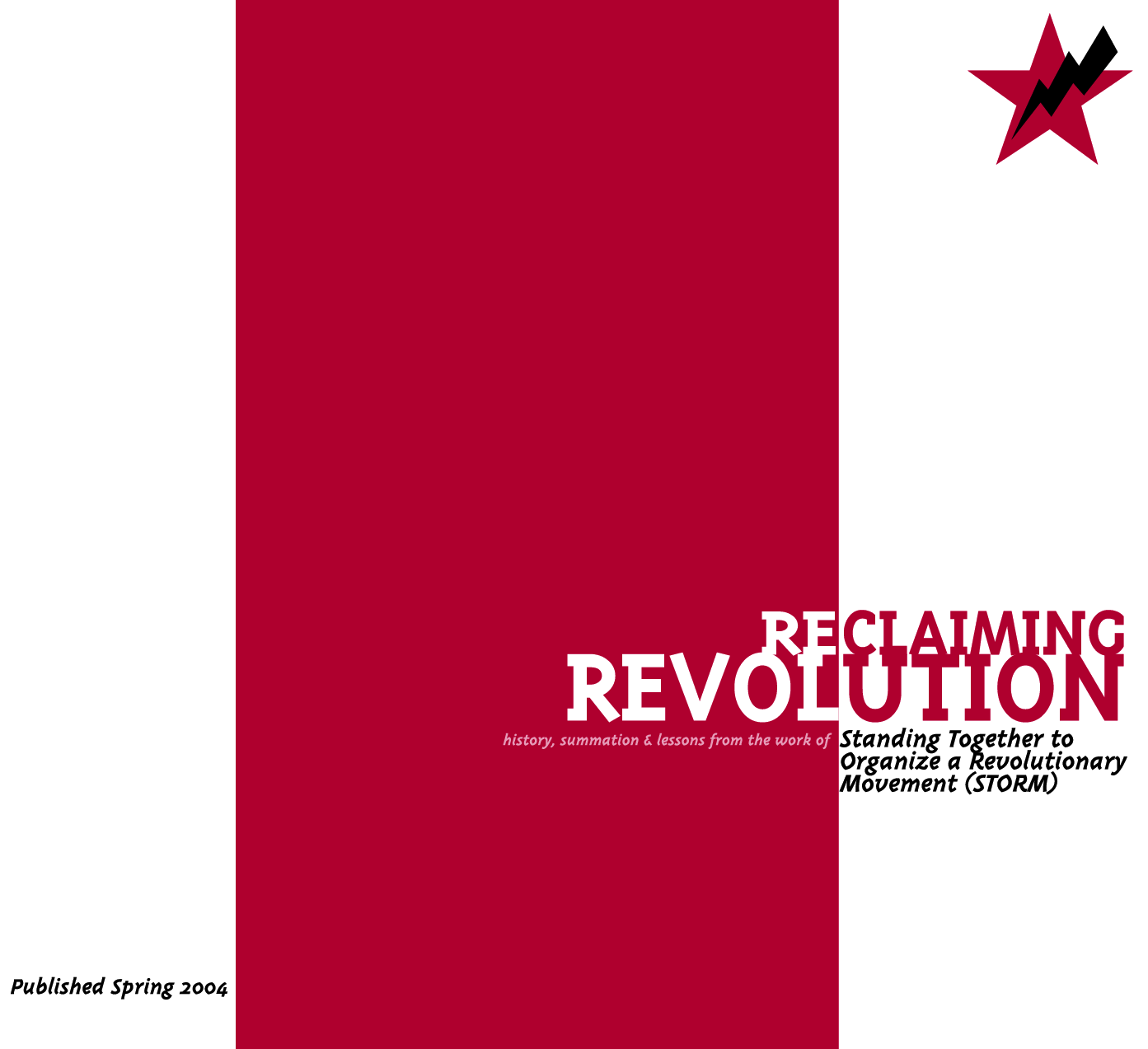
So many amazing questions raised in this piece, about what kinds of cadre are needed in our historical moment, how to practice and not just preach revolutionary feminism, the relationship between leadership and democracy and how to build revolutionary leadership in oppressed communities during a non-revolutionary period… totally daunting and absolutely essential inquiries.
A couple small points that are feeling particularly relevant and challenging for me right now:
We [STORM] also made a mistake in not considering emotional development to be a part of our members’ development as revolutionaries. We did not help our members heal from past life trauma or from personal challenges encountered during political work. Such hurt and trauma are inevitable and, if left to fester, can negatively impact our political work. STORM’s inattention to this matter allowed members’ political and practical skills to outstrip their personal capacity to handle the pressure of their work. This led to a lot of interpersonal conflict and tension with other activists.
and later:
STORM tended towards an emphasis on the common struggle of all people of color instead of a more in-depth understanding of the specific histories and roles of different oppressed communities within U.S. imperialism. Our work tended to focus only on multi-racial constituencies and organization. We neglected to build organization in and unity among specific communities with distinct interests and issues.
…
On a different — but related — topic, STORM did not create intentional spaces for members from different oppressed communities (e.g., different racial/national groups, women, queer people, working class people) to build community and political analysis around the particular issues facing their communities.
It’s just astonishing to me how, although I think they’re off the mark in some areas and self-contradictory in others, overall the people who wrote this document display such level-headed self-criticism, as well as appreciation for the strengths the group did have. (And their strengths were many.) Hindsight is 20/20, I know, but damn… nearly a decade later, these articulations still feel so relevant. Especially in the Bay Area Left.
It’s too late at night for me to form really coherent thoughts about these things, but one question I do have is: what do we mean by “emotional development” and “emotional growth,” and what do we want these things to look like? Are there universal qualities and phenomena connected to emotional development, or are there many, very different permutations that may not look alike at all? And what kind of timelines are we talking? How do we ‘measure’ emotional growth in our revolutionary development when emotional life might be irregularly cyclical, not linear? And how do we move beyond a triage model of emotional work, addressing subtleties of emotional dynamics without getting completely bogged down in them?
Sometimes I think the emotional realm is just as complex as the Marxist intellectual/theoretical realm, but we tend to not respect the complexity. We demand easy answers and go for simplistic fixes. Other times I get completely frustrated with emotional study and feel like many of us are very invested in making it seem more complicated than it actually is. We feed on the drama.
And when you’re of two minds about something like that, how can you ever know which mind to believe?
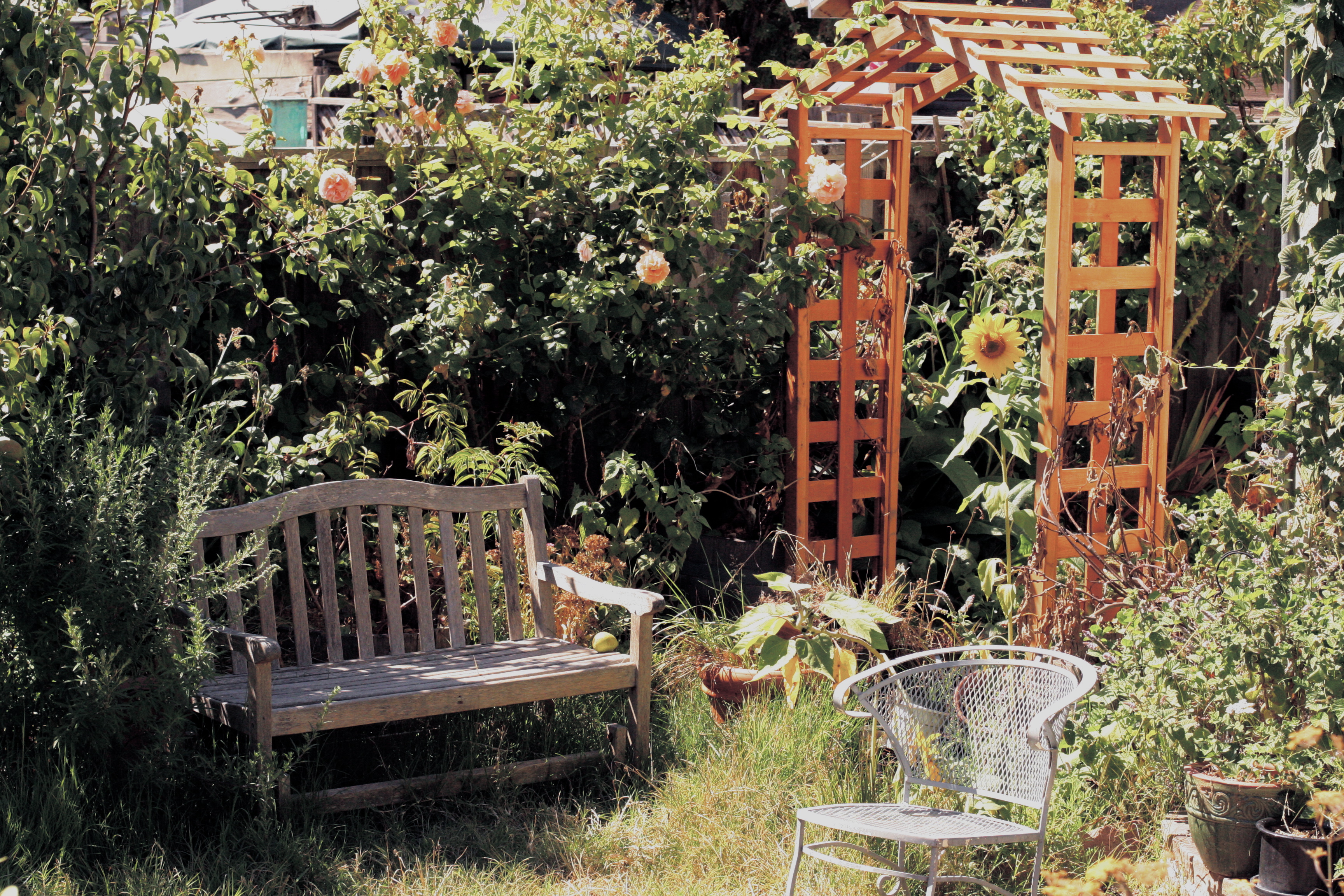
For the past two months, I was subletting a beautiful bedroom, in a beautiful house, with a beautiful backyard garden. On the few occasions when I invited friends over, nearly all of them marveled at the house. The splendid plants, the white piano, the cozy front-porch armchair, the kitchen swimming in sunlight. Each time, my stomach would turn, and I would shrink with awkwardness. It’s the same experience I have, sometimes, in a gorgeous, hip little coffeehouse in a gentrifying Bay Area neighborhood. The glass terrariums with their jewel-like moss and succulents. The indoor hanging bike racks and convenient public tire pump. The fancy teas in Mason jars on worn wood tables. The queer styles and asymmetrical haircuts. I enjoy these places, and I often avoid them (and not just for my wallet’s sake). They induce a special queasiness, the disquieting pleasantness of displacement.
This house — the house where I was staying: the landlords/housemates who owned it (1) run a nonprofit that “celebrates the earth-based traditions of Judaism,” and (2) have deep ties to community in Israel. Neither of these two facts poses an inherent problem. But I wondered, and I worried. Was my live-in landlords’ earthy loveliness part of the soft face of oppression?
Determined to “make the desert bloom”, an international organisation — the Jewish National Fund-Keren Kayemet LeYisrael (JNF-KKL, or JNF) planted forests, recreational parks and nature reserves to cover over the ruins of Palestinian villages, as refugees were scattered far from, or worse, a few hilltops away from, the land upon which they and their ancestors had based their lives and livelihoods.
Today, as Israel portrays itself as a “green democracy”, an eco-friendly pioneer in agricultural techniques such as drip irrigation, dairy farming, desert ecology, water management and solar energy, Israeli factories drain toxic waste and industrial pollutants down from occupied West Bank hilltops into Palestinian villages, and over-pumping of groundwater aquifers denies Palestinians access to vital water sources in a context of increasing water scarcity and pollution.
For me, this echoes painfully with the doctrine of “manifest destiny,” and the US colonizer history that continues to romanticize the “purple-mountain majesty” of a land bloodied by genocide and slavery. Again — not that all environmental groups endorse or perpetuate (whether tacitly or overtly) colonialism and genocide. But some have, and some do.
How did my landlords understand this pattern of greenwashed settler colonialism, and view their connection to it as US Jewish leaders practicing earth-based spirituality in deep community with people in Israel/Palestine?
I couldn’t ask. I was afraid. Not so much of what they would say, but of the potential fracas that might ensue from even raising the question. A fracas that would probably mean bad news for a certain tenant.
For similar reasons, the entire time I was staying in their house I avoided bringing friends around. What if they criticized Israel within earshot of the people who owned my home?
I mentioned my landlord quandary the other day to a friend of mine — a friend whose political opinions I deeply respect, and who has done organizing work around Boycott-Divest-and-Sanction of Israel (BDS) in solidarity with Palestinian people. At first, he pushed back and questioned why I hadn’t raised my concerns with my housemates soon after moving in with them.
In general, I agree — if Person A has a problem with Person B, it’s far better to ask Person B about the issue directly. Otherwise, Person A will likely go on making assumptions, resigning themselves to semi-resentful eggshell walking — if not all-out passive-aggression.
I also agree with my friend that if I wanted to, I could potentially use my Jewish ancestry — Holocaust, distant family in Israel, etc. — to make certain arguments in a way that could be somewhat easier for my housemates to hear. Maybe.
And yet. California legislators lump together well-founded criticism of the state of Israel with attacks on Jewishness itself. Was it unreasonable to infer that my landlords may share this belief? They may not — I absolutely grant that possibility. But was I willing to risk outraging them to find out?
My answer: no. At least not alone, not while I was living under their roof (without an easy fallback plan), and not while the potential payoff was so limited. After all, these are not folks with a ton of power (I don’t think), and neither are they people with whom I anticipate remaining in community. If they were my family, or my sangha, or big-time school administrators, it might be a different story.
Via Umi of No Nukes Action: super eye-opening (for me) interview with Mari Matsumoto: Nuclear Energy and Reproductive Labor – The Task of Feminism. How events like the Fukushima disaster put pressure on the reproductive labor sector, in terms of securing radiation-free homes, food — even breastmilk — and protecting children, who are highly vulnerable to radiation. Also points to ACT-UP as inspiration: “AIDS activism has a very thorough resistance against healthcare authorities and pharmaceutical companies, which is exemplary for us.”
Matsumoto’s reflections make me wonder: if neoliberalism can use “disaster capitalism” to manipulate crises into opportunities for privatization and neocolonization, perhaps the Left can begin to see crises as opportunities for deliberate communization: amplifying people’s boldness, sense of collective working-class entitlement, and attempts to seize means of production and reproduction.
Disaster communism? Well, we might want to work on the phrasing, haha.
 featuring my friend and beautiful leader






 Kloncke