*Trigger warning: depictions of state violence, discussion of intimate abuse.*
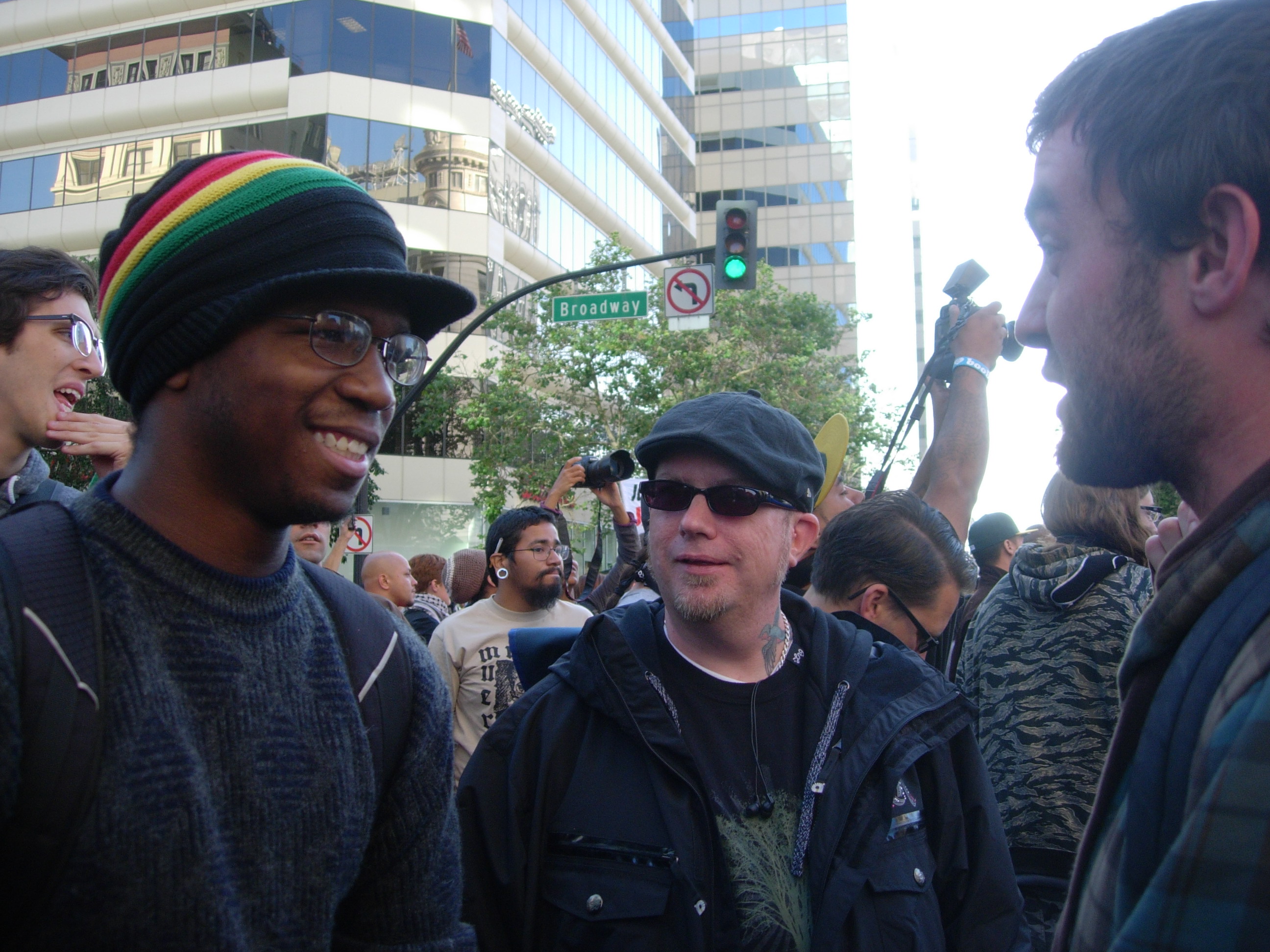
Associated Press video and some photos of mine from last night in downtown Oakland, after Mehserle was found guilty of involuntary manslaughter.

*Trigger warning: depictions of state violence, discussion of intimate abuse.*
Associated Press video and some photos of mine from last night in downtown Oakland, after Mehserle was found guilty of involuntary manslaughter.
Check out two dope thinkers, writers, artists, community builders, system challengers, and dear friends of mine:
cnekez at to live (def):
and Crunch at …or does it explode?
Read, relish, engage, and benefit. And have a good Thursday, y’all.

Last time we saw each other, my friend Ivan and I had a looooong and energetic discussion sparked by the question, “What is capitalism, anyway?”
Few days ago he emails me this cartoon, with the subject line: “pretty sure we had this conversation once.”
Don’t know where the piece is from, but it made me smile. Thanks, friend!
Cross-posted at Feministe. As the verdict approaches, I find myself thinking more and more about the relationships between state violence and intimate violence. In what ways our focus on state violence, and mechanisms for resisting it, jive and don’t jive with methods for dealing with intimate violence. Aaron Tanaka made a wonderful comment on the original post — as always, Aaron, I’m truly grateful for your insights and questions, and their organic connection to the great work you do.
Just yesterday, only 20 minutes after a conversation about police alternatives, as my friend Noa was dropping me off at home, we found ourselves in an impromptu cop watch. Four officers were arresting three men on my block — two of whom I recognized as regulars on the corner, and one with whom I’ve tossed a football across Hyde Street traffic. When I saw the cops lining the men up against the fence, I just stepped out of Noa’s car onto the sidewalk and inserted myself. After one of the officers attempted to intimidate Noa by calling in her plate number (we’d been stopped and talking in the car inside a red parking zone), she drove around the block, parked, came back and joined me for the next half hour as we watched these three men get yelled at, cuffed, and loaded into a police van.
I’ll maybe write up a full summary tomorrow, because the effect of our intervention on the cops’ behavior was pretty interesting, as well as the conversation we struck up with two male officers. For now, here’s my Feministe piece from Sunday.
————————–
————————–
 As you may have noticed if you’ve been hanging around here for any amount of time, I don’t talk much about current events.
Partly because this blog is mainly autobiographical — about my own lived experience — and I haven’t been involved in many “current events” lately. Also, news consumption has been extremely low for me in the past year — on purpose.
Despite my personal media fast, some major happenings (mostly US-centric) inevitably come to my attention. Oscar Grant’s murder. The bp oil spill. Arizona’s racist immigration law. The Gaza aid flotilla killings.
Still, when I am trying to talk about these issues, I don’t try to thoroughly research and analyze them the way I might have two or three years ago. Not that there’s anything wrong with research and analysis: both good and important. But here, for now, I’m focusing on deepening my understanding not of politics, per se, but of suffering. In order to understand suffering, it’s important to be aware of what’s happening around us — including politics and all the harm that’s constantly happening. But there’s more to it than that, I think.

To celebrate submitting my application to Goddard last fall, I went to a batting cage.
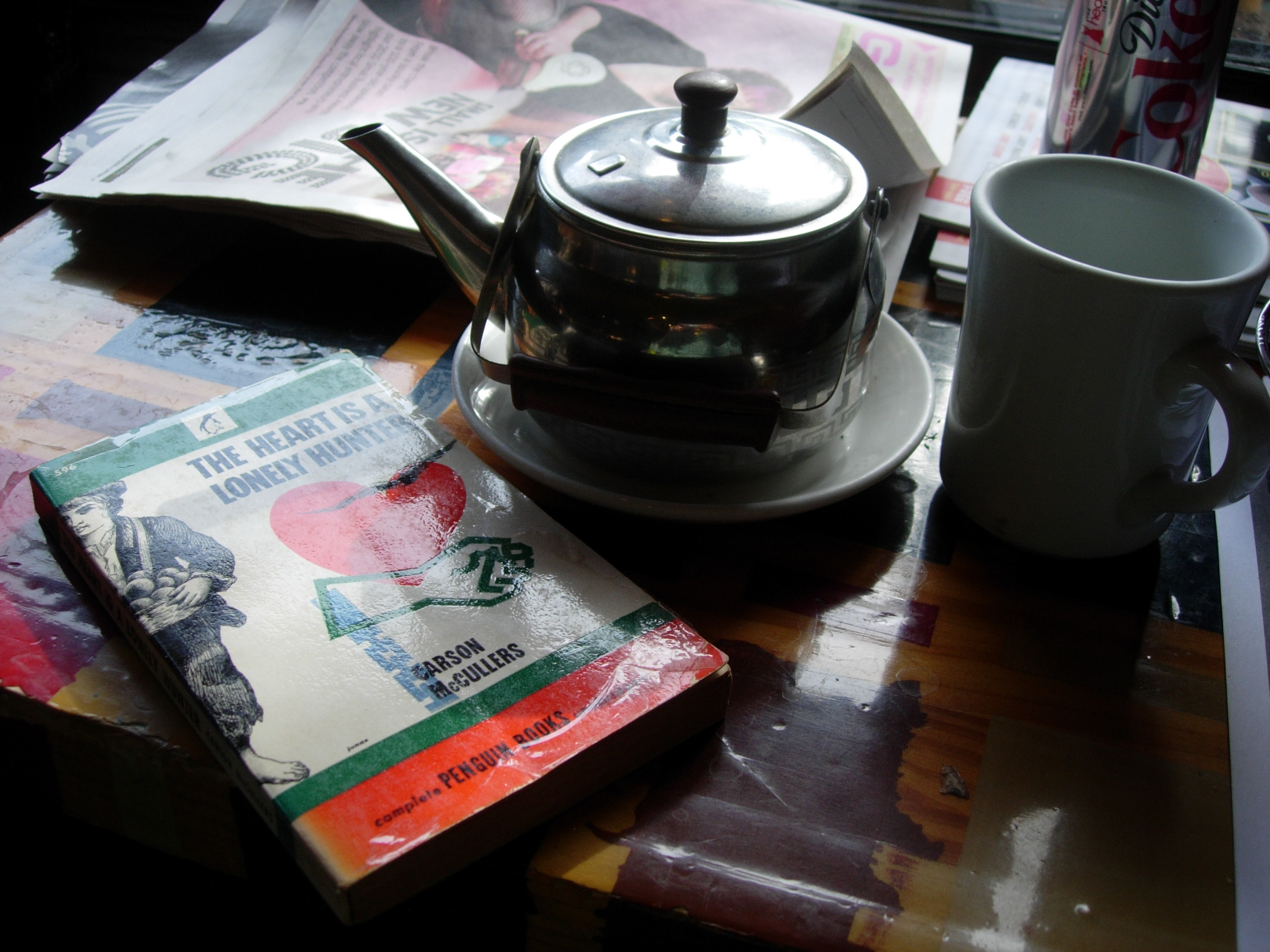
To celebrate completing my first semester at Goddard last week, I…read some fiction.
But not just any fiction! This gorgeous copy of The Heart Is A Lonely Hunter, a 1946 edition: older than my own mother.

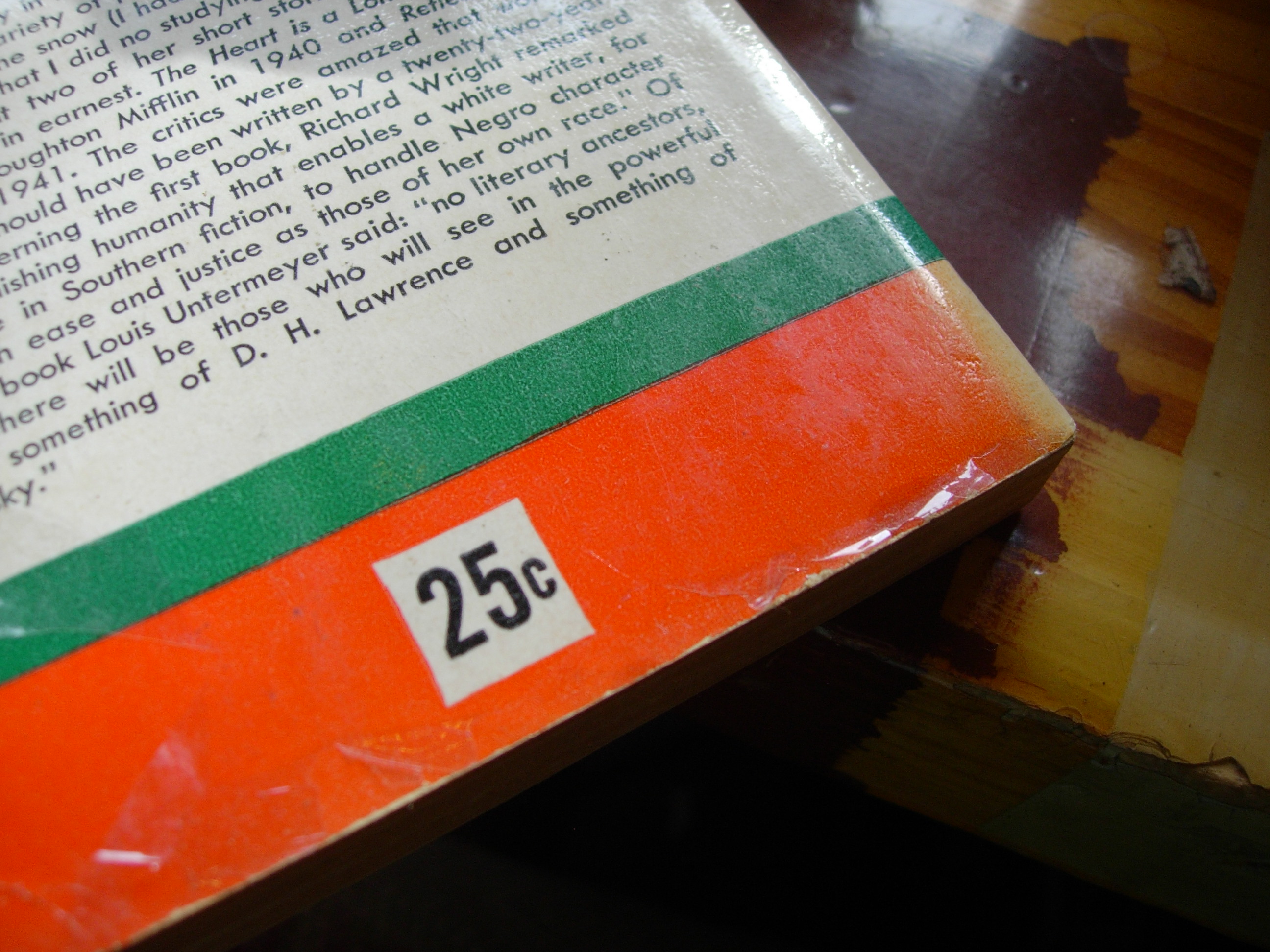

Isn’t she handsome? And I love the candor of the text on the back cover:
Born in Columbus, Georgia, in 1917, Carson McCullers has been writing since she was sixteen. For several years before that her main interest had been in music and her ambition to be a concert pianist. When she was seventeen she went to New York with the intention of studying at Columbia and Julliard. However, on the second day she lost her tuition money on the subway. Thereafter she was hired and fired from a variety of jobs, and went to school at night. “But the city and the snow (I had never seen snow before) so overwhelmed me that I did no studying at all.” The year after that Story bought two of her short stories and she settled down to writing in earnest. The Heart Is A Lonely Hunter was published by Houghton Mifflin in 1940 and Reflections in a Golden Eye in 1941. The critics were amazed that works of such maturity should have been written by a twenty-two-year-old girl. Concerning the first book, Richard Wright remarked on “the astonishing humanity that enables a white writer, for the first time in Southern fiction, to handle Negro character [sic] with as much ease and justice as those of her own race.” Of the second book Louis Untermeyer said: “no literary ancestors, although there will be those who see in the powerful situations something of D. H. Lawrence and something of Dostoievsky.”
I’m only five chapters in or so, partly because McCullers’ prose is so marvelously simple and vivid and penetrating that it makes me want to close the book and go meditate.
Speaking of which, time to sit and go to sleep! Night y’all, see you next week.
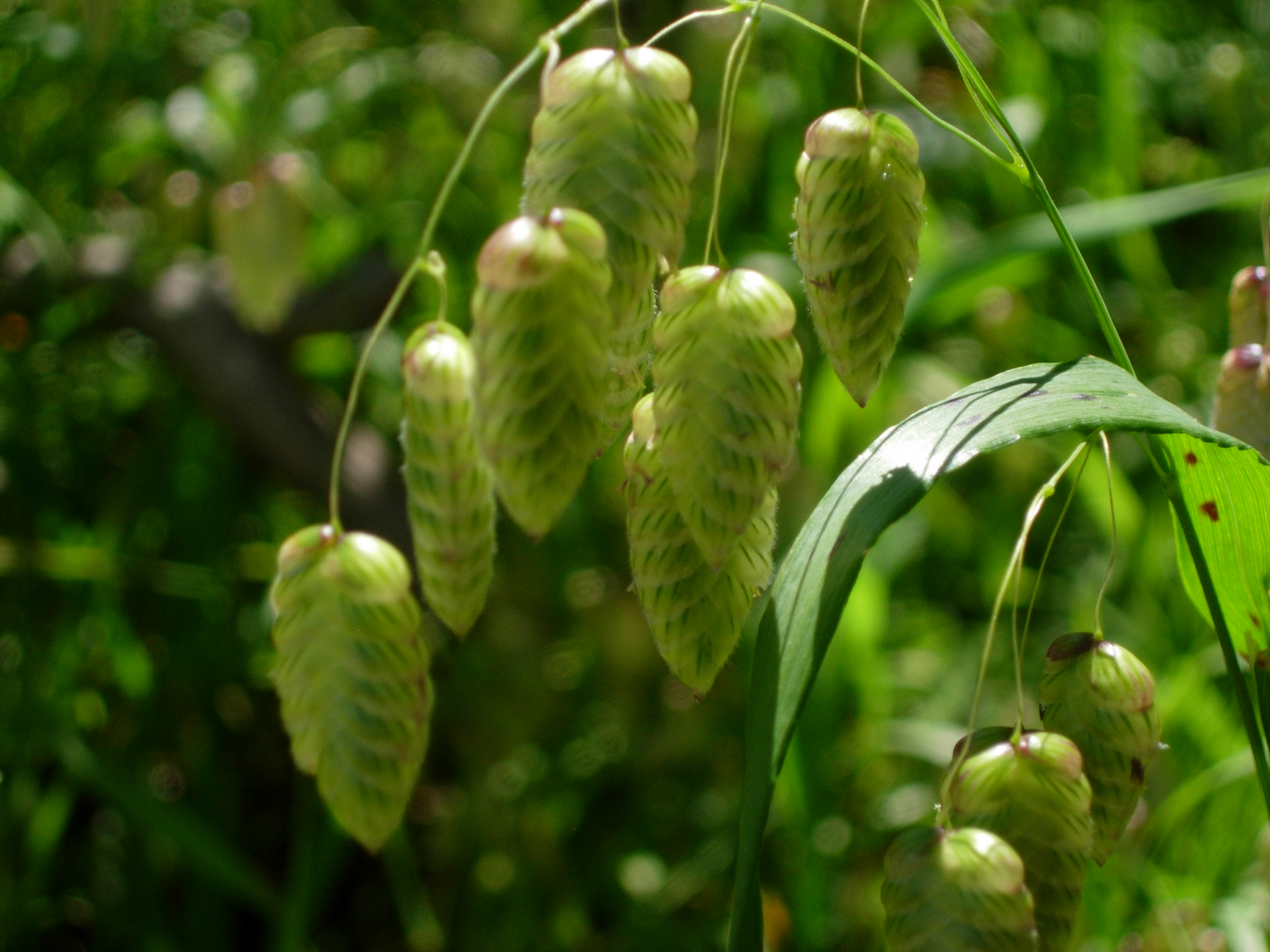
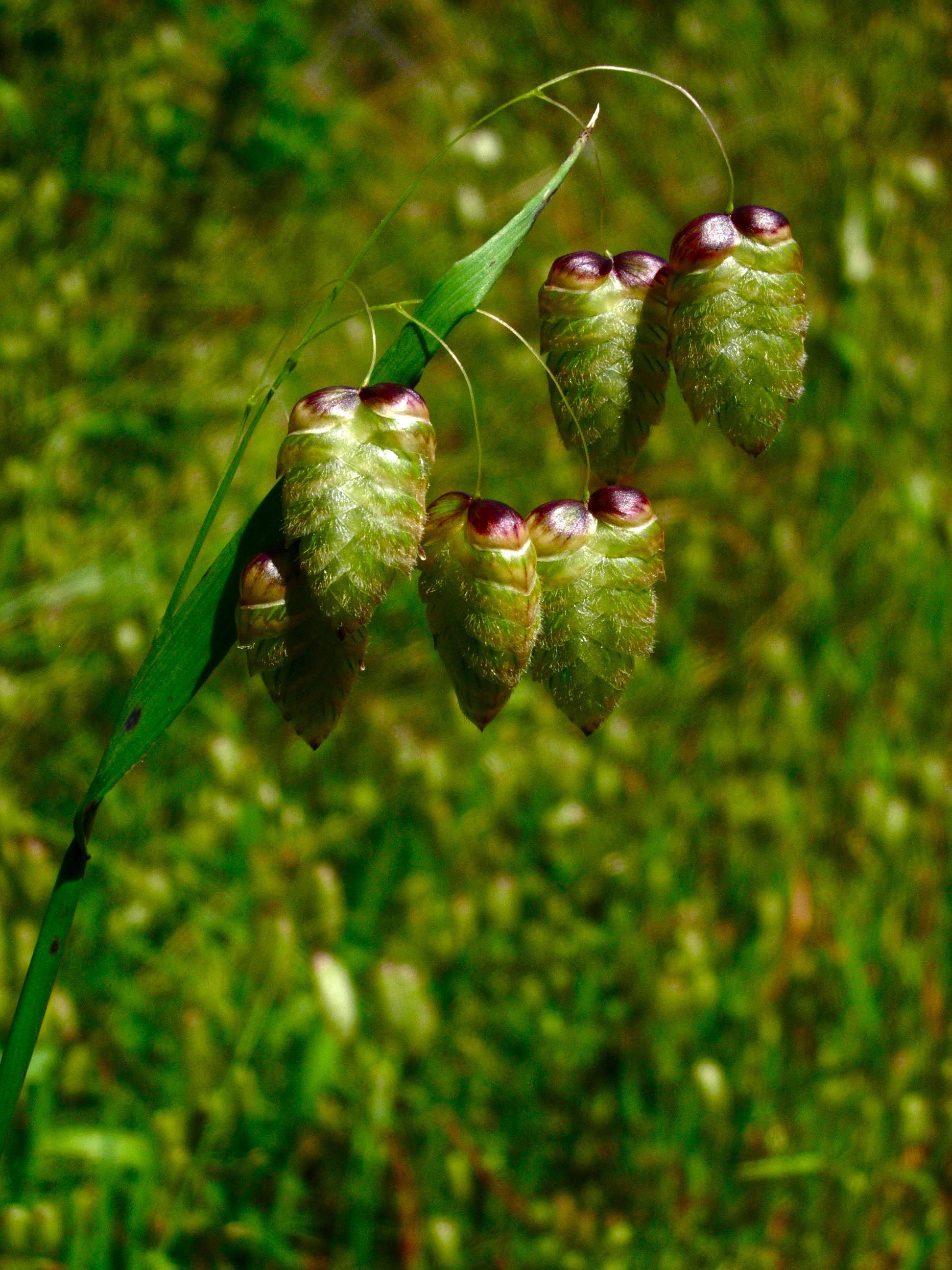
This plant lives on Angel Island. It’s everywhere on Angel Island. And other places in Northern California, I’m sure.
Ryan and I fell for it pretty hard when we ferried over to the island for a day hike and picnic on Saturday. We’re no botanists, but tried to identify different stages of its very colorful life cycle. (First three photos by him; last one by me.)


Because I met this plant on Angel Island, its associations in my mind will be bittersweet: lovely but linked to the sadness of life and death that happened there. Not only Native people exterminated, but also hundreds of thousands of immigrants — mostly Chinese, but also from Eastern Europe, Japan, and Central and South America — criminalized under a racist immigration system (sound familiar?); locked up and detained for weeks, months, or years; looking out the windows and watching the seasons change.
The passage of time reflected in this gorgeous, morphing, splendidly named “Great Quaking Grass” (Briza maxima) takes on new meaning in light of the poems carved in Chinese calligraphy into the detention barracks’ redwood walls.
Clouds and hills all around, a single fresh color
Time slips away and cannot be recaptured
Although the feeling of spring is everywhere
How can we fulfill our heartfelt wish?
More Angel Island poems here.
I heard this radio piece on Tuesday morning because Sharon* wanted to listen to the voice of her late husband. She was a bit of a nervous wreck (understandably) because later that day she and Carmen would be appearing before a judge who would decide whether or not Sharon qualifies for disability benefits. With all the tumult of the past year — losing her husband, quitting a rehab program prematurely, entering a better program only to have her housing number come up in the lottery, which meant choosing between completing rehabilitation and having a place to stay when she got out (I know, right?) — this decision felt particularly momentous. She’d been trying for over a year to secure this income in addition to government assistance, since she can’t hold a job because of her psychological disabilities.
Witnessing our welfare system firsthand through accompanying folks in the Tenderloin is a tremendous eye-opener for me, for sure. I knew the system was fucked in a thousand ways, including bureaucracy and stigma, but it’s another thing entirely to stand beside someone as they endure the process. In justifying her need for support by proving her incapacity to work, Sharon had to prove that she was off drugs (because people with disabilities and addictions don’t deserve support?) and recount all the traumas she has suffered in her life, from being born to a mother addicted to heroin, to being molested by her foster family, to being raped while working as a prostitute. Rather than a celebration of her incredible resilience and survival, the testimony had to be crafted to emphasize inability, incapacity, pathology.
“Break a leg” I said as I dropped her and Carmen off at a downtown Starbucks, where they would meet with her lawyer to review before the hearing. “Yeah,” she cracked, “maybe that would help my case.”
Hey friends! Sorry I dropped off the face of the earth so suddenly! I went into another Vipassana meditation retreat (my third so far under S. N. Goenka), and by the time I realized I’d forgotten to update the blog about it, it was too late: no phone, internet, reading, writing, or speaking for ten long days. Thanks to everyone who’s visited and written to me in the meantime — a number of delightful messages and comments when I arrived home to San Francisco. Mmmm.
For the first day or two since returning from the retreat, I’d been experiencing something of a blockage. A mild panic or depression that left me feeling that all the activities and avenues I had been struggling to juggle up until the meditation course — work at the Faithful Fools; grad school and blogging; political study; and day-to-day dharma practice — were far too hazy, murky, massive, or complicated for me to ever significantly impact or contribute to any of them. It’s been a long time since I felt such strong pessimism and self-doubt, and the timing — directly after a Vipassana retreat, which usually leaves me feeling giddy and abundant — added to the confusion.
Fortunately, I had just spent almost two weeks focusing at a deep level on the reality of change. So I did the best that I could do: watched and waited. Tried not to spin out or magnify things unnecessarily. Felt and explored the negativity, stayed curious about it, rather than trying to push it away.
And wouldn’t you know — it worked! Today my feet started coming back under me, thanks to some conversations with Ryan as well as three key pieces of media: one video, one book, and one radio segment.
I’ll share the book and the radio spot in the next few days. The video, below, is an independent documentary made for this year’s East Bay Meditation Center annual fundraiser. Seeing it today for the first time since early February, when it debuted at the event with Alice Walker and Jack Kornfield, reminded me just how much this organization inspires me, and how fortunate I am to be able to take part in it. (Even participating in the documentary making was great! Met some wonderful fellow members, and the filmmaker was tremendous, too.)
No more introduction necessary, really. Enjoy! And if you feel so moved, join in.
———
love,
katie
Traditionally, the dharma outlines 5 precepts for laypeople to follow. They’re not commandments so much as helpful signposts to happiness and mental purity. The idea being that performing any of these actions requires generating mental negativities in one’s own mind, in addition to harming others. It’s an interesting non-dualistic take on morality, and in general I find the precepts useful to keep in mind. They are:
1. Avoid killing.
2. Avoid stealing.
3. Avoid speaking lies.
4. Avoid using sexuality in ways that harm others.
5. Avoid abusing intoxicants (mainly because it diminishes our ability to observe the other four.)
Ok, so far so good, the Buddhists have whittled it down from 10 to 5, or something. But I’ve got a few questions about number 2: the whole thieving thing.
See, it’s pretty obvious how to avoid the vulgar kinds of stealing: bank robbery, purse-snatching, embezzlement, etc.
But what do we do when we live on stolen land? In a country where, as Thea Lim of Racialicious points out, “if you live on native land, you benefit from native genocide”? And where “many First Nations people in Canada, [where Thea’s from], live under third world conditions in a first world country“?
“Surely,” she observes, “there is a political option to remedy this beyond shameful situation, between ignoring it and moving back to England.”
Are we discussing and exploring those options in dharma communities?
And furthermore, how do we relate to stealing when we live in an economic system that operates on the basis of unpaid labor? (Which is the origin of profit under capitalism.) Does that count as stealing? Are we then morally obligated to oppose it? Justified in occupying university buildings and factories? How do we see our dharma practice reflected in these systems and struggles?
These are my questions. I would love to hear your thoughts.
Now off to Wisdom 2.0!
Later, y’all.
 Kloncke