Morning Marching Song

After a night dreaming of Trayvon demos, I woke up with a new chant-song in my head.  Lyrics below, chock-full of links.

stand up to Zimmermans
stand up to Minutemen
stop-and-frisk you ain’t caught shit
the white and rich you always miss
“terrorist threat” on plane get stripped
American drones KeepKillingKids
billions more for border biz
but whose land do you think this is?
justice for the black & brown
holler if you’re down

Empty for Trayvon

buddhist monk meditating

At this morning’s meditation, the still-fresh news crawls my skin like a tiny spider — down the neck, the right arm, until it drops, gently threading down from the tip of a finger.

Departure of imaginary spider creates a ghost imaginary spider.  Her double-absence haunts the mind more.

Trayvon’s killer has gone free.  Black lives again mean nothing.  9am morning meditation, I sit powerless.  Fatigued.  Trying to get free, be nothing.  I know I am doing it wrong.

I can’t

he can’t

we can’t

we can’t

we can’t…

…powerless for now.

Throw Like A Girl

Image

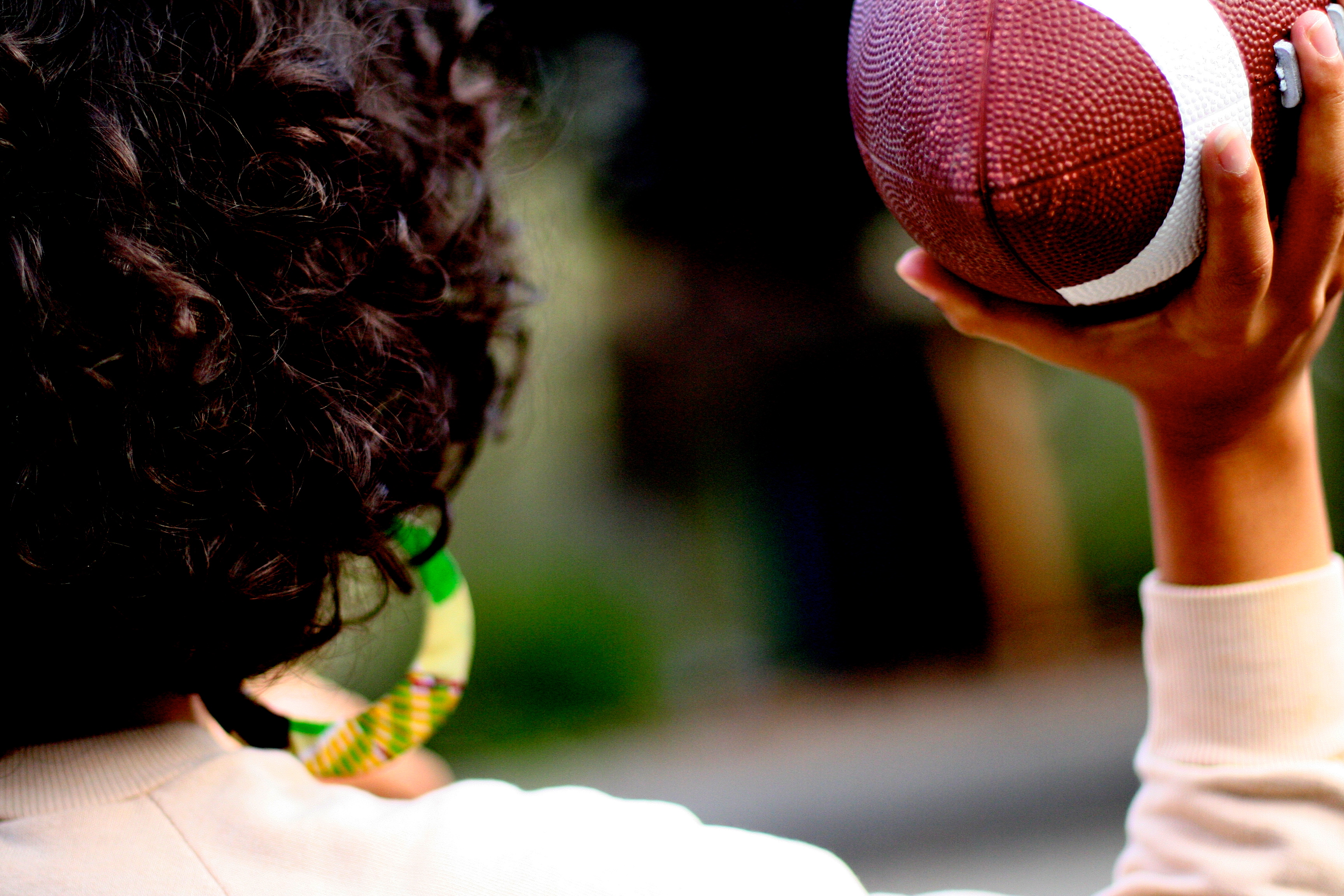
For months now, I’ve been wanting to teach the neighbor-girls across the street how to throw a football, like my dad taught me.  They’re always hanging out on the porch inventing games, waving to me out of boredom, friendliness and mischief as I walk to my car.  I even got a junior-size ball so they could hold it easier, but the very same day I bought it, it wound up waylaid at a friend’s BBQ birthday party.  (Hard to resist a game of catch, you know?)  Finally recovered this week, the mini pigskin enjoyed its debut on the block.

Once I showed the girls how to arrange their fingers on the laces, it only took about three tries before one of them (maybe 8 or 9 years old) could throw a solid spiral.  The older one (12 or so) didn’t throw so hot but could catch just about anything she touched.  The youngest (7?), too shy to try, sat on the roof of the blue car, playing music she downloaded to her smartphone. (!!!).  We all sang along to Alicia Keys and Nicki Minaj.

ImageImage

Unpacking The Visible Backpack. The Very Visible Backpack.

Image

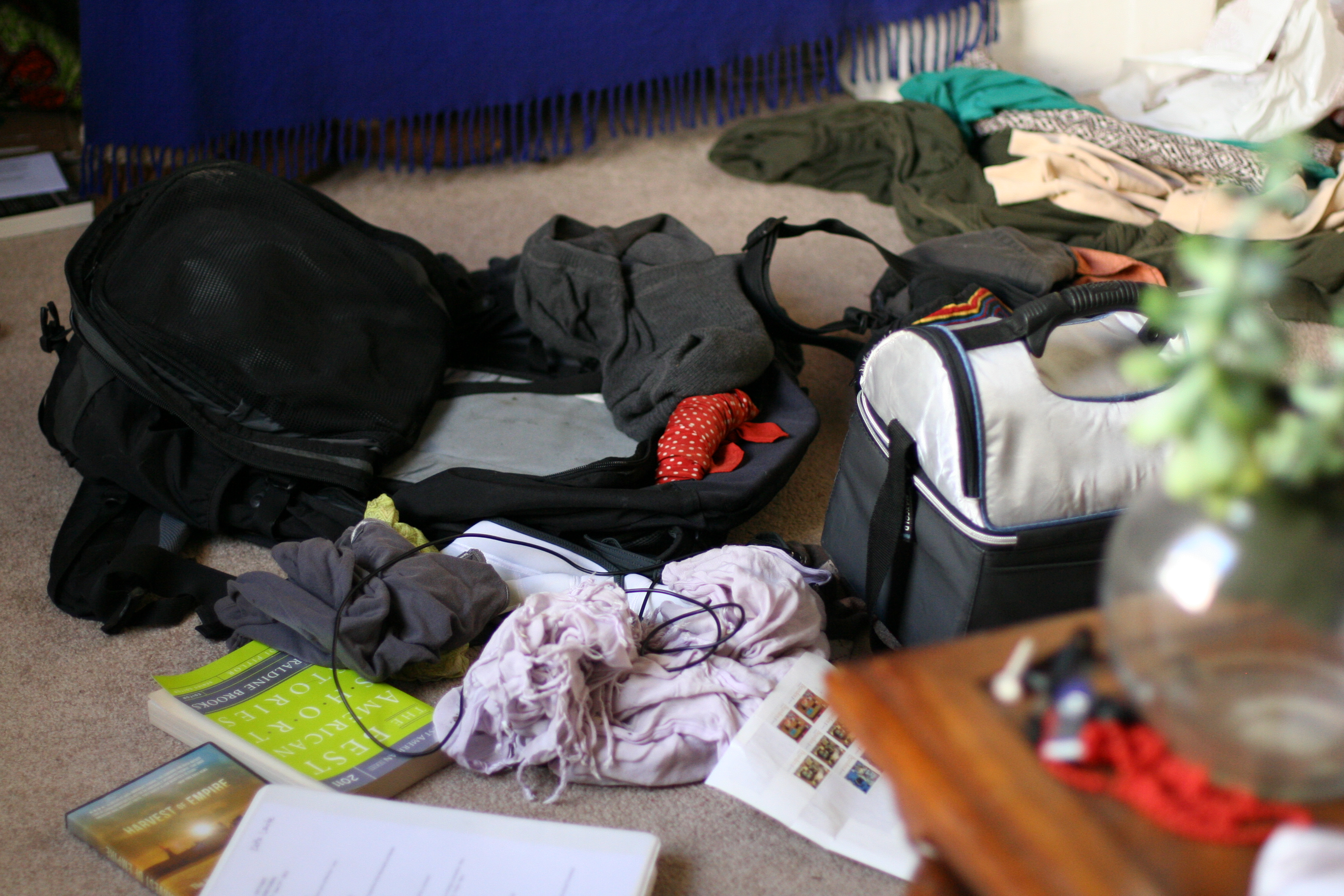
Typically when I come back from a trip, my bag and its contents litter the floor for at least a few days, “disemboweled” (in the words of my friend Salima). This time started out no different, especially since I was semi-frantically rooting through the bags trying to find my disappeared wallet, which turned out to be left at home in the pocket of a dress the whole weekend. (Phew.)

Wallet retrieved, it seemed the luggage carcass would be left to rot for its usual 3 to 7 business days. But then I discovered how to trick myself into tackling the clothes explosion sooner. Let’s call it “pseudo-multitasking.”

Start brushing teeth; realize, Now would be a great time to unpack and put things away. Go to the bedroom, start putting things away using both hands, leaving toothbrush in mouth, inert. Actual multitasking is not occurring, since the brushing of teeth has stopped, but the simulation of multitasking is enough to pickpocket one precious tidiness-minute from the messy, smug morning.

Out-Organizing Patriarchy, or: Buddhist Strategies For Existing Politically In A Mini-dress

459236_520280971341162_177525798_o

Some would say it’s my fault, for wearing a dress like that to a political action.

How do you expect to be taken seriously?

(And, from certain older feminists): We fought to be seen as more than sex objects.  How can you throw away that progress?

Understandable frustration.  Wanna hear something scary (though maybe not all that shocking)?  Recent psych studies ([1] [2] [3]) testify to what many of us have understood through experience: that bodies read as “women” tend to be cognized as objects (to perilous, rape-y effect) whereas bodies read as “men” are perceived as human beings.

You have to wonder whether any of the images used in these psychological studies showed androgynous people, gender-queer people, fat people, elderly people, or visibly disabled people.  (Anyone reading have access to the academic journals?  Hook us up!)  Normative standards of beauty and aesthetic ideals of ‘human-ness,’ from shape to skin color, must certainly affect the ways we are objectified or humanized.  Politically, our looks affect our interactions as we pass out flyers, march and chant, photograph the action, deliver a speech, or bus or bike to the strike.

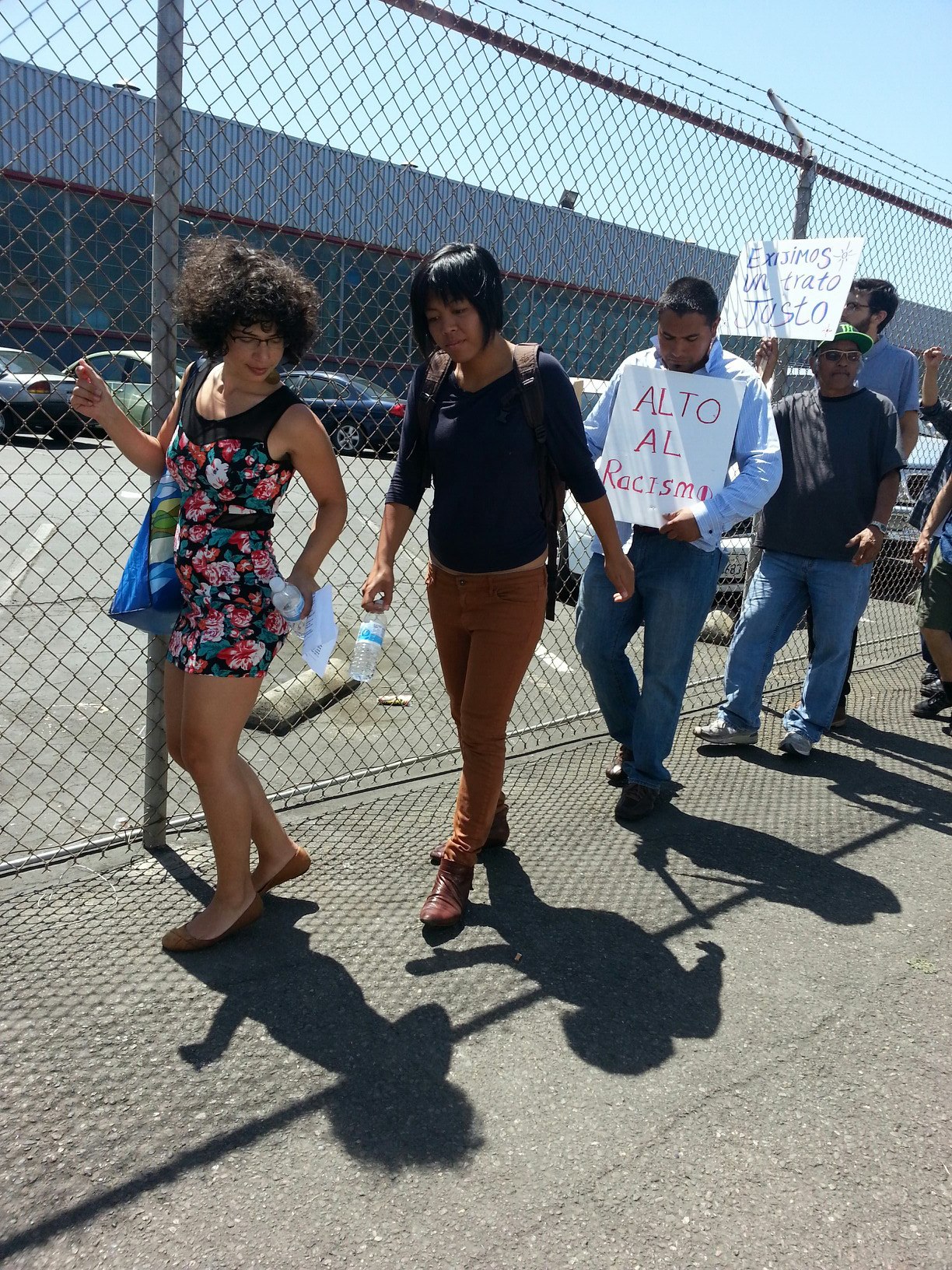
As for me, it’s not like it happens 100% of the time, but I can usually tell when strangers are paying closer attention to my hemline than my politics.  Like the two guys waiting for their order at the taco truck on Monday, right next to the undocumented workers’ press conference against I-9 audits, or “silent raids.”  I recognized one of the men from doorknocking in the neighborhood the day before.

“Hey!”  I called.  “You came!”  (Do I care that he’s probably just there for lunch?  Nope.)  “Come meet the workers!”

At first they stay put at the taco truck; they want to chat me up, but they don’t want to walk over to the protest to do it.  I approach them instead, talking talking talking.  I make myself oily like a duck’s feathers, so the swamp water of sexism won’t soak me.  (Awareness + acceptance* is my anti-patriarchy emotional preen gland.)  I explain the background for the action: 125 workers fired with no notice — some after decades working for the industrial bakery, still making just $9.40 an hour.  The guys’ ears perk up more.  I allow myself to get more animated about it.  “Come!” I say.  “Come meet the workers!”


Eventually, some combination of the political content, the live brass band, and my encouragement does the trick.  They walk over with me.  I immediately introduce them to other people, older people.  An elderly worker strikes up a conversation in Spanish with the neighbor who speaks it.  Only then does it come out: the neighbor says, “Yeah, I know someone who works in here” (inside the factory that we’re protesting).

“Oh yeah?” says the fired worker slowly, scratching his ear.  “Who?”

I flit away, to go dance some more with the band.  Before the neighbor men leave, I make sure to say goodbye, ask them what they thought.  I hope they keep supporting the fight.

*          *          *

If the psychological objectification of women is a pervasive phenomenon, it undermines the unity of the working class in the U.S., and deserves to be treated as seriously as the white skin privilege that the Sojourner Truth Organization (an almost all-white group) helped theorize, back in the late 60’s and 70’s.  Class-struggle theorists continue to study the feminization and de-feminization of various factory and non-factory work, which is important.  At the same time, I would love to hear more about ways that radical organizers are handling the manifestations of body politics that arise in the course of the political work.  The way I’ve learned to handle things isn’t necessarily the best way, or a way that is relevant or useful for everyone.

Important note: by *acceptance of sexism I don’t mean that I want to permit sexism without trying to change it.  The first step to changing something is accepting that it exists.  Patriarchy is how it is, right now.  I’ve been lightweight slut-shamed in my organizing circles before; it’s no fun.  Misogyny may not be as acutely dangerous for me as transphobia or homophobia are for other people, or as sexism is for women trying to organize in other contexts (see, for example: sexual assaults during protests in Tahrir Square, which may actually be state-backed efforts to sow discord in uprising groups).  But sexism here, in my life, still exists, still disrupts the political work we are trying to do together, and I have little choice but to name it and figure out how to deal.  In the words of Black revolutionary Assata Shakur (who recently became the first woman on the FBI’s most-wanted terrorists list):

People get used to anything. The less you think about your oppression, the more your tolerance for it grows. After a while, people just think oppression is the normal state of things. But to become free, you have to be acutely aware of being a slave.

In a way, it’s good to understand that the brains of many strangers see me as an object first.  Lets me know what I’m working with.  Then, compassionately — whether patiently or impatiently, playfully or gravely — I can try to thin and whittle those delusions in myself and others, to sound out new relationships written through the small-scale but meaningful struggles now at hand.

Rape Culture and Power Pyramids: Recent Thoughts

The past few weeks — and especially the past few days — I’ve been reminded of how rape culture thrives on social power pyramids: where the contributions of people at the top — be they star athletes, beloved artists, or skilled political leaders — are considered so important that people instinctively ignore, justify, or minimize the violent behaviors of the community’s golden child (or children).

This shows up frequently, in small ways.  I’ve heard more than one friend of a socially powerful feminist in the Bay confess to me that they feel afraid to tell her “no.”  Not that this fear necessarily defines their relationship with this person (and these conversations happened a year ago; perhaps their fears have since subsided or transformed), but to me, statements like that are a red flag for rape culture.  Someone is at the center, and getting on their bad side means you might get ostracized — or worse.  Besides, what they contribute is so vital and powerful…

Continue reading

Protecting Ourselves From Our Stories

Morihei Ueshiba
Morihei Ueshiba, founder of the Japanese martial art form aikido, which aims to let practitioners defend themselves while also protecting their attacker from injury.

On March 1st, exactly one year after R and I broke up, I drove to his house to pick up one last smattering of my belongings, left out on the porch for me in a Trader Joe’s brown paper bag. Anticipating that it might be difficult and I might get sad, I had asked a good friend to come with me. And though I did feel nervous and sad, it wasn’t as bad as I thought. Right on top of the pile there was a favorite belt that I’d been missing for like two years! When R and I were still together I lightweight hounded him about that belt — was convinced I’d somehow left it at his parents’ house. Don’t know where he ended up finding it, but I was glad to have it back, and as my friend and I drove away from his street, I thought I felt okay.

Still, the bag sat at the door of my closet, untouched, for a long time.

Again, though, once I finally screwed up the courage to go through it, it wasn’t so horrible. A swirl of memories: pleasant, unpleasant, neutral. A lot of the stuff wasn’t mine, but some of it was. Pillowcase. (Useful!) Books. (Beloved!) The scarf on the header image of this blog. (Nostalgic!) And oh, what’s this? I recognized a notecard, some stationery of mine.

It was the birthday card I had written to R last year.

Continue reading

RIP, Chinua Achebe

Even as we strive for liberation,
any truly emancipatory struggle must also be its own reward.

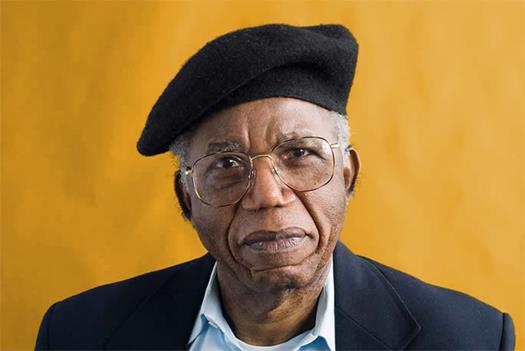
“To answer oppression with appropriate resistance requires knowledge of two kinds: in the first place, self-knowledge by the victim, which means awareness that oppression exists, an awareness that the victim has fallen from a great height of glory or promise into the present depths; secondly, the victim must know who the enemy is. [They] must know [their] oppressor’s real name, not an alias, a pseudonym, or a nom de plume!” —Chinua Achebe (Nov. 16, 1930 – Mar. 22, 2013)

215830_10151358255944677_779397493_n

 
via Julia Wallace of SU/LU.


Working-Class Self-Activity, Reform, and Ableism

IMG_8899

Reform and revolution: I’ve got questions; you’ve got answers! (?)

From Truth and Revolution, which I’ve mentioned here before:

‘Working class self-activity is working-class autonomy — autonomy from capitalism,’ argues [Lee] Holstein. Her problem with advocates of trade-union reform efforts, such as Moody, is that they ‘mush together the reform and revolutionary aspects of resistance and insurgency, treating forms of resistance and insurgency which are confined within the framework of capitalism in the same way as those which break out of that framework.’ For Holstein, by contrast, ‘self-activity is not just resisting and attacking, but resisting and attacking in a way that undermines capitalist power, destabilizes its institutional framework, and foreshadows and demonstrates, in the form and content of the current struggles, the potential of the workers to be rulers.’ (284–85)

Two questions for today, and then I promise I’ll get back to grad school work. ;)

Continue reading