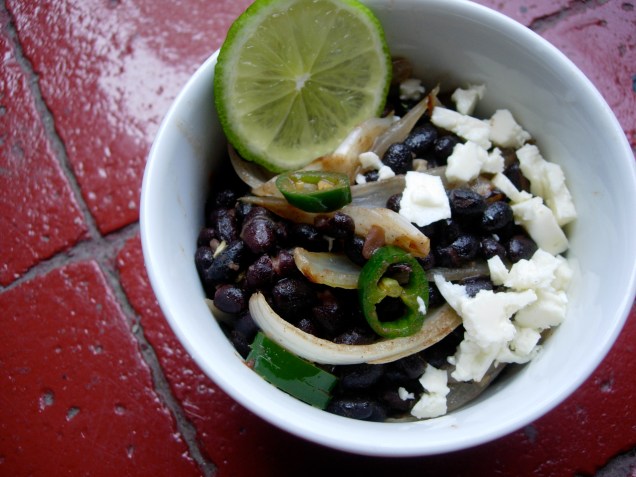
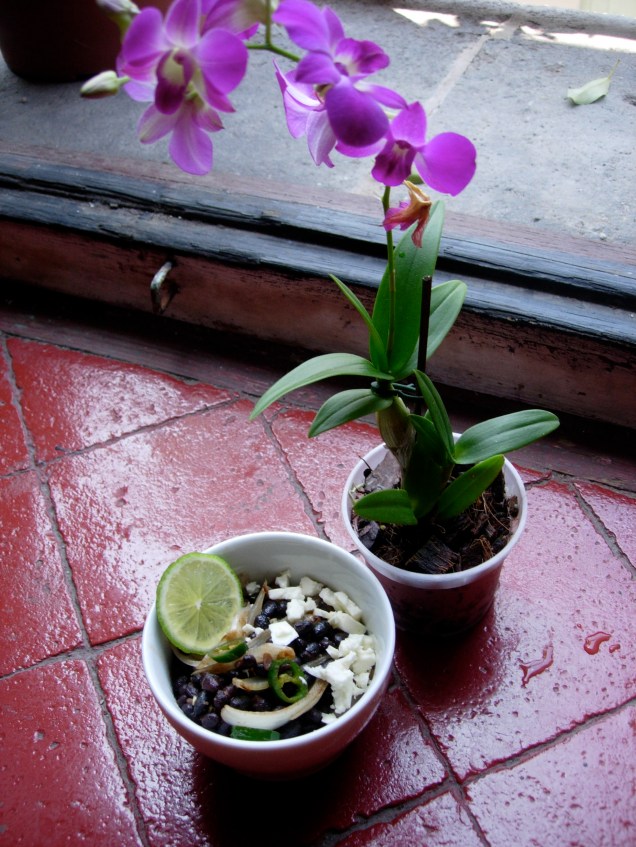
Black beans with sautéed garlic and onions, fresh chili *and* cayenne, lime, a touch of cinnamon and brown sugar, good extra-virgin olive oil, and queso fresco
Bonus post! Today’s lunch — just perfect after intense, unbelievably sweaty morning yoga. Easy, delicious, dirt-cheap, and make-your-nose-run spicy. What a stroke of luck to discover a Latin-American import grocery store that stocks Goya right down the street. (Though I don’t know much about Goya’s company practices…just that it’s a huge Latin@-owned US producer of brown-and-black-folks-staple-food-in-a-can. In this case, the black beans — which are surprisingly hard to find here in BCN.)
It’d be nice to learn to cook more traditional Spanish dishes (or, to be precise, Catalunyan), but honestly there’s not a whole lot going on here that’s vegetarian. So the last three home-cooked meals in our little household have been Persian, Thai, and Central-American. And already Nuria and I are plotting an outing to an Indian restaurant…hehe.
On the other hand, it’s easy to eat local when no stove is involved. As Mark Bittman put it in his recent, awe-inspiring catalogue of simple salad recipes, “Summer may not be the best time to cook, but it’s certainly among the best times to eat.”
Word. Maybe next time I’ll share a no-cook dish with locally-grown ingredients. Til then, giving thanks for everyday blessings de la cocina.
NeEddra James’ blog, PARAMECultureWorks, entered my life at a great moment. She’s a sharp writer and an incredibly insightful soul — and the email conversation we recently struck up reminds me why Internet ‘connections’ can be worthwhile. You should check out her blog in its entirety, but here I wanted to crosspost a piece that’s been particularly helpful to me over the last few days.
NeEddra’s illustration of the value of wake-up calls gets at the heart of the Buddhist teaching that ultimately there is no good or bad, merit or demerit. Because every uncomfortable, unpleasant, or downright excruciating event has something to teach us. It’s a doorway leading to the higher dimension of consciousness attained through nonjudgmental acceptance of what is. Total awareness and presence of mind.So with the valuable teachings that moments like these can offer, how can we really label them “bad?”
Putting this understanding into practice is no easy feat, obviously. But little by little, moment to moment, and with the help of reminders like NeEddra’s parking ticket saga, we get there.
Hope you’re having a peaceful day, folks. Whatever catastrophes (a.k.a. opportunities) come your way.
“Practice offering to the döns* by welcoming mishaps because they wake you up.”
I always read my monthly horoscope on the first day of the month. On Dec. 1 Susan Miller told me the full moon, which reaches its apex today on the 12th, would occur in my third house: the house of other people’s money. She went on to say that I’d be writing a big, non-negotiable check, and with “Saturn in hard angle to the moon…there will be no way to avoid acknowledging one’s responsibility or alternatively, accepting a loss and moving on.”
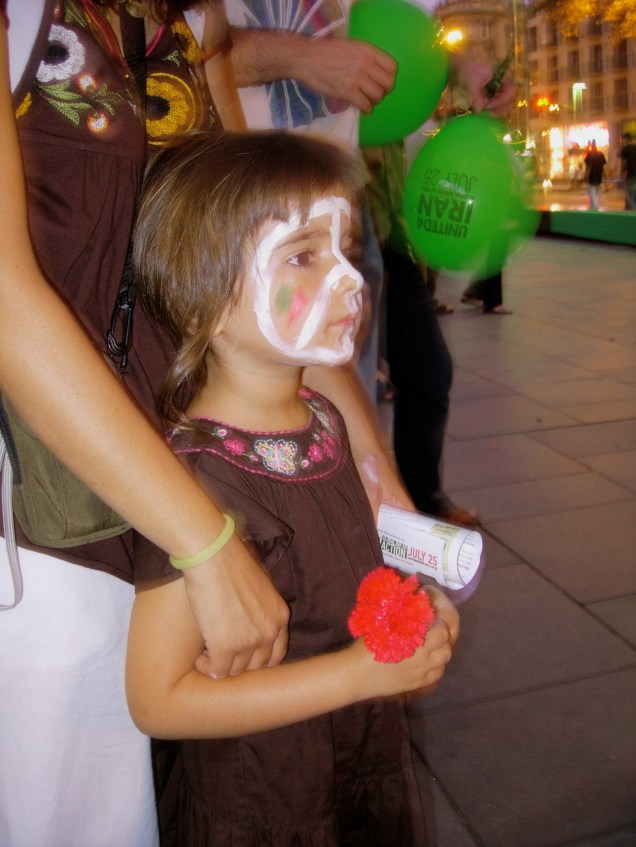
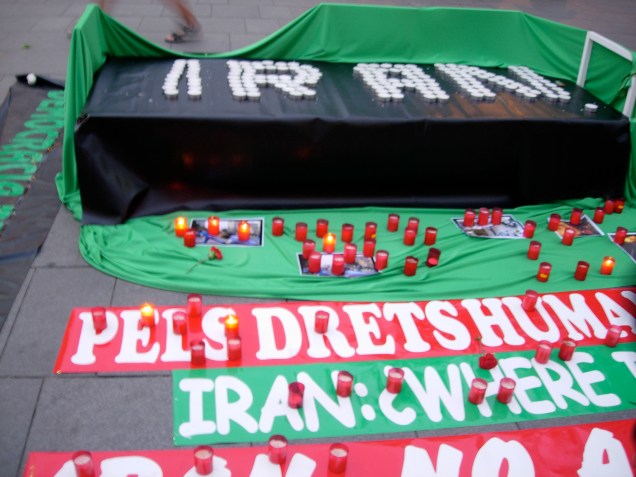
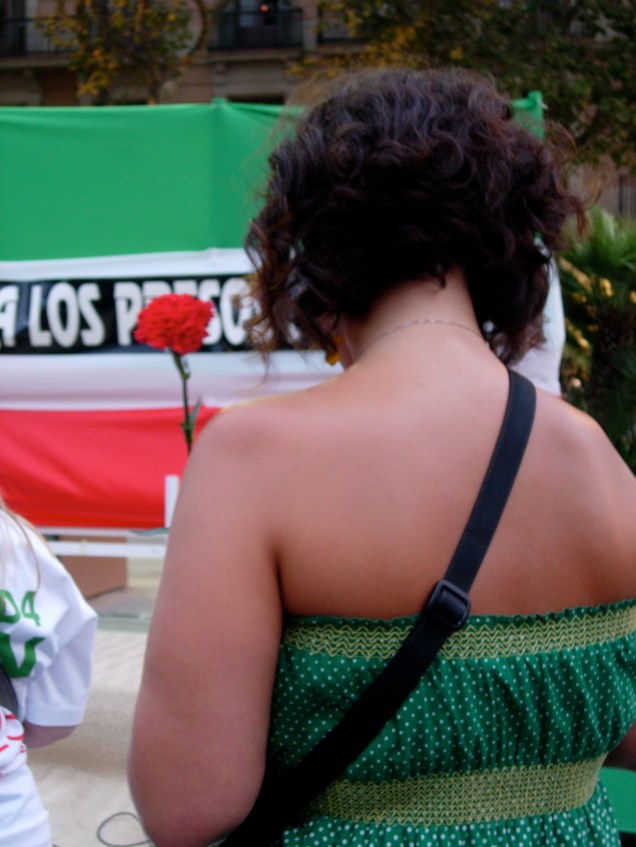
Saturday evening at Plaça de la Universitat. Sometime I’ll learn how to take better photos at night…but in a fitting way, the fuzziness implies an aspect of the experience: vision blurred with tears.
Seeing all these people here in Catalunya, families and strangers and activists and musicians, I was amazed at the sheer strength of everyone. And struck at the thought that the pain and anguish among those resisting is reflected in equal measure among the men with machine guns carrying out the repression. Their lives, too, are hellish.
Overwhelmed by my own emotion, I kept lifting up my camera halfheartedly, and then putting it down again. It’s like Jay Smooth says: sometimes we have to live our grief directly, without making media out of it. Sorry I couldn’t translate the moment into better photos to share with you.
The tradition of the acceptance speech appeals to me for a few reasons. It happens in the context of community — a community honoring the achievements of its members. Often it inspires others to persevere through their own challenges, knowing that someone else managed to overcome great obstacles or do something extraordinary. And most of all, acceptance speeches are about gratitude. Expressing gratitude to everyone who contributed to what, superficially, might seem like an individual feat, but is actually the culmination of much effort by many people. (And by greater powers, if that’s how you feel about it.)
Given the loveliness of this tradition, I don’t see why it should be limited to celebrities. Or, even, like, “winners” in the traditional sense. Don’t need to tally votes to know that every day, ordinary people like you and me do good things with the help of others. So why not give ourselves, and them, a little recognition? Why not deliver our own mundane acceptance speeches?
I thought about this a lot back in the spring, when I was feeling particularly grateful for a phenomenon that honorees often mention in this oratory ritual: “being where I am today.” I started thinking of all the people without whose help I could never have reached Spain, and the meditation center that radically transformed the quality of my life.
I thought of these people, and then I started writing to them.
Here, transcribed from my notebook, is one of the first letters in my multi-phase acceptance speech. To Canadian author Alice Munro, whose short stories quite literally changed my life. Obviously, it doesn’t matter whether or not the letter actually reaches the intended recipient — I had a hell of a time trying to dig up a mailing address for this notoriously reclusive writer, and six months later my lovingly hand-stamped envelope is probably still floating around in the UK postal system. But the main point of the practice is the intention.
So, friends, do me this favor: take the concept and run with it. Reach out to somebody who’s helped you achieve something wonderful. (And yes, I guarantee that you have achieved something wonderful in the last year. ;) ) In a letter, in a Facebook post, in a phone call, over coffee. Just try it. You might like it. Good luck, and let me know how it goes!
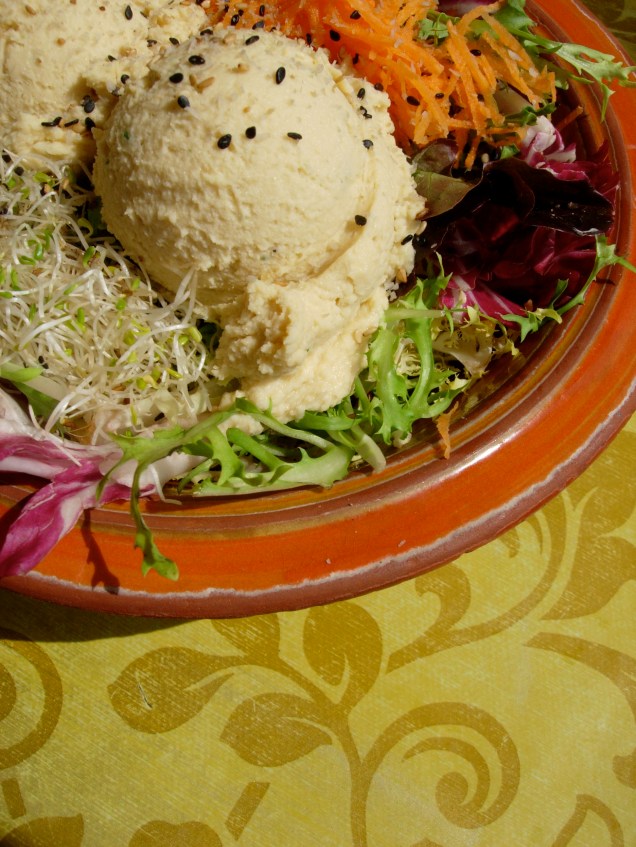
It’s ninety degrees Fahrenheit, people on the street are smiling, and I’m back at my favorite café, ordering the usual: best hummus salad this side of Switzerland.
It’s so good to be back.
Today I was gonna post about a letter I wrote to one of my favorite authors. Someone whose books actually altered the course of my life in a meaningful way. I was really jazzed about it, but now…now I’m still excited, but I want to take my time. Ease back into the city, enjoy the gorgeous day here. So we’ll save that particular goodness for Monday.
Enjoy the weekend, y’all! Especially your favorite haunts.
love,
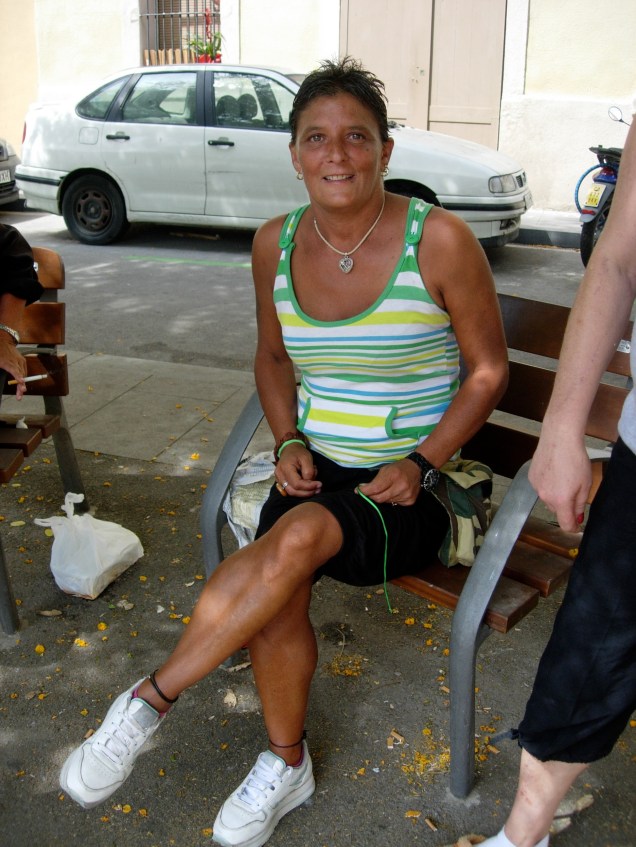
Mixed greens, carrots, cherry tomatoes, sprouts (sprouts! in Spain! praise heaven). Creamy, delicious, fresh hummus. Sesame seeds. Lots of olive oil. Excitement.Chatted with this lovely woman a while back, outside the café. She's seen some hard times, drugs and homelessness, but has this real warmth about her. Meeting her was a pleasure.
Read this, from The Huffington Post. It’s the first half of an interview with Susan Smalley, Ph.D., who, like Dr. Jill Bolte Taylor, had a life-threatening personal experience that pushed her to tap into the non-rational part of herself. (The second part of the interview was published yesterday, if you want to check it out.)
PF:What was your life approach before this heightened awareness?
SS: I didn’t think about trying to heighten my sense of consciousness in any way. I thought, yeah, learn more, read more, study more, talk to people, everything’s in books, everything’s out there in a reason-based world. Just follow it.
I gave zero time to places that would increase intuition, or enhance insight, ignoring what is probably a core component of wisdom. I was just running around constantly doing, doing, doing, and trying to soak up knowledge from books and experiments and science.
Sound familiar? Sure did to me.
Dr. Smalley goes on to describe the nature of her “mystical experience,” and how she worked to integrate the insights she gained into the ‘real life’ she still needed to maintain.
In particular, this part hit home like woah, in the decisions I’m facing right now:
My quandary became that I didn’t know how to go back to work, as I had a totally different view of the world. I felt that the insights I gleaned during that 30 day period were ones that we could each discover but how do you discover them if you don’t give time for yourself to try to uncover that stuff?
Before I didn’t think that this was anything I should value … to take time for myself, to reflect on things. Or to use any kind of tools that could help you to do that.
I didn’t know what to do next and I didn’t know if I could ever go back to UCLA because I just thought it was so inconsistent with this way of seeing the world – an alternative way of knowing – a first-person experiential way vs. a third person scientific way. Both are valuable and I used to think only one was valuable for real truth, until I realized they both are valuable.
How do we find life work that promotes both of these ways of knowing?
If anyone has any suggestions, please spill. :)
And why do stories like this one garner so much attention? Why are they compelling? Perhaps it’s a rare and special case when someone so accomplished in a recognized intellectual field (especially Western medical science), but who lacks spiritual knowledge or wisdom, suddenly opens up to this new dimension of learning. Every day I feel grateful that my life took this same kind of turn.
Tomorrow I’ll post a letter I wrote to someone who helped me make the leap.
Today, at the park near Notre Dame, I was the only one dancing.
It’s true.
The young-white-guy jazz players, with smiles like jukebox pages flip-flapping between smugness and delight, asked so nicely. Get up from the benches, everyone. Get up and dance.
And the boy next to me put down his sandwich (from the Subway by the Seine) and stood alongside me for the first couple minutes, clapping. But somewhere along the way, he disappeared.
And that was it. The drummer kept soliciting; I gestured to people to join in; but no one budged from behind their cameras. Taking pictures, video. Two months from now, finally getting around to uploading their vacation photos, they’ll rediscover these and say, “Oh, darling, remember that jazz band? They were so talented.”
What does it mean when a plaza full of people who are free to dance, free to engage with real people playing music, cannot bring themselves to participate?
And why was I so acutely aware of this freedom as freedom?
Nowhere have I felt my Blackness so self-consciously as here in Paris. Maybe that’s why dancing today, 15 minutes of white gaze on my sore-thumb body, felt like I was just barely getting away with something. Almost an act of defiance. These things start small, you know?
As usual, Toni Morrison’s got something deep to say about all this. Why art (literature) requires both solitude — the ability to dance alone — and community — an environment safe enough to dance at all. And why we have to secure these conditions for art to go on living.
Please, let’s dance when we can. And let’s ensure that everyone else can, too.
There is a certain kind of peace that is not merely the absence of war. It is larger than that. The peace I am thinking of is not at the mercy of history’s rule, nor is it a passive surrender to the status quo. The peace I am thinking of is the dance of an open mind when it engages another equally open one–an activity that occurs most naturally, most often in the reading/writing world we live in. Accessible as it is, this particular kind of peace warrants vigilance. The peril it faces comes not from the computers and information highways that raise alarm among book readers, but from unrecognized, more sinister quarters.
I want to tell two little stories– anecdotes really–that circle each other in my mind. They are disparate, unrelated anecdotes with more to distinguish each one from the other than similarities, but they are connected for me in a way that I hope to make clear.
The first I heard third or fourth-hand, and although I can’t vouch for its accuracy, I do have personal knowledge of situations exactly like it. A student at a very very prestigious university said that it was in graduate school while working on his Ph.D. that he had to teach himself a skill he had never learned. He had grown up in an affluent community with very concerned and caring parents. He said that his whole life had been filled with carefully selected activities: educational, cultural, athletic. Every waking hour was filled with events to enhance his life. Can you see him? Captain of his team. Member of the Theatre Club. A Latin Prize winner. Going on vacations designed for pleasure and meaningfulness; on fascinating and educational trips and tours; attending excellent camps along with equally highly motivated peers. He gets the best grades, is a permanent fixture on the honor roll, gets into several of the best universities, graduates, goes on to get a master’s degree, and now is enrolled in a Ph.D. program at this first-rate university. And it is there that (at last, but fortunately) he discovers his disability: in all those years he had never learned to sit in a room by himself and read for four hours and have those four hours followed by another four without any companionship but his own mind. He said it was the hardest thing he ever had to do, but he taught himself, forced himself to be alone with a book he was not assigned to read, a book on which there was no test. He forced himself to be alone without the comfort of disturbance of telephone, radio, television. To his credit, he learned this habit, this skill, that once was part of any literate young person’s life.
Toni Morrison receiving the Medal for Distinguished Contribution to American Letters at the 1996 National Book Awards. Photo: Robin Platzer.
Hey y’all, hope you had a wonderful weekend. It’s been quite an eventful few days for me, here in Paris. I guess I should have expected the unexpected from this city. On all sides.
>>Wandering the Jewish quarter, mouth full of falafel, and running into two college friends who, by pure coincidence, happen to be in town for three weeks, studying Yiddish.
>>Cringing at the colonialist overtones of a tiny upstairs Tea Museum.
>>Befriending a group of 1930’s-style jazz street musicians on Saturday night, and trying my hand at their washtub bass.
>>Getting some difficult news from a lover back in the States.
>>As a result, insisting on getting a phone number from Hicham, the beautiful, kind-eyed Moroccan man I meet the next day on a bridge over the Seine, and with whom I spend a couple of hours, talking in French, browsing a bookstore, and sitting in a small park. Insisting on getting his number because, in my forlornness, I can already tell that I’ll want to cancel our plans for the following day, so I’ll need a way to reach him and keep him from waiting for me at 2pm at Bastille.
>>And, after parting ways with Hicham, bawling my brains out watching The Reader in English with French subtitles. Seriously, by the end of the movie my whole clavicle was caked in salt and my eyes looked like two cherry tomatoes.
But even the sorrow has its upside. After all, Paris is a strong contender for Funniest Place To Be Heartbroken. When the view from my heavy, bleary eyes consists entirely of elegant balconies, kissing couples, and a view of La Tour Eiffel in the distance, it’s hard not to smile at the sheer cliché.
Later on this week I’ll write a bit more about this whole heartbreak thing — not for purposes of venting or divulging but because I think it’s a great chance to reflect on the meaning of sorrow in the pursuit of happiness. And observing my own reaction to the situation has been downright fascinating — an extraordinary reminder of just how much I’ve learned and grown over the last six months.
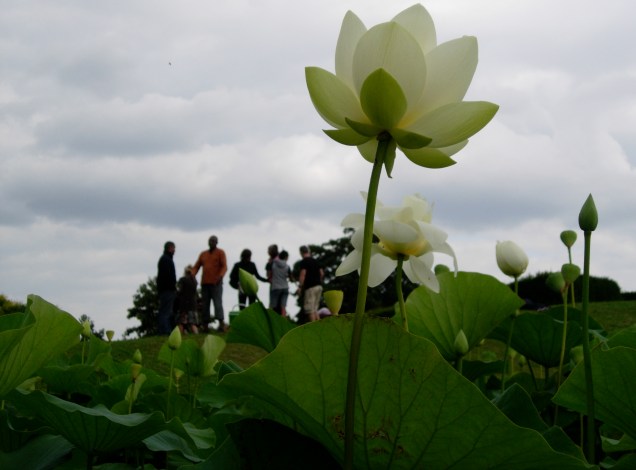
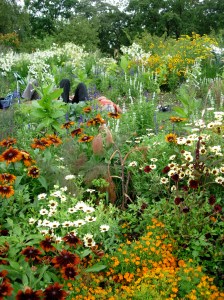
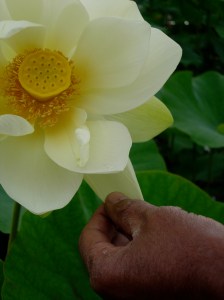
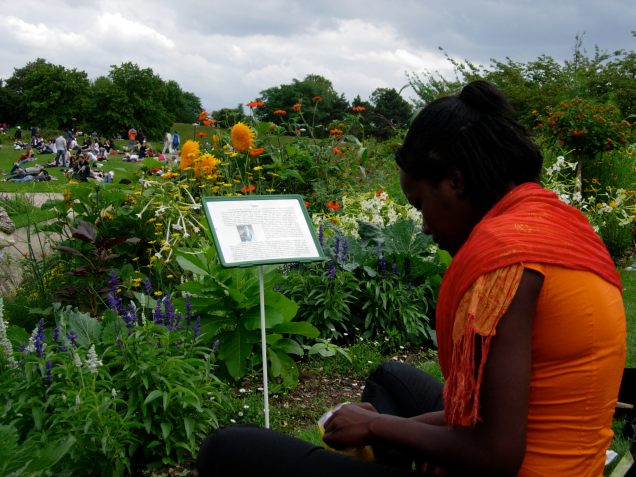
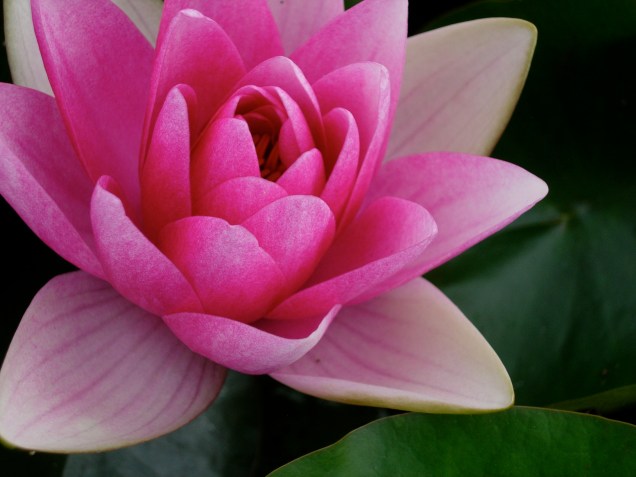
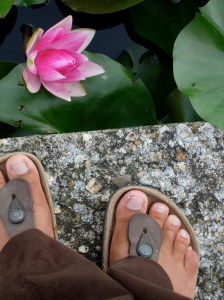
For now, though, indulge me. I am about to go crazy on lotus pictures. From a beautiful Sunday afternoon at the Paris Jazz Festival, in the stunning Parc Des Fleurs. By the time I left I wasn’t walking, but dancing — all the way back to the Metro. Wouldn’t you?
Last night, after arriving back to Izzy’s place in Paris, I had a wonderful Skype conversation with a dear friend in California. At one point the topic turned to love, surrender, and letting go of the illusion of control. Reminded me of one of my favorite love poems, by Iranian Sufi poet Hafez.
The Sun Never Says
Even
After
All this time
The Sun never says to the Earth,
“You owe me.”
Look
What happens
With a love like that,
It lights the whole sky.
With metta and prayers for the people of Iran today.


 The tradition of the acceptance speech appeals to me for a few reasons. It happens in the context of community — a community honoring the achievements of its members. Often it inspires others to persevere through their own challenges, knowing that someone else managed to overcome great obstacles or do something extraordinary. And most of all, acceptance speeches are about gratitude. Expressing gratitude to everyone who contributed to what, superficially, might seem like an individual feat, but is actually the culmination of much effort by many people. (And by greater powers, if that’s how you feel about it.)





 Kloncke